The Science of Attraction, Status & Success with Michael Sartain
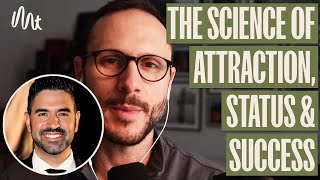
Conversation between Connor Beaton and Michael Sartain (YouTube podcast) about evolutionary psychology, male social status, and practical coaching for men. Sartain describes his background (pickup roots, military service), his male performance coaching program (networking, communication, leadership, dating), and uses evolutionary research (mate-choice copying, parental investment) to explain attraction and status dynamics. The discussion emphasizes the role of risk-taking, rejection desensitization, and building trust through doing hard things; Sartain also outlines disparities in men's mating outcomes and his program metrics.
Questions this video answers
2021 (had David Buss as a guest in the second month).
About 3,500 clients.
About 130+ modules and a 35-book required list; program takes about one year to complete.
Former U.S. military officer: flew special ops in a KC-135 for five years and served in counterintelligence for two years.
Chapters
Foreign.
Michael, welcome to the man talk show. How you doing, brother?
Good, man. I'm glad we finally did this. The first time we tried to do this, we had a power outage in Hollywood, I remember, and we had no signal.
Yeah, that was a, that was a mess. I was like, you know what, this is going to be bad. We should definitely reschedule this conversation. So let's just start high level. How do you describe the work that you do and the work that you do with men?
Yeah, so. So what I did was, it was a combination of several things. I started to look, I, I actually came up maybe 15, 20 years ago, vaguely just in the pickup community. And I, and I knew something was wrong with it. And I don't mean to, like, be hypercritical of them, but I, I knew something was wrong as far as, like, their understanding of how attraction worked. I think at some point I, I met some guys who were club promoters, worked in nightlife, and I watched what they do in comparison to what guys on the Internet were saying was helping men become attractive to women. And then I, probably around 2015, I met Tai Lopez, who introduced me to Dr. David Buss. And I started taking the experiences that I'd had for 25 years for my clients and for myself. And then I started comparing that and started saying, okay, what does evolutionary psychology say about these specific ideas when it comes to ambition, aggression, when it comes to jealousy, etc, and then I started to see that the conclusions that I saw from, like Jeffrey Miller and what William Costello, David Buss, etc, they were the same conclusions that I was seeing empirically, watching back and forward. So when I started my podcast in 2021, I had Dr. Buss on maybe the second month I was on, and when I interviewed him, I was like, I agree with all of this. This is really, really interesting. So I started diving deep into evolutionary psychology. And basically the best way to describe my program is I'm a male performance coach. I'm a performance coach for men. And the way I, I like to say it is throughout history, men who have had better networks have always been able to garner more resources and had more access to, had more sexual selection. So I basically use concepts and networking and I use it for men to be able to grow their business, to be able to get better jobs, to find better partners, to find better friend groups that uplift them. And I do, I use very specific ideas from science, but I, I do, I use the scientific ideas to break it down so some of my more logical clients can understand it. And I'm sure you had to deal with this before too. You have a hyperlogical client who's very good at his business, but when it comes to women, he has a problem because he doesn't know how to. He's still speaking the language of logic and it doesn't work. So I, I'm almost, I almost try to teach them how to translate between the two. That's something that I do. But I work in networking, communication, leadership and dating. I'm also a former U.S. military officer. I, I flew special ops for five years in the KC135 and then counterintelligence for two years. And I take a lot of the principles I got from the military and I put them into my program. I have a program that has about 3, 500 clients in it right now. There are, the program is a little bit over 130 modules long. There's 35 books in a required list. It takes about a year to get through my program. And at the end you are going to be the guy that all your friends meet their girlfriend through. You're going to be the guy that all your friends get their job through. You're going to be the guy that all the friends come to for recommendations. You're going to be the guy when people stop into your town, you're going to be the first guy people call and they're like, hey man, I need a restaurant recommendation, get me into this club, etc. Etc. I make you sort of the social hub of, of your arena.
And just like there's one other thing I just want to point out because I think we talked about this before. It's this massive misconception. When you and I were growing up there was like this 10 level of fame that existed. So this would be like when I was growing up, this would be like Ronald Reagan, Tom Cruise, Arnold Schwarzenegger, this is like 10. And then like there's this zero level of fame which is like the janitor at your high school, right? He no one knew who he was and there was like no mid tier level of fame. Maybe like your mayor was like a mid tier level of fame because of the Internet, because of social media, because of streaming, there's this mid tier level of fame, right? So if you think of someone like say Chris Williamson or Patrick Bet David, they're not as famous as the Rock or you know, Barack Obama, but, or Cristiano Ronaldo, but they're still in this mid tier level of fame that wouldn't have existed. Reality TV shows that's like this mid Tier level of fame. I teach guys on a scale of 1 to 10 to get to like a 1 or a 2 to where when they go out, everyone at least knows them. So, like, whenever I tell guys, you know, go on dates, regular places, have the chef come out and greet you when you're on a date. An incredibly incredible attraction trigger things like that. I teach guys to get to like a one or two level of fame. It's not really fame, but like a level of status. And in doing so, you find that dating becomes. It's on easy mode. It's. It's very, very simple. And the, the. The functions to do this are very simple and don't require money. And so I go through those things and break them down. And I've had a, you know, like I said before, we, we just crossed 3, 500 clients. I've been doing this for about four years, and I've been coaching for 16 years. But this company I've been doing for about four years, and it's just been a labor of love, and it's just been. I hope I get to do this for the rest of my life.
Nice, man. Nice. And if it's always feels so good when you found a sense of purpose and, and meaning, I mean, it's interesting because I, I always tell guys, like, your, your social circle is a, is a, A symbol of status.
Right.
It's like a woman, A woman doesn't just date you, she dates also.
Yes.
The vision that you are based on the men that you surround yourself with. And I think that, I think that the generations that follow us, unfortunately, the younger generations have been very poorly educated, trained, brought up to actually have really good social skills. And so that hurts them. Right? Because it's like you don't know how to network, you don't know how to connect. You know, you don't know how to just be in social situations. And I think, you know, that's one of the things that, when I was single, I think that's one of the things that I did sort of naturally well, you know, it's just like funny, silly, kind of carefree, you know, pretty direct, pretty forward.
Yeah.
But also I wasn't ashamed or afraid to just go and talk to whoever. You know, like that was really. I would just go talk to anybody. And I think because of my background being so diverse, I could talk to anybody. You know, I could talk to the construction worker, the laborer. I could talk to the CEO, the executive, the artist. Didn't. Didn't really matter. And I didn't realize how big of an attribute that was for attracting women until very late. Until like later on in life I was like, oh, my ability to not only talk to anybody, but my ability to have a strong social circle of good men in my life was actually one of the contributing factors to my success with women. Because they weren't just looking at me, they were looking at the men I was surrounded with. And I think if you're surrounded. Go ahead, go ahead.
You know, I was thinking, think about it evolutionarily. If you're a woman and this is 50,000 years ago, you're plain era woman and cave woman, who are you more likely to have children with that's going to cause you and your child to have a higher likelihood of survival? It's the man who has more alignments. It's not just the biggest, strongest man, although that obviously women find that attractive as well. But it's the man who has the most alignments. That's why humor, I believe, is funny or humor is very attractive to women because men who are funny are going to have better social alignments, which has a higher probability for you and your offspring to survive. And also I think it's a, it's a corollary to intelligence. And so, so these different things, like I hear women say all the time, I like men who are super smart. I think women like men who are very competent. I think that that's kind of where that comes from. But yeah, I mean, it's, it's been one of these things where you go back with your network and it's been one of the craziest when you explain to guys. A lot of times I'll give you probably the biggest piece of advice that I was giving probably before anyone else. This is probably 2008 and I recommended men have tons of female friends. It's very controversial, especially in the spaces that I run. A lot of the manosphere or like red pill places will have me on their show and they don't like this advice. They don't like the idea of men and women should be friends. When you have a ton of female friends, female friends get you used to being around attractive women. So if you have a bunch of female friends that are your type, but let's say they're married or they're. They, you know, they're. They're just not take. You're just not interested in them. You're just put them in the friend zone. When you do that, you get used to being around your type. You get invited to everything you get it? Like there's no event you don't get invited to. Whether it's a self help conference, whether it's a club, whether it's a huge private mansion party, wherever there's a great book by Professor Ashley Mears of Boston University. She's a sociologist who went undercover. I think Chris had her on her, on his show. She went, she's a model. She was a Runway model who got a PhD in sociology. And she went undercover as basically like a bottle rat for two years. And one of the things she said was all the guys who got the best networking opportunities in the Hamptons during the summer were guys who had girls with them. That's how they got invited to all these different parties. And then lastly, and this is the most important one, the, the women that I end up dating, seriously, I almost always, I'm introduced to them by women. And when I ask women, the most attractive women I know, I'm like, how did you meet the last five guys that you dated? It's a friend introduced me, A friend introduced me, A friend introduced me Instagram. A friend introduced me. I was like, you ever use dating apps? No. I'm a young attractive woman. I don't need dating apps. And then it was like, well, what about the guys just coming up and coldly approaching you in the bar? I was like, no, I've never met a guy through doing that. I was like, so how was the friend who introduced you male or female? It's almost always female. And so I started reverse engineering this and I said, okay, let me put this into my program. What if you're a guy and you have a ton of girls that you put in the friend zone. What happens then? And then the, the experiences they had were the same ones that I had, which is women are just keep coming into my life. And just in the. Imagine the, the delta between me going up and talking to a woman who doesn't know me versus a bunch, a girl coming into a bar, seeing a bunch of girls she knows and then say, hey, come over here and meet Michael. It's nightmare. It's not even. All that approach, all that weirdness, that approach anxiety, all that stuff just goes out the door when you have beautiful women with you. And then, then I go and look in evolutionary psychology. I start looking in the studies and I believe it was Texas Tech who did a study showing that men are like 2 points higher on a 10 point scale when they're in photographs with attractive women. It's like, okay, cool. This is a concept called mate choice. Copying in humans let me look up more content on this. And I found dozens and dozens of studies of the concept of mate choice. Copying in humans made choice copying was something that was studied in zoology probably in the 1990s and then they finally started putting it to humans. And what they found is that women choose men who other women choose. So I started using that as an attraction trigger for guys who generally aren't like facially good looking. Who aren't generally good looking. Like what are the ways that I can generate more traction? So showing them that was like a huge cheat code. But it was something I was trying to teach like 16 years ago and I got a lot of flack for it.
I mean it's interesting, right? I mean it makes a ton of sense because you're like pre vetted by other women that that woman then trusts, right? And I think to, to your point, you know, my, my wife has some, you know, single, single friends and they're always asking her like oh, do you know of any of Connor's friends that are single guys? That would be good fits, right? And so there is that kind of like wanting somebody that's sort of pre vetted, sussed out and, and you know, repped for, you know, somebody repping for you.
Again, kind of. That makes sense. Evolutionarily, if I'm a woman, I have more to risk if I have sex with the wrong person. Robert trivers in the 1970s come up comes up with parental investment hypothesis which is of A2 gender species. The gender that has the larger sex cell or more parental investment is going to be the more selective of the two genders. But the other part of parental investment hypothesis is that the other gender is going to compete for access to the first gender. And that's what we see in humans. Whereas men compete with other men for access to, to women. So that's, that's, that's generally how that works. But that if you're a woman and you have all these risks of the man being abusive or the man, all kinds of the man getting up and leaving, having a woman pre vet that is the best thing that you can do because when you look at a man, you can't see all the attributes that are going to help you and help your child. When I look at a woman, I can see the attributes that I maybe find attractive. But a lot of times, you know, dudes meet women and they're, they tend not to be crazy also. But the, the main thing is as a woman you look at a man, you, there's so many questions that you have. There's so much what we would call incomplete information. I don't know if he's a stalker. I don't know if he's abusive. I don't know if he's terrible in bed. I don't know all these things. And when you see a guy and you don't know these things about him, but you see so many women comfortable being around him, a lot of those questions are answered, or at least in your mind they're answered. There's a separate study I saw that was really crazy, that showed men, they were taking photographs with a beautiful women. I forget I may have been the Royal Society that did this, but don't quote me on that. I forgot who did it specifically. But basically women saw the men who were in photographs with attractive women and attributed more intelligence to them, more kindness to them. These. This is crazy. It's like things. There's no way you could tell this from a photograph, but women were rating them higher on these scales simply because they were in pictures with attractive women. And the thing was crazy. And whenever I bring this stuff up, it's really funny because you'll see it in the comments. People start attacking me personally for bringing up like evolutionary psychology stats, but it's just, I'm just going where the data takes me and a lot of times people don't like the answer. But man, it's one of the craziest things that I've ever seen is like. And you've, you've, you've seen like, if you've, I don't know if you've had Dr. Buss on your show or William Costello or someone like that. Evolutionary psychology goes through such a robust standard of, of testing and then whenever I find concepts from there, I find them to be, for lack of a better term, truer than anything else I've seen in psychology. And so that's why I really love talking about this stuff so much and why I found it to probably be the single most helpful thing that I've used with my clients.
Well, let's, let's touch on that because I think you're hitting something. Evolutionary psychology seems to be quite a charged subject. I've definitely, and I want to get your take on this. I've definitely seen it misquoted, mis, sort of represented sometimes, you know, and, and the, the data and the research does sometimes get like skewed for, you know, an opinion. But why do you think that it's so charged? And then maybe. Why do you think it's Important if.
You come to the. So this is this explanation. I actually asked Dr. Buss this and his explanation I thought was the best. I've heard William Costello say the same thing. Well, for those of you don't know, William Costello is the PhD candidate under Dr. Buss at the bus labs at University of Texas at Austin. He's, he's a tremendous content creator. Highly recommend you guys check him out. So if you, if you listen to a lot of things, what they say, general, what I call social sciences, their belief is a bit more egalitarian, a bit more behaviorist. So if you consider a behaviorist belief of psych, belief of psychology to be very reductive here, I give a boy a Barbie doll and I give a girl a Tonka trunk. If I give the girl the Tonka truck, she's going to become more masculine. And if I give the boy the Barbie doll, he's going to become more feminine. We know, we, after 100 years of study, this isn't true. But this was a belief that behaviors have, is that the only reason men are masculine was because of stimulus that has been put into their life. And the only reason women are feminine is because of stimulus. And this is just not true. This basically take genetics completely out of the equation. If you go back and read early Darwin, you know, Darwin's original works, you'll see that Darwin, he postulates about this idea that eventually all of psychology was going to be subject to natural selection, all of human desires. And then once behaviorism sort of takes over, that idea disappears. Actually, Sigmund Freud said something similar. He's like, all of psychology is a sexual psychology, something to that effect. And it didn't. It took all the way until the 1970s before people started to come to this realization. It's like, oh, wait a second. All these proclivities that we have as Homo sapiens, they came somewhere to aid in our survival in the last 200,000 years. And so there's a reason for each one of these things. Men wanting women with a certain hip to waist ratio and women wanting men who are taller than them, these come, these are proclivities that come through evolutionary psycho or come through our natural selection. And so when you, when you have these ideas, then all of a sudden, any idea of feminism, any idea of behaviorism, any idea of progressivism, any idea of egalitarianism, these things kind of get thrown out the window because there are innate sex differences between men and women and the. And that's a very offensive to a lot of people. The idea that there are innate sex differences. Like, for instance, the. This is one that, for some reason, I don't know why people argue this, but the median man, meaning the 50th percentile man, wants the same number, the same amount of sexual variety as the top 1% of women or top 2% of women. Some crazy number like that. And women will hear that and they'll be like, well, no, I like a lot of sexual variety, too. In fact, you. You hit on it before when you talk about Bonnie Blue or Lily Phillips, these women who have slept with hundreds or thousands of men in a day, and they're like, we're trying to prove a point. And the answer is, like, the question is why? Like, why is this important for women to want to contravene that idea? Women, Men just want more sexual variety than women do. That's just something we've seen in the data. It doesn't mean men are better. It doesn't mean women are worse. It just means that's just where the data takes us. And a lot of people don't like that idea. Men have about 100% more upper body strength than women do. In fact, it's probably the number one dimorphic difference between men and women. And so women want to combat that was like, I need. You know, women want to be stronger too. And like, it's fine that you want to do that, but accepting the fact that there are differences between men and women is just something that. That seems to be difficult for a lot of the social scientists and a lot of academics to deal with. And so they say things like evolutionary psychology. There's a massive video that came out that went after David Buss, went after Jeffrey Miller and went after Chris Williamson, called I. I debunked evolutionary psychology by Mooncat and William Costello and. And Mac, or I'm sorry, Cassella and Alex from Dates. Like, they did a. A rebuttal video, which I thought was magnificent to this idea, because a lot of the things that she was hearing or she was saying was, this isn't true because of patriarchy. And basically this is the only reason men find these westernized standards of beauty, these skinny models, to be attractive is because of patriarchy. And the only reason why women look like that is because of patriarchy. And it was just one example after another where the. They had already come up with the answer before they did the experiment. And the reality of the situation is men, throughout history have found the same type of woman to be attractive. I know there's certain examples of where Men throughout history have found more robust women to be attractive. But there's a certain hip to waist ratio that they tend to find attractive. There's certain signs of youth that they find attractive. And they've done these studies that David Buss did1 in 1989 with 37 different cultures and found men to find the same things attractive amongst all these different cultures. And that was. That's hard for a lot of women to. Or not women. I won't mean specifically women, but it's hard for a lot of social scientists and behaviorists to find true. You're telling me that our westernized standards of beauty are actually genetic, that they're actually come from like these are innate sex differences between men and women. When you say that, then all of a sudden now body positivity out the door because it goes against evolutionary ideas. And then. And now people get even more and more upset. And then you get even deeper. Connor, like Dr. Buss has a textbook, the New Science of Mind. The new edition just came out last year, and in one, in near the end of the textbook, and I don't believe this is in his novel, like the book that he wrote for public consumption. This is just in the textbook. Men who bully in high school have more sexual partners and men who get bullied have fewer. That's a really dangerous statistic if you, if you put it into the wrong hands. Women who, who get bullied in high school have more sexual partners, and men who have been the victims of violent crimes have actually have fewer and women find them to be less attractive. These are stats like, these are ugly stats put in the wrong hands. These are statistics that are, that are really bad, but they're still true. And if something is true, if a data point is true, it cannot be misogynistic. If a data point is true, it cannot be bigoted. If a data point is true, it cannot be racist. And so like, that's one of the things that I found when, when they say, when they come to these conclusions. Look, one of the big ones, Dr. Buss said jealousy may be an evolutionary adaptation for men. That's really offensive to a lot of people when you say that. So that, that's kind of where the controversy comes from.
Yeah, I think there's. So there's many threads that we can pull on in there. You know, I think one that we can circle back around on is, you know, what are some of the core pillars and sort of tenants that evolutionary psychology is saying that women are looking for in men? We'll. We'll put a sort of like a pin in that for one moment. I think one of the challenges that there's. There's sort of a notion of, like, how do I want to disseminate this? I've noticed through interacting with a lot of women over the years that there is what women say they want and then there's what women actually go for. And I think that is some of the challenge with some of this research is that, you know, if you put some of those ugly stats aside, because some of those are hard, right? It's like, oh, man. And it. And it makes sense. I mean, I've worked with enough men who have experienced sexual abuse or some type of trauma or been, you know, a victim of violence growing up. And it does shape you in a way where you are more risk avoidant. You. You are more prey oriented, Right? Just in your nervous system and your body and your language, you. You walk through the world with a different orientation that is not conducive for mate attraction. Right?
Yeah.
But I think that one of the challenges. To come back to this, and I've. I've seen this. I was just talking to one of my wife's friends the. Where she's a pretty big feminist, and we were having this conversation because she seems to attract and date men that are antithetical to her feminist beliefs. She attracts very wealthy, very status oriented, very domineering men. And, you know, we were having this conversation about feminism, and I won't get into that part, but I was like, tell me why it is that you say you want this very specific type of man, but then who you date all the time is somebody who is counter to that, you know, And I was like, you date, you know, you basically are the walking poster child of like, hypergamy. And yet what you're saying is I'm a staunch feminist and I don't care about those things at all. And that's the patriarchy, and those men are misogynistic, and yet those are the men that you're dating and sleeping with and want to be with. And so I was like, how do you reconcile those two things? And I think one of the biggest challenges with evolutionary psychology is that it sort of lays out at the very least a thesis or a postulate about why that behavior exists.
Connor. I would. I would postulate that the reason she became a feminist was because she was so subject to hypergamy. Some women are more subject to it than others. And that may be. May like, she did not like what that said about herself, which Caused her to become more. I'm just, you know, I'm just guessing here. I don't know her personally, but that's, that's generally what happens. But yeah, man, it's, it's. You go where the data takes you, and a lot of times it takes you to very uncomfortable places. And the, the analogy I like to use is an oncologist, okay? If I'm an oncologist and I study, let's just say, pancreatic cancer. If I go to someone and say, hey, sir, I'm sorry to let you know you have stage three pancreatic cancer, this is the treatment, we're going to go forward. I don't start applauding. I don't start saying congratulations on your pancreatic cancer. I just, I'm simply display. I'm telling you the football field. I'm displaying the game for you. I'm displaying the rules of the game for you. When an evolutionary psychologist does this, for instance, Dr. Buss, when he goes into, like, stalking, like, there's a. There's actually data that shows that stalking is effective for a small group of men, and it may have been an evolutionary adaptation that does. That's not a prescription for stalking. Stalking is terrible. It's a terrible, terrible thing. But once, once we understand our genetic proclivities, then we can transcend them, but we can't transcend them if we deny them. And so that's why I love the idea. I would rather just know the truth. I would rather understand to a certain extent we're hairless murder apes and that we can transcend a lot of these feelings that we have rather than pretending that we're not one of those things. It's really funny if you, if you read David Buss's in his New Science of Mine is a textbook. It's a picture of a gorilla. It's an evolutionary psychology textbook. But the, the front cover is a picture of a silverback gorilla. And so you understand when you come from this place also, what do you see on the Joe Rogan experience? It's a picture of a monkey. Like, that's why a lot of these beliefs come from. It's like, it's not that we're not actually hairless murder rapes, but when you, when you unders, when you look at things through that lens, a lot more of our proclivities make sense. And what I would like to understand is we came from our evolutionary past. Let's accept some of these things that we, that we hold true, and then let's move forward. One of the things you said before is that women will say that they like one thing and then actually be attracted to something different. The first rule I tell my guy, my guys who join my course, is we only pay attention to things people do and not what they say. Often. This is probably the best piece of advice I give to women whenever it comes to relationships. I say, take your entire relationship, all the things that he did. He didn't show up for this. He, he. He did show up for this. He liked this girl's photo, etc. And take all the words out and then go back and look at the entire interaction with no words, no words that you said, and no words he said, only actions. And then you tell me, what do you think the conclusion was? And generally, that's the conclusion that comes much closer to reality than the one with the words. Human beings use words in order to communicate ideas, but they use words to communicate ideas they want to communicate. And so because of that, often things get very confused and muddled. When you look at your interactions with people based on their actions and not their words, all of a sudden the truth just magically comes out. So that's why a lot of times, yeah, you're right. You'll hear women say, I'm a sapien. I have a friend of mine, she says she's a sapiosexual. She only likes highly intelligent men, and her last two boyfriends were a porn star and a male stripper. And I'm like. And I called her out on it in the show. I was like, savannah, you said that you're sapiosexual. I know your last two boyfriends, and they're one of one's a male porn star. It's like, they're not very smart either. I know them. And she's like, yeah, you got me. It's more what she wanted to believe about herself rather than what she actually. What was actually true. And so that's where the issue comes. And men are just as bad at this. Men are. Men are just as bad as this level of delusionality. Yeah.
Yeah. Well, I feel like we could probably go down the hypergraphy, hypergamy and evolutionary psychology pathway for a long time. I want to shift a little bit because I want to get into some tactical pieces that are going to support mental just in their life, but also in the relationship. Where I actually want to begin is what you were talking about earlier, which is a man's relationship to Risk and the importance that risk plays in his trajectory towards some type of success, fulfillment, purpose, you know, a healthy relationship. So talk to me a little bit about risk and how important it is for men.
So again, let's go back to our evolutionary past. Throughout history, we know from looking at Y chromosomes we can see that about 40% of men throughout history and about 80% of women have reproduced, meaning there's a 60% of men. There's also another insane stat. Before the year 1850, about half the earth's population died before the age of five. I was reading somewhere in the 17th century in Germany, the the likelihood of is a 90 chance you didn't make it to the age of 15. Like the infant mortality rates were insanely high. And then the men, there was a group of surplus men that were around and you see this in certain cultures where there's massive group of men that divergence or just weren't, weren't part of the, you know, weren't part, did not get to breed, didn't get to replicate. So if we know that about 40 of men and 80 of women have reproduced, that means there's a 60 of men who are sort of left behind. And in order for them to garner enough status or garner enough sexual selection to have enough high, a high enough sexual market value to actually get to mate, they had to take risks. Then when you look at the consequences or the symptoms of, of testosterone, you start to see it's more risk taking, it's more assertiveness, it's more aggressiveness, it's more dominance, it's more ambition. And so as men have higher testosterone, it causes them to take more chances. Those chances cause them to have a higher probability of having, you know, having sex with any women whatsoever. So it's going up and talking to a stranger, taking a business risk, guys gambling, it all on black, etc, you start seeing a higher ability, a higher level of risk tolerance, having a correlation to more success in business and having a correlation to more success with women. But the way I like to say it is there are certain risks that we had 200,000 years ago that we don't have anymore. For instance, approach anxiety in men, which is very, very difficult for men to get over. That approach anxiety comes from the fact that your ancestors would approach a woman, say the wrong thing and be ostracized from the tribe. Or just like maybe I live in a tribe with 150 people, there's maybe seven or eight women that I possibly could breed with in my whole life and I've embarrassed myself in front of front of them. Or I go approach the Wrong woman. And she's, she's one of the brides of the, the chieftain. And then all of a sudden, I'm killed unceremoniously because I've approached the wrong woman. That's where our approach anxiety comes from throughout our evolutionary history. Well, okay, let's go to 20, 25. What happens if I go approach a strange woman? Not much. It's not nearly as bad. Like, I'm not. I'm not gonna die. It could be bad, but I'm not gonna die. And so now I have this inappropriate or this misaligned fear of approaching, of approaching a woman. And so when you look at those things, it's like those fears that you have now I'm taking a risk that isn't even really a risk. It's not really that big of a risk. And then when you go even further and you see some of the scandals that celebrities that go through, you know, go through. Like, for instance, we have a man who had sex with a porn star, and we elected him president, United States. We had. We had a woman who. We had a man who wanted decathlete changed, transition to become a woman, ran over someone and killed them. And then we named her Caitlyn Jenner Woman of the Year. Four months later, when you realize that Jordan Belfort, one of the famous, most famous sales trainers in the world, all the drugs he did, all the prostitutes, all that kind of stuff, they made a movie about him where he punches his wife in the stomach and then kidnaps his own kid. And he's one of the most famous sales trainers in the world. His books are bestsellers. And O.J. simpson is really funny. Before he died, I had a conversation with him. I was at a party and I bumped into him and I asked him some questions. And he started telling me he was offered so much money to do a fantasy football podcast. Like, it's one of these things where it's like the risk that you were taking and the hit to your reputation doesn't seem, when you look at all these celebrities doing these meme coins at the hawk to a girl or Jake and Logan Paul, and they just recover from it fully. There's less risk to your reputation and less risk if you go up and talk to a stranger than there was before. Yet we still have the fear of doing these things. People's fear of public speaking. They have this horrible fear of public speaking. But no one's going to kill you. Like, if you go public speak, even though it's this mortifying, people would rather jump out of an airplane than go speak in front of a large group of people. And so you see these things, there's like evolutionary mismatches. And, and what you said before, your ability to take risk as a man is directly correlated to how much success you can have and how, how many women that you could end up dating or your options with women. So what I like to say is a high level of risk taking. So high level of risk tolerance in combination with subject matter expertise. That's where success you, you tend to see come from. Just blindly taking risk is stupid. But taking risks when you have studied the arena to take risks is probably the, the best. What I'm talking about the, the best combination for success. That's what I've seen. And then my clients who do the best are the ones who are, who have the highest risk tolerance. That's what I've seen be most likely. You, you just did a video recently where you're talking about men who don't take risk, how it becomes unattractive. Well, there's again tons of studies that show that men who have those attributes are more attractive to women.
Yeah. And I think one of the, one of the layers that I'll add into this because you're, you're adding in the evolutionary layer, which I think is important, I'll just add in the sort of interpersonal attachment based layer, which is that oftentimes like a lot of the men that I end up working with are guys that have some type of childhood, you know, attachment based interruptions, trauma, they experienced, abuse, they're bullied, that type of stuff. And it's interfered with their ability to take smart risks or to even know what a smart risk is. Because their neurology and their nervous system is so conditioned to move them away from any type of risk that might damage them again or put them back in that situation. And even if it's not remotely the same situation, their body has just been predisposed and conditioned to avoid that risk. And I think part of like one of the things that we do in our work is like helping men reorient their nervous system so that they have a greater capacity to take risks in their life. Whether it's sending the email asking for the promotion, you know, asking the girl, you know, the woman out, like.
Yeah.
And even basic things, having a hard conversation with your wife or your girlfriend, like those are the things that collapse a man and really start to push him into this corner of feeling like he's caged in his life psychologically, emotionally, sexually. All those pieces. So How. How would you say that a man can begin to combat that? Like, if a guy's wanting to work on his capacity and skill of risk taking, where does he begin?
My good buddy Orion Terraban says this. He goes after a hundred rejections. They're just data points. After you've been again, you go up and talk to a woman and she rejects you. It feels personal, painful. But how can it be personal? She doesn't know you. And what happens is initially you have this horrible feel, this massive cortisol stress emotion that happened. Oh my God, this woman rejected me. Once you do it over and over again, you become immersed in the idea of this rejection doesn't affect me personally, and it is not a commentary on who I am as a human being. When you get to the point where that rejection becomes less and less personal, you care less about the rejection. And what's funny is when you approach women, they can see you care less and you become more attractive, ironically, because you care less. It's the same thing in sales. I have a lot of, you know, I have a sales team personally, and I talk to a lot of guys in sales, and there's this feeling that you have to get over where this rejection is not personal. It's not personal, it's not permanent, and it's not painful. You get used to these things over time. So what I would recommend guys do is you do need to form a certain level of callousness to rejection. And so when you do so, you become more attuned to being able to take risks, which makes you more successful, tends to make you more successful and makes you more attractive. And so having these reference experiences and taking these, these risks where you like, I've rewired in my mind where I go take a risk and I get rejected. And. And I've rewired that in my mind to where. That's awesome. That's another reference experience. I have to be able to deal with rejection. You do this, you know, in all areas of your life when it comes to working out, when it comes to your finances and when it comes to your dating. And then all of a sudden, like, you are able to take these risks and you understand it's not that bad. It becomes your ability to take risk increases, smart risk increases. And what will happen is, ironically, you just become more attractive to the opposite sex and you again, when I see, when I have sales guys who go off the script sometimes and they take some risks to get the sale, I'm like, oh, this is awesome. Like this guy's willing to take risks. And this is a terrific thing, but you do it too much. You get to the point where you're hard headed. Or the worst part is when you take risk and you aren't willing to take constructive feedback, that's when you get yourself into a lot of trouble. So what I recommend to guys is just say like, hey man, what are these risks that I'm taking? That where I feel this stress and it's, it's not rational. Right. Approach going up and approaching a woman in a bar is, it's in irrational. It really is an irrational risk. Right? Oh, I'm sorry, I didn't know you were married. Good to meet you guys. You know, whatever you walk off, you're not going to die. You're going to be fine. And so getting used to understanding these risks, especially, especially when it comes to. Here's one of the most irrational risks. People who I meet all the time who want to start their own podcast or want to create a brand on social media and they're so afraid of what other people think of them. And I just go over again, I was like, look at all these politicians who go through these scandals, all these celebrities, and they just come out the other side unscathed. You, no one, you're not a celebrity. No one cares about you. You're sitting there trying to, oh my God, I'm gonna do a podcast. What if I say something wrong, bro? No one's gonna watch. You and I both know this, being on YouTube, no one's gonna watch the first 50 episodes you do. You'll be lucky to get 100 views. The idea that you're gonna say something stupid and anyone's gonna care. Go back and listen to Joe Rogan's first podcast. He's in a closet, right? He's. He doesn't sound like Joe Rogan. Your first episodes are going to be terrible. Take this risk. But what happens is you go back and you look at this reference experience that you have and it's unbelievable. And then the other thing is in order to skip several levels in success, and this has come to the relationships, dating, it comes to money is, is to have mentors who have already made a lot of these mistakes and try to use the feedback that you get from those mentors, you get to skip several levels. So one of the things I say is take rejection is not being personal. Take that as data points and then also find people who already have success and follow what they're doing. And then once you do that, now you can take risks with more intelligence and more confidence. Once you see, okay, I'm doing a coaching program. These are five guys who have coaching programs that are bigger than me. Here's the six mistakes that each one of them made. They told me the top six mistakes they made. Let's avoid those mistakes. And all of a sudden I get to skip several levels. So that's, that's, that's what I would recommend for guys to do.
Yeah, I like the take. The rejection or even failure is not personal, you know, as a data point that you can then learn from. Because I, I think that how a lot of men who maybe have a kind of tumultuous relationship with risk approach taking a risk is that in the back of their mind, they're almost like looking for the evidence when the rejection happens to reinforce the internal story of, see, I'm not good enough or I'm a POS or you know, like, whatever it is that's running through them. So I do think that that part is really, really helpful when it comes to taking risks. I think the other thing that has, that's kind of compressed a lot of men's ability to take risks is a couple of fold. And I'm curious to get your insight on this one is I think our male relationships have really suffered and collapsed.
Yes.
And so we don't have other men pushing us to be like, do that thing, jump off the 10 foot cliff into the water, like, you'll be okay. Or, you know, I think go and talk to that woman or send the email or ask the promotion. And I think a lot of our relationships with our male counterparts, with the close men in our lives, have become kind of soft to a degree where other men aren't challenging us to expand who we actually are as a man. And then I think the other thing that is infringing on this is social media's like just the onslaught of strangers that are willing to fucking terrorize you. Like the amount of shit that I have had to face on YouTube and Instagram and the emails that I get sometimes because I've. Here's the thing, I've tried for the last 10 years to be very middle of the road.
Yes. And that's the hardest part. Yeah.
I don't talk about politics, I don't talk about religion. I don't get any of that. And it's so interesting that, you know, in the last couple years I've noticed this rise in people who send me really hateful, mean messages around, like, how could you follow this person?
What the.
Does it matter that I follow them. You know, like I, I really try and immerse myself with diverse opinions, but it seems like we have entered in this time where if I disagree with you, I will sever the relationship with you. And I think that is so dangerous. And I see a lot of men who are paralyzed and they're afraid that if they take a risk and they make the wrong move that they're just going to get annihilated for it, whether it's online, you know, through Twitter, Instagram, you know, or whatever it is, or they're going to get attacked, you know, online or at work or whatever. And so comment on those two pieces, the male relationships and then the onslaught that you inevitably probably have to face.
You and I have taken on the risk of not being put into an echo chamber. That's what you're experiencing, right? I would say Chris Williamson's in the same category. I would say Adam Sosnik's in the meaning political moderates who, who sit there and talk about dating and relationships in these dynamics, because we don't fall so far to the red pill tradcon side of things. We get criticism from them and we don't also don't fall all the way to the Justin Baldoni, Chris gq, Perry, Will Hitchens, like female pandering side of things. So we get criticism from that side as well. Because I go where the data takes me for this is one thing I've noticed, Connor, is when I make an argument with someone and they're using the feelings that they have, and my argument is based on stats that I've. I tend to get way more angry responses when I try to base what I'm saying in some level of science or experience or like in your situation, you've dealt with hundreds of thousands of clients and you use data that you know to be true. You don't need it to be true. You don't even want it to be true, but you know it to be true and you express it, they can't argue back. And so the only recourse they have is personal attacks or hatred. I get a ton of it. And it's really funny because people who are like even further to the left than me see me as like a hardcore red pillar, which is absurd. And, and people who are hardcore red pill people see me as like some beta simp, whatever, because I have a ton of female friends, right? I'm like, again, I'm friends with Rollo Tomasi and Destiny. You couldn't get any further apart from those Those two people, I'm friends with both of them. And it's. It's one of these things where people are, like, very angry with me when it comes to these ideas. I'm friends with Jasmine Jafar and I'm friends with Andrew Tate. Like, like. But it's because I try to listen to people who have beliefs and viewpoints that I disagree with, and I can have discord with them without making these things personal. And when I do that, then. Then it's totally fine. I love talking to people who disagree with me. But. But here's the reason why I have enough self confidence and have taken enough risk. Like we talked about previously, where if someone says something that I disagree with. For instance, I was dating someone who was significantly younger than me before. It wasn't my choice. We just met each other, found each other very attractive, and she was significantly younger than me. And I was talking to Jasmine Jafar about this, and she pointed out, it's like the likelihood of you making it as a marriage with this age disparity you have is like 14%. It's like very low. I didn't look at her and cuss her out. What I said is, okay, let me look into this data. And sure enough, it is true. Like, when you have massive age differences in a marriage, it's harder to make things work. And so, so I took the data, I took the feedback, and I. And I inculcated it into my life. I had to, I had to accept that reality. And I actually even talked to my partner about it at the time. And so your willingness to do that, for instance, I'm. I'm slightly right of center. If you. 20 years ago, I would be left of center. It's just the world has become a little bit more left leaning, but I'm slightly right of center. So one of my favorite podcasts are these two guys who are socialists, who are both friends of mine. They basically talk about socialist ideas all the time. And I listen to him, and I love listening to him because I want to say, am I going way off overboard in my beliefs? When we did a political.
The night of the election, we did an election episode of my show Access Vegas Live Stream. I do. And we went out and I said, I need people who are liberals and I need conservatives. And because I'm slightly right of center, all the people that it connected me to were conservatives. And when I talked to them, I said, hey, do you know anyone who's. Who's going to vote for Kamala Harris? And they're like, I don't know a single person. I can't believe anyone's going to vote for Kamala Harris. I finally found two friends of mine, not through the Internet, who are Harris supporters, and they're like, I don't know a single person who's going to vote for Donald Trump. What's happened is these, these social media platforms are putting us in these echo chambers. And, and when you're in the echo chamber and you say a certain thing, you're going to notice all your positive, your comments are positive. When you do, like, again, like what I say, you, myself, Chris, I'd say Mac and Murphy is kind of in the same space where we're, we're just going where the data takes us. What happens is we get attacked from both sides and it's, it's insane. Another one, I would say, I think Joe Rogan's pretty moderate and it's really funny. If you guys have ever seen the video of Joe Rogan explaining climate science to Candace Owens, you understand that he's not anywhere near as far to the right as you think he is. But people on the left think he's a far right extremist, and people on the far right think that he's a liberal. Like, it's really crazy when you see this, when you just try to have a tempered view of the world. I don't need anything to be right or wrong. I just go where the data takes us, where the data takes me. And I'm not offended by the truth ever. No matter how bad the truth makes me look or the truth makes our species look. I'm never offended by the truth and I'm open to it. So what's, what's happened? What I, I'm hypothesizing what's happened with you and to a greater extent, like say Chris Williamson is because you guys are going where the data takes you and you have a certain type of audience. I think Chris said his 80, 85 of his audience is male or something like that. When you go to a place where the data takes you and they don't like the responses, they don't like the outcome. Like, for instance, men in the, in the, on the red pill side, they love this stat. Women who have more sexual partners before they're married have a higher likelihood of marital dissatisfaction. Right? They love that stat. But then when you take the same stat and you're like, well, men who have more sexual partners before they're married also have a higher level of marital dissatisfaction, they don't like that stat. So much. Right. And I'm like, you have to take both stats. You can't just say one thing without the other. And when you do so it was funny. I just said something that was empirically true. It's just true. And because I said it, now all of a sudden I'm getting attacked from both sides. I would say Professor Scott Galloway is in this arena. I would say Richard Reeves is in this arena. They're just going where the data takes them. Galloway and Reeves are left of center. I would say I'm a right of Center. I, Dr. Buss, I have no idea what his political beliefs are. But when you go where the data takes you, then you find these, you find common ground with these people. I agree with Professor Galloway with more than, than I disagree. Even though we're on the different sides of the political aisle. And so when you see that, then all of a sudden you get attacked from both sides. I would love to see a lot of political moderates come together and like, share some of these ideas. And what you would see is some of the most hateful comments of all time. You would. Because it's, it's very difficult to deal with someone who has a based viewpoint that's, especially in your situation, that's based in some level of science, psychology. And then, and you try to have an argument with them, they get very, very angry when, when you try to do those things. But the, the ones about body count before marriage, they're pretty, they're pretty conclusive. But here's another one that makes women mad whenever I say it. But it's still true. 80% of 70 to 80% of divorces are initiated by women. We see this from the data. And also my good friend James Sexton, he's a divorce attorney, he's talked about it as well. When you look at homosexual divorces, the homosexual divorce rate between two gay men, it's about 28% for the, for heterosexual couples, it's about 56%. For lesbian couples, it's 78%. 80% of divorces are initiated by women. And in lesbian couples, when they don't have men to blame, they're still getting divorced at 78%. That would tell you that while, while men may be part of the problem, a lot of the problem may be women just have more of a proclivity to leave a relationship than men do. That data is very hard for a lot of people to swallow. They do do not like that whatsoever. It's much easier to just blame men for women divorcing men. That's just the men just didn't step up. And that's the only possible answer. And any other answer than that is ridiculous. Other than when you go back to the original thing. I talk about parental investment hypothesis. Women are just pickier than men. It's good. They're the ones who gestate children. They're the ones who have. Who are generally the primary caregivers. It's good that they're picky, but their pickiness caused them to want to leave relationships sooner than men do. In general, about 4 to 1 women want to more than men or 3 to 1 somewhere in that area. Well, when I bring that stats up, women are like, no, it's because men are lazy. They're not alpha anymore. And I'm like, that could be true. But again, in lesbian relationships, if you have a 78% divorce rate, that would indicate that maybe it's not men who are the entire problem here. And people really don't like that discussion. They hate that discussion.
Yeah, I think it's. I've talked about that on the show before and talked about why that might be from a number of different angles. But I think one of the things around this risk taking piece that we've been talking about specifically for men that are tuning into this is that there is a re. There's a risk for taking more risk. Right. And you know what that is. Whether there's rejection or failure, but there's also a reward in it, in the sense that it is going to help you develop a sense of resiliency psychologically, emotionally, relationally. You know, I think the. How you are perceived and how you perceive yourself will inevitably shift. And I think for a lot of men, the reason why they lack a sense of self worth or a sense of self confidence is because there are certain things that they know they should be doing, certain risks they know they should be taking, that they don't take them. And then that erodes their sense of self confidence. Right. And then you take that and extrapolate it, you know, not just one time, but hundreds of times over the course of a year or a couple months. And like that's gonna tank how you perceive yourself.
Yeah.
And so there is this. There is this sort of correlation between your willingness to go and do the hard thing that you do not want to do and developing a more robust sense of self. And that gets rewarded by society relationally. It gets rewarded people. You know, I think, I think we maybe underestimate how, how much what you and I are talking about plays into people's sense of trust in us. Like, I know I can trust men in my life or, or my wife or, you know, friends or whatever it is.
Based on their willingness to take a smart risk and do the hard thing that they know they should be doing. And it makes it harder to trust somebody if they are constantly collapsing in on those things. And it not only erodes their relationship with themselves, but it then erodes their relationship with you. And I think for a lot of men that are having marital issues specifically, right. Or just relational issues with women, part of it comes down to that, is that a woman is sort of looking at what is your willingness to take this risk, to do this hard thing that you know you should do and do you hold yourself to it or not? And if she sees you over and over and over and over and over again collapsing in on that, it's going to erode her sense of trust and safety with you because she will feel like, oh man, do I have to do this for you? Are you going to like step up to the plate and take this risk, you know, or, or is it that you are just like collapsing under the weight of your own fears? And I think for a lot of women that is a real sort of like relational existential threat that a man is going to collapse under the weight of his own fears. So any thoughts on that?
Yeah. So it's funny because that trust that you're talking about was something that we had to deal with in the US Military. When I'm flying, I was a navigator in a KC135 Strato tanker. And I have to be able to trust that the co pilot isn't going to shit himself and put the gear down. In fact, one of my jobs as the navigator is to make. We have a rule in the, in the Air Force, the co pilot is always trying to kill you. Even when he's not trying to kill you, he's trying to kill you. And so you're always like the co pilot. You need to put the gear down, set the flaps at 30. We're always reminding this like 22 year old co pilot, hey, this is, you know, 26, somewhere around there, hey, this is what you need to be doing because he's going to kill you. But it's a certain level of trust that you need in these other members of the air crew to be willing to do their job right. The boom operator has to go to the back and, and refuel the other airplanes. That level of trust that you have in people, here's the way I look at it, there's this ability. So we, we talk about different skill sets in my. Because I believe male utility is a really great way for men to increase their self esteem is by accomplishing goals. I look up behavioral activation therapy, kind of a contrary. Not contrary, but different, a different variety. So from saying dialectical behavioral therapy or cognitive behavioral therapy, behavioral activation therapy. The idea of men accomplishing goals in order to feel better about themselves is really important. And it's, it, it seems to affect men more than women. I, I tend to find that when a woman is depressed, she can talk about her feelings and she can feel better about it by expressing herself. I find that guys can go to the weight room, hang out with their buddies, have a great time hanging out with their friends, going out, playing football, and they feel better because they've done something, because they've accomplished something. And so I think there's a pretty massive difference when it comes to that. What was the original question you were asking me about the, the risk? Trusting.
I was asking you. Yeah, trusting.
Yeah, the concept of trusting someone. So, so that's essentially what happens. You need to be able to trust people to the, the skill that I was meant to say was I don't want to do something and I still do it anyway. Right. I wake up in the morning and I don't want to go to dude, I'm doing 75 hard. I don't want to do that outdoor workout. I don't want to drink a gallon of water. I don't want to read 10 pages from the book. I want to play video games. I want to stay up with my friends and talk. I want to watch TV. I don't want to read 10 pages from a book. I don't want to take a picture of myself without a shirt on. All the things that I don't, I certainly don't want to stick to this diet. All the things that happen in 75 heart. Doing things when you don't want to do them is a skill. And when I see people who have that skill, those are the people I trust the most. And that's again, one thing we learned in the military. I do not want to get up at zero dark thirty and go do pt. I don't want to do it, but I do it because I, because I do it when I don't want to do it. You start to develop this callousness and this skill. David Goggins and Jocko Willock are really terrific at describing this attribute. Doing the thing when you don't want to do the thing is a skill in and of itself. It's one of the number one things I look for. People who I hire is, are you willing to do the thing when you don't want to do it? And. And when you find that that's somebody that you find you're. You're able to trust. Along with the ability to take risk. Along with the ability to take risk is also really, really important. By the way, you know, Mike, my company, we have like, 30, 40 employees, and a lot of them, I. I tell them all the time, you guys can always criticize me. At the beginning of our set, of our. A lot of our coaches meetings, the first thing I ask is, have I done anything to make your lives harder? Have I screwed up anything? And I noticed the guys who are more willing to be critical of me, which is what I'm asking for in a respectful way. Obviously, I'm their boss, but when they do. So those are the guys I want to keep, the ones who are willing, because what are they doing? They're taking a risk. They're sitting there criticizing their boss. I asked you to criticize me, but you took the risk and you did it. Those are the guys I want to keep, because what's happened, they're doing the thing they don't want to do, and they're taking a calculated risk. And when I see that, I was like, okay, this is someone who I could probably work with, who's probably going to have a little more success in this field.
Yeah, I. I have spent a long time doing that within my business as well. And, I mean, I just call it eating the humble pie. Right? Like, you got to get the feedback from the people who know more about you in their specific areas that when you take their feedback, it can help you optimize. I want to end off on, we're gonna take a hard right turn or hard left turn. Doesn't really matter which way it is. Talking about. I put a post out on Instagram about I don't know which woman it was. To be honest, I think it was Lily Phillips. Whichever one slipped with A Thousand Men. And so.
So here's a. Lily did a hundred guys in one day, and Bonnie said she did a thousand in. In 12 hours. Now, I don't. I do the math. You do the Math there. It's 43 seconds per guy. So that was really. And the funny thing after that happened, I met. I did a reaction video to Lily, and then I met Lily at avn. I was at the AVN Awards here In Vegas and I bumped into her and I had a conversation with her about it. And it's. When you meet her, she seems. She's very pretty and seems very normally adjusted. And then you realize what she does for living. It's just crazy. But yeah, yeah. The, the thing is what we were talking about before. Who's. Who's guy number 700.
Yeah.
Who is that?
Who.
When we. One of the things I do talk about is the desperation of men. I hear you talk about this often. The desperation of men. What happened in your life for you to be number 859 of a thousand men who had sex with Bonnie Blue?
That. That's ultimately the question I have to. Whenever. When people are. When this is. I'm getting way off topic here, but I believe there's three genders. There's high status men, there's women, and there's low status men. Because high status men and low status men, their experiences of life are so completely different. The idea like when we. When. When women complain about men, they're generally complaining about the high status men. The men who have like lots of options with women, but really they don't recognize the bottom third of men who have no options in short term dating. And then you don't recognize how bad it is until you see only fans made $6.6 billion in revenue last year. The average guy on dating apps gets six matches for every 1,000. Right. Swipes the average guy. The top 10% of men get a hundred matches for it. They get 100 matches for every 1000. Right sides when you see that. And then somehow Bonnie Blue, she's pretty. She's not that pretty. For her to get a thousand men to come and sleep with her. Like the idea that I'm gonna sit there and I'm waiting in a room, just consider this. Like, just put yourself in the shoes. I'm waiting there. There's a guy. There's several guys in the room in front of me. I watch them open the doors, they go in and then they come out later. And then eventually I'm gonna go in the room. That's madness to me. Like, what has happened in your life for you to get to the point? I've met Bonnie. I've met Bonnie, but I've met Lily. And I have to tell you, they're doing what they want to do. You want to talk about psychological damage or trauma they've dealt with. I agree that's probably going on. But they've made life choices and they're not actually the people I'm concerned about. What I'm concerned about is what happened that caused a thousand men to stand in line to have sex with her. And here's the craziest part. Conor is, I will bet for probably 7, 8, or 900 of those thousand men, Bonnie Blue is the most attractive woman they've ever had sex with.
Yeah.
And that goes back to lack of risk taking, not doing the hard thing when you don't want to do it. So I don't have. And it's just madness to me that you would do something like this. I don't know if you saw the documentary. After Lily Phillips had sex with 100 guys, they interview one of the, the, the guys and he's outside, his hands are shaking. After he had sex with her, he just, he couldn't believe he did it. And this whole thing is just so madness, such madness. But I, I do, I don't think that society in general understands this bottom third of men, their level of suffering. They go through the three or four times more likely to take their own lives, far more likely to be the victims of violent crime or to conduct violent crime or, or to be the victims of some mental health crisis. And they're far more likely to lose their job, be zeroed out. There's all these things that this bottom third of men are going through that are very difficult. A man who's divorced, in his 40s, depending on his financial situations, nine times more likely to take his life than the general population. When you see these statistics, it's really crazy. But the reason why we don't see that is because what we see are the top group of men that have a Lamborghini, the six pack, and a bunch of social media followers. When women complain about men who cheat, they're talking about those men at the top, and they're totally ignoring these. The mailman, the guy who gave you your Chick fil A. Like, these guys do not cheat. They're not cheating on you. They don't have any ability to cheat. They haven't had sex with a woman in three years. They have no. And so women, whenever I explain to them the number of women that go. The number of men that go sexless with without a year, the number of men that go with a year without sex. Women are just stunned by this because women are like, well, I get sex anytime I want. And it's just one of these, these, these stats that's really crazy for people to watch. But I, I don't know what you think about this. The commentary that it Puts on all men. Not all men, but a majority of men. That even a thousand men would consider having sex with Bonnie Blue in the first place is the part that is like, where are we now as a society? Those are. Those people are way. That conundrum they're going through is way more interesting to me than what Bonnie Blue is going through.
Yeah. Yeah. I mean, my commentary was on, you know, the fact she was talking about one of.
One of them.
I don't remember which one was talking about how her father approves of what she does. And, you know, I was having a commentary on that. But, you know, that for sure. The fact that that many men lines up is rough, you know, and it does speak to. You know, I've talked in many different ways about the decline of men in our society. And. And I think it's really hard. I've noticed more and more that I think it's really hard for women to actually understand what it is like for a man to try and get a woman. And I've. I have a very crude saying which is. Is like free dick is everywhere and free vagina is very rare. And it's very, very hard for women to understand how much men go through and orient towards just trying to get laid or trying to get a relationship. And I know so many men that have gone through this.
So here's why. It's because when you say man, people have a monolithic structure in their mind. They think of all men. Totally think of XY chromosome. So here's. Here's the best analogy that I've used. Ready? This is a big remote. This is a small remote. This big remote is 80% of men. These men are not having any success with women. They're deemed to be unattractive. On dating apps. You guys seen the. Okay, Cupid subbies? Like, 80% of men are deemed to be below average attractiveness on dating apps. These men are making about $59,000 a year. They aren't particularly tall. This is the majority of men. This is a small group of men. This. Men. This group of men right here have multiple options when it comes to women. They tend to make more money and. And they have, you know, bigger followings and they, they just, you know, whatever. For whatever reason, they're succeeding more. When women are complaining about men, they're complaining about this group of men. When you and I are talking, we're general. We're generally talking to this group of men. When women hear us talking to this group of men and they think it's this group of men, we sound toxic. You understand? If I go to a guy who's been zeroed out by his wife, divorced, she cheated on him. I was like, hey, man, you're the prize, bro. I just want to let you know, you're the prize. You, you need to maintain these boundaries and you need to actually have a fulfilling dating life where women are competing for your attention. If I say that to a guy who's been divorced and cheated on, that's not toxic advice. He needs to hear that he is at a low place. But my. I remember because my girlfriend would be in here and she would hear me saying this kind of stuff. And in her mind, she thinks I'm talking to the male stripper. She thinks I'm talking to the VIP host who's been with 500 women. And she's like, that's toxic as. You can't say that. No. When people can understand, there's two groups of men. There's this majority of men who are having no success whatsoever. And there's this small group of men with the Bugatti who's going around posting on social media and having women sliding to his dms. When you understand. I know I'm being a little hyperbolic here, but the thing is, when we're, when we're talking about men, if you can, in your mind, say there's two groups of men and say the men, when women are complaining about men, they're not complaining about the same men that we're trying to help. If you can really separate that in your mind, all of these dilemmas about what's a high status men and how much do men cheat and all this kind of stuff, all of these things just go out the window. They really do. Because men are really confused when they hear women talking about men are not stepping up and they all want to cheat and they would never take care of me, they don't want to get married. And I'm like, I know a bunch of dudes who would love to do those things, but you're not interested in any of those men. And because of that, when you understand this, this whole 80, 20, there's two groups of men, then all of these questions that we have, all of this mismatch becomes very simple. You cannot think of men as a monolithic structure. There's what I call a level of status poverty. There's. And when you look at it like, again, I'm just going to use just vague ideas here from like the bottom third of men, we're talking zero or one sexual Partners in the last year, somewhere in that area, the median is 5. I think the mean is 15. In the top 5% it's 50 sexual partners. And then at the top 1% it's 150. So the scale goes like this. You're talking about 100 and 50 sexual part. The scale goes like this. So when you look at that, okay, there's this point of inflection right here. If you're above that point of inflection, you're not having trouble dating. It's very easy for you. It's not a big deal for you. If you're below that number, you are not getting the options that you want because they're not, it's not spreading across evenly. If two thirds of men under the age of 30 are single and one third of women, there's something going on here. Either they're all dating older guys or they're all dating the same guy. Right? That's what the, the, the data will show you. And so when you do that, you, you, you have to make the, this, this understanding. When I talking about men, I'm not talking about all men. When I'm talking about men who are doing like the men who are, who are crushing it with women, they don't come to me for advice. They're not who I'm helping the generally and probably in your situation too, it's probably less likely they're coming to you as well. It's like, you know, I make $700,000 a year and I'm 64 with blue eyes and I work in finance. That guy is not going to a dating coach. He doesn't need help in that arena. But if a woman's been hurt by that guy and she hears our advice, she thinks we're toxic because we're giving advice to the 64 blue eyed guy who hurt us. No, we're giving it the advice to, I hate to say it, Sandeep from New Delhi, who's 5 4, he just came to this country, he's a second generation Indian person and women just ignore the, out of him. The guy who's like, you know, in his 50s, he's been divorced and he's a mailman, women don't even notice he exists. That's who we're giving advice to. And if, if people could have a little bit more grace and just understand that we're trying to help this bottom third of men who have no options with women, then, then they would, it's a little bit more understanding of what we're saying. Right. They could be a little bit more understanding of the advice we're saying, and we get a lot less hate in them in the, in the comment section.
Yeah, it's. I think it's very important what you're talking about. Which is it. There's. There's a lot of invisible men. There's a lot of men who really feel invisible to whatever it is, government, society, culture, women, all of those things. And they, they do experience a real challenging subset of issues. So, listen, man, this has been great. We're gonna, we're gonna pause here. Appreciate the conversation today.
There's fun.
We got into some. We got some good stuff. It'll be interesting to see the feedback and response from this. Although I don't think that we touched on anything like, you know, really, really radical. But, yeah, you know, you know how it is. Where can people find you if they want to learn more about you and.
Your work on Instagram, just go to Michael Sartain and then on YouTube. Is Michael Sartain on. On X? It's Twitter, Sartain Podcast. You guys can find me there. I. If you. There's. There's a lot of things I say here. If you're a person who understands, like, you want to learn more about evolutionary psychology and you're like, looking for data to win a debate or an argument, you probably should listen to my podcast. That's one of the things I. I talk about on my show pretty frequently. But if you're a man and in your life, you just. Just want to be better when it comes to communication, networking, leadership, and dating, if you want to be the person, like I said before, all their friends meet their girlfriends through. You have multiple options. When it comes to dating. You can get any job you want. You can get into any network you want. You can get into any event you want. If you're looking for that level of leveling up, leveling up your network, just check out moamentoring.com. that's the, the program that I teach. And if you guys want to see examples of the success stories, you can go to moamentoring.com testimonials and we have 200 testimonials up there, video testimonials, Q and A's, where the guys go through all the things that I was able to help them with in the course. Like I said, We've had 3, 500 guys go through the course, and it's just been a labor of love. It's been the greatest decision I've ever made in my life was to. To become a coach like this. And so, yeah, that's where you guys can find me, man.
Awesome, brother.
Awesome.
Thank you so much for joining me. For everybody that's out there tuning in, don't forget to man it forward. Share the episode with somebody that you know will enjoy it or maybe won't enjoy it, and you can have a good conversation about it either way. Remember, disagreement is an important part of life, so men it forward. Share the episode. Until next week, Connor Beaton signing off.
More from Connor







How to Raise Strong, Unshakable Boys in Today's Culture, with Dr. Shefali Tsabary



