The Science of Self-Control: Insights from Dr. Roy Baumeister
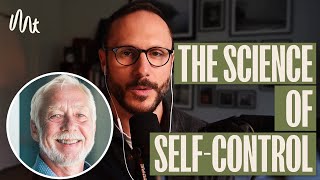
Roy Baumeister explains why willpower depletes, why men take more risks, and why people sabotage themselves. He describes self-control as a limited resource and argues that bad experiences shape us more than good ones.
Chapters
People having some kind of innate self destructive thing. So that doesn't really happen. The trade offs are people are pursuing something good, there's just something bad attached. The classical formula for that is the short term gain and the long term cost. So the more upset you are, the more you feel like just getting drunk. It's kind of the same with aggression. You get really upset and mad. You might get into a fight which you think will make you feel better, but it could cause trouble down the road with get arrested or, or whatever.
All right, Dr. Baumeister, welcome to the show. Did I say that right? I feel like I may have just forgotten it.
No, that was fine.
Okay, good. I like that I just asked you and then I went to say it and I was like, I feel like I've forgotten already. That's unprofessional of me. Welcome to the show. How are you doing today?
Oh, all right.
Busy moving and unpacking, but I'm getting settled. It's a good one.
Good, good, good, good. Well, there's a bunch of different topics that I thought we could dive into, but where I want to start is you had a quote in your book, is there anything good about men? And you said, society puts pressure on men to prove their value, whereas women's value is more often assumed. What did you mean by that?
Well.
Man has to prove himself. A girl grows up and she becomes a woman automatically. But a boy grows up, he isn't really a man until he establishes it. And many cultures have different ways that the men are supposed to prove themselves.
There's some other research that was done following my book that you could. That being a manhood is. You have to continue earning it. You might not feel like a man anymore, whereas a woman is always a woman. It's been a source of, I think, underappreciated conflict even in the workplace. Because for a long time respect was something in the male, in the male world that had to be earned.
But the boys were brought up to respect the girls and women automatically. And so the women were used to just being entitled to respect. So when the women moved into the men's sphere and started working in the companies and so on, that the men made the men treated them the same way they treated each other, which was disrespectful.
Put downs and so on. And the women were kind of shocked and alarmed by this. And the judges sometimes saw it as sexism and bias and so on because they'd pick out something about being a woman. But I think they were missing the Context that the men put each other down for a long time. And that was, if you look at it from the point of view of the social system of the company or society or whatever it worked. Men felt they had to earn respect, and there was never quite enough to go around. It motivated the young men to prove themselves and achieve a lot. Because eventually you do reach a place perhaps where you are respected, but you have to earn it. Whereas the women were shocked by this and they've introduced more the new. The new norms. Whereas everybody's entitled to respect, which is nicer in a way, for the young men. But whether it'll work as well for motivating people to achieve and contribute, that remains to be seen.
It's an interesting. I mean, you're kind of entering into the sphere of, like, motivation across sex. And it does bring up a question for me as to, like, whether or not men and women are motivated by intrinsically the same things. I'm curious if you have a thought on that. Like, are, do, do. Because one of the big things that you talk about in your book is that there's sort of these different social pressures that men and women face. And maybe you can expand on those different social pressures and how that might motivate men versus women.
Okay, well, that's about four or five questions in one. That's right. I'm very.
I'm very good at that. I'm very. I'll try and condense them down at one. Down to one.
So let me start with the first. Are they motivated by the same things? Well, there's a lot of overlap. I mean, both men and women want love and health and money and all those things. But there are certainly some differences, too.
I mean, a big one I've come to appreciate recently was a paper by. It was actually someone I became friends with at Harvard, Joyce Benenson. I was visiting there this year. She had a major article published that safety is a very central goal of the psychology of women. And even the body is much more designed to seek out safety. And that's less so for men. I mean, and, you know, you don't have to look far to see who is doing the crazy things that gets you hurt and stuff like that. But women don't. Don't take the chances like that. Say, well, women are more sensible. But it has a downside as well that seeking safety means not taking chances and creativity and stuff. I mean, we give. We're giving more PhDs now to women than to men. But it still seems to be true that the Ones who really strike out in their own and do more risky, creative stuff tend to be men. And there are women like that. And there are plenty of men that seek safety too. Again, men and women, they overlap more. But there is a difference on average in other motivations. I mean, both men and women want sex, but the, the sex, the drive for sex is much more powerful and central in men and women. I'm reminded, I wish I knew the name of the comedian who had this joke. He said, you know, well, women say they desire us too, and I suppose they do, but it's like the difference between shooting a gun and just throwing a bullet at somebody.
That'S good.
And so, you know, it's, it's a similar desire, but much stronger and more central to the men. We had a huge review article on it because it turns out it's. With all the political pressures and stuff.
Even the sex textbooks don't really want to say that men are hornier than women. But basically every measure and every study found it, you know, take more chances to get sex. Who thinks about sex more and more fantasies, wanting more partners, wanting to do more things. So that's there. The desire to take care of children, that's there too. But again, probably much more central to women than to men. And.
We evolved from the other apes who are again, the mothers take care of their babies. That goes way back in evolution. But the apes don't really take fatherhood very seriously at all. Certainly the idea that they should provide food and protection and shelter on a daily basis for many years, that would just seem utterly ridiculous to your average gorilla if you could get them to understand the idea. And yet plenty of men do this more or less cheerfully, at least willingly, all over the world. So that is a huge evolutionary change. It means, though it's not nearly as deeply rooted in the psyche as it is in the female. So anyway, those are a couple examples of, of differences. But again, there's a big overlap. A lot of similarities too.
It's, it's funny that you're talking about the risk taking piece because I, I posted a video on my Instagram, I think it was yesterday actually, and it was this video of these guys welding a chair to the, the hood of a, they had like taken the hood of a car off and the hood of the car is just laying on the ground and they're welding a chair to the, the hood of a car and then it's winter time and there's somebody sitting in the chair as it's getting towed behind a car.
They're just getting ripped around. And I was. I shared a story about how when I was in my early 20s, when I turned 19, I bought a. I bought a motorcycle. I bought a thousand CC V twin crotch rocket. Basically like a sports bike.
Right.
Much to the chagrin of my mom, who took out a life insurance policy on me, which she thought was, she thought was really funny, which I did not think was so funny. But one winter, because I grew up in central Alberta, central northern Alberta in Canada, which is freezing cold right. In the winter. And on the off season, me and my buddies would be sitting around talking about riding motorcycles and just a pining for the summer when we could get back on the bike. And one of my buddies had this trashed Honda F4 and he was like, what if we, what if we put spikes? And he had seen some like, YouTube video or something. I don't even know where he got the idea. He's like, what if we put spikes through the tires and then we rode the motorcycle across the frozen lake that's like, you know, 10, 15 minutes from our house. I was like, that's a great idea. And so, you know, five of us got together, put all these metal screws and spikes through the tires, went ripping across the lake on this motorcycle, towing a sled behind it. I was like, this is, this is very, this is not the smartest idea. But it was fun, it was adventurous, it was risk taking. And it, you know, it got me thinking about. In preparation for our conversation today, you said that the gender gap in risk taking has shaped the course of human history for better or for worse. And I'm. I'm wondering about the, the evolutionary differences or pressures of men to take risks or the male part of the species to take risk versus women. What is the research?
Yeah, that's important. Just a coda on your story, though. I can't imagine five women getting together to do that, weld spikes and then ride their motorcycle across the lake.
Yeah.
It has never happened, I would bet, in the history of, of Canada.
So why is this?
Well, so the easy and obvious part of the answer is.
Women evolved to have children and take care of them. And so they can't take a risk.
The father gets killed. Well, it's bad for the family, but she can find someone else or whatever. Whereas the mother.
It'S much worse. And the child depends much more on the mother. But a more important.
Difference, I think, and more interesting.
About 20 years ago, they came up with an answer to what percent of humankind's ancestors were Women.
So you look at all the people in the world today and then all the ancestors, what percent were women? And it's 2/3.
So then that, as I think I called it, the most underappreciated fact about the differences because it has a lot of implications for understanding that, including the risk taking one. Now people think it should be 50% if you don't know anything about biology, because equal numbers, roughly equal of male and female babies are born. But to be an ancestor, you had to do more than be born. You had to survive to adulthood, reproduce in a constant line so that there is some direct descendant of yours walking the earth today. And most societies have been polygamists or polygynists. More precisely, the rich men had multiple wives, the poor men had none, which quickly selects a lot of the men out of being ancestors of the subsequent generations. Most females have had a child and hardly any have more than a dozen, where there are men who've had hundreds of children and plenty, as I said, who've had none. So what does this mean in terms of risk taking? Well, looking at the way a biologist would, what is needed to pass on your genes and to sustain life for the woman, odds are it's going to happen. Someone will come along and boink you and you can have a child and you just need to choose the best one, but goal along with everyone else, play it safe.
And, and you'll reproduce. And there's not really much incentive even in terms of having more offspring to taking chances to get rich or anything like that, because as I said, having more than a dozen is extremely rare. Indeed, half a dozen is plenty. Now, for the male, it's very different. Most men did not reproduce, certainly not down to the present. But even in their own time, in their own generation, most men did not.
And then some of them did really well. But to do that you had to take chances. So we're descended from the ones who did take chances and were lucky and successful. So we're descended from male risk takers and female play it safers.
The men who went along with the group and just stayed home and did what everybody else did, which I said is the optimal strategy for the woman. But those men, a lot of them will have quickly disappeared from the gene pool. The ones who struck out and took a chance and managed to get rich, well, they did well. They may have had multiple wives and lots of children and could provide for them well. And again, there's no limit on how many children a man can have.
Unlike a woman. So that's Another reason I think that fuels the male risk taking. It goes with, you need to compete, you need to succeed.
And you need to step out of just the ordinary track that everybody else follows in order to be, to be highly successful.
That's, that's really interesting. So is there, would you say that, and I'm not too sure if there's, there's sort of like research on this, but would you say that women are, tend to optimize in their mate selection for men who have a higher tolerance or a higher level of risk taking? Or is it just that men who take risks are more likely to attract a mate?
Yes. I don't know that women like the risk taking itself, but they certainly like the men who are highly successful, who compete and are rich and well known and highly respected by other men. So working hard, I mean that's another thing, all the.
Another difference. Both men and women, you know, do plenty of work and so on and there's a lot of overlap and there are plenty of lazy ones on both sides. But if you look at the people who work really long hard hours, they are mostly men. I think I saw a reference in the Economist, which I read for news about a study in Britain about people who work 80 hours a week. No, it was 50 hours a week.
And that already 80% of those were men.
So again, it's the drive to get to the top. The innate part is that's what got you, the women to be highly successful within the competitive sphere of the men's sphere.
I have a sort of out of the box question for you then we'll probably return to this. But you know, as I was reading through your, your body of work and your credentials and what you've done over the span of your career really was sort of flabbergasted. I mean, 730 publications, 368 referee journal articles. And I, I was sitting with the, the kind of vastness of what you've produced in your, in your lifetime, within your professional career. And I wondered two things. One, what do you think, what do you, what would you say is one of the most important things that you put out into the world? And then secondly, what do you think is kind of the most underrated thing that you put out into the world that you wish got more, more sort of attention? And, and, and, and an investigation?
Oh, well, those are hard questions. Again with 700 some publications, it's hard to pick one and say, ah, people missed out on this one.
There are a fair number that could have gotten more attention. But in terms of what people like. I mean, most of your listeners won't know this, but the way they rate scientists now is not just how much you publish, but how much other scientists talk about your work when they're publishing their work. And so everything's on computer now. So they will go through every time a, a report of an experiment or something is published, they look at the references section and put that in the computer and count up. So that is a way for me to look at my publications and say which ones have gotten talked about the most. So the highest one is the argument is a basic motivational point about the need to belong. People have this basic drive to connect with others. And it doesn't sound like that radical idea, but in the history of psychology, this was always a minor thing. I mean, Freud said sex and aggression are the two main drives that make up the psyche. And other people had other, other ones. But belongingness is very powerful and people feel rejected. So that was. That's the highest. The next is a review article showing that bad things have a stronger impact than good things. It's called Bad is Stronger than Good. And we reviewed lots and lots of different lines of research where they're seemingly equal, good things and bad things. And the psychological impact of the bad thing is bigger. It had been noticed in two areas before, which people can probably relate to. The economists had noticed this with money, that you're more upset, say about losing $100 than you're happy about gaining $100. And so when people are making their investment plans, they're too risk averse, they avoid risk because they want to not have something bad happen.
And so that departs from economic rationality. The other, the psychologist has studied it in first impressions, when you meet somebody new, if you find out something bad about them, that has a disproportionate impact.
On your whole impression. But we found it everywhere. I mean, if you have a good day, you feel good, you have a bad day, you feel bad, but the bad day tends to carry over to the next day, whereas the good day is gone. Or in relationships, it's not that. You know, I ask my students, why should someone marry you? What makes you a good partner? And they say, oh, I'm a good listener, I'm nice, I have a good sense of humor, good in bed, blah, blah, blah. But really the important thing is not to do the bad things. Can you hold your tongue and not say something you'll regret? When you're having an argument, can you not blow your paycheck and Leave the family struggling for money. Can you avoid the negative things? The negative things have a much bigger impact on the course of the relationship. And anyway, it goes on and on. It was a huge review article, so that was my second most cited one. And the third, some experiments we did on self control, showing that it's a limited energy, that after people exert some self control, they've basically depleted their willpower. And so if something else, another challenge comes along, they do worse at that.
Yeah, we're gonna, we're gonna definitely dive into that one because I think that's. I have a couple questions on that front because I think it's something that we as men fixate on a lot. But I want to just come back to the. The why we fixate on bad over good is. Is that because we're sort of neurologically wired towards safety and, and protection, so we're constantly looking and sort of scanning our environment and ourself and others for what might go wrong, or is there, like, what's the evolutionary purpose of that?
So it's, it's, it's such a basic and universal thing that it's, it's probably not the product of any particular culture or socialization or anything, and even some signs of it in animals. It's harder to get the data from animals. But there you put it.
Life has to win every day. Death only has to win once. Uh, you know, you miss an opportunity to have sex or find some good food or something. Well, it's too bad to miss an opportunity, but, you know, it's no big deal. But you miss out on a predator who's coming along to kill you. Well, one mistake and that's the end.
So it's more important people notice the difference with food too. The early researchers who studied rewards and so on, the animal had to be rewarded right away. And they were shocked to find that if they ate something and two hours later were made to feel sick, that they learned they didn't like that anymore.
And they would avoid that. But you can't put too much poison into your, into your body and live to a healthy old age. So developing a quick negative reaction to food is useful. And yeah, you want the good stuff to taste good, that helps, but it's not nearly as urgent or as important. So that's my understanding. You know, we started, we didn't really have a theory. I just, I was thinking, well, let's look where bad is stronger than good and where it's not. And we'll put these together. By the way, if Listeners are interested in this John Tierney and I have a book on that called the Power of Bad. He's a beautiful writer and applies it to politics and things like that. He's a first rate journalist and business and love and everything else.
But.
I forgot what we were saying that's important.
It's so fundamental to be there. Yeah. Initially we were looking for exceptions. It just, we couldn't find any. It seemed to be true everywhere. So it didn't make as interesting or complicated a theory. But it did have the excitement that this seems to be one of the fundamental truths about the, the human mind.
Yeah, I mean it's fascinating. I remember years and years ago I had a gentleman, a neuroscientist by the name of Bo Lotto on the show and this is a long, this long time ago and he was talking about how the brain is this pattern recognition machine and that it's literally designed to just recognize patterns over and over and over again and it steers us towards the patterns that it recognizes and steers us away from the patterns that we don't recognize. And that it's sort of a self affirming machine, sort of designed for safety. And that, that always stuck with me partly because of the commentary and the other part because I was starting off my podcast and I was in a very precarious place recording the podcast. I was like out at the lake, at my, at my parents lake in a, in a shed recording the podcast because it was the only place that I had quietness. But let's talk a little bit about self destructive behavior.
Okay.
Because I think this is something that, I mean, you know, I've been running this organization, working with men now for about a decade and that is a perception that many, many of us men hold that we are self destroying and that we are sort of self destructing. We, we have all these habits and behaviors that, that can pull us down. And I think a lot of men are, are really trying to look for and find ways to end or eradicate the self destructive behaviors. And you had this. I'm just going to read it out because you had so many good sayings that I had to pull a whole bunch of them. But you said there is no self defeating urge as some have thought. Rather self defeating behavior is either a result of trade offs, enjoying drugs now at the expense of the future backfiring strategies, eating a snack to reduce stress only to feel more stressed or a psychological strategy to, to escape the self. Where various self defeating strategies are rather directed to relieve the burden of Selfhood. Oh, tell me more about that. Relieving. Relieving the burden of selfhood.
Okay, well the first part about that, there's no instinct or urge, this has been argued and Sigmund Freud thought there's a built in drive for death and a dive for life and they compete. This is sort of late in his life and he kind of maybe went off the deep end a little bit, but that has not really held up very well. Widespread evidence of people having some kind of innate self destructive thing. So that doesn't really happen. So why does it happen? Well, the trade offs are people are pursuing something good, there's just something bad attached. The classical formula for that is the short term gain and the long term cost. So the more upset you are, the more you feel like just getting drunk to do it. But you know, getting drunk a lot is bad for you.
And it's kind of the same with aggression. If you get really upset and mad, you might get into a fight which you think will make you feel better, but it could cause trouble down the road with get arrested or whatever, or injured.
There are lots of those. People.
Don'T take their medicine because it makes them sick or makes them feel bad or whatever. But then they have more problems from not completing the medical care.
Some people worried about success create obstacles to their own future success. This is one theory of why people, why successful people become alcoholics is they're not sure they can repeat it. And everybody says, oh wow, your work is so great, you're so brilliant. And then they're worried, oh, I don't know if I can keep this up. But if you develop an alcohol problem, people will say, oh so and so is such a genius. It's too bad about the drinking, but they'd rather have that than oh, I guess it was just a mediocre person after all, got lucky with one initial success. But there's really no talent there, so it preserves the reputation for brilliant the same. Sometimes students not studying for the big exam or something like that, it gives them excuses. So short term gain, long term cost. Also definite gain, probable cost, merely probable. The mind doesn't work very well with probabilities.
So like both of these apply to cigarette smoking, which is a classic example of self defeating behavior.
So the pleasure is immediate, whereas the danger of smoking cigarettes only really come after, after many years of smoking. And even then it's just a change in the odds. From what I've read, the odds of getting lung cancer from being a longtime heavy smoker are really only about 9 or 10%.
Whereas it's 1% if you're a non smoker. So 1% to 9%, that's a big jump in the odds, but it's far from guaranteed. And there are lots of smokers who don't, don't get lung cancer. So again, the mind doesn't naturally deal with probabilities very well. The guarantee you have a cigarette, you'll feel better, it makes people, gives them positive. I have to say I've smoked a few cigarettes out of curiosity. They never did anything for me, so I don't get it. But other people clearly do.
So a definite gain and an immediate gain versus a change in the odds of something bad happening down the road that will often lead people into self destructive behavior.
The backfiring strategies. People have ideas about how the world works and sometimes they're mistaken. So like I said, you feel bad. You think you'll feel better if you eat something and end up feeling worse or getting drunk is another thing. People think, oh, I feel depressed, maybe if I have some drinks I'll feel better. And often it's not. They feel worse.
Because of that, especially if they're just sort of wallowing in their bad feelings or going out with a friend and complaining about how miserable their life is. That doesn't really help, no matter how drunk you get. So those are the backfiring strategies. Escaping self awareness. Also tied to those, alcohol does.
One of its genuine benefits is it reduces your awareness of yourself. And that's for good or bad. I mean, it helps you not dwell on your problems and so on. It also reduces your inhibitions and you do things you shouldn't, whether it's continuing to drink too much or drinking and driving, or getting into an argument or fight, telling your boss what you think, going to bed with the wrong person, all sorts of things. Again, the self awareness, that's part of inhibitions. Self awareness is not just oh there I am, it's what am I doing and is this a good idea, should I be doing this?
That doesn't, doesn't happen as much under the influence of alcohol. So you're more likely to do things that you'll regret down the road. Anticipating regret, thinking about the pluses and the minuses. We had some lab studies that showed that when people get mad.
They will take big chances, often with a downside, just because they're pursuing a big reward. We give them a chance between a high risk, high reward outcome and a low risk, low reward. And you can manipulate those statistically to make them equal. But we made them unequal so that the clear, the rational choice was the low risk. You know, take the small reward and be happy with that. But as they got more angry, upset, embarrassed, things like that, they're more likely to grab for the big reward, even though the chances of it were very slim. And there was a downside too. There was something negative would happen if you didn't get the reward. So they did that. We found if we made people just stop and list the pros and cons, which took them a minute or two, but that wiped out the effect that, you know, sort of goes with the traditional advice that when you're angry, count to 10.
Before you do anything. Wait and look at it. But waiting and thinking about it.
Considering the upside and the downside.
That eliminated some of the negative, the self destructive effects.
I think what was really interesting to me about this, this passage was just the notion of relieving the burden of selfhood. You know, that there's, there's kind of, there's this experience of being who you are, that we are, that our brain is looking for escape hatches from. You know, especially if you've experienced trauma or hardship or you're, you're in a challenging place in your life or you know, you've developed a kind of neuroses or terrible, you know, inner critic. The way that you speak to yourself, there's this constant pursuit that you're going to be of, be in, of trying to relieve that burden of what it's like to be you. And I think that was, that for me was just really hitting the nail on the head. I was curious about some strategies that maybe you found or could recommend to people who deploy these behaviors and are maybe looking for ways out of them. What has been, what's been effective for dealing with that. That sort of paradox between I need relief from who I am or what I'm feeling internally. But I also do not like the strategies that I generally deploy.
Okay, well there, there are other strategies to escape from self awareness. I had a book on this, Escaping the Self. And I really pushed myself to have some both destructive and positive ones. So once we covered. So meditation takes a little more work and at first, you know, you have a bit of a struggle with it. But meditation, people say, does help get rid of the self or reduce the burden of it. So that's probably a positive one. Alcohol is, you know, can be quite negative. It's, for a lot of people, it's actually fairly innocuous. I think people are overstating the risks. These Days as we become more risk averse in our society. But.
But it can be, be quite destructive for that. We had sexual masochism, which was an early one. I mean that's, that's what started me thinking about this. I was initially read about it. I was going to write a book on how people find meaning in life and I was looking for interesting cases and I thought, well, what about those people who like to be tied up and spanked and all that? I bet they have really interesting lives. So within the first hour or two of reading about in the library, it was clear I was not going to learn anything about meaning of life from these people who do this kinky sex. But it was a direct challenge to all our theories about the self because the self seeks control, but they want to be tied up and, you know, made and the self seeks.
Positive esteem and appreciation and they want to be embarrassed and humiliated and things like that. The self takes pleasure, they look for pain. So.
Why not find a deeper level of meaning from those folks? Is it just that it seems more simple that they're just seeking an escape from that selfhood or.
Yeah, it's a fancy kind of sex that didn't seem to have a lot of deeper meaning. I mean, some of them will talk about it and say, oh, they thought it made them a better person or gave them deeper insight, but they're always very vague about what it was. And I didn't see any evidence of that. I didn't see any evidence of harm either. I mean other people who say, oh, the people who do that are sick or pathological, actually they, if anything, they're slightly healthier and more successful than others. Remember, there's a book published. They were. Somebody interviewed all the call Girls in Washington D.C. well, not all of them about a sample and thinking, well, these must be interesting. And they were just like call girls anywhere. But their clients were interesting because they were catering to federal judges and senators and congressmen and all those, those people. And they had a very high rate of wanting to be dominated. I think they said like, you know, you can ask to deliver a spanking or to be spanked. And they wanted to be spanked about 8 to 1. And it made me think, well, these guys, because it's mainly the men, these guys are in a job where sustaining this positive self is a huge stressor. As you're trying to project this superhuman image of yourself to attract votes. Meanwhile your opponent is trying to tear you down and the media are out to get you and find anything wrong about you. So there's this constant circle. Their stress of self is much more than, say, you or I are likely to encounter in our, in our daily lives. And so the desire for an escape is probably stronger among them than among others. And so everything from alcohol use, which again removes self awareness, to engaging in these kinds of kinky sex where it's just incompatible with your normal self and sort of takes you out of who you are for, for a little while.
Do you. Have you ever read the Denial of Death by Ernest Becker?
Yes, Long, long time ago. I do know it led to a long string of research studies in psychology and I've been friends with the guys who do that. We have some theoretical disagreements, so we've been arguing back and forth in friendly fashion for many years. But I do know the book, the experiments. They have some good valid findings and repeated some of their experiments successfully through effects. I don't, I don't buy the whole thing though, that, that all of culture is about avoiding the idea of death or awareness of our mortality. I mean, to me we form society not to escape awareness of death, but, but to, to escape actual death. There's safety in numbers. We work together, cooperate hunting and farming and creating more food. We're safer when we work together. We're not, you know, really awesome physical specimens. You know, a human being alone against a tiger has, has no chance. But in reality, the humans learn to work together and defeat the tigers and the lions and all the others by coordinated action. So to me, the, the, the belongingness is a much more important drive than the, the desire to conceal our own mortality from.
Was a cool idea.
But I think it's overstated and I won't say it's not there at all. I remember we had one argument with them about anxiety because they were saying, well, anxiety is all really based on knowing that you're going to die someday. And I didn't know much about anxiety, but I looked at the people I knew and said, are they the ones who have anxiety? Is it really about death? Is it really more about being rejected and abandoned by your loved ones or I'll lose my job or my husband or wife will leave me or whatever. And so we did this massive review of all the anxiety research we could find. And there is indeed some fear of death and injury and stuff like that, but the vast majority of it is really about rejection, social exclusion, that you'll either be kicked out of the groups you belong to or you won't get into the ones that you want. So a lot of anxiety is about that and the death is, is in the background, if they think about it at all.
Yeah, there's, there's certainly existential anxiety and, and, and dread that I think some people fall, fall into for, for sure. But I think you're, you're bang on about that sense of, of belonging. I remember I had, I've had Francis Weller on, who's a wonderful therapist a number of times, and he, he talks extensively about the need for belonging from a sort of soul level level and psychological level. And, you know, I think one of the big challenges that a lot of men face today is this ever increasing sense of isolation and, and real life isolation. You know, that men's social circles are constricting. Their ability and capacity for a lot of men to interact with women is, is becoming more and more limited. And, and you know, I think a lot of men go on. I mean, what is it? It's like the body bottom 50% of men on most dating apps can't even get responses from women because it's the top 5 to 8% that is just sort of cleaning house. And so in some ways, the, these dating apps have created a kind of almost like polygamous setup where there's very few men getting access to so many women and then this massive subset of men that just have almost no access whatsoever. Uh, and I think that's being mirrored as well. And again, like I said, in their social circles, I mean, you see in the, in the data that men are having less and less friends than they've ever had before, spending less time with friends. Their social circles are constricting. I'm, I'm wondering about the research that you've done on belonging and the correlation between belonging and a man's mental health and how important it might be for a man to really start to develop a more robust sense of social circle and community and connection.
I think there's abundant evidence that both mental and physical health are strongly correlated with belonging, with social connections to others. People who are alone in the world.
Fare worse.
On both. I remember when we were reviewing the research on that, there was a medical book already out in the 80s, I think, that said mortality from every cause of death, every cause of death is higher among people who are alone in the world than people who have things. And the medical establishment wasn't buying this for a long time. They thought you're in the hospital because you got sick or you broke your bone or whatever. How often people come to visit you, that can't make a difference. And yet it did and the data gradually piled up that the people who had a parade of friends and lovers and family come through to see them, they felt better and they got better faster than the ones who just sat in the same bed by themselves day after day. So that's physical health, and that continues to be true. And mental health, it's the same thing. Now, when you have correlations, you wonder sometimes, is it the people who have bad mental health that have a harder time connecting to others? And there's certainly some of that. And it goes both ways. But it looks, but it is both ways, too, that people who lack the connections have a harder time. And society's changed as women have moved into the men created society. By and large, up until the 1800s, the men spent the day with the men and the women with the women. And I think that's really what produced the inequality, is all the progress really emerged from the men's sphere and the women. And it's still true, women don't seem to work together as well with other women to create progress and new things. But as women moved into the men's organizations and they began to demand changes to suit them, including getting rid of men's clubs and establishing women's clubs and so on, I, talking to my buddy John Tierney, written a couple books with, and.
We talked about the issues that men have in modern life as well. And he pointed out that the places men could go to be with other men, traditionally there were a lot of them, and especially, you know, marriages were difficult and, you know, but.
These have gradually been wiped out. People go bowling, but they don't go and participate in bowling leagues and clubs anymore. As a classic book, Bowling Alone, I made the point 20 years ago. The bars where you could go out the saloons and hang out with men, well, there's been a big crackdown on those. The men's clubs and organizations like the Kiwanis and the Knights of this or that and all those, those are dwindling. So.
The social landscape is being transformed in a way to make it more suitable to women. But what works for women doesn't necessarily work for men. My impression, and I've talked to some women about this who some agree and some disagree, but my sense is a woman, you know, she wants to have a man and then have children, and then her world is kind of complete and she doesn't really see the need for a lot of other things. I mean, she may have a job and so on, and that's nice, but it's not her little world with a husband and she doesn't understand why that isn't enough for the man. And so she wants to.
Have him stop going out with his friends and stop spending time with other men and more stay home with her and the children. That should satisfy her. And the man then tends to do what she wants. I mean my impression is when men marry they outsource their social life to let their wife take over. I've had some male friends who got married in the midst of our friendship and we used to be I'd call up and say well let's go have a beer today and talk about ideas. He said okay, sure, but if he's married, well, I have to call so and so and make sure and see if she has any plans for us and we'll see when I'm free and if she'll let me go. But.
That'S not good. And so the men end up spending more and more time alone and having this distress for them and just interacting with the wife and child.
Isn'T enough. You mentioned the dating things. I mean I'm an old man. I was wondering recently if I'd be having sex if I were in my 20s. There's the, the 80, 20 thing. 20% of the men are having 80% of the sex because they choose just based on very superficial things. I mean I did have a nice time a number of long term girlfriends when in my in my 20s, but most of them got to know me first. It wasn't that they saw my picture on thing and what is it swiped the One Direction right.
I think it swiped to the right.
For yes, I'd be out forever. No, we got to know each other in class or in the dining halls or where we were working in the laboratory or whatever. And then over time got to like each other and then the romance developed out of that. So yeah, it's unfortunate for a lot of men that that becomes the system. From what I've read then the a lot, you know, the few men for whom it works, they're great, they enjoy their 20s and they have lots of partners. But for the others, they really don't get much action until they get into their 30s when they're a little bit more successful at work, learned a little bit more maturity and things like that. And then they start appealing to women. So there's the argument that there's this social.
Realm of 30 year old men and 20 year old women.
And the women, they get into their 30s, they, they say okay, I'm ready to settle down now. My career is established and they're kind of shocked that the, the men in their 30s aren't really interested in that. But the men have been waiting for their turn to have some parties and have some fun too, and they're not ready to settle down really well, which the, the women of their own age really want to push forward. And so it ends up often being upsetting and disappointing for the women who put career first and postpone this and especially think, oh, the 20s and I'm still me and this will go on forever. And by the time they're ready to settle down, then the choices are quite limited. But it's hard on the men too, other than the handful of ones who come across really well on the dating sites.
Until things can happen to be better for them. So I don't know. There's no optimal or ideal system. And each system has advantages and disadvantages. Certainly now you have a lot more choices that you can meet through the online dating apps. You know, 100 years ago you met somebody at work or at church and that was about it. You may be in a bar, but I don't know how many, how many marriages really started in a bar anyway.
Yeah, or, or through friends and, yeah. And, and acquaintances. I mean, that's how my, my wife and I met. But I, I mean, I've seen the data on that over the years that, you know, meeting online has just, I think it's like 60% of couples or something like that now meet online.
You remind me of a quote from the comedian Louis CK who got a lot of flack and, you know, did some interesting things, made some interesting life choices. But he, in one of his stands up stand ups, he said he was talking about flying in an airliner and he said, you know, we're 30,000ft up in the air and you've got Wi Fi up there and nobody seems happy. He said everything's amazing and no one's happy.
Right.
And that sort of, that I feel like that sort of speaks for the dating scene right now is that no matter who I talk to, sort of like there's all of this access, there's all this choice. You know, there's a lot of amazing things, but nobody seems to be happy with the current scenario and situation within relationships. And, and I do think that in part there has been, there's become a sort of like a demonization of what men want. You know, I remember this piece of research that came out that was saying that, you know, men need two guys nights on average every week in order to maintain you know, happiness and, and fulfillment. And the, the comments online from a lot of women were outrageous. You know, it was just like, you know, men are such children. This is ridiculous. Why would men need that? And just sort of hating on the notion that men need guy time.
Right. Yeah, the women, that's what I was saying a couple minutes ago. The women don't understand that it isn't enough for the man to just come home and be with his wife and baby and feel that that's all the social interaction he needs in the world.
Yeah, yeah, it was, it was, it was kind of surprising for me because I, I would have expected that women would want that, that women would want the men in their life to have a good social network. Because from as far as I can tell, one of, one of the sort of status markers that women often look for within a potential mate is the group of men that he's surrounded by. And the quality and the caliber of the man that he's surrounded by is often indicative of who that individual is. And so I see a lot of women looking for like, what type of man is he surrounded by? Is he surrounded by good men or are they all schlubs and living in their parents basements? And that can be a, that can play a massive role in whether or not she chooses to pursue a relationship with him. But then it, it does seem like as the relationship goes on, a man will oftentimes move his social circle into her social circle. And that oftentimes isn't treated as the red flag that it, that maybe it should be based off of, you know, some of the things that we're talking about.
Yeah, you mean not, not that he incorporates all his friends into world with her. You mean that he gives up a lot of his friends?
Correct.
So the couple's friends are her friends, which then when they get a divorce, he doesn't have any friends.
Exactly.
Because they're, they're all hers.
Yeah.
Yeah, it's a disaster for him.
Yeah, let's, let's switch gears. I want to, I want to maybe just touch on two more topics before we, before we end. I feel like I could, I really could talk to you all day about these things. I feel like we'd have a really phenomenal conversation for four or five hours, but I won't subject you to that. Talk to me about what ego depletion is. What is ego depletion and how does it affect an individual's self control?
Okay, so that's, that's the term. I mean essentially willpower Depletion is the same. We needed a.
The idea that the self had some kind of energy. This was a radical idea back in the 90s when we started coming up with lab findings suggesting that.
And so we borrowed Freud's term just because he was the only thinker we could find who talked about energy in the self. And we weren't buying the rest of his model, but at least he did recognize energy.
Back in the 90s, psychology was all. Everything was computer models and so everything was about information processing. And the self is a network of information and their concept and all this stuff. And, you know, there is certainly some of that too, but the energy part is really crucial. So the basic finding is after people exert self control.
That uses up some of their willpower. And so until they recover again, their willpower is low for a while. And if a second challenge comes along, they do worse at the second one. So we did lots of laboratory studies so people say first they had to control their emotions. So we have them watch either a funny or.
Some kind of negative violent film and say, well, don't have any emotions. Try to stifle your emotions. Don't show any emotions in your face, so keep a poker face. So that depleted their willpower. And then afterwards we give them a test of self control, like how long can you hold your hand in ice water because you know it's cold and you want to pull up, but you. It's mind over matter. And they would quit twice as fast as people who hadn't depleted their willpower. Lots and lots of different findings like that. We used many different procedures and other people picked this up and it's been replicated in, I don't know, dozens of laboratories all over the world. There are hundreds of significant findings along these lines. A few people don't find the effect, but usually they're trying to do something really simple and fast and quick to get it done. And, you know, it's a kind of fatigue. It's a kind of mental fatigue. Indeed. When we extended it from self control to decision making, we use the term decision fatigue. And that resonated right away with a lot of people as you make a series of choices and it gets harder and harder to do it. When I was doing this, one of our, the women in the laboratory postdoc was getting married and she went to do the bridal registry route where you go and pick out, you know, that's a lovely thing. You get to pick out all the stuff you're going to get for your wedding. You know, they do it so you don't end up with four toasters or whatever. So everybody goes and picks something. It's a nice, it's a nice procedure. But she said, oh, it was so exhausting. You know, at first it was fun, but by the end you could have talked me into anything. Making all those choices was so, so, so difficult. And I've heard other people say the same thing. And we showed in the lab that after you make a lot of choices, your self control is worse or the other way around. After you have demands on your self control and willpower, then your decision making becomes much more superficial and casual and you don't think things through as carefully.
So ego depletion is a scientific term. You can also call it willpower depletion.
For this state of lowered willpower, lowered energy, and it affects self control, decision making, rational thinking, planning is another word, another one, and the fourth is sort of taking initiative.
Being active instead of passive rather than just letting, letting things happen.
Yeah. You talked about the importance of habits in conserving self control. And I think this is something that a lot of guys would benefit from. So what, what are some of the practical habits that guys can adopt to improve this sort of discipline and focus in this area?
This is something I came up with after I'd been studying self regulation and self control for 15 or 20 years. Suddenly we got this new thing where we realize is the people with good self control, it's not that they're doing these heroic acts of.
You know, swimming the river in the cold or, you know, running into the birding building or resisting a strong temptation to have sex with the wrong person. I mean there's some of that, but mostly people with good self control use it to break bad habits and to form good habits. Habits don't take willpower, they don't take your energy as much. They're much easier. They don't have as much emotion, they just sort of occur on automatic pilot. And so if you can use your self control to form good habits, then your life goes along on automatic pilot and you don't really have to exhaust yourself. I use example of exercise program. To start exercising when you've never exercised takes a lot of willpower and you've got to figure out how to do it and plan it. And I don't feel like it today and my feet are sore, do I have the right things and how far should I run? And all this goes on. But once it's a habit, I mean, for me it has to be late in the Day because I need my energy for work. But at 4 o' clock or whatever, it reaches a stopping point of my work. Okay, time to exercise. And I just put on the clothes and go down, get on the treadmill usually.
And do that. I don't have to use self control. It's just a habit that again, runs on automatic pilot. And an exercise habit is very good for you. It's one of those things. It's the same with eating habits and romantic habits and lots of other things. I particularly came up with work because we were looking at the things that self control predicted. Everybody thinks about it in connection with dieting and losing weight. It does help with that, but it's only a moderate size effect. It's not really big. There's a lot of stuff about your weight and so on that's just genetic and you can't really do much about. It does help, but it's not huge. The big effects were things like work and whether it's schoolwork, studying or work there. And why is that? Well, people with good self control form good work habits. They get started on things. They set their own deadlines so that they're not doing things at the last minute. They know how much they can work, make progress. Every day I'm in universities, I see students tackling their dissertation. Oh my God, I've got to write a dissertation. That's got to be my, my magnum opus. Too nervous to get started. Set small goals, just get started. Make, make a little bit of progress every day. Use the football metaphor, move the chains. You know, you don't have to have a touchdown every day. You just work toward getting a first down and making a little progress. And over the course of a few months, that really will add up. If you think, okay, I'm going to write a book today.
No, it's too intimidating. But today maybe I'll make an outline of the first chapter.
Okay, well, that much you can get done. So forming habits.
Is a useful way to conserve your energy.
And that's effective.
I was curious, you know, when I was looking into your work around willpower and self control. You know, obviously things like social media have diminished our, or maybe infringe on our ability to have that level of self control because we're constantly checking our. What is it like the average person checks their phone a couple hundred times every single day and it's, you know, that's. Talk about unconscious habits. Now I was curious about. Maybe there's no research on this, but maybe just your personal take on how porn. How something like porn has impacted a man's level of self control because it's, it's become so accessible and I think such a kind of plague for a lot of guys where it's really this thing where it's always in the background of their mind. It's always there, it's super accessible, most of it's free.
And I can't help but think that for a lot of guys that's like enemy number one. We'll just call it that. Enemy number one for lacking self control. So any thoughts on that?
Yeah, well, first again, it appeals to the very strong sex drive.
So we're, we're grappling with something that's, that's, that's very powerful. And then it. Because it's. I assume most people still think the ideal thing is to have, have great sex in person with somebody you care about, these romantic feelings are in love with or whatever. But watching porn and masturbating is not that far behind. And given the difficulties of the dating market and all that, and dealing with modern women who are not necessarily any better than modern men.
So dealing with that, it's complicated. Expensive porn is there and free.
Something I've been wondering about is.
That it uses up that novelty in sex is a limited resource. So I wonder what will happen today's young men when they get older and they've seen everything. I mean, if you start out that, you know, when you're say a teenage boy, you can get an erection just from seeing a woman's ankle or something like that, it doesn't really take much at all. So watching all these elaborate sex scenes, that's overkill. And I'm pretty sure if that all been available when I was young, I would have looked at it because it's hard to resist. But you gotta save something for when you're older. What's gonna be a turn on? You can gradually get turned on by little things and then.
You know, the feel of a breast and you know to start having sex, intercourse a little bit later yet and then have multiple partners and then, you know, try blindfolding or some other tickling, whatever, stuff like that. So you can introduce novel things steadily as you go. If you've seen every imaginable sexual thing by the time you're 21 or 22, you've used up your, your novelty research source.
So I'm speculating there'll be a fair amount of erectile dysfunction when these young men get old. Not, not for any physical reason. It's just.
The novelty isn't, isn't there the way it was.
Yeah, there's like a need for more and more and more stimulus and, and excitement.
Right.
And I do think it's one of those things where a lot of men have a challenge around self control with, with pornography. And it is this sort of inflection point. I think I've seen a lot of men have this perception that.
If they can't control themselves with porn, then there's something wrong with their level of self control.
And I don't think that that follows. We're dealing, again, with one of the strongest drives.
In the male psyche.
The interest in sex, the drive for it and so on. And.
It doesn't go away.
I told you, I was at Harvard this past semester. So these are serious intellectuals. The other professors there, one was remarking he was in his 60s and he says, you know, we like to talk about ideas. I'm fascinated by all these things. But, yeah, if a pretty woman walks by or bends over and shows her bow, I still automatically look, you know.
It'S there. So don't beat yourself up for it, but try not to. But try to save some things. Try to conserve some novelty.
For. For later.
Yeah, for real life. Let's just close off you. There's a great quote from, from Willpower, which is, self esteem is a byproduct of doing things that matter, not the cause of them. Self esteem is the byproduct of doing things that matter, not the cause of them. Can you just maybe share some words of wisdom to the men that are listening to this podcast that maybe struggle with a sense of self esteem? Any guidance for them?
All right.
The early part of my career, I spent a lot of time studying self esteem, and we thought, many of us did, that it was going to be a cause of a lot of good and bad outcomes. But when they started tracking people over time, it was more a result than a cause it does have. Having high self esteem does help you view things more positively, but it goes with an overall positive attitude. So debated with some other scholars on that and they say, well, look, you know, your self esteem at time one does predict how satisfied you are with your salary at time two, okay, predicts being satisfied, but it doesn't predict getting a higher salary. It's just you have a better attitude toward it. So subjectively it's nice, but in terms of actually making life better, it doesn't really seem to do it, whereas self control does. So my advice to parents and teachers and coaches and so on is forget about self esteem. Concentrate on Self control.
That at time one really does lead to more success in life and health and better relationships.
And everything else. Victorians used to call it building character. Make yourself do things that challenge you a bit and they're outside your comfort zone. Make yourself improve your life and start in small ways and build up to, to bigger ones. I think that is a much healthier program.
Both physically and mentally. You can take up the exercise program to take care of your body, you can take up meditation to strengthen your mind, or you can educate yourself on challenging issues or whatever. But.
Achievement, self control, that's really central for the men. And self control is the trait that helps you to do that. Guys who are struggling with self esteem, I don't really know quite what the roots of their problems are. If they're doing bad things, well, then you need to stop doing some of the bad things and self control will help you do that. If it's just having doubts about your success, well.
I don't know what to say about that. We all have doubts, but you know, man, you have to go ahead and tackle things anyway and finding, you know, you find something in life where you can be successful at. One of the wisest things I read about man was, this was a sociologist, even though it totally has a strong evolutionary resonance to it. But I don't think the guy was looking at this at all. He just studied manhood in many different cultures. As a man, to be a man you have to produce more than you consume.
And so take that that you got to produce resources, be in some line of work where you're producing something good enough to take care of yourself, but also some extra to pay taxes, to support a family, to help the poor, to do good by, by others too. That, that once you achieve that and get that, that's a healthy basis for self esteem.
Yeah, I appreciate that. I think my life certainly mirrors that. The lack of good, lack of self control led to a definite lack of self perception and lack of self esteem. And the more that I develop self control, the more I just felt good about myself. I liked who I was more, you know, feel out of control all the damn time, you know?
Yeah, yeah. People with poor self control, their, their lives are much more chaotic, so they have a much harder time. You know, they don't pay their bill and then something gets repossessed or they've shut the lights off or whatever, or they say something they shouldn't say and then they have a big fight with their partner or their boss or whatever and their job is in doubt. Or they're sleeping on the couch and then they're not sleeping properly. And so, yeah, cultivate self control. Bring your life under control. Stop screwing up. I mean, that's the, the fastest way to reduce stress in your life is to stop imposing problems that you, you know, dig yourself into holes that you have to then dig out of. Self control is good for all those things and then you have a healthy basis for self esteem and life is easier.
Very true. Very true. That is a great place for us to pause for today. Thank you so much for coming on the show. Where can people find more out about your work? All the books that we referenced in this conversation.
Okay. I think There's a website, roybaumeister.com.
That'S easy to find or any, I'm pretty well findable on Google or other sources, but that has a list of new books. I just had a new one out on Free Will.
Two years ago on the self for the willpower we're talking about. That was a book about 10 years ago that was a New York Times bestseller, heavily based in the research that we and others had been doing.
And yeah, so that's it.
Beauty. Well, we'll have the links for that in the show notes. Thank you so much for joining me, everybody that's out there listening and tuning in. Don't forget to man it forward. Share this episode with somebody that you know will enjoy it or that you want to have a conversation about with it. And as always, until next week, Connor Beaton signing off.
More from Connor







How to Raise Strong, Unshakable Boys in Today's Culture, with Dr. Shefali Tsabary



