The Simp-ification of Modern Men in Brief
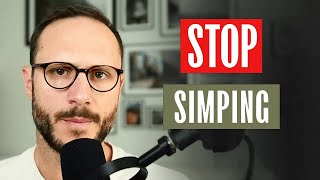
Connor Beaton argues modern men are becoming overly domesticated through social narratives that redefine masculinity, biological changes like reduced testosterone, and modern stress. He recommends lifting weights, spending time in nature, building male friendships, and approaching women in person to reconnect with masculine resilience.
Foreign.
What's going on, team? Welcome back to the Man Talk Show. Connor Bean. Here today we are going to talk about the simplification of modern men. The move to make modern men into simps. Now this isn't some big conspiracy theory if you've never heard of the term simp before. It's basically slang for simpleton. That's where the original word came from. And it basically, I mean, it means a lot of things, but in today's world, it seems to be describing a man who is overly domesticated, who is overly effeminate, who doesn't really have good boundaries, who doesn't stand up for himself, who doesn't really seem to know what he wants or has any real connection to a deeper sense of value. And it's often used in a pretty derogatory way, in a pretty shame inducing way. It's often used in a character attack. And so I was pretty hesitant to even use the term. But I think sometimes we have to use the terms that are out there and, and then work with what's sort of prominent within the modern culture. I am going to break this down into three categories. Three categories that are domesticating men, young men, old men, doesn't matter what your age is, but it's really domesticating men. And the popular term is turning them into sims. So the first bucket is social. So there's a big focus in, within our modern culture and there's this big focus on gender being purely a social construct, which I don't think is true or right at all. I think if we ignore the biological underpinnings that naturally come out in how we express our gender and our sex, I think it really misses the mark. But there's this big push within our mainstream society to look at the social construct of masculinity. And we've entered into the first period, as far as I can tell, in, in maybe human history, where masculinity and what it means to be a good man, what it means to be a man who's good for society, is now almost entirely being defined by women. Men are essentially, in some ways, and I think this is Chris Williamson who said that men are essentially defective women, right, and that men need to just be more like women, need to be more vulnerable, need to open up more, and that will somehow inherently solve a lot of the problems that men face. Now, I'm not saying that opening up and being vulnerable sometimes isn't a valuable thing for you psychologically as a young man, as a man in general, it can be very beneficial I have specifically and personally suffered by trying to hold all the stuff in and not talk with my buddies about what's going on in my life. I have experienced the detriment of that. And so I'm not advocating for never talking about the shit that's happening in your life. But there is such a thing as sharing too much too quickly and with the wrong people. And so when we just sort of whitewash this notion that you should just be able to be more vulnerable and that's somehow going to inherently solve all of your problems as a man, I think that we fundamentally missed the mark. But a lot of men, because a lot of young men and men in our modern generation are being told that in order to be a good man and in order to be a man who's good for society, they need to be more vulnerable, they need to be more effeminate, they need to be less direct, less assertive, they need to be less dominant, they need to be less all these things that are, you know, traditionally associated with masculinity and masculine traits, which now is more socially acceptable for women to express and less socially acceptable for men to express. Bucket number two is biological, right? We are being overly domesticated because we live this hyper sedentary life. You know, a lot of guys lack movement, they lack lifting weights, they are in a shitty environment with, you know, crazy bright lights all the time, with a lack of sun, there's an over consumption of terrible food. There's intense chemicals that have been shown time and time again to dramatically impact testosterone levels and testosterone production and uptake within the body, which is an, an imperative chemical when it comes to a man's architecture and body and biology. So much so that this is now impacting sperm counts and some people. I remember reading this article recently that was talking about the Spermageddon and what that really meant was this sort of collapse within male sperm production. And a lot of studies have shown that in the last few decades alone, just in the last couple decades, right, like 20, 30 years, sperm counts have gone down by 60 to 70%. That is an astronomical number. Which brings me to my last bucket, which is stress and distraction, the last piece of the equation. And I just want to make it super clear, I don't think that there's some.
Evil, you know, master plan out there that is aiming to domesticate men or turn men into simps. I don't think that that's true at all. I think that maybe some people are out there that want to make men more docile and more pliable. And more easy to manipulate, for sure. I think that, that, that's for sure the truth. That has always been the truth. Right. People in power have oftentimes wanted individuals, men and women alike, that are much more pliable and agreeable because then they're easier to get to do what they want. But the last piece is stress and distraction, right? So I just wanted to get that out of the way. I don't think there's some like, big master plan to turn men into the simps. I think that there's, there's these sort of categories that are colliding into men's lives that are overburdening their systems and causing these stressors and we need to be able to talk about them so that we can start to face them. The. There's something about the core of masculinity that wants to face challenges. So I'm not saying that this is inherently a bad, bad thing, right? A couple things that we can do. One is very intentionally reduce your social media time. That might mean that you delete a couple apps. Like, I've just never had TikTok on my phone. I've never been on the platform. I don't really like it. I don't go on Facebook anymore, like hardly ever. Unless my family sends me a message, I will go on Instagram. But I limit it to when, to certain times and a certain amount of time per day. So limit and restrict your amount of social media time. Approach women in person, right? Go have conversations with women IRL in real life because this develops your sense of risk. It develops your, you know, instead of being risk averse, you start to be okay with taking risks, you start to be okay with rejection. You start to develop these traits that not only women find appealing, but develop your sense of confidence as a man, regardless of your age. Start to lift heavier weights, start to get out into nature, start to get more sunshine, start to make some deeper male friendships. Stop blaming women for all your problems. You know, it's like I see this sort of reaction sometimes that's, that's out there online where men have a. Some men, not all guys, but some guys have a tendency to be like, well, all the problems that they're doing exactly what the, you know, what the women that they complain about do, right? Which is like, oh, women just blame men for all the problems. But then when you listen to some of these guys talk, what they're actually doing is they're just blaming women for all of men's problems. And that's not freaking helpful, right? So stop blaming women for all your problems. Realize that life is inherently hard and that that's part of the point. Part of the point in a man's life is being able to, in a robust, cognitive, conscious, grounded and understanding way, learn how to face the hardships of life. It is not meant to be easy, right? If you wake up every morning and go jump in a cold plunge and then go work out and you have a meditation practice, or you're journaling and you're chasing after your goals and you're going and talking to women and you're living a life that you have started to design that is going to put you more in touch with your own masculinity and your own masculine core than kind of just floating through your day, working a job that you hate, watching Netflix every night, smashing potato chips into your face and rubbing one off at the end of the day, watching porn to some woman that you'll never talk to that is going to unequivocally weaken you as a man and disconnect you from your masculinity. So let me know what you thought about this episode. I hope that you enjoyed it. Don't forget to man it forward. And until next week, this is Connor Beaton signing off.
Sam.
More from Connor







How to Raise Strong, Unshakable Boys in Today's Culture, with Dr. Shefali Tsabary



