The Weaponization of Modern Psychology & It’s Impact On Relationships
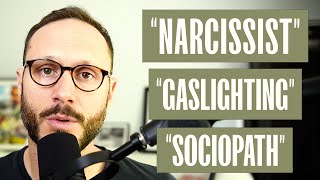
Connor Beaton (Man Talk Show) argues that psychological and therapeutic terminology has become pervasive in popular culture and is frequently weaponized—used to label, dehumanize, and gain superiority in interpersonal, political, and educational contexts. While clinical labels can be useful within therapy to guide treatment, their widespread social use (via social media and 'armchair clinicians') often reduces complex people to single terms (narcissist, avoidant, gaslighter, etc.), which severs opportunities for connection and healing. Beaton outlines harms: objectification, moral/psychological superiority, victimhood dynamics, and the undermining of relational repair. He recommends returning to a relational orientation: reduce pathologizing (of others and self), seek professional diagnosis when appropriate, communicate vulnerably with partners/family, and prioritize connection—especially in online and text-based interactions. Closing includes references to thinkers (Bayou Akomalafe, Esther Perel, Andrew Huberman) and a call for comments.
Chapters
Welcome back to the Man Talk Show. I'm Connor Beaton and today we're going to be talking about the weaponization of modern psychological terms and terminology and its impact on relationship, culture, society. This is a big topic and it's something that I've been thinking a lot about. I read an article by Bayou Akomalafe, the New York Times recently about something along the lines of, like, decentering modern psychology from the cultural narrative. And there's. There's also a great podcast that the Emerald did with him that I think was really interesting on this topic. But I'm going to take a little bit of a different angle. I'm going to be talking about how the modern psychological terminology becoming a sort of center point within our culture is actually creating more separation and, and segregation amongst couples and in dating and within our cultural narratives, within political narratives, within the education system. So we're going to do a little bit of a deep dive. There's more to this conversation that I'm not going to be including in this. This is just a sort of primer and I'd like to hear your thoughts on this. So before we jump into it, as always, don't forget to subscribe to the channel wherever you are watching or listening, and don't forget to man it forward and share this content with somebody that you know will enjoy it. So, look, maybe it's just me, but have you noticed that in almost every single conversation about relationships, about politics, about education, about just modern social issues in today's world, that mental health and psychology seems to be at the forefront of absolutely everything, and that psychological and therapeutic speak has become very dominant in the modern conversation to the point where it's being weaponized, and it's being weaponized in a way that is quite dangerous. So it's being weaponized in the sense that as soon as you disagree with somebody or you feel offended or you feel triggered or you feel hurt by that person, or you feel like they don't understand you, it has become commonplace to use therapeutic speak to essentially degrade the other person and disrespect the other person. So you have terms like narcissists and gaslighter and bipolar disorder and NPD or narcissistic personality disorder, trauma avoidant and anxious attachment anxiety disorders, existential anxiety. I mean, you could just keep going, right? There's all these terminology. There's all of this terminology that's out there floating around. And this terminology within a clinical setting can be quite helpful. But I think that the thing that we're missing out on is that even in the clinical setting, these terminologies, these terms are all meant to be for the clinician to better understand the individual or the people that they're working with so that they can guide them on some sort of path towards rectifying the issues that they're dealing with internally, actually being able to help them on the path towards whatever it is. If you're somebody that's dealing with depression or bipolar disorder, or if you have some form of attachment issue, it's really. These terms are meant to give the clinician an idea of, okay, here's what's happening in this person's world, and here's the pathway that I can support them. Here's how I can actually help them heal. The challenge comes into place.
And a lot of psychologists and therapists that I really deeply respect have talked about this exact same thing. Pathologizing the client in some ways will actually dehumanize them and can actually prevent further development, right? Further progress. Now, sometimes giving them the label of here's the realm that we're working in, right? You're dealing with COVID depression, or you're dealing with overt depression, or you're dealing with existential anxiety. Sometimes that can be very helpful for the individual to assess, like, oh, okay, this is what's going on. I'm struggling with depersonalization or derealization, like, cool, that gives me an interesting framework that I can then operate from and maybe give me some direction on where to go. The problem, however, is that the term, the psychological or therapeutic term, just describes what that person is experiencing. It doesn't actually give them any direction, any pathway, any support. And what has become very clear in our culture is that a lot of these psychological and therapeutic terms have become cornerstones in people's identities. And that's not the function of these terms. The function of these terms is not to become a mainstream part of your identity. Right? If you go in and see a therapist or a psychologist and they say, hey, you're struggling with anxiety.
It's not meant to be that you walk out of that session and say, ah, I'm somebody that is anxious. I'm somebody that has anxiety. Now, it's not meant to be that our ego attaches to it and that that becomes a part of fundamentally who we are. But you see, psychology has infiltrated into mainstream dialogue, especially through social media. I mean, the amount of therapeutic content that's out. And I get that this is, you know, I talk about therapeutic concepts and modalities, spiritual modalities, Psychological modalities and concepts on my page quite often, especially on Instagram, where I'll talk about Jung and, you know, shadow work and these types of things.
I get that there's a little bit of hypocrisy here to what I'm saying, right. And so I just want to make that very clear. But when you go online and you start to look at all of the overwhelming content that's out there, what you'll start to see is a lot of this comes. Content is actually about giving people these terms. Narcissist, gaslighter, bipolar disorder, gender dysmorphia. Da, da da, da, da. Right? And so you. You have all this terminology and all this information, but the average person, they don't know what to do with it, right? They don't know what they should be doing with it or how you should be consuming that content. And unfortunately, the majority of the content that's out there. And the reason why in a lot of my content, I'm not talking about here's what a narcissist is, and, you know, here's what narcissistic personal disorder is, and here's what. Here are the signs of bipolar disorder, you know, to look out for. I don't take that approach because fundamentally, what I have learned over the years is that pathologizing a client or a person objectifies them. It turns them into the label. And yet this is what I see happening in dating complaints, right? And a lot of dating complaints, a lot of relational issues, a lot of political disagreements, a lot of educational conversations that we're having in today's world. A lot of these things have devolved into, well, that person's just a narcissist, that politician is just a narcissist, or they're gaslighting America, or that person's bipolar, that person's NPD or that, you know, whatever term gets thrown around. And the problem is, is that that begins to sever our capacity to see that human being as a complex system. And what we do is we. We sort of categorize them under one psychological term that then obliterates really, any opportunity for human contact and connection. And this is what I think is super damaging to modern relationships. You know, a lot of the people that Vienna, my w. Who's a marriage and family therapist, a couple's therapist, and myself, because I've worked with a lot of couples over the years, have seen, is that people come in and they've worked with other therapists or psychologists, and they have. They're just burdened with a tremendous amount of labels, right? It's like he's avoiding attachment. I'm anxious avoidant. You know, I think he might be narcissistic. I think he's dealing with depression. I think that blah, blah, blah, and each person or one individual in the relationship specifically, will have this sort of recipe list of pathological terminology that they have reduced their partner into. And when we reduce our partners or we reduce anyone in our culture and our society down to simple psychological, therapeutic terms, we extract the human being out of them. And we say, you are just this thing, you know, you are just a narcissist. You are just an anxious attachment style. You are just an avoidant attachment style. Again, not saying that these terms can't be useful, they can't be helpful, and that educating ourselves on them isn't a meaningful endeavor. But what I'm saying is that on social media specifically, and I posted about this the other day, and it was very interesting to see people's responses on social specifically. There has been this massive rise and tidal wave of armchair clinicians. You know, like, if you watch football there, there's like millions of dudes sitting around on their couches on the weekend watching the NFL games. I mean, I do this, I'm a hockey fan, I love watching the Oilers. And I get caught in this mode of being like the armchair coach or the armchair athlete where I'm like, oh, why'd you do that? And, oh, they should be playing like this. And can, you know, we. We can be so invested in something that we can think that we have the expertise to actually create change or. Or that we could do it better, right? That, like the average dude sitting at home cheering for their Green Bay packers or Seahawks or whoever it is that you cheer for, you know, your Knicks or whatever sport is yours, that you somehow think that you'd be better equipped to. To succeed and to win. And so you start calling the shots, right? Oh, they should be doing this, they should be doing that. And that's what I see happening relationally, culturally, within our society, is that a whole bunch of people have gone onto social media. And because the therapeutic industry has blown up on social media, on YouTube, on Instagram, on TikTok, you can go online and you can learn a tremendous amount about these mental health challenges. Now, there's a. Again, there's an extreme benefit to that. If you're somebody who's really dealing with depression, you've been going through trauma, you know, you had some acute traumatic event happening. Being able to research some of that is so important, you know, and so I'm not. I don't want to devalue the content that's out there because there is some really, really good, good solid content. I think there's people like Esther Perel who puts out good content. My wife puts out incredible content. Andrew Huberman Science and research backed Paul Bloom there's just a ton of people who have put out really fantastic content, and it can be very beneficial. But I think the challenge is that, you know, we are starting to see this, the, the overuse of this terminology, that after every breakup, you know, the guy's a narcissist or he had, you know, he had narcissistic personality traits or that he was on the spectrum. And what I start to see is that there's a lot of people who are using these terms not only incorrectly, but they're using these psychological terms as a means of self superiority, as a means of avoiding dealing with their own pain, their own hurt, their own sadness, their own grief, as a means of trying to sense, make maybe what happened in a relationship. But ultimately the impact is it can actually push people further away from the help and the support that they need. And I see this all the time with men, and maybe you guys have felt this too. If you go through a breakup and you go through that breakup and you try and operate to the best of your ability, but you're flawed, you're having a hard time, you don't know what to say to the girl that you're breaking up with. You know, it's going south. It's not the relationship that you want to be in, and you don't handle it maybe as well as you could, or even if you do, right, let's just say that you, you crush it. Like, you follow the, this, the, the plan, right? You break up with her, you're very clear, you're, you know, very compassionate and as loving as you can be. And months later, you know, or weeks later, you get messages being like, you're such an asshole and screw you. And I think that you have attachment issues and, and you're a narcissist and you gaslit me and all these things, but you acted genuinely in integrity, and you acted genuinely from a place of compassion and love and understanding. That can be really dehumanizing as an individual to be like, well, listen, I did the best that I could, and I'm not perfect by any means, but I did what I could, or, yeah, you know what, I probably could have done better. That's either going to dehumanize that individual or completely shame them. And yet this is the tactic that so many people have started to deploy. So I'm just going to wrap this up by saying a couple things. Number one is I'm going to talk a little bit about what the problem is with letting this psychological terminology become so pervasive in our culture and specifically allowing ourselves to weaponize it. And then I'm going to talk about what we do from a relational standpoint. Because for me, everything in our society is relational. And a lot of the issues and the challenges that we are facing politically, socially, within our education system, within our family systems right now, within our intimate relationships, a lot of these things come down to an ability to stay and maintain connection, to stay connected, to make connection. And a lot of these issues.
Are about being able to treat each other as human beings. So what's the problem with it? Well, number one, most people don't know what the hell they're talking about. You know, just, just in a very simple way. Just because you've watched a couple YouTube videos or you've watched your favorite celebrity therapist or psychologist doesn't make you an expert, right? It's like just because you've gone online and read some stuff about medical issues doesn't make you an expert. Now, if you want to self diagnose, be my guest, go for it, man. Like, have at it. But maybe seek out some professionals to also confirm your internal suspicions, right? So the first one, it's just that it's just a lack of experience and that can be dangerous in itself. Number two, and this is the real big one that I've touched on already before, but I'm just going to resay it, when you pathologize someone, when you use these labels and these terms to describe another human being, you objectify them. So you literally turn them into an object and you say you are an anxious avoidant, you are an avoidant, you know, attachment style. You are a narcissist, you are a gaslighter, you are. That's your trauma speaking or whatever it is. So you turn them into an object and then simultaneously while that's happening, you are taking the seat of superiority, right? So if I'm interacting with somebody online and they disagree with me, and my response to that is to say, well, you're just a narcissist, it's basically just shutting down the conversation, right? It's like what's happening in political conversation when people are saying, oh, you're, well, you're just a racist. It's like, where do you go from there? How do you have a conversation with somebody, right? If, if you're trying to have an interaction with somebody and they're like, you're just a narcissist, there's not much more that you can do in that conversation because that individual has taken such a seat of superiority morally, psychologically, ethically, socially, and they've used a psychological term to demean you in such a way, but that there's not much room for true connection, conversation or understanding to exist within that relationship, right within that moment of relationship. Next is that using these terms, as I was saying before, is often a means of gaining power and superiority with regards to how you relate to the other person or people. And this is very unfortunate. Within our culture there is a very shadowy yet monstrous version of victimhood that is emerging in our culture. And part of the victim archetype is to actually use victimization to gain power and superiority over the perceived oppressor. Now I'm not saying again that people haven't been victimized in our culture, really hurt, oppressed. I'm not saying any of those things. I'm saying that it is, is a very common and a very known thing. We all know this. We've all seen people who are playing the victim, right, who are claiming that they've been victimized by their girlfriend, by their boyfriend, by their husband, by their wife, by a parent, by a co worker or a boss, etc. They are claiming to have been victimized when really they are internally insecure, they feel inferior, they feel weak, or they, they were victimized in the past and they haven't healed that right? They were sexually abused, they experienced trauma, they were abandoned, they were neglected and they actually haven't healed that initial experience, that adverse experience. And it continues to show up because that's what trauma does, right? It creates an inflection point where a part of us is really wounded. And then that trauma will continue to show, show up as patterning within our lives. And so the big one is that we've all seen people that do this, and I'm just going to come back to the victimhood piece, is that when we feel powerless is when we have the strongest urge and tendency to want to do whatever is necessary in order to regain some type of power. And in our modern culture, on all sides of the political spectrum and with many people right now, but specifically within the left, and this is an attack, it's just a factual commentary, but specifically within the left, there is a growing predilection towards using psychological terminology in order to avoid feeling powerless and to feign being the victim and to gain a sense of moral, ethical, social superiority by using this therapeutic terminology. Because if I'm. Again, if I'm in conversation with you and I disagree with you, rather than trying to find any kind of understanding, I can feel better about myself by simply saying, well, you're just a narcissist, or, you know, there's clearly something wrong with you, like, you need therapy and you won't go do it. You know, however I approach that, that use of the terminology of the psychological superiority is going to create the feeling and the sensation that I'm just right and you're just wrong. And so I get to feel righteous in that moment. And for the other person, of course, what they get to experience, they get to experience being put in a position of powerlessness. They get to be put in a position of helplessness, and nothing gets solved or resolved. Lastly, and I think this is honestly one of the big pieces that I, again, I touched on in the beginning, and I reinforce here using these terminologies, you're avoidant. You have an avoidant attachment style. You're a narcissist. You're a gas. You're gaslighting does almost nothing to solve or make the situation better. You know, if you're in an argument with your partner and you feel like they're pulling away, calling them avoidant, you know, telling them that their avoidant attachment style is active in that moment isn't going to help. It's not going to support them. And so we have millions of people online every single day running around pathologizing the other people that they come into contact with. They're a narcissist. Oh, they're gaslighting. Oh, they're this. I see it all. I see it on my page, too. Like, accusing me of all kinds, like, oh, you're gaslighting. Oh, this. You know, you're diminishing. It's like, okay, all right. So it does nothing to actually solve the issue in that moment. It doesn't create more connection. It doesn't create more attachment. It doesn't build or reinforce the relationship. What it does is destroy all of those things. It tears the relationship. It breaks connection, and it breaks any opening for psychological, emotional, spiritual, social understanding. It breaks it. But this seems to be the method that people are deploying, you know, and again, I'm going to say this for the last time, psychological tools, principles and modalities are brilliant tools. They are so important for our culture and our society. But not everybody's a therapist or psychologist, just like not everybody is a shaman, right? There's a reason why for hundreds of years we have been going to see, or thousands of years we've been going to see shamans, right? There's a very real principle around that. And I'm going to be talking about that in a later video. So these principles are powerful, right? Just like tools. I can use a hammer to build a house, while somebody else can use a hammer to bludgeon somebody to death. So it really is about how you use the tool. And here's the thing that I want to end with. What do we do? Like, what do we do with everything that I'm saying, right? Because we can point out the problem, but how do we handle this? For me, again, everything in our society is relational. Everything is relational. It is how we attach or detach from other people, how we maintain connection or contact, as my mentor, Dewey Freeman would say, how we maintain contact. I would say connection with other people or how we break it down. And so what we need is to move back towards an orientation of relationship. And pathologizing someone is non relational. It's just a non relational way of existing in the world. And so you can do it. But I would just reinforce that what you're doing in that moment is non relational. And what we need more of is people who are conditioned to be relational, to know how to be in relationships, specifically in online forums, because this is where it's very hard to maintain relationship, right? A lot of you have probably experienced this where you get an email from the person you're dating or a text message from the person you're dating. And it is so wildly easy to misinterpret what the hell that person's saying. You can't hear the tonality, you can't see their body language, you know, and so when you take that, that level of misunderstanding that can be present and then you layer that over a stranger, right, who you don't know where, you don't know if they're being sarcastic or they're being funny or you know, where they're coming from at all, you have no idea about their life experience or nothing. It is so brutally easy to be non relational, to just say, well, that person's a clown or that person's a dumbass, or that person's a psychopath, or that person's a sociopath or that person's a narcissist. You know, fill in the psychological term. And so what we need to move towards is stopping ourselves literally putting a halt to the amount of pathologizing that we do. And I really encourage you to bring this into your relationship. Start with your surrounding environment. I see a lot of parents pathologizing their kids and of course, you know, understanding if you're, if your child's having a hard time. And that's just brutal, right? If they're really having a hard time at school or whatever it is. It's so hard to see our kids suffer. It's so hard to see our partners suffer, our family members suffer or struggle. But this is where we need attachment the most. This is where we need connection the most. And so just saying, well, yeah, you, you know, that sucks because you got ADHD or, you know, you're, you're on the spectrum. You, you're autistic. That act serves to reinforce that person's internalized perceived sense of defectiveness. And that's not what psychological terminology is meant to be. It is not meant to reinforce internal defectiveness. It is meant to be a sign that can point us as clinicians, that can point psychologists and therapists and counselors and coaches that can help them guide that person through the forest of what they're dealing with internally. Not meant to be something that the ego can then glom onto. So start in your own life and start by stop using these terms so heavily to judge people, to label them, to put them into a box when they disagree with you and even to some degree. What I really strongly recommend is to stop using these labels with yourself. If you are somebody who has gone down this path and you're like, I'm anxious avoidant and I suffer from existential anxiety and you know, I have whatever it is psychotic tendencies of, blah, blah, blah, start to just reduce the amount of internalized usage of those things and especially stop self diagnosing, right? It's like when you're sick, physically ill, the worst thing you can do is go on WebMD and put in your freaking symptoms and have it spout back out some bullshit about how you're probably dying from canc. Answer, right? It doesn't help you in that moment. What does help is going to your partner, going to a friend or family member and saying, listen, I'm really struggling, I'm not feeling well. And having a conversation about how you're not feeling well or about what you're dealing with, or about what you're trying to do to create change and connection in your life, all of that is relational. So we need to move back towards a relational way of being as human beings. And I hope that all of you men take this and, you know, without judgment, without shaming anybody in your life that is constantly using psychological or therapeutic terminology to create more division or to label other people or to try and make sense of the world, because it can be a wonderfully helpful tool. But it is not the only tool. And when we can begin to relate more with other people, then we will actually feel less alone, less isolated, more understood. And so we need to move back to this relational way of being. So let me know what your thoughts are. I'm going to have more on this topic in the future. This is probably a lengthy video by now, but comment below, let me know your thoughts. And until next week, this is Conor Beaton signing off.
Sam.
More from Connor







How to Raise Strong, Unshakable Boys in Today's Culture, with Dr. Shefali Tsabary



