Therapist: What Helped You Survive Won't Help You Thrive - Nedra Tawwab
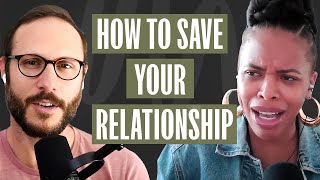
Therapist Nedra Tawwab explains how survival skills learned in childhood can sabotage adult relationships. She argues that closeness comes from depth, not frequency, and that men's solution-focused processing often clashes with partners' need for emotional disclosure. Effective boundaries require specific, actionable requests, not vague complaints.
Chapters
So there are so many things we learn in our families that we continue to carry. And one of the things we must remember is just because it worked at that time doesn't mean that it's still working. The skills that helped you survive are not the skills that you will need to thrive. And the family dynamics can really get in the way of some adult situations. When I hear people say, like, my partner never opens up, and, you know why? They have all this family stuff. And it's like, it was great for you to not open up, open up in your family. Like, that's how you got out of it. Like, you survived that, but now your relationship is in jeopardy because you won't open up. And so this is something that we have to reconsider as a tool.
All right, Nedra, welcome to the Man Talk Show. How you doing today?
I am well. How are you?
I'm very good. I'm very good. Yeah. After we got a chance to connect at the Psych Networker, I was definitely excited to have you on the show and been following your work for a while, so I think we're going to have a good conversation today.
Well, I am excited to chat with a man about men.
Get in. Get in on the relationship front. Talk about men. You're married.
How.
How does. How does that go? How do you. What's like, give me a take on a therapist's view of. Of men while having all of this information about how relationships work. Tell me about that. How does that go?
You know, I. I have one client, one male client in particular, who.
Reminds me so much of what men go through in relationships. And I'd like to think that it makes me more intentional as a spouse in real time to see people struggling through things that, from a female perspective that I don't think about, you know, I'm just thinking of something as normal as when you have kids and how much praise women get. And, oh, I do all these things around the house, and the dad is like, hey, hey, hey, I'm doing stuff, too. And I'm like, I guess y' all do be doing stuff.
I mean, I only think about myself, my friends, and what we're doing.
I spent six hours outside yesterday building a garden bed for my wife. You know.
Yeah. So the male perspective is certainly necessary. And if we look at, you know, so much of the research that, you know, the Gotmans have done and so many of these other wonderful folks who work with couples like there is, you know, men and women are impacted by children joining the family and all of these things. But when it's just my perspective, it feels like I am the only person impacted by this. And it's like, actually we're both impacted in. In different ways. And to some extent, we both experience postpartum, you know, challenges, and that idea of, like, who am I now after I have kids? Like, that stuff is being experienced on both ends. So I think working with men certainly centers me, and it makes me think more about not just my perspective, but what works for marriage and also what men are likely thinking.
Hmm. Yeah. I mean, it's. It's interesting is one of the things that I've been. One of the things I've been kind of been focusing in on lately because, you know, we have a lot of content on YouTube and I've been running the. The podcast now for she's like, eight years. And so I talk to a lot of guys and, you know, their sort of sentiment is that therapy sometimes feels more centered around, you know, a woman's needs in the relationship than it does around theirs. And that can be challenging. That can be a block for them to even go. It's like. It's like, oh, I'm just going to go there and I'm going to get blamed for everything. And like, these are the types of things that I think we. We come up against sometimes. And so, you know, I do think that that's shifting. There's more men entering into the therapy than ever before. But I think that what's fascinating to me, and this is just my geek side, so excuse me for a second. But, you know, what's fascinating is that we have this inverse effect where as more men are entering into therapy, there's actually less male therapists and psychologists than there ever has been before. And that number is continuing to decline and decrease. And so I do think that there's a bit of a, you know, there's like a representational issue that I think is showing up within the industry, right? It's like 80% of therapists are female. And so I think for a lot of guys, sometimes that felt experience of like, oh, you know exactly what I'm talking about, you know, you know exactly what I'm going through, whether it's a desire or an urge or like just some type of internal experience that's. That's physical for. In nature, I think sometimes that can be challenging. But, yeah, I don't want to get that too far down the rabbit hole. I didn't mean to sort of like, take us off topic, so I'm going to pull us back In. And I'm going to share some words that I found on your profile that I really loved. You said closeness is measured by depth, not by how many times you talk to a person and for how long. And I love this because I'm all about depth. And so can you expand on this in terms of how do we really develop that close, satisfying relationship that has depth, where this sort of nooks and crannies of who we are can emerge into a relationship?
I was listening to a podcast, maybe early last year, and there was a gentleman, he was in his 70s, and he talked about not having any close friendships, but having his friendships for over 30 years and not being in a space where if he were going through something in life, that he would confide in this group of men. Because although there was contact of, you know, poker and, you know, trips and all of these sort of things you might do with your friends, there wasn't any conversation around how you were feeling. There was no intimate connection within the friendship. And that's not just for male friendships. I think it happens more with men, but it can happen in any type of relationship where we think that frequency means that we are close to a person. So if I talk to you every single day, we have a close relationship, it doesn't matter what we talk about. Even if we're talking about the weather, we're close. When in actuality, the context of the conversation matters. Not, you know, not how often you talk in the length of time, but what you're talking about, how you feel about the relationship. Your comfort with disclosing your ability to be seen and heard by this person is more important than, you know, that that frequency that we tend to really focus on. I used to have a friend, and I would say we talked most days for at least an hour. And one time my husband overheard me talking to her. He said, y' all don't be talking about nothing. I said, you're right. And it's. It's shocking because that wasn't my closest friendship. It was just the person I talked to the most often, the person who, at that time, I would consider myself closest to. I probably talk to that person once a month. But when we talk, it would. Oh, gosh, we talk for, like, four hours. And it was just. I mean, I'd be so sleepy. I'm like, I gotta get up and go to work. But this conversation is so good. It's just. It's so deep. And we're. We're just talking about things in a way that I didn't talk about with this person that I was speaking to every single day for about an hour. We were just talking about what did you watch last night on TV or. Oh, my gosh. I didn't know they had that at Target. You know, we were. We were talking about a whole lot of nothing.
I feel like this is where men and women diverge a little bit, because I can't imagine talking to one of my buddies for an hour every single day. I'm like. I'm like, bro, I got like, what are we doing here?
The hard way with me. And I am a person who has a lot of male cousins. And I remember when I turned 18, I had a cousin who lived next door to me, and I thought, oh, I'll just call him every day now that we don't live next door to each other. And he wouldn't have anything to talk about. I was so shocked. What is this?
Because your friends, you can call them, and it's like, oh, my gosh, what webcam did you get? And I don't know. We're just talking about nothing. I don't even know what we're talking about. And, yeah, it was like, is that all you have to say? Okay, bye. It's like, oh, my gosh. Like, you really want some. Some details in this conversation? I guess we don't have anything to talk about.
It's. Oh, man, it's. It's. It's interesting, too, because I think this is such a important piece of an imminent relationship. You know, it's like the communication that you have. And I remember talking to a buddy. He's also in the podcasting industry, and he went through a breakup, and we were talking, and I said, you know, what. What sort of led to it, because he ended the relationship after a few years, and he said, you know, everything was there, but we just had nothing to talk about. It was like all of the other stuff, you know, there was physical attraction. We'd have a good time. We could travel together. You know, we could go out for good dates, and we had lots of fun. But he's like. When it really came down to just having the kind of quiet moments and the mundane conversation, he's like, I just couldn't seem to, like, break through the ice with her, you know, like, we just couldn't have. And he's a very. He's a very smart guy, you know, And. And so I was like, well, you know, it's like one of those things, because I think for us, as. As men, we. We kind of sit Back and say, well, do I need to get that here? Or is that something that I can satiate in other places? And I think for him, what he was finding was that is actually a pretty crucial piece of what he was looking for. And so I'm curious, from your perspective, like, what are some of those key things that we can do in relationship to start to cultivate that depth of connection and conversation? Like, what pulls us into the deep end when maybe we normally stay on the surface level?
Well, I think sometimes we have friends who are disclosing things, and we don't know how to manage those disclosures. And sometimes what we do is avoid bringing it back up. Like, if I never bring this back up, they won't have this problem with their divorce anymore, right? Like, if I never talk about it, it didn't happen, or if I don't check on them after their parent passed, then they're feeling great. I find that with men, there is this initial, oh, my gosh, my butt. My buddy's mom has cancer. And it's like, okay. And it's like a day of sadness. And then it's like, on to. You're watching sports with this person again, and it's like, what is. Is. Is she in treatment? Like, what's. What's. Oh, I don't know. It's like this fear of going deeper because it opens something up and that. That thing that is opened up. I think there is this.
Masculinity that gets in the way of.
The discomfort around those. Those deep emotions that in some ways women do not have, because we're used to being intimate in some ways. I was. I was telling someone that, you know, I remember, like, sleeping in the bed with my friends, and I mentioned that to a guy. It's like, I didn't sleep in a bed with my friend, like, as an adult, like, and you have men who are like, no, we have to have separate hotel rooms. We have to have separate room. Like, now I'm pretty sure I slept in the bed with a friend, like, in my 30s. Like, it was.
It wasn't a thing. It was just like, this is your side, this is my side. And it wasn't like, oh, my gosh, this is too close. This is inappropriate. It was very much like, this is what we do when there are certain sleeping accommodations, and it's not a thing. So in some ways, not that you all need to just platonically sleep together in a bunk bed, but this way that we manage, people saying, tough stuff needs to be revisited, and we have to. If we can't manage it at the time of the disclosure, it's really important for us to sit with our discomfort and pick the conversations back up because the silence doesn't mean, oh my gosh, this person is feeling better, or they have moved on. It just means they, they don't have anyone to talk to. That's what I hear a lot from my male clients, that I told my friend I was having challenges in my marriage and they never asked me about it again. Or I told them that we lost the baby and they just said, h and that was it. Or I told them, you know, and, and it's like, I don't have people like, I am sharing this stuff because I'm always encouraging, like, share it, share it. And then once they share it, they, the information is not managed. And now they're thinking about this friend, like, well, is this person my friend? Because I told him my grandfather died and they didn't even, they didn't even do anything. And I'm like, I think they're a friend and they don't know how. So you're in therapy, you're learning how to be there for people in a different way. You're trying to restructure some of this programming. And they're not in that same space. It doesn't mean that they're not a friend, but they may not be in the space of dealing with discomfort in a way that you are. Hmm.
Yeah. It's almost like we have to. I mean, I remember I wrote about it in my book where I talked about this moment in life where I bottomed out. And part of that was that no one really knew what was going on behind the scenes of my life because I wasn't talking to them about it. And I do think that that's a frame that a lot of us as men, it's almost like we have to go through this kind of initiatory process where we have to learn that, yeah, we can get through things on our own and there's merit in learning things, being self sufficient, having autonomy, those types of things. But then there's this whole other world of value in being able to bring things to people and developing those relationships. And I remember after I bottomed out, it's like, well, I got nothing left to lose now, so I might as well just tell people what was going on. It's like, doesn't fucking matter anymore. And it was so wild because I remember the first conversation that I had with a buddy of mine who I went to university with. I Opened up and shared a bunch and it was like nothing happened. I think I had it in my head that if I opened up and shared that I was going to get rejected or he wouldn't want to be friends anymore, or there'd be this big judgment or criticism of me for my actions or even just for the act of sharing. I think that's a big thing that we as men struggle with. It's the act of sharing can. Can be this thing that we fear. And he responded wonderfully and he actually responded very openly and with his own sort of story and vulnerability. But how do we. Is there a way, you know, if. If there's people that are out there and they are trying to have deeper conversations and what they're being met with is like blank stares and like, oh, that sucks. What do we do? Like, how do we navigate that? Can we invite people to swim the deep end with us? Or the like, how do we have that con to see if somebody's willing to come with us to play in that area? Because I think a lot of people are looking for that relationally.
Well, it could be one of those situations where you sort of bounce something back to a person. Like, have you ever experienced depression? Or do you feel anxious about having children and working and keeping it all together? That could help. And then there are other times where we need to find people who are in the same space as usual, us. And that could be very challenging. When you've had this 20 year relationship that's based on high school sports together or, you know, whatever that is.
It can be very challenging to say that I need different sorts of relationships in my life, that I can no longer be in these situations where if I have a emotional disclosure, people are uncomfortable and don't want to talk about it. I need to be supported. Many of my male clients, I find that even with me, a lot of it is me mimicking that I am comfortable with their discomfort. I am comfortable with you sharing certain things. I'm not going to make fun of you. I'm not going to, oh, man up. I'm not doing any of that stuff. I'm allowing you to cry. I want you to feel more comfortable with it because, you know, it's interesting. I've had male clients come in and it's almost like they're reading a little list, like, what do I want to talk to you about today? And they go through their things and they're like, okay, I'm done. How much time do we have left? I'm like, 30 minutes.
No we do have a list.
We have.
We have lists. I promise you.
30 minutes, buddy.
You just. Just went through your list, like, and in a way that I'm like, wow, this was very much like, check, check, check. Told you about my boss. Told you about this, told you about that. Okay, now we're done. I'm like, okay, well, let's revisit those things and let's talk about them in a different sort of way. Let's talk about the feelings. Let's talk about if there was something you could have did different or if you, you know, like, let's talk about those things. Because really what you did was report.
And reporting. It's wonderful. I want to know what's going on with you, but we haven't done any processing. So now, after you've reported everything on your checklist, thank you for letting me know. Now we need to go and process. And so I'm teaching them how to process these situations. And it's always really fun to a few years later hear them. Being the person teaching other people how to process. I'm like, weren't you the person who came in with a list?
And here you are saying, my wife does not talk about her feelings enough. I've asked her, and I'm like, who are you?
That's so good. Yeah, I heard. I think it was. I think it might have been terry real. I'm not 100 sure. I heard some. Somebody in the last sort of, like, several months talk about how we as men generally communicate from a place of problems and solutions. And that can create all types of rifts, especially in a relationship where. And he says men generally communicate from problems and solutions. And then women generally communicate about their feelings in reference to what they saw, experience, whether it's a problem or something that happened. And he said, and. But generally speaking, women are not looking for solutions when they're communicating something that's happened which causes all this sort of, like, mansplaining stuff. Right? Because we're like, oh, okay, you got a problem? I can be very helpful with that. But I thought it was an interesting, just, like, very basic distinction. And I think one of the things that I've noticed is that we can almost get caught in this routine of not stepping outside of that. And so have you seen that in your practice as well, where there's, like, this gap between. And again, this is a generalization, right? It's not everybody, but where there's a gap between men and women sometimes where we're sort of in that analytical problem solutions oriented Space.
Yeah. And I see it as women hearing men hearing women as complaining or nagging, when in actuality, they're processing that complaint and talking through the details of all these steps. And I need more help with laundry Tuesday. When I ask for. You know, they go through. We go through all that. We're giving way too much detail. The color of the shirts, the type of laundry detergent. And the man is sitting there like, do you want me to wash more? You do you want me to wash and fold? Like, what is. What is the problem? I'm hearing a lot about Tide and Seventh Generation. Like, I don't even know what you're talking about at this point. What is. I wash. And then the woman is like, oh, my gosh. Like, you're not listening to me. Right? Because men are trying to get to the solution. Like, tell me what to do so we can stop talking about this. You're nagging me. You're. And it's like they're processing. We talk about it. I told you I would talk for an hour about nothing. Like, we're just. We're just talking. I don't even know what it's about. Sometimes, you know, it's. It's a lot of nothing, and sometimes it's something. But I think that's how we've been programmed to speak. We're not speaking in this reporter sort of way. We are not problem. And then here's the solution. We are problem. I want to talk about the problem for a long time with 50 people, and then I might be ready for a solution, but I want to process it. And I think, to some extent, we can't expect men to listen to us how women listen to us. That's something that I've certainly had to work on. I mentioned my cousin, where I'm like, oh, my gosh, this guy is just right to the point. And even with my husband, I have to think, like, you know, when I share information with him, it's very different than sharing with one of my girlfriends, because, you know, they're gonna. If I say, hey, I have a new hairstyle, send me a picture. Show me the side of it. Show me the back of it. Who did it? Where it's, oh, my gosh. And my husband, he might be like, oh, that looks nice.
You're describing my marriage right now, where my wife gets her hair done, and she's like, what do you think? And I'm like, it looks great.
It looks great.
Meanwhile, that's it. That's all you have to say.
Her friends Are Winnie. They're like, oh, my gosh. Remember two years ago when it was a little bit longer and it was. Oh, my. It's so much detail there because that's how we communicate. But we cannot expect that from men.
We have to shift our expectations because we are not trying to make them like our friends. And sometimes we do. And that's where couples have a lot of issues. Like, he's not, you know, supporting me. It's like, it sounds like he went to every doctor's visit. What's, what's the not support here? Because he's not saying things in a certain way that your best friend says that, you know. So it's a lot of gender comparison and communication that's not actually helpful, I think.
On that note, I've heard you talk about this, this concept of, like, words per minute, paying attention to, like, how many words per minute we're. We're using. And I'm curious how you think that that fits into how we can develop healthy, really good communication within relationships. So maybe just unpack that a little bit for the people that are listening and then talk a little bit about how we can leverage that to actually improve our communication with the person that we're dating.
Well, it's really important for us to be concise. And I think sometimes when people are talking, particularly if they're processing, they're not necessarily being concise. There is something special about being a bit more solution focused and being able to say, okay, here's the issue, and here is a resolution to the issue versus we will talk about the issue. And so when I work with couples, sometimes I encourage them to minimize the words per minute and to think more about the resolution of this. Not to agree, not to, you know, really engage in having processing, but to think more about what is the resolution. Because sometimes the processing is, I want you to think like me. If you think like me in this scenario, we'll never have an issue with you taking out the trash again and putting it exactly where it should go. Because now you can. You agree with everything I say, when in actuality what's important is that they do the thing that you say, not that they agree with it. There's a lot of things we do in relationships with other people. I do not agree with them, but I do them anyway. I don't. I don't even know why I'm doing it sometimes, you know, but it's important to you, and I want to be in a relationship with you. So if it's not harmful to me, There are some things that I will do for you. Not all things, but there are some things that I will do without us having to talk through it. And I think this idea of, well, if I say all of these things and, you know, give them all of these examples and scenarios, Scenarios, they will understand it enough that they'll agree with me, and that's why they'll do it. But people will do things simply because they love you. As a parent, I. I do a whole bunch of things because I love my kids. I don't always enjoy the things I do.
But I do them. And, and in my marriage, I do things with my family, with my friends. There are things that we do in relationships that we don't have to. The buy in is, is I want to be in this relationship is not that I always enjoy this task or I have to agree with doing it. And so all of this, this conversation and explaining that we are. We're doing, it's for us to feel, you know, heard and they understand us and now they can think like us, but we're not. We're not creating assistance. You want your assistant to think like you. You don't want your partner to think like you. Some separate thinking is healthy. It is, okay, they should be considerate of you, but they shouldn't think like you. So minimizing the length of arguments, how many words we're saying when we really want to just say, here's a problem, here's how I feel about it, and here's a solution. So if we could make those things a bit shorter, we could save a lot of relationships.
Yeah, I really, I really value what you're saying there, because I think in the age of hyper individualistic Instagram content, you know, there's a. There's a lot of content out there, specifically around relationships that's so rigid. You know, I think it's teaching people to, in some ways, not, you know, like, never compromise. And so you, you're just, you're in this constant state of like, no, I'm not willing to do that with you or for. For you, because that's like a, you know, seen as like some evil sacrifice of your. Your individuality, you know, And I think that that just, I think that's damaging relationships in a lot of ways, because there is this inherent, reciprocal nature to love and relationships and intimacy. And when we start to, like, the reciprocal nature isn't just about me doing the things that I want to do for you. Like some, like, you're saying, like, sometimes we got to do the things like, okay, I know this is important to you. Like, for example, I'll give an example. My wife loves women's college basketball. I couldn't give a. Don't care. Grew up in Canada. Like, I grew up in Canada. It's like that just doesn't even exist in Canada, you know, it's like it's all about hockey. That's all that I know. But she loves it. And so I'm like, okay. And so Caitlin Clark was playing, you know, like an hour from where we are. And she's like, I really want to go. I really want to go. You come with me. And I was like, well, how about get your dad, Your dad loves, you know, women's college basketball. You should go. And she was like, nah, he won't come up. And I was like, okay, I'll come with you. You know, it's like, it's not for me, but I know that it's important for her and, and that will, you know, that'll be a memory that we can share. And so, you know, I think it's those types of things that are important. On this note, since you are the queen of boundaries, we're going to talk about this, which I'm sure maybe you don't like that moniker, but who knows, it could be good, good for marketing.
Tell me a little bit about whether you think that men and women approach boundaries differently, because I can imagine that that can create some conflict. Do you think that we approach it the same? Is it more of a family systems thing, like the environment that we grew up in? And yeah, I'll leave that out in your doorstep.
It's tough. It's really a case by case basis. There are some men who lean a bit more passive and there are some women who lean a bit more passive. I don't know if it's because of the amount of women who attend therapy versus the amount of men who attend therapy, but looking at that, that women go to therapy more, you might assume, like, oh, women have more issues with Boundari, but it's hard to say. It's really hard to say because I think there are lots of men suffering in silence. There are a lot of men in relationships that are unfulfilling that they don't necessarily talk about. I see men dealing with things in their relationships through behavior and not necessarily through their words. So you may have, you know, when a couple comes in and there's been infidelity and, and this man hasn't talked about some of these things or even when the woman hasn't talked about some of these things that can be, you know, perhaps I did have a really strong stance on something, but I didn't say it. And so instead of saying it, I've become very resentful and now I'm looking for love and affection outside of my relationship with you. So that happens a lot. And I don't know if we see that as a boundaries issue that I didn't and stick with what I wanted firm enough that I just let you have whatever you wanted. And now I'm actually very pissed. And because I'm pissed, I'm doing these other things. So that, that happens quite a bit. I think with.
Women because we are more wordy at times. There is a lot of teaching with women around how to say things. We do need more scripts because we love to give people a long reason and explanation and we want them to buy into why we can't come to the birthday party. And you know, it's, it's a whole thing we have to do and it's just getting them to say, hey, I won't be able to come, but I, I'll see you next year is, is the hardest thing because we have been taught to over explain there is something, you know, within society that just is like somebody walks up to you and say, well, why are you saying no? It's like, oh my gosh, I have to explain everything. I mean we really feel that pressure. And so we can learn a bit there from our male counterparts who have always been able to just say no, I don't like it or no thank you or to some extent, like I said, not all, but you know, quite a bit. I'm always.
Men with boundaries. So inspiring. I have a colleague who emails me and his emails are so short. I just love it. I mean it's so to the point. There's no hey, hope you had a good weekend and none of that. There's no best, there's no thank you, there's no regards. It's like, you know, I'm talking to you because I'm emailing to the, this to you. I don't even have to say your name in this email. So there's no like, hi Nedra, it's like, do you want to do this thing?
Great.
Oh my gosh, women, you know, we do have this, hey, how are you? Great, thank you so much. I look forward to seeing you and blah blah, blah, blah, blah, which is great. I don't want us to stop doing that. But I do notice that even in that distinction of email, even when we. Our vacation reminders look different.
That there is something about. I don't have to give people all of this reason and explanation. And I'm not. You're not entitled to me knowing about your weekend. Like, I don't. I don't have to send you a whole email about your weekend. You know, it's like, I just want to know if you can do this one thing. I'm not. I don't need to know what movies you watched on Netflix off the weekend. So there is this idea that.
I can get to the point with men, that I feel like women. We're like. I can't just get right to the point. I have to consider feelings. I have to consider context. I have to think about, you know, where they're at, like, all of these things. And to some extent, we need both. We do need both. I don't want us. I don't want women to feel like, no, we need to be more like men. Please say, hello, Nedra, I hope you had a great weekend. And those things are needed in the world. And also there are some people that we should not take offense to who might be a bit more concise in their approach.
There's some good research on this that shows, like, statistically and again, generally men are less agreeable than women and that women have a higher level of agreeability. And, you know, I think we could talk about. We could talk about why, you know, like, is that an evolutionary thing? Is that a social thing? Is that something that is just, you know, in the last however many years has sort of been conditioned in. I think there's a lot of factors that play into that. But I, I agree with you in, in every way is like, what. That relational way of being is so important, and that other way of being of just, you know, logistics and get done, like, that's also helpful sometimes. And I think it's also a natural expression of somebody's character. Right? Like, you don't need to try and conform to be something that you're not, because that's just not, you know, that's just going to be jarring for. For everybody.
Right.
But, okay, what are, what are some ways that we as men, like, what do you think that we as men maybe sometimes miss with women? How can we. How can we maybe hear a little bit deeper into where the boundaries are for women, what they're trying to communicate to us? Because I think this is. I think you're tapping on something that I've heard a lot of men talk about, which is like, okay, you know, sometimes when my wife or my girlfriend is communicating to me, like, I'm just not really too sure what I'm supposed to do. Do I just listen? Like, am I. Am I trying to help her out? Am I trying to solve a problem? Am I, like, trying to help her? Like. Like, what should I actually be doing? So how can we approach that conversation a little bit more effectively?
Well, that's a wonderful question to ask. What should I be doing? What would you like to see different in the future if we could do this all over again? What would you have liked to see instead of what happened? So asking those sort of questions and putting it back and to your partner's lap, I think is very helpful because they do have an idea of what they wanted, and it's important that they share that. And sometimes we don't know that we can. We don't know that it will be respected. And sometimes, frankly, we're just not used to doing it. We're not used to saying to someone, here is the problem. And this is what I want would like. We think that, you know, I'm. I'm always amazed at people who are in therapy and talking about relationship issues, but also patting themselves on the back for being a great communicator.
I don't think you're great. And you might be great in some areas, but not all. You could be a great communicator with your sister, but not your brother. You could be a great communicator at work, but not with your children. You know, so it's not like I am a great communicator everywhere I'm not.
I'm still learning how to communicate better in some areas.
So, you know, it's not like if I communicate well in this one area, then everybody has to adjust to my form of communication. So if we can get this in our head, that communication is unique to the person.
Is unique to the person that we're dealing with. And so if I have a problem with you, I should also offer you the solution that can help us move forward. If I only talk to you about the problem, I'm lecturing you. I am not even giving you the opportunity to do better.
I need to give you the boundary. The boundary is the solution. The boundary is not the problem. And. And I write a lot about that and set boundaries, find peace, and, you know, other spaces. Because often people think like, oh, if I tell this person that I have this problem, I've set the boundary. I'm like, you just told them about a problem.
What do you want them to do? What should they get from this experience? What new thing did they learn about you? Nothing. You haven't given them anything to move forward with. You've told them, here are all the problems I have with you. They don't have a correction plan. They don't have a course of action that they can take. They need an actionable step that they can do. In the end, if you don't give them that, you haven't given them a boundary. You've just talked about problems. And what happens when we don't give people solutions? We continue to have the same issues over and over and over. When I work with couples, they will have the same argument. For seven years, they've never talked about a solution. There's never been a solution. I have said to couples, look, this is going to be the last time we talk about this.
This is the last time we're talking about this. Because what you all do is you want to go back and forth. And I said this, and this person said that and blah, blah, blah. And you've been talking about it for six, seven years, four times a year.
No movement. Because there. There is something in their head. Like, the more I talk about this, the better this will get. And it's like it's getting worse. You have to give a person a resolution so you could talk about how you felt. All of the details. In the future, I would like, next time, I hope I will no longer tolerate X. If your mother does this, then I will. You know, that's. That's when we move the argument beyond that processing phase. But many of us will stand these disputes and relationships because we're not resolving conflict, we're just processing conflict.
Yeah. I think one of the things that. I mean, I used to be the classic avoidant in relationships. Right. It's like something wasn't working. I wouldn't really bring it up, and I would just, you know, it would. It would eventually lead me outside of the relationship. And one of the things that I've had to learn is bringing the challenges that I have into the relationship and then being very direct. And it's. It's actually, I don't know, maybe it's come easier to me for some reason, but being very direct around, like, here's what I need from you, or here's what I'd like. Are you open to that? You know, or like, here's what I'd like to see happen. And that has, you know, I think when I entered into a relationship with Vienna, my wife I had been practicing that for a while, which, thank goodness, I did, because she's fierce, you know, she's a fierce individual, and. And she has very clear, very strong boundaries, you know, and it's actually interesting. I was going to bring this up before. There's some research that I found years and years ago looking at divorce rates among therapists. And it was. Yeah, it was really high. And it was highest in relationships where there is a female therapist and a male, non therapist, and they were the lowest where it's a male therapist and a non therapist. And I thought that was really interesting because I remember meeting Vienna and we. The first couple dates that we had, she was very good at trying to extract, like, how are you feeling? How is going on within you? Tell me about your story. And kind of staying in that space of being this sort of, like, therapist. And when I turned it on her, you know, I remember her having this experience like, oh, people haven't really asked me those questions before. People haven't really gotten into that. And so I think it is one of those things where we, as mental sometimes can learn the art of asking deeper questions relationally, you know, and being able to kind of, like, put on our Sherlock Holmes hat of inquiring deeper into, like, well, how do you think about that? How do you feel about that? And that can bring out a lot. Not, you know, not just if you're dating a therapist or a psychologist, but. But, you know, if you're. If you're with a woman that. That you're wanting to get to know better.
Well, I think the thing with therapists, male or female, is.
Sometimes this posturing that we know people better than they know themselves.
And we have all of this, like, historical information. We know what we could potentially diagnose them with and how they can get out of their problem if. And it can be helpful and harmful.
And when you're in a situation with a partner, it can be harmful because you're like, I know that, you know, this person has some issues with their mother because they were abandoned, and that's why they're projecting this when maybe if I wasn't a therapist, I would be like, you know, this person is being a jerk, and I'm going to tell them about himself.
When I'm a therapist, I might have a little more compassion, and then I get angry. But that compassion, sometimes it causes resentment because you're not focusing on yourself and your needs. You're considering the story. And so I say a lot, like, I think somebody's story is really Important and it matters to them. But in the grand scheme of thing, the way that you treat me, I'm not going to consider your story. It's, it's out the window. It's like, I know your story, but you don't get to be mean to me. I know your story and you don't get to abuse me because you have this history of, you know, X, Y and Z, because there are other people who don't do that. And so story and choice.
Are also very important. And so because we have these tools, sometimes I think that, you know, we have all of this information about people. But not all therapists practice what they teach.
Not all therapists are in therapy. Not all therapists are aware of their stuff. There are some of us who feel like I am an all knowing being. I know everything about people. I know this and that and this and that. And no one can tell me about myself. I've met these therapists. I'm not one of them. Please tell me about myself, but I've met these therapists. You know, when you're doing training, I'm, I'm often, you know, there are certain folks who come up to me and I'm like, oh, you're interesting.
You'Re interesting. And, and it's someone's therapist, but their personal stuff is just coming up. So at the end of the day, therapists are people. And some of us have a bit of a God complex because that is how our clients and the world might view us. Like, oh, you know, stuff. I met a lady today. I was getting my nails done and she came in and I had my mask on because all of the fumes. And I pulled it down to say goodbye and she was like, Nedra, she recognized me. And I said, this is Nedra 2.0. You don't know me.
This is not the Nedra you know. Because then it's like, oh my gosh, this person is like, no, you, you don't actually know me. Like I'm just a person getting my nails done. And in this space I'm cussing, I'm doing a bunch of stuff that you probably don't know me as.
Because I'm a whole person.
I'm a whole person. I am not just a therapist. I am not an all knowing being. I'm watching news cycles just like you are. And I'm like, girl, that's wild. I don't have a wise perspective on everything.
That's not true. But that is what some of us believe about ourselves. That is what we try to portray at all times. And it's certainly what clients think. It's, I mean we experience it all the time where your client is just like, they will give you all of the flowers. Oh, and I know you, you know, And I'm like, I don't, we're figuring it out together. I want to be very clear. I don't know what I'm doing here.
We're learning together.
I think it's such an important reminder because I know so many people in relationships, non therapists, especially in the age of therapeutic, the therapeutic tidal wave of information on social media I think has equipped everyday people with all of this lingo to then bring back into the relationship and pathologize the living shit out of their partners. And I've seen this a lot in relationships from men and women alike where.
It'S almost like you said, they know their partner better than their partner knows themselves. And it's one of the things that I, on a regular basis will kind of joke around with men about is like one of the things that I found to be really important in relationship is to kind of be playful that your partner doesn't know everything about you. I joke with my wife all the time. I'm like, there's parts of me you still don't know. There's parts of my life that you still don't know. There's, you know, because I think that, that, that desire to have that all knowing is strong in some, some of us, you know, and so having that like, little bit of mystery even, and especially in long term relationships, my gosh, like that's when it's almost the most necessary, where we have a little bit of mystery. But I wanted to ask you one question because I know we're, we're close to being up for time here. I was curious about how you see the environment of our family system playing into how we show up with our boundaries in our communication later on in our intimate lives. Like, how does that system that we grow up in inform how we're going to set boundaries later on in relationships?
Oh, you know, I, I think it's a huge part of how we communicate in the future. Like we're being shaped and molded to sometimes be, you know, a people pleaser. And we get a lot of praise for it and you know, you get a lot of reward for it and compliments and all of those wonderful things. And you know, sometimes if you grow up around violence, you may learn like, you know, the quiet person doesn't experience that as much. So there are so many things we learn in our families that we continue to carry. And one of the things we must remember is just because it worked at that time doesn't mean that it's still working. The skills that helped you survived are not the skills that you will need to thrive. And the family dynamics can really get in the way of some adult situations. When I hear people say, like, my partner never opens up, and, you know why? They have all this family stuff. And it's like, it was great for you to not open up, up in your family. Like, that's how you got out of it. Like, you know, you were. You survived that, but now your relationship is in jeopardy because you won't open up. And so this is something that we have to reconsider as a tool. Once a tool, not always a tool. So those things that might have kept you safe or kept you able to, like, stay in this bubble or compartmentalize, those things may have been really helpful at a time. And we have to recognize those things that are no longer helpful for us. And it's, you know, sometimes people are unwilling to see those things. And that's why I think therapy is so important for us to be able to talk about that. For men and women, particularly for couples, I think individual therapy is very important. When couples come to couples therapy and they're not doing that individual work, it can be quite challenging because I find myself noticing a lot of individual issues that I'm supposed to be talking about finances, but I can't unheard that your dad had a gambling addiction. Like, I cannot hear that. And so I'm trying to talk about joint bank accounts with you all. But now I'm thinking about this desk. You have to go to therapy to talk about this stuff with it. It's. It's so impactful to your relationship. Currently.
I don't want to unpack all of this with your partner in this space.
And so as you're doing couples therapy and even before we need to be an individual, we need to work through our stuff before or work with our stuff not through it, because sometimes it's still with us, but we need to work with our stuff while we're in relationships. While we're not in relationships, particularly when we get out of relationship, we. We should run to therapy. Run to therapy fast as you can, as soon as you get out of relationship, because what you don't want to do is do that same thing again.
And so I love therapy for many reasons, but I really love it for us being able to figure out what our stuff is. And being able to figure out a way to manage it in a way that we can show up as a healthy being with other people.
Yeah, well said. Well, I'm gonna, I'm sure we could have a entire conversation with a question I'm about to ask you. So please note that I would love to have that conversation at some point if, if you're up for round two. I'm curious to get your thoughts and, and insight on the future of therapy. You know, as we have the therapeutic industry entering online, tons of content going out for, for the masses. You have AI, you know, on the, on the precipice, we're going to have AI, you know, therapeutic robots that people can, that they can work with. Sort of a twofold question, where do you see the future of therapy going and what's one area that you hope or think is going to be necessary for therapy to start to tackle?
I'm going to predict, predict something that I think would be really helpful. We need more independent thinkers. Social media and online communities is really shaping sort of like this group thought is no originality. It's just like whatever the mass of people are saying, whatever they're wearing. However, I was just telling a friend this. I said, seems like everybody's house is decorated the same. Like everybody has the same house. I think we're just morphing into one thought or maybe two, you know, maybe two because we have to argue. But there, there is this idea that my opinion is informed by what everyone else is thinking. I can't look at this information and write a paragraph about it. I have to look at what everyone else said about it. And then that is now my opinion.
Therapists can help tremendously with this by not teaching people to rely on your answers and helping them to discover their voice. It can be very safe to depend on others for your thought.
You don't have to do any work. It takes the decision making out of it. It's like, okay, yes, great. But in some perspectives it's also not well researched. It's also maybe not what you want to do. It might not work for you. So it is important for you to think a little deeper about things that are important to you. So that's the first thing I think, you know, hopefully we will re rebuild like independent thinking. The other thing is, I hope that there is a progression towards more collective care and less individualism in relationships. We spoke about this earlier where I said, you know, you're everything is not always what I want in relationships. There are things that I do because it's important to this other person. It's not necessarily my thing. You know, I'm sure when my husband watches, you know, a romance movie with me, he's not thinking, you know what? I would watch this any day of the week.
He's like, I'm watching it because she has hounded me, and she. She seems very serious about this, and I'm okay with that. I will. I. I know he doesn't want to watch it. I'll say, hey, if you watch this movie with me, I'll make you a pie. You know, it's like, hey, I don't even eat baked desserts, but I do make pieces. You know why? Because the people in my house enjoy them. That's two to three hours of my time. I don't even eat it. That is my collective care. The other three people here, they love it. It's not my thing. If I. If I prepare a meal and I'm like, I don't care if people don't eat meat.
I'm gonna have some folks in my home not eating. And I do care about that. That. So I will make tofu. I will have a. A meat option. I care about other people. When I have a gathering, I am considerate of other people. I would love for us to move toward that because as you stated, there is this idea, like, I am uncomfortable, and it's causing a lot of discomfort in relationships. This person made me upset. They didn't. They didn't want to let me do this thing. And it's like absolutes. It's very black and white, no gray. And it is unfortunate. And I do think we'll loop back around. We'll loop back around. I can't remember the other part of that question. Oh, AI and online.
You know, I. I think we will be living in a space where if you have a challenge in life, you could probably text somebody and get a decent solution. And that's where I think the independent thinking is going to be important.
Yeah, well, unfortunately, our time is up. That was a great answer. I feel like I definitely, at some point would love to have a conversation with you about, like, the societal responsibilities of. Of therapy, you know, because it's. It's become so mainstream and so modern and such a big part of modernity. And I don't know if socially that we've had a conversation around the responsibility that the therapeutic industry has socially and culturally and how much therapy speak has actually infiltrated modern culture and is influencing things, maybe at an unconscious level. So I think that'd be an interesting conversation, but that could also just be the nerdy part of me wanting to geek out with you. So. But thank you very much for joining me today. We will have the links for all of your stuff, your books, your website in the show notes, but anywhere that you want people to go to check out your work.
Work.
Natural Tocom that has it all.
Perfect. Yeah, we'll have that in the show notes as well. And for everybody that's out there, don't forget to man it forward. Share this episode with somebody in your life that you know will enjoy it. And until next week, Connor Beon signing off.
More from Connor







How to Raise Strong, Unshakable Boys in Today's Culture, with Dr. Shefali Tsabary



