This is why more men don't do therapy?
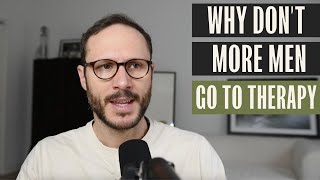
Connor Beaton argues that men avoid therapy not mainly because of stigma, but because the field is 71% female and produces content aimed at women. With only 29% of U.S. psychologists male, men struggle to find therapists and materials that speak to them.
Chapters
Welcome to 2023. I've had a couple things drop already this year, but I don't think I've actually welcomed everybody into the new year. So I wanted to start off by doing that. And, and secondly, what I really want to get to is why don't more men go to therapy or find a psychologist or a counselor, et cetera? Why is there such resistance around this? And, you know, there's the normal things that are talked about, right? It's, there's a stigma around it. There's a stigma around a man going to therapy, sort of indicating that maybe you're broken or that there's something really wrong with you, or, you know, you gotta be really, really screwed up in order to go, go to therapy. And then there's narratives that are sort of permeated on the Internet by certain individuals that say that, you know, if you go to a. The therapist, then there's. There must be something really screwed up with you and there's better uses of your time, right? Like, you can probably figure it out in the gym. And all of those are interesting takes. You know, obviously there's some stigmas around men going to therapy, and depending on your race and ethnicity, that it might be even more stigma around it. I remember talking to Jason Wilson, a friend of mine, who does some incredible work for young black men within the Detroit inner city and teaches them jiu jitsu and martial arts. I had him on the show a couple times. We've had some interesting conversations. And he said, you know, within the black community, there is a huge stigma. And around a man going to therapy or going to find a psychologist, it's just not something that's done because you're really looked at and perceived as weak. It's also something that is more of a white culture thing. So just depending on, on your background and your, your race or ethnicity, or who knows, your religious preference, there might be certain stigmas that come along with that. And I think that some of those things are true, but I don't think that that's necessarily the real reason that more men don't go to therapy. I think that the, the real crux of it is something that we're starting to see in the data, in the research, which is that the therapeutic industry and the psychological industry is dominated by women. It's dominated by women, and it has become more and more a woman's space speaking to women, creating content for women, writing books for women. And you can see this just in one very simple statistics, which is the representation in terms of the number of men that are psychologists. So statistically speaking, in the United states alone, only 29% of psychologists are men. And that number is decreasing rapidly. Right. It's even less for therapists, right? Trained therapists, less therapists. I don't know exactly what the number is, but it's less than 29%. And if you look at college and universities today, what you'll find is that people within the psychological programs or the therapeutic programs are predominantly women. It's something like 5 to 8% of people that are enrolled in therapeutic programs within colleges are men, right? So it's this very small number of individuals. So if you're a man that's out there and your wife or your girlfriend or, you know, your buddy has said, hey, you know, maybe you should go and talk to somebody about, you know, the death of your father or whatever you're dealing with, right? This divorce, this separation, this challenge that you're having in your relationship, and you start to go online and look at therapeutic content on Instagram, on YouTube, or you start to hunt down a good psychologist or therapist that you can go and work with, the first thing you're going to come across is one that the majority of the content out there is probably not going to speak to you. I think that the therapeutic industry has done a massive disservice to itself in not speaking a language that represents what. What is going to engage men and not creating content and information that is going to speak to men, that is going to engage men specifically. So when you go to these conferences and you. And you, again, you look online, a lot of the content that is being created by therapists, by psychologists, by counselors, et cetera, a lot of that content is specifically designed, curated, and directed towards women. And it's why a lot of men don't follow those types of channels. Right. I mean, my channel is specifically for men who are looking to find these types of resources. And there are some other channels that are out there that do something similar or in a different vein, right? There's like a. There's a guy on YouTube named Hamza who I think produces some really great content. It's like a mix of stoicism and therapy and, you know, being a gym rat, right? Like getting your body and your mind into shape, essentially. But he openly talks about going to therapy and why it's important. And so I think that there are some men that are doing an exceptional job of this. But. But I think that that is few and far between. And I think that the psychological and therapeutic industry have not only done a disservice to themselves, to the industry itself, but to men. Right. Cause there's all of this pressure that is out in the modern narrative that says men need to change, men are in trouble, men need help, men should be more vulnerable, men should open up, but then the access is not there and then the support and the way that that support looks is designed mostly for women. So a lot of guys, this content and they're like, this doesn't resonate with me at all. Like, this is just telling me to open up and cry or be more vulnerable or like share what I'm feeling. And for a lot of guys, like, I don't even, I don't even really know or I don't think that that's going to solve my problem or like, how the hell does that help me in my marriage? So I think that largely there's been this gap and again, you can see less and less men entering into the psychological space because it's dominated by this more feminine oriented narrative. I mean, you can even look at somebody like Jordan Peterson, love him or hate him, is just constantly under attack. And here's a man who represents a man within the psychological space, right? A man within the therapeutic industry, by many accounts is very respected within his field and has done some incredible work and has supported a lot of people. And so I think a lot of men look at the industry and they say they. That's probably not for me. I think I'll go to martial arts instead. I think I'll go to Brazilian jiu jitsu instead. I think I will, I'll just try and work it out. I'll just try and, you know, talk to my buddies about it or, you know, a woman in my life. I'll just try and get some advice. I'll try and figure it out another way. Rather than seeing the value in going down the path of working with a therapist, a psychologist, a counselor, coach, et cetera. And I think that a lot of guys come into the space and they see people like Tony Robbins or Brendan Bouchard or Grant Cardone or whoever it is that they're inspired by and there's no real pathway for them to find somebody that they can work with one on one that they can actually dive in with individually that's going to be able to support them. So this is my take. I think that there's a vacuum. I think that it's maybe shifting a little bit with organizations like Everyman and Sacred Sons and my organization Man Talks and my buddy's organization the Nation Men Uncivilized. Trevor Bohm. I think that there's a lot of guys that are starting to step in and create therapeutic spaces for men to do very deep work that is done in a way that resonates more with men that it that is different than you would normally get in sitting across from a therapist and just sort of talking about things for months on end. So let me know your thoughts. What do you think is the driving force behind more behind men just avoiding therapy or finding a coach or a counselor altogether? Do you agree with my sentiment? Do you think that there's other factors that I should address or talk about? If you're watching this on YouTube, comment below. Don't forget to subscribe to the channel. Like the video. If you enjoyed it, share it right man it forward with somebody and engage in the conversation. And until next week, this is Connor Beaton signing off.
More from Connor







How to Raise Strong, Unshakable Boys in Today's Culture, with Dr. Shefali Tsabary



