Trauma Psychologist: "Power Differentials Are INHERENT in Sexuality" - Dr. Frank Anderson
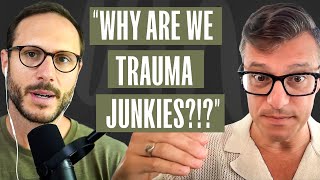
Dr. Frank Anderson explains how trauma rewires the nervous system into fight, flight, or shutdown states, and why power imbalances show up in sex and intimacy. Healing requires three steps: sharing what happened in your body, correcting who was actually responsible, and rewiring the memory itself.
Questions this video answers
July 9, 2024
Since 1992
To Be Loved
Chapters
I married the woman and I did the heterosexual thing until I came out at 32 years of age. Because I was programmed to be a normal boy from a very early age, right? So that was what I did. And I learned how to do it and I knew what I was supposed to do, you know, And I reenacted my father being abusive and controlling with my wife, my then wife, who was passive and accommodating like my mother. So that's the other thing we do, is we recreate our family of origin in our sexual intimate relationships. It was horrible for me to be the recipient of abuse from my father and then to start being abusive just like my father was to my wife. You know what I mean? So it recreates the trauma because of those power differentials that are inherent in sexuality. Why are we trauma junkies, right? Is because we're actually trying to foreign.
Doctor Anderson, thank you so much for joining us. I'm gonna. I'm just gonna start with Dr. Anderson. I'll call you Frank after. But I gotta start with it. It was funny. As I was gearing up for the conversation today, I kept hearing the special agent from the matrix like, Dr. Anderson, you know, I don't know if you've ever gotten that before.
Oh, yes, I have.
Anyway, let's let' straight in to the deep end with the question, what can neurobiology teach us about ptsd?
Yeah, it's a good question. And I'm happy that more and more the general public is kind of paying attention to the nervous system and paying attention to neurobiology, because I've been working in this field since 1992, really long time, and been teaching about the neurobiology of PTSD and dissociation for a long time, especially as it relates to psychopharmacology or medications, you know, but the world is better versed at, oh, wow. The nervous system has a role here and our biology plays an important piece. So I'm happy about it. A lot of the work as a doctor, I kind of nerded out around science anyways, so I always had that interest. I remember doing my neurology rotation, a class in neurology. I'm like, God, this is fascinating. We'll never figure this out. Like, you know, never will. You know, cardiology, they know so much, you know, because they've done so much research and they have a good sense of how the heart works. I'm like, the brain that will never figure this out, right? So I'm like, I'll never get bored in this subject. And I really felt that way. But the neurobiology is important. And I like we've known about the neurobiology of PTSD in a hyper aroused way, sympathetic activation, the fight or flight, holy shit kind of stuff. And there's a whole set of understanding around it. Joe Ledoux is one of the guys who's really helped us understand the amygdala and the role that the amygdala plays. And all the chemicals that get released when we're in a fight or flight, you know, dopamine, glutamate, and cortisol primarily. And what we know now is that those chemicals really shut off key parts of the brain. They shut off the hypothalamus, hypothalamus, and they shut off the prefrontal cortex, which allows us to process information. So I think it's important for people to know when somebody's freaking out. They have no capacity to process information. So to talk to them, to rationalize, to get them to understand is a waste of time. And I think that's important for people to know. Like in those states, your, your capacity to process information is offline, is you don't have it. So it's holding space in a certain kind of way with compassion. That's super important when somebody's activated. And you know, we've, we've been there for a long time. Sympathetic hyper arousal. We haven't known that much about the other side of the story, which is shutdown, dissociation and disconnection. Like people haven't known. We've known it had something to do with the NMDA receptor, it had something to do with glutamate, but we never really knew that much about it until Stephen Porges came along with polyvagal theory, because he really helped us put dissociation from a neurobiological perspective on the map, you know, and he talks about the dorsal branch of the parasympathetic nervous system shut down, fight or flight, life threat. It's a shutdown, shame, disconnection, dissociation. And that is the exact opposite. It's a top down over inhibition. So it shuts everything down. We call it over inhibition. No thinking, no feelings, no physical sensation. Right? And it is a top down shutdown. And the reason that's important.
Is that the way you help somebody in shutdown is from the bottom up. Start with the body, then go to your emotions, then go to thinking sympathetic hyper arousal. If you started with the body, they'd freak out more like, yeah, you know what I mean? So it's very you do very different things in neurobiology. Helps us understand that. Like if we didn't know that, the other thing I'll say that's kind of relatively new information is, is Ruth Lanius helped us understand this periaqueductal gray, which is a part of the brain. We always used to say that's where freeze happens. Was just like this one statement. That's all anybody ever knew about the perad. Ductal gray. But now Ruth Lanius helps us understand that's where the decision making is around whether we go hyper or hypo, hyper or hypo. And it's also how our sense of self gets connected to trauma in this structure. So there's this new information that's constantly happening, which I love and is exciting. It's like, oh, when people are like, I am my trauma, it's like, now we know why, right? And whether you know, how we help them.
Whether it's hyper or hypo, we know where in the brain that exists now. So there's different interventions that we can do by understanding the neurobiology. So I do geek out on it. I love it. I think it's important. But it's also not just cool. It helps with strategies and interventions.
All right, team, this episode is brought to you by Henson Shavings. And I gotta say, I love this product. I can't rave enough about it. I just used it this morning to shave. If you've heard me talk about this before, I generally don't like shaving. I haven't liked shaving for a long time because I usually get irritation on the neck. It's just kind of a bit of a pain. But these razors are great. I don't get any, any, any irritation, not once. I've been using them for six to 12 months now. And this product is really, really well designed. You get a really precision based shave. There's no irritation, there's no clog. One of the things that I hate about most razors is that they clog up really easy. Maybe it's because I have like the thick, you know, facial hair. And it's also affordable. So if you have been looking for a better shave or you just want to give it a try, head on over to hensonshaving.com forward/mantalks. It's H E N S O N shaving.com forward slash mantalks and use the promo code mantalks and you will get two years worth of blades for free. It is a great product. I highly, highly recommend that you Go check it out. To support the show. Thanks so much. Yeah, I mean, I think one of the reasons why I bring it up is, I mean, many fold. But one of them is I've noticed that for a lot of men, we generally are less tuned into when PTSD is activated. Maybe a little bit less.
Less ready to admit that that might be the experience that we're having. And so I've worked with a ton of guys, you know, former military, Navy SEALs, just men who have experienced trauma and abuse in their life. And it's. It's such a wild thing to me. It's like, oh, that's like, that's ptsd. Like, there's PTSD and there's PTSD and there's ptsd.
Yes.
And so can you talk a little bit about.
We're not going to spend. Although I feel like we could probably spend hours and hours on this. That's right. But I do want to touch on this because I think this would be helpful for guys. So when somebody has experienced a traumatic event, what are some of the possible symptoms that they might experience in terms of ptsd? And I'd love for you to break it down into those two sort of branches, Hypo versus hyper.
That's exactly right. Like, so a lot of people talk about what's trauma like. For me, there is the what happened to you.
What you experienced, which is very different than how you respond. How it's all. For me, it's all about the response, honestly. Because that's where things really are at. Is it? When we're looking at people's responses, that's what it's about, right? And people. So, you know, you talk about people. You talk about people who work in the er, you talk about people who go into the military. Navy SEALs, like, those are kind of trauma junkies. They're seeking that stimulation because it's part of what's familiar. I'm not going to say normal, I'm going to say familiar. Right. So when you're disregulated from those chemical perspectives and you're. When your trauma was encoded and you have a hyperaroused response, you almost seek it out to stay in the familiar because you're trying to fix it. I think it's important for people to know, like, why are we trauma junkies? Right. Is because we're actually trying to get ourselves in a familiar state in order to fix it this time. But what ends up happening is we keep repeating it, repeating it, repeating it, and people then get more overwhelmed and get depressed, like, oh, My God, I failed again. Oh, my God. It didn't work this time. And then they shift into submit, Disconnection, numbing out, Right? So Deb Dana, who's part of polyvagal world, talks about a ladder. Like, we stay in safety and ventral. Then we move to holy shit, you know, and then we fall into, you know, the. The pit of despair, the disconnection. So there is a trajectory, and sometimes people go really quickly. It looks as if they miss hyper arousal, and they go right into disconnection. You know, like, shame. Oh, shame response makes us go really fast through hyper. Right into hypo. I'm bad. I'm no good. I'm worthless. Right? So these responses are rooted in the neurobiology as we were talking about. And the two poles are hyper and hypo, right? And they're extreme. That's what pisses everybody off, you know, the rage, the attacking, the fighting, the yelling. It's protective. We're trying to protect ourselves from what got activated in us. We're trying to protect. Those are protective responses. So don't hate them. Culture and society hates them. And I'd want to teach people, don't hate them. Like, let's appreciate them for what they're trying to do, even though they're usually ineffective. I'm always having people focus on the intention. Right. Same thing with the shutdown disconnect, you know, and the guys. Guys are, like, thrown into either one of these categories. You're a rage monster, or you're so unavailable. Right. Those are those two poles. Right. And to start learning that they're both protective responses to trauma is eye opening for a lot of guys.
Can you maybe just speak a little bit about the role of disassociation? Because I think for, you know, especially a lot of men who have. Who have fought, who have been in battle, you know, guys have experienced maybe sort of more extreme forms of trauma or traumatic events. Disassociation can be a pretty active symptom, and there's different versions of it, so which, you know, I've had guys be like, why the hell does that even happen? So I would love for you to just kind of get into that a little bit.
Yeah. And I see dissociation along a spectrum. Okay, so there's the range, right? You. You get in a car and you space out, and you start thinking about your day. You're dissociating. Like, that's a level of dissociation. It's. Do a little. You can pay attention to the road, and your mind wanders. Like That's a form of dissociation in the most kind of normal range. Right. Versus the extreme form. You know, some people, when are. When they're in battle or something like this, like they're often on autopilot and they're not there, even though they're performing mechanically. And that's protective. It's emotional protection. Like dissociation in its core is emotional protection. So to what degree are you disconnected from what's happening in the present moment? You know, and we do that a lot. You know, it's like people, you know, people who commit violent crimes, the largest percentage of them are dissociated. Like it's very hard to kill somebody, excuse me, and be present for that experience. Right. It's much easier to be disconnected so that you can do what needs to be done for whatever form. Do you know what I mean? So dissociation is protective in that way because you don't have to feel what's actually happening in the moment, you know. And some people on the way extreme, like really have different Personas. Like, you know, I'm different people in different scenarios and they're each holding different traumas or different experiences. You know, that's extreme end of things where it's way too much to hold the. And. And so they become totally separate.
Yeah. So it's. If I'm hearing you correctly, disassociation is a protection mechanism.
Yeah.
Against the emotional intensity, the somatic or physical intens of what a person has experienced when possibly their trauma has been activated, when the energy of that trauma has been activated. Is that roughly correct?
It's totally correct, yeah.
Where does something like derealization or depersonalization fit into that? Because I think again, now we're kind of getting into the extremes. But again, this is something that I've seen a lot of guys who have. Who have experienced that extreme trauma have struggled with and never really been able to make sense of. And I don't hear it talked about a ton, so.
Well, and for me, the derealization and depersonalization are all on that spectrum of dissociation. I don't see them as so different. Like, you know, in a moment I could. I don't feel like I'm real or I don't feel like this moment is real. Like am I in a dream? That's a form of dissociation.
Right.
So is deep personals. Like I don't feel like I'm me and like I don't feel like I'm. That I'm me or you're You Right, the depersonalization. And sorry to say this, not sorry to say this, it's a truth. Like I, I talk about in my book To Be Loved, this memoir that I wrote, like the Value of Dissociation. Like, I remember. It was like I remember being. We did have this car ride from Chicago to Florida. It was like six people in a car, you know, it's 20, 20 hour drive or whatever it was. And it was so monotonous and there was fight, everybody's fighting and who gets what position. And I was like, oh, I know how to leave. And I did that. I left the room, I was sat in that seat and I wasn't there. And I had such bliss. And it was, it was a moment. It's why I wrote about it. It was like, hey, I know how to get out of this. This is like. It wasn't like I wasn't being physically hurt. It was more like, oh, I don't want to endure. I don't want to be here for this 20 hour car ride. And I was like, I've got a. I know what I can do. And I left. And I just like hours went by and I was in another world and it was very pleasant for me, you know, so dissociation, even though it's problematic because you're not really present, you're not able to connect in an authentic way. And people complain about that. There was, it was, There's a way that when you leave something painful or difficult, it's. There's a level of it that can be pleasant. It's like I'm in space, I'm floating, nothing bothers me. You know, like there's a draw for some people to dissociation. Other people, it happens kind of automatically. They don't have control over it and they're just gone because something overwhelming got activated. And then it's like a reflex and they're gone. So, you know, and sometimes dissociation is pleasant, other times it's not. It feels really uncomfortable. So it's a range. It's a real range. But to understand it's. It is a protective adaptation to something overwhelming. And then it generalizes. Then we do it at the drop of a hat. Right.
Okay. So just maybe coming back up the chain a little bit.
Yeah.
When, you know, say there's people that are out there listening to this and they're struggling with some symptomology around PTSD or, you know, sort of disconnecting in the way that we're talking about, where does one begin with all that because that can feel insurmountable, right? I think when people start to click into their trauma or ptsd, it's like, holy shit, where do I even begin with this? So where. Where do you start with people when you're working with them?
It's a good question. And, you know, this is one of the things that I'm doing. My priority, and it's one of the reasons I wrote a memoir, is to start teaching the general public about healing. Like, I've been working, I've been doing research. I've ran trauma organizations. I teach therapists how to do trauma treatment. Like, I've been doing that for a really long time, but now I really am motivated to teach the general public. It's like, hey, here's my story. Here's my trauma. I was able to heal. Let me teach you how to heal. I could tell you already, that's my next book. I know that's my next book is how to Heal Trauma in the General Public. Like, I'm so clear about it. But I. What I kind of come up with, because it is different. Like, you know, some people have the capacity to do some of this work on their own, and that's what I want to teach people. And then you need to know when it takes you over and you need to get help. Like, there's a. There's a range there, right? There's a lot of people that I know now that are helping people in the general public learn some of the signs, some of the symptoms. Like, awareness is first. Like, you're talking here kind of like, are these responses just I'm an ass, or are these responses rooted in something happened to me and this is the way I'm adapting? So that awareness is really important, that it's not just I'm a jerk or it's not just I drink too much or whatever. It's like, these are true adaptations to trauma.
And appreciate their intention. I say thank you. Your trauma responses. The first thing to do is be aware, have awareness, and then thank them. Like, thank you. And not just say it, because Frank said to say it, feel it. You've got to understand what they're trying to do. As trauma responses never accomplish the goal, but they try. So we have to appreciate suicide, drinking, fighting, yelling, hitting, even hitting. Like, even suicide, positive response. So that's super important to me to start. Like, oh. Because what we do is we move away from, not move toward. So I'm saying we got to move toward. We have to start appreciating.
Yeah, I think. And That's. That's usually the hard part.
Right.
You know, especially. Especially for guys because we usually build up so much animosity and hatred towards that symptom.
Right.
Of like, hate that I yell, hate that I drink. I hate this porn addiction. You know, it's like there's this. Yeah, there's. There's this sort of like intense hatred of that response that's happening.
Yeah.
And it can take a while for us to move towards, like, oh, this. This actually is a very beautiful thing that's occurring within me. So any advice on that, friend?
Yes. I love that you're. It's. You know what? That's much harder for men than it is for women. Yeah. Women kind of more naturally go in. Women are like, oh, my God, it's me. I'm bad, I'm wrong. Women internalize. Men externalize.
Totally.
Okay. Like testosterone. Gotta love it, gotta hate it. That's what I say about testosterone. Like, awesome chemical and boy, it causes us to act out, not act in. Yes. Aggression. It's the. It's so much easier to be angry than to be vulnerable. And so it is a challenge for guys to be like, oh, love my rage. As opposed to. You're a. Right. It's so much easier. You're a. Than, wow, what is my anger doing? Yeah. What's the purpose of my anger? So that is not an easy. It's not an easy ask. It's not an easy ask. And then typically what happens is men are much more likely to go from one extreme to the other. There's. Like I said, there's a spectrum. But it's either like, I fucking hate you or I'm fucking out of here. You know what I mean? It's like, boom. Because then when it gets to be too much self loathing comes in and then there's the disconnection. And this. I'm a. I'm horrible. I'm no good. I'm out of here. Because that's the other thing men get accused of is either pole. Either extreme. Yeah. Attacking and externalizing, or then the self loathing. I'm a worthless piece of. And everybody hates me. Why should. Why wouldn't they hate me? I've screwed up everyone and everything. So it's those extremes that I think are problematic. And. And again, first step is like, hey, maybe there's some value here. Hey, maybe if I move toward them, I'll learn something about myself and not hate myself so much. Do you know what I mean?
All right, team. This episode is sponsored by BetterHelp now, obviously you know that I'm a big advocate for therapy. I'm a big advocate for having somebody in your corner to support you as you work through some of the challenges in your relationships. And I'm a big advocate for that because I have benefited greatly from it. Not just in the moments in my life where I was really struggling or at a bottom relationally or in my own mental health, but just in the times of my life where I needed to chew the fat or the gristle on something in a relationship that I couldn't seem to make sense of. And BetterHelp has made it very, very easy for you to get that help and to get that support. They have a ton of great practitioners and they have supported so many people over the years. It's all virtual and online. It makes it easy so that you don't have to go hunting for a therapist in your area, which can sometimes be a challenge. And so if you are wanting to check it out, then head over to betterhelp.com mantalks to get 10% off of your first month. Again, it's betterhelp h e-l p.com forward/mantalks yeah. Yeah. I mean there's.
There'S a ton of shame I think that men carry around.
Yes.
And it's, it's what I've learned in the last decade of working with guys is that shame is usually the emotional experience that they are the furthest away from. Consciously.
Yes.
And it's, you know, unless it's, unless it's just consumed them and then it's just their daily experience, which there's still a big removal from. Right. So in, in your work, you know, how, how have you seen shame from the childhood show up in our adult relationships? And then how do you direct men to, to start to work with that shame? Because I think it's the like the, you know, million, billion dollar question for most guys of like, how do I deal with this?
Well, I have a really cheap answer then. Million dollar question. And I have a really cheap answer. And the reason I say this is like, you know, my second book I wrote was called Transcending Trauma and it makes you think about everything. Like when you write a book, you have to figure out. Right. And I have this whole section in there around shame cycles. I talk about different shame cycles and there are from a trauma perspective, two main shame cycles. Like the hyper aroused one, you worthless piece of shit. If you're physically or verbally abused, you're going to get a hyper aroused shame Cycle. So you in. And those are the guys who have the activation, have the intensity, but also have a harsh critic as you internalize that energy. Everybody who's been traumatized internalizes perpetrator energy. So you have an internal critic that says you're a worthless piece of shit. You screwed up again. But we also have the part that holds the shame. I'm bad. I'm wrong. Okay? The thing about the part that holds the shame, I talk about the shamer versus the shame. The shamer is the critic, right? The shamed. What ends up happening with the parts of us that hold the shame, and like you said, really hard to access.
It is a distortion of responsibility.
Okay? And what I mean by that is, this is we take responsibility.
For what happened to us when the people who harm us don't.
Okay? And that happens 100% of the time, okay? So to hold the shame, as you know, you're a worthless piece of shit. Verbal abuse. If I say, oh my gosh, I should have never said that. It's my fault. I am so sorry, I should have never done that. You're up. You're a kind person. I'm wrong. You're not going to hold shame around that. Because I've taken responsibility for my reaction to who you are or my reaction to your behavior. Right? So then you don't personalize it. But when I don't, in most trauma situations, people don't. You're left as a kid with nothing but to say, it must be me. It must be me. If the person in power doesn't take responsibility, the person that was affected does. And we say it must be me because the person didn't take responsibility. But we're also trying to fix it. Ah, If I take responsibility, then maybe I can have some control over it. Like, it's twofold. So the shame is twofold. Like, we do it because the person who is responsible never took responsibility. It's a distortion of responsibility. And we also do it. I'm bad. I'm wrong. Because we're trying to fix it. Like, if I have some control, maybe I can fix this.
So shame is really a dis. Is when perpetrators don't take responsibility for their actions and kids do and try to fix it. So it's an attempt at fixing something that happened to us. Okay?
It's also, as you were talking, it's so interesting because I've had the fortune to work with multiple families over the years and see how sometimes different siblings will embody those different roles. Like one, you know, one brother Is the. Has taken on the shamer, and there's this very harsh critic driving force. And then the other one is just the embodiment of the shamed.
Right.
And they're carrying that all around. And so it's so interesting to see how that can play out within a family system where somebody will sort of adopt one part of it and the other one will adopt the other part of it. Yeah, but so if there are guys that are out there listening to this and they're like, holy crap, I fall into one of those. Yeah, you know, how do I start to work with some of that shame once I've identified which role I'm falling into? Is it about, you know, bringing compassion into the thoughts? Is it about placing the responsibility with the, you know, perpetrator in the way that is responsible? Like where. Where do you guide people?
Yeah, so that's exactly right. So once it's that awareness, like, wow, this is happening, and you know, and you do, part of what healing is, is part of the healing process. So I'll name three components of healing, and one of them includes appropriate assignment of responsibility.
Okay? So first, when we're healing, if we identify that the. The experience has to be shared.
And that could be internally where the part that was shamed shares it with me. Now, as an adult, it could be the part that me holds that shares it with somebody I care about, a therapist or a family member that I'm close to. So it's not only the story, it's sharing the experience.
The thoughts, the feelings, physical sensations. People always talk to tell the story as if that's going to help heal. It doesn't. You have to share all components of it, which means this is where it's hard because you have to share the feelings. Right. But I don't. I say to people, reliving trauma is never helpful. So it's not about reliving it. It's about being with it in a compassionate way.
There's a combination of feeling some of it and being with some of it. That is the sweet spot to healing. Okay? And once that sharing has happened in a way that feels complete to the part that went through it, then a corrective experience occurs. This is where we correct the distortion. Okay? And a corrective experience is like this. Either me saying, you are kind and loving, it wasn't your fault. Boys should never be treated that way. That was wrong. So you correct the distortion. Right. The part has a corrective experience. Oh, it isn't me. It's not my fault. Right. Or it Happens internally. Sometimes it can happen internally. It's an internal process. Like you, Frank. This is when I talk about my book, Little Frankie, right? Where I. Frank now at 61, I'm like, it wasn't, you know, your father should have. It was your father's fault. He should have never treated you that way. You are a kind, loving soul. You're innocent, kid. It shouldn't have happened to you. And then the part, it's like, oh, is that true? Like, you need the corrective experience. The part does. Needs the corrective experience. And once the. Once the experience is shared and there has truly been a corrective experience, then release as possible. That is how we release trauma. Right? Not just process it. I'm really focused on release in a way that people are not enough. People aren't doing the release because they don't know the steps involved. And, you know, what I just described is rooted in neuroscience. Memory reconsolidation talks about literally rewiring the neural networks at the synaptic level. And that's what we're doing there, right? We're rewiring it. So there is a healing and a corrective experience that happens when you don't carry it anymore.
Yeah. And the. The witnessing of it, I think, is so important. I usually tell guys, like, the. The grief that hasn't been witnessed can't be released and healed.
Right.
It just can't be healed.
That's.
And.
Right.
And I think it's part of the male culture that we really struggle with. Right. Is this notion that our grief, our pain needs to be witnessed. And it's like, you know, it's that barrier to entry for so many guys of like, I don't want to talk to the therapist about it. I don't want to get into a men's group and talk about it. Like, I don't want to have these parts of me, not just the stories. Right. I think guys will often talk about the stories, but it's in a very disembodied way where it's like, here's the facts and the logistics about what happened to me or, you know, in my life versus here's the impact that it had on me and the experience. And I'm going to let you witness that. And that's such an important piece.
I do say to guys, I don't want you to relive it. That is not what we're talking about. We're talking about sharing it. Like, trauma is a violation of a relationship.
Healing happens in connection.
So that's right. That's important for people to take those risks, but again, not reliving. It's being with differently.
Yeah, I love that.
How.
How does some of what we've been talking about play out within the realm of sex and intimacy? Because I think where most guys start to see it is in the porn addiction, in the, you know, dysfunction in the bedroom. The anger that comes up when they're, you know, the wife says no or, you know, partner says no, like, whatever that is. But it usually is. That's like the. That's the place where it comes to a crossroads. And I think the last thing I'll say is that for a lot of guys, sex can also be the reason that they'll enter into the work, right? Where it's like, okay, this shit's not working. I can't stop watching porn, or this shit's not working. You know, the sec. My sex life with my partner just gone down the drain. Like, how do I address this and deal with this? So how does what we've been talking about with trauma, pain, ptsd, shame show up within the realm of sex and intimacy?
It's such a great question, and I think a topic that we don't talk enough about to tell you the truth. I really do. Sexuality, desire is so complicated. There's so many layers to it. There's a. There's a charge and a power that is connected to desire. So it has that. You know, it has the power connected to it. And there is a vulnerability attached to sexuality that is hard for people to embody a vulnerable, intimate side of it. So within sexuality itself, it has both perpetrator and victim, if you want to use those terms, right? Because there is the strong and powerful element of sexuality for men, as well as the opening yourself up and being vulnerable that's also in it. So it really has the trauma elements wrapped up in it, right? And men typically. This is. Excuse me for saying this to all those straight guys out there, because I really apologize for this statement. Like, it's so complicated for a man to be with a woman because of the differences. It's so complicated. It's like I'm like, oh, my God. And I didn't create it this way. Like, I did not create this dynamic, I'm telling you. But, you know, men typically will use their power.
And their dominance and their strength to gain intimacy.
And that's what draws a lot of women to men, is that. Is that energy, right? And then men, once they have.
Exerted that, then they can relax and be open and vulnerable. How many Men are like at their best, sweetest space after intimacy. So men. Right. Like men will use the power as a root in.
To be able to be vulnerable, to be able to be soft and gentle and relaxed and safe in that way for. So we use sex to gain intimacy.
Right? And it's, it's the opposite for women. It's totally the opposite. That's why it's like, it's. Heterosexuality is so complicated. Like it's such a screwed up system. Like, because women are the exact opposite in that way. Right? Women are the exact opposite. They're like, I need to feel soft and gentle before I'm willing to open up to that intimacy. Right. And so it's a really complicated dance for both the men, for men and women. And it's real. And people. And the trauma comes up always in sexuality. It does, because it's got power, it's got vulnerability, it's got, I'm in charge, I'm going to be receptive and open. It's got those elements that were violated in trauma. So people often don't realize if you're going to really heal, this is another reason why they're like, no, thank you, I'd rather take a pill. Because if you're going to deal with your trauma history, you're going to have to deal with sexuality. Yeah, okay. And it's a, it's not a thing that people like to talk about so easily or openly. Right. Because it is a. There is a vulnerability around it, you know, like it's weird, you know, I was somebody, you read about it in my story. Like I married the woman and I did the heterosexual thing until I came out at 32 years of age. Because I was programmed to be a normal boy from a very early age. Right. So that was what I did and I learned how to do it and I knew what I was supposed to do, you know, And I reenacted my father being abusive and controlling with my wife, my then wife, who was passive and accommodating like my mother. So that's the other thing we do is we recreate our family of origin in our sexual intimate relationships. You know, it was horrible for me to be the recipient of abuse from my father and then to start being abusive just like my father was to my wife, you know, so it recreates the trauma because of those power differentials that are inherent in sexuality. It's complicated.
I like that. I like that framework quite a bit. I remember having a conversation with a good buddy of mine and.
Similar situation. He's he's gay. And he came out, I mean, he came out quite young.
Yeah.
And, you know, tried dating women and like didn't, you know, go. Just didn't fit with him. And from a very southern family, you know. And it was so funny because we were having a conversation one day, one day. And I was like, it's so interesting to watch like men in gay culture because it's almost like if you took a man's sexuality and you just completely said, like, you're going to be attracted to people who have the same level of just like sexual. Just like, I want to do this all the time. And it was so. Because he was telling me about like grindr and I was, I was getting educated on gay culture. I was like, holy man. Like, this is, here's the thing I.
Say about it too, is like, it ain't like it's a hell of a lot easier if you're in the gay culture either. I said, what's kind of messed up in the straight cultures, like men and women and the way they're different. You put two of the same together and it's a shit show.
Like commitment seems to be a different ball game with.
There's no balance. There's no balance. So that in the gay, in the, in same sex relationships, like, they're often lacking the balance in a way. When you're saying like two guys who like, I'm wanting sex all the time, there's nobody to kind of. That's why anonymous sex is so rampant in the gay culture because there's nobody kind of regulating the vulnerability of the softness of the internal connection. Right? Yeah, some degree. So I'm not saying gay is better than straight. I'm not saying straight is better than gay. I'm saying different dynamics will show up. Right. And in gay relationships there often is this. You know, in straight relationships too, like, sometimes you're in a more dominant mindset, whether you're the man or the woman. And men are receptive sexually and that can feel good. Like, so there is both dominant and receptive in both gay and straight relationships. But again, from the trauma perspective, it brings us back to our trauma, whether it's the abuse of power or whether it's the vulnerability of receptivity. Right. So it really, this is why I, for me, it's such a complicated thing and you can't really deal with trauma without dealing with sexuality from your perspective.
Is that because the, the sort of dark underbelly of the trauma will always show up. There is. Because there's certain Behaviors that. That you can't really see until it comes to that part. Like, why. Why would you say that is?
It's the theme, like. Like I said, like, there is power and vulnerability. There's dominating and receptivity inherent in all sexuality. And those same themes are being abused in trauma, ours being abused. Vulnerability is being violated. So it's like the same themes that are in sexuality are being manipulated or harmed in abuse. So therefore, it's like you can't get away from it. You just can't get away from it. I personally. So I married a woman. I told you. And I. I needed to deal with my trauma history before I could look at my sexuality. Like, it was just. It wasn't even safe, you know, Other people are different. Some people, like you said, your friend comes out really early, and then they're going to deal with their trauma later. There's no right or wrong answer. And this is the same with straight relationships. Like, when you're talking about. Guys get so pissed off, and it's typically, I want to be in power, and my female partner is like, no, no, no, no, no. Like, that's the typical scenario. And you're like, I need this to feel better about myself, God damn it. You know what I mean?
Or to feel connected to you. I think that. I think for a lot of guys, like, real close emotional connection comes through the doorway of sex and intimacy.
Right? But here's the thing that I'm gonna. I'll give a little secret into the window of the guys. Like, the reason it doesn't work is because you're leading with a part that has a charge, that wants this for a reason.
You're not leading from a place of what I call calm power. You're leading from a place of driven power because there's a need. And guess what? The women are like, that doesn't feel sexy. Like, that is an intimate. That is like, it's all about you and your little boy who wants something. I don't want to. I don't want to be intimate with that. So women tend to reject the driven power. And then it sets up the dynamic, you know, Like, I need it for intimacy. Like, I'm alone without this. I need this now. Like, that energy is so not mutual.
Yeah, it feels transactional, like you're just using me to get to some.
What you want and has nothing to do with me, which is what women need. Women want intimacy before sexuality. Right? I need intimacy in order to be open, to be sexual. And so that's part of the problem, you know, so if men can kind of be aware of that drive for the need and not lead from that place, lead from confidence, lead from mutual. Like, I want connection and I want mutuality, and I'm going to show up in strength, but calm power, that opens the door very differently because that energy is the energy that is the connection that women need in order to be sexual. So, you know, it's. It's very. This is what I'm saying. It's really complicated. And instead of like, my wife, she doesn't put out or whatever it is, it's like, well, because the way you're approaching her is anything but sexy to her.
Yeah, yeah. I've, I've said to a bunch of guys over the years, you can't, you can't criticize your way into a great sex life. It's not gonna happen, you know, but it's. It's the tactic. Yeah, I think it's the tactic that a lot of men who are frustrated in their relationship, it's like, well, I'll just deploy criticism and harshness and I'm going to tell you, like, how important this is to me. And then that closes a woman down. And I think in the inverse, a lot of women will deploy withholding sex as a means of gaining emotional connection. Right. So we both do it.
Both, like, well, that's the power for women.
Totally.
Where women hold their power, you know, that's where women hold their power is around being the gatekeepers. Right. That. So it is that women resort to utilize. Using sex as their only form of potential equality. So it's. It's a crazy dynamic. And I do want to say this dynamic happens in the gay relationships also. It happens in relationships regardless of orientation, is we're never fully balanced equally. There's always somebody who holds more receptivity and somebody who holds more power and control. And then it's the dance of how we negotiate those needs together. Right. And that's, that's typically because some men, like, are super passive and the women hold. You know, women are in charge, or women do the money and do the finance. You know, there are some very passive men that also, you know, because of their childhood upbringing, are attracting very strong dominant women and vice versa. You know what I mean? So this power, this, the thing, this power differential is inherent in every relationship, gay or straight. And so how you negotiate and how you show up is all the difference. And trauma gets in the way of you showing up in a healthy way.
Well, let's, let's pull on that thread a little bit, because I. I agree 100%, I think. I mean, there's a saying, whether or not, you know, people agree with it, I think it's largely accurate for the most part, which is women. Women are the gatekeepers of sex. Men are the gatekeepers of commitment. And so men are always trying to get women to open the door to sex. And women are always trying to get men to open the door to commitment. And it's like this dance back and forth, right? Which is a very, very interesting thing in, In. In heterosexual relationships. But let's. Let's pull the thread on. When a man is maybe dissatisfied sexually in his life, whether it's because he's, you know, overusing pornography or he can't, you know, seem to maintain, you know, physical connection with his partner, where should a guy start? Like, how does a guy start to explore his own sexual potency to knowing that maybe, maybe my shame or, you know, what I experienced in childhood, even if it wasn't physical abuse or sexual abuse, like, maybe that hypercritical parent has impacted me in a way in the bedroom that I don't want to admit. Where do you recommend guys start?
For me, it is.
Looking beyond the response.
So we've talked about paying attention to your responses. Demanding or controlling or whatever it is looking beyond the response. What drives the response?
Not in the other person. Because it's so much easier to say, she doesn't give me because of her. So much easier than.
All right, what do I want? And what is driving that? What is driving that in me? Because that's where the wound is in me.
And that's where the vulnerability comes in that actually gets you more intimacy. Because nobody enters a relationship without the desire for mutual connection. We want to get our needs met, and we're wanting connection. That's why everybody does it. It's a very basic.
Whether you. With. Whether you maintain your power through withholding or you maintain your power through lack of commitment, doesn't even matter. But those are the responses. And what's underneath it? What's underneath it is your pain around vulnerability, and you're not getting your needs met at some point in your life. Around to be loved like that is the title of my book. To be loved because every single person wants it. End of story. Like, that is what it's about. That is what it's about for all of us. We want to be loved. And if we weren't, we've developed all these coping mechanisms to try to get it, and it doesn't work. So if you look at your responses and then start looking at what drives the responses. It is, I'm on. I'm no good, I'm unlovable. I'm worthless. I'm not confident. I'm not valuable. I tell you, some version of that is always underneath. And if you can connect to that, I don't even say tell your partner about it yet. You need to be comfortable. Like, be comfortable with your internal drive before you share it with anybody. This is what's really going on for me. You know, I do a lot of couples work gay with gay and straight couples. Like, I just do a lot of couples work, and everybody has the same desire, and they. They mess it up in opposite ways. Somebody spends too much, Somebody doesn't spend enough. Somebody wants too much sex. Somebody doesn't want enough sex. Somebody spent, you know, like, they, you know, somebody's this. Are they. Like, we all want the same thing. And we end up getting what I call polarized in the way we try to get it.
And so if we can look at what's underneath it.
For each partner, it's the same thing, but we're going about it, getting it in opposite ways, and both are ineffective.
That's the dance.
Yes, that is the. That is the dance. I mean, I think. I think in some ways, you know, sex. There's a great quote that I put in my book, which was. I think it was Oscar Wilde. He said, everything in life is about. Everything in life is about sex except for sex. Sex is about power. And I think that's really what we're talking about.
I would change that. I would say sex is about connection.
I would agree 100%. I would agree that sex is about connection. However, I think. I think we grapple with our own relationship to power in. In our relationship to sex with our partner.
Right.
Or with, you know, whoever we're with.
That's the using power for connection.
Yes. Yeah.
Yeah.
And I think it's. I think it's hard sometimes for us as men because the. There is this innate draw that women have or people. You know, I think even within. Within gay relationships, like, there is this draw towards a man who is connected to a certain level of his own potency and his power.
Yeah.
And so there. There is a real, you know, a reconciliation. I think that has to happen within us.
Right. Think about, like, I do, and I really. I love that term because it throws people calm power.
Calm power is very sexy. Like, but people. Calm power. What do you mean? Like, calm means wimpy and submitting and you know, accommodating. It's like. No, I think about it like within myself. Like, my calm power is like, there's like a titanium core running through me and I. That's what it feels like. It's a titanium core. It's like unwavering. I don't have to yell and scream. I don't have to dominate. I'm like, I am clear. This is my truth. This is who I am and this is what I want. And there's a clarity and calm power that doesn't scare people, but it shows you energetically. This is who I am. Clearly with possessing my power, not.
Not overpowering you. It's inhabiting my power.
Yeah. That's different. Do you see? It's like from where it comes from. It's where. From where it comes from.
Yeah, yeah, yeah. I mean, it's very, very different. I would love for you to just, in the sort of final time that we have, your book opens with this, with this story from when you were six.
Yep.
And I'm wondering how that maybe just to have that be an example for how that maybe influenced some of the things that we've been talking about along the way.
Everything. Like, you know, it was really weird when they suggested that I wrote a memoir. I was like, that's kind of crazy. Like, I'm a psychiatrist. Like, why the hell would I write a memoir? Like, it was really kind of a strange thing. But when I got it, when they're like, you, your trauma history can help other people heal their own trauma history. Then when I got that, it immediately popped into my mind. It was weird, was like, you're not going to school today. Like, I knew that's how this book would open automatically. And the reason that I knew that, the reason that I knew, like, this is how the story is going to open, is because that moment changed the trajectory of my life.
Can you share it?
Yeah. I was 6 years old and my brother, my sisters and I would typically kind of run into my parents bedroom in the morning. Their king size bed. We'd flop around on their bed. It was kind of a thing we, you know, we often did that. Right. It was like, oh, good morning. And this particular day, it was a weekday and I, I got up early, I went into my parents room and I sat, I stood on the side of the bed and my dad was up, like sitting there. And my parents were clearly in a conversation, like, and they stopped when I walked in. Like something was clearly going on. And they're like, you're not going to school today, Frankie. I'm like, what do you mean? Like, it's the weekday, it's not the summer. Like, I'm not sick. Like, why am I not going to school? Like, I didn't understand, and I was confused, you know. And what ended up happening was that.
They had taken me to downtown Chicago, which was another weird thing, like, not to the local hospital. Like, you're going to the hospital. You're going to downtown Chicago. Like, only sick people who are dying went to downtown Chicago, to the big hospitals as a kid, right? And like, you're going to. You're going to the hospital. And I did a day of psych psychological testing because I got caught playing with my cousin's Barbie playhouse in her basement. That's what it was. That's what. What the inciting event was. And so I had psych testing all day long and then spent six years weekly in therapy. Was a form of conversion therapy, which I learned later to make me be a normal boy. So, like, I was programmed to play baseball, to do. Don't do. Don't do arts and crafts, play with guns. You know, do boy things. And I remember. I remember in the office, like, I was six years weekly is a long time. I have very little memory. I dissociated so much from what happened in there. It was crazy how much I disconnected. But I remember these moments. Like, he would open a chest of drawers and I had to play with these toys, and I couldn't draw or I couldn't do, play DOH or crayons. I had to play with army men and battleships. So it was like this kind of, like, programming. It was brainwashing. And I'm a smart kid. Like, I was smart. I learned, you know, I'd watch my uncles. Like, I have to act like that, you know, so that. That changed that totally. It was like the message so early was, you're wrong, you're broken, you are bad. And if you want to get love, Mr. Anderson, it was Costella at the time, which is a different story. You need to be somebody different. So my whole life was, you have to be. You are not okay. You are not good. There is something drastically wrong with you. And if you want to be loved, you need to be this way. So I lived a false life for many, many years, successfully. Ish, you know, but I think. And it's been, you know, it's been amazing. So many people not having not been in conversion therapy and was really gay. And so many people are relating to this story in a way that's so powerful. I couldn't be who I was either. My authentic self wasn't acceptable in my family, even though it's a different version. It's such a universal theme. Right. And I love that my story is impacting people. Gay, straight, doesn't even matter around.
I wasn't loved for who I was in a genuine, authentic way. And it set up a trajectory of screwed up relationships, honestly, until I figured it out and loved myself enough to actually attract somebody who could love me for who I was.
Yeah, I mean, there's. There's a bunch of different threads in there that could pull out, I think. I think what I'll maybe just zero in on because it is such a relatable thing, Right. That so many people have to trade some level, like Gabor talks about some level of authenticity for the safety of belonging to. Yes, that's right. How did you. When you became aware of it, how did you start to, you know, I'll just say, unfuck that whole situation?
It was. Well, you know what? Honestly, it was.
I got into Harvard, which was an acceptable reason to leave the family. Like, I grew up in Chicago, and they're like, oh, okay, Frankie, you. You got into Harvard so you can go to Boston. So there was a. I. I had enough space. Like, there was. I couldn't work it out in the confines of that family because it was too much of an abusive environment. So it was good for me to get away and have enough distance to start looking at what was going on inside. Right. So that distance was important for me because I don't think I could have done it if I would have stuck around. So. But it was legitimate. You're allowed to go because it's Harvard. It was kind of like that. And then I started doing therapy and uncovering my trauma history. And I tried to talk to my parents about it, say, oh, my God. This because I repressed so much. Like, I repressed so much. When I started uncovering it in therapy, my own therapy, they had nothing. They didn't want anything to do with it. That didn't happen. That's not true. How dare you? Blah, blah, blah, blah. But I was an adult then. Huge difference. And I stopped having contact with them for seven years. Like, I started taking control of my own life for the first time, you know, until I was able to have enough space and safety to find out who I actually was, you know? And so I married. It came out, divorced my wife at 32 years of age. We were married for six or eight years, something like that. Long time, you know, but it was like in that moment, and I knew I kind of thought, if I come out, I'm going to lose my hope. I'm going to lose everybody. Like, that was my. I lose everybody in my life, you know, because it was so not acceptable. Clearly, in my family, it wasn't acceptable when you send somebody to therapy, you know, and it's a Midwestern conservative family. So it was the first time in my life that I was me, honestly, you know.
Yeah. First time I chose me over everyone else. Yeah.
Those are. Those inflection points, I think, are. Are really like, I moved out of the house when I was 18. Yeah. I didn't move very far away.
Right.
And then I ended up getting a degree. I ended up going to university, but not until I was like, 23. So I, like, work construction. And then I hit this inflection point. I was like, I need to get the hell out of here. You know, Like, I just need to create distance and, you know, moved. Moved, basically, like 14 hours drive away.
Right. Sometimes that. That's a boundary. Like, when you grow up in an. In an environment that's unhealthy, boundaries are not there.
Yeah.
And boundaries aren't there for kids because kids don't have any control. So the setting that boundary is an important first step in whatever way you need to do it so that you can start looking in.
Yeah.
Doing the work.
Yeah. I like that notion because I think when. When kids grow up in a household where it's abusive or, you know, whatnot, it's usually that their boundaries have been so penetrated and they're used to be invading so much that. That it can be very hard to just do some of those things later on in life. And so that's a beautiful place to start. Well, I think we're gonna have to pause here today, but thank you so much for coming on the show and your wisdom and your work and just the humor that you bring into very challenging topics. For people that want to check out the book to. Where should they go? Where should they go to check out more of your work? Just let them know.
Yeah, definitely. So. And thank you for having me. Like, we are doing this together. Like, we're not going to be able to change the world, singular. Singularly. So we're doing it as a collective. So thank you for doing what you're doing. Also, people can get the book to be loved. Audio version on all audible, you know, sites. It was great to read it. Reading your own story was a whole different level of things. Right. Or any bookstores you can get in it. You know, Amazon, you can get Pessy.com is the publishing company. My website, you can certainly get it through my website. Frank Anderson, maryland.com I'm active on all social media channels. Instagram is probably the most popular or the most active for me right now. Frank Underscore anderson, MD So there's a lot of ways to connect.
Yeah. Thank you. I appreciate being here.
Likewise. Likewise. I'm sure that we'll have you on the show again, hopefully not too far in the future. We'll have the links to all of your work and the book in the show. Notes for people that want to check it out. And until next time, until next week, as always, don't forget to man it forward and share this episode with somebody in your life. And this is Connor Beaton signing off.
Sam.
More from Connor







How to Raise Strong, Unshakable Boys in Today's Culture, with Dr. Shefali Tsabary



