Walking Barefoot Across The US For Men's Mental Health
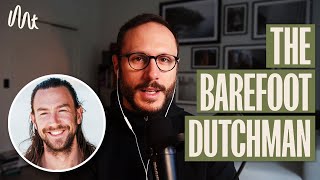
Dutch army veteran Anton Notenboom walked barefoot from Los Angeles to New York City in 260 days to set a Guinness World Record and raise awareness for men's mental health. He crossed the Mojave Desert, Loveland Pass, and Midwest heat while recovering from suicide ideation after military service. He argues that vulnerability and physical challenge can help men talk openly about their struggles.
Questions this video answers
Eight and a half months (260 days).
From Los Angeles to New York City (west-to-east coast).
A new Guinness World Record for walking barefoot that distance (LA→NY).
Finished in November 2024 (returned home after completing the route).
Dutch army veteran; served 10 years and completed three tours to Afghanistan.
Chapters
And even in that moment, I still told myself, I do not have a problem. And even if I have a problem, I'm a dude, I'm ex military. I will solve this myself. That took about another week. I was pacing up and down this beach and all of a sudden I stood still and I overlooked the ocean and I felt like I'm at this intersection here. I can keep doing what I'm doing, but that's not going to get me anywhere. Even worse, I'll go deep down the rabbit hole. I won't come out of it. If I want to feel different, if I want to have a different outcome, I'm going to have to start making different choices. And there's only one person that can make that choice, and that's me.
All right, Anton, welcome to the Man Talk Show. How you doing, buddy?
Pretty good, man, thank you. How are you?
I'm good. How are your feet feeling?
My feet are doing pretty well, actually. They've, they've got all the time to heal now. It's the rest of my body that I was worried about a little bit. But no, I'm doing, I'm doing better.
Good. Well, for those who don't know who you are, maybe just give like a 30 second context of what you and embarked on this past year in 2024.
Sure. Yeah.
I.
So I'm a Dutchman, Dutch army veteran, and I just finished walking from Los Angeles to New York City barefooted, which is a new Guinness World Record to raise awareness for men's mental health. And yeah, finished this November and just got back home and mission complete.
Nice, man. Well, why, why walk across the US and why walk across the US Specifically barefoot?
Well, the barefoot part is there's many reasons to it, but the main reason, it takes something very out of the ordinary and challenging these days to get attention to raise awareness. And the barefoot thing is just a paperclip thing. You know, it's as simple and easy as using my two bare feet that do the trick to get the attention because no one's ever done it before, like on that distance.
And. Well, why, you know, across the US I think men's mental health is a global issue, but I think the US Paints a pretty good picture on how it is right now and it's not good. So I, I figured, you know, if there's anywhere I want to create changes to the US but also if you want to have like this big ripple effect going to all corners of the planet, do it in the US as well. Like the platform that you can Create is way bigger. So there's multiple reasons and of course it's a beautiful country. Like I always wanted to go from west to east coast. Now I just did it in pretty slow pace.
Yeah, you really, really took your. Like I have, I'd love to drive across. I actually went across the country. I don't know if many people know this, but when my wife and I got engaged, my father in law, who is now 87 I think at the time he was like 81.
Has a very big fear of flying. And we got married outside of Vancouver, British Columbia and Canada, which is. I'm, I'm originally Canadian and we spent a lot of time in Vancouver and Whistler. It was like one of our favorite spots. And so we wanted to get married in, in Whistler in British Columbia. And her dad was like, well I'm, I'm not going to fly there, so if you guys want to do that, I won't be there. And I remember having this moment of like trying to convince him. I was like, come on man. Like, you gotta, you gotta get over your fear. It's just like it's, you're just, it's just flying. There's all of these things that you can do to help you. And you know, he's an 80. At the time he was an 81 year old man and he was not having it. He was just like, I'm not, I'm not flying, I'm not getting on an airplane. He's just terrified. And so I was like, well, you're not missing your only child's wedding. Like you're not missing your daughter's wedding. Like that's not going to happen. And so I made a side comment about drive, like, you know, I'll drive you across the country if I have to so that you can be at your daughter's wedding. And I was kind of half joking at the time. And then you know, later on he probably about a week or two later we were on the phone, we were on the phone and he's like, so were you serious about driving me across country? You know, is that a real option? I've been thinking about that quite a bit and, and you know, I think I could probably do that and, and I'd be, I'd be open to it if it was you. I was like, oh.
But it was a really. Yeah, it ended up being a really cool experience. You know, before, a week before my wedding, driving my father in law from, from Somerset, New Jersey on 1 side of the continent, all the way across to the other side of the continent, to Whistler, British Columbia. It was. It was an adventure, man. So I can only imagine how many experiences you had. But I'm curious. I'm curious about a couple of things. Number one, what was the strain like for you mentally and emotionally? Because I would imagine that there were mornings where you woke up, your body's in pain, your feet are hurting. No part of you is wanting to get out of bed, let alone continue to walk however many kilometers or miles in that day. What. How did you deal with some of that mental strain?
The mental, physical, and emotional strain was just out of this world. And I felt that way every single morning. I was like, no, I do not want to do this again. But.
It was showing, like, one part of this whole journey was to show lead by example. And there's a lot of things I share about mental health. And one thing is that we feel like that often when we are struggling mentally or emotionally that we don't even want to come out of bed. Like, getting out of bed is, like, the biggest task of the day. But then I encourage, like, just get out of your bed, get through your day, and by the end of the day, you're one day closer of coming out of it. So I got to show now by doing this that I did not want to get out of bed. I didn't want to hurt myself again by walking barefoot through the freaking Rocky Mountains. But I did. And by the end of the day, I was one day closer of getting out of this. But also showing that, you know, you might think this. This day is going to be this massive challenge with everything you came up with in your own mind, but it turns out to be this awesome, beautiful day, meeting cool people. And sometimes it wasn't. Sometimes it's just miserable. A lot of times it was. But, you know, it just shows as well. Like, you never know what the day is going to bring. Just get out of your bed, get the day going, and by the end of the day, you'll be one day closer of coming out of it. And that's what got me going as well.
Sure. Share a couple examples of some of the hardest moments for you, because I can imagine. I mean, I've ridden motorcycle through the Rocky Mountains. I've hiked through some of the Rocky Mountains. There's parts of that that are very challenging landscape on a motorcycle and hiking. So I can imagine doing it barefoot. But share some of the, like, really challenging moments. Maybe there's a couple of stories that you have from the journey, because how how long did you walk for? How long did this actually take?
It took me eight and a half months. So 260 days. Yeah, so it was 260 mornings of thinking, I do not want to do this. But I got there and, man, there's. There's been so many moments that were, you know, beyond challenging. I think at first, going through the Mojave Desert, there's not a lot of options on roads. And the road I took turned out to be made out of Lego, you know, like, you know, well, not literally Lego, but it felt that way. You know, when you miss that one piece of Lego that's in the living room and you step on it, the entire rope felt like that. So I figured, hey, you know, this, these, like, these desert roads, you know, the dirt roads, I'm just going to take one of these and at least it gets me off this road. Well, that turned out to be a bigger mistake because it was just Lego all over the place. But then in the middle of freaking nowhere.
And, you know, just nothing, no towns, no city for days and days surviving on canned food. I was there with my girlfriend, she was in a camper van, but it was just nowhere to get food. So energy got low and that was just a start. Like, that was within the first two or three weeks that we were like in the middle of the desert.
And there was just no end to these roads. Like, I would start my day and sometimes you, like, have these hills or mountains you would climb up and you'd stand on top of this hill and then you just see this endless long road just ahead of you going straight through the desert. And I just know I knew every step I'm going to take off this road I'm seeing ahead of me right now, it's going to hurt. But there's only one way of getting there, and it's just by taking that step. So Mojave Desert at the start, I think Rocky Mountains. As I mentioned before, there was still six foot of snow when I had to do the Loveland Pass. I had to take the Loveland Pass. You have the i70, which is the interstate. But obviously I wasn't allowed to take that, so I had to go all the way around over the mountains. So it was like a 12,000 foot mountain peak with 6 foot of snow. So luckily the roads were cleared of snow, but it's still cold as hell.
It was beautiful. And lucky enough I get into this mindset, I can fully enjoy the fact that I'm just doing it. Like, what the hell I'm here in the mountains. I see people coming down the mountain on skis and I'm walking here barefooted. But it was so cold. Like, it was so cold. Like it gets into your bones. And of course when you bare skin of the bare feet touch that touch the ground, it just gets into your entire body. So there's no way of heating up as well. But again, I managed to get through it without, you know, freezing my feet off. I got, still got on my toes. But I think the hardest bit was the Midwest summer heat. Apparently it was the driest summer in 100 years. There was a lot of drought problems, at least that's what people kept telling us. You know, high 90s, low hundreds. And then the humidity, as soon as we got into like eastern Kansas, Missouri, kind of part, man, that humidity just smacked me in the face every single day. It was so relentless. And for three and a half months it was just like high 90s, low hundreds. And there's no hiding from it. Like I was out there, you know, it's, it's plains, there's no hiding, there's not a lot of trees. So I was out there in the sun for like eight hours a day. I burned my feet twice because I was just too stubborn. I thought, like, I can do another half an hour where I couldn't. So I had to take siestas during the day and just walk at night, which then gets more challenging because people don't see you on the side of the road.
But yeah, those were, I think, you know, one of the hardest bits. One particular moment to finish it off with was in the Mojave Desert.
Like again, this, this endless long road. And I just, I went on Google Maps to see like, hey, this is where I'm going. And I told the team, like, this is where I'll end up. And on Google Maps it just showed. It was one straight road and I was almost there, but it was like something that Google Maps didn't show. There's an entire mountain in between. And I was pushing this stroller like a troller, like a dock stroller. And I was just by myself. So there was no way in hell I was going to walk all the way back through the desert to go around, pick a different road. It's like, I need to get over this mountain. There was no trail, there was no road, just bare rocks.
It was like so challenging that after a long day of walking, I had to pull this heavy trolley up a mountain. And then once I got on top of the mountain, like one guy of the other team, they were at the campsite at the other side of the mountain. And he came up and he told me, like, man, you still got a long way down. So it took me twice as long. I had to, like, Gollum. I was coming down that mountain, like, on hands and feet. I couldn't stand on my feet anymore. And that was one of those things like, well, you never know what you're gonna get. Sometimes, you know, it's a good day and sometimes it's a bad day. This is one of those moments where I thought, this is not day. But again, there's only one way of getting there. And it was, like, up and over that mountain with the. Like, with the stroller. And I made it. It was dark. It was. It was horrible. But, yeah, we got there.
And what's. What's going through your head during those moments? Like, you're walking through the desert, you're, you know, kind of going through a mountain pass. Feet are freezing. Or the inverse of that, where you're just getting swamped by the Mideast, like.
Air swamp. You know, you're having to go through this. This other mountain pass. Like, what. What's going through your head in those moments? And then how do you traverse that? Because I think this is very relatable for a lot of guys where they're. I mean, it's a little different, right? Because you're not. Maybe the guys aren't going through this type of physical challenge, but they're facing something in their life that feels insurmountable, and you just want to quit. You know, you want to walk away from it. So what's going through your head in those moments?
Well, the beauty of this is, like, I saw a metaphor and everything I went through when it comes to, like, other men going through similar things with their mental health, just different shapes and forms.
And I just let my mind wander and go wherever it wanted to go and without judging it. So you hear so often, like, your mind is the blue sky and your thoughts are just the clouds passing by. And I really like the one because it's so freaking simple, but it works. And for me, in that moment as well, I think, because I've been in the army for a long time as well, but also went through my own mental health chapter for quite a while. I learned their tools on how to navigate through these emotions. And whenever I felt angry, I just felt angry. And I would scream loud as hell. I was in the desert anyway, whenever I felt the emotions come up, because I was just so tired, I Would just cry. And in other moments, like just before I went up that mountain in the Mojave Desert, I was just doing 360s by myself because I was laughing out loud because I was just feeling like, whoa, look at this, I'm here. I got myself here and it's beautiful. And then I went up to the mountain and I was just swearing, swearing words was going through these valleys. But I think the most important thing is I just let everything be like every emotion that came up was welcome and I didn't try to control it. I didn't try to not be angry. I didn't try not to be sad.
And it was like, it was such a relief that everything was just welcome. I didn't have to force it to be in any way. The situation sucks. There we go. I'm allowed to be angry, but not let it take control over me so I wouldn't lose myself in those negative thoughts. I would still. Like I said, I know these are just clouds passing by. I'm allowing myself to be angry or sad right now. I know this too shall pass. This will get better and I'll come out on the other side. And that was just, I think that was like a mantra that I was just keep telling myself was like, this too shall pass. Like, whenever I was laughing and having the very best time, I knew this too shall pass. I will get, I'll get to be challenged probably like in an hour or so again.
And same for when I felt shit like, I know this too shall pass. I will feel better in a few hours, a few days, however long it takes for me to get through this. But everything was welcome. And I think that was the best tool to have with me, to have the knowledge. I will get through it, to not lose myself in the emotions and let them just be there.
Yeah, it's a, it's the hard part. I. I just did an interview on Modern Wisdom with Chris Williamson. He's got a pretty like, decent sized platform and I've been on there a couple times, but we just did a. A Man's Guide to Emotions. And it was funny because he's asking, you know, he's very logical and very, very rational and linear and. And he's doing his job as a podcaster. Right. Trying to extract information for his listeners, which are largely men.
Yeah.
And it's so funny because as men, when it comes to dealing with our emotions, we always want some rational, linear, like breakdown of what we do with them, you know, And I think one of the biggest things that I was Trying to drive home in the episode is exactly what you're saying, which is one of the worst things we can do with our emotions is to try and stuff them down or ignore them or to repress them instead of actually allowing them to just be there and come up and out in some capacity. And that, that process of allowing yourself to just feel what it is that you're naturally feeling in any given moment without having to become overrun by it or become that emotion fully, but just to allow yourself to feel it, have some form of expression around it that that is processing your emotions. And over time you become much more proficient at it. And so it sounds like you, you had this eight and a half month journey of like emotional processing in some ways that, that really, you know, I would imagine has led to a different layer or depth of emotional calibration, understanding, regulation, self trust, all of those pieces. I wonder. I want to back the train up a little bit because we haven't touched on why you actually went on this journey in the first place. Like why, why, why? Trying to raise awareness around men's mental health. What spurred that on?
So I've spent 10 years in the Dutch army. I did three tours to Afghanistan. And afterwards his life happened. So.
Relationship issues, so heartbreak, financial issues, not being in the right job, not being in the right place. And above all, after leaving the army, losing my identity. And I didn't know how to deal with all of that combined, like I call it Murphy's Law, Everything landed on my plate at once. And I was one of those guys that said, don't grind my nut, just keep going. And I learned the hard way, if you don't speak up, it's yourself and a family around you that you're punishing. And I ended up on a cliffside in Sydney, in Australia, where I was living at the time. Not necessarily wanting to die, but just wanting that pain and endless long dark toll ahead of me that I imagined to be there. I wanted that to stop. And lucky enough, I scared myself enough with just having that thought and I stumbled back and I saw this sign on a fence saying, lifeline, if you're mental distress, call lifeline, we're here 24 7. And even in that moment, I still told myself, I do not have a problem. And even if I have a problem, I'm a dude, I'm ex military, I will solve this myself. That took about another week until I was just pacing up and down this beach. I was just in a deep depression and didn't know how to deal with it. And at some point, I was pacing up and down this beach, and all of a sudden I stood still and I overlooked the ocean. And I felt like I'm at this intersection here. I can keep doing what I'm doing, but that's not going to get me anywhere. Even worse, I'll go deep down the rabbit hole. I won't come out of it. If I want to feel different, if I want to have a different outcome, I'm going to have to start making different choices. And there's only one person that can make that choice, and that's me. And in that moment, I chose to seek help. And before, if people will come toward me, you know, saying you should come to, like, a mental health coach or whatever, I was like, go hug a treat. It's not my thing. Go float away in your magic carpet. But, you know, way out of my comfort zone. But I figured, you know, I'm rock bottom here. I got nothing else to do. I might as well just try it. So I went out, I got help from this spiritual coach.
Even further out of my comfort zone. But that's when I realized, like, hey, this is doing something to me. She gave me, like, a few small things to do, like meditation, like mindfulness. And at first, again, with a lot of resistance. I was chewing on a raisin, and I had to go through all these sensations, like, what the hell am I doing? Or meditation. I had to look for a quiet spot, sit there with my own thoughts, thinking, that's the least I want to do right now. But I. I did it anyway. And along the way, I figured, like, hey, but I'm not thinking about my own misery right now. So this is. This is doing something. And it got me onto this. This journey of just, well, self awareness. On, on. Okay, what else is out there? I started reading more books, started listening to podcasts. I watched YouTube videos.
Downloaded more apps. But most importantly, I started to talk. And I bumped into the same people every single day when I was just pacing up and down the beach. And they're always asking, how's it going, mate? And my standard answer, yeah, you're good. Busy, busy, be good. You know, standard answer to pretty much everything. And then I realized, like, but I'm lying to these people every time. They're generally asking, how are you doing? And every time I answer it in honesty, when I told him what I was going through, I felt like, hey, I'm not alone. Because every time I share it, they share it. And I feel like, so everyone I'm talking, like, talking to is going through something and they all have their own tools to kind of deal with it. If they can do it, I can do it and fire that way. I just slowly, you know, made my way out of it and I came out stronger than ever before because now I had all that self knowledge as well. But in that whole process, I learned how big this issue is. Like, how many people are struggling with their mental health silently. And even more so, how many men are struggling silently with their mental health because they were like me. They see it as a weakness. And I know now it's courageous to speak up. And if the army told me one thing, it's lead by example. So I now had my story and the tools that I learned and I wanted to create something so I can share my story and the tools that I learned in hopes that creates like a safe space for someone else to feel. If he can do it, then I can do it. And, you know, walking barefoot in Sydney, Australia, is just a bit more in the culture because you live at the beach. And I was just walking home barefoot one day, and I figured I already promised myself I would take myself to the Himalayas. I wanted to see the highest mountain on the planet as a physical and mental challenge to myself so I could empower myself again. And I figured, you know, I want to raise funds and awareness for people living in these remote communities. They can use some help. And I'm pretty sure no one's ever done base camp of mine ever barefoot, because why would you? You know, it's super uncomfortable. And that's when I thought, I'm just going to be the first person ever to do a barefoot. That way I can generate attention, awareness and funds for these people living there. And so I did. And as I reached base camp of Mount Everest, like this cliche Hollywood scene where I stumbled towards, like this big rock with the height of Base Camp Mount Everest. And as I touched that rock, like, all the emotions came out. Like I was crying and laughing at the same time. And I fully realized I got something here. It's as simple as using my two bare feet and willpower to create change for someone else. So that's where the barefoot Dutchman was kind of born. Like, I need to use this.
And I just kept researching, you know, what mental health means, what, how it impacts people and how we can change it. And yeah, I just started to use that crazy thing to generate attention for men's mental health because, you know, in a lot of countries, it's the number one cause of death. But, you know, you don't hear for men, but you don't hear anyone talking about it. So we hear about the flu, but we don't hear about the number one cause of death for men because still this stigma around it. And I just want to show the opposite is true. It's not a weakness. It's absolutely, it's an act of bravery. And hopefully this way I get to show that.
Yeah, yeah, I love that, man. I mean it's, it's interesting. There's, there's a bunch of different threads that I want to pull on in there. The first I just want to sort of touch on is what do you think are the real challenges that guys are dealing with today? Like what, what do you see? I would imagine that you had a bunch of, you know, different individuals reaching out to you over your journey. You probably ran into a bunch of people, you know, as you're walking across the country, etc. And so what have you seen that men are really struggling with on the day to day and within themselves?
I think just not feeling safe to say anything. Just having that feeling of always just having to be that rock. And I think it's a very healthy thing to be the rock, but not, they have to feel like a lot of men are stuck in just that one way of thinking. So the only side they have is it's very heavy, masculine, not particularly very healthy masculine side where a lot of men are not aware they also have another side that's fully allowed to be there. So the main thing is men do not feel safe to say, I need help. You know, even when you go to Ikea to, you know, to build this big ass closet, I will fix this. I'm a man, I'm going to put this together. No man, like if you deal with a mate, you're going to be twice as fast and you might learn something as well.
I think a lot of men see each other as competition, so we don't dare to ask for help to our mates anymore because he's doing this, I need to do this to be a better man. No, like we're all brought us, we're all on the same level. We get things to learn from each other, but that feeling is not there yet because society kind of makes us believe we always have to fight each other instead of just collaborate and work together.
So on that level, that's where it starts. Like we have all these responsibilities as men and they're beautiful, but we don't have like this.
How do you say, like an off button. We're always on. We're always working towards something. We're the rock. We'll get the bread on the table, we'll do this, we'll do that. But we don't have like this off button where we can just say, hey, you know what, I want to do this, but I'm not really sure how to, or I'm experiencing some stress or whatever, but I don't have this valve that I can relieve some of that pressure. We just don't know where that button is. We only know the on button, but we don't know the off button.
And yeah, that just causes us exactly. To be like me. At first it's like, ah, but I'll fix this myself. No, you're going to learn the hard way. If you don't speak up, it's yourself that you're punishing. But on a more bright side that once you do, this whole world of opportunities and solutions will open up. But we're so stuck in this one way of thinking. This is what it means to be a man, and this is what I need to do. And there is no other thing. There are no emotions. I don't have vulnerability. Well, I got a news flash for you. You're just human like everyone else. You're born with it. The first thing you do when you get born is you cry. It's in your system. And we're just allowed like anyone else to show that.
And the problem with that is so. Well, the solution to that is I think it's just up to us to make each other feel safe. We can have the most beautiful organizations out there that do the best work to help us. But if we don't make each other feel safe to go there, we're not going there. They're useless then. So it's up to us men to level up and just to create that safe space for each other to say, hey, you know what? If you need any help, I'm here for you. Or if you see a mate struggling that you know for a long time, you know that someone is struggling, even though it doesn't always show. When you've got a mate and there's something going on, there's always little things that you might, you know, notice and just ask, like, hey, man, I just noticed that you're, you're acting off a little bit. Is everything all right? How's home? Just start the conversation. That's sometimes all it takes for that burden to relieve because that person feels seen. It's like, oh, man, this, this, this person just creates this safe space for me to actually say, hey, you know what? No, I'm hurting right now and it's, it's fine.
Yeah, I mean, I think it's, it's a bit of a, it's like a catch 22, you know, it's. I think it's a conundrum that most men feel because we know that a lot of our, A lot of our value comes from being able to provide, be that rock, be solid, be strong, mentally, emotionally, physically. And, and we're rewarded for that. You know, society, culture, women, other men rewards us for having that strength. And I. So, you know, for, I think for a lot of men that I've worked with over the last decade, it's like, well, wait, am I not supposed to be strong? Like, I think that's what, I think that's what my wife or my girlfriend or my boyfriend, like that's what they're actually asking for from me. They're wanting me to be robust, they're wanting me to be resilient. They're wanting me to have grit and determination. And so I think for a lot of men there's this, there's recognizing that it is something that's extremely valuable to the world there. It's recognizing that it's also very rewarding for us because I think every man, you know, who does develop some type of mental strength, emotional ability and acuity, physical strength, etc, just go down the list, he feels rewarded by that internally. But then it can turn into a kind of prison, you know, where if you over index on that and you don't allow yourself to.
To receive any support or help or praise from outside of you, then all of a sudden it can morph into this really negative experience of isolation and desperateness and I have to, you know, do everything by myself. And then you're bitter and resentment, you know, resentful towards your partner and friends and the, the government and, and so, you know, it's, it's, it really is funny how this thing that we as men are rewarded for and, and kind of expected to achieve, this thing can really morph into one of our greatest pitfalls. Would you agree with that? Or like, how would you?
No, for sure. I, I think that's, that's exactly where we're stuck in. And I think there's a, there's a, a very simple solution to that. It's simple, but not so simple, else I won't be doing it. But the simple fact is like, we just need to change perspective again because it's not been like this. It's only been like this for what, maybe 100, 150 years or so. But we need to change perspective because it is a strength. And as soon as we start to see it as a strength, all of a sudden our chest goes out, our chin goes up. Okay, so I'm strong when I reach out, which is actually true. We just need to change perspective again on the fact that you can still be a leader. You can still be a rock. I think you're even better of a leader if you just sometimes say, I need help with this one. We can go there together.
And, you know, towards in relationships as well. Like, if you as you as a man just says, hey, you know what? I don't have the answers to this, but I will find the answers. Like, I will find help to get there. You show that vulnerability, you become even more of a man to your woman by just showing that you've got that emotional side to yourself as well. Like, it is not a weakness. And that's the thing that we need to change, that's the thing we need to lose, is that it's not like one or the other, that if you show emotion, all of a sudden you're less of a man. No, you're even. You're more of a man if you show it. It's not like black and white like this. There's more to it.
And, you know, I fully vouch for be the rock, be the leader, be that man. Stand tall, chest out, chin up. You know it's good for you. But also know that you have this other side that's fully allowed to be there, and it doesn't make you anything less of a man. Opposite is true. It will make you more of a man. But it's again up to us to show each other and again to lead by example. It takes that one friend in a group of friends to say it out loud. And I can assure you that maybe not in a group session, they might kick your chin first, but afterwards they'll come back to you, hey, man, thanks for saying it, because I'm actually going through this right now. I can assure you that it will open up that space, your mates, your colleagues, wherever your teammates. Be that one person that says, hey, this is what I'm going through. And I can assure you someone else will say, hey, me too, man. And that will open up the conversation, and that will show you by practice that it's not going to make you anything less of a man.
And I think a cool thing to know about that as well. That it's been like that for thousands of years. We sat on rocks in circles, men coming together, and we learned from each other and we shared stories. And young men learned from older men how to become a man by talking, by sharing stories. The wilder men did it. The samurai did it. You know, we have all these really cool Hollywood movies. They show this one aspect of being a warrior, you know. You know, battles, the spear in one hand, shield in the other hand. But what they don't show in the movies, but what is written is that after battle they would nurture each other before they went back to their wives and families. They will be there for each other to mourn their losses. They will, you know, wrap an arm around each other to say, like, hey, you know, let's go through this together. They would heal each other wounds so they wouldn't drop it on their wives and children. What happens a lot right now is, you know, at some point, at some point, the bomb bursts and we just drop everything on our family and they're not there to deal with your shit.
We as men, that's my opinion, we as men need to help each other so we can safeguard and protect and keep them away from all your misery. In that sense of just don't dump it on them. You can talk about it, but don't dump it on them. But like I said, it's been like that for thousands of years. Like, we need to come back to that warrior man that stands tall and strong, but also is therefore his mate after a battle.
It does seem that along, like, we've kind of. There's a saying in the west that, like, don't throw the baby out with the bath water.
Right?
And I think that. I think that part of what's happened in the.
I'm like, trying to word this in a way that I'm not going to get launched at online, but I think I'm just going to say it anyways. I think. I think part of what happened with the attempt of dismantling the quote unquote patriarchy was that what came along with that was the villainization of any type of men's spaces and the view that men hold all the power men shouldn't be allowed to gather. I remember when I started Mentalks 10 years ago, I literally for years would get messages, like hateful messages from people. I mean, a lot of women initially, but men and women as well, saying, like, why do men need this? Men already have everything. Men already control all the spaces. Why do men need another space? And it's like, hold on, how many spaces are there for men to talk about what they're going through, to share support for one another, to create maturity and elderhood? That's not, that's not what a lot of spaces are for men. Like modern male spaces are sports oriented, finance oriented. They are not about emotional, psychological, soul oriented, spiritual oriented, health. You know, that's not, that's not what they're about. So it was very interesting when I started the company that there was so much hatred and I think it was very telling because it's almost like you can be almost assured that when you catch that much flack and that much resistance that you're onto something. You know, when people launch at you that hard and even just the name man talks. I mean, I got so many people like, you know, like, what do men need to talk about? And like, you know, everything from like, this is gay, you're a. To like, you know, men to, to all the way to the other side of the ex, you know, the, the extreme of like men just need to have cuddle parties and cry with each other and it's like, oh my gosh, like this is, you know, there's so much misunderstanding of men, how men operate and there seems to be so little interest in actually genuinely understanding how to support men. I think I've said this stat on the show before, but there was a study that was done in the UK and it looked at male suicide and what it found was that 91% of the men who had taken their own lives had sought out therapeutic help at some, at some level. And 80% of those men who had sought out therapeutic support, they had been deemed as low risk of suicide or no risk at all. And so we have a, like, we really do have a culture of, even in the therapeutic space. I think the therapeutic industry has, has done, I've said this before, a real like piss poor job of being able to support men and meet men where they're at. I think that the biggest problem within modern psychology and modern therapy is that it approaches men's issues from a female oriented lens and it misses out on large pieces of what men actually need to do in order to find mental health. Because those things are in some ways fundamentally different from what women go to therapy for. You know, a lot of men are they want to feel competent and they want to feel competent in their emotions, in their decisions, they want to feel competent in, you know, how they show up in their relationship and their communication. But that's not, that's not necessarily what the Majority of women are going into therapy for, you know, they're, they're looking for. I mean, I don't want to speak for what. Because that'll just get me. I'll just have to, like, this is not what women want. And so I don't, I don't even want to go down that rabbit hole. But I think, you know, I think that having worked with so many men, having worked with so many therapists and psychologists and counselors and coaches and having them as clients and supporting them, what, what I've noticed a lot of. And then digging into the therapeutic kind of being outside of the therapeutic industry as a. As somebody that's very skilled in therapeutic practices and modalities, it's like that whole space needs an overhaul. And in terms of how it approaches men's issues, because it's almost like taboo to say that men and women are different and how they approach their problems are different. And what causes problems internally for men and women might actually be different. You know, that's like, ooh, that, like, you know, that's. That's a big thing that you shouldn't say. And it's like, well, how the fuck are we supposed to solve anything for guys if. If we're not allowed to say, maybe what's causing men to take their own lives is different than what causes women to do that, you know, and that we should be able to study that.
Yeah. And I think as clear as daylight, that that is the fact. And then like you said as well, like, it's. It's like this very delicate thing to discuss because we can't. Like, everything has to blend in. Everything has to be equal and the same thing. I know there's just differences in our biology. We just need different ways of, of dealing with it than women. And that's fine. Like, it doesn't say the one is better than the other. It's just different.
I had the same thing. Like, my campaign was called Brave Men Talk. I had it over and over again, the same discussion. Like, oh, why men? For example? And then I think a very important note on that is that.
If us men do not take care of our mental health, the numbers in.
Discrimination, in sexual abuse, in violence anywhere, like, on, at home, it's just going to grow and grow. Like it's, you know, we have way many more women that are dealing with men that are violent or, you know, just misbehaving in whatever way. So that's why we need to work on our mental health. It's not just like, oh, but you Guys have so much already. No, no, no. This is, this is the issue that we have and this is what we need to do to actually help you guys as well and to have kids that grow up with a better sense of what it means to be like a healthy masculine man or what like a healthy relationship looks like. Therefore, we need to work our mental health.
I also, I'm just going to jump in there. I also think that there's. I also think that we need to shift the perspective and the narrative and, and really push back on this perspective that men are at the cornerstone of the problem within society and modern relationships, like there are. When you look at the data out of the uk, out of the US There are a lot of men that experience domestic violence and domestic abuse. And a lot of the data shows that when domestic violence. And this isn't every single time. So I don't want to make it sound like that's what I'm saying, but a lot of the times I don't remember what the stat is. When domestic violence happens, it's both partners that are contributing to the domestic violence. It's not just one party. But what ends up happening is that men don't speak out about domestic violence. We don't see it as a real issue because men are stronger than women. You know, there's a whole bunch of stigma around a man talking about domestic violence.
And, and those types of things. And that's just one example. But I think at the core of it is this notion that women are the, women are the victims and men are the trespassers that is very prominent in our culture. Now, that isn't to say that men don't enact more violent crimes than women. They certainly do. But when you drill, again, when you drill down into the data, it is a very small percentage of men that are repeat offenders. They're doing these things over and over and over and over and over again. And so what can happen is that you can see the data and you can have the perspective of while the volume of men that are committing violent crimes committing violent crimes against women is so much greater than women committing violent crimes against men that you can have the perspective of, well, many men are violent against women or many men are violent just in general. It's like. Well, no, it's. It's that. That data and those stats take into account guys that are repeating that violent crime. And so. But I do think that I talked about this in an episode where I talked about what I call the patriarchy virus, where there's A notion in Western and modern culture that every problem socially, relationally, economically can be traced back to men. And it's the patriarchy's fault and it's men's fault, and men need to take responsibility for it. And it, in some ways, it. It takes women out of the equation. And I think it's amplifies what a lot of the pressure that a lot of men feel, which is like, man, I'm just. I'm the problem for everything. And I talk to a lot of young guys who feel that way, where they're like, I watch the news, I go on social media, and it seems like I am the villain for absolutely everything that's wrong in the world. Like, why should I even bother contributing to society when I, you know, I haven't even graduated high school, I haven't even graduated college. And, like, I just have the target on my back of, like, you're the problem with society.
So how do you, how do you.
Think about communicating with young men that are maybe growing up in a culture that. That I don't want to say is anti male, because I think that's dramatic, but that are growing up in a culture where they're hearing a lot of these narratives of, like, men are the problem. You know, men need to get their shit together, Guys just need to be better. Just sort of blanket statements like that. Who, you know, a lot of young men sort of feel like, how am I supposed to even contribute when I'm just seen as the problem?
Yeah, well, I think the solution to, well, not say that's just one solution, but a solution is what I mentioned before. Like, young men learn to be men from other men. And I think we need to ingrain that more into, like, normal life, let's say, have groups like that in schools where men can just come together and learn from each other. Like, hey, what's going on in your mind? What's going on in your brain? And have a discussion about it. So. Because what happens with a lot of teenagers nowadays, like, you get social media, you don't talk, so you get all this information, but you don't let it out. Like, so that becomes the truth. Where if as a young man, you just have these conversations already, you burst that bubble, you get more information, you feel like, oh, okay, so maybe what I understood from just seeing these videos is not the truth. There is, like, different truths out there, and I can search for my own. But to have these conversations in schools already, I think is the most important thing to do right now for young men. I Always say a little less of Pythagoras and a little bit more of about life. And it definitely counts. Like it counts for, you know, girls and boys, but I think especially for boys because like you said, they feel that pressure of having to be a certain way already from a young age. Like, I need, eventually need to be that leader. I need to be the provider. You haven't even left, you know, high school. You had and you already feel that way. You already feel that pressure. Suicide amongst teenage boys is again, the number one cause of death for a lot of teenagers. It's like freaking ridiculous. Like they shouldn't die at all, but if they do, they should die from being stupid enough to jump from a roof because they're just being boys, not from mental health issues, because they're just boys. They just start life. So let's start focusing on the whole system, on how we teach or what we teach our boys and how we do it. Like you said, like in the whole therapeutical system, it's the same thing. We need to redevelop certain programs, I think, or like have different looks on how to deal with certain situation. When it comes to men's mental health, but especially with young boys, we need to plant the seeds as early as possible that talking about these emotions and going through these, you know, mindsets or thoughts is one. Okay. But also that you need to talk about it. And, you know, if there is any young boy listening right now, please talk about it. Because whatever you see on social media or on in the movies or whatever, it's not true. It's not. It's. Don't stay in your own bubble and make everything the truth and make it happy and happy. Please chat and your bubble will burst. You'll get different insights and you'll feel lighter and better about it and you'll get the right tools on how to navigate through these emotions and whatever you might be dealing with, tools that are way more important than just, you know, grammatics or math.
This is, I mean, I think this is a good segue into the sort of connection between physical pain, physical resiliency, and emotional struggles, you know. And what I really love about your journey is that it really is at that intersection of physical discomfort, a lot of physical discomfort, and then the emotional struggles that come along with that. And so I'm curious about how you see the relationship for men, especially of having physical discomfort, the role that it plays in being able to teach you about how to deal with your emotions and how we can create or how, you know, Young men or older men can create opportunities for themselves to actively. I'll ask it a more simple way. Why do you think it's important for men to do hard shit?
Because that's ingrained in our DNA. That's who we are. We are not supposed to be sitting in a chair all day in an office and then sit in a car and then go to our couch and eat crap all day. Our body is supposed to move. That's how it's designed. That's why we feel miserable when we sit for too long. And that's why we feel great when we go for a run or we go to the gym or whatever you want to do. That's why our body starts creating happy chemicals when we start moving. Like it's ingrained in us. And especially for men, it's kind of like, again, going back to the older days. That's our task. Like, we are supposed to be warriors, defending our freedom and safeguarding the women and children in your life. You won't be able to do that when you're, you know, just lazy in your chair, not moving at all.
You'll never get that sense of confidence from your chair. You will not grow in your safety bubble. It's ingrained in us to move, to get stronger, to lift heavy things, to run. It will create, like, a sense of confidence that will create, like a feeling like no water, that you are on top of this world and that you can, you know, if you want, you can safeguard your family. Not that you. Because that's where it goes wrong a lot as well, that we go into that direction. But then we, we get into this kind of. I wouldn't, I don't like using the word toxic, but we start to abuse our strengths. So we get physically abusive or, you know, emotionally abusive because we feel strong. No, just know that you can. Doesn't mean that you have to use it.
But I think the knowing that you can is something that we all have to have, like that sense of confidence. And the same goes on for your mind. Like, that's. I always say, like, if you train your biceps, train your mind as well. Like it's the same. Like it's another muscle for you to, you know, to. To go to the fitness for, you know, understand how your brain works, understand who you are and how you respond to certain situations. Like it's just as powerful to know that you can lift, like bench press 100 kilos. I don't know how much that impounds or to know that, hey, I'm being triggered Right now, and I've got a choice on how to respond. And I'm gonna let, like, let my emotions control my response. I know how to observe my emotions and how to respond in a certain way that I keep control in that sense. And I'm not like, outbursting or whatever or, okay, this is time just to let my emotions go and I'm crying.
Do you think it's.
Sorry to interrupt you, but do you think that men need to go through physical hardship in order to have some level of emotional mastery? Or can they attain deep emotional mastery without having to go through some type of physical hardship?
Oh, I think. I think you can do it without physical hardship because some, like heartbreak, for example, is one of the toughest things to have to go through in life. And that will teach you a lot of tools or how you deal with certain things as well.
But I think for us, you know, that's a very negative way of feeling it. I think the most positive way to gain that strength and to gain that knowledge is by challenge yourself physically. Like, it's a healthy way of learning and growing and getting stronger at it. So, yes, I think we need the physical challenges in our life and we need to pick it. Like, we need to get out of our comfort zones. We need to get off our lazy butt. That's what we need to do.
Yeah, I mean, I agree because I've always wondered about this of. You know, you look at even monks as an example. I mean, they sit for hours and it's not comfortable. If you've ever meditated for more than five minutes, you know, how. How much discomfort can arise physically, mentally, emotionally. And I do think that there is something for us as men about confronting discomfort and being able to intentionally put ourselves into situations, whether it's a hard conversation or something physical or something that you, you know, we risk being rejected. That develops us emotionally and psychologically in a way that. That we can't get otherwise. And I. I think that part of the issue that a lot of men are experiencing today is that, you know, modernity has kind of sold them this bill of goods that says if you seek comfort, you'll be happy. And a lot of men attain some level of comfort in their life and they're miserable, you know, because there's nothing for. For them to press up against. There's no discomfort in their life. And. And you begin to atrophy psychologically and emotionally. And I mean, it's really such a strange thing. You know, it's like I've. I talked to. I've had a couple guests on the show where we've talked about, you know, do you have to go through real hardship? Do you have to go through some type of. Whether you want to call it trauma or, you know, extreme discomfort or extreme hardship to really achieve some kind of greatness? And. And I'm starting to believe that the answer is more and more like, yeah, you know, you do have to. You do have to put yourself into things and experiences and.
And op. You know, create opportunities for yourself to be really uncomfortable and to get. To get that level of discomfort to sharpen yourself.
I think Tom Brady. I think it was Tom Brady, he had, like, an awesome speech about that, that, you know, in the win, like, when. Like, because they were winning so much, like, I did not learn anything from winning Super Bowls. Like, it's cool, but it doesn't do anything to me. It. Winning all these games doesn't teach me anything. It's when hit the fan, when everything was destructive, when I wasn't picked, when we were losing, when physically I had an injury, that's when I was learning. That's when I felt alive. Like, I'm not, you know, I'm not really sure what he said, but, like, it got. It got to that point where, you know, it's like, the winning stands for comfort. In comfort, you're not going to win anything. Like, it's. It's just going to make you numb. It's about the challenges. The challenges will make you grow. The challenge will make you stronger. It sounds so cliche, but it's so needed because, like, fact is, the majority, the vast majority of population has become weak because of all the comforts we have. That's why we have so much disease. That's why you have so much mental distress. We have become weak because of all the comforts. We need to go back to the basics and understand, again, what are the important things and challenges part of that. Like, again, back in the days, they had challenges every day just to survive. Now you go to your kitchen and it's like, I know whatever you want is right there. We need to. Yeah, we need. We need to go back to the basics of what made us thrive as humans. And that is definitely, you know, the challenges. We were out in the cold, we were out in the heat. We had to survive. We were part of nature. We were eating healthy, we were exercising because we had to go out and catch our own food. Not saying we have to go back to being cavemen again, but, you know, understand the pure basics of what it means to Be human. Get yourself out of that comfort zone and get yourself in that spot again. Make yourself long for food. You know, like, fasting in that sense is another challenge you can do. You know, get used to not eat every single hour because that's one of the most unhealthy things you can do. You know, a challenge lies in so many things you can, you can do for yourself. And there's so many healthy ways of, of challenging yourself, but in that growing, understanding yourself better and knowing how to respond better and to stand taller and stronger.
Beautiful, man. Well, that feels like a good place for us to maybe begin to wrap up today.
Give our listeners a little bit about where they can find you and maybe what challenge you are looking to next. I know you're in full recovery mode. Some of you are like, I'm not looking at anything right now. But. But yeah, where they can find you, follow along in your journey, learn from you, and maybe what challenge you got next.
Cool. Well, yeah, they can follow the journey on, mainly on Instagram, the Bearfood Dutchman. If the is not there, it doesn't come up for some reason. So the Bearfoot Dutchman. Same for Facebook. Anton Notenboom. I think it will come somewhere in the text because it's a difficult last name.
And you can find me on the website bravemantalk.com.
Yeah, and I will come. Actually, I'll come to the US as well to do a men's retreat by the end of the year, which is. It's awesome. It'll be awesome to see you then as well. And I will be doing another challenge. Like, I'll never ever do something huge like this again. That's going to take like almost an entire year to finish. But there's one I want to do in a year and a half. There's a Guinness World record of the longest barefoot run in 24 hours, which stands at, I think it was 130 miles or something like that. I hate running. Like, if I run for like two miles right now, I'm dead. So that's where the challenge lies. I want to go from, you know, absolutely zero to running a new Gainesville record in about a year and a half. So I'll be training for that over the next few, well, let's say the next year or so. Wow. Yeah.
Awesome, man. Well, thanks for everything that you're doing for men and the example that you're setting and, you know, being able to press yourself and push yourself physically in this way, sharing your wisdom and your lessons as you go along, I think, is really, really inspiring for a lot of guys. So thank you for everything that you're doing, buddy. Keep in touch for everybody that's out there. We'll have the links to Anton's Social in the show. Notes if you're having trouble finding it, just in case. And until next week, as always. Oh, don't forget to man it forward. Man it forward. Share this episode with somebody that you know will enjoy it. And until next week, this is Connor Beaton signing off.
More from Connor







How to Raise Strong, Unshakable Boys in Today's Culture, with Dr. Shefali Tsabary



