Connor Beaton (speaker) contrasts avoidance versus ownership in relationship conflicts: avoidance generates shame, guilt, and inner-criticism (the "shadow") and weakens us, while ownership—taking responsibility—creates strength, clarity, and confidence. He emphasizes pulling focus inward in partnerships, warns against projecting standards onto others, and calls relationships the most transformative vehicle for personal growth.
Avoidance equals the shadow, right?
And so whenever there's something that we are actively avoiding, whether it's a hard conversation or whatever, it will inevitably create some form of repressive emotion, whether it's shame, whether it's guilt, but it creates fuel for the inner critic and the victim and all sorts of stuff. Whereas ownership equals strength, right? Ownership equals direction and clarity. And it's a hard thing to train ourselves to do. But this is the simplest way that I can put it. And sometimes we need to break these things down to, like, their simplest form of, like, okay, if I'm avoiding something, it's going to create more of a shadow, more shame, more of a. More of a problem in my life. And it's going to make me feel more emotionally, mentally, physically weak. Whereas if I can own something and I can take responsibility for it, because that's the aim is responsibility here, then that will create strength and clarity and confidence and all those other pieces. Now, that is just for us, right? We can very quickly.
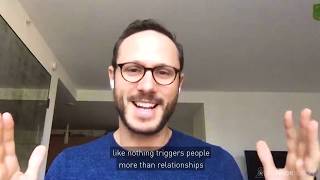
Want to hold someone else to our own standards, or we can very quickly bypass our own standards and project that onto someone else. And so rather than taking ownership over our own experience in a conflict or an argument, we'll very quickly move into a space of like, well, you're doing X or you're doing Y and you didn't. Yada, yada, yada. So I'm off the hook, right? And we can throw our hands up and walk away. And it's a really, really important piece. And so this is why it's so important for us to pull the focus back in on ourselves. It's so easy in partnership especially. This is why relationships, in my opinion, are the most transformative vehicle on the face of the fucking planet. Like, nothing triggers people more than relationships.
So this why it's so important within the context of a relationship. Notice when we are projecting our stuff on another person, when are we trying to hold our partners accountable in the way that we hold ourselves? They have their own journey, they have their own sabotage mechanisms, they have their own inner critic and their own work to do. And so we need to be able to see, okay, is that me? Am I trying to hold her to my expectation? And if so, what's the impact of that? How could I let go of my expectations and create some space for her to be able to go through her own experience or for me to understand what her blocks are and what her challenges are and why she's sabotaging and why that's happening?