What To Do When Dating A Masculine Woman
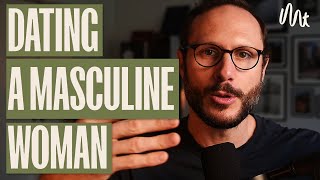
Connor Beaton breaks down why some women lean masculine: societal pressure, being raised by dominant mothers, or trauma from aggressive men. His advice for men: stop fighting for control, regulate your nervous system, and help her feel safe enough to soften.
Chapters
Foreign.
Team, welcome back to the Man Talk Show. Connor Beaton here. And today we're going to be talking about the keys to dating a woman who is more in her masculine. I get this question all the time from men. What do I do if my woman is more in her masculine or she can't seem to switch out of that? How do I operate? Causes some tension. And no, the answer is not just bounce. Um, I've seen a lot of commentary on the Internet of like, oh, if a woman's more in her masculine than you know you're beta and you know you're attracting her, or if a woman's more in her masculine, just bounce. You know, don't even bother with that. That is a life choice that you can make. But if you're married to a woman who sometimes occupies more of a masculine energy sometimes, or you seem to attract women and date women that are more in their masculine, this isn't about fixing her or changing her or trying to solve it. I'm just going to talk about why this happens. Why are more and more women more masculine oriented? And then secondly, what do you do? How do you build a healthy, grounded, peaceful, loving, fulfilling, satisfying relationship with a woman that maybe is more in that masculine orientation? So let's dive in. First, why, why is this happening more and more and more? I think the big thing, there's three big things I want to lay out. The first one is that society has incentivized women to embody the masculine. More and more there has been this push for women to embody more masculine oriented gender norms or characteristics or traits, things like assertiveness, becoming a little bit more dominant and aggressive. Those things seem to be more and more socially acceptable for women to embody, to be more direct, to have, to be more ambitious, and they are less and less socially acceptable for a man to embody. And we can see this in our culture, right? Feminism sort of denotes this idea that in, in some ways, and I'm not knocking feminism, I'm not putting down, I'm just, just, you know, we're just talking about it here. Don't, don't bring the knives out, don't shank me. But in, in many ways, FE is promoting equality through the vehicle of encouraging women to be more like men and men to be more like women. And that's a very basic frame, but it is a part of what a lot of feminist rhetoric and ideology promotes to women. And what ends up happening is that a lot of women end up embodying a lot of modern women in, you know, big metropolitan areas, they end up embodying the type of man that they want to attract. So they end up becoming very much externally like the type of man that they want to attract, they're highly ambitious, they're go getters, they're very assertive, they're very direct, they go after what they want, those types of pieces. And there's nothing inherently wrong with that outside of the fact that it doesn't leave a lot of room for the man who is that way. Because the inherent truth is that a man who is very ambitious, you know, very direct, very assertive, he's not necessarily looking to get into a relationship with a woman that he's going to have to compete with or that he's going to have to, you know, sort of grapple with for the, for the sort of masculine seat in the relationship. And what can, what can be challenging is that for a lot of women who are very career focused and very career driven, which again is not an inherent problem, but, but what ends up happening relationally is that they can't shift out of that, they can't shift out of this very masculine way of being. And what ends up happening is that they attract more feminine, what I call feminine forward men. So men that are generally, you know, they have more softer skills, they're more nurturing, they're more caretaking, they're less ambitious, they're less direct, they're less assertive, and they have sort of these more feminine oriented qualities or qualities that we have hidden historically associated with feminine with women. They seem to attract a lot more of those style of men. And the men that they really are desiring, these sort of ambitious, driven, direct, assertive men either get deflected away or women adopt this narrative of I'm just too much for some men, or some men can't handle me, or men are scared of me. And this becomes the rhetoric and this sort of way, of the way of coming to terms with the fact that they are deflecting away or turning off the type of men that they would really want. And so society has, largely a lot of society, and much of feminism has told women you should be completely independent, you should never quote, unquote, need or have to rely on a man. And the truth about relationships is that there is reliance, there is reciprocity across the board. And so what can happen is that a lot of women end up becoming completely autonomous and 100% independent, and there's no room for a man in their life. Now, if that's truly what you Want and you desire power to you. I'm not saying there's anything wrong with that. But for the women who want to be in a relationship, it can be very challenging to step out of this hyper individualistic or orientation that doesn't actually leave room for a man to contribute into her life or give feedback or you know, grow with her and these types of pieces. The second thing is that some women have been raised by a very dominant woman and they never really learned what it actually feels like to not be in this hyper dominant orientation. So they don't actually know what it feels like to be in a more feminine, relationship oriented body, caretaking, nurturing, soft way of being. And again, I'm not saying that those are the only qualities of a woman that are attractive or appealing to men, or that in order to be a quote unquote good woman that you have to be nurturing, caretaking. But the reality is, is that when you do ask men, those are things that the majority of men say that they want in a woman. They want a woman that isn't going to make their life exponentially more complicated and drama filled and you know, conflict oriented men, generally speaking, desire women who are nurturing, who are caretaking to a certain degree. And it's very interesting because the modern narrative is that men either shouldn't want those things, it's degrading for women to embody those characteristics and et cetera. And so for some women, they've just never grown up around a woman who had those more feminine qualities of being able to nurture, being able to caretake, being able to care for the people around her in a way that still embodies leadership and its own orientation, still embodies strength in its own way, but they've just never actually witnessed it. The last piece is that some women have been really hurt by, by, or taken advantage of or abused by or betrayed by a man who embodied this sort of.
What we could call hyper masculine orientation, right? Very dominant, very assertive, overly direct. But he wasn't maybe honest or truthful. Maybe he took advantage of her, maybe he abused her, maybe he abandoned her, you know, maybe he betrayed her in some capacity. And so what happens for those women is, or maybe she just grew up around a very hyper controlling father, you know, type of father that was like always trying to control everything that she did, what she wore, who she talked to, gaslighting her, manipulating her. And so this very either deep mistrust of men started to come online and so they embody those characteristics or they adopt this Mentality that the only way to be safe in life is to embody those characteristics of the man who was controlling. So she becomes hyper masculine. You can see this in some women that, that maybe had these types of fathers that are very controlling, manipulative, narcissistic, coercive. A lot of these women mistrust men. And how they develop safety around men is by being in this hyper dominant, hyper controlling position where they're always right and they're controlling the outcomes, they're dominating the conversations, they're dominating the outcomes. And that for them is a position of safety. It's not to excuse the behavior, it's just to say that that's part of what has created it. So what do we do? Regardless of which one you found yourself in, what do you do? How do you actually develop a meaningful, deep, connected, fulfilling and rewarding relationship with a woman who is embodying more of her masculine. There's a couple of things that I want to lay out for you. Number one is letting go of the who's right battles. This is very common in relationships where if you are a man who is, you know, remotely masculine, you're going to get in a relationship with a woman like this and there's going to be a lot of battles, going to be a lot of conflict. And that conflict revolves around a kind of power struggle where she is not wanting to move out of this safe space of being in this masculine orientation. And you find yourself provoked in some way to engage in this power battle with her to try and win, to try and be right. This is the thing that you need to step out of regardless of your relationship, stepping out of the need to win with your partner. Because when you are in a battle with your partner and you're trying to win, you are automatically in a position of moving out of a relational space and into an objectification space. You are moving into an adversarial form of relationship. It's me versus you that is non relational. That is not the type of relationship that is likely going to bring you long term fulfillment and joy and happiness. So moving out of this power battle, beginning to, beginning to identify what are the key things that you and her seem to get locked into a power battle around? Where do you find yourself trying to prove yourself? Where do you find yourself needing to be right all the time? Where do you find yourself trying to correct her? And you know, like litigiously, some, some guys end up going into like lawyer mode where it's like two lawyers arguing, you know, between the man and the Woman, Uh, and he's just trying to. To gain some semblance of.
Of, we could call it masculinity, but he's trying to gain some semblance of control in the relationship by. By being right. And so you have to start to let go of all this, and you have to start to disengage. Because it's very common that women that are very much in their masculine will use conflict inadvertently and unconsciously as a means to stay in a position of superiority and as a means of staying in a dynamic where they never have to be open, where they don't actually have to be vulnerable, where they don't have to share their emotions. And they can continue to perpetuate this belief or this narrative that you're not safe, or the relationship's not safe, or it's not okay for her to open up, or you never understand her, or you never actually hear her, or some variation of that. So when you step out of this incessant need within you to be right or to win, you stop being adversarial with her and you stop pushing her into her masculine orientation. Because this is what a lot of guys do. Unintentionally. They engage in this conflict from a place of, I'm going to be right, I'm going to win this argument. And it becomes this very adversarial thing where you push the woman that you're with more into her masculine orientation. So step out of those power battles. The second thing is, and this is the only way I can frame it, stop fighting for the masculine seat or the masculine role in the relationship. It's very common that when men enter into a relationship with a woman who has a good amount of masculine characteristics or masculine energy, for some men, it ends up becoming like an intimidation thing where they feel like they need to go into this kind of battle in order to claim the masculine role or seat in the relationship. And you see this in conflict between the two of them. You see this in how the man is engaging with her. He stops operating from a place of trying to woo her and trying to express desire for her. And he starts trying to win her, right? He starts trying to conquer her. And it's a very different energy that again, will push that woman more into battle, more into resistance, more into, I don't trust you. It feels like you're trying to control me. It feels like you're trying to manipulate me. And she. She will go more into this very rigid, protective orientation that to you, as a man, is going to feel more like More like a masculine orientation. And it's kind of like, you know, if you've ever played sports with, you know, against somebody and you're trying to win against them and you're trying to. You're kind of like battling for positioning of who's the more quote, unquote dominant one who's going to win, who's going to take this seat. That's what ends up happening for a lot of couples where a woman is more in her masculine orientation. The man pushes her more into that by trying to battle for this position or this role of I'm going to be in this position rather than battling her, stepping outside of that battle, being able to identify here are the ways that I'm actually competing with her for the masculine role in the relationship. I see this happen all the time with guys. They'll use. They'll deploy complaints and criticisms, and they'll try and criticize their. Their. Their girlfriend or their wife out of this masculine energy. They'll try and dominate her into it. They'll try and use avoidance. It's like, you know, eff it. I'm just not going to deal with you at all. And then that, you know, creates a lack of trust. So instead of battling with her for the role in the relationship, try out grounding her. The real competition, if there was one, because we all, not all, but many of us like the tactical things that we can do. The real, quote unquote, competition is can you outground her? Can you stay grounded? Not un. Not unfazed or emotionally shut off or completely disconnected? But can you be less reactive? Can you actually learn to breathe and ground your nervous system? Can you stay calm, cool and collected? Even when she moves into this space of maybe being harsh or coming at you a little bit and having like a kind of a fierce edge? You know, I think a lot of men end up dating a woman who has a good amount of fire in her. And they don't know how to be the water that's unfazed by the fire, that's unbiased, burned by the fire, and actually help the fire start to diminish a little bit and turn down. And what they end up doing is they meet the fire with more fire. And so they meet that hostility or that aggression or that assertiveness or that directness or the criticism, it causes them to be reactive, and then they fight back and they try and fight fire with fire. You are not going to put out or reduce your woman's fire by meeting it with more fire. So the game is to out ground her. The game is to outground her. That means using your breath down, regulating your nervous system, having practices on a daily basis where you aren't going to be so reactive. And the beautiful thing about this, because I can hear some of the comments on YouTube being like, that's so much work. It's like, well, your relationship is meant to be a training ground for you to step into the highest and best version of yourself. That's what it is. For me, maybe for you, a relationship is there to serve as a vehicle for your ultimate level of complacency and mediocrity. I don't know, maybe that, maybe that is what your relationship is for. But for me, a really solid relationship.
Is meant to support me in my journey of stepping into my highest and best self, growing myself in many, many ways. And part of that is being able to ground. So that's the third thing, the fourth thing, and the last thing is evoke her emotions.
Women who are more in their masculine have a whole slew of unconscious tools and responses that are meant to deflect away from their emotional body. Again, because that's been seen as weak. They've been told that that's dangerous to share with a man. They haven't seen an example of what that looks like growing up. They've done it in the past and they've been used or abused or betrayed because of those things. Or they just genuinely don't trust that a man can hear or understand what they're feeling emotionally. So your work, part of what you can do as you step out of this battle for the masculine seed as a relationship, is to occupy the masculine territory of presence and the presence to evoke her emotions out. And so what a lot of men do is they get caught in the details of what their girlfriend or wife is saying. You know, it's like she starts complaining about a work situation and he says, well, how do you think you should fix that? And so a lot of men continue to push their girlfriend or wife up into their head, which is where they are in their masculine versus helping them to drop down into their body. So instead of saying, what do you think you should do? Or why do you think that happened? You can ask simple questions like, what did it feel like when that happened? Or what happened inside of you when she said that? Or when your mom called you and you know, is complaining about the same thing, how did you respond? You know, how did you feel? And you start to redirect. You start to redirect and hold presence for her to express herself, express herself, not explain herself. Explaining is a very masculine oriented thing. And what a lot of men do is they ask their partners to explain themselves, explain why you felt that way, explain why you thought that, explain why you made that decision versus express what was happening inside of you. And that is a natural feminine orientation. So when you start to evoke emotions and you start to encourage expression within your partner, you are supporting them in moving back into this more feminine oriented space. And over time, this will build a deep trust between you and her, this will build a very deep bond between the two of you and you will naturally occupy a more masculine oriented role of being present, being grounded, being the person that's evoking and witnessing the emotions versus the one that is constantly being emotional. Because this is the last thing that gets caught in this relational dynamic. A lot of men that attract more masculine women are very out of control with their own emotions and emotional expression and they end up occupying a lot of the territory because they are the emotionally volatile one. They're emotionally expressing themselves constantly. They don't have a good level, they don't have a good relationship with their own emotions. And so they're either completely shut off and disconnected or they, they are up and down and all over the place emotionally. And for their partner, it feels like I can't move out of this grounded state because he's never in a solid emotional place. So part of your work, and this is where it can be a great dynamic for, you know, some men, is that you can really work on moving yourself into an emotionally stable place where you develop that type of emotional stability and robustness that is genuine and real and not a result of suppression or repressing how you feel, but actually having a good relationship with your own emotions and being able to regulate your nervous system under conflict, under duress. So leave your thoughts below. Don't forget to man it forward. Maybe share this with your partner. Talk about what you liked, disliked, you know, what you'd like to implement and share with somebody that you know will enjoy it. Until next week. Connor Beaton signing off.
More from Connor




How to Raise Strong, Unshakable Boys in Today's Culture, with Dr. Shefali Tsabary





Anxious, needy, overthinking in love? That's a pattern, and it can change. Check the description 👇
