What Writing A Book Taught Me About Life
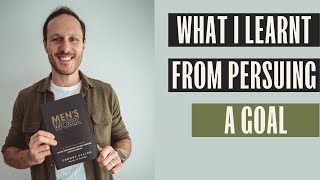
Connor Beaton spent five years writing Men's Work and learned that rejection teaches you how to adapt, external feedback cures ignorance, and strong desire can trigger insecurity and corner-cutting. Break big goals into small wins and celebrate them. Impact matters more than likes.
Questions this video answers
January 31.
Almost 1,000 people.
Chapters
Today we are going to talk about the lessons that writing a book taught me about life. And maybe you don't want to ever write a book and that's fine, but it is the lessons that pursuing long term goals can actually teach us about life and having long term goals. Because this, this has been a goal of mine for a number of years and it actually took me about five years in order to get to the place where my book published and launched on January 31. So it took a long time, lots of advers. And so I just want you to think about whatever your long term goal is, whatever you're aspiring to financially, relationally, within your health. Maybe it's something to do with something that you want to do professionally. Whatever it is, just hold that in mind. But in the meantime, this is my book, it's called Men's Work. And I would love for you to go and grab a copy to go check it out. If you already have one, go and leave a review on whatever platform that you have purchased it on because it goes a long, long, long way. And we'll have the links for that if you're watching this on YouTube, we'll have the links for that below so you can check it out. But with all this said, this just isn't about writing a book. This is about when we set ourselves to a task down the road, right to an endeavor, something that we want to accomplish. Whether we want to write a book, whether we want to start a business, whether we want to get ourselves into peak physical condition, whatever that goal is, we have to know that it's probably going to take than we expect, right? I don't remember who said it. I think maybe it was Bill Gates. But it's like people often underest, overestimate what they can accomplish in a year and underestimate what they can accomplish in three. And so sometimes we try and pack our goals and our ambitions into a very short time frame and we underestimate how long sometimes these things can actually take. And so I wanted to share this with you because for me, I got rejected countless times. I questioned whether or not I knew what the hell I was doing. I compared myself to, you know, other authors who have had extreme success, like Mark Manson, who wrote the Subtle Art of Not Giving a, or Jordan Peterson with 1212 Rules for Life, or David Data, whose book where the Spirit of man has been read by, you know, the majority of people. And I found myself getting caught in this cycle of like, comparing myself to these other people and expecting myself to do something to the same caliber that they had produced in the world, which maybe wasn't realistic, but I think it's okay to have lofty ambitions, right? To be able to push ourselves and push our edge. So the first thing that I want to talk about that I really learned in this process of setting this goal for myself was be rejection ready. Be rejection ready. Now, most of the time, when you listen to people talk about rejection, what they're really talking about is how do you deal with it after? And one of the things that I found during this process was going into conversations about getting the book published, getting the book sold, and even when I got the book sold and starting to write the book, getting rejected in terms of the concepts or ideas that I want to do, but also getting rejected in terms of the writing maybe not being where it should have been. And so leading up to these conversations, knowing your limitations, knowing that there's a chance that that rejection might happen, not believing that it's going to happen, not buying into the cognitive bias of like, oh, I'm going to get rejected and this isn't going to go well, but knowing that rejection is a possibility and also knowing that rejection is an integral part of the process. And I'll give you an example. When I first had the idea for this book, I started reaching out to my network, to my connections, and I said, listen, I want to write a book. I want to write a book for men, and I want to write a book that, you know, will give men some context for, for self improvement, for developing a deeper sense of self leadership and to, to provide a framework to do that. And so I started reaching out to people and I said, can you put me in touch with agents? Can you put me in touch with possible publishing houses? And sure enough, I got put in touch with some of the biggest publishing houses in North America and essentially in the world. And I started having these conversations, and the first one that I had, you know, I went into the conversation with a tremendous amount of optimism, like, okay, I'm going to pitch this and we'll see what happens. And that conversation went really well. And it ended with that publishing house saying, we love you. We love the platform that you have built, we love the concept that you have. But the reality is that our data shows that men don't buy books, and men don't buy books specifically around self improvement, which I thought to myself was a bit asinine. But I carried on, right? I soldiered forward and I had another conversation and another conversation and another conversation, and all of these publishing Houses were saying roughly the same thing and it kind of irritated me. And so I went out and I, and I took a different route rather than trying to go to the publishing houses. First, I went and found an exceptional agent and I pitched my idea and the agents said, okay, we'll take you on, let's help to sort of curate what this looks like. And so I let the rejection that I was experiencing and facing informed how I repositioned myself to make my goal happen. So I knew that rejection was going to be a part of the process. But I let that rejection inform how I actually continued to pursue the goal, whether I needed to shift, adapt my message, or just solicit people who knew the industry better than I did, because I think I was barking up, you know, the wrong tree or at least in the wrong order. So be rejection ready. Know there's going to be a part of the process and allow it to inform how you actually go about achieving your goal. Again, whether it's you wanting to get dates with somebody, whether it's you wanting to get in shape, whether it's you wanting to do something financially, whether it's, you know, in your business, whatever it is, let rejection inform the outcome. Second is feedback is the cure for ignorance and inexperience. Again, I'm just going to use my book as the sort of example here. I failed grade 12 English. I did not do well in English in school, not because I wasn't competent at it, but because, you know, I was prioritizing their things. I was, you know, chasing women, hanging out with my girlfriend all the time, getting drunk, you know, driving my car around. I bought a Mustang in high school and I wanted to spend more time driving that thing than I did in class. I just never actually applied myself in my education, so I had a certain level of ignorance about what it would take in order to really produce something that was going to be good, produce something that was going to be great and be well received. And I was just inexperienced, you know, I'd never written a book before and even though I've done a tremendous amount of writing, I've not put a ton of it out into the world, out into the digital space. I've done more of this, producing podcasts, having conversation, producing video content, leading live workshops, facilitating in depth work. That's what I've produced more of and put out into the world. I haven't actually put a lot of my writing out. And so I realized that there was a gap in my experience and I realized that I had a certain level of ignorance about what it meant to produce really good writing that people were going to connect with. And I think this is where most people fail when it comes to hitting their long term goals and their really big aspirations is that they don't want to admit their own ignorance and they don't want to admit their own inexperience. So what did I do? I went out and found some of the best people, the best editors, the best agent that I could find, and I allowed those people to contribute to me. And I admitted my ignorance and I admitted my inexperience. And I said, hey, listen, if you were me writing this book for the first time, do you think that the structure of the book is going to land? Do you think that the writing in the book, the voice and the tone and the vocabulary that I use is going to hit home for people? And of course I trusted my own intuition, I trusted my own knowledge after working with men for such a long time. But I allowed myself to be sort of winnowed and honed away and refined by the feedback of other people. And people were much more willing to support me because they saw that I was tuned into my inexperience. I was tuned into, I was like, I know what I don't know about writing a book, about publishing a book, about putting this content out in the world and making it really land. And here's the thing that people love. People love humility. People love humility. I mean, you think about anytime you come across somebody that you just want to help, it's when they have this very interesting concoction and mixture of a deep passion for something that they want to achieve, they, that maybe they want to contribute to, and a willingness to admit when they are a little experienced, you know, not in like an overzealous way where they're like, oh, I'm so bad at this, or I'm blah, blah, blah. But a willingness to say, you know what? I know I don't know this, I know that I'm not very good at this. So feedback is the cure for ignorance and inexperience. And that'll go a long way. When you are looking for some support in guiding you towards the achievement of your goals. The next thing, the third thing is an interesting one that I found and maybe this is just for me. I don't know if this is going to land for everybody, but I think it lands for a lot of guys, especially when it comes to like, relationships and wanting to accomplish our main goals and achievements, which is the more you want it the more likely you are to either cut corners or act out of insecurity and fear. So the more you want it, the more you're probably going to act from fear. Now listen, I wanted to write this book really badly, and not because I felt like, you know, what I have to say is so monumentally important to the world. That's just ridiculous. But I wanted to write this book because it's an edge for me. This is a challenge for me. This is an intellectual, entrepreneurial challenge to figure out a new part of an industry, to figure out what it looks like to write a book. And, and I had something in me where I really enjoy the writing process. And so I wanted to push myself and push my edge to do it. But along with that desire to accomplish something comes this sort of maybe wanting the tendency to like, cut a corner or act from insecurity or act from fear. And the best analogy that I can give is like, when you meet a woman that you really want to date and you're like, man, she's perfect. She's everything I've been looking for. It's like, the more you want that person, the more needy you become. The more you act from insecurities, the more you start to do ridiculous crap. Texting her constantly getting all in your head, you stop acting authentically. And so it's just a reminder that we have to be able to in some ways, not reduce the amount that we want something, but really be aware of, of our behaviors that are coinciding with it. So knowing that, okay, if I want something really badly, if I want to achieve something or accomplish something or be with somebody, that what might come along with that is this urge to act out of integrity. And so I started to see that urge come up when I started to write the book. And what I did was I got support from people in my life. I said, listen, I know I'm putting a ton of pressure on myself. Help me out. You've written a book. You, you've published before. Like, what did you do when you got to this stage where your insecurities started to come up? And so I resourced myself. The best cure for that insecurity and that desire to cut corners is resourcing yourself with good people who can give you that feedback, who can give you support, who can guide you and give you help. There's two more things I want to share and one bonus. And I'm going to condense these down and be quick about them. The fourth one is that long term goals require short term Gains and short term recognition. So anytime that you set a goal for yourself, right in the next two years I want to lose, you know, 50 pounds or I want to put on 10 pounds of muscle in the next six months or year or I want to save $100,000 in the next three years or whatever the long term goal is, we have to be willing to look at and break it down into short term gains. What's the progress actually going to look like on a day to day basis, on a week to week basis? And then what are we going to do to recognize ourself for those gains? Because what too many of us do is delay the gratification. Well, not just the gratification, but delay the validation and the recognition to the value very end. So we don't recognize oursel for writing the 200 words in whatever four hours, even if it takes all day. We don't recognize oursel for the going to the gym. We don't recognize ourself for putting the $10 away into a savings account, whatever the marker is. And this is a crucial key component. If you do not celebrate and recognize the small short term gains and wins along the way, then you put a tremendous amount of pressure on the long term goal to give you some kind of monumental satisfaction. But you also undercut your desire to continue on the path. Right? If you're going to climb Everest, one of the things that they'll talk about if you talk to anybody, and I've talked to a couple people that have climbed Everest before, is you have to be able to recognize and celebrate yourself for getting to the next base camp, for maybe just getting through the hour, you know, and that, that self recognition is the thing that allows you to continue to carry on. Next. And lastly number five, very simple. Don't do it for the likes, do it for the impact. I did not write this book and spend the last five years of my life writing this, producing it, you know, getting feedback, getting rejected. I didn't do this for people to like me. I didn't do it for people to recognize me. I did this to try and attempt to have some kind of meaningful impact on the people who read it. And maybe I would imagine probably almost inevitably not everybody's going to love this book. But that's not the point, right? The point is when we try and pursue a long term goal, it's not to try and appease everybody, it's trying to impact a few. And I think if we can focus on doing that and when we can focus on moving away from the culture that we live in, that's dominated by get attention now, get likes now, get validation now, and do whatever you can to get that. And we can shift into how do I impact other people? We begin to become the fringe, we begin to become the anomaly. And people are drawn towards that because people want substance, they want depth, they want value, and they want impact. And so the more that you can shift your yourself, your thoughts, your life, your work, towards meaning, towards impact, the more that people will rally behind you. And this is my bonus part, and this is how I want to close out this conversation. Being able to celebrate and experience the success of a win, of an accomplishment, does not exist in a vacuum. It doesn't happen in a vacuum. It doesn't happen alone. We can't truly experience celebration or success solo. It's nice, you know, you can stand on top of Everest and you can celebrate that moment, but what do you really want to do? You want to share the video with other people. You want to share the photos and the stories and the experience. And so, you know, for example, on my book publishing day on January 31, I held a live free call and almost a thousand people signed up for it. And it was me and eight of my closest friends, these men that I meet up with on a weekly basis. We have our own men's group and we talk. And I have never felt so supported in my entire life than I did by these guys and my wife. And during this process, they were incredible. They shared the event, they've shared my book, they've celebrated me along the way, they've given me feedback, they've cheered me on, they've shared their experience of writing books. I mean, it was phenomenal. And so it really reminded me that. It reminded me of this African proverb that you've probably heard of, which is, if you want to go fast, go alone. If you want to go far, go together. And I have found so much value in the pursuit of going far. The quest, whether that's far in going deep, internally, psychologically, whether that's going far financially, whether that's going far within my career, elevating my business, expanding and growing my company, all of that does not happen solo, doesn't happen in a vacuum. It happens in community. And so whatever you're doing, whatever your goal is, whether it's financial, whether you want to stop watching porn, whether you want to lose weight, whether you want to, you know, save more money, build a business, hit a big goal within, within your sports or your art, go with a community, share your goal with other people who are actively going to support you and allow yourself to be supported not only along the endeavor, but in the celebration of the accomplishment. So thank you so much for tuning in. Comment below. Let me know what you would add to this. Don't forget to like and subscribe to the channel and hit the bell notification so you can get more when you get notified of when more videos drop. And don't forget to man it forward. Either man it forward this video or man it forward the book and share this content with other people that you know will enjoy it. Until next week, this is Connor Beaton signing off.
More from Connor







How to Raise Strong, Unshakable Boys in Today's Culture, with Dr. Shefali Tsabary



