Why Are Fewer Men Going To College (And The MASSIVE Opportunity In It)
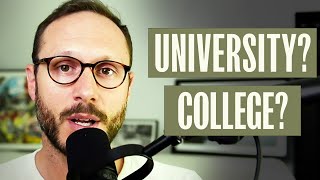
Connor Beaton breaks down why college enrollment among men has dropped to 41% while women hit 56%. He points to tuition costs, perceived anti-male campus culture, and appealing alternatives like trades and entrepreneurship. Experienced practitioners can capitalize by building apprenticeship programs.
Questions this video answers
About 11.5 million women and 8.7 million men.
Roughly 56% women to 43% men.
Speaker cites about 41% (men).
Apprenticeships are claimed to be up 50% year over year for the last 3–5 years.
Approximately 90,000 clinical hours.
Chapters
Why is it that so few men are going to college? Why are there less men than ever before going to college institutions? You know, as of 2021, there were roughly 11 and a half million women who were going to College and 8.7 million men within the United States. So it was roughly a 56 to 43% ratio. And that divide in 2022 got even more bigger. So there are less men year over year. I believe the stat was 41% college graduates or college admission was men. This year there are less men going to college than ever before. Now, is this a problem? Yes and no. Like, not necessarily. It's not an issue if you're a man and you don't want to go to college. Because there are a ton of reasons to not go, right? College admission, college price, the cost to go to college is higher than it's ever been before. It's absurd. You know, we saw over the pandemic that most college institutions, even though you were taking classes from home through zoom, you weren't even showing up to college campuses. Most colleges actually raised their tuition prices. And so a lot of people are coming out of a college degree with, you know, a hundred thousand, two hundred thousand dollars in debt, and starting at an entry level job, you know, making 50, 60, $70,000 a year becomes very challenging to pay off the that debt over your life. And so I think a lot of guys are looking at this as, is this even worth it? Not to mention that college campuses have become a hotbed of anti male sentiment. I think when I've talked to a lot of young men, because a lot of you guys, you know, tune into my channel, I think something like 34% of my channel are men between the ages of 18 and, and 28. And then there's a much bigger proportion of men who are 28 to 44. But a lot of you guys message me because I've talked about this before. You message me on Instagram, you email me, because I've been talking about this for a while and say, why do I need college? You know, I can go into a trade, I can start a business, I can make money that way. Yes, that is true. But I think one of the things that's interesting is that for a lot of women, they look for men, especially women who have college degrees, right? The 12 million women who will graduate with a college degree, they look for men who have college degrees, they look for men who have education similar to them. Remember, women date up and to the right, they date men who are of equal status. Or standing or above. That's what women traditionally and historically have looked for. And when you look at the data today, that's really not a lot different. Women are still looking for men who are equally educated, who are equally earning, who are equal or greater than them in some way, shape or form in terms of status. So why are so few men going to college? To be honest, you know, if I was a young man today, I would struggle with this decision. And I delayed, you know, after I graduated high school. I had terrible grades in high school. I didn't really care about school and academia necessarily. It wasn't really built for me. I had problems sitting still. I had adhd. You know, I was probably like the first guinea pig on Ritalin way back in the day when the drug first came out, like in elementary school. And academia was really something that I struggled with because that's not how I learn. It's not. I'm not the guy that sits down with the textbook for hours and memorizes stuff and then regurgitates on a test. It's not how I learn, it's not how I operate. But what I learned later on in life. And I did go back to school eventually, when I was about 23, 24 years old, I went back and got a degree, but I got a degree in music. And I was pursuing something that was more mentorship based. And the things that I really struggled with in school was the. The more academic part of it, right? I did great in English, but I really struggled with, like, music theory, which is, you know, quite a bit more technical. It's. I really didn't enjoy it. But the problem that I see a lot of men having, and I. Richard Reeves on the show, and we sort of talked about this, is that most educational institutions are not designed and developed for men, for young boys, for the way that we develop. They're not necessarily developed or designed to educate men in a way that supports us. And so I think a lot of men are opting out from college for a number of reasons. One, it's hard to justify the cost in America. It just is, you know, in many other countries, it's so much more affordable, or it's part of the social system and it's. It's something that makes sense, right? You can go and get a degree, a bachelor's degree, a master's degree. You can come out, you have a good job that's set up for you, and you're not burdened by $100,000 of student loan debt that you have to pay off immediately and that you can literally never get rid of, even if your life takes a turn for the worse and you go bankrupt, Right? So I think there's that one part, right? Mathematically, logically, it's hard to make it make sense unless you're going to a degree where you're kind of assured a very high ticket job or career on the other side of that. And then I think that a lot of men are moving towards trades. They're moving towards building a company, building a business, getting into a specific trade. And then finally, I think there is a massive resurgence. And here's where I think the opportunity is for you as a young man or however old you are. I think that a lot of men are moving towards apprenticeship based ways of learning and apprenticeship based education. Now this is where I've thrived in life. My education in psychology, in therapeutic modalities has largely come. You know, I've learned a lot by reading books and by going in textbooks on my own. But I have learned most of what I do today and most of what I know today, but by sitting at the feet of mentors, by taking on really old school, traditional style apprenticeships. Right. So my first apprenticeship was with a man who was in his early 70s. He was a French Canadian guy who knew a tremendous amount about Jungian psychology, cognitive behavioral therapy, neuro linguistics, programming, Buddhism, Zen Taoism. And I spent about two to two and a half years apprenticing with this man. And so I would pay for his time. And when I couldn't pay for his time, I would basically volunteer around his farm. So I would give my time to subsidize the time that he was spending for me with me. And so what I would do was I would help him with his asparagus farm. I would help him chop down trees. You know, I did the like carry water thing. You know, I helped him, he, he raised rottweilers and so I helped him with his dogs. You know, it was a really interesting thing, but I, I created an exchange where I would pay him for his time. And then, you know, because I couldn't pay him all the time, I would subsidize that by supporting him around his farm as he was aging. And that created a beautiful dynamic. But I also learned a tremendous amount firsthand. And I think this is what a lot of men are searching for. You know, I look online and something like YouTube, if you're watching this on my YouTube channel, which has started to grow quite a bit. And thank you to for everybody that tunes into that it's been growing exponentially alongside my podcast, which has been a blast because I'm investing a lot of time into that. But I see a lot of men watching, you know, do it yourself YouTube videos, training videos on YouTube, how to get better in relationships, how to be better in the bedroom, how to, you know, build your own table, how to improve your carpentry skills. Like, all of this is accessible online, and so you can literally learn how to do almost anything online. And I think a lot of men love and appreciate that modality. There is something baked into our masculine cores that really enjoy sitting down with somebody who has mastery, you know, over the years. Like right now, I work with a gentleman again, who's in his early 70s, who's been doing gestalt therapy and equine therapy, which is working with horses for 40 plus years. This man has like 90,000 hours, 90,000 clinical hours of working with patients, working with people. And I have found a tremendous amount of value in that. And I've actually had this dialogue and conversation with myself like, do I go back and get a master's? Do I go back and get a PhD? You know, do I need that? And I think for certain things, there's still merit in that. You know, I think specifically within psychology and therapy, you look out at the sort of modern narrative and mainstream media, they traditionally are going to promote people who have the degrees. But for the most part, I have built an incredibly successful company.
Without the degree, and it's just not a necessity anymore. And I think with the rise of things like artificial intelligence, where you'll be able to learn languages, skills, trades, trading, financial acumen, all of these things, you'll be able to learn much faster with AI for much cheaper. I think with the rise of those types of things, there is this huge emerging market that is going to start to. That I already think is happening. That's already emerging within apprenticeships, right? Apprenticeships are actually up 50% year over year for the last three to five years. So I think if you're a man that's out there who has a skill, you know, if you're in your 40s or 50s, you've built up a successful business in a specific area and you have a skill or a trade or knowledge in a certain area. My advice, for whatever that's worth, I don't like to normally give advice, but. But I would really encourage people to start to look at. Is there a way for me to create an apprenticeship program within my world, within my niche, within my skillset, and within the area that I have mastered. Because there are going to be hundreds of thousands and millions of men, especially in North America, who in the next 10 years, the next five years, are going to be looking for an apprenticeship. We are going to return my gut and my guess and my bet and what I'm betting a lot on in my own life is that we are going to return to a blacksmith style of education where you sit with the expert and the wisdom and the knowledge of a certain skill is passed down. And I think that there's something very rich and historic and traditional about that, specifically within masculine culture. And we're seeing a resurgence of that. You know, even within the weekends that I host with my colleague and my mentor, a lot of men are coming out to go through a kind of initiation to sit with people and go through a kind of apprenticeship where they learn new skills, they attain new psychological, emotional, physical assets, and they learn how to do things from people who have been immersed in that field for a very, very long time. So whether you're in the finance space, whether you are an entrepreneur, whether you are an actual blacksmith or a carpenter, or an electrician, or, you know, you're an artist, whatever it is, I would really encourage you to begin to look at this new form of education that is that. Not this new form of education, the return the sort of as. What's his name, the weird guy with the hair and the strange voice. It'll come back to me. But the archaic revival, right? This notion of an archaic revival that I think our education is returning and a lot of men are returning to this space of I want to sit with people and learn from people who have actually been out in the world learning. You know, it's like the. One of the reasons why I didn't want to go back to go get a psychology master, a master's in psychology, is that a lot of those people have been lifelong professors and they actually don't have the type of expertise and wisdom that you're going to get with somebody who has been in the field, working hands on with people for the entirety of their life. It's just a very, very different thing, right? It's like you can go and learn business and entrepreneurship from a professor who has studied business and entrepreneurship, or you can go and learn from the entrepreneur that has built a dozen companies, failed three or four times, and had massive successes three or four times. And the value in that is just something that you cannot put and fit into textbooks. So to summarize all this, why do I think that so few men are going to college. I think that many men are starting to wake up to the reality that maybe that that traditional education system that has put us on an industrial complex sort of line that says you go to school, you graduate from school, you go and get a college degree, you graduate the college degree and you go and work a 9 to 5 job and, you know, you move up the corporate ladder over the course of 40 years. I think that many guys are tired of that and it's not appealing to them. And so they're looking for and trying to source out new ways of building their skill sets, of building themselves. And I think that we're going to see more and more of that. I actually think that in the next five to 10 years we are going to see less and less men going into colleges and universities and it is going to in some ways create some discrepancies within corporate culture, within marriage and dating. I think it's going to put some duress on some of those areas. But comment below, let me know what you think about this topic. Why are less men going to college? What do you think they are opting for? And what are the possibly negative and positive outcomes that are going to come from this? So either share this episode man it forward Comment below if you're watching this on YouTube or DM me on Instagram. Mantalks if you are tuning into the podcast and until next week, this is Connor Beaton signing off.
More from Connor







How to Raise Strong, Unshakable Boys in Today's Culture, with Dr. Shefali Tsabary



