Why Is Everyone Acting So Crazy? The Rise of Mental Health Issues And Political Identity.
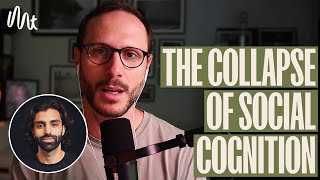
Connor Beaton talks with Anthony, a Columbia psychology graduate, about why political polarization and mental health struggles rise together. Anthony traces the neurobiology of how we read others' minds, then explains how social media and identity politics lock people into rigid thinking. He also discusses why men avoid therapy and concerns about gender-affirming care debates.
Questions this video answers
Columbia University — degree in psychology.
Medial prefrontal cortex (mPFC); temporal-parietal junction (TPJ); amygdala; orbitofrontal/orbital cortex.
Chapters
All right, Anthony, welcome to the Man Talk Show. How you doing today, buddy?
I'm doing well. Thanks for having me, Connor. It's a pleasure to be here.
Yeah. You know, I stumbled across some of your work online, and I found it to be insightful.
Well, well, spoken like you really have a good way of articulating the concepts that you're putting forward.
Thank you.
And just a. Just a completely different spin. So I kind of got curious about your work, and I thought it'd be interesting for us to sit down and. And. And just sort of jam.
Yeah.
So tell. Maybe tell the listener a little bit about, like, what you. What is your background and how do you describe what you do and the content that you post online?
Sure. So recently I graduated from. I guess we can start from the most recent place. I graduated from Columbia University, degree in psychology, and.
I returned to school. I'm 35, so I'm back. I was back at it late in life, but started out as a classical musician, actually, all throughout all my life, up until the pandemic, I was doing that. And then I decided to enroll in school again to pursue psychology. And I'd always been interested in psychology, Human behavior, attachment.
Temperament, all those kinds of things under the sun regarding wellness and human potential and healing and all that stuff, but I never really leaned into it, so I. I was always sort of on the outskirts of it, talking about it and. But the pandemic hit and things slowed down for musicians, and I had some time to introspect and lean into the other aspects of myself that I thought had been, you know, kind of quiet. And I thought, you know, why would I go back to school, pay all this money, all that stuff? And I've been lamenting over that for a good few years prior, but I decided it was the right path. I wanted to. Wanted to get a formal education in psychology, do some research. And of course, Columbia is a great research institute, so I had an opportunity to. To spend time with some research. And, And. And that kind of led me to different avenues at Columbia. I wanted to focus on pursuing a PhD at some point, but that kind of. I got a little disenchanted after I'd interacted with several professors and PhD candidates. They didn't deter me personally, but just their. Their advice was, ah, we're not so sure. That's not for me, but just at this point in time, you know, maybe consider it. Recon. Reconsider. And so I thought, well, what am I going to do?
And I thought, well, I love to write. I love to talk about the things that I enjoy learning. And.
I think that I'll do a little bit of commentary, but I wasn't so sure what I was going to talk about. There's so many different areas of psychology that I enjoy. But Columbia was going through a volatile period last year, and it still is politically. And so I decided to hop on Instagram and talk about what was going on there. And that got more views than I'd ever had before on Instagram. And so I thought that that was the time to start something. And so that's. That's when I leaned in and started to build a following. That was just back in March or April, I think, but I guess to close that off, the. The possibility of continuing an education still on the table. But right now, this is what I'm enjoying and. And happy to be at places like this with you right now, here with you right now doing podcasts. So. Beauty. Yeah, beauty.
Well, maybe just speak to a little bit of, like, the. The research that interests you and some of the research that maybe you got into. And I think that would. That would be helpful to just sort of contextualize for the listener. Like, what. What areas? Because you kind of mentioned a couple different areas. But, like, what areas of psychology have you kind of dug into?
Yeah, so they're. They're. They all have. They're all connected in one way or another. It's kind of a hodgepodge. But I started in an autism research lab for a few months.
And that's where I had some interaction with the basic science research with mice, animal models and more of the molecular aspect of behavior and all that stuff. But I became very interested in social cognition in autism. I hadn't really paid much attention to it and theory of mind. And, you know, for people who are on the spectrum, depending on where on the spectrum, the capacity to mentalize or to understand that one's mental framework of the world differs from another person or theory of mind, which is about the same thing more, which is a bit more of a cognitive bent where you can conceptualize somebody else's frame of mind as being different from yours is stunted in people on the spectrum. And it's not for lack of empathy, but it's because there's just the neural architecture. Whatever's going on up there impedes that ability to. To see it from a different perspective. And then that creates a bit of a social rift or some social awkwardness sometimes. And that became very interesting to me as an area of research, and I thought, I'm Going to go into the repository of my, of my interest, of, of what I'm interested in. And I'm very interested in, you know, human attachment, human, you know, childhood development. I'm interested in sociopolitical issues, but not from sort of a political science surface level perspective. Nothing against poli sci, but more from a behavioral perspective. So kind of mashing these all together, I guess you could say that I'm interested in how people develop their ideologies, their perspectives. What's. What about that is temperamental baseline and, and genetic. And what about that is environmental? And how do they, how do they cross talk? I was. And then I, I finished my time at Columbia at a lab where we focused on narrative arcs, how, how we interact with others arcs or positive or negative storylines, how that makes us perceive them and how that makes us perceive our own story arcs. So we take it in together. I'm. It's a lot of different stuff, but I think if you distill it, I'm most interested in social cognition, social emotion.
And. Yeah. How we interact with one another from that, from that level.
What are some of the things. Because I think, you know, social cognition is something that I think a lot of people are interacting with on a daily basis but don't really have a lot of reference for what it is and how theirs is actually formed. So maybe give a little bit of insight from your perspective about, you know, unpacking a little bit more. What is social cognition and how does our social cognition actually get formed? And then how do we see that showing up within. Within culture today? Because I think one of the things that I've noticed is that we have become socially much more prone. People have become much more prone to hit the eject button on relationships as soon as disagreement shows up.
Oh, yeah.
And it's. I think it's so catastrophic for relationships. I've been talking about this and I've seen it in people that I know. All of a sudden, if you disagree with them, it's like the relationship is severed. And so it's really fascinating to watch because I've done my best to maintain tethers, maintain relationships with people. It's one of the things that I, you know, I really try and hold as a core value. I can disagree with you and still be in relationship with you. I can disagree with you politically and still disagree with you. I can disagree with and still be in relationship with you. But it seems like a lot of people, there's almost an ideological narrative out there that says if someone disagrees with you, that is the basis and the grounds for complete disconnection. And I feel like that is, it's very challenging. So I'll, I'll let you go back to the beginning.
Yeah, so exactly what you just said, the sort of if then proposition or setup is, is in, in and of itself an indication of, of binary thinking, of an, sort of a incapacity to experience ambiguity and to regulate through that ambiguity emotionally affectively.
And that from a higher level, I would say that that comes down to something like, you know, cognitive dissonance and holding two opposing views at one point in time. And how much does the incoming information.
Impose itself on whatever is already established and how do you deal with that? And for people who have a low threshold for distress or have a low tolerance for, for stress, when their stress system upregulates, it becomes much harder for them to open the gap between that stimulus and responses. That quote is attributed to Victor Frankl. Between stimulus and spawn response, there's a gap. And that's where your freedom is. And I love that because you take that visual and I, I do that a lot and I think about, okay, how am I taking this information in? What is it making me feel? And am I not hearing the person as I, am I not hearing the person as they're intending? And are we cross talking? Are we misunderstanding each other? Am I misunderstanding them? So all of that is, is part of social cognition. It's when you can stop and introspect and be a little bit introspective, you can regulate, employ some metacognition, all in a very short period of time. And that's a practice, especially if it's someone who's really quick to respond. And some of that's temperamental and biological, some of that's just genetic. But regardless, we can employ these top down strategies to regulate how we interact with another person. And, and so if a person struggles with that, there could be various reasons why it could be, like I said, something more temperamental, biological.
Something more neurological. It's often a mix of things, it's not just one thing. But fundamentally, social cognition is, is a set of mental processes that we use to perceive, interpret and respond to the social world. It's how we understand people's emotions, intentions, you know, beliefs, behaviors, and the intentions parts. Really the part about intention is important because what you're pointing out to is on the, the social kind of world that we live in today, people ascribe meaning very quickly to others words or they perceive that they have nefarious intentions where they're very well may not be. And the, the inability to catch oneself and think, well, maybe that's not what that person thinks. Let me just pause. Is like I said earlier, a problem with theory of mind, being able to distinguish your own mental framework from another person's and to be okay with that in the psychodynamic literature and in something called mentalization based therapy by Phonegi, I think that's you pronounce his last name. The term is psychic equivalence. When a person has a difficulty perspective taking, engaging in perspective taking.
This is called psychic equivalence, which is how I think about you and about what you're saying. The quality that I ascribe is therefore the truth and I'm going to act accordingly to that ascription, you know, and it doesn't give the person any time to explain themselves. It closes that gap very quickly. And it's much easier to close that gap when there's an online interaction. Of course.
Yeah, seems I want to sound like conspiratorial because I, you know, as you're saying like, you know, people can take, take things out of context so fast these days, but it does seem like there has been a kind of direct onslaught, whether it's intentional or unintentional, to erode social cognition within people. And it seems like the extremes of both the left and the right.
Move towards this, this complete bias totally, you know, on a, on a regular basis. And so I'd love to hear your thoughts on like what from your perspective, what has transpired that has eroded the everyday person's ability to have a little bit more of this social awareness and, and not collapsing somebody's entire identity into, you know, a caricature. A caricature or a one word statement, an ism or an ist, simply because they, they disagree. Like what's, what's going on?
That's such a good question. And I mull over that all the time. But I think a fairly.
Simplified explanation, or at least my view of it is I do, I do think to start off, I would say social media does get a lot of.
Gets gets blamed a lot and rightfully so. It's a moderating variable that really does tend to accentuate our, the deep, the darker corners of our psyche or even the most brilliant corners of our psyche. And it could be very good. But.
I think that social media, because it's, there's such an expediency at which things are delivered and, and expressed and the hit rate, the response and hit rates are so close and, and everybody's always out to get that next thrill and to get assurance, you know, if someone's more or less higher in anxiety or trait neuroticism, like a lot of adolescent teenage. Well, it's redundant. A lot of adolescent girls.
Developmentally, that could be a, you know, social media could be a very comforting thing to close that gap. Like I was saying before.
And I think that given. Okay, so if you think about. Given the conditions of, of our human nature, you add something like that to the mix, it just makes it that much more pronounced. But this is not really new. I mean, we've. Even if you take social media out of the, out of the game, you see the identity politics from, you know, since the French Revolution.
Athens, Sparta, you know, it's like. But. But without going down that rabbit hole, I mean, to, to be a little bit more concise and specific to our times, I think that, you know, you have two. Two camps of people and people. People don't like that there is a binary that there's the Republicans and Democrats. And I understand that because from a. It seems superficial and in many ways it is superficial, but really it does hit on something pretty fundamental about, about our humanity that is quite anthropological and evolutionary, which is you do. You do sort of get this binary. You sort of get the, the nurturing types and, and then more, you know, kind of strict traditional types and that they, they create their own distribution, if you will. And there's a lot of variation and variability, I should say, within those distributions between left and right. You know, not everybody on the left is one way, not everybody on the right is the other way. But this does seem to be a through line in our, in our species. You know, you have an adherence to certain rules and structure and traditions.
And you see a lot of that happening on the right, the political right, and you have more of a diffuse lookup of humanity, which happens in the left, which is more egalitarian. And we have to make sure that everybody is taken care of and more maternal, if you will.
And I think that.
People really, when. When they're in a precarious state of mind or maybe even dark night of the soul, if you will. The. And I could speak for myself anecdotally, I can't say empirically, but. And there's some empirical evidence on this too, I should say, and I'll get into that in a second, but when you're kind of going through it, the more nurturing communal.
Tribe is. Is going to feel probably a little better rather than the one that says, you know, you've got to Build something and maintain it. And you know that more conservative archetype is, which tends to be true, is you start with self family and then outer rings and you go into the community and the community to the state and it just becomes, it's more, it's iterative like that. And then the left tends to be. A lot of the people who adhere to leftist politics tend to fuse to. They tend to fuse their identities, personal identities to a group. This happens on the right too. But the left tends to.
Tends to be more kind of sucked into the group as a maternal figure. And the right tends to look at hierarchy a little, a little more upward. And they, they, they know that there's a structure. And a lot of this work can be seen in Jonathan Heights work and some other social psychologists that focus on. I could send you links, you can post them if you'd like. But.
I think when you give people a slogan who are feeling at odds with themselves or feeling diminished in whatever way, it makes them feel like they bel. There's a sense of belonging, group adherence, and it can get quite militant. And I think that's a very long way of saying that groupthink is very appealing to people who might have more of a proclivity toward anxiety, who don't like ambiguity that much.
Who feel marginalized and they sort of outsource their autonomy to a group. I'm kind of going on too long now, but I think that if you take these ideas and think about them, you can put something relatable together, you know. Yeah, yeah.
I think all of that is very worthy insight, very valuable insight. And I remember seeing a study once that looked at the difference between conservatives and liberals and was trying to discern like what the core values were of each, each set of voter. And that, that generally conservatives are at the epicenter of their values is really family and the family structure.
Yeah.
And when you look at the liberal structure, it's much more further like the, the family is much further out from the center of their values.
Yeah.
And what's at the value is like socio. Cultural importance, you know, what does my peer group think versus what does my family think? What does society and culture think? And, and so, you know, I do think that there's a divergence there just naturally between. I'm sure we could psychoanalyze that, you know, to a bit. But it does seem interesting to, to see this divergence where especially in the last election, you know, men went one way and women largely went the other way. And, and you know, that's been Talked about quite a bit. I wonder how much of that is.
A, a, a sort of predisposition towards men and versus women that, you know, women are more sort of social beings and men are more. I don't know how you would frame it like principled or, or. I don't even know if family centric is, is necessarily it, but.
I wonder if some of that plays into it. And what's been fascinating for me doing this work is that, you know, for the last 10 years been running a company called Man Talks. And I remember starting it, you know, a little over 10 years ago now in 2014 and just getting so much hate, you know, having women being like, why do men need this? And this is ridiculous. And, and then it becoming more socially accepted and then over time it becoming very. From women specifically, it was like they either loved me or hated me, depending on whether or not they thought that how I was serving men would ultimately serve them.
Ah.
And it's like, are you turning men into the man that I, that I think I want? And if so, you've got my thumbs up. And if not, then you know, I'm going to delete you from, from existence. And there does seem to be a kind of, on the one side, it does seem to be a kind of eradication or a dissolving of categories and hierarchies, and on the other side, a kind of re. Entrenchment of that. I've noticed this. I even had somebody the other day, a friend of mine who's in our field, he was working with, with someone and she said to him, you know, every hierarchy is patriarchal and misogynistic, like any higher. And he was like, any hierarchy? And she was like, yeah, any hierarchy that can exist is patriarchal and misogynistic. And it was like, well, what, yeah.
That'S like, that's, that's a problem with. And I'm sorry, I'm sorry to say, you know, if, you know, I don't want to speak ill, I'm not going to speak ill of her. I won't. But I'm just going to preface with that, that is a problem with social cognition right there. I mean, it's this all or nothing thinking pattern that like you said, collapses people to a caricature. And it's just, it's fallacious, logically flawed, first and secondly, just not realistic. I mean, we know that there are sex differences, biological differences fundamentally between men and women. I mean, people poo poo over testosterone being, you know, hugely influential in, in how men operate and oxytocin, how women operate. And of course we both have, you know, both sexes have them, but you know, it's. They're social, there's. They're partially social hormones and testosterone being, you know, often linked to aggression and, and dominance and oxytocin to bonding and trust and, and that's, it's not a, it's not like it's beall end all like, you know, that's, that's the story and that's it. That women can't be aggressive and men can't be, can't bond and be soft. You know, but it's there, there's a functional reason for this and it's hardwired into us. And I remember there was a time when even just saying that was a huge problem because it, it came off as essentialist or of course you have the social construction, the constructivists who say that, you know, gender is a construct and therefore everything under that statement, what follows is that anything you say, any differential is constructed and that's just not true. And I think that plot has collapsed, thankfully. Well, maybe. I mean, it still exists, of course, but it, it doesn't have as much power. But, but yeah, I mean like there's for women who wanna, you know, this whole idea of we're equals, we, we are equal, we're equal under the law. We are, we are equal if one has, you know, believes in God, you know, a creator. But this idea of equality has been turned into a.
What would you say.
A euphemism or something that's, that's, that that has a, a much more nefarious meaning than what it really is stating is that of course, all things aside, you know, men and women are equal in many ways, but there are differences. And those differences are not a problem. They're functional, they're adaptive, they're, you know, they just are what they are. And, and we've been told for so long that they're not. And, and I think that's had a deleterious effect on, on everybody, to be honest, from straight men to even gay men to straight women who are seeking a mate who probably really want, you know, that typical guy. I would say I, I would be hard pressed to say that most women would want someone who is not phenotypically or typically a, A guy. You know what I mean? I don't know if that's outlandish to say, but I, I don't know. What do you think?
I would agree.
Yeah.
You know, this is something that my wife and I talk about quite a bit. She's a licensed marriage and family therapist.
Oh, nice.
And, you know, she's got a lot of, you know, a lot of girlfriends that are very successful and. And some of. Some that are not, but, like, you know, some are married and lots are single. And. And there is this kind of.
There is this. There is definitely a pull towards your sort of, like, I. I still want a man to be a man. And I think that's been very confusing for a lot of guys in the last, you know, decade or two. Yeah. Because what they've been told is be.
Exponentially more emotional and vulnerable. But how it's been interpreted because we're so logical and linear is like, okay, you just want to hear about all my emotions. I'll just tell you all of my emotions, because that seems to be what you're asking for, and then it's not actually what they're asking for. And so they end up still going towards the men that they say they don't want. And that is very confusing for the younger generation and, you know, the men that they end up breaking up with.
Yeah. Yeah. That makes.
Like, I've. I was just gonna say, like, I've seen this example a couple of times where, you know, I. I know of a few women who. What they say they want is not the man that they date.
Yeah.
And. And what. And who they tell their sons to be is not the man that they date. And so it creates this dissonance within a lot of men of like, okay, you're telling me to be one way, but then you're rewarding the thing that you're telling me not to be. You know, you're telling me that success and money and these things don't matter, that assertiveness doesn't matter. That, you know, being extremely direct doesn't matter. That I should be, you know, soft and vulnerable and I should share my emotions with you openly, and it doesn't matter if you make more money than me or not, but then that's not actually who they're choosing. So I think it's very discombobulating, to use a clinical term.
Yeah.
For a lot of young and mean, just men in general. And to. But to. To just kind of like, loop back around. I'm sure we'll touch on this again, but to loop back around just so we don't get too far from it. What, like, neurologically, what parts of the brain are active and. And important when it comes to social cognition? Because I could. I could imagine that things like the amygdala, prefrontal cortex play a very big role in being able to like, oh, I need to pause and do I. Should I really collapse this person's entire identity down to a caricature or a one word, you know, statement about who they are? So what parts of the brain are active in that? And what can people sort of be aware of in terms of making sure that they can have more nuance within discourse, within relationships?
That's a great question. I love the social brain.
Yeah, so there, there are a few areas that are pretty specific actually. I'll just get, I'll just kind of go down the list a little bit if I could remember all of them and if not that's okay because there are a few key ones that are actually really cool to, to learn about and to put in your pocket for some deeper thought. And if your listeners want to look, look into it more. It's pretty cool. There's the, you have a region called the medial prefrontal cortex or mpfc. And that part is implicated in.
In a perspective taking what we talked about before or self referential thinking.
Or in other words understanding others mental states.
And it helps to some degree. It helps like evaluate social information. And.
You, it basically is the part that, and of course the brain is, is not sort of like functioning in nodes where just one part does one thing and that's it. And there's always cross talk between the different regions through the fibrous connections. And where one region gets activated, one in the back gets activated as well. Like the front of the brain might get activated, you might have activation there that will then send signals to the part of the brain that, that disperses dopamine, for instance. And so it's like very interesting how it all works. But, but the, the, this part of the brain, the medial prefrontal cortex will be something like, you know, it's when you say what does this mean for me? Or how, how might they see me? And then you have another area that's been studied quite rigorously. They all have been, but this has been a very interesting one to me at least when I learned, called the temporal parietal junction or tpj. And that's also responsible for largely for theory of mind recognizing, recognizing others beliefs, desires, perspectives.
So I guess an example would be if you think of this, this part being especially important for when you're trying to understand.
Let'S say like a friend made a mistake because they didn't have certain information, not because they didn't, not because they Wanted to harm you. So again, intention. And then like you mentioned, the amygdala is a big part. The amygdala people tend to get, people tend to tend to simplify the role of the amygdala in pop psych and say that it's the fear center, but it's actually the attention center, the, the antenna that scopes out salient information in the environment, especially memories.
And, but it, it is, it, it does particularly get active when there's more of a threat at hand. But it, it, it helps more with, it's more responsible for like, prior priority prioritization of emotionally charged social information.
And you know, there are other regions it can go on, of course, there's face recognition areas, there's conflict monitoring areas. Parts in the front of the brain, the orbital.
Cortex, which is right, right near the orbital bone here, which is responsible for social reward and punishment processing and decision making. And in fact, that part of the brain that, when there's, when there's issues with that part of the brain that is connected to like things like psychopathy because the person has very poor impulse control, but other things as well, and lesion studies and brain injury studies show that, you know, a person with problems in that part of the brain doesn't mean that they're psychopathic, but that is a part of the brain that does. That does have a lot to do with how we monitor our response and our impulses. So taken together.
Just get a brain scan. No, I'm just kidding.
It's, it's, it's, it's interesting to know these regions because I think the, I think especially the amygdala because if you're the kind of person who is quick to judge or quick to.
Get go from 0 to 100, your autonomic nervous system is going to be the sort of like the first line of response of defense. And downstream from that, all these other regions are going to kick on and you know, you might be impulsive and then you might judge and misconstrue someone's intention. So I would say for anybody who's listening, if you were to rewind and listen to all those different regions and yeah, that's cool, great. But I fundamentally, I think the most important thing is emotion regulation. The capacity to, to step back and to, and to, to cool your jets a little bit and to allow for perspective to, to come through and, and to, to think about your response, how you respond, what you're thinking when you're in the heat of the moment, that's very hard but, and especially for men who are more prone to aggression, I think it's especially handy and, and good to have that capacity to. But see, I wonder what you think about this because then, sure, we're talking about this clinically and biologically and, and functionally. But I think that part of the therapy world hijacked those fundamental basic things and wrapped it up in this softening or I don't even know if softening is the right word, but this.
Ms. They.
They have attributed. Let me rewind. I think the, the world of therapy, if you want to call it that, has taken these very basic functions and, and the human capacity to regulate. And I'm going to get in trouble for this, probably. I don't care. But have feminized it to the point where it's like, well, men need to regulate their emotions. And so kind of going to what you said a few minutes ago, that looks like this, you know, and rather than just simply learning the body, learning your own body, learning how to regulate properly, it became branded as something else. Does that make sense? Am I making, am I landing somewhere or do you see what I'm saying? Maybe you can expand on it better. But yeah, repackaged in some way, I think.
Yeah, I agree. I mean, I, I call it the therapeutic industrial complex.
That. Right. There you go.
And you know how.
There'S a. I mean, it's been interesting, I've talked about this one or two times on the show that it's been interesting to watch therapy and psychology and the terminology within it enter into mainstream culture and become weaponized and become something that has been used to power grab.
Yeah.
Like redistribute power. And because there's something so potent in, oh, I understand how you're working. I understand how you're operating. And you're operating in a way that I perceive to be bad. And so I'm going to tell you what you need to do and correct. And I can use that to position myself in a place of superiority.
Yeah.
And so I, I see a tremendous amount of. Using psychological and therapeutic terminology and concepts as a means of power acquisition.
Yeah.
I can sit in the seat of superiority over you because I've, you know, I've pathologized you, I've labeled you, I've, you know, I've diagnosed you, even though, you know, it's like that person's watched 10 hours of content on TikTok, you know, or, or seen a couple tick tock reels and confirm their bias.
Yeah.
So. But I think for men, the impact has been. It doesn't give them a lot of direction.
Yeah.
And it's kind of vacuums.
Yeah.
He's kind of vacuous. And for, I think for a lot of guys, you know, it's our tagline within the company is it's not therapy, it's training. And so that there's a direction there. It's like, we're going to teach you something about the challenges that you're experiencing internally. And what happens is a lot of men come into our work and in our organization and they've done years of therapy, you know, and what ends up happening is, oh, I never talked about this trauma. I never, I never got into this abuse or if I did, there wasn't really a direction that like acceptance was the, really the only tool that was deployed.
Yeah.
Or having compassion. And a lot of these guys are still in the same cycle because they haven't been actually taught well. How do you regulate? How do you enact that pause? How do you deal with the anger? How do you deal with the resentment and the frustration when it comes up? So we've, you know, I think there are more people now that are taking a little bit more of a tactical approach to some of these things to be able to say, here's a more. Whether you want to call it methodical way of doing things, but actually a method where you can make some progress and see some change. And I think this might get me in trouble. I'm going to say it in a vague way, but I think, you know, I've had a big challenge with affirmation based therapy.
Oh, yeah. No, I mean, I'll say it straight out. I think it's crazy. Sorry. You don't have to say it. I'll say it. Yeah.
So, you know, I think if you look at the, at the DSM 5 and you open it up and you just point your finger at a, you know, a clinically diagnosable illness.
Affirming what that person is experiencing if they're dealing with bulimia or anorexia or multiple personality disorder or any other type of diagnosis, affirming that would actually do nothing to support them. It would cause more harm.
Right. And it's precisely what's been happening. Yeah.
And that's, that's what's been happening. And I think, I think what men have experienced in therapy quite often is just affirming, oh, that's your experience. That's how you feel. And you should just feel how you feel. And, and I, I'm here to affirm how you feel. And then the guy's like, okay, you've affirmed how I feel. Now what do I do? Like that doesn't fix the problem in my marriage when the fact that I'm watching.
Poor different. Right, Exactly. Very different when it comes to how they. Well, we're different when it comes to how we orient ourselves in terms of our goals. And like there's more of a strategy typically.
Just more, you know, thinking things through more methodically like you're saying. And, and I think that this diffuse, like I said before, this diffuse kind of amorphous approach to tackling how we're feeling is probably not. So maybe I don't want to speak for all men. I, I can't of course, but, but I would say, I would venture to say probably more annoying and a turn off than anything. And I think that, and I would be curious to think, to hear what you think in your experience working with men that, and I think you may have just alluded to it.
Giving practical methods and strategies that just help someone get to a certain like help, like just help you get ahead rather than kind of swimming around all this. I mean because there, there are some, just a parenthetical quick point. There are, there are some evidence that has come out in the clinical literature to show that.
Talking about emotions, you know, there's this idea that labeling emotions is a good thing. And, and it is to a certain degree, but it's not a one to one. It's not like great for everyone. Actually for some people it becomes rumination and actually has shown in some clinical literature to decrease well being and have adverse effects on people. So I wonder if that places onto males more than female. I don't know. I, I'd have to check. But I'm wondering, in your experience, have men responded well to more of that methodic, methodical approach versus that diffuse amorphous. Like let's dig into our feelings. I think you just like mentioned something along these lines, but more practically and in your experience, I mean what have you seen?
Yeah, absolutely.
Yeah, absolutely.
Yeah. I mean men, men respond very well to. Here are the things that, here's the action that you can take.
Right.
And you know, sometimes that action is you have to go into the depth of the grief that you experienced, you know, that, that you are actually experiencing and caring and let somebody else witness that. That is 100 true. Because for a lot of men, like in my book I wrote about how, yeah, for a lot of men, suppression equals masculinity, it equals strength. And so we deploy that Tool. A lot of, okay, I'm feeling something I don't like, it might be a hindrance to me doing my job or being in my relationship or being a father, a parent or a friend. And so I'm just going to stuff that shit down.
Yeah.
And then hopefully I can, I can continue to do what's needed of me. And so there, there's certainly times where, you know, I think the other problem is that not a lot of therapists know how to get into a man's intensity and actually bring that out in a way that's effective. I think a lot of men are, are sort of shielding therapists and, and the, their, the practitioners that they work for work with from the intensity that they have inside of them. But, yeah, it's a, it's an interesting conundrum and it's not to, you know, it's not to like on the therapy industry, but I think it is missing the mark, you know, I think it's missing the market in a big way. And I spoke at like, one of the major psych conferences. Not last year or this. This year. Yeah, this year in March feels like last year.
You know, and, and taught about, like, how do you work with men? And taught in front of all, you know, thousands and thousands of clinicians and, and spoke about this, and it was interesting to hear how many of them were outing colleagues for shaming and blaming male clients. That the, that the man was the problem. Not that, not that the practitioner, the clinician didn't have the skills to work with that man. No, that the man was just stubborn. He just had a big ego, you know, he was just whatever. And so I think that's a major block, is that in, In a large part of our culture, it's become commonplace to say, you know, patriarchy, bad man, bad man's the problem. And there's, there's sort of this, like, very simple equation that takes place. And so when things are, you know, if that, that bleeds into the therapeutic environments, I believe where with some practitioners, they, if they can't get somewhere with the man, they don't reflect and say, well, maybe my method and the way that I'm working with him isn't working. But they go to, is there must be something wrong with him or he's just too stubborn or he doesn't actually want to do this. And it's like, well, he's in your office. Yeah, yeah, he's paying you money, you.
Know, and there are all these cultural co. And short and shorthands. This. Heuristic kind of like, you know, I guess I'm going to go into this, I'm going to dig into this a bit because I think it's important to talk about the. I think that we can take it apart in two different ways. We can say, like I was saying before earlier on, I think that. I think I did, I mentioned this. I'm not sure, but. Yeah, well, people who more so politically.
Lean leftward.
Kind of adhere to this idea that we all have to hop on board these social mandates and everybody's in, in. We have to be this egalitarian communal approach to society where we right the wrongs. And if that means.
Kind of abandoning personal agency, then so what? So I mean like people, people subscribe to, to these, to these modes of thinking and I think they, they take this whole wholesale approach, this very.
Reductive approach to fixing the pro. The problems. And one of the problems is toxic masculinity, which I think is nuts in a many different reasons. I think it's nuts, but not that there isn't something that could look toxic and is masculine and. But then we have to talk about the other side of it, which we haven't and we're starting to now. Not you and I per se, but just generally, which is hey, toxic femininity.
And I think that.
You'Ve got some people who really do care and want to jump into the therapy scene as a clinician or just mental health in general who have a big heart and care a lot about people and would be part of that kind of camp of people who are more egalitarian. But then you have people who have higher levels of dark triad traits like Machiavellianism, psychopathy, narcissism and even sadism. And the way that females, women express their dark traits looks a little different from how men do. Women are a little more internalizing. They engage more in reputation savaging, sort of the mean girl streak. And men externalize it with a little, little more vocally with some violence. And, and then there's also predacious men of course, who, who are more Machiavellian and psychopathic and will hide the more obvious parts of their pathology. But you typically, you could, you typically know you can get us, I mean, at least from my view, you can kind of get a sense of men like that.
More generally. Again, that's just from my purview. But when you're embedded in a system that, like I was saying, coheres around this, oh, we're in it for the good, we're in it for everyone to be better. Yeah, we have these prescripts that ask of you to do the work, but, you know, it's better to do the work and be a better person than it, than it is to be a terrible man who's xyz, you know, a toxic man, you know. So I think you have a lot of therapists actually, and you can kick back if you want, but it's female dominate, dominant or dominated, I should say. And I think given the kind of political orientation of psychology and mental health and stuff, I think you do find to some degree a lot, you know, fair amount of women in the field who they themselves are not acting in good faith and you can totally stomp on that if you'd like. But I, I think it's something that probably should be said and.
It'S hard thing to say, but not for me actually. But I kind of real, I just don't want to be disrespectful on your show and say something that will be upsetting. But I, I, I just, I think that.
In, in the literature, in this, in at least in the political psychology literature, you have something, you have something called the dark ego principle. Dark ego vehicle principle. And these people are high in Machiavellianism and antagonism and narcissism, not so much psychopathy and callousness, but they tend to take advantage of the moment and they tend to place themselves in vulnerable in, in situations where people are more vulnerable and who are much easier to manipulate. And they kind of look like your upper echelons, like they're at the upper echelons of a movement or something like that of a, of a political movement. Often. That's not to say that everyone at the upper echelons of a movement or a company or a firm that does therapy or whatever is, is like this. But.
People like this do like to do that kind of thing.
So they tend to go where people are most vulnerable and they take advantage of them. And I think when a man goes into therapy for a lot of people like this, it's, it's a great moment for retribution. It's a great moment for vengeance. And it's a great moment like at that conference to savage, you know, be, to be savage and to just like not take accountability and say, maybe, maybe I'm, maybe I'm not doing something right. Maybe we have to rethink how we're treating men in this context rather than they suck and it's them, it's all their fault, you know, so that was a Little hard to get out because again, I don't want to come on your show and be like, ah, you know, women in the field. I don't want to be misconstruous, something like that. But I think there's a truth there that needs to be said.
And there is some literature around it that could support it too. So.
Yeah, yeah. I mean, there's. There's part of the. There's part of this sort of ideology of the left around, you know, patriarchy is evil. That is a kind of reallocation of original sin.
Yeah, exactly.
You know that you are born with original sin as a man. Like whiteness.
Like white.
Yes. And whiteness. Right. It's like, if you're white, you are born with original sin. You can't be racist towards white people. White, you know, white whites can't experience racism. It's like that, that type of stuff is this. This reallocation of the original Senate concepts, at least. And so it's. It's a very fascinating thing to watch unfold in the therapeutic field as well. It's, you know, I think it's. It is female dominant. Is 75, 80 of therapists are women.
Yeah.
And. And, and I would imagine. I don't know if there's data on this, but I would imagine that the majority of them, the vast majority of them are. Are politically very on the left.
Yeah.
And so, yeah, I mean, it's. I. I posted something the other day, and it was a woman on a podcast saying, you know, I don't need a man.
Oh, I saw that.
Men are extra. And then, you know, and it just cut abruptly to stats of, you know, men as electricians, as pilots, as oil rig workers, and just saying, like, you know, my comment was, we need to stop this type of division.
Yeah.
You know, like, men are needed, they're wanted, they're.
I love that. That was great. Saw that. Yeah. On your Instagram, the hate.
You know, like 700 people unfollow me, and I get DMS, really. And the comment section was just. It was, it was so interesting because there's like, this battle that started in the comment section. I was like, I didn't expect it to have such controversy, but a lot of women were like, you've taken this out of context. And that's not what she meant. And she was talking about relationships. And I was like, what? Okay, but I was like, but that narrative that men aren't needed, men aren't wanted, men should sit down, men should be quiet. Like, that is so prominent in Our culture, you know, and this woman is stating that she's. She's espousing that. And, and it's like. But you can't defend that, you know, like. So anyways, it was, it was interesting because it feels like.
It seems like we've moved into this place of demonizing exceptionalism, you know, to kind of come back to what you were talking about before, that people that rise into power or authority or are exceptional in some way, that those are the people that we attack.
Yeah.
You know, those are the people that we go after. So I, I want to. There's so many different things we could talk about. I'm sure that we'll have around two, but I want to get into one one final piece.
Sure.
We have to close out, which is about being alone. And you wrote a piece about a comment that somebody gave you about, you know, you're just going to end up alone. You're gonna be in loan for your whole life.
Yeah, yeah.
And I thought that was very interesting. And when you look at some of the data and the research around young men and women, I mean, there's. There's research that shows that something like 45 of women by 2030 are going to be childless and single. And that doesn't seem to alarm people. For me, that seems very alarming. You know, if my. I have a daughter, if she's, you know, single and alone by the age of. Of 40, you know, I think I would be. I would feel a certain way about that. And it seems like there's this kind of empowerment movement that has infiltrated the conversation to say, you're just better off alone. And I see a lot, again, when you look at the data for young men 18 to. To 29, the vast majority are single. You know, like, at one point it was like 66% of young men in that age bracket were single. They're not having sex, they're not going on dates, they're not talking to women. So we're really creating this, like, it seems like the environment between men and women is just hostile. And it seems like on the one side, women are being advocated like, you go girl, be single. And that's not, that's not all of the conversation, the narrative. So I don't want a blanket statement it. But I do think that that is quite loud within the cultural conversation.
Yeah.
And I think for men, it's. That's starting to happen as well, which is really concerning for me of like, oh, it's just better off to be alone. Don't get married. You know, don't buy into relationships. Women just want you for your money. And there's this kind of.
Animosity that's really entering in. So I'd love for you to talk about this notion of aloneness.
Oh, yeah. So much.
Maybe share your story.
Yeah, yeah, yeah. There's so much. There is so much there. Well.
I, I think it's. The first thing is I think we're going to see an unfortunate.
Sort of. I think, I think it's, I think we're going to see an increase in mental health as if we're not already. But among women especially.
What is the word I'm looking for a decrease in mental health, mental wellness, I don't know how else to say it in the, in the next decade or so.
Because we're trying to push against.
This. You know, this all falls, I guess this is all kind of.
From one particular lane of thinking that then has many different offshoots, which is this postmodern objective reality is not true. We can construct reality as we see, as we see fit based on the whims of our, of our impulses. None of this is arbitrary. This is not just kind of talking points. This is really what over the past five decades has been running through the veins of our culture. From the free love movement to, you know, the abortion movement to, to the, the.
You know, the contraceptive. Contraceptive move. I mean, like, I'm not saying that I'm not, I'm not downplaying the, the importance of, of sort of certain realms of progress we've made. If you want to call maybe access to an abortion based on a, you know, a woman's health or like the very fringe parts of it that could be adaptive or if you want to call it that. I'm not saying that. I'm saying it's just become such a part of our culture to default to pleasure, short term gratification, which leads necessarily to these quick outlets of relief like, oh, I can have sex whenever I want and I don't, and it's not my fault ever if I get pregnant, so I'll just have an abortion. And I know it's more complicated than that. And like I was trying to say before I said this that it's, there are complicated cases. I'm not, I'm not saying there aren't. But generally speaking, we've created this culturally, this, this hegemony where, you know, our shorthand response is I can do this because there's a way out. I can do this because there's. That Way out. I, I'm. I'm boss girl now, so I can sustain myself. I don't need kids. I'll just wait until you can't. And then your biology is telling you something very different, a very different story. Okay, fine, some women will never have children, and someone. Women without children will be very happy. Fine. But the majority, no, when you take it into account, like our human evolution and our need for that, for family, for structure, for our biology to continue, for genes to continue, I mean, just baked into us.
We'Re gonna. I think we're going to see something pretty catastrophic, unfortunately, especially among women. And that sucks.
Well, I think, I think we see that happening already. I mean, the rise of women on antidepressants is like, yeah. You know, in the last decade has just started to absolutely spike and skyrocket. Totally. I think with some of these narratives. I saw Instagram Reel the other day that, like, I was, I never comment on shit. I was so close to. I was like, no, I'm not going to comment. That'll just, That'll just bring some, Some hay my way. But it was this woman, like, performative, dancing, talking about how. How the institution of marriage is a patriarchal structure that only benefits men and doesn't benefit women. And I was like, oh, my God. Like, okay, here we go. You know, yet another. Another thing. And it, It, I think, I think when you destroy and attempt to eradicate categories and hierarchies and structures and really any kind of objective truth and reality, you damage the individual psyche.
Oh, yeah, no question.
You fundamentally erode the individual psyche to the point where the definitions are relevant and, you know, biology is irrelevant and physics is irrelevant and you can be a bird, you know, you can identify as a therian.
Yeah.
And that, like, that's just a healthy thing for you to do and that should be socially acceptable for anybody to identify as anything. And I think, you know, that. That, to me, from a psychological standpoint is like, man, it's so dangerous.
Oh, it's very dangerous. Yeah. Yeah. And I think you're right about. With women, that being the case already. And the suicide rates among men. I mean, of course, a lot of women, I think it's reported, they, they have higher rates of ideation, but men, higher rates of. And I, I just, I think, I think about, like you were. I mean, just this between men and women.
Women who are pushing against, quote, the patriarchy and all. What they think is at least the women who think like this, because there are a lot of women that I know who Don't. And they're like, hey, I'm doing well, I'm going on dates, I'm, you know, and there's a lot of these kind of like these men, sort of leftish leaning men. Funny, I hate that everything. It's like you, you want to take away the categories that are so strict, but we're in it and it's, and you just start to see these dynamics play out where in fact you see these like sort of left leaning men, at least anecdotally I've started seeing like they're like, whoa, women want to date a man? Really? I can. That's wow. You know, at least a subset of women, the ones that are not cutting off their hair or dyeing it blue, you know, it's like, okay, fine, whatever, you could do that. But it's, there's something about that that is just isolating and vengeful and just a tactic to push away against something that's not even there. It's, it's this fake. It's not that, you know, okay, there's patriarchies, there's, there, there are abusive men. Okay, fine, but even in the, in the monarchy, I mean, I mean you, you in kingdoms, you had, you had royalty that, you had women that were in control of the kingdom. It's like you, it's not, it's not a, a zero sum situation.
But coming back to earth, I mean, I think that one of the things that I worry about with men, and I know a few of them personally, is how they hold on to their aggression and how they displace that aggression.
And it's, it's quite scary to watch when this, some of the men that I know hold on to it so much and they know that there's a problem there, but they, there's just something blocking them from tending to it. And.
I, you know, I know a few who have been very heartbroken and claimed to have repaired from that, but really just carry that luggage with them and keep it buried up and sort of buried, buried underneath them. And I, I don't know that that actually is quite frightening to, to watch in real time. And I know you, I'm sure you've had experiences with men who have been in that situation. So I worry about, I do worry about the self harm rate among men still, you know.
And, but I kind of see a little bit of daylight because we're talking about it more, we're talking about these things more. It's really good.
To let that daylight in and to, to actually.
To, to Say to people who have these very odd narratives, these power dynamic narratives, to say, I'm gonna push back on that because I think that's a little batshit, to be honest, and not to be afraid to be PC about it and like, knows that's kind of nuts. And here's why. Because this is a very zero sumway, zero sum way of thinking, very binary way of thinking. It's not nuanced at all.
And people are complicated. So I think anybody who's in that camp of thinking now is facing the music a little bit more loudly than they were even five years ago or two years ago, even a year ago. But I guess to close out on that little rant, my personal story, just to make it quick, I was told that I would end up alone. I wrote a piece for a publication at Columbia University about having.
Rejected the, the, the premise that.
Or the notion that gender affirming care, back to affirming therapy, that gender affirming care was safe, that it was the obvious answer to gender dysphoria. And I said, the science isn't settled. This was a few years ago. And a friend of mine said, well, you sound like even an evangelical wing nut. You're going to end up alone because you think this way. And I, because I'm, you know, in the gay community. You know, I, I don't even know if I would call it a community. But you had to subscribe to these ideas ipso facto, like you, just by default, you had to just, you were in on it. This is what you think. No ifs, ands, or buts. And if you say anything, you risk losing your social viability. You pay the social costs. And I did with this friend because I dared to say, I think the science is not good or settled on this issue. And so men.
There are a lot of gay men these days who are speaking out and who are unafraid of doing so, to do so. And I'm, I'm one of them. And I, I think it's fine. I think that more power to you. If you want to push back against narratives that you don't subscribe to you, you don't want to be automatically.
Cornered into, into. And so I feel much better for it. And anybody that I meet who still thinks that I ought to subscribe to these mandates, these ideas, I just say no. Simply, that's what I do, is just say no. That's not how I think. And then they can have their tantrum or name call, in which they do. I spoke to a guy once who basically, who not basically have the message that said, I'd rather you told me you had HIV than you saying that you think like this. And so it was like, all right, well, I don't. And I think that's quite disturbing that you would rather I have a disease than to have a different point of view from you. So that was recent too. So that's where we are.
That's wild. I mean, I remember, you know, a friend of mine, and he's gay as well, and we were chatting about the whole trans conundrum.
Yeah.
You know, I don't, I don't pretend to be an expert on that. What he was sharing his insight. He's like, you know, somebody that's in the gay community, he's like, I've spoken against some of the, the methods and he's a psychologist and he said, I've spoken against some of the methods. And he said, it's interesting because I've been called. I've been called an anti gay, I've been called a homophobe. And he's like, I'm gay.
Yeah, yeah, yeah, yeah.
How can I even be that thing that you're calling me? But it's just such a natural response that there's not really healthy discourse that can be had within the industry. And I've. I've had this conversation with some really prominent people in the therapeutic and psychological industry and space where I've said, you know, where do you actually stand on how. Because, you know, it's. It's also, it's also not a big subset of people. You know, when you look at what everybody's being treated for within the therapeutic and psychological space, it's not a big subset of people.
Right, right.
But I think because the methodology is so alarming, it warrants a very serious conversation. You know, it's like, it's, it's a very serious thing. If my son or daughter was going to get put on puberty blockers, that would be a huge conversation that I would want to have. But that conversation isn't allowed, you know, and that's problematic. Whenever you shut down any type of discourse around anything, you are going to create a natural challenge. But I think, yeah, I think people largely, even in the therapeutic space, the people that I've talked to, they're terrified to talk about it, even if they fundamentally disagree. They're just terrified.
Yeah, that's unfortunate because it's.
The caught, the cost outweigh the benefits, I think. And I just go back to do no harm. And of course we don't have to get into it now. Like you said, we can do a part two. But I just see it from that, I see from a methodological, medical, like there are other ways of dealing with these problems and it's, there certainly is a social contagion aspect to it and the fact that, that we're not allowed. Well, we are. Like I'm saying we are. It's becoming much more mainstream to talk about these things, which is great. And, and there have been, I think New Hampshire just banned gender affirming care a few a week ago or so. And, but anyway, like, yeah, like you said, I mean, your, your psychologist friend who's gay being called a homophobe and all that stuff. It's like you push back and you say, that's not true. I'm gay, I'm gay, how can I be? Then they'll come back with a, well, it's internalized homophobia. And they'll, so they'll throw something that's unfalsifiable out you.
Yeah, that's what it was.
Yeah. And it's crazy. And I had a therapist who said this about me too. So it's like, I'm not, I'm not into it. I, I, I think, I think that people want to think like that. It's, it's at this point beyond, I don't even fight with it anymore. I think it's so annoying. I just, I just simply say no to them and I, I'm calm about it and I just lead with what I know about it. And I said, well, I know myself. So I, I know that I don't agree with that and here's why. And if you don't, that's fine too. But if you're gonna engage in the name calling and the weird splitting, then you can do something else because I'm not, I'm not here for that. So.
Yeah, well, we got, we got into some good weeds here. So. I really appreciate your time, man. I, I really appreciate how you research things, articulate things. You're very well spoken. Your content is very well spoken.
Thank you so much. I know I went down a few different avenues in this long form discussion, but I, I'm glad that, yeah, thank you for it.
My, my audience is very used to my ADHD on a whole bun. Different pathways. I remember one of my guests was like, I think you just asked me five questions at once. And I was like, that's probably right. Yep.
I like that though. It gives, it gives room for like, good exploration and yes. And next time we chat, we can certainly go down different routes and maybe even in person because we're so close to each other. So.
Absolutely. Absolutely. Well, thanks very much, Anthony. We'll have the links to your Instagram account and your substack in the show notes. And for everybody else that's out there, if you are, if you found this conversation interesting, man it forward as always. Maybe this is something that you and your men's group want to talk about or somebody in your life you just want to listen to together and have some discourse and conversations. So don't forget to man it forward. And as always, until next week, this is Connor Beaton signing off.
More from Connor







How to Raise Strong, Unshakable Boys in Today's Culture, with Dr. Shefali Tsabary



