Why Porn Is an Intimacy Disorder (Not Just a Sex Problem), Sathiya Sam
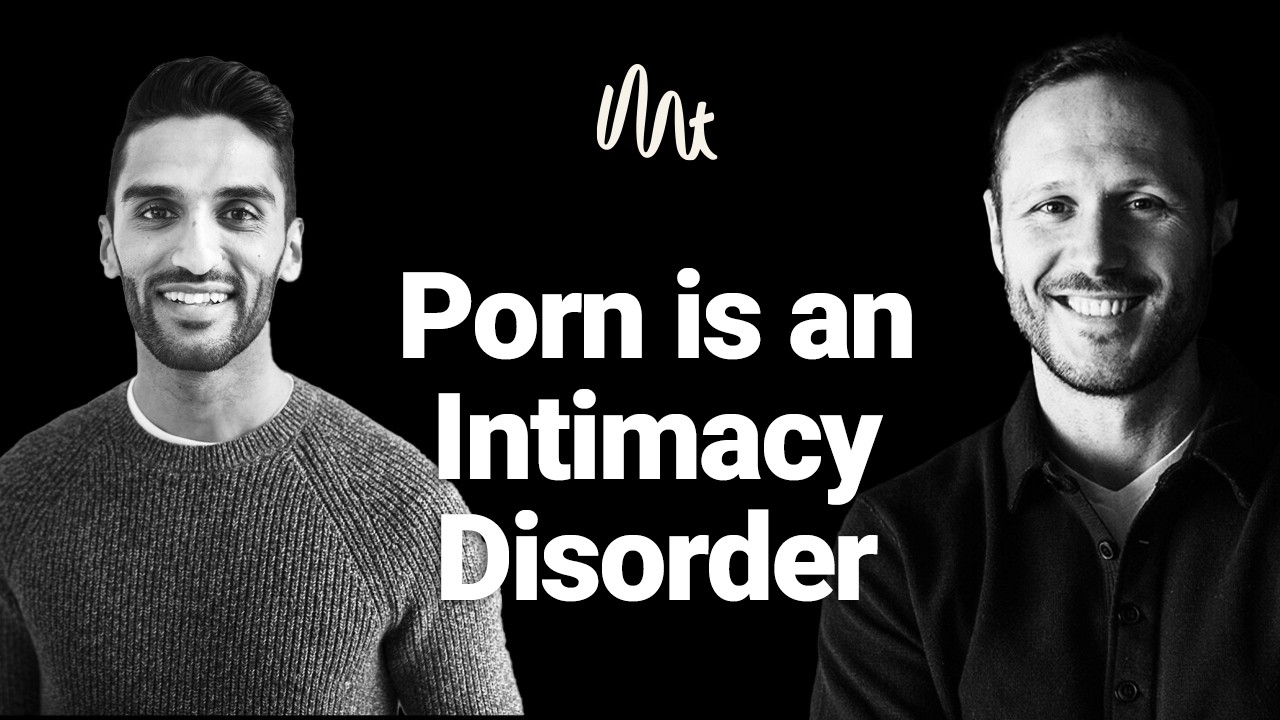
Recovery coach Sathiya Sam explains why porn addiction is rooted in intimacy wounds, not just sexual desire. He identifies the "3 A's" (affordable, accessible, anonymous) that make it uniquely addictive, and traces the pattern to dysfunctional family relationships, especially with mothers. His Deep Clean program uses trauma work, identity shifts, and connection to rewire how men see themselves.
Chapters
Alright, Sethia, how are you doing today, my friend?
I'm doing great, man.
Awesome.
Great.
Well, I'm glad to have this conversation with you. I think this is going to be an interesting one for the audience. For those of you that are listening, Sethia is a recovery coach, author of The Last Relapse, and creator of the Deep Clean program, helping men break free from porn addiction and healing the wounds underneath that behavior. So, as you can imagine, we're going to be talking about NASCAR today and nothing else, nothing but NASCAR.
Not talking about NASCAR.
Just turn left and end of story. All right.
Two Canadians talking about NASCAR.
Yeah. Could you imagine?
I don't think that would feel right. Yeah.
You know what's funny is I actually— my aunt was married to this guy for a period of time, and he had this crazy Doberman Pinscher that he had basically trained to, like, go and open the door and get beer out of the fridge. And, and he was, he was the ultimate NASCAR fan, like jerseys, you know, framed in his house and stuff like that. I remember going over and if NASCAR was on, you know, you couldn't talk to him. He was just like in his chair watching NASCAR and he was, he was a miserable human being. So I'm not saying that all NASCAR fans are miserable, but, you know, just going around in a circle indefinitely sounds like the bane of my existence.
So I feel like you have to be American and like grow up in the Midwest to get it. That's right. Yeah.
Yeah. I like the horsepower part of it. I like going really fast. I like the dangerous part of it. But I like F1 because it's like, you know, there's, there's more strategy. There's, you know, you turn right, which is great. Every once in a while that happens. But yeah, yeah. Anyway, we've—
we're—
I'm going to take us right off in the weeds if we're not careful. But okay, let's talk a little bit about pornography and how the landscape is changing. What, what are you seeing with young men's usage of pornography, how it's shifting, how AI is sort of changing the game, and, and maybe talking a little bit about why it's— I mean, it almost feels like it's just become so commonplace for men that it's almost not even a question as to like whether or not, you know, an average dude watches porn.
Yeah, I mean, it's changed a lot. So just a little bit of context. I was addicted to pornography for 15 years. I was actually a university researcher during some of that addiction, was in pastoral ministry. So like a faith-based kind of background, living that double life, believing one thing, doing the different thing. And then I've been helping people with deep clean since 2018. So it has changed a lot. Even if you look at kind of the last 15 years, social media, smartphones, all that changed the way people consume. It changed what we consume, what it looks like. But we're in the middle of like some really big shifts. Obviously, at the time we're recording this, AI, you can talk about AI, pretty much anything, and people are going to click on it right now. So I'm seeing a huge divide. And I'd be curious on your take as well, because I know you're having these conversations with guys every day. There's two camps. One is people are getting way more digital. It's way more AI. It's, you know, I have a client probably come to me once or twice a month now that has an affair. And then you find out as you kind of get deeper into their story, the affair is online. It's virtual, it's mostly emotional. It's with a chat. It's in a chat room. And turns out it was a bot. That story is way more common than guys probably realize. And that's because people don't care. They just— they need the connection. They need the validation. They need the safety, the control, whatever they're looking for. And a digital experience offers it in a very manicured way. So AI is, you know, some guy sent me a message last week on Instagram. I'm watching AI-generated videos of girls that are rejecting me. He's asking them out, they're saying no, and he's recreating the videos of them doing, you know, he said he told me making out, but, you know, it's usually a couple of degrees softer in the DMs than what's actually happening. So that you have that AI experience where it's very tailored and you get exactly what you want. And that's kind of the lure. That's the trap that men fall for. And then you have this other thing that is, I would just basically call the OnlyFans track., and it's where people are actually so sick of the digitized digital stuff that they're craving something that feels more real. Now, granted, OnlyFans is still digital, and you're probably talking to a Filipino VA in the chat, but the experience that they're creating is actually quite like in person. It's meant to feel like you're connecting with that person. It's not manicured as much. It's not digitized. It's actually a real person. So those divides, I think, are going to get stronger as AI becomes more central. Where some people are going to say this is amazing, you have AI-generated, you know, whatever. And then you're going to have another camp of people who, who resist that so much because they're so desperate for in-person sexual intimacy.
Yeah, it almost feels like we are going to bifurcate. I think that men are going to bifurcate more than they ever have before. And I don't know if you've heard the term K-shaped economy. That there's this notion that we are— I think we already are in a K-shaped economy, but it'll get worse. And basically, you know, well, you'll have people in the economy that just cannot escape sort of poverty or lower income, you know, sort of below middle class. They just can't get out of that and break into the top echelon of earners. And then you'll have the top echelon of earners that just continue to have escape velocity and make more and more and more money. I really think that we're moving into a K-shaped dating economy where you're going to see a ton of men who just cannot get attention from women, don't know how to approach them, have so much social anxiety, have so much shame and guilt and nervousness around it. And, and honestly, I think in some ways it's a lack of competency as well, that there's just— they don't have a lot of engagement with women. I mean, you think about the kids that went through COVID that were forced to stay at home and then shielded and in little boxes when they're at school. And then, when they could engage with other kids, they're on their cell phones. And so, I think people have really been disincentivized about it. And, I saw this Reel the other day that I think is so relevant to the audience and to men around pornography usage and dating. He was talking about like the hurdles that young guys used to have to go through in the '90s. Like you would call, like the balls that you had to have, like you'd call some girl's house.
Yeah.
And her dad would answer, you know, or her brother would answer and they'd razz you a little bit and they'd, you know, give you the gears. And I remember doing this to my high school girlfriend. I called her house once and her brother answered and it was a younger brother and he's just being such a pain in the ass. And then he calls his dad over and his dad comes over and then, you know, he's giving me the gears and then finally she gets on comes on the phone and, you know, it's like you've passed the tests of this, you know, very confronting, nerve-wracking experience of calling her home and having to talk to her family. And then she comes on the phone, it's like, okay, now, now we're going out, right? It's like you've, you've made it this far. And none of that really exists anymore, you know. None of those social pressures, uh, exist for men. And the, the fear in the social pressure I think amongst men in a post-MeToo culture is that, you know, if I do or say the wrong thing, I'm going to get canceled, you know, or I'm going to be some chick's, you know, ride home talking head video on TikTok or on Instagram about how terrible the date was. And she's going to, you know, call me out or how I said something stupid or whatever it is. And that's going to go viral. I'm going to be shamed and embarrassed. And so I think The risk-reward has changed quite a bit. And so I think we're going to see this bifurcation where there's like a, you know, K-shaped mating economy or dating economy where there's just going to be a huge population of men that feel hopeless. And what they're left with is pornography, OnlyFans, AI bots that they can have relationships with. And I think it's going to be hard because I think a lot of men are going to be disincentivized to break out of that bottom tier. I'm curious to get your take on that. Does that feel too extreme? Does that— like, what are your thoughts on that?
I think that's pretty accurate. And I think like the K-shaped economy, it actually started a long time ago. It was just a little bit more subtle, so you didn't really know about it. But it's grown so much that you can't avoid it now. All of a sudden it's like, wow, my grocery bill is 3 times what it used to be. And, you know, like, it's unavoidable. And I think it's the same thing because I'll be honest, when I was addicted to pornography, one of the huge draws of pornography was there was no risk of rejection, right? I can type whatever I want into the search bar and I get exactly what I'm looking for and I don't have to put myself out there. And that was ultimately what, you know, truthfully delayed the reason I ever met somebody and got married. Everything in my life kind of got put off because I was just being a little boy and I wasn't actually, you know, going through some of those hurdles that you have to go through to really get your chops. But I do think the K-shaped consumption patterns and, you know, just the state of affairs amongst men romantically Very, very true. I think there's probably another emerging group, which is— and I'm seeing this in my conversations with Gen Z, because our generation, Connor, kind of didn't really think too much about online pornography. It was, it was just there. It's locker room talk. Everybody kind of does it. Sometimes you talk about it if your buddy brings it up, and then sometimes you don't talk about it and you pretend you don't do it and whatever, you know what I mean? It was sort of that. And so it's there. I think Gen Z is much more aware of the harmful effects. I think they're, they're just at a different disadvantage in the sense that they are, they're tech natives. It's been there from a young age. But I do think there is another contingent of people that are emerging that are kind of saying like, to hell with all of this. And I, I don't, I don't want anything to do like I'm, I'm done with the social media stuff. I'm done with pornography. You know, Gen Z is drinking less. There's like a whole bunch of things, and that's really encouraging to see. So hopefully there's some hope in all of it, that it's not just the, the Puritans who never got exposed and the people who are just too caught up in it. I think there's another contingent who's saying, I'm going to be a man of integrity, and I want to make decisions that are actually going to better my life and my relationships, and that means not using pornography.
What, what would you say are the conditions that— well, yeah, okay, let's, let's, let's do this. What would you say are some of the conditions that make, uh, that create sort of the fertile soil for a man to become addicted to pornography? Like, are there certain subsets that you've seen of men that end up becoming more reliant on it? And maybe addicted— I mean, now in the literature, um, I noticed that some psychologists and therapists are avoiding saying addicted to porn. They're saying compulsive, you know, compulsory usage of porn, or some other terminology. Um, yeah, for the men that are— have a problematic relationship to it, how we want to frame that, um, what are some of the ways in which that is created?
Yeah, so I, I think there— the first layer of this conversation is that nobody is exempt because porn is what they call the 3 A's. It's affordable, accessible, and anonymous.. And those qualities are very unique to even, even a comparable behavioral issue like video games, where you don't have those, those 3 A's to the same degree. So I think everybody's kind of, you know, at risk. The, the greater predictors are rigid households. That's a really big one. And so if you grew up with really rigid parents, especially, like I said, I come from a faith-based background, faith is still a huge part of my life. And so we tend to attract that kind of client, you know, who did grow up faith-based, has a conviction about it, knows it's wrong, but didn't really get a lot of the nurture, didn't get a lot of emotional support. And it was just, you are what you do. So I think those people are definitely a lot more prone to it. Not just the exposure. I think the exposure is generally ubiquitous. It's, it's, but it's more so the secrecy. It's the hiddenness. It's, it's keeping it insulated. Um, that, that contingent, very strong. So people that are rigid, uh, trauma is a huge part of it. So definitely I mean, it's not like if you have trauma, I mean, if you have trauma in your life, all of a sudden you're gonna be a porn addict. It's not quite like that. I think you're just more prone to compulsive ways of coping and getting your needs met. So I think that's another big one. And then definitely, and again, this might be a little bit unique in our, in the Deep Clean community, but it's what I see, which is a lot of dysfunctional relationships with mothers, mothers in particular growing up. So it's interesting because for probably 50 years, people have been talking about how, like, where are the fathers? Fathers are absent, the family's falling apart because dads aren't showing up. All very valid. I mean, most of it valid, we'll put it that way. Um, but now I'm seeing a lot of guys who are— were actually like, yes, sure, there's some stuff to talk about in their relationship with their dad, but then it's the relationship with the mom that is actually driving a lot of the porn use, because pornography is where they, they go and they get that nurturing. It's where they feel safe, they get comforted, because they didn't really get that growing up. And it it didn't start with pornography. It started with something in the middle, like you're chasing girls or, you know, you're a little bit of a womanizer or whatever. But then it kind of devolves into this problematic pornography usage that they, they can't really seem to get their way out of. So those are some of the, the, I guess, commonalities that we see with the people that we work with at Deep Clean in particular.
It's interesting because, I mean, I think in working with men, what I've seen is like attachment issues certainly are one of the big ones. And that it becomes this kind of balm or salve for any type of emotional experience that a man doesn't want to feel or deal with. You know, it's such a great— that was, I mean, that was part of it for me. You know, it's like when I was lonely, found pornography, you know, as a teenager, and then it just became this habituated thing and became very problematic in my late teens and early 20s. And there wasn't really The challenge was that there wasn't really any literature on it. I remember going online and trying to look for stuff around porn addiction and there's just nothing. And, I was like, "Oh." And then, so all I could find was stuff about sex addiction. I was like, "Oh, maybe I'm a sex addict or something like that." And so, it's good that there's more literature around it now. It's also fascinating. The mother piece is interesting. I've done some stuff recently around mother wounds in men. And it is, it's so funny to talk about sometimes women's roles in wounding men and to see the pushback that happens.
I was gonna say, are the moms coming after you?
Oh, man. Yeah. You know, it's like talking about women's role in wounding men and, you know, how some men have a mother wound and just like the animosity in the comments of like, oh, another man blaming women. And it's like, well, women can hurt men too, especially women can hurt boys, you know, like women. Yeah, mothers can hurt sons. I'm not saying that that's happening all the time, but it is a big part of it because, um, of everything, you know, that's changed and happened in the last however many years, right? Or the environments that a man has grown up in. So what are some of the ways that you've seen— what are some of the mother wounds that you've seen, or the, the sort of, um, dynamics between a boy and his mom that can lead to him really engaging in pornography in that way?
Yeah, well, for starters, I totally relate with the moms coming after you because I get the same thing anytime I talk about mother wounding. I think I have people who just follow my accounts and wait for that content just to like get in the comments and try to kind of stir the hornet's nest. So, yes, I get you on that. I'm not surprised to hear that at all. So I'll lead with my own story because I think this is why we attract guys who are in these similar positions. So I grew up with immigrant parents, immigrated from India. Very, you know, Indian culture is very stoic. It's not particularly emotional. Lots of pressure to perform academically, all of that. My parents were cut from a little bit of a different cloth. They don't fit in some of the traditional Indian norms, but still nonetheless, not a lot of emotional connection in the home growing up. So my mom was very present physically, but not emotionally. And she has her own trauma history and stories, and there's a lot of reasons for that that I've been able to understand with time. But for me, and it took therapy, it took a lot of work to kind of come to this realization while I was struggling with pornography. I perceived my mom's lack of emotional presence as neglect. I felt neglected by her. And because there was those innate needs for maternal affection, for safety, the security, some of those things that your mom is supposed to you growing up that I didn't get. Naturally, you do chase girls. And then pornography was— I didn't even realize what the grip of pornography was. I just thought, I'm a guy, I'm horny, porn's just a good option, you know, it seems like a good match. But then you kind of kick the can a couple years down the road, and it's there in your life worse. And you kind of start to ask yourself, why am I here? What is this really providing me? And in reflection, working through with that therapist, he really helped me realize, actually, pornography was meeting a lot of those needs that, that went unmet as a little boy. So I think, I think the, the present physically but not emotionally situation is a very, very common one. I think especially baby boomer— I don't know why baby boomer mothers were particularly just kind of in that, like, pseudo-survival state. Like, there's resources and they're doing okay, but then emotionally they're, they're just not really there, um, not with a lot of particular depth. So I think that's a really common one. I think the other thing that you see with mother wounds in particular is a lot of like very hurtful words that are not necessarily like the mom's verbally abusive. Those are, I would say, those are pretty extreme cases. But just especially as boys, we're very sensitive to the things that our moms say about us. And it's not just what they say to us, it's sometimes how they talk about us around that. Oh, like, oh, he's just shy. Oh, he's still like, he's a little bit behind, you know, whatever. Some of the things that we hear our moms say those things tend to surface when we're working with guys quite a bit. And often in unexpected ways, it seems like a very innocent moment. And then it's coming up like, oh, I didn't realize that, you know, my mom saying that about me actually really affected how I viewed myself or what I thought of myself. And that can kind of lead to the spiral with pornography as well.
It's interesting, because I think the— when a man starts to deal with porn, and when I say deal with it, I mean, start to maybe unravel the relationship with it, it can be one of those really shame-inducing experiences, you know, because he's getting— he's going online, he's seeing the comments on, you know, conversations like this, where sometimes the conversation is like, oh, this is great, I needed this, this is helping me quit porn, you know, I'm implementing this one thing. But then you also see the comments that are like, you know, fuck, you know, fuck this, like, why do you need this? This is ridiculous. Porn's great. Like, What are you even talking about? And so, you know, I think it's challenging for a lot of guys because there can be shame around the behavior of doing it. There can be shame around the inability to control if and when it happens. There can be shame around it, you know, stopping or not being able to stop. There can be shame around the type of porn that they're watching. And so there's just a ton of shame around it. And I think one of the challenges is that you know, there's that sort of, uh, preyed on, you know, in the industry. It's like porn really has gotten to be this monstrous, monstrous industry. I don't know if you saw this last year, but, um, the, the women of OnlyFans out-earned NBA players.
NBA, right?
Yeah, like you've got— I mean, you know, and, and, you know, you, you look at it and it's however many women, right? There's like hundreds of thousands of women on OnlyFans. But then, you know, there's millions of men that are paying money to go and engage with the women on OnlyFans, right? And so you're like, yeah, okay, that's, that's a lot of guys that are paying money for that. And, you know, I can't help but think that a lot of this is one of the, one of the main driving factors is shame. And, you know, your ability to sort of metabolize shame or deal with shame or move through shame And I think one of the frameworks that I think that you've deployed or talked about that's very helpful for that is this notion that, that if you have a poor relationship with pornography, whether you want to call it porn addiction or you're just struggling to quit, that it's more of an intimacy disorder and not a sex disorder. So I'd like for you to just maybe unpack that because I think that could be very helpful for, for the average guy whether the man listening feels like he's a, you know, a porn addict or just uses it once in a while, it's not problematic, but he just like can't seem to let go of it.
Yeah, it's actually a good dovetail into what we were just talking about a minute with mother wounding. And, uh, one, one other point I'll make on that, Connor, is if you look at the top, uh, the top searched terms on porn sites year over year, uh, mom or MILF and stepmom are top 5 almost every single year. So this is actually pretty broad spread, uh, spanning around guys that are viewing pornography. And there are more women that watch pornography as well. We should probably mention that. Not exclusively a female or a male thing anymore, but it's, it's mostly men who are watching, you know, and, and that's there for a reason.
So I think that I gotta jump in there because I've— yeah, I've had— I can't remember who I had on the show before, but because the rates of women watching porn has gone up exponentially. Uh, yes, but the, the, the take was, well, women are watching ethical porn, and so that's okay. And I was like, okay, it's ethical, so it must be all right, right? It's real. Having sex is no big deal. I was like, okay, that's the way out, right? So yeah, okay.
Yeah, I love— I've been asked about that, you know, and on some pretty decent-sized shows too, you know. What do you think about ethical porn? And I just— I usually, my question back is just, would you snort ethical cocaine? You know, like, if it's ethically sourced, does it— it's still cocaine at the end of the day.
Ethically sourced cocaine is, is all right, you know. It's like, yeah, as long as you're doing it on clean surface and not off of a prostitute's, you know, back, you're all right.
There's no insecticides with the cocoa plant, you know, like it's totally fine. Yeah, like, it's crazy. Okay, intimacy disorders. So yeah, this was something I discovered. It's just after working with a lot of guys, you kind of, you start to hear conversations on why guys are watching, what they're really after. And the thing that I come back to again and again, it's actually a very old TED Talk. It's probably one of the first TED Talks to ever go viral is a British journalist named Johann Hari. He popularized an experiment that had existed for a long time called Rat Park. You're nodding your head. I'm sure you're very familiar with Rat Park, but I'll say for your audience in case they don't know it, you know, you have a group of rats. The control group is you put a rat one at a time into a cage with two bottles, one a bottle of water, the other a bottle of water laced with cocaine. And wouldn't you know it, the rats all get addicted to cocaine. 100% of them get addicted. So then scenario number two, they start messing with some variables and they create a new cage that is bigger. It still has the same two bottles, but it's got, you know, little rat hamster wheels, it's got tunnels they can crawl through. But the big thing was that instead of putting the rats in one at a time, they put in groups of rats. And they found that because these rats were able to play with each other, mate with each other, and basically build connection and community, even though the cocaine-laced water was there and just as accessible as it was before, not, not one of the rats actually got addicted to it. And the, the TED Talk which made this saying very famous is that the opposite of addiction is not sobriety, it's connection. And that has proven to be very, very true in the, you know, 1,000+ guys that I've coached personally. I, I've seen this, that a lot, a lot of what we're really after at the end of the day is connection. And pornography is not the vice that every guy goes to to find that meaningful relationship and connection. But for guys who do struggle with pornography, or guys that are having a hard time getting pornography out of their lives, Often I use the word intimacy, and I'll explain it and why I use that in a minute. But often disconnection or a lack of meaningful connection is at the core of it. And so, of course, there is the trauma work, there's attachment wounds, there's learning to emotionally regulate. Those are all necessary. They're necessary things you have to have to really have a complete package. But if I was actually going to double down on one thing, you know, the guy has very limited resources and he can only do one thing. I would be helping him find meaningful connection in his life because that's usually the big catalyst for all the other breakthroughs he's going to get doing trauma work and regulating and everything else. But intimacy is sort of a deeper level. That's not the most comfortable word in the world for a lot of guys. The way I define intimacy and what I mean by that is I think the definition is actually in the word. Intimacy is into me see. And, you know, you and I have, have like good abilities to communicate, to ask good questions. And one of the dangers that you and I have is that we can get to know people very well without people getting to know us. That's something I've had to really work on. It's something I had to work on when I struggled with pornography because the feedback I would get from the girls I would date or even in some of my fresh friendships was at a certain point the honeymoon phase kind of wears off and then there's just like a wall. They don't feel like they're really getting to know me because I was, I was so guarded. I'm very like classic avoidant and just didn't, didn't have that comfortability letting people in and letting people see me for who I really was. And this is a big thing that we're focused on with guys is learning how to cultivate those relationships. A lot of our guys are married, so there's a natural opportunity there. But for the guys that aren't, they still have, you know, close friendships. They have close family members, plenty of opportunities there also.. And in the process of being seen, this kind of into me see, you see me for my struggles, you see me for my challenges, you also see me for my strengths. It's not just about airing your dirty laundry either. There is, um, there's meaningful connection that is formed there, connection that is healing, uh, connection that feels safe, and connection that allows you to be a truer version of yourself. And that often is the, the container for guys to have very, very effective healing from attachment wounds building the skills to emotionally regulate, shifting their identity. You know, we're not, we're not really big on the like once an addict, always an addict thing. We really believe you can, you can change who you are as a person and leave that old identity behind. All that happens when guys really embrace intimate or meaningful relationships. And the last piece I'll layer in, and I'd love to hear some of your thoughts on this, Connor. But the last piece for us, because we come from a faith perspective, is building that connection with God. And I realize not everyone listening is gonna necessarily have that, but I do believe that if it's not a connection with God, at the very least, it's having a connection with your purpose, with the sense that you're here for something that's bigger than you. That can be very, very powerful. But I do think connecting with God is incredibly, it has unique powers in guys being able to heal and experience meaningful relationship. Meaningful connection. So that's where the whole intimacy thing plays in. And, um, and the reverse side of it is that when guys do, uh, address some of these areas, they, they start to thrive in not just in quitting pornography but in all areas of their lives.
Yeah, it's interesting because I think, like, I never want to— I don't know, it's such a fine line. Like, I never want to shame people, and, you know, I don't think that that actually helps or serves anything. Or make it sort of like, this is wrong. And, you know, this, this behavior is wrong or, or terrible for you to go down. Because a lot of times when I have these conversations with people, guys are always asking, like, is there a place for it? And like, what if my wife and I watch it together? And, you know, that type of stuff. And everybody has their own life to live. I think what's— what we're talking about is when it is problematic for you. And for me, I knew it was problematic. There's this saying in, in AA, sort of like in addiction recovery, where it's like, I knew I was an addict because I couldn't have one, you know, I had to have many. And that was sort of me. Like, I wasn't the guy that was like, oh yeah, I can just open up porn and watch it for 5 minutes. It was like, you know, I'd be 2 hours deep. Or, you know, it had to happen every single day. And it was, it was problematic for a long time until I was able to get, get clean, I guess you could say, which is such a strange thing to talk about with pornography. But, you know, until, uh, I was able to move out of that, and relationships with other people was a big part of it. You know, I think for me, uh, one of the things that, like I said, that would propel me towards pornography was just loneliness and a lack of connection, a lack of intimacy. You know, I had lots of relationships with people, but none of them were depth relationships. You know, they're all kind of surface level. Nobody really knew about struggles or challenges or, you know, I didn't really feel known by a lot of people. And I think that that's the case for a lot of men, is that either there's at their core this kind of deep loneliness of I don't feel like anybody really knows who the hell I am or cares about who the hell I am, or who I think I am is somebody that I really don't like. I don't like who I am. And so not only do I not want other people to know me, but I'm afraid if people get to know me, then they're going to realize that I'm a piece of garbage or whatever it is. And so I know that you kind of talk about this notion that negative self-image is kind of at the heart or sort of at the core of part of your model. And so, how does a man's internal story, internal relationship, internal perception about himself that I'm not enough, I'm broken, feed this cycle of needing to go back to pornography?
Yeah. I mean, I'm a big believer that you can out-behave your beliefs. So, I think that if— this is why I don't necessarily agree with the once an addict, always an addict because I think that if you really believe you're an addict or you believe that you're a pervert because you watch all this pornography, as long as you believe that about yourself, I think one way or another, you will probably start to act out just by faith, just because that's who you are, you know. We have had clients who have come to us sober, as in they don't engage with pornography anymore. I'm thinking of one guy who had, you know, he had been addicted for 50 years, had a bunch of affairs, got caught, life blew up, trying to get it back together. And his story was, I've been clean for a year, So I'm like, great, you don't need me. I don't know, like, why are we here? And he was miserable. He said, I wake up every day. I'm like, I'm shaking. I know I'm one bad move from losing it all over again. He just had enough willpower and enough motivation because all of a sudden his ass was to the fire. But he didn't actually— he didn't really have that healing, that identity shift. No shift, certainly, in what he believed about himself. So I think that it's very, very important if you're struggling with pornography, if it's having some kind of adverse effect on your life, one thing you really want to take a good look at is how do you actually view yourself? We, um, we have this thing that we do with our clients called mirror therapy, and the whole premise is— I, I like affirmations, but I find that affirmations sometimes just feel a bit hollow, like you're just, you're just saying it kind of out of rote or routine. But I do think what you say matters, you know, what you say about yourself. So there's a proverb that says the eyes are the windows of the soul. And so one of the things that we have guys do is we— it's just a couple, um, statements that they write about themselves, things that they're maybe having a hard time believing they know it's true, you know, but the heart doesn't really grasp it yet. And we have them look at themselves in the eyes in a mirror and start to say it. And it's, it's, it's talking like third person, like it's Sethia, you are a man of integrity, you are a trustworthy man. And I, I believe so much in that. And you have to kind of reprogram and rewire how you see yourself. Otherwise, I think you end up acting out one way or another, or you end up sober of the behavior, but you're miserable on the inside. You're, you're a fraction of the man that you really could be. And the byproduct of this— so the identity and belief system thing is the third pillar in our recovery system. So build self-awareness, heal the heart. That's kind of doing the trauma work and some of the stuff we were talking about and shift your identity. Those are the three pillars. And we have a mantra for each of them. And the mantra for shift your identity is, I would rather be 100% my true self and rejected than 80% my true self and accepted. And so we're trying to foster this kind of unapologetic authenticity. Like, I am who I am. This is what you get. And you either have to be okay with it. And if you're not, that's okay as well. Like, I'll move on, but I'm not going to— I'm not going to hide. I'm not going to acquiesce. I'm not going to people-please. I'm not going to show just a little bit of who I am and hope that you like me. We're really trying to foster a completely new way of viewing yourself where you are who you are and you're able to just own it without apology. And I think that, that's a part that's missing often in this conversation. We talk so much about the trauma work, the emotional regulation, very, very important things. And even the community, I think people are starting to understand that. But the identity piece and the way that you talk about yourself, it matters so much. And yes, it's the thought life, but it's also how you portray your story. You know, I got asked to interview on a very, very popular addiction recovery podcast, and the host was reading my biography, and it was, you know, "Sathya Sam is a recovered porn addict." And he said, "Oh, I'm so sorry. I can't actually read that to my audience because I don't believe that you can actually fully recover. Are you okay if I say that you're a recovering?" And I was like, No, it's not okay, actually, for you. I don't really want you to say that, but you can say that I struggled with it, or like you can frame it differently. But yeah, we fundamentally believe it deeply that you can actually change, you know, and that you can shift your beliefs and actually become a different person. It doesn't mean that you suddenly abandon your past and it doesn't exist. You have to reconcile some things still. But I do believe there can be a finality to it and you can live a life that's completely free of this. Not just sober, like I don't do it, but, you know, I'm like one bad day away, but actual freedom where you live without it and you don't really think about it that much. And I don't know how long it's been for you, Connor. For me, it's been 10 years. You know, February 2026 marked 10 years for me, and it's truly not a part of my life. And I'm not— I don't live a perfect life. I still struggle with things, but pornography is not one of them anymore. And a huge part of it is because of this shift that has happened at a belief level in my life.
Do you think that it's— I was going to say necessary, but that's not the right word. Do you think that it is useful for some men because their life is— I, you know, I try and oftentimes put myself in some men's shoes, and I think in every man's shoes as often as I can. But I think that some men, you know, maybe the perception is that it's useful, it serves a function or a purpose because they have such a hard time engaging with women or their relationships with women are either nonexistent or they really struggle to engage. And so, it serves a function for them. And so, I wonder if for some men, they just view it as a necessity of, "Well, this serves a very clear purpose in my life. I know what it is and it's no big deal." What's your take on that?
Yeah, I mean, I definitely get it. I think I get where people are coming from. And I would say there are a contingent of people who you mentioned earlier that can, that do watch pornography and they dabble in it for 5 minutes or they watch it every couple of months and it's, you know, whatever. I know you're asking about a different contingent here. I think, I think for guys where you're having a hard time, you know, forming those relationships and pornography is serving a clear purpose and maybe you feel like you're really, like you even have the situation relatively under control, you know, whatever that means to you. My main question back would be, what do you actually want? Big picture, you know, what are you really after here? If we used kind of a parallel, if you have somebody who is addicted to alcohol, or maybe they don't even think it's an addiction, but they just say, yeah, I probably drink a little bit more than I should, and sometimes I'm not able to stop myself. But man, I can't wait. Once I marry the right girl, that will be the motivation I need to put the bottle down and not go to it. And we, we know that story, and we know exactly what happens. Uh, you don't attract that kind of girl until you put the bottle down. And as long as you kind of sit and wait, it's very, very unlikely you're going to actually get what you want in life. And so I think for people where you're feeling like, man, I'm having a hard time romantically, I'm having a hard time getting any kind of meaningful thing going, but pornography is at least some sort of placeholder until that opportunity comes, I would venture a guess that if you got pornography out of your life, that opportunity would probably come a lot faster. But more importantly, you would actually be the kind of man who could sustain that opportunity. And that is something I see is like, we have guys that, you know, they earn good money, they're, you know, put together, they're attractive looking guys, and then they get into these relationships. And because they struggle with pornography, the programming, the issues, all the root level stuff is there, the relationships usually get frayed or they end up being a fraction of what they could be if they were willing to do the work and figure out why is pornography there in the first place? What is it offering you? What is it serving? They would actually find themselves, number one, probably attracting more opportunities. But more importantly, when those opportunities come, they'd be able to steward them with a lot more grace, a lot more reliability, and probably something that leads to a long-term relationship that's healthy. And I think that's the big difference there. Now, for somebody who's in that position, I'm not trying to draw a hard line in the sand and say, like, you have to quit today and you need to get this out of your life, otherwise you're never going to meet someone. I think it's more just understanding if you do want a healthy long-term relationship and also you want to continue to advance and become that person that you feel like you're made to be, I think you're going to have a much better shot at that without pornography.. And rather than waiting for some of those things and then quitting, my big encouragement would be to quit first.
Yeah, it's— I mean, it's interesting because I think there are— I think that there's just a lot of— no, maybe not a lot, but I think that there are more and more men who feel checked out, you know, from relationships, from dating, from society, the economy. I mean, you name it. And it's interesting because I see them in my YouTube comments sometimes where there's this kind of like nihilism and hopelessness that has sort of taken over. And, and it's funny because I think that sometimes they're in like indirectly and inadvertently looking for some type of hope or some type of direction in, in my content. But it's, you know, it's sort of coming across as, you know, anger or whatever it is. But I do think that there are some men that just have a really hard time in the economy. And it's, you know, it's one of those things where you go online and you see this sort of red pill notion of men don't have value and you have to build value in your life. And it's like, no, you're a human being who inherently has value. But it is true that men are more appealing from a mating and dating perspective when they build up value in being disciplined and in good shape and financially secure. And all of those things do build your value as a man. And we all know that. And so we shouldn't pretend like that's not true. And I think that for some men, you know, they've maybe tried that a little bit and it hasn't worked, or they don't see that as something, you know, that they should even bother with, or it's annoying or it's frustrating that life is that way. So, I get it. I get where guys are at. I often joke around that there's like a 500-pound fat man inside of me that just wants to play video games and smoke weed and watch porn and not give a shit about pretty much anything in the world. And, I think that's— yeah, a lot of men have that. And, I think that unfortunately the conditions in our culture and our society today somewhat incentivize men to exaggerate that part of them and to continue to go down this path of screw it, like, let's just whatever.
Yeah.
What do you think? I want to talk about this notion of moral incongruence, because one of the things that I found in my research, and I've talked to men about this and, and helped men sort of move through this one piece, is that one of the main reasons why it's so hard to quit pornography is one is the secret side of it, right? Nobody really knows. It's this hidden behavior. That gives it a lot of power. But then second, there's this moral incongruence, right? I don't want to do this, and yet I keep doing it. I don't want to take this action because it's wrong or bad because I'm married or I'm in a relationship, or, you know, it's wrong in my faith, in my religion, or like whatever the case is. But that moral incongruence creates a tremendous amount of pressure that that man then can't get out from underneath of. And it reinforces the cycle and the behavior, right? It's like that moral incongruence is fueling it in a big way. So talk to me about that piece.
Yeah, it's an important part of the conversation because I think some of the therapists and practitioners you were talking about earlier who don't really use the word addiction, I think they typically use— they call it PPU, problematic pornography use. Those are often people, if you go a little bit deeper into that contingent, a lot of them believe that pornography, pornography, even the PPU thing's not really valid because really it's just these moral convictions. And if you can just kind of massage the moral convictions out a little bit, then you find this isn't really that big of a deal.
Well, I do think that— I also sort of interject, I do think that there's also an attempt to really normalize pornography usage in the therapeutic industry, which I find to be so weird. Like, I spoke at one of the biggest psychology conferences in March, and I had spoken there last year about how to work with male clients, teaching therapists and psychologists. And then this year I spoke about porn usage and how to work with a man that is coming in, you know, and using porn. And it was interesting because I really focused in on here's what causes it, here's how you work through it, here's how you, you know, sort of undo these behaviors. Here's how you work with a man in a way that's effective. All that type of stuff. And one of the— a couple of the questions at the end was like, well, what's bad or wrong if a man's watching pornography? You know, like, why isn't that just okay? Why can't we just normalize that? And I was like, well, if the man's telling you that he doesn't want to do that, yes, then you probably shouldn't be normalizing that, you know. Uh, but, but there was a, there was a contingent of therapists that seemed to take the stance that that should just be okay behavior and that all that you needed to do was work with the man, you know, in a way that helped him to normalize that behavior. And I was like, that's so fucked up. Like, this guy is coming in to work with you saying, I don't want to do this anymore, and your method of working with him is to just normalize that he's doing it.
Like, that's crazy.
So, so strange to me. But anyway, um, I just wanted to—
no, no, no. We— well, we get a lot of clients who worked with the— who work with these therapists, and then they come to us very confused because they're like, yeah, we—
I have—
I still have a conviction about it at the end of the day, like, despite all the normalization that they tried to do with me, you know. And I wanted out, but they couldn't find a therapist who would actually do that for them. I think the— so the moral piece is interesting because I think you hit the nail on the head. It it's— in some ways it's necessary for anybody who's made it this deep into the conversation. You have to have some conviction that this is not a good thing to, to have in my life, whatever the reason might be. And then at the same time, in your moral zeal, you can actually end up putting a lot of pressure on yourself. So I think the— I think what sort of diffuses that pressure is actually what we were talking about a few minutes ago. And I talk about this extensively in my book, book, because I get a lot of questions about this. The Last Relapse is the name of the book, about the whole identity piece. So if you are what you do, whether it's morally, it's professionally, academically, like, you pick your poison. But if your intrinsic worth is dependent on how well you do something, you will always be subject to this kind of damned if you do, damned if you don't. And for, uh, for our contingent, where we have a lot of guys that are faith-based, the moral component is very, very strong because moral is not just— it's not just be a good person. It's I have a religious conviction that this is wrong and I'm not supposed to do it. And so every time you do it, the shame becomes a layer thicker. It insulates you more within the behavior. So I don't think the solution is to massage out the morality. I think that really what you're looking for is you're trying to separate that person's identity and their sense of worth from what they do. And what, like, a very— this is like one of the, my least favorite things about religion, and it's why I had to work through my own faith when I was struggling with pornography, is a lot of people believe that, you know, being a Christian or believing in God or whatever is just about doing good. And you get a report card from God on how many good things you did and how well you did things. And that's really not how it works at all. In fact, what drew me back into Christianity was the whole notion that The premise of it is it's a relationship. And I think that if we— this is tying together a lot of things that we've been discussing here, Connor. I think that if we start to find our value in our relationships first, and obviously, look, if you're not performing at work, I'm not saying you should be giving two thumbs up, smiling, just feeling like everything's great. Like, you have to have a conscience here. And obviously, like, as guys, we're going to be very conscious of our performance and how we're doing. Different areas of our lives. But the question is, can you reach a point where you can have a bad day or you can have a bad month and still feel valuable and still believe that you are fundamentally valuable as a person? That's kind of the test you're going through here. And I think when you do reach that place in life, the moral conviction actually, it only deepens your work. It allows you to go deeper, to want this more, to step in more freedom. To get this out of your life, to be the person that you feel like you're made to be. But I don't think you have the pressure of like, but I got to do this thing right because if I don't, I'm a failure and I'm going to feel terrible about myself. So I think that's the big difference there. It actually comes back to the identity piece. And when your identity is secure and it's stable and you've done the work there, I think the moral convictions and some of those things actually really, they reinforce it in a positive way. The, the life that you want to lead and the person you want to become.
Yeah, I like that frame, you know. Um, Jung— it's very interesting. Carl Jung, who I'm a huge proponent of and influenced my work and my journey in the very beginning quite, quite a bit, substantially— he is one of the reasons why AA actually exists today, which is fascinating. Um, but it came about because he he was working with a client, and I think the client was the brother of the man who would go on to create AA, if I'm not mistaken. I could be wrong about that. Um, but he basically said to the, the client who was struggling with alcoholism, you don't have a psychological problem, you have a spiritual one. And it was that he was disconnected from anything bigger than himself, right?
Yeah.
Life, Source, God, Universe. There was no relationship with anything bigger than that. And what's interesting is that when you look at developmental psychology, the first stage of existence, the first stage of life is coming in as you come into being, as you're born, is, is the world okay? Is it a safe place? Can I have a relationship with this thing, entity that's bigger than me? And so in some ways developmentally, you know, and, and a part of that development is the relationship that we have with our mother, because even though the umbilical cord is cut, our nervous system has a kind of invisible umbilical cord with our mother's nervous system. And so, in the first 18 months of life, that development is really formative. And, what I've seen for a lot of men is we can have things have happened early on in life that are pre-verbal. We don't have language around it. We don't necessarily have memories around it, but there's this kind of disconnect with something bigger than me, whether you want to call it life. Can life hold me? Can I trust life or God or source or universe? And if that's cut, if that's severed or interfered with in some way because of some adverse event that you don't even know about, or, you know, later on in life you've had some trauma that's made you question that, um, or just relationships in general are not safe for you, then you're going to continue to collapse under the weight of your own psyche because you're going to feel as though it's not safe for me to trust anything bigger than myself. I don't have a relationship with anything larger than myself. And so, then you're just stuck with yourself and your own problems. So, I think it's very important.
Yeah. So, I just want to say something there because I think this is really critical even to what we were just saying a few minutes ago for the guy who who's kind of feeling like, I'm damned if I do, I'm damned if I don't, so I'm just gonna, I'm just gonna stay. I'm gonna be the 500-pound inner man, you know, I'm just gonna let him loose. I think this plays into this very significantly. There's a researcher in this space named Jay Stringer. He's kind of a therapist researcher, and he surveyed over 3,000 people about, you know, their usage of pornography, why they watch it, childhood upbringing, you know, just trying to figure out like what are the layers to this. And they did a multivariate analysis of the results, which basically all that means is they looked at a bunch of variables to see is there anything that more obviously predicts whether or not somebody will watch porn and struggle with pornography? And there was one thing that stood out above the rest, and it wasn't trauma, it wasn't even childhood, it was meaning in life. And people who felt like they had no meaning in life were way more likely not just to view pornography, but to, to watch it compulsively, to have that, that struggle, that kind of cycle of I can't get out. And so conversely, and he talked about this, it was a surprise finding in the study, in the data rather. And then he started to examine that in his clients and start to talk more about purpose and meaning in life and focusing, still doing the inner work, but kind of complementing it with this. And he found that the clients who've actually just discovered a deeper sense of purpose of why am I here, like you said, finding something bigger than themselves, those people had a much quicker trajectory. And again, like we talked about this earlier, like what are certain things that kind of just make the deeper, harder work a little bit more manageable? Community. That was a big piece that we talked about. But this was, this was another one for him. And we've definitely witnessed the same thing. I've seen the work that you do in your clients, Connor. It's phenomenal. I know it's the same thing. Those guys there, you are helping guys discover this, this bigger thing, why they're here, and they're discovering how they play into that. And that is, that'll, that'll set the world on fire like that. That'll turn a man upside down in the best way possible. When he has meaning. And obviously, conversely, I think when a guy lacks that meaning or that clarity on his purpose, I think that becomes the breeding ground for problematic porn use or, you know, smoking weed every night to go to bed and get to sleep and, you know, whatever else it might be.
Let's have a little bit of fun before we close out and speculate about the future of porn. What do you think is going to unfold? We've got AI, we've got robots, you know, you've got AI companions and whatnot. Tell me a little bit about how do you see things unfolding? What can men be aware of? Because I don't— here's what I'll preface this with. I'm going to share my thoughts after, but I think we're going to see pornographic mediums change. And I really believe that this isn't going to be a men's, men's predominantly men's issue. I think we're going to see it really start to shift in the coming years. But I'm curious to hear, how do you think things are going to change and unfold with porn?
Yeah. So I love that you asked this question because when you were on my podcast a couple of years ago, I asked you this question. I don't know if you remember that, but I'm always thinking about this. I think it's very, very interesting. So I'll lead in with— you kind of just gave me a little bit of a shoehorn there. I do believe that women, women will continue to become more prominent porn viewers. 2024 was the first year that there was actually a country that had more female viewers than male viewers. And, um, and we're seeing again, like you said, the percentages going up. But that goes back to what I, what I said earlier, which is I believe that most issues in this conversation are actually intimacy issues.
They're—
it's an intimacy disorder. And again, male or female, neither of us are exempt from that. So that's definitely a thing. I think that— I don't think the AI thing is going to become what we think it is. My personal conviction is that AI is going to create a small contingent of people that are unbelievably addicted. Like, they're so addicted that we don't use the word addicted. It's just integrated with their lives and we'll probably have some name for them. But I really believe that because I think that, I think that a bigger contingent of people are going to be in kind of this messy middle of like, I, I need, I want to have more meaningful relationships. I'm still not really getting it. AI is giving me something. There's these, you know, there's OnlyFans or there's, there's some kind of like more, more communal experience that's still digitized. And then I think we're also actually going to see a return to the physical establishments. And I don't think it's just, it's just like in the pornography conversation, like we're doing a lot more retreats. I know it's something you've been, you've kind of pioneered in this space. Like your retreats are also excellent. I think that's something that I think guys are looking for more and more. And so if they're looking for it in the good, you know, to heal and to improve themselves, I think as well, those in-person experiences are actually going to become a lot more appealing as well because people are going to get so repulsed. Now, I'm making predictions probably 10, 20 years down the road. I don't think that's in the near future. I think those are, those are the big things. And I think at the end of the day, I think people are going to look for, for places like Mantox. They're going to look for places like Deep Clean. Where they can just have real honest conversations with other guys. I think that, that is like the gaping hole that exists in the landscape right now that, you know, people like you and I need to continue to try to fill and create more opportunity for. Because I think regardless whether I'm right about some of my predictions here or not, and I know we talked about the K-shape earlier also, and whether or not that pans out, I do think that, that guys will always be looking for, you know, more meaningful connections, communities, brotherhoods. Um, I think there's going to be a premium for those things in the days ahead.
I agree, I agree. I think, I think that's, that's all fairly accurate. Um, I think part of what we're also going to see is I, I think we're going to go through probably 5 to 8 years of relationships getting even worse than they are now and dating getting even worse it is now. Um, yeah, because it has to get worse before it gets better. Yeah, yeah. I mean, it's— some of the expectations and the conversations around dating are just— I think they're completely asinine. Like, they're just insane. Um, but I think what you— I think what we probably will see is a rise in women that are on AI apps where they have a they have a man that is the embodiment of everything that they want in a man. And it's not a visual man, right? Like, the porn for men is visual, right? So if you look at— like, my prediction is that in the next few years, you'll, you'll see this rise in AI-generated pornography that looks more and more and more real, and more guys will continue to engage in that. You'll have customizable pornography that, you know, I think you're going to run into some logistic problems that they have, thank God, in terms of likeness, you know, like you're not going to be able to make porn out of Angelina Jolie or some bullshit like that. Yeah, but you're going to have guys that can create porn in the way that they want, and that's going to be part of the appeal and part of the game is that you get to create all the scenarios that you want and the type of, you know, woman that you want to see or guy or whatever that is. And so I think men will that pornography will get more visual and it'll be about visual creation. And then I think for women, it'll be mostly auditory based and it'll be like this really hyper emotionally intelligent sexual man that she can engage with. And they've— I've already started to see this happen. Like, I— my wife spoke at Esther Perel's conference last year, and there was a company that was producing an app that was doing this. And I was like, that's interesting. Like, why? So, you know, and it's, it's kind of the way that I see it is that porn for women is going to be about transporting them into something that really feels like they're in the romance novel. And I think that's where in the next, like, 3 to 5 years, you're gonna see so many women hooked on these chatbots and trying to bring or trying to compare their dating life and their relationships with these, with these AI experiences that they are in that feel very much like a romance novel. And I think that's where it's going to become problematic because you're going to have the hyper-visualization of men's overly pornified brains meeting, you know, women's expectations of what they were experiencing in their AI romance novel, you know, version where they're getting to interact with this, this guy that's sort of straight out of a romance novel. And they'll be able to curate it too, right? They'll be able to say, I want you to base this character off of this guy from this romance novel, and they'll be able to engage with him and he'll know everything about her and ask her all the right questions and be sexual at the right time and all that kind of stuff. And so I think that's where the divergence is going to start to happen. And, and then I think people will start to hopefully start to come back to real relationships. But, uh, it'll be, it'll be interesting to see.
So yeah, kind of got to get through the messy middle first, right?
Yeah, man. Well, where can people learn more about you? Where can people find your book? Um, give them the deets. We'll have the links in the show notes.
Yeah, the podcast is called The Man Within. Um, it's available on all major platforms. I've had amazing people like yourself on there, and I'm excited to have you back on again as we record that. And then the book is called The Last Relapse, also available anywhere that books are sold. But if your audience goes to thelastrelapsebook.com, they can get a free copy of it. And it also comes with a workbook. And it's for people that want to understand the system a little bit better and go deeper on it. That's a great resource.
Awesome, man. Well, thank you so much for joining me. Everybody that's out there, guys, do not forget to man it forward. If there's a man in your life that you know could use this conversation, that might be a good thing to share with them, build the relationship, build the rapport. And as always, go check out the links in the show notes, go check out Cynthia's work, and I'll see you next week. Connor Beaton signing off.
More from Connor







How to Raise Strong, Unshakable Boys in Today's Culture, with Dr. Shefali Tsabary



