Why you don't have enough money
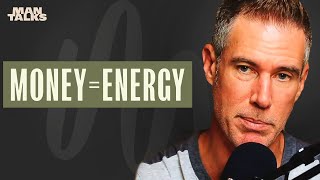
A recorded conversation (YouTube) between Connor Beaton and David Baer exploring how limiting beliefs, nervous-system states, and unresolved trauma produce financial insecurity and block the flow of money. Baer recounts a pivotal 2022 breakdown and recovery—returning to 12-step practices, developing a "whole human framework," and teaching tools (Decision Matrix, resentments-forgiveness work) to rewire beliefs and restore connection. The discussion links individual healing to communal fellowship and reframes money as energy/currency that flows when one drops scarcity narratives and non‑resistance.
Chapters
So we have to understand money is currency. It is. It is looking to work through us for our own desires for growth, for expansion, for evolution, and wanting to be out of financial insecurity for the false belief that I don't have enough and haven't had enough and won't have enough. That's what prevents the flow of this particular form of energy to us and through us. And then again, it comes in the form of ideas. It comes in the form of perception. It comes in the form of synchronicities. Thoughts really are things, and money materializes through the thought process, but we don't have access to those thoughts and perceptions if we're completely caught up in this financial unreality that we don't have enough.
All right, Mr. David Baer. How you doing, brother?
I'm feeling great. It's good to be here.
It's been a. It's been a hot minute since you were last on the show. I actually didn't. I didn't look. I probably should have to see when. When I last had you on the show, but I think it's been about four or five years, if I'm not mistaken.
Yeah, I think it was like around 2018. Definitely pre pandemic.
Definitely. Yes, definitely pre pandemic. So it might actually be longer than I'm. Than I'm thinking. But anyway, since it's been so long, I'm going to ask you the question that I asked everybody, the question that you probably answered last time, which is tell us a story about a defining moment in your life.
So we. It's a different defining moment than the defining moment last time, and it's a recent defining moment.
There was so much contraction and compression in the experience of the pandemic for all of us. And one of the things that I'm sure we'll get into more is how the negative emotions that we feel or the experiences that we don't prefer in our life.
Are actually an opportunity to unpackage and create even more energy in our life and expansion. So it's like you get through the challenge and you're bigger on the other side. So that was already going on with the pandemic. And then. And then my wife Carol was pregnant. Carol was three months pregnant, is the beginning of 2022. So it's not that long ago. And in late 2021, you know, we had grown very, very quickly as a transformational coaching company, working predominantly with entrepreneurs. We were doing a lot of online marketing, Facebook advertising. And in around late 2021, there was a complete update to the targeting algorithm of Facebook and our advertising. Stop. So we were in this vivid business uncertainty, new babies coming, uncertainty. I was experiencing some health challenges, nothing serious, but stuff that had been going on for a long time. And I'd been doing my own practice around it, my spiritual work, my personal growth work. And it was like, shit, why is this? Why does this thing still here? And so tensions were building. I think we lost a team member. Carol and I ended up in an argument. And so one day.
I tried to walk it off. We were actually renting in old San Juan, Puerto Rico, while our home was being the one that we purchased, remodeled up in the mountains. So that was another change. My mother in law was living with us in a small space. And so I went for a walk just to try to shake off the stress, and I couldn't. And I got home and I had done enough somatic work and myofascial release work, and I was in tune enough with listening to my body that I knew like, I was over capacity. And so I got in a shower, turned it on real cold, and I just started yelling. And Carol and her mom came running in and they said, you know, what's wrong? What's wrong? I said, I don't know that anything's wrong. I just know that I need to do this. I have to yell. I have to get this energy out. So they pulled me out of the shower.
Reached out to someone whose care I've been under, like one of those magical mixed martial arts wizards that does energy work. So Brian kind of helped stabilize my nervous system. And then my brother got involved. My brother's clinical runs a clinical rehabilitation practice out of Los Angeles. And he said, hey, like, you've had a nervous breakdown and you need to address this. You got a baby on the way, you got a business you're trying to pivot, you got a marriage you're trying to manage. And so he hooked me up with a psychiatrist that recommended some medications. Now, I hadn't been on medication since I was 33 years old and got into drug and alcohol and pornography recovery, I was on medication for anxiety. And so I'd been off medication since that time. I really liked being off medication because when I got off of SSRIs and anti anxiolytics to manage my panic attacks. Like, all of a sudden I was like, wow, this is what a nervous system feels like. And even though it was challenging, I really committed to experiencing my life fully. So but I was feeling desperate. The psychiatrist put me on a medication he says, very, very safe. No one has any side effects. This well, after about 48 hours, I called him. I'm like, hey, I'm experiencing this. He's like, wow, you're experiencing one of the rare side effects. So then he said, let's try this other medication. Like, this one doesn't have any. I don't know anybody that has side effects with this medication. As he puts me on this other medication, I call him about 48 hours later. I'm like, him, him. I'm experiencing this. He's like, I can't believe this. You're experiencing side effects from this medication too. My intuition was this was a contraction, a compression that I was meant to work through and unlock the energy. And so what I went back to was the one thing that I went to in my most desperate times, which was working a 12 step program. So I got back into working the 12 steps. I didn't have a problem with porn or alcohol or drugs, but what I realized was I was addicted to worry. And so I started going back to 12 step meetings. It was kind of funny. It was like, hey, I'm David and I'm an alcoholic, but secretly here I'm here to work on my worry. Because you can't really get into to the 12 steps unless you've got some sort of, you know, defined, classically defined addiction. It's like a secret society of people who have access to the special technology, but the rest of humanity can't really plug into it. And so, long story short is that over the course of 2022, as I was working the 12 steps, I was getting back into my own work. I started get revisiting Louise Hay's heal your life work. I started exploring more the what I would call the technology of self love and self esteem. I discovered that each and every single one of us not only has limiting beliefs, but a core limiting belief that our personality has literally structured itself around, called the core program. And what emerged over the course of that year is what we call the whole human framework. It's a 12 step, whole healing, transformational structure. And so that was. It was a redefining point in my life. And I think, and I'll stop for in a moment here, but I think that oftentimes we go through what we think is the long, dark night of the soul. And you know, especially with entrepreneurs, but with all people, and then we're like, okay, I'm done. Like, I, like, I survived that, you know, walking through the valley of the shadow of death, right? And what I'M seeing amongst my peers. And I think it's a result of this quickening of consciousness right now that's taking place is that lots of people I know are going through their versions similar. And so we're. I'm really excited to have gotten through the other side and. And to be able to potentially help people, you know, shepherd people through that because it was a. It was an incredibly difficult experience, 2022, but it was. It was the best year of my life because it gave birth to a new me, it gave birth to my baby, it gave birth to a whole new framework to help people. So that is my. What are we describing it as? Pivotal, life changing.
The defining, the defining moment.
My defining moment.
Cold yelling in a cold shower. I feel like that's a prescription. I feel like I've given that as a prescription before.
Go turn on a good.
Go get in a cold plunge. Go get into a cold river. Go find yourself in the middle of a mountain somewhere cold. Go get into the water and then just yell it out a little bit, you know.
Do you think, do you believe. Do you feel that people need to have some type of collapse or deconstruction in order for real growth, personal growth, to be possible and plausible?
It's such a great question that this is like the central question that has been coming up with the other thought leaders that I'm around because we're all going through this. You know what, I don't want to put labels on things, but a very painful transformation. Traumatic experiences that wake you up to take a deeper look at who you've been and your life. And it makes sense right now.
If you really step back and have this conversation from an Aristotelian first principles conversation, not like having a conversation based off the illusion of life as we experience it. You see that the superorganism of consciousness, which expresses itself individually through all of us as spirit has been a. Has been. Has been having this collective experience for thousands of years. And if we go back and we look at what that experience has been, we've basically been raping and pillaging each other for thousands of years. That's the common thread. So there's this incredible accumulation of lineage related and generational trauma that has to be flushed out of the system. And we're seeing the materialization or the making matter or physical or real of what all that trauma is in the world we see today. And so there's this detoxification or metabolization that's taking place. So that seems to be the experience right now. But as I've gone through my own healing, which continues.
I have a sense, and again, this has come up in conversations with other people whose way of thinking and who've done their own work that I respect, very much, that it's not always going to be that way, that we can start to get ahead of it. And one of the ways we started teaching how to get ahead of it at one of our recent private client retreats was identify where we frame the conversation in what I would call bound and unbound energy. Bound energy feels contractive. Last time we talked about the two states of being, powerful states and primal states. Bound energy is where you feel like you're in a primal state. Stress, anxiety, overwhelm, not enough time, all that stuff, sympathetic expression of the nervous system.
So you can scan your life and identify where there's bound energy. And then you can, you can work in that area of your life to what. What I would call make yourself more available in that area of your life. It gets back to some of the healing teachings, right, of like not trying to run away from the thing that is a challenge, but actually bring it so close that you transform it through you. It's almost like this toroidal effect. So.
You know, that I'm still working with in my own life, what I've materialized out of trauma that shows up in my life and working with it so that it doesn't have to continue to show up and so that I can learn from it. But I'm also starting to just as a practice, look at my life and where is their bound energy that hasn't yet materialized into something that I don't want. Right. It's like getting ahead of the autoimmune disease. It's getting ahead of the cancer. It's getting ahead of the financial just challenge. It's getting ahead of the relationship breakdown. And so I think that can be really, really helpful. One of my, one of my clients I was coaching with said, hey, I want to get on more stages and do more speaking. How do I do that? And I said, well, where is there the most bound energy in your life right now? He said, well, in my relationship with my wife. I said, well, then let's go work your limiting beliefs and your traumas that are. That are showing up over there in your relationship with your wife and see if we can make your personality more available for what's over there. That'll liberate the energy there. And. And the energy is intelligent. I kind of think of this as like masculine and feminine. It's like let's go unlock the masculine matrix that is locked down over there. Because once we do, then we've got this like Pachamama, Mother Earth energy that unlocks. And you've already placed the order for more stages. But the mistake that most people make is they're like, well, let me now go figure out and hustle and grind and push real hard and manipulate and sacrifice who I am to go achieve this goal of more stages. But spirit is saying, no, go love your wife more and go be more available over there and you'll get more stages. So a lot of the business coaching we're doing right now is very nonlinear. It's all about where can we unlock energy. Because everything we're wanting to achieve, everything that we desire is going to be achieved through energy, right? And it goes back to that Tesla quote of whatever it was. If you understand the universe through energy and vibration, then you understand how it all works.
Yeah, Nikolai Tesla was a very interesting character and I highly recommend that people go read his biography. There's many different writings about him, but it's just interesting to study his life and his perspective and the way that he saw the world. It's interesting, David, because I think part of what I hear you saying, and this is something that I've seen.
Within.
The personal development self help world, is it's been very me centric, right? The therapeutic modality in and of itself is very me centric, very eye centric, very personal centric. And it's almost missing something, right? Because if you look at any good historical initiation process, that initiation process is meant to prepare and prep and initiate the individual to actually be of greater service to the collective. And so I think that we often miss that part within modern day therapy, modern day self help and personal development. It's like, yeah, yeah, it's working on you, but it's actually not about you. The process of you going through this dark night of the soul, facing your demons, having the, this collapse, hitting rock bottom. Like it's partially about you, but it's partially about trying to not rise you up, but bring you into this place where you're actually more capable, competent and effective to support other people. So I'm curious, from your perspective, what do you think is the intersection between personal growth and communal development?
It's such a great question.
One of the pieces that we adopted from the 12 step structure in the whole human framework is the sponsor sponsee relationship. So when people do the work in our community, they do the work and then they share the work with Another and the other, who they share the work with, they. They don't have a relationship with. But our, Our. Our traumas and our wounds, we've buried them deep, if you want to use language to describe it, right? Like in the dark. And so we bring them out and we expose them in the light to the consciousness and spirit of not only ourselves, but to another. And that helps facilitate the. The transformation of that energy from dissonance to resonance at a larger scale. You look at what 12 step, or the community that we've built, or the community that you've built, right? And why people are experiencing a greater level of awakening. And it's because it's. Fellowship is critical. So it's not just doing the work with another and rather than yourself, it's now being in a community of people who are disciplined in a practice of being their unwounded self, of being their higher self. And then to your point, though, I believe that intelligence's purpose for all of this, or spirit or God or Jesus, Allah, or the universe, or whatever you want to call it, but the purpose for all of this is for us to awaken through this process of first individual. And then where more than one comes, there's even more energy. Right. Scripture tells us that Napoleon Hill told us about the mastermind concept. Then you move into fellowship, and then you move into this collective connecting with the rest of humanity. And along that linear process, one would describe it as, oh, I discovered my purpose. And then we would look to see what that purpose is because they've accumulated enough resonant energy. And that purpose would be giving or serving in some way. And I'm not saying you have to be a coach. You could be a fashion designer, you could be a restaurant owner. You could be. But you're now truly driven by, you know, the genetic predisposition of your destiny and your dharma to go, could it go do this thing? And it's more clear now because it's no longer being choked off or suffocated by these misunderstandings and these hand me downs that we got. And now, now you're plugged into the whole world and, and even beyond that, I think personal growth is the linchpin of the evolution of the human species. And what's happening, as those who are really committed to doing their own work are doing it, is they're learning how to downregulate their nervous systems and actually rewire their brains and to move from sympathetic, the habit of sympathetic fight or flight that most of us live in most of the time into Parasympathetic. And that's where New Age folks talk about your vibe or your vibration, right? So your vibration or your resonance changes. You're now living connected to everyone and connected to spirit. And if you look at the Eastern teachings now, you start to unlock all kinds of yogic capabilities. And we see these yogic capabilities in nature. It's how the birds know how to fly together and the fish know how to swim together, and the beehive and the ants know how to operate together. That's the potential of humanity. And, you know, maybe going back historically, people talk about the Lemurians or the Atlanteans, like maybe they had that kind of connectivity. But the bottom line is, and it's such a simple conversation, in a sense, our traumas create dissonance. That dissonance is like a radio frequency disruption that is separating all of us. And as we work to transform these traumas, these limiting beliefs, these personal stories, these misunderstandings and these wounds into resonance, frequency becomes clean and we all start to become more powerful and more powerful together. And that is now the macro conversation. I think, of how we become so powerful that we have the stability within ourselves and the courage and the connectivity to walk away from the current system. That's a larger. Right, like geosocial geopolitical conversation, which we can dive into. But that's why I wake up most days and I'm like, I'm so excited to be alive right now. It's like. It's like. It's like Avengers endgame. But it's real.
Well, it's. I think it's. There's a couple of threads that I wanted to pull on in there because, you know, I'm a huge. I've studied Carl Jung just endlessly, and I really think that he's got some insightful work. But one of the things that he talked about extensively was this notion of the collective unconscious, right? That we're all sort of interwoven, that a part of our unconscious mind holds archetypes and symbols and myths and threads that bind us all together as a collective. And when you look from a anthropological stance, every culture, pretty much, maybe not every single one literally, but the majority of cultures in their myths, in their religion, in their stories, they have some telling of an interconnectedness between all. Between all human beings, right? And so that notion that you're talking about, between, you know, how bees work together or the birds fly together and make their way over thousands of miles, it's so interesting to me that we, somewhere along the line, have Disconnected from that knowing, right. From that wisdom of like there is an interconnectedness between us and we oftentimes don't see it. And I think what's fascinating is I've talked about this on a bunch of shows that my sort of theory or my belief is that we've created that collective.
A manifestation of the collective unconscious in the Internet, in social media, and suddenly we're interacting with it in a way that is sort of material versus a way that is within ourselves. Right. It's externalized versus internalized. And I think what you're talking about, and maybe I'm wrong about this, but it almost sounds like a reconnection to a deeper kind of internal wisdom of connectivity with other people and attachment relationships, connection, plugging back into other human beings and not sort of seeing them as separate nodes out there in the world that you have nothing to do with. So is that roughly accurate in terms of part of what you're saying? What would you add into that?
Well, a couple of things. Again, if we simplify it into all energy, when we come together, we're energized. I'm plugging into the energy that is you and I'm actually plugging into the whole like decision diamond, all the branches that go out from you. And so, you know, when we're together and we're engaged and we're truly connected, I've got access to all kinds of information. My body's downloading the resources that you've tapped into that it might need in order for my own personal healing or wealth accumulation. You could just look at it in an extreme way of like, if I just stay at home by myself, there's not a lot of information available to me. There is information available to me. I mean, you and I have both been in practices like ideas and inspiration come to us. But there's so much value to plugging in and connecting with other people. You know, it's interesting to see how humans got this way because I think in, in some sense, you know, not. There are a lot of different evolutionary theories. I think like the stoned ape theory is really interesting that like, you know, for, for tens of thousands of years we were walking around eating magic mushrooms. And so our brains grew and we developed into human beings. Maybe.
It'S a fun one.
You know, if you've ever done mushrooms.
In your life, a lot of magic mushrooms right now, and they seem to be evolving spiritually, you got to do the work too. But. Right. These third party tools and technologies can be helpful. But you know, then Then as our brains evolved, all of a sudden we started having thoughts. You know, really the ego evolved. And so then there was separation. And so, you know, this is almost like, how can, how can we be this species that has the intellectual and emotional capacity and free will that we have, while also, while now through that process of individuation, learn how to connect back in. And community is very, very important. And I think that's why what's happening right now, both with media propaganda and corporate capture of the media and of governments and of non governmental organizations and of all kinds of organizations like the kind that are meant to, you have, you have, you have institutions that are meant to be regulated that are now essentially governing their own regulatory bodies. And so there's this massive distortion taking place. And in that distortion, it feels as though there's an intentional separation. I mean, certainly we had that in the pandemic. But when I go, when I go out, I'm in Puerto Rico now. But I just spoke at the, the Raymond James Chairman council. It's the 100 top performers within one of the biggest wealth advisory organizations in the world. Everybody had a lot of different opinions, but everybody was really to each other. But you wouldn't see that or believe that if you were watching the news. And so there is this like architected attitude of separation that's taking place too. And so we need to move through all of that because wellness comes through connection. Business growth comes through connection. Obviously, healthy relationships come through connection. Having you and Vienna here, for example, starts to model for Carol and I new aspects of our relationship that we can adopt. Like we can download that programming through connection and relationship. So like I'm 100%, hell yeah with you in terms of the importance of it. And then, and then I think the questions to ask are, okay, so what is interfering with that? What is preventing us both from within myself and also external in terms of the structure of the world, the structure of these systems that we are influenced by.
It's interesting because as we're having this conversation, I think about one of the guys that works with me and he's very disenfranchised with the personal development and self help industry.
It's palpable. And I think in many ways.
I love him for that because.
It gives me a different perspective on some of the folks that are out there and some of the stuff that maybe is missing key components because he's very communal centric. He's very much about if you're doing the work and you're not bringing that back into your family system, back into your society, back into the, you know, the shitstorm of whatever it is, right? Political polarization and actually trying to go back out into the world. Then it's sort of like this self centering loop, right, where you're just, your, your planet is just circling around your own star and you're not actually going out into the universe and actually trying to support others. And I think that that's very valuable in a lot of ways. I'm curious to come back to this notion of 12 step and recovery. How has that played. You talked a little bit about it, but how has that played a role in your life? And why has it become maybe so central to a good chunk of your work?
Well, you know, I.
Gosh, this is a good question. There's so many ways I could go with it. But back, back in around 2010, I was running a venture backed technology company. I had raised about $5 million in investment for.
Was going through some challenges, I was going through some challenges and I realized through a series of circumstances that I had a problem, that I was a drug addict, I was an alcoholic, I was a pornography addict.
And.
I had one night where I blacked out and it scared the shit out of me. I called my brother the next day, who was a few years ahead of me in terms of, he was already in recovery, and he said, listen, I think you've got a problem and you should go talk to somebody. So I went in and I saw an addiction therapist specialist. Fortunately, he, he also specialized in the neuroscience of addiction. So it really resonated with me. And he said, look, you're an addict and you're going to be an addict for the rest of your life. And we don't know if it's pornography, drugs or alcohol or all of them. You know, I, I can have a drink now. I don't, I was, I was using alcohol to get to drugs, to get to pornography. Really my sex addiction was my core addiction. And, and so he gave, he basically said, hey, look, you know, you're going to go to three meetings, 12 step meetings a week, you're going to get a sponsor, you're going to work the 12 steps. You're going to call two to three people a day who are in the fellowship, in your program. You're going to come to therapy once a week with me and you're going to come to my Wednesday night men's group. And I was like, like, how am I supposed to manage my life?
And he's like, that's like another Full time.
Yeah. He's like, your life is unmanageable right now anyway. And again, that's, that's, you know, these great paradoxes that show up. It's like I thought I was giving away all my freedom, and what I actually got was my freedom back because I was given a structure that I could follow rather than the chaotic structure I had developed for myself over so many years. And.
12 step has the components that we see across all different modalities that are critical for healing and a spiritual reconnection. And it's not to say that there aren't pieces outside of 12 Step. And there are some pieces 12 Step has. Right. That aren't in the outside work. And so my job over the last 10 years.
In order to survive at first, and then because I was so passionate about it, was to kind of collect all these pieces and see how they fit together and to be able to explain it to people in a way that was digestible and understandable. And so, you know, in 12 step, it's not like you sit down and you say, okay, well, what are all of your limiting beliefs? But you do go through a process of inventorying your fears and your resentments. That's very, very helpful, just as a level of self awareness. And one of the things that I had realized last year in working, you know, we've had probably 30,000 people go through our live events, our coaching programs, like it's a pretty big petri dish. So I was wondering why some people have an easy time initially letting go or transforming a certain set of limiting beliefs. And then there's another set of limiting beliefs that are a little bit harder that seem to hang on. And then almost everyone has this core limiting belief that they're like, I just haven't been able to get rid of it. And so 12 step gave me some optics. When I went back into it last year and I did my resentments inventory, I realized, oh, wow, for me, some of the limiting beliefs that I've been holding onto that I haven't been able to let go, they're connected through resentment to other people. In other words, some of the core. Some of the beliefs I got from my dad, I still had resentments from my dad. And you cannot let go of a limiting belief if you're still holding on to the person who you form that psychological, emotional relationship with. And so, you know, inventorying my resentments and then developing a really powerful process for forgiveness became a part of the whole human framework. And so the 12 steps, if you have the ability to.
Take someone like myself who was abusing pornography since 13 years old, so 20 years, sometimes looking at pornography and self sexing four, five, six times a day, having no ability to stop, but for short periods of time and then binging afterwards. I'm an intelligent guy.
I remember driving to the grocery store and throwing out my bag of porn and then driving back two hours later to crawl into the dumpster to get it out. That's the level of insanity and addiction and hard wiring that had taken place. To be able to take someone like that without using drugs or medication, and 18 to 24 months later, I'm not looking at pornography at all, is an astounding technology.
And so part of it was the fellowship, working with a sponsor.
Going through the 12 steps, which has all these amazing components. It's incredibly liberative. And that's. At that time I said, oh my God, all my friends need this. Right? And everybody who gets into 12 steps feels that way. And it wasn't until 13 years later that I had to go through my second addiction breakdown, which was an addiction to worry that through me, you know, this, this 12 step structure for everyone has emerged and, and I'm really excited about it.
I want to talk more about, let me. Limiting beliefs, but I want to pause first to maybe make a pit stop at the intersection between repairing relationships and 12 step. Because one of the things, I mean, I've. I've talked about my stuff pretty openly. I wrote about it in my book, you know, same sort of similar thing, porn addiction. There was no magazines, though. It was all digital by that time. Although I, I did, you know, start in the age of dial up. And so it was like line by line, you know, loading photos, which was, you know, anticipatory, I guess, in a way. But.
I think what I've noticed is two things. One, that the majority of people, if not all who have addictive behavioral tendencies, whether they're, you know, quote unquote true addicts or they just have addictive behavioral tendencies, have some type of.
Attachment issues, that they have some type of core challenge or core belief, that they aren't worthy of love, that they aren't deserving of it, that it's dangerous, that they're going to get hurt, that relationships aren't safe, that people aren't trustworthy, that they don't have value. Right. I mean, I could just go down the list. And so it's interesting because in some ways, when I look at the structure of AA and I look at a lot of addiction recovery, that's effective because there's a lot of stuff out there that's not one of the core principles at the very center of it. For me, when I look. And maybe this is just because I see things oftentimes through relational lenses. But for me, one of the core pieces that I had to work on was repairing in my ability to stay in contact with people, to be in relationship with people, to trust people, to open myself to people, to be vulnerable with people, to be honest, to be real, to get curious about what they were going through and hear the depths of what, you know, they were experiencing and then to trust them, you know. And so I'm curious, from your perspective, how do you see this intersection between repairing relationships? I'm going to use that instead of attachment, but repairing relationships and addiction?
Well, I think it's very similar to.
What we talked about before in terms of the importance of fellowship. And, you know, metaphorically, it's like we're. Humanity is this neural network and if you isolate a neuron, it doesn't have access to the rest of the information. You know, if you, if you cut the flower off from, from the tree, that's going to die. And so we're meant to be interconnected because it is, you know, as the vegans would say, it's all one. Right.
So he's made them very happy.
So I don't know how many, I.
Don'T know how many vegans truly tune in my show. I posted a photo of me barbecue over a wood fire last night. I have, I bought this, like, wood barbecue that I love. I love cooking over top of, of like real, real flame cooking sausages and steaks the other day.
And so I'm like, I don't know.
How many vegans actually follow me and tune in my content, but I'm sure that they're there. And if you are, thank you for tuning in there.
I'm a reformed. I'm a reformed vegan.
Don't think I've ever heard that.
And no, but this, we really are all one. And so there, there's an incredible fellowship and connection dynamic within 12 step. And even within the structure, not just your sponsor, your sponsor the fellowship, you go to dinner with other people who are all moving and working and living in the same direction. Right. It's this resonance of healing more specifically around whatever the substances or the behavior is, but it's this resonance of spiritual connection. So you're in that resonance and then part of the structure itself is repairing the relationships that have been broken all around you. Right. Identifying where you have wronged people and making amends. So, you know, again, in my mind's eye, I can see it. It's like addiction. And we're talking about a specific type of addiction. But, but Bob and Susie, who are not abusing alcohol, but are miserable in their life, really, the same template is taking place.
You're going through the motions in your life. You're separating from other people.
You'Re isolating. There's so many ways to do that now and not even realize it because you don't feel like you're isolating when you're connecting with social media or the Internet because there is this interfacing there. It's not like you're just sitting there with the covers under your. Over your head in bed, but it's an isolation that's taking place. And in 12 step, the technology encourages you to identify those relationships where you wronged and to go make amends. So you're reconnecting into relationship. It doesn't mean everybody's going to be open for your relationship again, but at least you've put your synaptic connection back out there and you're learning how to connect and be around people within the structure of the program. So it's essential, you know, and I, and I think, you know, you, you, you might look at, at the, through the lens of relationship and say, hey, you know, the way we're going to heal the world is through a relationship. And I would go, you're right. And I would look at the world through the lens of personal growth. And I would say, hey, the way that we're going to heal the world is through this next level of personal growth. And I'd be right, because it's really all one conversation about removing the interference or the resistance that has accumulated within us so that we have space for the natural connection and expression and genius and love and compassion that is there, there. And that's where I think a lot of people have gotten it wrong. I just, I don't think I mentioned this to you, but we launched our podcast a couple of weeks ago, which I'm really excited about. It's called A Changed Mind. And in episode three, I explain that especially to entrepreneurs, but to everybody who has a goal that you don't. You don't actually need to figure out the plan that, that when you have a desire and there's no resistance to it, the plan figures itself out through you. You start to have thoughts and ideas. You start to have feelings related to those thoughts and ideas. You take action based on those emotions and then you produce results. And it may not produce the result immediately the first time, but as long as you don't insert another limiting belief or resistance into it based on where you're at in your process 100%, consistently, predictably, the human being is designed to materialize desires, but the key is non resistance. BJ Palmer, the founder of chiropractic, talked about this. He says nature needs no help, just no interference. So what do they believe in chiropractic? They believe the body can heal itself when it's out of alignment, it has dysfunction. You realignment, you basically remove the resistance or the interference and you get health. And so our job is not to actually figure much of anything out. It's to identify what is the resistance that's accumulated inside of us, that's been passed down generationally or that were misunderstandings that we had when we were younger and to transform that resistance, to let go of the resistance. There's nothing you have to go grab or accumulate to put inside of you to be more, to deserve more, to heal more. It's really just about identifying what you've been carrying around that isn't yours to carry anymore and to learn how to let it go. Now that's where there's some complexity, right? The tools that are available. How do you become more self aware? Why is everybody doing ayahuasca or MDMA or psilocybin or. It's a very big conversation, right? Jumping in the cold river and yelling. Bodywork and somatic work. It's a journey. But if someone's listening to this show or watching it on YouTube, clearly you've been asking for a greater level of your healing and life shows up with the resources. And so that's the good news, right? As long as you stay loyal to your desire to have a powerful living experience, your own path will unfold that will help you heal. And relationships are central to the entire thing.
Yeah, I mean it. I was going to go down a path of talking about psychedelics because they, you know, they have some promising outcomes for specific things. But it's, it is funny how there are all these fads and trends, you know, that we sort of go through where people hop on the wagon for the next thing looking for a sense of salvation.
And.
So let's back up the train to. And I'm not discrediting them at all. I think psychedelics have done wonders for so many people. I've gone down that path extensively and something that I'll probably talk about at some point, but I think they can be very helpful and they often require a good amount of understanding, integration, you know, external support. You still have to do other types of, of work. You know, I think it's very rare for people to go and do some type of journey and then come back and be like, I'm totally good, man. I'm just fine. The rest of my life is going to be okay. I can, you know, die peacefully now. So let's come back to this notion of limiting beliefs, because I think this is something that a lot of people. It's just a very human thing.
Right?
We all have limiting beliefs based on, you know, painful experiences that we had growing up, not belonging at school, you know, feeling outcast within our friend group, experiencing some type of abuse or neglect or abandonment within our childhood, our family system. So maybe if you can just do two or three things. One is your, how you define the parameters of a limiting belief? Two, what, outside of what I sort of mentioned there, what creates a limiting belief? And then three, we can start to traverse how do we begin to unwind these things that, that oftentimes are very central to our life, to our suffering, and to us feeling stuck.
Yeah. So I want to acknowledge that we're having a conversation using language, otherwise we wouldn't be having a conversation sort of in the way that humans have evolved. Maybe in the future you and I'll just be staring at each other and transmitting information, but language is, is, is influencing, it's shaping. And so just by the nature of the fact that we're using language, we're already in a limiting conversation. So we, when I, when I say a word, you might actually give it a different meaning.
And when I say a word, it's almost like a, a mathematical equation in a sense, that doesn't contain anything outside of the equation.
We use words like, you know, something is hard. It's like, well, what does that mean? I mean, everything that we actually strive to accomplish has a series of steps and processes that need to be executed on. Some may take less time, some may take longer time, but someone somewhere along the way described it as hard and taught us the hard heart has an emotion to it, doesn't it? For some people might be pushing.
There's a tension almost to it. If I go tell you, hey, Connor, this is going to be really, really hard what you're about to do. So let's just acknowledge that language has created this layer of influence on top of things that don't fundamentally have the emotion that language is infusing into it. So Already we're operating in a limited or limiting belief environment.
So when we say what is a limiting belief? And we define it, I could argue that almost any belief is a limiting belief. In other words, if I say I'm good enough, then that's limiting me to whatever good enough means for me.
And. And one of the revelations that Carol had, my wife, about a year and a half ago was as great as our transformational work was helping people go from feeling not good enough to feeling good enough. She said, but what's outside of good enough?
What is beyond that language? In other words, if you say I am good enough.
And I'm just coming up with this one on the spot, right, versus I am God.
Well, is I am God more expansive than I am good enough?
It seems like it might be from a hierarchical standpoint. So now we go, well, wow, I am good enough is a limiting belief too. So just acknowledge that as we're using language, we're always in limitation. I've found as I set my vision for what I want to create in the world, that that's really, really helpful just to understand that any belief we have is a limiting belief now. So what is a belief? A belief is a meaning that you gave an experience, usually before the age of seven, as the prefrontal cortex was going through its rapid formation process. Now, I'm not a neuroscientist, but they'll tell you that the brain really evolves all the way up to 20 to 25 years of age. But in the very beginning, you're born with 100 billion neurons and about 25 billion synaptic connections. Connections and neurons are these electrically excitable storehouse cells in your brain, and synaptic connections are the wiring between them. So you note that like, wow, I've got more neurons than even connections. So what part of the brain was connected? Well, the part that required you to survive. The eating, the sleeping, the pooping, the crying. Like it comes built into the human being operating system. And then you've got this sort of whiteboard that.
Becomes built out based on the experiences that you have. So for example, one of the early experiences I had before the age of seven, I was working on a school project in my garage. It was, I had to build. We have these like, I don't think they're like Catholic missions all the way up through California where missionaries came and built these like, kind of church type living places. And I lived near one, it was San Juan Capistrano in Orange County, California. So my first grade teacher gave Me, the very important project of building Mission San Juan Capistrano. And so I was, as I was building it, I put the monks quarters in a different place than the drawing because I thought it would be cool if the monks, when they came out of their sleeping quarters, could walk through the garden. And my father walked over, he'd been helping me with the project, but he had gone down to the bottom of the driveway to replace a light bulb in a street lamp. And he came back up and said, hey, what'd you do there? And I said, well, I moved the sleeping quarters over here. And my dad said, oh, well in the picture it's over here, so let's put it where it belongs. And he grabs the little sleeping quarters and he puts them down where they were from the picture. So what's happening is I'm recording that entire experience. I'm seeing it, I'm smelling it, I'm tasting it, I'm hearing it, I'm feeling it, and all of that information of that experience. And by the way, every experience, moment by moment by moment, is being ingested through your nervous system, sent to the brain, and then being compiled as a memory. And so you start to build connections between all of those available neurons. In fact, by the time you're seven, you still have 100 billion neurons. But rather than having 25 billion connections, you have a quadrillion synaptic connections. So you've built out this massive mainframe, a lot of which is the memories of your life that then become used in the next present moment to figure out if the next present moment is safe. But the other thing that gets stored within literally the structure of the brain is the meaning you give the experience. And the meaning I gave that experience was I didn't know how to do it right. Okay, now we would call that a traditional limiting belief, right? If all, if all beliefs are limiting, maybe we'd call this one a disempowering belief, right? Empowering beliefs and disempowering beliefs. But we'll call it a limiting belief. And so then what happens is in every new experience, when I'm 13 years old, my brain at an unconscious level, if there's a situation or scenario I'm in, that IT data matches back to that experience, then the meaning will occur for me again as a thought, oh, I don't know how to do it right, or I may not know how to do it right. And as you and I, Connor, have talked about before, what happens over time is your, your brain starts to only pay attention to the Evidence, in this case of what you believe, I don't know how to do it right. And ignores all evidence otherwise. It's a part of the brain called the reticular activating system. And we can actually see that the myelin, the covering of the synaptic connections in your brain get thicker and thicker and thicker. And so you have a greater and greater tendency to give this meaning to an experience of your life. And oftentimes by the time you're in your 30s or 40s or 50s, it's the over application of these meanings that create painful emotions that causes us to have a breakdown, right? Or moves us into our long dark night of the soul. Basically, the system goes, hold on a minute. Like this was helpful for a while, but now it's becoming suffocating and damaging and causing autoimmune disease and for me to lose my relationships. And so I got to take a look at it. And the beautiful thing is that mindset as we define it, is the ability to use your mind to rewire and reorganize your own brain and downregulate your nervous system. So as a species, we have this incredible capacity to re engineer our electrical system. So that's what a limiting belief is. Right? A limiting belief is the meaning that we gave an experience that isn't congruent with our greatest expression, our greatest expansion of the goals that we want to achieve. Because certainly I don't know how to do it right, is not particularly helpful for me long term. Right? And that's what a limiting belief is. And how they were formed was through the example I just gave us. My wife, for example, she had an attempted molestation when she was seven years old from a family member. And the meaning my wife gave that experience was I can't trust mention. And then a follow up to that experience was when she went and told her mom and told the therapist, they didn't believe her. So I can't trust men. No one believes me and I'll figure it out on my own. And so what did I get? I got a bull in a china shop, operational, runs my house, runs my business. Incredible Latina Colombian wife who in her early 40s started to become suffocated because she was controlling everything in the business, micromanaging, and it was burning her out. So she had to come face to face with this trauma that had in some ways enabled her to be successful, but was not going to allow her to get to the next level. Okay, so what are limiting beliefs? How do we get them then? How do we Transform them, I think, is the third part. You want me to keep going or of something?
Let's roll, man. You're in. Let's roll.
I would like to call limiting beliefs resistance.
Because I think there's four types of resistances, or we could say there's four types of limiting beliefs. And so when we talk about transforming them, and I can briefly go through all four, the first layer of limiting beliefs are fairly easy to change. Once you understand that, oh, I, I'm, I'm only experiencing this reality because I've been believing this thing for a long, long time. Like, you have to understand the philosophy, which again is in this like mega episode number three of the Change Mind Podcast of how thoughts become things. How do you really create your own reality and thoughts become things, both through you? You have a belief like money is easy to make, maybe that's a belief you have. So then you have thoughts and ideas of making money easily. This is just behavioral psychology, right? And then when you have those thoughts, you experience emotions, excited, curiosity, inquisitive, innovative, and then that motivates action. So rather than, you know, sitting on the sofa watching Netflix, eating food you shouldn't be eating, worrying about your bills, that would be what the action would be from someone who believes money is hard to make and they're never going to have enough. This person who believes money is easy to make is going to take action that'll produce results. And those results will then reinforce the belief they'll start to make progress and eventually they'll go, oh look, I made money easily. Right? That's how a thought becomes a thing. That's the internal mechanism of how we bring an idea into reality. But there's an external mechanism, and that is that while you're thinking and feeling these things, you're an electrical, mechanical being. And so your nervous system is resonating with a very specific frequency or vibration that you are emitting into the rest of quote, unquote reality, which is also just this energetic receptacle or container. And so that's how you create synchronicities and coincidences. So this internal mechanism meets this external mechanism and that's how we co create. And so you have to understand all of this so that you can start to free yourself up to believe something different. You have to understand this is why transformation can feel difficult and why your friend or your employee is jaded by self help. Because I think if you don't have these pieces like a really well articulated philosophy, so that you can now start to even open yourself up to making some, some new decisions and changing your beliefs. So then you go, okay, I got it. I'm only experiencing what I've been experiencing because I've been believing it for a long time. I get that my thoughts create my own reality, both internally and externally. So, Dave, how do I change this belief? And the lower 50% of beliefs simply become transformed by understanding that beliefs are decisions. So yes, my belief is that I didn't know how to do it right from that story with my dad. But really it was an unconscious decision that I made. I made a decision at that point in time that I didn't know how to do it right. And then my whole system goes, okay, let me just show you more of that. And so now that I acknowledge that, we teach a tool called the decision matrix, where I literally, I take a piece of paper and on the left hand side I'm like, I don't know how to do it right. And then on the right hand side I write down the opposite or the empowered decision, like I do most things really, really well. And then the third column is, what evidence do I have for the fact that that's true? And as you're willing to. Actually, at first, you may not find that much evidence, but as you get into, let's call it, on behalf of our vegan friends, as you get into the frequency of it, as you're willing to kind of commit yourself to finding the evidence, old memories will start to come up, literally dormant neural networks will start to become activated that contain all the evidence of you do most things pretty well. And now you've established what we call the decision matrix. You see that the limiting belief was never really true. You've made a new decision or a new belief that's congruent with who you want to be and what you want to create. And you've started to activate evidence for the fact that this is true. And you bring this into what we call living meditation. This is the work that you do as you go out into the world. You notice when you're old, neural networks get activated when the limiting belief comes up and you remind yourself of the new decision. And what happens over time is you stop feeding those old neural networks energy and you redirect it to this new neuronic growth, which is really a change in who you are, which is how you change your belief. And so most beliefs, 50%, can be addressed through this mechanism of just understanding that beliefs are decisions and being willing to make a new decision. The other part that is very, very helpful to understand that we also have talked about, Connor, is that there's only two states of being. Your nervous system is either in a powerful state or a primal state. And powerful states are states of being that feel good, like joy, excitement, compassion, presence, excited anticipation. And primal states are states of being like stress, anxiety, overwhelm, boredom, powerful states, peace and calm. And you're always in one state of being or the other. And you're never in two states at the same time. And these map to the sympathetic nervous system, those are primal states. And the parasympathetic nervous system, those are powerful states. Well, one of the things that we discovered is that when you are entangled with a limiting belief, you're always in a primal state. Right? When you're thinking there's not enough money or there's not enough time or I'm not as far along as I should be, or this isn't going to work out for me, or I'm going to be a for the rest of my life, or I have to do all of this in order for the project to be successful. Right. Sometimes people wouldn't think that that's a limiting belief. They go, no, that's true. I have to do all of this in order for the project to be successful, in order for me to be a good dad.
Those thoughts, those limiting beliefs move you into a primal state. So if you're in stress or anxiety, the only thing causing it is your own thinking. And the quality of the thinking is it's a limiting belief. And what we found to be true time after time after time, having taken tens of thousands of people just through these decision matrixes, is that 100% of the time when you're thinking something that doesn't feel good, it's not true. Your nervous system is actually, you're experiencing the dissonance of that false idea in your nervous system. Because every time someone works a decision matrix and they come up with a new empowered decision that they find evidence for, they move back into a powerful state state because it's more true, it's more in alignment, it's more congruent with possibility. It's not as limited.
So again, these are just some signposts of the frameworks that we teach. But the key to transforming a limiting belief is to identify a belief that is not limiting and almost always the opposite of that belief, and then to find evidence for the fact that it's true, to be able to see that the limiting belief is actually unintelligent, that it doesn't make any sense. And we do this with forgiveness and resentments too. Our forgiveness framework is really about seeing that your resentment doesn't make any sense. Doesn't make any sense. My dad did the best that he can. He came through generations and generations of traumatized people. He wasn't as emotionally intelligent as I am. He was 27 years old with three kids, a senior partner in a law firm trying to make it happen for his family. That's why he wasn't as available as I wanted him to be. So I can continue to hold on to that resentment or I can just, you know, pray for my dad. Right. Thank my dad for giving me these programs that have helped me become who I've become and knowing it's now my responsibility to transform those programs into their most resonant version. Right. So what do you see? You see the resentment is unintelligent. You see, the limiting belief is unintelligent. There's a beautiful thing about the brain which once you truly see, and sometimes that's why these third party tools, Connor, are helpful, I know you've experienced it, is that you're able to actually see something that you've been believing for so long that has been keeping you stuck is making no sense anymore. Right. That to me is real transformation. So I hope I answered your questions.
Yeah, I think that's a very robust and thorough breakdown of limiting beliefs. And I think it's helpful because there's a lot of stuff online about limiting beliefs that, that is sometimes not helpful. But I think that that's very clear and concise. And one of the things that I think is, you know, that I'm sort of pulling out of what you're saying is just this notion of how those limiting beliefs affect our nervous system. Right. And it's interesting, I refer to this interview that I did years ago from this gentleman who is a neuroscientist. And he talked about how the brain is a pattern recognition machine that's designed to keep us safe. That's like the primary goal. And so it's constantly looking for the patterns that could be dangerous. Which means that we have a predilection and a tendency to look for negativity, to look for worry, to look for what's going to go wrong and what's, you know, and so that can feed into everything that you're talking about. Right. These limiting beliefs that we then carry around, we can look for them, we can look for the manifestation of them, we can look for the evidence that reinforces them constantly. And I think what's interesting about what you're saying is that we have to actively work to shift our sort of mind's eye into a different direction, to rewrite those neural pathways, to move back into a more sympathetic oriented way of being, a parasympathetic oriented way of being. To move back into a place of, well, maybe I do know how to do this and maybe I do know how to do it well most of the time, and maybe I do get it right most of the time. So I appreciate that. I think that's a pretty, a pretty thorough breakdown. I wanted to.
Just take a little bit of like a step to the left or the right, whichever way into our beliefs about money.
I see a lot of stuff online around money, and I'm curious to get your thoughts on what are some of the most common. Not failures, but what are some of the most common limiting beliefs that people hold about money? How do we reorient ourselves towards money? Especially in a time where it seems to be the economy is a bit.
Of a shit show.
Right. We've got inflation, we've got super high interest rates. Things are, you know, you turn on any media station and the, you know, the narrative is that, that everything's more and more expensive. I read somewhere the other day, well, not the narrative, those are, those are stats. But I read somewhere, I think this morning that the average monthly, the average monthly rate for a car now to finance or lease a car is $800. It's almost 800 bucks a month. And so, you know, everything's sort of going up. I think people are feeling a crunch. There's also a lot of counter narratives around money. You've got things like cryptocurrency and bitcoin. And so it's a very complex.
System from the outside. But I'm curious to get your perspective on what are the common limiting beliefs around money and how do you think about money? How do you orient yourself about money or towards money?
Yeah, I think your language of orientation is really, really appropriate.
So.
Similar to what we talked about before.
It'S important to understand the first principles around money. Like, what is money? Well, everything is energy. And what I mean by that is, you know, when we were in high school, my high school teacher said, hey, everything is made up of molecules. Molecules are made up of atoms. Atoms are made up of this thing called neutrons and electrons, neutrons, protons and electrons. And she said the structure of an atom is, imagine the nucleus, which has the neutrons of protons in the center of a football field. And the electron is circling in the parking lot, and it's the size of a tennis ball. And she said, so it's almost all space. And now we're able to look at the. What we thought were particles, and we see that the. Those things that compose the particles aren't actually particles at all. So we live in this energetic reality. That's the way we describe it, right? We call it energy, this waveform energy potential of materialization. And so even though it seems like we're living in a materialized life, we're not. So how are we experiencing this reality that seems very material? It seems like matter, like it's matter, it's physical. And the. And the answer is because we've been given energetic or waveform interpretation devices known as our senses. So our eyes are interpreting this almost nothing fluctuating energetic reality into the very physical visual experience that we have have. Same thing for our sense of smell, our sense of taste, what you hear me say, and our sense of touch. And that's why Einstein said reality is an illusion, albeit a persistent one. And so we're in energy. And so money is energy. And whoever they are, they knew money was energy. That's why they called it currency. So currency, it's a very energetic quality. The idea of currency and current and electricity. So money, money flows through us just like health flows through us, just like relationships flow through us into materialized form on the other side. And energy has a quality to it because it's intelligent. In fact, it is intelligence. It's that one thing we were talking about, God, spirit, whatever, in the form of currency which materializes as money and energy. If you observe energy or if you observe the natural world, there's a quality to it of expansion, of evolution, of diversification, of growth, right? So we can then assume that those are the same qualities of currency or money. So let's personify it a little bit. Let's pretend money has a personality. So money wants to grow and evolve and expand.
Now, we put a pin in that. Why do most people want money? The majority of people want money because they feel like they don't have enough money. And so if you looked at the psychology that most of us have around money, money is hard to make, or money comes, but it doesn't stay very long. Or money is the root of all evil, depending on where you grew up, and if your values are not to be evil, then then you will keep money away from you. But I think the really core limiting belief that I see most people experience shows up as the symptom of financial insecurity. People are scared financially. So, okay, what is the thinking that's causing this emotion of financial fear? And what I've observed is that it looks something like.
I. I won't have enough. I don't have enough, and I won't have enough.
Well, money, we just said is desiring to be put to work for growth and expansion and for evolution and for creation.
So that's not in alignment with, hey, I need money so that I'm not in financial insecurity. That's not creative.
Because I believe that I don't have enough and I won't have enough. At the same time, when we say, hey, I don't have enough right now, and I may not have enough in the future, I won't have enough. And I can even look backwards and go, and I've never had enough, and my family never had enough, does that move you into a powerful state or a primal state? Primal state. Okay, right. Moves you into a primal state. Stress, anxiety, financial insecurity. What we teach is, well, then that thought or that belief can't be true. And so we look more deeply at it, and what we always find is that, number one, right now, you have enough. Anyone listening to this show has enough. This gets into the trickiness of language. What is enough? But what we emotionally experience is that we're not going to have enough to survive.
But you have enough to survive. You may not have as much money as you'd like, right? You may not like the stress and tension of not knowing if you're going to pay your mortgage this month or not. You may not have been able to pay your mortgage and you had to move out. You may have had to move out of a home. You're now homeless. You're now homeless with people you care about.
Do you have enough?
I would say you have enough.
You have enough to survive. And I would say you've always had enough, and your family had enough. Now, they may not have been as rich or wealthy as the other person. They may have had to do some things that other people didn't have to do in order to make ends meet. But you're still here, and you're still alive. So de facto, you have enough. So what I want to reorient people to is, I have enough. I've always had enough, and I will always have enough. Because I actually believe that that's what's true. Now, if we do that, if instead of saying, I don't have enough, I may not have enough. We never had enough, which isn't true. And we know that because it invokes these, the sympathetic expression of your nervous system. Now we're starting to, as you talked about, reorient ourselves to money. And then we can say, look, if you knew that you have enough and that you've always had enough, what would you want money for? Now we're getting a new alignment. Well, I'd want money in order to have amazing meals with my family. Well, I'd want money in order to start taking people on vacation. Well, I'd want money because I have a dream of launching a business someday. I want money because all these are fine, by the way. I'm not putting a judgment on what you want money for. I'm just saying want money for more. More philanthropy, a bigger home, a better car. If you want money to get out of a financial insecurity that life doesn't even perceive that you have, it's a dead stop. It's a dead stop. So we have to understand money is currency. It is looking to work through us for our own desires for growth, for expansion, for evolution, and wanting to be out of financial insecurity for the false belief that I don't have enough and haven't had enough and won't have enough. That's what prevents the flow of this particular form of energy to us and through us. And then again, it comes in the form of ideas. It comes in the form of perception. It comes in the form of synchronicities. I played a game with myself once where back in 2012, I said, I'm going to make $60,000 by the end of the year from a source that is other than my business. And all these synchronicities lined up where I got invited to contribute my ideas to a startup company, and they ended up paying me $60,000 by the end of the year. So thoughts really are things.
And money materializes through the thought process, but we don't have access to those thoughts and perceptions. If we're completely caught up in this financial unreality that we don't have enough, we have to reorient ourselves towards seeing the truth that we've always been provided for. We've always been okay. We will always be okay. Okay, now that I've got that established, what do I want money for?
Yeah, it's interesting because it's so much about the stories that we were told growing up. I also do think that there's, you know, there are external structures at play that I think can impact our perception around it, our mindset around it, for.
Sure, and.
Make it a difficult Thing sometimes to change those mindsets. I remember.
When I was younger, paying 300 bucks in rent, not being able to afford my car, eating Mac and cheese, going through that phase and going through that phase. It wasn't really a phase. That was the life that I had, like tens of thousands of credit card debt, student loans.
And that's a very hard. In my experience. I know I'm using the word than the language that you use, but it was in that moment, it was a very hard place to be, and it was a very hard place to imagine getting out of. And I think that's part of the interesting thing about what you're saying. I heard Francis Weller, who I've had on the show a couple times, American therapist and psychologist, phenomenal.
He said we have to allow our imagination to enter into the places where our trauma and our pain exists. And in some ways, it's interesting because our imagination is such a potent force. And almost what I hear you saying is we have to allow our imagination to go to work on helping us to envision a pathway out of where we are right now. And that sometimes what can happen is when we're in those places. I know for myself, my imagination was on fucking overdrive, imagining how much more worse it was going to get, how much more worse my credit cards were going to get, how just this constant state of sympathetic nervous system and anxiety and stress. And so I really empathize with anybody that's in those positions, as I know you do, because they are challenging. And I think money has this very interesting potency to it. It's a very interesting conversation that I think maybe we'll hold for our next one. I would like to, in our next conversation, go down the rabbit hole of success and entrepreneurship and go deeper into this conversation about money, because we're going to have to pause for today, but.
I looked up when we spoke last, and it was November 13th of 2017. Wow. So it's been almost six years. A lot of life has happened. I've seen you a number of times in between those. In between that. That recording. But listen, man, it's just such an honor and pleasure to get to drop back in with you, and I'm so glad that you're doing well. Congrats on being a father.
Thank you.
It's been so cool to just watch externally. You know, you enter into the joys of parenthood and. And I think your son is very, very fortunate to have you and Carol, because having met the two of you, you're just wonderful human beings. And I can only imagine how excited Carol probably is on a daily basis to be a mom. I feel like she's just got that presence of nurturing and love and care that I think is going to go so far. So for people that are wanting to learn more about you and dig into your work, work and maybe reach out or come and work with you at some place, where can they find you? Where can we go? And we'll have all the links for this in the show notes, by the way.
Yeah, sure. So if anybody wants to go deeper, we set up a URL@DavidBear.com Mantalks where you can download my free ebook. It's called MindHack. And we've got a couple of training videos. You subscribe to our newsletter. We send out two emails a week announcing new episodes of our podcast, which is called A Changed Mind, which you can find on Spotify or itunes. And we do some highlights on YouTube and, and just stay connected. You know, everything that we're focused on right now is helping remind people of the certainty of the goodness of the future and, and, and wanting to create a fellowship and a sanctuary for the human spirit. There's just, there's so much going on externally that's dissonant that we need to find, as you talked about earlier, like these communities of residents to dip into to keep our minds right. So we're putting a lot of content out there and running some free mindset challenges and just really excited at how we're supporting people right now.
Awesome, brother. Awesome. Well, I'm sure we'll talk again soon. We will not wait six years to do this again.
No.
And for everybody that's out there, as always, man it forward, share it with somebody that you know is going to enjoy the conversation. Don't forget to subscribe. Subscribe wherever you're listening or watching this on Spotify, YouTube, iTunes, you name it. And until next week, this is Connor Beaton signing off.
More from Connor







How to Raise Strong, Unshakable Boys in Today's Culture, with Dr. Shefali Tsabary



