Why You Don’t Trust Yourself (and How to Fix it) - @TheBasementWithTimRoss
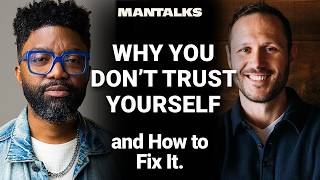
In this long‑form interview, host Connor Beaton talks with therapist and author Tim Ross about the central role of vulnerability in men’s lives. Ross explains that vulnerability is the primary vehicle for authentic, integrated living, yet it is often weaponized and suppressed by cultural conditioning. He shares personal stories of childhood sexual abuse, the cascade of secret‑keeping, and how those secrets manifested as addiction, health issues, and relational dysfunction. Ross introduces practical tools such as the “accusations audit,” safety code words (e.g., “the monster is back”), and the importance of honest disclosure to trusted partners. The conversation expands to broader societal trends: declining education, marriage, and employment rates among men, which Ross attributes to an inability to translate feelings into words, leading to acting out. They discuss parenting strategies for talking about sexuality with sons, normalizing anatomical language, and confronting porn use through moral incongruence. Ross also highlights the ManTalks Alliance community and his media platforms for men seeking growth. The interview ends with actionable advice: first tell the truth to yourself in the mirror, then choose a next trusted person, and use concrete language to keep the body‑mind integrated.
Chapters
All right, Tim, welcome to The Man Talk Show. How you doing today?
I'm doing well, Connor. Thank you so much for having me.
Thank you. Thanks for joining me, and thanks for the work that you're doing, the story that you put out. Um, tell the audience a little bit about how you describe the work that you do.
Um, my goal in life is to normalize vulnerability for every human being on Earth. So that every person is fully seen, fully heard, fully known, and fully loved, even if they're not fully agreed with.
Why do you feel like vulnerability is such an important piece? Obviously, the V word has some sometimes negative connotations with guys.
Yeah, and there's merit for that. Vulnerability is risky, and it has been weaponized. And it can cause a lot of hurt. And I still believe that it is the number one vehicle to living the most authentic and integrated life that one can live.
What would you say, or— I mean, I agree on that note, right? Like, I think that there are risks, and I think that guys sometimes are a little hesitant, let's just say, to be open, to be transparent, to be honest about what they're going through or a choice that they've made. What are some of the— maybe not traps, but the downfalls of vulnerability? How do we know who and maybe when or what about we should be more vulnerable with?
Yeah, I don't think vulnerability is a trap. I think the wrong person can be. And you can only find out once you divulge something, right? There's— especially if it's somebody you don't have relational equity with, somebody you don't know, there's a 50/50 chance that this could be weaponized. Um, I've just lived, um, enough of my life that I've chosen that I would rather be vulnerable than to hold something true about myself, you know, in a secret way because I don't want to get hurt. If George hurts me, I won't tell George anything anymore. But I'm not going to— turn my experience with George into experience with everybody. I won't penalize the next man for what George did.
What does it look like for a man to start to step into that? Like, should he start to open up with friends? Should he try and— like, how do you identify somebody? Because I think this is a struggle that a lot of guys have. It's like, okay, there's some stuff that I need to talk about. There's some stuff that I need to get into. There's some stuff that I've been holding on to. I know it's having a negative effect on my life or my marriage or my relationship or my sense of self, but I don't even know where to begin. For the guy that's in that place, how does he start to discern, like, who can I talk to?
This is interesting. I think intrinsically most guys know who they can talk to. I think they already have that person. It's a matter of getting over their own fear of how they projected in their head this person is going to respond. So let's just be— say, let's just say it's between you and I. We've been friends for a couple of years, but I got some stuff that I've just never shared with you. But you haven't given me any indication in 2 years that if I were to tell you that you're going to have some adverse reaction. But I've projected in my head Connor's not going to think feel the same about me. He's probably going to judge me. He's going to probably hate me. Why didn't I tell him sooner? You know, he's going to think I'm a fraud. So all of these things are going through my mind, and I won't know if any of that is true or not until I tell you.
Fair.
And so one of the ways that I would, um, if I, if I were to lab with some men right now— I do role plays all the time with men and women— if I was to role play with a guy I would say, between you and I, I would go, hey, Connor, you've been a good friend. But I'm going to tell you something, and you're probably going to hate me because I didn't tell you sooner. You're probably going to think I'm a fraud, right? It's called an accusations audit. Anything I think you're going to feel, I just name it. That way, if you feel it, the only thing you can say is, yeah, I do think you're a fraud, right? As opposed to saying something and you going, you're a fraud. And I'm like, oh my God. So my self-awareness knows, oh, you know what? I've been keeping this from Connor for 2 years, but yet I call him a good friend. He'll probably think I'm a fraud. So I'm going to just out myself and say, you're probably going to think I'm a fraud, Connor, you know? And then I tell you, you know, I told you I've been sober for 5 years. I haven't been sober the last 2 weeks. And Here's the triggers that caused it, if you do know or you don't know. You might say, I don't even know why I started drinking again. You know, I had a lot of pressure. My wife and I, my kid's been sick. I'm not making the money I used to. They cut all my overtime, whatever the case. And then you get to choose how you respond to that. I'm going to find out how good of a friendship we have right here, right now.
Right?
I'm about to find out, right? There's a colloquialism in our ethos, F around and find out. I won't say the word. But I've changed that F for that word to faith. Sometimes I need to faith around and find out. I need to have enough faith that this is not as bad as I think it is. And I won't find out until I actually say something.
I think from looking into your stuff, and maybe I'm wrong about this, but it seems like a lot of your audience are men. And I'm curious, or at least, you know, you speak with men on a regular basis, interact with them.
Yeah.
What do you see is going on with men? Because I think when we look, you know, I think you and I sort of speak to very similar overlapping communities, but also very different communities. And I think when you look at the data and the research around men socially and culturally, men really are in a kind of decline in almost every category that we can look at. They're going to school less, they're dropping out of college more, they're not in relationships, they're living at home more. There's just so many of the metrics that we can look at. It really looks like boys and men are in a steep decline. And I'm curious from your perspective what you see contributing to that.
We could literally, you know, blindfold ourselves and throw a dart at a wall of societal ills, and whatever we hit, we could say is a contributing factor. I am much more 40,000 feet in the air type of person. And it's silence, Connor. When— whatever doesn't come up and out of our mouth through words comes up and out of our body through actions. So when we see the decline in college, when we see the decline in marriage, when we see the decline in trades, education, all of these different things, there's something going on within that man that he has strong feelings about, but he cannot put into words. And whatever he cannot put into words, he's going to act out. Point blank, period. And so you show me a man that's domestically violent, I'll show you a man that cannot express his anger. He can't put it into words. You show me a man who can't stay faithful to one woman, I'll show you a man that cannot articulate his loneliness, his attachment styles, his trauma. So I could go on and on with that. But at 40,000 feet in the air, since the beginning of time, it's been about, can this person put their thoughts into feelings? Thoughts into feelings and feelings into words? Or are they just trapped in their feelings? Because if they're trapped in their feelings, they're going to act out because they can't speak out.
Do you think that that's only social conditioning, or do you think that we have— as men, like a predisposition towards suppression?
Uh, uh, I, I think, I think our, our parents predisposed us to suppression. Um, we, we didn't come out of the womb like this, right? We came out using our voice like every other baby, right? We came out with a voice and we came out with tears like every— nobody looks at a baby boy fresh out of the womb and goes, stop crying.
Right.
But by 5, stop crying. Be a big boy. Well, biologically, if I keep living, I will be a big boy. I'm 5.
I actually have a 5-year-old son. So that's like, it's funny. I see him in that stage right now, and I've even noticed a shift where I'm like, oh, you're like, he's getting bigger. And, you know, he's in a very different stage and phase right now. And I've certainly found there's like a part of myself that I never shut him down emotionally. I never, you know, would never say, you're not allowed to cry or anything like that.
Right.
My response to him is always, you're allowed to feel however you feel. You're just— it's just not okay for you to do certain things because you feel that way. And that's the big thing I'm trying to teach him right now, because sometimes he's like, you know, he's got a year and a half— year and a half old sister who sometimes takes things from him or will like pull his hair, you know, and— or she'll— yeah, whatever, right? And yeah, and then he'll get upset and, you know, he'll react to her. And so I'm trying to teach him that lesson right now. But it's, it's interesting because again, when you look at some of the research, it's like by the age of 3, boys will be— get 50% less physical touch on average than girls. So, like, something starts to happen in the way that we relate to even, like, a 3-year-old boy where they just stop getting physical touch, which is crazy.
You know, like, it's absolutely— it's insane. Yeah. So I have 2 sons. They'll be 18 and 16 this year, respectively. Okay. In July and October. And again, I didn't know any— I didn't know who or who. I didn't know which dads or which dads were not doing this. I know I was doing it. Then I found out Tom Brady was doing it. And so now it's the Tom Brady rule, I guess, because he's famous. But it's like, I was doing it before I knew Tom Brady was doing it, probably before Tom Brady started having kids with Gisele. Anyway, I still kiss my boys on the lips. Or conversely, they still kiss me on the lips.
Right.
I mean, they got beards now and facial hair and hair. Their hair is longer than mine, you know? And before Nathan will go to work, he'll come kiss me on the lips. Before Noah will start his day, go to school, walk the dog outside, he'll come kiss me on the lips. It's been the most— I've been doing it to them since they were born, right? And you would not believe how many men who have seen me on my own podcast, because I have a very It's the— whatever the antithesis of quiet on the set is for a podcast, it's our house. I'm married to a Caribbean woman. They're loud. And so it's just like, hey, just life is happening in the background. So they know that even though Dad's doing his pod, I'm his son. And if I need something, he's going to stop. He doesn't care what's going on. It's the truth. It's the rule. So they'll come in, give me a hug, and they'll kiss me on the lips. And there'll be men in the comment sections, you're turning your boys gay. Like, they're literally triggered because I kissed my 17-year-old boy on the lips. But their disposition and their heart and their sensitivity, I mean, these are these are alpha males, but they're very tender alpha males because nothing got weird, right? And I'm not saying every dad needs to kiss their kids on the lips, but if you're not hugging your son after 3, if you're starting to just give them a punch in the chest at 5 and you're dapping them up at 7, it's like, what do you expect this kid to become when he, when he turns 13?
Right.
Totally.
Well, and I think it's— I mean, I wrote in— I wrote a book for men called Men's Work, and I wrote in it, you know, for most men, strength equals suppression. And the more you can suppress, the more you can push down, the more you think you're presenting yourself as strong. And I do think that that's part of our masculine culture that's faulty, you know. Again, when you look back at different cultures throughout history, that's never been the case. Like, that's never been promoted. That's a very new concept and idea that I think has emerged. And when you look at Western, you know, Western, I mean, you look at European cultures, you look at even like African cultures, you look at South American cultures, you look at Asian cultures, there is a kind of physical affection that sometimes within North America, we seem very uncomfortable with. And it's strange, you know, it's like we've— I call it one-dimensional masculinity. Like we've tried to compress masculinity into this very finite, small material. And if you step outside of that, then, you know, you're attacked or shamed or, you know, seen as weird or strange or whatever it is. So What was that like for you? Because I know you've talked about part of your story, like, secrets keep us trapped, this notion that secrets keep us trapped. What was that like for you? And how did you start to get out of that cell?
Yeah, absolutely. So I was sexually abused when I was 8 years old by an older teenage boy that lived across the street from me for about a 6-month period of time. It not only happened to me, it happened to my younger brother. I found that out when I was 15. And not only did it happen to my younger brother, it happened to every boy my age on the block. So this guy abused all of us, we found out later. And obviously, to be sexually traumatized at 8, what am I supposed to do with this? I don't know, right? So I don't know these terms at the time, obviously. All I knew— is that if I told my parents, my dad would kill the guy and my older brother would bury the body because my older brother founded a gang in LA. So at 8 years old, I made a decision not to tell the truth about what happened because in my mind, it was going to mean I'm going to lose my father and my brother. And my mom's going to be single. And we're going to— like, we were hood adjacent. We were about to be in the hood hood. And so I became a professional liar at 8. Like, consciously, I knew I'm telling a lie when I tell somebody my day was good. And it just became normal. Now, like I said prior, Connor, whatever doesn't come up and out of the body through words will come up and out of the body through actions. So I don't know how soon after, but I started bedwetting. Obviously, my parents— there was no trauma information at this time, right? My parents were parented by the Silent Generation, a literal generation that was called silent. Right, right. Prior to Boomers, silent, right? And so, um, uh, 12 years old, I got exposed to pornography, and that became my medication. It became my numbing agent. Um, I saw my first crack rock at 7. It could have been crack. I It could have been alcohol, could have been weed. Just so happened to be porn and masturbation. That link was like, oh, I don't feel what I feel when I don't do this. And so I need more of this. So that goes 12 to 19. And when I'm 19, my mom catches me watching porn. Now, Connor, I was born in the year of our Lord 1975, right? I was born in the 1900s. So this is not quickly swipe away the porn, right, to a different app. This is a box TV, VHS. You know, when I tell you I'm caught watching porn—
I started watching porn in dial-up. It was like line by line, you know, just like slowly line by line with the dial-up, where it's like, did it, did it, did it, did it? Like slow. You're like, ah, there it is. You know, it's like a celebration, you know, when you see something.
I can remember that. I can remember that. Yeah. And if a call came through while the line was going, you got to start over, right?
Yeah. It's a part of the anticipation, you know? It's like the build-up. Yeah, yeah, yeah.
It's so funny. That's hilarious. So my mom catches me watching porn, and, um, she makes a 180 pivot, goes to her room, hits her knees, and starts praying. Now, obviously, I feel shame in the moment. I feel awkward in the moment, right? It's just a weird feeling for your mom to catch you watching porn, right? So I remember taking the tape out, the VHS out of the VCR, popping it, throwing it away, cleaning up. And then I walk down the hallway. If I make a left and go to my room, I'm going to get in the bed, you know, try to fall asleep. I know it's going to be awkward for like 4 or 5 days. Mom's going to tell Dad. Dad's going to come in the room and be like, don't watch porn, right? What's going on? But I know why I've been watching porn, right? I know pornography is not the root of my issue. I know it's the fruit. I know the root is sexual trauma. And so that night, I made a right. I knocked on my mom's door. When I opened it, she was— I still remember it like it was earlier today. She is on her side of the bed, which means I can only see her from, like, probably, like, the sternum up, because she was kneeling praying. And she lifted up her face. Her face was soaked with tears. And that 8-year-old in the 19-year-old body finally got to tell Mommy where it hurt. Mm. And what I said to her, Connor, was, Mom, I don't want you to think I'm dirty or I'm a pervert, but I got abused when I was 8. And so she starts bawling. We start talking. And she goes, does your brother know? And I'm like— Well, it happened to him too. She's like, wake him up, because it's like 2 o'clock in the morning. So we wake, we wake up my brother Miles, and, and we're talking about it. And then my dad, who worked nights for the post office, she's like, hold on, I got to call Dad. And so Dad gets off work, he drives home. And so now the four of us are in this room, and we're all sharing stories of like trauma. So after it's all over, we We hug. We cry. I go to sleep. And when I wake up in the morning, I feel like 2,000 pounds of concrete has come off my chest. And I just remember feeling— I feel like my feet aren't touching the ground. I feel lighter than I have felt since I was 8 years old. And whatever this is, if it's because I've just said what I had been keeping secret, I will never have another secret again as long as I live on the earth. And from that day to this, I've never had a secret. Somebody has always known what the hell I'm going through.
It's pretty big, man. I mean, I can feel the— yeah, I mean, just the emotion around that type of liberation. Yeah. And I mean, I've worked with so many guys where they are carrying around that 2,000-pound concrete block on their chest, you know, unable to— and then they're trying to figure out like, why isn't my marriage working? Why is my career so stalled? How come I can't figure out X, Y, and Z? And, you know, it's— they're not— they haven't really expressed Maybe it's not a secret like that, but they haven't expressed the pain of what they went through growing up.
Mm-hmm.
That's right. All right, guys, really quick aside. First off, thank you so much for tuning in to the show and to the channel. If you are wanting to go deeper, if you're a man that's working on himself in some way, shape, or form, you're wanting to be more self-led, you want to trust yourself more, you want to have a deeper level of self-worth, or maybe you're looking to improve your relationship. Then I encourage you to check out the ManTalks Alliance. You can go to mantalks.com/alliance. We have over 1,000 men in this incredible community from around the world, men who are just like you, working to better themselves, to be a better husband, a better father, a better leader in your own life. So check it out, mantalks.com/alliance. That's right. And when you say that, unless it's expressed, uh, with words, it comes out through the body, through actions. Can you just talk about that more? Because I think it's— you've said it twice now, but I really want to make sure that it like lands with guys because it's so true. It's so true, for sure.
So, um, our bodies are not designed to carry secrets. It's the, it's the reason why Things like deathbed confessionals are still so profound because nobody actually wants to take a secret to their grave, right? As much as we've tried to— that person will keep a secret to their grave— it's not actually the way the body is meant to and designed to work. So when we are not truthful with our bodies, our bodies turn rogue on us. And they turn rogue in a multiplicity of ways, right? I talked about anger being expressed and all that kind of stuff, but ulcers will happen. Some cancers will form. Teeth fall out. Skin breaks out. Hair falls out. Skin gets blotchy. Sleep gets deprived. Eye starts twitching, right? You'll medicate and overeat. You'll undereat. All this stuff is because you cannot put your feelings into words. I watched a clip, I think it was— gosh, I think it was yesterday, Diary of a CEO. There was a lady on there who had, I think his name is Steven, Steven Bartlett. Yeah, he had Steven hold out his hand and she said, I want you to tell a lie. Well, I want you to tell the truth first and say, you know, just say like, you know, my name is Steven. So every time, and then she tried to push his hand down every time he said, my name is Steven, and she tried you know, he tried his hardest to keep it up. My name is Steven. My name is Steven. And she couldn't get it down. And then she said, now I want you to say, I love to vomit. And every time he said, I love to vomit, the hand went down straight to the table. As much as she tried to hold it up, she was giving this example to show the body does it like you to lie. The body never lies. She said this is the reason why the only people that can pass lie detector tests are sociopaths, because every other human being is not capable of doing so. Right. Right. And so when there's no integration between our bodies and the words that come out of our mouth, our bodies go rogue.
Was there— I'm curious because I think for a lot of guys, there's the fear of if I'm actually transparent, if I actually talk about what happened, what I went through, or the decisions that I made or the pain that I experienced or whatever it is, right? Like, whatever the thing that he's withholding is, there's usually this fear of, well, it's going to disrupt the system, right? It's going to mess up my family. It's going to mess up my marriage. It's going to mess up my, you know, whatever it is. And I'm curious about what happened within your family system after that. And, you know, because I think a lot of the times there's these kinds of generational secrets that are being passed down, correct? These generations, you know, traumas and pains that aren't being talked about. And so I'm curious what happened in your system after that.
Yeah, so, and so my disclaimer is I won the lottery when it came to parents. Okay, my parents— I won the lottery, that's all I can say. So, so, so, um, my parents cultivated an environment where we had the most openly communicative household of anybody in my— I want to say state, but definitely our neighborhood in our city. Um, and so we got closer after that night. We were more, uh— I learned vulnerability at such a young age. I mean, my mom caught me watching porn. My penis was in my hand. I don't think it gets more vulnerable than that, my guy. Like, you know what I'm saying? Like, and so when you've been seen by that, by a parental figure, and the response is, I love you, and thank you for sharing, and I'm heartbroken, and I feel like it's my fault, which it wasn't. My mom was the guardian, right? We went to the mall. She was the woman. That stood right outside the men's restroom, counted to 60 seconds, and then she came in. Like, I've already seen penises. I'm not a perv. My kid's in here, and you better not be bothering them. So, and I had to reassure her, Mom, predators are called predators for a reason, right? You never see them coming, right? They wait until you turn off your alarm, and that's when they prey. That's why they're predators. You never see them coming. So I had to reassure her and my father that this wasn't because you weren't diligent parents. It's because somebody was a predator and they knew when your guard was down. So in my family structure, All it did was bring us closer. But I do want to speak to the fear of disruption. It is absolutely real. And here's my statement. It is worth blowing up a life that's been lived in a secret to live the life you were always supposed to live being known. So that fear of blowing it up, um, yes, you're gonna blow up the lie you've been living, right? You don't want to confess it, or you don't want to address it, or you don't want to come clean on the situation because it's going to hurt my wife. Well, it's been hurting her anyway because she doesn't know, right? Well, she'll leave me. She might. At least she'll be free. You ain't gonna find out till you say so. Do you know, I would have to— this is a little arbitrary, but it's not going to be far off. And my wife is roaming around outside. She could probably testify to this. I would say between 75% and 80% of men that confess whatever they've been doing to their wives stay married. The wife actually respects the fact that they've come clean and they're actually doing the work to change and heal. It is literally less than 25% of the women that walk away from a man that decides to be honest about what he's been through.
Mm-hmm.
And to confess it. So that fear, as looming as it feels and as large as it feels, I had to do the same thing with my wife as well. It's not like, you know, what happened at 19 didn't replay itself in my 20s when I got married. It was just a different shape and a different nuance. I was sharing it and being accountable to people, but I didn't want to share it with my wife. And that bit me in the butt. And then she caught me watching porn. And I'm like, OK, I'm not doing this again. I can't take an L doing this a third time. This is so stupid.
OK, Tim. You don't get to do that. He's like, this is what's going to keep happening.
That's right. Yep. So I had to do it with my wife as well. And she's like, how come you didn't tell me? Why would you hide this from me? And I'm like, well, I didn't want to hurt you. Well, she found out and got hurt anyway. So I might as well come clean. So I learned. That it is better to just blow up whatever you think is the life than to keep the secret.
I was going to say, I never got caught in the moment, but I got caught via browsing history, which was, you know, equally unpleasant. Of course.
Of course. Especially when they get to see where you've been going. Yeah. Yeah, yeah, yeah. It's like you're 15.
Why are you viewing this? And how my parents handled it was brutal because they just printed off the search history and then sat me down. And in hindsight, I was like, that's terrible.
Don't do that.
Right, right, right. Anything that was just like, we know, don't do this. Not why is this happening. None of that conversation. I grew up in the sort of antithesis of what you had, where it was just like, shame, don't do this, that's wrong, you know that you did it, and nothing changed, right? Like, nothing changed. No deeper conversation of like, well, why is this behavior happening? I think it was just assumed you're a teenage boy, you know? And there's some validity to that, but I think there was also the deeper issue. I used food as a kid. I would chronically overeat and eat insane amounts of unhealthy food and watch porn. And, I had a lot of bad behaviors and cycled through a whole bunch of different addictive behaviors that I then had to work my way out of. But, I think sometimes we as men were so pragmatic that we look at the addiction and it's like, "I have to fix this addictive behavior." But, what we don't look at is the core driver, you know, like the pain, right? The, the fuel source that's pushing us towards that addictive behavior, you know?
Right, that's correct.
For the guys that are like— because I do think that for a lot of men, there's either they're using porn too much in their relationship, or they're ashamed that they're using it. Um, and usually, I mean, again, what the research shows is that a huge part of what drives men to go back to that is something called moral incongruence. It's just, it's their incongruence or out of alignment with a behavior that they don't want to be doing, right? And so, it's just the fact that I don't want to be doing this because I want to be connected to my wife or my girlfriend and I don't want to be using this stuff and it feels like it's secret. I'm not actually open about it. So, for a guy that wants to start that process of disclosure, What does that look like? Because I think, again, there's this intensity of like, well, that's just going to mess up the relationship. And so any words of wisdom on that front for a guy?
Yeah, I remember I had done enough work. So I've been in therapy for 28 years, and I had gained enough language to be able to articulate to Juliette, like, hey, these are the drivers for my leanings towards pornography and masturbation. Yes, there's— I have core traumas, which are attachment and abandonment. Those are my two core traumas from what I experienced as a child. But also, um, what I do is very stressful. The emotional swings of what I do for a living leave me very needy. And when I'm— I'm so used to handling it myself, medicating it myself with porn and masturbation. I don't even think about you. So a couple of things that I want to do out of this full disclosure, right? Because I'm not just coming to admit I've been watching porn, right? I kind of know what it's linked to now. So a couple of things. First, whenever I have the desire, I want to be able to tell you. And you're not going to hear it every 5 minutes because it's— I'm a big boy. I can handle most of this. But when that desire gets past a fleeting thought, I want to be able to tell you. And the way I'm going to tell you, our code is going to be, the monster is back. And when I say the monster is back, that's how you're going to know, OK, this is really something that is more than just a whisper. It's something I'm entertaining. And so then my wife would come, and when I say the monster is back, she'd go, okay, well, what do you need? And do you know the only thing I've ever needed anytime that desire was really strong, Connor, was to talk. I didn't even— I never needed sex. That was like the most profound thing for me, was like, wait a minute, I'm thinking like, if I don't watch porn and masturbate, I'll have more sex with Juliette. And I had exponentially— I had more conversations than I was having sex because I just needed to talk, right? And then when I did need to connect physically with her, when I needed to actually be sexually engaged with her, I just told her, I would really like to connect with you today. Like, it would be very meaningful today. Like, when I come home from this trip, it was great. It was emotional. And it would really ground me if we could connect. I've never had a problem. Julia has been more than willing. And so just being able to— First of all, I need to understand it, but then to be able to articulate it in a way that she understands it, now I have an ally, right? Now I have somebody that is there to support me. She's not my parole officer. She's not there to become sexually objectified, right? But she is my helpmate. And she's the best. So I think those practical tools of just being able to get language around what it is that you're feeling— and that takes some unearthing. That takes some excavation. But once you have words for it, you'll understand yourself better. You'll know your brand. Right? Every— it's not this cookie-cutter kind of every— all— everybody— all these men struggle with porn and it's all the same thing. No, it's— there's levels to it and you got to know where you are.
I was going to say, how have you— how have you traversed that conversation with your— with your sons? Because I think that's a big thing. You know, again, when you look at— I just keep saying the research, but when you look at a lot of the studies out there, the average young boy now is finding it between 9 and 12. And, that's becoming commonplace because it's so easily accessible. And then, when you drill further down into it, a lot of the times, it's either they're stumbling across it because they're online and there's not some parental filter. And so, they're coming across something that's leading them down a bad path or they're being shown it by some other kid or older older child.
Absolutely.
And so I think this is a thing that like a lot of parents are like, I don't know, how do I talk to my son? And how do I talk to my kids? But specifically, how do I talk to my sons? Because they, they really are the ones that seem to be more impacted by it. So what's that look like, if you don't mind?
Yeah, so, um, I spoke to— like I said, my kids would be 18 and 16 this year. Uh, Juliette and I sat them down to teach them about sex and sexuality at 12 and 10. And after that initial conversation, we basically established an agreement that if you hear something, see something, say something, right? So obviously, that's easier said than applied once it starts. But like you said, pornography is so pervasive. The likelihood of shielding your children against it, you have better odds to win the lottery in your state, unfortunately. So the way my son first got exposed to pornography is because he was out with his friends playing in the street, and one of the kids named an adult performer. And he heard the name, and 4 months later, that name popped back in his head, and he Google searched it. And that's how he got exposed to porn. So he didn't immediately tell us. His mom caught him. Sound familiar?
I was going to say.
And quickly called me. Uh-huh. And we had a discussion about it, which ended with him curled up in my arms, crying a river of tears and snot into my shirt. And I'm like, hey, I'm here for this. You're not dirty. You stepped in something dirty. We just need to change your clothes. If this is not something— if you don't like this feeling, obviously, women's bodies are beautiful. But this is not the way you are to take in this beauty. You don't want to objectify women. You don't want to start— being curious about your mom, about your cousins, about your friends. You don't want to start sexualizing every woman you meet. So we had this very trauma-informed conversation and language around it. And we kept that open. We had to deal with a scenario where it wasn't porn. It was a young lady who wanted to send— her bits and pieces through some text messages, right? And that's another level, that's another nuance. These kids are creating their own porn, right? This— it's not adult stars, it's Snapchat. It's a young lady. Yeah, it's a young lady or a young man that's sending little videos of themselves, you know. So we've kept that at the forefront. And we've just never— we've normalized all things sex and sexuality so that it's not— it doesn't feel taboo when they want to talk about it. Because we've normalized it so much from 12 and 10 that they're like, OK, we get it. You know? Yeah. Mom and Dad have sex. That's gross. But now we know why we need to knock on the door.
Yeah, right.
Like, we just covered it all. And by normalizing it, we've taken away the awkwardness of it.
Yeah. Yeah. I mean, it's interesting because I think normally, I mean, at least in my generation, I think we're kind of in the same. I think you said you were 75. I was 83. So we're not too far apart.
Correct.
You know, it was like a one and done conversation. It's like, here's the birds and the bees conversation. We are never going to speak about this again. You know, I remember getting— I got a book, like an anatomical book, you know, it was like the most scientific shit ever. Like, that was the— that was the prequel to the conversation, was like, here's this book. And I was like, this is a little weird. Why am I— why do I have—
what is this book?
This is so strange. Like, there's, you know, it's showing like the— like the cutout of like the anatomical— what's happening inside of the penis. And I was like, this is so It's like, why are they giving me this? Oh, they're gonna have the conversation, you know. Of course, like everybody at school, you know, this, this stuff, right, right, right.
Have your parents been— yeah, exactly, exactly.
Yeah, yeah. I remember the funny— this is, this is— I remember in, uh, junior high, everybody's sharing how their parents had the talk with them, if their parents had the talk with them, and like what they would— what they had said. And, you know, so I think it's, it's funny because I think it's part of the kids are maybe more open with one another than parents are with their children. Correct. And then it creates a dynamic where you can't go talk to parents about that. I've really thought about this with my kids of like, how do I foster that environment of you can come tell me anything?
Correct.
No matter what it is, no matter what you've done or what's happened to you or whatever it is, like you can legitimately come and tell me anything. And there'll be discernment on my side of whether or not I need to do anything other than just love you and support you through it. For sure. And I get— and I've had to sometimes check myself because I want to be like the big strong dad of like, if anything happens to you, I'm going to— and my wife's always like, yeah, if anything happened to our kids, You know, I'm like, are you going to be— are you going to do anything? Is anything— I'm like, no, no, no, no. Because I think what I've recognized is exactly what you described, which is sometimes kids don't tell their parents for the fear of what their parents will do. And that becomes like a strange double bind that the child is in of, well, I don't want anybody to get hurt, or I don't know how my parents are going to respond to me telling them that this happened to me. Are they going to think about me different, see me different? Am I going to get hurt again because of this? Is somebody else going to get hurt because I told them? And so it's a, you know, it's all of a sudden a child— like, the way that I've framed this before is that trauma is an experience that at the time, often, especially when it's childhood, trauma is an experience that was just way too big for you to comprehend. Absolutely correct. And it's this experience where somatically cognitively, emotionally, you know, on all these different planes of, of subjective experience. You just can't comprehend it.
Not at all.
And then the thought of going to talk about it puts even more strain on that poor little psyche and body because all of a sudden there's all of these other big existential questions. And so I love, I love what you're saying because in, in many ways you're saying, well, create the environment in the relationship that diffuses a lot of that pressure for a child. And it sounds like in many ways you grew up in that type of environment where it was more acceptable, where the environment was more conducive for you to go and express some of those things.
Absolutely correct. I'll never forget when we homeschooled our kids, and so that's why we wanted to have the conversation like we did when we did because we wanted to preempt when they started to get into more robust social circles. But from children, we've always called their penis penises. There were never any nicknames around it. You know, we let them know once we had the talk at 10 and 12, you know, women have vaginas, men have penises. But here's what you're going to hear on the street. And we started going through the list of all the words that are commonplace derogatory, however you want to categorize them, the blue words. And we're like, hey, you're probably going to be the nerds among your friends. But just know that for all of these different nicknames, colloquialisms, and euphemisms, It's a penis and it's a vagina and it's an anus, right? You know, and you're going to hear all manner of things come out of people's mouths and you're going to hear music that describes it in all these different ways. It's a penis, it's a vagina, it's an anus. And so they grew up quite Matter of fact, that's a penis. Matter of fact, there's penises and vaginas and anuses. That's great.
That's great. I mean, I've kind of been doing that with my kids, too. My daughter is in this self-discovery, right? Every time she has her diaper changed, she's like, yes, she's trying to figure out what the words are for everything. And whenever she gets a diaper change, she's like, what is this?
Exactly. Exactly.
So it's been an interesting thing, but I've I like that. I like that. Just like matter of fact, like it's a penis.
Yeah.
You don't need to call it other stuff that has— that's right. Sometimes negative connotations or derogatory or anything like that, or desensitizing.
Right. Like if we start calling it wee-wees and tutus and cookies and all this other stuff, we're desensitizing it and we're giving predators a leg up because they desensitize it. So we've always told, if you get around anybody else that wants to refer to your genitals as something different than what we've told you, red alert. Because they'll nickname you right into something you don't want to be doing.
Yeah. Yeah. Well said. Well, maybe on that note, for the men who, you know, because a lot of guys come into this podcast and into our organization because they've experienced adverse events through their life, whatever those might be. What are some things that you would maybe just leave them with if they are listening and on their journey of working through you know, sexual abuse, or they maybe haven't even started that yet. What are some other things that you found really helpful with dealing with, whether it's the shame or the self-worth component, that might be helpful for them on their journey?
So I'm very pragmatic, and I'm a very sequential person. My mother worked for the LAPD for 30 years. I went to school to be in law enforcement, specifically to be a homicide detective. So I have a very sequential mind. So here's my encouragement to your audience today, to the men that are listening to this podcast. There's no way you've heard the conversation between Connor and I and have been like, oh, yeah, my friend Billy needs that. You know it's you, right? Because it's all of us. It's all of our thing. And you don't have to have gone through what I've gone through. To be carrying something that you know you've never put into words. Before you tell anybody, tell yourself. I want you to just look in the mirror, and I want you to look yourself in the eyes, and I want you to be able to put that thing that you've told nobody into words. It's an exercise that I promise you is way more painful than it sounds. Oh, easy. I'll just look in the mirror and I'll just say— I'm not telling you to look in the mirror and say, you're good, you're awesome. I'm telling you to look in the mirror and say, I've been a hypocrite. I've been lying to myself and others. I am an addict. I am an alcoholic. I am petty. I'm vindictive. I've been abused. I have never wanted to say those words because I don't want to give it power. But it's the truth. Your body's been waiting on you to tell the truth. So before you tell the truth to anybody else, tell the truth to yourself. Just look yourself in the mirror and go, you know what? My body's been through this, and I have not been honoring it with the narrative that I've been sharing. or not sharing. And so I want to be honest about that first. And once you say that, I just want you to see what happens to your body once that comes out of your mouth. You're going to notice tension literally release. You're going to notice your body almost like, finally. And then, you know, you might need to— think about, pray, whatever your method of operation is, about who's the next person to tell. I've told myself, who's the very next person I can tell right now? It might be your spouse. It might not be your spouse. It might be your best friend. It might be a parent. It might be a coach, mentor, pastor, whoever. But it's my double dog dare, because I've lived it. I don't have any letters behind my name. I'm not the clinician. I don't have the psychology degree. I have 28 years opposite the doctor. I'm the one that's been on the recliner. I'm the one that's been in the chair. And I am a freer, vulnerable, more integral man as a result. Beauty.
Love that, man. Well, you've got a new book out called The Missing Piece, and I think that'll be live by the time that this rolls out because it's coming out on May 5th. So people can go check that out, obviously on Amazon and anywhere that books are sold. But where can they find you to follow along with more of your work and your message?
Yeah, so on YouTube we have a show called The Basement. With Tim Ross. It's a 3-hour show, um, that just covers anything you're going through in life. We've taken phone calls from literally all over the world, uh, through our Discord servers, and that's been, um, a beautiful space for us. On Instagram, Upset the Gram. On TikTok, Upset the Tok.
Nice. Beautiful. Well, we'll have the links to that in the show notes for whatever platform you're tuning into, whether it's YouTube or Spotify. As always, don't forget to man it forward. There is probably a man in your life that you know needs to hear this conversation, would enjoy it, would benefit from it. Maybe this is one of those dialogues that you send to a friend or to a significant other and you have a conversation together about it. So thank you so much. Don't forget to man it forward. And as always, this is Connor Beaton signing off. I'll see you next week. Tim, thank you so much for joining me, brother.
More from Connor







How to Raise Strong, Unshakable Boys in Today's Culture, with Dr. Shefali Tsabary



