3 Keys To Shooting Lower Scores Faster
Connor Stirling Peterson breaks down why junior golfers improve slowly: the average player gains just 1.2 strokes per year, mostly from hitting farther, not scoring better. His coaching system tracks three stats (penalty rate, greens-in-regulation, 3-putts) and cuts practice to what matters. Students who follow it improve 4.5 strokes yearly; those who don't improve less than one.
Chapters
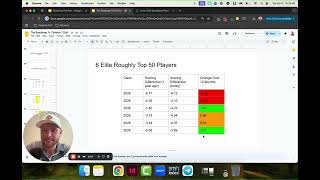
All right, what is going on guys? We've got an amazing video for you guys today. I hope you enjoy data. We're gonna be digging into the amount that the average junior golfer improves per year and why the average junior golfer doesn't really improve by that much at all, and what you can do instead. If you're a returning subscriber, welcome back. If you're new, this is all we talk about is helping junior golfers develop to play Division 1 golf, getting really specific about the numbers. A lot of the time there's a lot of fluff that goes into this subject. There's a lot of stuff about, oh, you gotta work hard or you gotta do blah blah On this channel, you know, we make this stuff really simple, so let's go ahead and dive right into it. So all this stuff is backed by data here. Everything I'm going to be talking about— Junior Golf Scoreboard, it's going to be one of my favorite websites to go to. Go specifically to this page called signings. You're going to be able to see all the players that were recruited by, you know, different Division I programs for boys and girls all the way back to 2017. So there's a lot of really cool things you can do with this. There's a lot of creativity that you can have. But long story short, this of what's required to play Division 1 golf. And you can say, hey, well, you know, nothing's guaranteed, blah blah blah. Yeah, but we look at this and it's like, you know, if you're ranked well enough, it's like the probability you go play Division 1 golf is extremely high. And, you know, most people don't really talk about this as well, but, you know, we consider the average scholarship— just the average scholarship for a Division 1 player, it's about $72,000 per year. Um, bear in mind there's probably about 300 spots per year, you know, give or take. And so when we consider that, you know, there's a significant payoff for this if you're able to take this seriously and you know the right stuff to focus on. So that's what I'm going to be talking to you guys about in this video, um, specifically here. Now within Junior Golf Scoreboard, um, this is not accessible necessarily to the public, but one of the things we're able to do that's really, really helpful is we're able to see this statistic over here on the right called percentile. So a lot of the time, um, you know, maybe your child is ranked on Junior Golf Scoreboard, maybe they're not, but long story short, we're going to be able to see how that player compares to all the other players in their class and it's a lot more helpful of a number compared to where they're ranked in their class technically, because obviously if there are only 5 players in the class and you're, you know, number 2, it's not as impressive as if there are 500 players in the class or 5,000 players in the class, right? Um, so it's really helpful for us to understand kind of, um, you know, the average progress, um, of a player, you know, year over year, right? So if you can kind of see like percentile, how much does that percentile move, right? If we just look at an individual player, we're going to get a bunch of randomness as far as our numbers go. But if we're able to see the overall big picture, we can kind of see, okay, how much do players improve on average? That's the first thing I wanted to kind of share with you guys here. So this presentation I built a little while back, but I want to share with you guys. So if we look at the average, right, the average player, um, these are the benchmarks that are going to come up. So for a class of 2025, 26, 27, 28, 29, 30, 31, and that is it. So we're going to see a few statistics here. We're going to see their scoring average, the scoring differential, the class rank, their average distance. This is specifically the length of the golf courses that they're playing and the course rating of those golf courses. So just kind of make this really simple for you guys, we can see here if we add these all together, or you can just do the quick math, if you took 10.64, subtracted, and then subtracted 3.49 and divided that by these 6 years, you're going to get about 1.19 shots. So that's about 1.19 shots per year of improvement that's represented in the player's scoring differential, right? So scoring differential is essentially just a representation of scoring average versus the difficulty of the golf course. Typically that's going to be in length. You'll see over here on the course rating, this is the absolute kind of number that's going to determine how hard the golf course is. And you can kind of see here, again, if you do the math, it's about 1 shot per just under about 200 yards. So if you play a golf course that's 200 yards longer then it's about one shot harder, um, you know, essentially based on, you know, all these course ratings. And so if your child shoots the exact same scores on average but they play on a golf course that's 200 yards longer, they're one shot better. So hopefully that makes sense to you guys. Anyway, um, long story short, when we look at this, you guys hopefully can kind of see some interesting things about, you know, what this average player, you know, is doing, right? Obviously we start off with a very good, you know, or, um, we seem like we're ranked higher in a class, but at the end of the day, these are the middle player. This is not, you know, doesn't really tell you anything, which also kind of shows you it's like, hey, where you're ranked in your class doesn't really matter until it's like the, the time to get recruited, you know. And even that is not really the thing you want to be looking at. You want to be looking at scoring differential, but that's neither here nor there. Um, here's the interesting thing. The average player is not really improving as a result of their scoring average going down. We can see that, you know, we've got a player who's, I think, like a 5th grader. So this is senior, junior, sophomore, freshman, 8th grader, 7th grader, 6th 5th grader, and these are all looking backwards over the last 12 months. This is like 5th grader here. They've got a scoring average of 80, and maybe there's a little bit of bias that, you know, the 5th grader who can actually, you know, be ranked, you know, maybe shoots a little bit better scores. But long story short, I mean, this is pretty consistent across the board here. You've got a scoring average of 80, and we get all the way down to a scoring average of 70.47. Yeah, this one's a little bit lower, but a little bit easier golf courses, but you kind of get the picture here. We're not really improving our scoring average hardly at all. And so all of this improvement that you're seeing, it's pretty much the players are just hitting the ball further. And so hopefully this kind of tells you, oh shit, um, apologies for my language there, um, if we're just doing kind of like normal things. And again, like, the reason I use this, this middle ground is just say like, you know, just think to yourself for a second, what does the average junior golfer do? Like, what are the things that they probably do? They probably get lessons just like everyone else. They're obviously playing in tournaments. In this case, not only that, they're playing in ranked tournaments. You could even argue that these players are probably above average just by the fact that they are ranked. Well, let's just consider all that. Doing those things doesn't really move the needle as far as our scores go. And the only thing that is actually really moving this needle as far as bringing the scores down is, is these players are hitting the ball further. So, you know, if you guys take one thing away from this, that hitting the ball about, you know, a few yards longer every single year does actually make a pretty substantial difference. It's probably going to be the most difference that it makes, which tells you investment in something like, I don't know, like Speed Sticks or something like that, or a gym membership for your child, um, or a personal trainer might even be more valuable than the swing coach. Um, which, you know, I'm neither one of those. Um, that's just an observation here of saying like you don't see a lot of improvement in the stroke— the scoring average. You just see it based off the distance off the tee. So if you guys are in between on that, um, you know, now you know. Now one of the questions that might pop up for you, um, I know this popped up for me, is, well, these are— these players are average, let's just say. How is it different for an elite player, right? If a player is, you know, very well ranked maybe they have more resources, maybe they have more money, maybe they have access to higher level of instruction that will result in better performance. I had that same thought. So let's look at that. These are 6 randomly chosen players right around top 50 in their class for 2026. This is where their scoring differential was a year ago. This is where it is today. This is the change over the last 12 months, right? So we've got, you know, Player number 1 and 2 here, they actually got a little bit worse. Player number 3 and number 6 here got, I would say, significantly better. And then we have, you know, player number 4, number 5 here, which kind of didn't, didn't improve, you know, as much as kind of in that middle ground, a little bit worse than average is what I would say. But collectively, if you add these all together they improved by about exactly the same. It was about 1.19 shots on average across the board here. So when we consider that, we're looking at these averages here. These elite players, these top 50 players, are improving by about the same rate that, you know, the, the average player is improving by. And again, I don't have the numbers up here, but I would wager a lot of this improvement comes from probably distance. Is just, you know, is my bet there. Um, but long story short, hopefully you guys can kind of internalize, be like, wow, okay, cool. Whatever is kind of like the normal model of lowering scores doesn't work very well. That, that's— I mean, the best model that I can see from this, if you wanted to go Occam's razor on this, hit the ball further. Do everything you can to hit the ball further. Um, so that might be club fitting with a driver, you know, that might be a very valuable activity for you, especially if you're able to You know, let's say your child had a 3,000 spin rate on the driver and, you know, they're launching it at 10 and you get them in a driver they can launch it at 14 and have a 2,200 spin rate. They might pick up 50 yards just on that. Um, so, you know, that would be a big thing if they were going to work with their swing coach. It almost seems universally that, you know, if their coach is going to work on them, work with them on something, they'd be hitting it further off the tee. That would be the smartest use of resources there. Um, Anyway, obviously I don't think this is the end-all be-all, but I think that this is really important benchmark to hammer in for you guys that like average players improve by that much. And even when they do improve, it's mostly because they hit the ball further, not because they're scoring better. So that, that said, one of the things you guys will notice here is this average player, you know, scoring differential of 3.49 is way off from what a Division I player needs to do. Uh, Division 1 player typically is going to have a scoring average between 72 and 74. That's, that's kind of where they're going to get recruited by. Um, that number is going to be largely determined by how hard the golf courses are that they're playing. So I can just tell you right out the gate, Division 1 players can be playing closer to about 7,000 yards, maybe a little bit more than that, maybe a little less than that, but in general it's going to be somewhere in that range. They're going to have that scoring average around 72 to 74. So that's about 4 shots here. So if they just brought the scoring average down that gets this player to about a -1, something like that, you know, maybe -2. You bump the yardage up by, you know, let's say in this case 200, another 200, it gets you close to 7,000 yards. Now you're at -3, which is exactly where Division 1 players end up for the most part getting recruited. So when you look at that, the key here is to be able to lower the scoring average, not just hit the ball further. We want to be able to do these things together. We also want to play harder golf courses. If you're just playing 6,300 yards, it doesn't matter if you hit the ball further, right? Because it's still— you're playing 6,300 yards. But anyways, we want to hit the ball further. Hopefully that's been the takeaway. We want to score better, right? Which is unclear. It's not swing lessons, I can tell you that just based on this data. And we want to progress through those tournaments. Like, that's, that's kind of like long story short of this. Um, and so how do we go about doing that? Now obviously, um, you know, I run a program where I help junior golfers develop to play Division 1 golf. We're very specific about kind of the methodology around how we're going to do that. Number one, we're going to track their stats. We're going to build them a custom practice plan. We're going to build them a custom tournament schedule. Then we're going to adjust that practice plan while we're tracking their stats every 10 rounds so that we validate and, and they have a practice plan that's up to date. So if we say, hey, we're going to go practice this, we're going to improve this particular statistic that's going to improve your overall scores, that we're continuing to validate that over time so we can say, okay, yes, we did improve that statistic with this practice and now our scores are lower, what's next, right? That's how we strategically do that. I think that's one of the reasons why most coaching kind of falls short, because it's just most coaches don't have the resources to be able to say, hey, you know, here's exactly what we're going to do. They don't have the time to be strategic about that stuff. It's kind of like go in, get your lesson, and go out. Um, and not to devalue that, but just in terms of lowering scores, at least at this level, doesn't really work that well, it, it seems, at least. Um, on average. And so building out that methodology is super important, or following that process is super important if you want to help your child develop to play Division 1 golf. Now, um, I've got an application below if that's something you're interested in, you want my help, um, you can check that out. And, you know, if you're in a position where I can actually help you specifically play Division 1 golf, um, I don't work with anyone, I only work with players where I'm just like, hey, I know that you could play Division 1 golf if we put apply this process and we got average results. Um, if that's something you're interested in or that's where your child's at, again, application below. But anyway, um, yeah, I'll say, you know, transparently, the average student that I work with improves by about 3.6 to 3 shots depending on where we're at right now. As of late, I've onboarded a few new students. They've kind of dragged my average down, so we're closer about 3 shots on average of improvement. Um, That said, one of the things that jumped out at me, cuz like one of my questions was like, okay, cool. My statistics got worse because new students came in. That doesn't mean that my program is worse. That just means that the students haven't worked for me as worked with me for as long. Um, there's also other students that I started working with in like November or October who just haven't had a lot of tournaments, you know, tournaments in December suck tournaments in November suck. Um, and so, you know, there, there's those. So when I look at that and I segment that out, The average player who's been working with me since August improves by about 4 shots, um, you know, give or take a little bit. And then I was kind of looking at that and I was like, okay, cool, if I segmented these out, what would I see? Because obviously I work with students who, you know, are very diligent about doing the stuff that I tell them to do. And then there are other students that I work with where they're not as diligent about doing what I ask them to do. And, you know, it's more trying to get them to do the thing. And so I started measuring my own stuff and said, okay, cool, where should we be at as far as our overall, you know, of the students who are following the process, where are they improving? And of the students who are not, where are they improving? Because, you know, who knows, maybe I'm wrong. Maybe, maybe the way that I approach things is not as effective as it could be. A student's telling me, no, I'm gonna do my own way, or I'm gonna do my own variation of what you said to do. Um, maybe they're right. Well, here's what I found. Average student who's following the process, at least, you know, from my perspective of following the process and doing their best with it is improving by about 4.5 shots per year. The average student who is not, um, or it's just a little bit of a challenge there, or it's just like consistently is like, hey, you know, you doing the practice? No, I kind of did my own variation of it. You're improving by about 0.65 shots per year, right? Median, 4.54 shots per year versus 0.33 shots per year. Okay, standard deviation, so that's just like the variance, like how variable is it tighter among the players who are following the process versus those who are not, which makes some sense. If we're following the exact same process, we get— should get more similar results than if we're following just random processes. We're gonna get different results. So anyway, here, long story short, um, I wish that it was more complicated than this, but it really isn't. Um, very simple process that I follow. We're focusing on ranking. The two things that are going to drive that are scoring average and tournament difficulty, right? We want to make the tournaments harder over time as the scoring average comes down, right? There's a, there's an appropriate balance. There's no one-size-fits-all for that. Um, and from that, we're going into, you know, within those tournament difficulty, we're just picking the tournaments. Pretty simple. And for practice, we're saying, okay, here's what we're going to need to do based on our practice. Specifically going into our practice to share with you guys some nuggets here. Number 1, we're tracking statistics. It's the most important thing you could possibly do. The tool I use is called Draw More Circles. Highly encourage you guys sign up for them. I don't make any money off of that. I do give a discount to my students, but I don't make any money off of it. It's just that, that's the most important thing. If you can take one thing from this video is track your statistics and use that to make the judgment of what you should be doing next. Because if you're grinding out there, you're working really hard and you're statistically neutral, or you're getting worse, then you know you're working on the wrong stuff, right? It's just inputs and outputs, right? And so if you're doing that, if you're tracking your statistics, you have a clear benchmark. If you have your rankings and your statistic, now you have the direction of your rankings and you actually have the statistics back up. Say, okay, cool, I have a scoring average of 78. Why? What are the statistics that I need to move in order to do that? And it's usually going to be the usual suspect. You know, penalty rate off the tee is huge, greens in regulation, 3-putts. Just focus on those 3 statistics, you can probably make a pretty big dent. Um, and if it's not one of those three, odds are we're like chunking chip shots or something stupid, or hitting, you know, blade and chip shots across the green, in which case, you know, you might have 2 or 3 shots you can improve overnight just by learning how to chip, just being able to hit the ball on the green at all. Just be like, I missed the green, I made bogey. And that's, that's our worst case scenario, right? So tracking the statistics. Next one here is huge, um, is focusing on the skills that are actually holding us back in tournaments. or just, you know, from our scores in general. So for example, if we look back at our statistics and our statistics show us that the reason that we shoot higher scores, or when we do shoot higher scores, is because we have a particular part of our game that falls apart— let's say penalty shots— what do we think that we should be working on in our practice? We should be working on our tee shots. And then specifically within that, what should we be doing in order to, you know, improve that? You know, one obvious strategy— or maybe not obvious, but one strategy is to go to for me when I'm working with students is moving to hitting exclusively one ball flat off the tee. If we're trying to work the ball both ways, we're really going to struggle. Yeah, we're really shaving down our margin for error. If we're able to move the ball one way exclusively, we're able to practice that shot again and again and again and again, ideally at a target, let's say a fairway that we're trying to do, which is going to be essentially a one-to-one translation of the golf course, then it's going to be a lot easier to develop that skill. And in theory, if I become better at that drill Right? If I have a set number of shots that I'm going to hit and I have to perform to a certain level that's a little bit harder than on the golf course, when I go to the golf course, if I'm improving my practice, I should improve on the golf course. If I'm not improving on the golf course, then that means one of two things. Either there's something different between the golf course and practice, right? And that's a— that we can be very clear about whatever that skill is. Or there's something about that drill that is not effective. Right? So we want to be able to use that to say, okay, cool, how am I going to get better? Um, long story short of this, kind of put, put this together in summary. Um, there's some other things as far as practice and playing frequency I'm not going to get into in this video. Um, you know, again, if you want me to work with your child and tell them exactly what to do, so they know which tournaments, all that stuff, again, application below. Long story short here, if you're just doing the normal model of go get weekly swim lessons or monthly swim lessons or whatever it's probably not going to move the needle that much. And that's not my opinion, that's just me looking at, at data for you guys and sharing with you. The key here is going to be tracking their statistics, making sure they're playing in the right tournaments, and making sure their practice is working on the right things. A lot of the time parents think that it's like, oh, their kid's not working hard enough, and the actual issue is they're working on the wrong things. They're putting in all the effort that they need to, they're just putting on the wrong stuff. And so that's really the takeaway here. And if you guys want to just stay with something really, really simple, I'll start off with just maximizing distance, right? Getting into something like speed sticks, rip sticks, um, potentially getting them a trainer, maybe looking at TPI stuff to help them hit the ball further. If you were going to do any of the statistical stuff, if you aren't going to do any of the practice stuff, I would at least do that. Um, that's probably going to give you the biggest bang for your buck. Um, I wouldn't 100% rely on that because there's only so many shots you can improve by hitting the ball further. There's we can only hit the ball so much further. A lot of this is still going to require, if you want to play Division 1 golf, getting into that elite scoring range, and that takes a little bit of deliberate practice. So hopefully this video is at least helpful for you and just kind of help you see like, here's how much the average player improves, and if you want to get better results than that, you know, what should you do differently, um, potentially it works a little bit better. So hopefully this was helpful for you guys, and I will see you in the next one.










