Behind the Stats: What D1 Coaches REALLY Look for in Junior Golfers
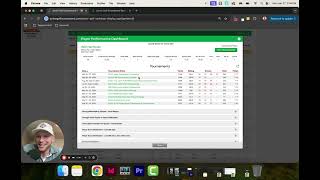
Connor Stirling Peterson breaks down what D1 golf coaches actually use to evaluate juniors: Junior Golf Scoreboard rankings, scoring average, and scoring differential. Boys need around 70-74, girls 78-79. Camps and emails don't move the needle; low scores and multi-year planning do.
Chapters
What is going on everyone? Uh, in today's video I'm going to be walking you guys through what Division 1 coaches are looking for when they are recruiting players. I'm going to be going through the details of what that actually looks like specifically and how you can position your child or help them be positioned to play Division 1 golf. If you're new to the channel, this is all we talk about is helping junior golfers play Division 1 golf. So if that's something that you're looking for help with, go ahead and hit the subscribe button, to get videos like this every single week. If you enjoyed this one, please go ahead and leave it a like. It's not a very big subject, pretty niche, and so if this is helpful for you, it means the world to me if you would like it and share it with more people who are in a similar position. Because this isn't like one of those general golf videos or just general golf channels where I can, you know, just go out there and talk about random, you know, mindset stuff and things like that. This is going into the nitty-gritty for you guys because this is all I do. and this is, uh, something that I want to make sure that you have guidance on. So let's go ahead and jump right into the video. So, uh, if you're also— if you're coming back, um, you guys know this is one of my fundamentals here is junior golf scoreboard, looking at our rankings. So if you're coming back and this is, you know, one of the multiple videos you've watched, maybe you're binging some of my videos, welcome back to the channel. I appreciate you as well. Um, so when we're looking at helping your child play Division 1 golf, it's important that we have objective measurements. Because they're— just to be clear, like, there's a lot of people out there who, you know, maybe you go to a coach and that's just the thing that you do. You see your coach weekly or monthly or whatever, and it's just, we're gonna work hard on our swing, we're trying to get the swing looking good. When the swing gets good enough, somehow we're gonna magically start shooting low scores and we're gonna win some tournaments, and then we're gonna get recruited. That's, that's kind of typically how most players conceive of this. I've lived that personally. I've a junior golfer, so I understand if you are, you know, if that is something that you think about. Another one that I see a lot is going to camps, trying to get relationships with coaches. Another one I see is social media, trying to post on Instagram, trying to do that type of thing. Email's another one. Um, you know, another one would be like NCSA, you know, trying to send out emails, stuff like that, trying to, you know, get an advantage or something like that. And all of those kind of miss the point. Because in order for your child to play Division 1 golf, they need to actually be a Division 1 golf level player. And it's really difficult to actually quantify what that is if, if you don't have some objective like measurement here. Like, you're just going out and be like, well, I think the swing's looking better. It's like, that's great. I can show you a million players who are going to get recruited to play Division 1 golf who have weird-looking golf swings, who probably have worse-looking golf swings than your child does. And that, that's not really the end-all be-all. I can show you players who have relationships with coaches, um, where they could actually get physically like introduced to the coach with a warm, you know, introduction, all that, and still won't get recruited. Like, I've seen that firsthand. And so it's important that if you're trying to position your child to play Division 1 golf, you know actually how to position them to play Division 1 golf. Hopefully that makes sense to you guys. So I like this page as a starting point. So if you go to Junior Golf Scoreboard, rankings and honors, college signings, you can actually see all the players who recruited all the way back to 2017, and you can see that for boys and girls. So if you have a particular program your child wants to go to, you can literally search, like, filter whatever that program is, and you're going to see where, uh, the players are ranked in their class that that program recruits. And you're also going to be able to see their scoring differential. Now, scoring differential, if you're not familiar, is essentially a way to represent how a player is scoring on the, the difficulty of golf course that they're scoring on. So if I played a harder golf course but I shot the same scores, well, it should be reflected somehow that, you know, yeah, you should have shot the same scores, but it was a harder golf course. That's represented in scoring differential. So long story short, like, that's, that's how that works. And so when you're looking at, okay, we want to play this program, that's how you want to think about this. You want to think about, like, where we ranked in our class, because that changes, you know, as we get more and more kids, that that dilutes. Um, at the same time, you don't want to look at it as like, hey, you know, how do we win a tournament? Because that doesn't really matter. Like, it doesn't matter, you know, there's plenty of kids who are going to get recruited who are not, you know, who haven't won any tournaments. Like, let's just look at this right now, you know, Tyler Watts here doesn't have a tournament win, um, has a couple of, you know, top fives. Guarantee you he's getting recruited being ranked 5th in the country here. I'm sure he's got tons of different offers, right? Um, let's scroll down here and see someone that we've actually literally— okay, cool. Will Hartman going to— Hartman going to Vanderbilt. Vanderbilt's one of the best programs in the country. Did not— has not won a tournament in the last, you know, 12 months. So again, it's not the most important thing. Um, so you guys can see here, you know, the tournaments, strength of tournament. So a lot of the time, you know, people watch my videos and they say, oh, well, we need to play in the best tournaments possible. And it's like, yeah, you do. But tournaments for the sake of like, they're hard or they have good fields are not, that's not a good reason to play in a particular tournament. The reason you play in harder tournaments is so that the overall course difficulty is higher. And so when you shoot 72, it's, it does a lot better as far as like your overall scoring differential than if you went out to the golf course and they had a score you know, uh, whatever, a score course rating of say 70 or 69 or something like that. I know some of you guys, if I say, hey, we can't be playing golf courses that are 6,300 yards, you guys know what I'm talking about. And to be clear, that's for like a junior, um, you know, if your kid's like 12 or 13, then, you know, 6,300 yards might be okay. Um, although it's probably going to be longer if we're realistic about like AJGA stuff, but I digress. So anyway, the main things we need to be looking at here are scoring average, and the difficulty of those tournaments, right? So in this case, this player has a scoring average of 72.32, and they're playing some pretty good tournaments. You got Rolex Tournament of Champions here, we got AJGA, AJGA, um, we got some invitationals, Junior PGA, US Junior, um, you know, these are all really good, um, tournaments that this player is playing in. And just to be clear, like, this doesn't happen overnight. Like, you can't just have a good summer and, and just end up in this position. Um, it actually requires multiple years of planning to be able to say, okay, cool, we're at this scoring level now, we've been able to get exempt status, now we're playing in these better tournaments, now we get invited to this event, and so on and so forth. Like, these things compound over years, and it doesn't just happen overnight. So just to be clear, if this is something you guys want help with, of actually figuring out exactly which tournaments to play in and how to bring your child's scoring average down, I have a coaching program where I guide students through exactly this. We look at their statistics, build our practice plans, we build their tournament schedule, and we support them every single week on a weekly coaching call. So if that's something you guys are interested in, um, go ahead, click the link below. There will be a link to apply for that program. It's not for everyone, you know, it's only for junior golfers who are between 10 and 16. We've got enough time. Average player improves by like 3.6 shots a year. So if you actually know where your child's scoring differential is and you know what their goals are and you know how much time they have, you can actually kind of do the math and figure out like how, how much, um, they should improve as a part of that program. You can do the math on whether that's an investment that you guys want to make, but something to check out if you guys actually want help with this, because a lot of this tournament stuff specifically is just too complex for me to really go through on YouTube. And also, I mean, this is free content, like, let's be real here. I'm trying to help you guys as much as I can, but also, you know, if you're working with me, we're going to go really into the weeds. This is just kind of like scratching the surface here, but Anyway, let's get back into the video here. So when you're looking at your child, you want to be able to know like where's their scoring average. If you don't know what that is off the top of your head, you guys aren't really serious about making this happen. So we want to know scoring average, we want to know the difficulty of the tournaments we're playing. Uh, easiest way to kind of, you know, off the back of the cuff, um, know that is how long are the golf courses, you know. So if your child is playing 7,000, 7,100, 7,200-yard golf courses odds are, you know, those are pretty difficult golf courses. They got a scoring average of 72, odds are they're this kid, you know, like odds are they're doing pretty dang well. Um, but if you're watching this video and you're trying to figure out more of this stuff, odds are you're probably not in that position. You're prob— your child probably has, you know, scoring average 75, 76, maybe it's even higher than that, and they're probably playing on golf courses that are probably closer to 6600, 6800. Um, for all the girls, uh, all the parents of girls watching this video, your child— your daughter is probably going to be more in a spot where her scoring average might be a little bit higher, maybe in the 79, 78 range, um, because girls' golf courses tend to be more difficult for girls. So you're gonna have less of a tournaments issue and you're gonna have more of a scoring issue versus boys. You get the best of both worlds since, you know, boys' golf is a little bit more competitive than girls' golf. So, um, but hopefully that makes sense. So when you're working with your child you want to be super clear about like, where's our scoring average? Which tournaments are we playing in this year? So we've got a, uh, you know, I'm filming this in January. You're going to have tournaments coming up. It's like, you want to make sure that you're getting the most out of those. You want to make sure you're not playing random stuff. So you want to make sure the events are ranked, and you want to make sure that they're the— they're appropriate tournaments for where your child is at. So I'm not going to sit here and tell you, oh, every single video or every single tournament your child plays in needs to be AJGA. Like, that's just not true. Um, because what if your child has a scoring average like 81? Then the main priority shouldn't be playing in AJGA. The main priority should be getting the scores down. And it's like, oh well, what if they're older? What if they really need to get the exposure? It's like, great, there's nothing to expose about shooting 81, you know? Like, you need to get the scores down, and you need to actually know the answer to why do we shoot 81? Why is that, you know, where we're at right now? Because, you know, realistically that's where all the attention needs to go. And I think one of the things that a lot of families really struggle with here is they don't know how to prioritize the different things that go into this, because sometimes the answer is we just need to play better tournaments. Sometimes the answer is, hey, we need to have the scores come down. But specifically, we need to have the scores come down by improving our putting, specifically putting inside 5 feet, specifically our putting stroke, because for some reason we can't start the ball online, right? That's how granular you need to be able to be, and then be able to say, okay, cool, we've been doing this drill, we've worked on this thing, and now our putting has improved. Like, our putting— now we're actually making more putts inside 5 feet, our putting stroke is solid, we can move on to the next highest priority item that's going to cause us to improve the fastest. That, that's really the key to all this stuff, is understanding which steps to go at, um, first. So as just so you guys are clear, typically what I see is 72 to 74 is a scoring average you want your child to really for. Let's just pull up a few other ones. Um, so again, 72.29, this player is going to UCLA. Uh, let's keep going down here. 72.43. I will say at the high end, um, you know, the best players in the country do tend to have a lower scoring average. You know, 70.5 is typically where I see it. Um, sometimes as low as 69. Let's see, yeah, 70.7. But again, this is, this is a video to help as much of you guys, as many of you guys as possible. I'm taking a look at some of the best players in the country just so you guys have some perspective here of kind of like where the best end up being. But realistically, you guys are going to be closer to the 72 to 74 range. And realistically, your child's probably going to be playing in the AJGA events. They might be qualifying for the US Junior. They might be qualifying for the Junior PGA. Those are more the events that your child's going to play in. just realistically. So again, that, that's really the range that you want to aim for here. Let's pull up another one. So we're going to see some higher ones if the golf courses we're playing are a little bit more difficult. So this player is really loaded up on AJGA events. So again, he's kind of getting away with these longer golf courses. He's able to shoot some, some higher scores. But this is really what you want to be looking at if you're a parent. You want to be able to see like, okay, cool, Where's my child ranked in their class? How— like, which tournaments are we playing in? We don't have to play in tons, you know, we don't have to play in 20. You guys can clearly see there's no advantage here in playing more events. If anything, the players who are better playing fewer events. And so again, like, it's all about resource management, right? We don't want to just go in there and play in a bunch of random stuff. We want to play in the right stuff at the right times. We want to understand when we just need to focus on our scoring and bring the scoring average down, and when we need to play a lot of tournaments to, um, position ourselves realistically. You don't just need to play in tons and tons of stuff just to play in tons and tons of stuff. That's not the approach you guys want to take. So I hope this video is making sense to you guys as far as like what coaches are actually looking for here. You want to actually have your, your ranking in a good spot. You want to have your scoring differential in a good spot. If you know where your child's ranked right now, um, then this should really help you kind of map out like, okay, we're here, we want to get here, what's the main thing? You know, if they have a scoring average of 77 Well, then it might be as simple as saying, okay, well, let's just bring the scoring average down first before we start worrying about doing some crazy tournament calculus, right? It's about making the right play for where your child's at, not just saying, hey, here's, you know, here's this arbitrary rule of, you know, we need to play in AJGA or something like— we need to play in big tournaments or something like that. So hopefully this is helpful for you guys. Like I said, I've got a program if you guys want help with this, if you want me to coach your child through that. Again, we'll look at their statistics, we'll build out their practice plan We'll tell them which tournaments to play in so you guys don't waste any money on that. We'll get on weekly coaching calls so they have support every single day, you know, every single week that they're out there executing on this stuff. If you're interested in that, click the link below to apply for that program. Again, you guys can figure out if it makes sense for you, but if you guys just enjoyed this video, please go ahead, leave it a like. And if you guys are wanting more videos like this, go ahead, subscribe to the channel. Feel free to post any comments below, any questions you guys have, like try to get those, uh, get to those as quickly as I can. Um, anyway, uh, hope you guys enjoyed this one, and I will see you in the next one.










