Complete Guide: Decision Framework For Shooting Lower Scores
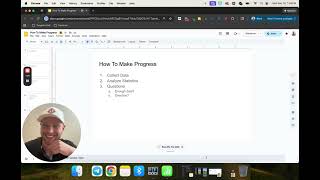
Connor Stirling Peterson outlines a data-driven framework for junior golfers to lower scores: collect stats from at least five rounds, identify what's broken, then adjust one of four levers—Strategy, Mindset, Practice, or Mechanics. He's placed seven juniors in Division I programs using this systematic loop instead of random drills.
Chapters
All right, what is going on? In this video, I'm going to be making essentially the complete guide to making progress in golf. And I want to be super clear, this is not going to be going down into any individual drills. Um, that's not the way that we're looking at this. We're looking at this from a high level of strategic thinking of the questions that we want to be able to ask and the processes that we're going to be going through through. Okay, so it's gonna be a high-level video. And so if you're looking for like individual like little tips and stuff like that, first of all, it's not going to be in this video. And second of all, you're probably not going to make any progress doing stuff like that. Or if you are, you're probably not scoring at a very high level, in which case you're going to need to, to think at a higher level, right? If you're shooting 100, if your child's shooting 100, you know, yeah, they can just brute force this. Um, these principles still apply at every level They obviously have more and more impact and importance, um, you know, at a more elite level, right? You're going to notice them a little bit more. Still benefit you at a lower level and still, still applicable. But, you know, don't, don't think that, hey, you know, we just brute force this or something like that. So it's going to help you kind of ask those more sophisticated questions. And of course, this all goes within the context of helping your child play Division I golf. And, you know, if they want to play Division I golf, they're going to need to improve. It's like point blank here, they need to improve. They're going to need to improve, odds are, quite a bit. I talk about this all the time— to play Division 1 golf, it's literally harder than getting into Harvard. So by watching this video, there's no guarantee that that's going to happen for your child. All I'm doing here is just passing down the lessons that I've learned helping 7 junior golfers get recruited to play Division 1 golf in the last 2 years. I've worked with over 100 junior golfers at this point. You might be asking, Connor, why have you only gotten 7 placed? Because the average student I work with is an 8th grader or freshman, right? So about 67% of the students that I do work with who are ranked are on pace to play Division 1 golf. And so very likely over the next 2 or 3 years, we're going to see that number balloon quite a bit. And it comes from following the systematic process and approach. A lot of coaches get real spooked at the idea of systematic approaches, especially when it comes to golf swing, because there's a lot of nuances with that, right? This is a layer up from that. And so it's going to be really going through how to think through these problems. So let's go ahead and get into it. If you guys enjoy this, go ahead and leave it a like, um, share it. It really helps push the channel out to more people. This is a very niche topic, it's very narrow, um, and so if this helps you, you know, share it to more people, it also— all right, cool. So step number 1, collect data. So this might sound, you know, maybe it sounds kind of weird, maybe it sounds Counterintuitive. First things first is you got to go out there and you got to start tracking statistics. How much, you ask? You need to play at least 5 rounds of golf to make any meaningful judgments about what's going on. So if you do something, play 5 rounds with it. If you're changing stuff every single round of golf, you're gonna have a hard time getting better. That's why most junior golfers I see get stuck, because they don't do the same thing for a long enough period of time. It's a little bit for any of you guys who'd like to go to the gym, it's a little bit like saying, well, I did curls once and my biceps aren't bigger. Doesn't make any sense, right? You have to do it for an extended period of time to be able to be like, yeah, that worked or it didn't work, right? So the first thing we need to do is to go out there and collect data to figure out what's going on. And if you think to yourself, or your child thinks to themselves, oh, I know what's going on, um, no, they don't. Nobody knows what's going on unless they measure this stuff. Right? Because we can't think in terms of 90 holes worth of data for each individual shot unless we track it, right? We have to write this stuff down, otherwise we're just not gonna be able to comprehend it. Next thing sounds pretty straightforward. We have to analyze the statistics. We gotta actually look at the stuff we tracked. And this is where most people get lost, right? They get to this position where they look at the statistics and they just don't have a clue What's going on? They don't know what they should be looking at, right? This is absolutely a problem. If you're watching this video and you're like, hey, my child needs to start tracking statistics, I guarantee you if you have them start tracking their statistics and then you don't have— you don't work with somebody like myself or somebody who's actually going to understand what to do with that data, or you're trying to like bootstrap it, you're going to annoy the crap out of your kid because you're just giving them busy work. You don't know what to do with it, they don't know what to do with it. You just gave them an extra random thing to go do. Right? So you want somebody actually guiding you through what to do with that information so it doesn't become busywork and deter from enjoying golf, right? So hopefully that makes sense. That's something you want help with, to actually have somebody guiding you through this entire process, not just this little individual detail. Um, you can fill out the application below to work with me. Um, ask you a few questions about your child's situation, make sure they're in a position where I can actually help them, and then we'll be able to schedule a call and talk over what that would look like. All right, back to the video here. So we've got to analyze the statistics. We've got to actually look at the data that we just tracked. Then we've got to ask some questions, right? Data is not valuable in and of itself. We have to be able to— the whole point of tracking the statistics is so that we can ask questions about what's going on here. Okay, first question we got to ask is, do we have enough data, right? So sometimes I get families where they track a couple rounds of golf track like 2, 2 and a half rounds of golf. And so when I say round of golf, I mean 18 holes. So if you play 9 holes, that's half a round of golf, right? It's essentially nothing. And they'll be like, well, you know, we played 2 and a half rounds and, you know, it hasn't been our best week. I'm just like, dude, you're, you're like tossing a coin 3 times and you're like, dude, it came up heads like all 3 times. Like, I think I got a busted coin. I'm just like, you're just, you're not looking at anything that's like substantial there, right? So first question is, do we have enough data? We've got to be able to make assessments based off enough. Data. So if you don't have enough data, and I say if you have less than 5 rounds of golf, so less than 90 holes, that's step 1, right? There's no other questions that you can ask here. Do you have enough data? Now, once you have enough data, right, 5— long term, I like to look at 10, to be clear, but 5 is a starting point here. Direction: are we improving or are we not improving? Right now, for those first 5 rounds, you actually don't know. To some degree, for the first 10 rounds, you don't. 100% no, because we're still establishing a baseline. And this is one of the things that I see junior golfers' parents shoot themselves in the foot routinely, because they go play in one tournament and they'll reference like practice as a measurement here. And it's like, well, tournaments are completely different from practice, and you guys probably know that, right? Where it's like you're gonna shoot one score in practice, you're gonna shoot something completely different in tournaments. Well, similar, right? Similar skills, but there's some skills that are specific to tournaments who don't practice in practice. I'll give you guys one right away. You know all of the holes at your home golf course. You know where to miss, you know where to miss around the greens, you know where to miss off the tee, you know all that stuff. Tournament setting, you don't know that stuff. You have to become good at figuring it out quickly, right? You got to be able to play a practice round. Some of you guys might be watching this video and be like, hey, we don't even play practice rounds. And so that, you know, that, that's obviously a concern, right? So we got to establish enough data, but once we have that 5 rounds, we can look at 5 rounds or 5 rounds, right? We can say 5 rounds, last 5 rounds versus last 10 rounds, is it better or worse, right? Directionally, are we getting better, right? And so this isn't just score, these are these sub-statistics as well, which I've talked about in other videos that we want to see are those trending. An example of that would be greens regulation. Why? Greens regulation is highly correlated with what you're going to shoot. And so for all those people who are like strokes gained nuts, be like, Connor, you don't understand strokes gained. Yes, I understand strokes gained, but here's the thing. I don't care what your understanding of strokes gained is. If you're hitting 50% of your greens, good luck shooting in the 60s on a routine basis. It's not going to happen, right? Conversely, if you just make it your goal to be like, I'm going to hit 80% of my greens, which to be clear Not very reasonable. I like to shoot for 70%. Uh, if you hit 80% of your greens, you're gonna have a hard time shooting in like the 80s, right? So you're gonna shoot in the 60s routinely. When I look at junior golfers where they get it into the 8— like 80-ish percent, high 70s, they shoot in the 60s like all the time. Now, is that normal, right? Is that something that's going to stay for an ongoing basis? Unlikely, right? It's above kind of our reasonable threshold, right? And so we have to kind of keep that in consideration here. But long story short, we want to see it like directionally, right? If you say, hey, I'm going to go work on this stuff in my golf swing, is, is it actually improving, right? You can say, oh, it looks better on camera. Be like, okay, cool, is it performing better on the golf course, right? And if you're saying no, well, the bet is in the long term it's going to be better. It's like, okay, cool, over what time period? What time period are you evaluating that over, right? And how has the data already told you that that's the thing, the particular risk that you need to take? Right? Have you identified that every other part of your game is completely like maxed out? Like you don't 3-putt, you don't hit balls out of bounds, stuff like that? You got to change your golf swing though, right? Because if you're shooting 90 and you determine, hey, off the tee I've just got this crazy high penalty rate, you got to probably, you know, fix some stuff, right? There's some other stuff we're going to talk about here in a second that's going to help out with that, that we should do first before changing the golf swing. But in that case, you can say, hey, well, I already hit a million balls out of bounds. If I change my golf swing, hopefully in the short term I'm gonna hit fewer balls out of bounds, right? That's pretty reasonable, right? It's always— it's like it's already so high, it's hard to do a whole lot worse. Then it makes sense to go ahead and make those changes, right? But if it's— if it's not a problem, gotta make sure we're not— not fixing stuff. So directionally, are we moving in the right direction? Are we improving? Magnitude's the next question. Magnitude, for any of you guys who don't know, just a fancy way of saying, are you improving like how much, right? So you could be improving directionally, but you're only improving by like 0.1 shots per month or something like that, right? Um, which I'd say is essentially the average for junior golfers, maybe a little bit higher than that. Um, you're looking at your 0.1 shots of improvement, you're like, hey, I want to get that up a little bit. That makes sense, right? But if you're improving by, I don't know, 0.4 shots per month That's a lot, right? That might sound very, very small to you guys, but that's actually how this stuff works, right? The average player I work with improves by about 4 shots per year. So that's about 0.33 shots per month that we're kind of aiming for. Now, does— is there fluctuation in that? Absolutely there is, right? Absolutely there's fluctuation. But, you know, that's kind of a good benchmark here of kind of monthly improvement that ends up being something as simple as a 1% or 1.5% improvement in something like 3-card reading. And so if you're able to line those up month over month over month, make a lot of progress, right? So we got to evaluate magnitude right now. First thing here, if it's improving by more than kind of what I just gave you, like that 0.3, 0.33 shots per month, I wouldn't touch it. I wouldn't change anything. I would keep— I'd let it ride, keep doing the same thing. Because there's a bunch of intangibles here as well that over time improve, right? We get more ownership over our game, we get more comfort in our game. We don't always need to be fiddling around with different stuff. Sometimes it's just like, hey, hitting the ball better and better and better, nothing to change, just leave it alone. I think that's where most people actually shoot themselves in the foot. And it's like, you know, I got to go see my coach every single week. It's like, why? Because that's what you think that you're supposed to do. And it's just like, like Okay. But if you don't have a good reason why, it's just like, you're just doing it to do it. Are you doing it? Cause someone sold you that was a good idea. I'm trying to sell you the opposite here. Not anything against swing coaches, but that's just, you know, there's a reality here. It's just like, you're getting to coach swing coaches every single week is changing something in your swing. We're doing a tune-up. What are we doing? Like, if it's not moving the needle in a meaningful way, or if we haven't tested for it, maybe that's something we should think of, especially if you've been stuck in the same spot for a long time. So let's just say that we've determined that something needs to improve, right? We've determined, hey, we got a problem. This is stalled out. It's not improving. It's getting worse. What are our options? We have 4. First one, strategy. That's, I'd say, among the easiest, right? Strategically, what are we trying to do? Because if we're trying to do something that's not possible, then fixing that is going to have cascading effects through everything else, right? Because if we have bad strategy, if we have bad expectations about what the thing is that we're trying to do, then that will compound into our mindset, right? We will think that we should be able to accomplish something that is impossible, and every time we don't accomplish that, it'll piss us off, and then we'll just spiral. Now it also compounds in your practice, because if you expect yourself to be able to do something that is impossible, then you'll piss yourself off in practice because you might be able to do it in practice, but you get under the gun, you can't do it, right? So you think it's practice or some other problem, right? So practice compounds. Mechanics— I can't hit it as good as I want to, which might be beyond what's possible, therefore I have to fix my golf swing. And so we go down a rabbit hole that doesn't move us anywhere, and we just burn ourselves out. So strategy is essential. When I'm working with any family, this is the first thing that I want them to really, like, dig into, because if we get this right, everything else flows out of that. Everything else is smooth sailing. Not, not 100% smooth sailing, but you know what I mean. Like, that sets the foundation going forward. If we get this wrong, everything else gets screwed up. We don't know the right questions to ask. And, and that's just, you know, enough said there. Mindset. That's the next piece. What is our process for consistently executing on this? Because I see people get mindset screwed up. They think of mindset as like breathing techniques or, you know, things like that, which is just already dead on arrival if you don't have the strategy. Let's just say you do have the strategy. How sold are you on the strategy? Right? Like, how are you actually trying to execute on that particular strategy every single time? Because if you have some vague idea of strategy but you're not actually committed to it, you're going to struggle, right? Mindset to me is, is really your ability to consistently perform at your average, you know, within a reasonable amount of times, right? So any of you guys watching this video understand numbers, right? You're going to understand a standard deviation curve. Or a, a standard distribution, right? So we're always gonna have our average and then we're gonna have variance around our average, right? So 70% of our scores are gonna fall in particular threshold, and then another 14% of our scores on either side are gonna fall in with that double that threshold, and then triple that threshold, another 2.5% of our scores are gonna fall into those thresholds, right? So whatever your average is, if you know that, you can, also calculate the variance, provided you have enough rounds of golf that you can actually look at. You can say, well, this is the variance here, and if I just continue to play enough times, I would shoot scores at these rates in these ranges, right? Um, for those of you who are not big math people, this might be a little bit difficult, but that, that's what this is. We got to do math. Like, is what it is. Or you guys are uncomfortable with that, it's difficult for you, then that's where you fill out an application and talk to me and we do this in more detail. Um, so mindset's huge, right? We want to be able to consistently perform at our level. Again, we don't have strategy to understand what our level even is or what we should be able to do. That's going to be a problem. So next one, we have practice. What are we doing to develop the skills, right? So strategy and mindset really fit into the what. What are we trying to do? Practice, the other one that we're going to get into, mechanics, are how do we do it better. That's really what we're trying to do here. And so for practice, what are we doing that directly improves our ability to execute on whatever these skills are? That's really what we want to be asking. So if your child's just out there beating balls on the driving range, ask yourself if they're rewarding themselves— think about this— for every time they hit one perfect, how often does that happen on the golf course? Not very often, right? If you know anything about golf, we don't— this is not a game of perfect, this is a game of good enough. And so if they're going out there rewarding themselves mentally thinking that they need to be driving range player, then they're going to struggle on the golf course. And you might see that, right? You might see that where they're just like, hey, they're amazing on the driving range, but they really struggle on the golf course, especially after they hit a bad shot and they spiral. It's because they had the first part of that screwed up, right? They're not thinking strategically of understanding. So like, hey, so I don't say you hit the ball on the green, then I'm gonna be okay. And even if I miss the green, like, as long as I leave myself in a decent spot, I'm gonna be okay. It's not a big deal. And it's like, well, what if you hit bad shots? It's like, you hit enough shots, you're guaranteed to hit some bad shots, just like standard deviation curve that I just gave you guys, right? You're gonna have some that are amazing, you're gonna have some that are pretty awful, you're gonna have a bunch of stuff in the middle. So if you expect yourself to operate at your highest level all the time, you're gonna shoot yourself in the foot, because that's just not— expecting that is not going to be helpful, right? We want to expect reality to happen, which is we're going to do about average, an average percentage of the time. Occasionally we're gonna get lucky and do something amazing, then we're not gonna be able to duplicate that consistently. 'cause it's at the upper end of our pattern here. On the flip side, we could do something terrible and odds are we're probably not gonna do it again 'cause it's just so improbable that it happens. And so that exists at every skill level and it also exists for scores, right? So part of how we smooth things out here is understanding that the skills do not have to, to overlay to the score. So what do I mean by that? You can have days where it's like your putting is good and your tee shots are not so good, or your tee shots are good but your putting's not so good. That's usually how stuff goes, right? Not everything is going to be perfect all at once. You're gonna have some days though where it all lines up, where it's just everything's amazing. That's where you shoot in the 50s if you're a tour player. That's where you shoot in the 60s depending on the level. That's where you shoot your best rounds. There's a level of that that's luck. Because you not only had everything performing at its highest level, but you had it across the board, right? It's just like, it's improbable for that to happen. On the flip side, you will have days where everything is just bad. So you've got the bad luck of everything being bad, and also whatever the worst of those things are. That's when you shoot your worst rounds. Then you also have things that go against you, right? And on the flip side, you have things that could go for you on the high end, right? And so it's like everything was bad and the weather was bad. It's like, okay, cool. Well, you might shoot 15 shots worse than your average because you just got on the bad side of that luck, right? So we have to have that framework. But within the context of practice, we need to make sure that our practice as closely as possible mirrors what's happening on the golf course and what's happening in tournaments, right? So that, that's absolutely essential there. Last piece of this, mechanics. Is there anything that might prevent us from accomplishing whatever our goal is mechanically, right? So if we don't have clear strategy, then we don't have any business looking at mechanics here. But if we're clear on strategy, right, we are clear on— we're trying to execute on this thing— that you could have those first two and just not practice, and these first two are gonna have a huge impact for you. But just like you add in practice, right, you're actually trying to develop that skill You still have reasons why that skill becomes deficient, right? Or is deficient, right? But we can see by process of analysis, it has to be mechanics. There's no other answer here, right? It's like we know what we're trying to do. We're sold on it. We're practicing it, but we just can't move the needle, or we can't move the needle as much as we would like to, to make this magnitude enough to accomplish whatever our goals are. That's when we look at mechanics. So let me give you guys an example of this. If you're trying to hit more greens, which is likely a problem you're going to have if you're high 70s, mid-70s, typically the main problem is when you hit more greens. Either that or hitting balls out of bounds, but usually it's that one. We want to hit more greens and strategically trying to hit the ball on the green, right? We kind of understand our shot pattern size, we're trying to, let's say, start the ball at the right side of the green and have it draw some amount, assuming we're a right-handed player. You have the ball, so right side of the green, draw some amount, and we know that our shot pattern is going to be at least about 20 yards wide, right? So that should hit the green a decent percentage of the time. We're mentally sold on that. We're doing that every single time. We don't have a part of our brain that like floats off to, hey, you know, it'd be really nice to hit it close. It's like, nope, just trying to hit the green every single hole. That's our analysis on that shot. Be like, what's the shot that gives me the highest probability hitting the green? What are the particular sets of clubs or shots that give me the highest probability of hitting the green that are the easiest to pull off? We're sold on that. Practice. We're practicing like those particular ranges. Like let's say we've got 125 to 150 yards on every single hole, just for the sake of this example. We're practicing those exact shots in practice, right? We're practicing this exact shot shape. We're trying to start that ball at the right side of the green and have a draw. Now there's still a possibility here where we do that, we're just hitting pulls. The ball just starts with more left than we'd like it to. We've got our alignment, everything that's all down correctly, we just have a tendency to hit pulls. Well, that's the perfect time to break out your tripod, which a shocking number of junior golfers do not have tripods. Um, so this is your key to get one of those. Because we need to have consistent camera angles. Anyone who's got some like funky camera angle from like some weird angle doesn't know what they're doing. I'm sorry, like even if it— you see golf coaches sometimes just like got like a 45-degree, like nothing's like aligned the right way. It's like they don't know what they're doing. Um, I'm sorry, and like maybe some golf coaches can cook me on that, but it's like camera angles matter a lot. Um, and I'll show you guys an example here in just a second. But it's like, for that player, let's say they're struggling with hitting pulls, it makes all the sense in the world to be like, all right, what's going on mechanically here? It's just like, are we doing anything that's getting that face closed that's going to cause this ball to start a little bit to the left? And what can we do in this golf swing to alleviate that so the ball— the club face is a little bit less closed? Pretty, pretty straightforward, right? And so, you know, there's different permutations of that, but that's fundamentally what we're trying to do there. And so we need to have down the line and face on for a particular player looking at their swing. We can't just look at down the line and be like, oh yeah, that's efficient. We have to look at both to see what's going on, you know, mechanically for that player. And so, you know, same thing. It's like if we're struggling with contact around the green, same thing. We need to look at like film it, like what's going on. We need to do that in slow motion so we can actually see what's happening, right? Can't just look at a golf swing real time and be like, oh yeah, tempo's a little bit off. But that's what you see, right? That's what you see with people who are a little bit less sophisticated about these types of problems. They just go, yeah, something's wrong. It's just like, no, like, that's not— it's not an answer, right? We need to know what specifically is happening in these issues so that we can fix them, right? Um, so let me give you guys another example, right? And I'll give you an illustration here. If I've got a player who wants to draw the ball as their default, there are certain patterns that I'm going to look for in their swing that are going to set that up for them. And so let me go ahead and show you. Hopefully you guys can see my, my screen here. And so what you're going to see is I've got myself and then I've got Rory over here on the right. And so Rory is trying to hit a draw, right? Because that's Rory's default ball flight. I am trying to hit fade. A couple things you're going to see here. The first one I've already got doodled up here is our lead arm on the way down. You can see for me, my arm is more out on my stance line comparatively to Rory's here, right? Granted, Rory's also aimed a little bit further out to the right. The other thing you're going to notice here is my club face is a little bit more closed than Rory's is because my club path is set up to be more left clubface also has to be a little bit more left here. That's going to allow me to hit a ball flight that looks something like this, which is exactly what I know I'm hitting in this particular frame here. So lead arm shifted a little bit more out, more close to the stance line, clubface a little bit more closed, sets up a pattern where I'm gonna swing left and I'm gonna see a little bit of a fade here. Rory, on the other hand, more open clubface, more swinging out to the right, clubface is still closed relative to the path for him, and it's still open relative to the path for me. But that's what we're going to see here. And for him, you're going to pretty consistently going to see a ball flight look something like that here. Now, if a player with this lead arm position wants to hit a fade, they're going to have a lot of inconsistency problems. And that's why going back to this here, they could be sold, be like, hey, I want to hit fade. They could be mentally sold, right? I'm trying to hit fade, I'm trying to start it on the left side of the golf course. They could be practicing that, right? But if that arm's that deep, they're like, hey, yeah, every now and then I just get the face a little bit closed and I draw it, or every now and then I just leave it high right and just hit some like crazy block cut. And then we look at the swing and it's like, boom, lead arm's that deep. Well, then we know, hey, like either we need to say we're gonna hit a draw instead, or we need to do something to get this lead arm further out so that we're able to create a pattern that consistently produces that ball flight. So anyway, this is obviously just a high level of the actual steps that we're doing, because fundamentally we make any one of these changes, right? Change strategy, mindset, practice, mechanics— what do you guys think comes next? Go collect more data, right? We have to document What we said we're going to do, we got to go collect more data, analyze the statistics again, and start asking questions again. Do we have enough data? What's the direction? Is it enough? And then if it's not enough, what adjustment do we need to make? And for me, this is why I'm able to get the results that I'm able to get with my students. It's not because I'm, you know, super smart. It's not because I've got some crazy, you know, background or whatever, you know, like I've been doing this for a long time, to be clear. But it's this feedback loop where it's like, I can see this across every junior golfer that I work with, which depending on the time that you're watching this video, I don't know what it's at. Um, I can tell you right now filming this video, it's a little bit over 50. And so I can see the data across all those players and see consistently what works the best for each one of these things and roll them out across the group. And so this is really the process that we want to be applying. Now again, if this is something that you want applied for your child so they can improve as quickly as possible, because Hopefully you guys can see, like, this is what's absolutely necessary to improve. You guys can do some variation of this, um, but fundamentally each one of these has a whole subset of other things of like strategic adjustments, mental adjustments, practice, mechanics. Those are all very smooth, like which drills to do, how hard it needs to be, all that stuff, how to track it. Those are all things that I'm doing with all my students. So if this is something you want me to walk you through, work with your child, application below. Fill it out, um, make sure your child's in a position where I can help them, and then schedule a call where we can go over together and make sure everything makes sense. But aside from that, hopefully this video is helpful for you guys. If you want to learn more about college development in general, go check out some of the other videos on the channel. If you enjoyed this video, go ahead and leave a like. If you're new here, go ahead and subscribe to the channel so you can see stuff like this every single week. All right, hope you guys enjoyed it, and I'll talk to you guys soon. Bye.










