COMPLETE GUIDE: Scoring Differential vs Scoring Average
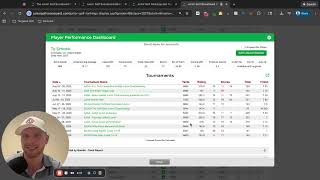
Scoring differential accounts for 65% of a junior golfer's ranking on the Junior Golf Scoreboard, calculated as the difference between course rating and score, averaged over the best 75% of rounds. Aim for a 72-74 scoring average, then play harder courses to improve differential. Miles and other examples show how identical averages can produce vastly different differentials depending on course difficulty.
Chapters
All right, what is going on? In today's video, I'm going to be covering the difference between scoring average and scoring differential. Um, let me do my best to do this as completely as possible. Uh, this is a relatively simple topic, but it's something I see a lot of parents getting tripped up with, and so I want to make sure that you're clear on what each one of these numbers actually means, and more importantly, how you're going to be able to, you know, influence them and also which things aren't going to work to influence them. So scoring differential— zoom out here real quick— is 65% of the overall ranking for your child on Junior Golf Scoreboard. So if your child isn't ranked on Junior Golf Scoreboard, that's what it is. If they are ranked, this is how much it's impacting them. This is by far the most important statistic that you need to be paying attention to. The reason for that is the other 25% and 10% 10% is where they finish in the tournament. So you can interpret 10% as essentially irrelevant. So if you're looking at tournaments, be like, oh, my kid finished 1st or 3rd or 20th or whatever, literally doesn't matter. Second best player in the country ranked-wise hasn't won a tournament in the last 12 months, it's irrelevant, doesn't matter. Now next one, strength of field, 25%. It's a little bit more important, might get you to start thinking about something like, well, you know, maybe I should play in some better tournaments. And to some degree, that is true, right? If you play in better tournaments, you're going to play against better players. It will help the ranking. It is not something you want to try and optimize around. You do not know which players are going to play in specific events. And for all you guys, you're going to say, oh, well, actually, I do know the players you're going to play in the events. You don't know how well they're going to be playing because nobody does, because that player doesn't. It's dynamically backdated, right? So based on how the player is playing, it's going to be based on their history versus everybody else. Point being, you can't game it, so don't try to. Okay, so scoring differential— what is it? What does this number mean? Now I want to be super clear, this number does not mean that Miles is shooting 10 under par on average. Just so you guys can kind of see this, he's got a scoring average about almost, you know, 2.5 under par, um, but he's got the scoring differential of -10.45, and that's because these golf courses he's playing are really long and they're very hard. So scoring differential is the difference between the course rating and what the player shoots. So if the course rating is 74, the player shoots 72, that's a -2 scoring differential. Now add a little nuance here. If you go to, uh, rankings and honors, about junior golf rankings, which is kind of a pain to go ahead and search this, but sometimes you just got to read the materials. They're looking at the top 75% of their lowest scoring differential rounds to be able to make this, this judgment here. So this is based off of the average of the top 75% of Miles's rounds. Right? You can kind of see that here. These rounds that are around par, those are getting thrown out. Those are in the bottom 25%. Now I will say here, if you try and get real big brain on this and calculate all this stuff out, it might not be exactly what they have on Junior Golf Scoreboard. Don't freak yourself out over that, right? There's other adjustments that aren't always seen, like the, um, the weather and stuff like that. And the worst thing you can take away from this, be like, oh, Junior Golf Scoreboard is BS, whatever, it doesn't work— that is the wrong place to put your energy. Let me talk about the right place to put your energy. We want to be focused on lowering the scoring average into the range of 72 to 74. That's our target, right? To play Division 1 golf, for most players, 72 to 74 is the target. Once your child is there, they need to increase the difficulty of the golf courses. That's the way to kind of think about this. So I want you to bear in mind here with this player here, scoring average is 74. Look at this player, scoring average of 74. Both have the exact same scoring average. This player is a -1.96 scoring differential, and this player is a -4.8 scoring differential. Big difference. They shoot the exact same scores. Why is that? It's because this player played harder, longer golf courses. And this isn't AJGA, you know, specific entirely, right? So it's like you look at this player, I mean, like they did play big AJGA events, But, you know, it's not like all these were AJGA events. Some of these are just really good events, like Jones Cup. It's just really good event. Um, you know, Bobby Chapman, just really good event. Junior PGA, Western Junior— those are all great events. Um, they're not AJGA. So comparatively, this player, which you kind of see here, not a huge difference, right? They actually played more AJGAs technically, but you'll notice they played shorter golf courses on average. You don't see a lot of 7s in front of these numbers here versus this one. We see a few more 7s, we see longer golf courses, we see the shortest ones about, about 6,600 yards comparatively to this player, shortest one 6,300 yards. Now I want to be super clear, we can't like game this out too much. We don't want to be looking at tournaments saying, well, I shot this in this tournament, I shot this one good round, one bad round, and doing all this crazy math. What we want to do, so we want to play in the longest, hardest tournaments possible on average for us, right? That's something that I help players do when I'm working with them in a one-on-one setting. It's even something that I've put together in a resource. It just goes through my entire tournament framework. If you're interested in that, there's a link below. You can purchase it for— I think it's like $150 or something like that. If it saves you just one wasted tournament, pays for itself, right? So if you're interested in that, you can also add on a one-on-one call with me on that. You do have to take me up on it like when it's offered there because I don't like just doing one-off random calls. But something you want help with, I want to make sure you're successful with the stuff that you purchase with me. So, um, link, link down in the description for that. But aside from that, it's really just important here to understand we want to get to the 72 to 74 scoring average. That's the focus. We want to play in the longest, hardest tournaments possible. That will produce a lower scoring average. Do not get super big brain about, oh, I need to calculate exactly what it is and I need to calculate exactly what my child needs to do and blah blah blah. You do not want to be in that headspace. It is not going to work out for you. You want to make sure you're focusing on what's the average, what are the main statistics that we need to do in order to improve, which I have other videos on going over the statistics you should be tracking. But what are the statistics we want to be focused on in order to improve those scores? Or is the main concern we just need to play longer golf courses? Sometimes that's an issue of just going out and playing it. Sometimes that's an issue of, hey, our longer irons need to get a little bit better so we can keep our greens regulation high. Sometimes That's just an issue of, you know, hey, I need to hit it longer off the tee. So hopefully this makes sense and clears up really what should be a pretty simple thing, is just how scoring average works, how it's compared to scoring differential. You can have the same exact scoring average and have completely different scoring differentials just based on the difficulty of the golf courses you're playing. So if your child has a scoring average of 85, you don't need to be doing crazy stuff about tournament selection, right? Then you're playing in good tournaments, but the main concern needs to be lowering the scoring average. Right? Still get them ranked on Junior College Scoreboard, but main concern is lowering the scoring average, right? On the flip side, if your child has a scoring average of 73, you got to take the tournament selection stuff seriously. Gotta really buckle down, make sure they're playing in the right events, and then also continue to improve their scoring average as well. Because to be clear, as well, at the top end of this, you know, the best players in the country, you know, they're beating out all this, right? They've got an under 72 scoring average and they're playing long hard golf courses, right? And they've got crazy little scoring differentials. So if that's your child's goal, they want to play a program like Stanford, they want to play at an elite level, then you might have to do a little bit more of this. But again, just in summary here, scoring differential is just the difference between the course rating, whatever your child shot, right? Whatever that number is. If they're shooting better, that's negative, and it's going to be the average of the top 75%. Quick context here, When you look at handicap, that's the top 20— the average of the top 20%, right? So this is the top 75%. It's a little bit more representative of the player's scoring average. That's— this is really the most important metric that I like to look at. I like to look at scoring average and scoring differential. That's really going to project for you where your child's going to be as far as playing Division 1 golf and giving you kind of context on how many shots they realistically need to improve by, right? They might be in a situation where they need to keep the scores the same and lengthen out the golf courses. They might be in a position where they need to keep the golf courses the same, lower the scores. Or they might to do some combination of both. When I'm working with players in a one-on-one, uh, setting, then I'm doing all this stuff for you guys. I'm showing you guys exactly what you need to focus on so you don't have to think about this type of stuff. And if that's something you're interested in, there's a link below. You fill out an application to work with me directly. It'll make sure that your child's actually in a position where I can help them. And then if they are, get on a call. I'll make all this stuff really clear to you. If your child's already ranked, I'm going to literally look them up and do math in front of you to show you what they need to do in order to play Division 1 golf. And then we can both sit there and say, hey, yeah, this makes sense, or no, this is going to be a stretch. Or you might say, hey, you know, this can be a stretch, but we still want to— you know, we want to do this anyway, um, just because I want to be able to support my child and give them the best shot possible because we just really care about the development process. Whatever that is, I want to make sure that you guys are able to make a good informed decision for your child because that's really all this channel exists for. That's exactly— that's why I do what I do, is to make sure that if you want to help your child play Division 1 golf, you have a clear perspective what that path looks like and where it makes the most sense to, um, invest. So hope this video is helpful for you guys. If it was, go ahead and leave it a like. It does push it out to more people in the YouTube algorithm. And if you want to see more videos like this every single week, go ahead, hit the subscribe button. We're going for 2 a week this year. I really want to make sure that you guys have everything you need. But again, if you want to accelerate it, link below in the description to work with me directly, or at least just get my framework on how to pick picking out these tournaments to make sure that that's not an issue for you, and you can devote all of your child's energy to just shooting lower scores. Hope you guys enjoyed it, and I'll see you guys in the next video.










