Does Your Child Have A Mindset Problem
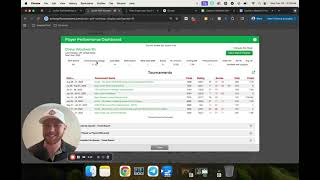
Connor Stirling Peterson explains why "mindset problem" is often a misdiagnosis. A true mindset issue means a player knows what to do but can't execute under pressure. Before labeling it that, track stats across tournaments, compare practice to tournament performance, and check if the issue is actually a strategic error or unrealistic expectations.
Chapters
All right, what is going on everyone? So in today's video, I want to be covering whether or not your child has a mindset problem. This is one of the most common things that I see come up when I'm talking to families, when I'm working with junior golfers, as there's a very common kind of disposition that people have where we're able to quickly jump to, hey, we're not getting the results that we want or that we think that we should get. Therefore, we have a mindset problem because, you know, let's say we're able to hit the ball well in the driving range. Um, so that's what I'm gonna be digging into in this video. If you guys enjoy it, go ahead, leave below a thumbs up. If you're new here, um, go ahead and subscribe to the channel if you want to learn more about, more specifically, helping players develop to play Division 1 golf. Um, cover everything that goes into that subject on this channel. So I've got a bunch of their videos going on a bunch of other subjects. Today I'm gonna be talking about mindset. So if you're a returning subscriber, welcome back. Um, this is gonna be good. It's gonna be really important. So a lot of time when I'm talking to families, there are a few big problems that come up when we're thinking about mindset. Now, first of all, I want to really caution you guys against the catch-all mindset thing where it's just like, we didn't play well, we didn't play as well as we think we're capable of playing, and therefore it's mindset. I hit a bad shot, therefore it's mindset. And it kind of neglects, neglects to understand that when you're on the golf course, you're gonna hit all kinds of bad shots, and there's a lot of variance that comes into golf. Um, kind of the easiest way to think about this, like, you hit a drive right down the middle of the fairway, hit a sprinkler head, and it bounces out of bounds, right? It's just like, that's just bad luck. Everyone can understand that's bad luck, right? We also have an issue when it comes to, you know, our expectations, right? So if a player goes into a particular hole and they say, well, it's a par 4, therefore I should make 4, that's a good score, it doesn't really take into consideration all the other things that go into that hole. You know, for example, the USGA famously makes ridiculously long par 3s for all their, um, for their— at least their national championships, right? You get a 310-yard par 3 and it's like, is that a par 3? It's like, well, kind of. If you just looked at the average strokes the whole out, certainly not. You know, averaging less than, you know, 3 shots or right at 3 shots. You know, it's certainly more than that. Um, it was probably not averaging 4 shots, but if you went into that particular hole thinking, oh, I've got to make 3 because it's a par 3, it's like, good luck. I mean, like, you're trying to hit driver on a 20-yard-wide green, like, the probability of that happening is pretty dang low. And then it's like, okay, cool, you're probably gonna have like a 30 or 40-yard pitch shot. It's like, the probability of getting that up and down is pretty dang low, right? So it's like, you can kind of look at that and say, well, yeah, the hole will probably average you know, a little bit over par. Um, but it's like, it doesn't make sense to view that through the lens of, oh, I should make par on a par 3. Um, there's also kind of the element of, you know, a player, once they kind of get into that space where they think that they're failing because of their mindset, it creates a spiral, right? So it's like, if I think there's something wrong with me or the way that I've done this, then I start having all these ideas start flooding through my head of Oh my gosh, what, you know, what if this happens? What if this happens? What if this happens? And then that actually does create a mindset issue, right? We do have a problem of, you know, for lack of a better term, if you think of your brain as a highway system, you've got too many cars on the road, right? You create a traffic jam and now you can't execute, right? So it's like we see the symptom of, hey, we spiraled, but we're not actually getting down to the root cause of why we spiraled, right? Because we didn't have proper expectations about what was possible on a given shot. And as a result of that, we freaked ourselves out. Now we can't do basic things, right? And so that's why when I'm working with a family, I always want to start with our expectations of what's likely to happen and our timetable, like our framework of what's going on, um, how long we're going to wait before we make decisions. I think it's one of the biggest mistakes junior golfers make is we're rapidly— and this is true for all golfers, to be fair— we're rapidly trying to change things without allowing time for anything to settle. And one of the things that I found working with, you know, some of the best players in the country at this point, is the better the player is, the less they tinker with things, the more methodical they are about making little tiny incremental changes over a long period of time. And that allows those changes to mature and, and allow that player to have more certainty, right? So kind of the easiest way to think about this is if I change my golf swing, right, I could have something that technically looks better, but if I don't understand it as well, then I can still have catastrophically bad problems because golf isn't about hitting great shots all the time. It's avoiding the catastrophically bad shots, right? So if I'm always changing stuff around, then I don't know where those catastrophically bad shots are. And sure, I might hit 8 out of 10 shots perfect, but if I hit the other 2 out of bounds, like, it would have been better for me to hit those, you know, 8 shots mediocre and those 2 shots be findable. Right? Because we're still going to have variance within a shot pattern, which is another subject for another time. But it's just important to understand that, you know, don't jump to the conclusion that your child has a mindset problem. You want to get there, um, by reasoning to it. And so I'm going to start off with kind of the framework that I would encourage you to use when you're trying to evaluate these things. And then I'm also going to give you the framework on what you should expect is just like when you can say, yep, this is a mindset problem. So I actually want to give you the second one first, just right away, just so you, um, you kind of see where I'm coming from here. Your child has a mindset problem if they know what they should be able to do, which is almost always not true, um, if they know what they should be able to do and they're unable to execute on that thing. So they're just like, yep, I'm trying to hit my— let's call it something easy— a lob wedge on the green, and I am so anxious and uncomfortable that I can't do that. Or I have a 7-footer and I need to roll this, you know, within 10% of the total distance, or maybe a couple feet past the hole, and I'm so anxious and uncomfortable I can barely make contact with the clubface. That's a mindset problem. That's 100% a mindset problem. And that's a whole— there's a whole set of things that we can do to try and, you know, solve that problem. But in almost all cases, that's not where your child is at. In almost all cases, your child has a mindset problem because they have a 5-iron, they hit fat, and they think Oh well, I should have hit that 5-iron on the green. You know, it's just like, it doesn't work. Um, so anyway, high level here, what do we want to be doing? First thing we want to do is we want to get ranked. Um, and the reason for that is if I don't say get ranked because all of a sudden coaches are gonna start reaching out to you, that might be the case if you're already really good and you're, you know, let's say a sophomore or junior or senior or something like that. But in most cases, the reason we want to be ranked specifically on Junior Golf Scoreboard, is we're going to be able to see objectively where we're at versus our goal, right? That's the first thing that's really important. If we don't have perspective on like whatever our goals are, they're always going to be panicked that we're not reaching our goal. And so it was just anxiety, right, before we even like set foot on the golf course, right? We just have stress. And so to the degree that we can, we want to lower the stress as much as possible, have as much clarity as possible before we even get to the golf course, because then each, each shot that we hit has less pressure on So that's why I say get ranked first. How do you do that? You go over to tournaments and results, search for tournaments. You'll get this little page here. Just go to your state and find the ranked tournaments that you can play in. Um, just rather than having your child play some random like 9-hole, 18-hole tournaments, get them playing 36-hole events. They're not already able to do that, then like get them playing more golf. Odds are, that's kind of another thing— most players don't play enough golf. They spend too much time on the driving range instead, and they think that Somehow that's going to translate to them shooting lower scores, which almost never materializes. Um, aside from, you know, if they're a beginner, then there's some benefits to that. Um, but get them playing in those events. They need to play in 4, right? If they play more than 4, that's great. Their ranking is going to be based on the last 12 months. We just want to get that initial set of tournaments there so we can see where we're at objectively, in a way that we can demonstrate to the world right? We're also going to get the data of what's our actual scoring average. So I'm just picking up a random player here. Um, being able to see this actual number tells us where we're at objectively. So we don't have to look at that and be like, well, I think I should be able to shoot blanky-blank score that I shot the other day with my friends or whatever. In this unique circumstance, it's like, no, we're going to make a judgment based on 8 rounds or 10 rounds of tournament golf to say like, yeah, what's your scoring average in tournaments before we even make decisions about like, hey, here's who you are as a golfer. Because too many golfers have this idea of who they are before they even— like, they don't have any basis on it. It's just like delusional. And they get caught up in this pride of like, oh well, I should be able to shoot XYZ score. And it's just, it's just a made-up narrative. And so the first thing that, you know, I've kind of noticed in being able to help a player play better golf is actually having the humility to be like, yeah, I don't know where I'm at. I don't know, you know, how good I am relative to everybody else. And I don't have a vested interest in being like, oh, I need to be here. It's just, I want to be in touch with reality. So I'm just going to go out there, I'm going to play, I'm going to do my best, and then I'm going to see where I end up, right? That's, that's step one. And that takes patience, which is extremely difficult. Sometimes it's difficult for the kid. It's also a lot of times difficult for the parents. If you're watching this, you're a parent, it's super crucial that you have this perspective as well. So you don't put some like weird pressure on your child to be like, oh, well, you know, this last tournament didn't go well. It's like, nope, we're going to be playing these next 4 tournaments. We're not going to make any judgments about your game until, you know, the end of those tournaments, right? We might make little adjustments, stuff like that. We're not going to be making an assertion about here's where you're at. We're in the process of discovery, which takes time and, you know, takes patience, right? So humility and patience are huge in this game, and most players don't have it. So that's something you can kind of, you know, differentiate yourself on or help your child differentiate themselves on. The other reason why we want to do this is If you look here, rankings and honors, college signings, we can see all the players that are recruited all the way back to 2018. We're starting to see 2026 come in here. We see this for boys and girls. This isn't comprehensive yet. Yeah, we can see all the players are getting recruited and we can just say, hey, where is this player? You know, where are we relative to whatever type of program this player wants to go to? So if I just go 2025 here, like we're gonna see a little bit more normal thing, but you're gonna be able to say, hey, I want to play at XYZ program. Be like, okay, cool, well, you're right here right now and you want to get there and you have this many years ahead of you in order to accomplish that goal, right? That makes plenty of sense. And then we can say, okay, cool, well, if we got to improve by, let's call it, 10 shots over the next 3 years, then, you know, we need to improve by 3.3 shots per year, right? So then we just need to back out, okay, what do I need to do in order to accomplish that on, you know, I like to look at a 10-round rolling basis, but you can just look at that and say like, hey, okay, I need my junior golf scoreboard scoring differential to trend in this direction at this rate, right? So how many of you honestly are looking at this on a, on a, let's say, quarter-to-quarter basis and be like, hey, we need to improve by 0.8 shots or 0.7 shots, and then break down the math of how that's actually going to happen and what specific part of your game your child needs to improve on? Like No disrespect, I'm sure you guys aren't doing that. If you are, please comment, let me know, because that's, that's amazing. Um, that's super cool. I would imagine your child's pretty good if you're doing that. Um, but for the most part, you want to talk to families, we're going out there, we're getting lessons, we're just grinding our game and like hoping one day we're gonna look up and everything's gonna work out for us. And to be fair, that does happen for some people. Um, but in my opinion, it's just not a great way to go into this, um, and have a lot of clarity on what's going on. It's a great way to go into this and have a lot of anxiety. Because every time it's kind of like you're pulling like the lottery, the little lottery lever, and you're like, oh, I hope it comes up. You know, I don't play lottery, so I don't know. But you got— you guys get what I mean, right? Here, so it's like if we have that clarity here, then we have a mental framework that's clear on what's realistic and what our actual goals are, right? So if we're going to each one of these terms to be like, hey, over the next 3-month period of time, I need to improve by 0.7 shots or 0.8 shots, if that was your hypothetical. But it's like, how am I going to do that? Oh, I'm going to cut down my 3-putt rate by, you know, let's just call it 5%, right? It's like, oh, well, how am I going to do that? Well, I need to make sure my lag putting is a little bit better. It's like, okay, so what am I going to do in my practice? I'm going to be grinding my lag putting. And then when I go out on the golf course, I'm really going to be paying attention to that. When I go into a tournament, I'm really going to be paying attention to that and saying, okay, well, something breaks down. Like, why does it break down? Asking the right questions, right? Well, at that point, you have a lot of clarity on this. And you can say like, hey, you know, what are the particular issues that I'm running into? So anyway, back to the mindset thing. Let's say you have this whole perspective here, right? And you've identified, hey, we're improving. Now, how fast are we improving? The first thing here, if you're improving at a rate that makes sense, at a reasonable rate that's gonna help you accomplish your goals, I don't think it makes any sense to start making judgments or kind of like layering on and be like, actually, we should be getting, you know, better even faster. You know, it's like, can we improve things? Yeah. But we shouldn't have an existential element of that. Should be like, all right, cool. Like we're on track. Like, let's just keep doing our thing and should work out for us. And if we kind of diverge off course, then you'll make note of it and we'll make an adjustment there. But all in all, like, we want to be just super clear about like, hey, like, we're on our pace to reach our goal. We don't have to be like better, better, better all the time, you know, indefinitely, right? Unless you want to have that type of stress. But, you know, I, I think it makes a lot more sense that you're probably gonna get better even faster if you're just like not even really too worried about that. So Hopefully that makes sense. So now we get back to kind of this core of this. So like, you understand this, you have the big picture. How do you know if your child has a mindset issue? Now, one of the things that could be contributing here is there's a big gap between practice and tournaments. So this is one of the reasons why it's so crucial to be tracking their statistics, not just have Junior Golf Scoreboard tell you what their statistics are. But actually see the difference between their practice and tournament statistics on the golf course and be able to say, okay, specifically, um, and these are the statistics that I like to look at, specifically here are the gaps in my tournament versus practice and here's where my statistics change. I like to look at these main stats because these are very predictive of what a player is going to shoot. Um, and so if you're able to look at and say, hey, well, in at home I 3-putt 2% of the time and in tournaments I 3-putt 15% of the time, Well, then it's very logical to be like, okay, I need to figure out how I'm going to, you know, avoid those 3 putts. And you could call that potentially a mindset thing. You could also look at that first from a strategic standpoint and be like, okay, well, if I've got a 30-footer, like, what's my goal? You know, if the player says something like, hey, well, I need to hit every putt past the hole, well, that's not a mindset issue. That's just bad strategy, right? Because if you have a 10% error on a 30-foot putt, which is, you know, pretty solid. It's like, okay, well that means you have a distribution pattern that's probably going to be about 6 feet deep. So if you just hit 20, 30-footers in a row, odds are your shortest one, your longest one are going to be about 6 feet apart, right? So if you just push that all the way past the hole and just say every ball needs to get to the hole, well then that means the furthest one past is going to be 6 feet past, right? So that's a problem. And that's not 3-putting because you're not skilled, that's 3-putting because you have a bad target. So let's fix that first. If you have identified that that's the case, you fix that and you still have the issue. Well, then you would also want to look at like, okay, cool. You know, is my distribution pattern that right? It's just like, is my distribution pattern too big? Like maybe I have to spend a little bit more time on that. How much time do I spend working on this specific area? Right. And if I'm at 15%, it's not saying, hey, how do I get down to 2%? Like practice. It's just like, how do I get from 15% to 12% to 10%? Like, can I trend in the right direction? Because if I can, then it's like, okay, whatever my intention and effort is getting that result. We do not want to go to mindset and say, oh, this is going to be a magic bullet, and all of a sudden we're going to go from 15% to 5% overnight. Like, it just doesn't happen. We need to look at tournaments as a real battlefield of like what's going on and say, okay, cool, what do I need to do in my practice in order to be able to true improve these tournament scores? Rather than looking at practice and say, how do I translate those practice scores over to those tournament scores. You need to look at, okay, cool, what can I do better in practice to, um, to be better prepared for these tournament scenarios that I'm running into? So hopefully this makes sense from a perspective of we just want to make sure that we want to have a holistic viewpoint right here. We want to have a clear end goal. We want to have clarity on where we're at. We want to have clarity on the amount of time that we have to get there, right? Because we need to improve by 10 shots tomorrow, it's just that we all agree that's not going to happen. Right? If we think, hey, I need to hit every ball at 5 feet on my approach shots, it's like we can all just agree that that's just not going to happen. And so if we have some variation of like that expectation, then we're just going to create mindset problems for us. First, if we understand what each shot is supposed to be able to do, well then we're not going to have nearly as much of a mindset problem because we have better expectations. There's no amount of mindset work that can be done that's going to overcome those bad expectations or this like delusional stuff of like, oh, I'm gonna, I'm imagine myself birdieing every single hole. It's like, what happens when you don't birdie the first hole? You're gonna be irritated about it. First, if you go into the golf course and be like, well, you know, I'm just gonna try and hit my tee shot and play. And when you find your tee shot, you're like, oh nice. And if you can't find your tee shot and you're like, oh, I just gotta work on hitting a tee shot in play, which is a lot more accomplishable thing than I gotta hit every ball in the fairway. It's unrealistic. Same thing on a lot of the approach shots, right? I need the ball on the green this percentage of the time, which means I can also miss a certain number of greens. And as long as I just miss it in kind of a usable way, then I'm okay. Yeah, I still did a good job, right? If I missed the green around the greens, it's like, to some degree, whether or not I get up and down is going to be based off where I left that shot, not so much on my short game, right? So we've got that element. Lag putting, shorter putts— like, if I can have a lot of that dialed in and have the right expectations for it, then there's just less room for those mindset issues, you know, looking at other players and saying, oh well, so-and-so did this, therefore I should do it. Make any sense at all, right? That kind of neglects, again, the strategic perspective of understanding, hey, good strategy is good strategy regardless of the circumstances, right? That's what makes it good strategy. And if a player's not bought in on that, then you know that that's the main problem, is actually getting the player to buy in on the strategy, right? And that's why having numbers, having these statistics to be able to look at, point to, and be like, hey, like, how do you interpret this? Like, this is what it looks like to me. Um, you know, what are you seeing here? Being able to get the players buy-in, not to say like, hey, here's what you need to do, go do it. Why aren't you doing it? It's actually having a conversation with them, be like, hey, like, how are we going to figure this out? Like, what— why do you do that? You know, just like from a general state of like curiosity, not like a, hey, like I'm telling you you're wrong. Because if you're a parent watching this, like, odds are your kid's way better than you at golf. Like, odds are. Um, and so it's like, it's kind of a weird place for you to come at them and be like, hey, you know, I know better than you because, you know, whatever. It's like, odds are you probably don't. And you know, that, that's obviously where it can be helpful for a player to talk to someone who's actually, you know, like does this all the time and so on and so forth. So if that's your situation, if you want more help with this, hopefully this has at least made sense, but if you want more help with this, there's links below. Um, you can apply to work with me. Um, I work with junior golfers, help them do this all day. Like this is literally my job. Um, this is the only thing that I do. And so if this is something you want help with, I'm happy to do it right now. I work with about 50 players. I'm gonna be capping the number of players that I work with at 100. So this last year it ended up going from like 20 to 50. So that was a pretty big jump. Um, but like I said, I don't want to go over 100. So if you want to get one of those spots, um, go ahead and apply below. And, um, you know, depending on whenever you're watching this, hopefully there's still spots left over. Again, you could watch this way out in the future. It's kind of the way YouTube works. So anyway, hope this was helpful for you guys. If you guys enjoyed it, it was helpful for you, give you another perspective, go ahead and leave it a like. Um, just push it out to more people in the YouTube algorithm. And we've got kind of a niche channel here, but we're going over niche topics because I want to get in the weeds with you guys and make sure just super clear about, you know, how everything works. So hopefully this video was helpful for you guys, and, uh, go check out some of the other ones on the channel as well. We're going to a lot of different subjects like this and tournaments and so on and so forth. So if you want to learn more, go ahead and check those out as well.










