Here's How To Actually Score
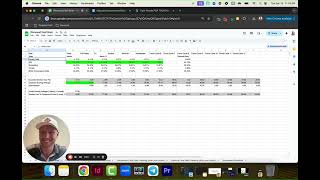
In this instructional video Connor Stirling Peterson explains why traditional swing‑centric coaching often fails to lower scores for junior golfers and introduces a data‑driven framework for scoring improvement. He argues that scoring is the result of several independent skill components and that players should track five core statistics – penalty rate, greens‑in‑regulation (GIR), scrambling, 3‑putt rate, and birdie conversion – to diagnose weaknesses and prioritize practice. Using a spreadsheet model, Connor shows how each metric translates into expected strokes and demonstrates the impact of adjusting each lever with real‑world examples, including a detailed case study of Tiger Woods’ historical stats. He discusses how to set realistic goals, measure progress over at least ten rounds, and apply the model to individual players or their children, while also noting the model’s limits (e.g., compound errors, untracked chip‑in‑green scenarios). The video concludes with calls to action for personalized coaching applications and a newsletter for ongoing content.
Chapters
What's going on guys? In today's video, I'm going to be covering how to score. Um, this is gonna be a lot of fun. It's gonna be a longer video. We're gonna be going into a lot of detail. We're gonna be going into the numbers, so hopefully enjoy that type of stuff. Um, if you're a returning subscriber, welcome back. If you're new to the channel, this type of stuff we do. We're going into the details of how to play golf at a very high level, specifically around junior golf and accomplishing the goals to go along with that, whether that's breaking through a scoring plateau in, you know, low 80s, high 70s, in the mid-70s, or even in the low 70s. This video is really going to give you clarity on exactly how to kind of think through that, the most important things that go into scoring. So, um, buckle up, it's going to be a good one. So let's kind of start a high level here. There's a few concepts that really need to be understood if you want to be able to score. So traditional golf instruction, the way that that looks typically is you go, you get a coach to look at your swing, and they tell you what they like or what they don't like, what they want to see changed, and you go ahead and change those things. And then based on the idea essentially that, you know, hey, if I hit the ball better, or potentially, you know, if I putt better, or if I chip better, um, you know, or my mechanics are better, then that's going to translate to lower scores. But anyone who's shot the scores that I mentioned there, um, you guys know that that's not entirely the case. You can actually be flushing it on the driving range and hit lots of really good shots and still struggle to shoot those lower scores. And, you know, for the most part, it's because of the things that, you know, I'm going to be going over in this video. This is a very, very deep topic, so I'm not going to be able to touch everything, but I want to give you guys a really clear picture that you're able to walk away from this video kind of having a better perspective on what you're going to need to do in order to score. If you're watching this for your child, help kind of understand what your child needs to do in order to be able to score. So long story short, a lot of the time one of the things that I see is players will focus on, I want to shoot this particular score, or I'm working really hard on my swing and therefore I should, you know, shoot these particular scores. And it kind of misunderstands how scoring really works. Scores, especially with a game like golf— you've probably heard this before— that golf is a, it's a very unique game because something like putting is entirely different from something like hitting the ball long off the tee, right? You know, a lot of the guys who are in long drive can't necessarily score as well as some of the guys on the PGA Tour, even though the guys on the PGA Tour can't hit it as far, right? There's a bunch of different games all in one. There's a bunch of different skills that are kind of tested, um, independently. But one of the mistakes that most players make, um, it's very easy to make, I've made it plenty of times, um, is, you know, let's say I hit a great tee shot, right? I hit 300 yards down the middle, in the middle of fairway, I got 80 yards left, and in my mind I should make birdie. That's, that's the thought process right now. The reality of that is, especially amongst higher handicap golfers, you know, let's say somebody who is shooting in you know, let's say low 80s, high 70s, the probability that you make birdie is still pretty damn low from 80 yards. Um, you know, it might be higher, you know, a higher probability than, you know, from 140 yards. But the reality is the biggest priority from that person really should be just hit it on the green, like literally anywhere on the green, guarantee yourself you're making par. And yeah, potentially if you hit it close, then all right, cool, you make birdie. But you got to understand that a lot of the way that birdies come is not really by hitting great shots. A lot of times it's shots that are essentially by accident, um, where, you know, maybe you intended to hit the ball past the pin and you kind of hit a little bit fat and ended up being like 3 feet, and you look like a hero even though you didn't actually hit the best shot. And there's plenty of other times where you hit the shot perfect and you hit a little bit too far, or you didn't grab the right club, or you didn't account for the wind correctly. There's all these different scenarios here. Long story short, you can't evaluate them all together and be like, oh, I made, you know, bogey on that hole. The key here, and that's why I have the spreadsheet up, is to separate the skills out. Um, and we can get very, very deep on this. I want to be clear, this is a high level of the, the key stats that I look for when I'm working with players. Now, um, just kind of like quick disclosure here, the average player improves by about 1.19 shots. Um, that's measured on Junior Golf Scoreboard. I think that's reasonably fair just because you're gonna get all the tournaments that they're playing in. It's kind of unbiased versus, you know, reporting bias within like, you know, stats tracking app or something like that's gonna be a little bit more suspect. Um, but across the board, that's about kind of the average. When I work with players, the average player improves by about 3.6 shots per year. Among my disciplined students, ones that I know are very consistent about applying the stuff that I'm talking about, it goes through about 4.5 shots. So that's just help you guys understand this stuff actually does have a really big impact. And again, I'm going to be trying to share as much as I can with you guys. So anyway, there's 5 main statistics that I like to keep track of: penalty rate, greens regulation, scrambling, 3-putts, and break conversion rate. The reason I like to keep track of these statistics is because they have a big impact on scoring, right? So, you know, one of the things that's very common that I see among people, or maybe a little bit more plugged into statistics, is they look at stuff like proximity to the hole, and they might look at greens regulation and say, oh well, you know, that's not very sophisticated statistic, you know, blah blah blah. What about the 18th green at St. Andrews? And it kind of like, in my opinion, misunderstands the point. If I tell you, hey, you've got— let's, let's make this easy for me. If you've got 100 yards, right, and from 100 yards from the fairway, PGA Tour average is going to be like 22.5 feet. Um, just so you guys are clear on how to get to that number, a PGA Tour player is going to have about a 10% error on their shot. So let's say we have um, I'm sorry, it's not 22.5 feet, I'm thinking 150 yards. They're going to have about— what would it be— about 15 feet. So just so you guys know, 100 yards, 10%, 10-yard total dispersion. And assuming we have a perfect target, so we've centered the pin directly in the middle of our shot dispersion, then we're going to have the average of all of those approaches be at about 15 feet because we have a 30-yard, you know, 30-foot dispersion there, right? 10 yards, 30 feet. And then half of that is going to be our, our average proximity, 15 feet. Now, if I tell you, hey, I want you to hit this to 15 feet, it kind of warps the way that you're going to approach that particular shot. Because if you hit— let's, let's say you hit your shot to 25 feet, in a player's mind, that could be unacceptable, right? It'd be like, well, I was supposed to hit it at 15 feet. And it creates a lot of stress and kind of a problem, which is the reality is like, if you hit that 15 feet or if you hit it 25 feet, you're not even moving your probability to hole out within like half a shot. It doesn't really have that big of an impact whatsoever. So again, Scott Fawcett has done a great job with this, with Decade, and talking about how, you know, essentially everything inside 8 feet is worth a lot, and outside 8 feet it's kind of like it's all pretty much the same. You know, to go from, you know, 1.5 shots to hole out to 2 shots hole out, you got to go from 8 feet to 30 feet, or 32 feet technically on the PGA Tour. Um, And so when we consider that, like, you can't hit it to 8 feet intentionally. Um, and so the reality here is, you know, all you can do is say, let me try and hit this on the green. Um, and you know, if it's close to the pin, then awesome. But the reality is I can't really control that. Is it not a lot healthier to say from 100 yards, let's just hit this on the green? Because then you get into the headspace of, well, if I just hit this ball solid and I got the right number, it's probably gonna end up somewhere on the green. The green's like 20 yards wide. It's probably, you know, 15, 20 yards deep depending on what part of the green you're hitting to. And you can kind of consider that. Well, now all of a sudden you start saying, okay, cool, I want to guarantee that I hit this on the green. I'm going to make decisions differently. I'm going to really focus on me, like, let's just hit this thing solid and we're going to accomplish that goal. Versus if I say, hey, I need to make birdie here. Now you start chunking it, you start hitting it thin, you just like, you just start doing all these weird things. So long story short, it's important we have really clear goals about what we're trying to do, and this helps us do that. So if we can say, hey, If I'm able to hit the ball off the tee and I don't have any penalties, that's a successful shot. Um, probably another layer that we could add on to that is if I have a line at the green, right? If I'm not in the trees and I'm not out of bounds, that was a good tee shot. Assuming you didn't like top it or something like that, you know, that's a great way to understand that versus one of the things I hear all the time, you know, even with the students that I work with, it's like, oh, I hit it at the wrong side of the fairway. And it's like, your driver dispersion is gonna be like 70 yards wide if you're a PGA Tour player. You know, like if you're a junior golfer, it might be 100 yards wide. I mean, the average fairway is like 30 yards wide. You can't intentionally hit it to one part of the fairway. Like, that's absurd. And it's like, you know, let's say you hit that and you're blocked out because of the particular part of the fairway that you're in. Well, you would have to be able to say, well, I could theoretically have aimed 40 yards right of this target, um, or 40 yards left depending on the other side of the fairway, um, in order to, to avoid that particular problem, to really say that that was a course management issue. Right. That was just kind of an unfortunate thing on a hard hole. Right. If we're in the fairway and we didn't have a line at the green, that's a hard hole. That's pretty crazy. But it's important to understand that because a lot of time a player might look at that and be like, oh, it's a course management issue. And then they put too much stress on their ball striking because they're like, oh, well, they're trying to solve what is actually just a hard hole issue by saying, okay, well, my course management needs to be better. So I'm going to hit it to this particular target. And then every time they actually accomplish that, they think, oh, you know, that time it was my course management. And they hit it to the other target, it's like, oh, it was bad course management. It's like, no, you had unrealistic expectations to begin with. Now you're pissing yourself off throughout your entire round, and it just makes golf really, really hard. One of the best ways we can look at golf— you know, your strategy is dialed in if you can hit a bunch of mediocre shots and still shoot really well. Like, that, that should really be the key. So if you go out there and you feel like it's really hard to shoot par, or it's really hard to shoot like a couple under par, like you're making things really hard for yourself. That, that odds are that that's what the case is. Um, because again, like, guys on the PGA Tour, like, yes, they have a higher average standard of shot that they're going to hit, but it's like they're probably hitting by their own standards a lot of mediocre shots. They're not hitting every shot flushed. You know, if you talk to the guys, it's like that's not what the expectation is. They want to put themselves in position where they don't have to hit great shots. Um, but you always have the ability to screw those shots up. If anyone— you guys watch the Masters this, this past, uh, week, we watched Rory try and choke that thing away several times. Um, he didn't because he's so good that even if his brain is trying to choke that thing away from him, he's still able to do it. But, you know, even consider, you know, that tournament would have been pretty easy for him to win if he could just hit a wedge on the green. And it's like he had to hit some other great shots, but there are a couple shots that he hit that were just like bad shots. Um, that all— the reason I bring that up is just to say like, hey, if you think that you're above hitting, you know, 100-yard shot and taking that seriously of like, like get it on the green You know, Rory's not above that, so, you know, neither should you be. So anyway, penalty rate, huge. You know, we can't be out of bounds, can't be in the trees. That's gonna have a really big impact on scores. Greens regulation, next huge one, right? The more times we hit this on the green, the higher probability we have of making par. Now, making par, a lot of the time people think greens regulation, oh, it's an opportunity to make birdie. It's not. It's an opportunity for you to make par, because the reality is you've got a probability that you are going to 3-putt from those particular distance, right? You have the probability that you make birdie, right? Those things are kind of like weighed against each other. But odds are, a lot of time when you hit the green, you're going to have like 20, 30, 40 yards— or 20, 30, 40 feet, I should say. You're not making those putts. You're not— certainly not intentionally trying to make those putts. You're trying to lag those up inside 10% of that total distance and make your second putt. Um, and so that's just to be very clear. The reason you hit a bunch of greens is it insulates you from being able to shoot high scores. right? If you hit 70% of your greens, I mean, how hard is it to shoot 80? Like you'd have to like make double bogey on every single time you didn't hit the actual green, right? Like that, that's what would have to happen. So that's really impactful. And you can also, you know, I'm not going to do it in this particular video because this video is already long as is. Um, but you can go ahead and dive into subsets of that, right? So you could say like, okay, my greens regulation is lower than I want it to be. Um, where should I be focusing? Because a lot of the time amongst junior golfers, at least one of the most common areas that I see is par 5 greens regulation is lower than it ought to be because players struggle with that second shot of knowing exactly how to handle that particular scenario. Also, just quick, quick disclosure here. Is this something you guys, you're kind of going through, just like, whoa, this is something you want help with in more detail, you want to work directly with me, or you want to help your child work directly with me? There's an application below this video where you can learn more about what that would look like. And just based on your situation, whatever your goals are, and be able to kind of tailor, you know, what makes the most sense for where you're at. And then we can talk about, you know, again, like, whether that actually makes sense for you. Or, uh, if you just want to see more stuff like this every single week, um, there's also a link down below to my newsletter where, again, just put out videos like this, emails like this, just kind of breaking down how scoring works and what your child needs to do to shoot lower scores. So anyway, continuing on here, scrambling. Scrambling is a statistic that I track not because I really care that much about short game. Um, short game, in my opinion, is one of the most overrated things in golf. Um, it's, it's not really that difficult, and it also doesn't have that much of an impact on scoring. If you look on the PGA Tour, there's very little separation between players based on how good their short game is, um, just because of this, like, these— the skill itself is, is just doesn't really matter that much, um, as nearly as much as these other things do. So scrambling shows us what happens when we miss the green. So how often do we make bogeys is another way to look at that, right? It's not something to really say, let me try and like get my short game better so I can get up and down more. Um, that actually doesn't really make any sense because when you consider this I could put you in the rough, you have to hit a flop shot over a bunker, and it's like downhill. Like, you're not getting that up and down. I don't care how good your short game is, you're not getting that up and down a high percentage of the time. Versus if I leave you on the fringe and you've got like a 20-foot putt, like, you got a pretty high probability getting that up and down. That has nothing to do with your short game though. That had to do— had everything to do with where you left your approach shot, right? So it has much more— it has a much higher correlation with how we're leaving our approach shots and the strategy we use to hit our approach shots rather than how good our short game is. Even once you go beyond that, that's a lot to do with how good our putting is, specifically in kind of the 5 to 10 foot range. Because a lot of the time when we hit a good, um, we hit a good chip shot, we're gonna be somewhere in that 5 to 10 foot range. You know, if we have a 20-yard shot from the fairway and you're a PGA Tour player, you're gonna average, you know, somewhere around 6 feet. I again, taking that 10% number. And, you know, when we can kind of consider that you're not gonna make every 6-footer, uh, PGA Tour players are probably gonna make like 70%. Um, the junior golfer, you know, it's like if you made 50%, I'd say that's pretty decent. Again, it's just, it's not going to have the biggest impact based on your chipping getting way better. It will have a big impact based on your putting getting better. But again, it's just not really an important statistic to really try and like push, say like, oh well, I hit 50% of my greens, but if I get my short game better, then I could shoot par. It's like maybe on your best day, but like you're not shooting 65, hitting 50% of your greens. And at the end of the day, like, if you want to have a scoring average that's around 72 or 73, it's like you're gonna shoot 65 sometimes. Um, so it's just super important, just in general for scoring. It just, it really matters. 3-putts is the next one that I like to track. Really tells us how often from the greens that we're giving up a shot, right? And that's just an important thing to know. Typically, if we push greens regulation higher, 3-putt rate will tick up just a little bit, just because, and we have more opportunities to 3-putt because we're gonna have more longer putts on average, um, simply because of hitting more greens. And so this is also one of the things that's very important to understand is like you could have a theoretical scenario where the most impactful thing you could do would be to hit more greens and then things change and it becomes the most impactful thing could be improving your 3-putting. Now throughout that period of time, you could have a scenario where it's like I increased my greens in regulation, but my 3-putt rate also increased and my score stayed the same. Did you get better or worse? Well, you're actually the exact same player, um, and you're actually in a better situation because then what you can say is, now the effort that I put into my lag putting and my short putting will pay off a lot more because now I'm hitting the additional greens. And now if I just sharpen up, whether it's the lag putting or the short putting that's causing you to 3-putt more often, then it'll put you in a position where you're gonna be able to shoot lower scores, right? So sometimes it's a two-step process. It's not always just like, hey, I fixed this one thing and it's good instantly. but in often cases that, that actually is the case. Um, the last one that I'm gonna, uh, keep track of is birdie conversion rate. So when we do hit the green, how often do we make birdie? And that can kind of give us a sense of, you know, how, um, yeah, how close our shots are, you know, how many putts we're making. Um, and I'll break down each one of these individually, but anyway, that's going to give you a score that you're probable to shoot. And you can just literally do the math here if you're good with Excel. Um, you've got In this case, you're in about a little over 10 greens. You've got about 1 shot you're losing off the tee, depending on how you want to value penalties, whether it's 1 shot or 2 shots. In this case, I value it at 1 shot. Scrambling, when you do miss the green, you're getting up and down about 25% of the time. So getting up and down about twice, you've hit a little over 10 greens, somewhere in that ballpark. We're 3-putting a little less than once per round. And, you know, for those whatever 10-ish greens, we're making about 2 birdies. It's kind of a way to look at that. So you can quickly do that math. We should, based on these— the set of statistics, have a scoring average about 77. Now to be clear, we're going to have variance within that scoring average, right? Typically for junior golfer, it's going to be about plus or minus 4 shots. Um, if you're like really, really good, you know, like Tiger Woods, Rory McIlroy, might be closer to like 3 shots. Um, and they're also going to have a lower scoring average. Um, in general, they're high— they're closer to their, their ceiling, so to speak, than a junior golfer is. So junior golfer is gonna have more variance. So when you say I'm inconsistent, that's actually what you mean is, is that you have a high standard deviation, but standard deviation is just a mathematical way to be able to quantify that rather than just being kind of like vague and be like, I feel like, you know, that particular way. So once you have this scoring average, you can compare yourself to, you can say, all right, well, what do I actually shoot? And that's going to give you a clear perspective of there's a few things that this model does not catch. So if you have a 2-chip, right? So you missed the green, you chunk it and hit your third shot on the green, and then you 2-putt and go to the next hole. It will not be accounted for. In this model that I've laid out. So that's why I have this, this last category, this compound errors. This would also not include, um, if you're hitting it out of bounds, right, instead of hitting it in hazard, right? Like, I, I've got that taken into consideration here because I'm only accounting for one shot off the tee. So if it was two, that would come up. Four putts would be another one. I'm not counting that in here. I'm not counting total quantity of putts. Um, and so this is— these are just kind of opportunities that just kind of say, hey, based on all these statistics, you know, is this number crazy or is it not? And how crazy is it compared to all the other things? So again, if I took this, this set of statistics here, what I can do— this is, to be clear, this is a spreadsheet that I give all my students— what I can do is I can say, okay, well, if I change one of these variables, how big of an impact is that going to have on our average score, right? This is part of why I'm able to help players improve as fast as they do, because we're measuring this stuff. You know, what gets measured gets done, right? If we just go out there and work on a golf swing, golf swing might look better. Um, but if we measure our scores and we measure the statistics and skills that go into our scores, and then we're practicing the right stuff, which is, you know, another topic for another time, but that's, that's what we do with this stuff is say, okay, cool, based on this, how should we practice in order to develop these skills? Yeah, that's how we see real improvement. Because then if I said something like, hey, um, I'm digressing a little bit, but I think that this is valuable, is, you know, let's say you're at 10%, uh, 3-putt rate. And you're able to bring that down. So 10% 3-butt rates, like twice around. Let's say that's specifically because your lag putting's bad. And let's say you improve your lag putting. And we, now we only 3-butt once around. We've improved by about 0.9 shots. So if we can do that every quarter, right? Like if you took 3 dedicated months to just get better at your lag putting to improve by 5% on the greens, that's gonna be worth about 0.9 shots. It's worth almost a shot. And so you can kind of see with a disciplined player how you would get to 4.5 shots a month or 4.5 shots a year of improvement is just being able to be surgically focusing on those things. And I also want to be clear, this gets harder as you get better. You know, like I work with some players where our scoring average is closer to 73 or 72, and those players have completely different problems. Um, it's a lot harder for them to see that improvement just because they have fewer of these levers to pull on. I'll go over these in just a second, But the reality is, you know, let's say if I don't— if I had a 10% penalty rate here, what's a very easy thing for me to, to say? Okay, well, if I just improve that one statistic, you know, that, that's a substantial— that's like 2 shots right there. How hard is it to stop hitting balls out of bounds? It could literally just be a strategy thing. Like, we could have a shift in strategy and say we're gonna hit one ball flight and we're gonna adjust our strategy off the tee a little bit. That could be a potential scenario, right? Um, versus let's say, you know, I don't have any penalty shots. Let's say I already hit like 70% of my greens. Let's say I'm already getting up and down like 60% of the time. Let's say I only 3-putt it like 2, 2% of the time. So I've got a scoring average in that case, you know, right around 72. How is this player going to improve? Well, they've only got one variable left that they can really work on, and that would be birdie conversion rate. Birdie conversion rate typically has the biggest impact by your make rate essentially from 10 to 15 feet. That's, that's really the statistic that really tends to move that one the most. There's a little bit of that if we're really screwing up par 5s, that could play a factor as well. Um, but for the most part, with good players, that tends to be the place to focus. It is much more difficult to get better at making 10 to 15-foot putts than it is to not hit balls out of bounds. And so as a result of that, there's a little bit of a sliding scale. So I talked about, hey, my average student improves by about 3.6 shots per year. Just to show you guys kind of a more adjusted model. You know, if I'm working with a player who's starting off on the higher side, I use scoring differential here, um, as kind of the measurement. That's what Junior Golf Scoreboard uses. Um, you know, somebody who's working with me who has a scoring differential of 15, you know, adjusting that, they might improve closer to 8 shots. Um, I had ChatGPT build this out just based on all my students' data just to kind of show this. If I start working with a kid with a scoring average of, let's say, you know, 0, we're probably somewhere just above 3. —2.5, we're looking at probably 2.5 shots. I was working with players like one of the best players in the country, we might shave a shot, shot and a half. The method doesn't change. The method being applied is similar. But I just want to give you guys that disclosure because, you know, if I started working with a bunch of like kids who shoot 85 and I get them to shoot 80, it's like, it's not as impressive as if I took a bunch of kids from shooting 75, shooting 70, right? And I just want to reflect that, you know, some of the kids that I work with do shoot the higher scores, some of them shoot the lower scores. I want to make sure I give you guys a balanced perspective on that as well. Um, so anyway, those are the main statistics we like to focus on. Now I want to show you guys on a few levels, um, of how this works. So I have marked here that this is not up to date here, um, but what I want to do is show you guys Apex Tiger Woods. It's just kind of an example of what this looks like and how good this could hypothetically be. So let's just call this, you know, 2000 Tiger, because thankfully we can actually get this stuff. So for the most part, Tiger PGA Tour players don't hit balls out of bounds. So we're going to call this essentially zero. I know it's not going to be exactly zero, but we're going to essentially call it zero. So let's go ahead to, uh, stats on the PGA Tour website, and then we're going to find all these statistics. Now when I'm working with students, I have a tool that I give them to be able to do this and make it pretty easy, but for the PGA Tour, we can just go ahead and grab the stuff, um, that way. So, all right, cool. So we're gonna go first to approach play. So Tiger hit 75.15% of his greens. How many fairways did Tiger hit? Tiger hit 71.22% of his fairways. How many of you guys thought that Tiger bad off the tee or not accurate off the tee. He's actually pretty damn good, especially like apex Tiger. Um, that's not necessarily saying you sacrifice distance for that. That's just saying Tiger actually did hit a lot of fairways, even if you might think that he didn't. Um, we look at scrambling, 67.08%. Okay, if we look at 3-putting, Tiger 3-putt, 2.63%. And let's look at— apologies for my son in the background here. All right, cool. Let's look at this here. All right, so birdie or better. Cool. So we can't actually we don't have that statistic, but what we can do here is we can say he averaged 4.92 birdies per round. And if we multiply that by— so he's hitting 13.53 greens per round. We can back that out. So he's got about a 36%, 36.36% conversion rate here. So in this particular year, Tiger had a scoring average of 68.17. Now this model is based on a scoring, um, average golf course length or average par of 72. The PGA Tour, you're gonna have a range of 70 to 72. So you can see again here, he'd have a scoring average right around 68 based on, you know, kind of this modeling here. So again, that's just to kind of show you guys, number one, that this model makes sense, and it also kind of shows you, well, we kind of have an apex here. We're not really going to hit 80% of our greens. Um, you can look at, you know, the PGA Tour website to kind of model out all these numbers. Um, but I mean, like, you're probably not going to do that. You're not going to get up and down a whole lot more than 70%. If you look at, you know, PGA Tour website, again, 70% is pretty much as good as anyone's going to do it. 3 putts, we're not getting it lower than 2, you know, like, yeah, maybe somebody can get it out to like 1. I think Xander was at 1 for a second there, but it's just like, there's not a lot of shots there. Um, and birdie conversion rate, you know, that's kind of like the last piece. When you see guys dominating par 5s, that's one of the ways to do it. Um, when you see players or coaches talk about wedge play, that's another way to do it. And another way to do it is making your 10 to 15-foot putts. You know, Tiger in 2008 made one of the greatest 15-foot putts of all time, you know, on the, on the, um, 18th green at Torrey Pines, right? So that is really what, you know, that apex level golf looks like. Now if we looked at the next year and we said, okay, cool, Tiger You know, Tiger didn't have as good of a year in 2001 as he did in 2000. Um, you know, not because he necessarily got like way worse, just, you know, he's tired, whatever. But let's look at how these statistics changed. So he's about a shot worse, you know, not quite a shot worse, but let's just— let's model this out again. So he was about a shot worse on approach shots, he hit 71.91 shots, right? So Still elite. Yeah, you still, still really, really good, but you know, dropped off a little bit. Let's look around the greens. 69.78. Okay, cool. So he picked up a little bit around the greens, so still not too bad. What about on the greens? 3 putter wins, 3%. So you got a little bit worse on the greens, not by a lot though. And what about— we're probably not going to get birdie conversion rate. Yeah. We're not going to get pretty conversion rate. Let's look at scoring. So we're going to have to do the math again, pull out our handy-dandy calculator. 18 times 0.71, 12.78. 4.3 divided by 12.78 gives us about 33.6% pretty conversion rate. And again, you guys see we're about a little, little under a shot worse. And so again, we can actually— let me move my own statistics here— we can actually say for Tiger and be like, okay, cool, out of all these things, you know, this is clearly your apex. What would give you the most bang for your buck? Let's just look at it. If we got this back to, say, apex is 75, what'd that do? Improve by 0.38 or 0.35 shots. Yeah, we probably can't get this a whole lot better. I mean, this is excellent. You probably can't get this moved a whole bunch. We could push this up to maybe 38%. So that would have the biggest impact, right? So if we could theoretically make more birdies, um, probably by, you know, attacking par 5s or maybe being a little bit sharper on the greens, um, you know, some combination of, you know, we need to make more birdies and we need to hit more greens is really the takeaway here. Um, you know, the two things that he could work on that would have caused him to improve. Now if we look at 2002, so just kind of keeping continuity here because I'm sure he knew all this stuff to some degree. So if we go to 2002, let's see how his numbers changed. And I believe he left Butch in the middle of this year. So again, scoring average, again a little bit worse, right? Still the best, but you know, by his own standards, a little bit worse. Greens regulation jumped up a little bit, so yeah, he did a better job with that. Let's see, around the greens, still excellent. Okay, so he didn't give up any ground there. Let's look at 3-putt rate. He improved a little bit there. And let's see, you know, scoring, he had 4.47. And let's see here. So he's hitting 18 greens. Let's actually just do this in the spreadsheet. 73.96, 73.96. 69.67. We've got 2.78. And then last calculation here, we've got 13.3— 4.47 divided by 13.3. And we got about 36% conversion rate or 33.6% conversion rate again. So he improved in this case by, yeah, a little bit there. So we can also infer based on these statistics is this statistical pattern here is better than this one. So even though, so he's got a scoring average of 69 here. What did he have in 2001? In 2001, he had a scoring average of 68.87. That actually tells us is that Tiger actually played better. He's probably just playing more 72 and 71, 100, or par 72 and par 71 golf courses as opposed to par 70s that he might have played, um, in this particular year. So that's kind of how that, that math works out. But anyway, this is the way that I like to look at player statistics because it makes it very, very clear about what we need to do next and makes it very clear about what specific skill we need to develop. So when we're in our practice, we can be very clear about like, I want this statistic to move. And if I practice these things, that statistic does not move. Guess what? I worked on the wrong stuff or it was not effective what I did. So I need to do something else. That's the way we want to look at this. You know, even for myself, I've got my own personal best statistics here so I can see when I'm looking at myself where I'm at now, what's realistic that I could get to. And what's holding me back from that, um, you know, what's, what's causing me to not play as well as I could. I can look at this and say, okay, cool, well, if I'm at a 6% penalty rate, it's like, yeah, probably the easiest way for me to bring down the scores at this point would be to hit more balls in play because then that's also going to bump greens regulation. But nonetheless, it also probably technically bumps scrambling as well. Um, but nonetheless, I know what those, those numbers are. So if I'm at a place where I'm at 70%, I know that's really, really good, but also have a clear model of like, here's where the statistics need to be. Here's where your skills need to be in order to accomplish that level of golf. Um, and this is just the process that I do with all my students. So I wanted to break down this for you guys, just like understanding this is how you score. You break it down into its parts rather than looking at the whole, right? It's easier to eat an elephant one bite at a time or something. Um, and then you get really specific about, okay, I'm going to do this to improve it. And then you measure that to say, okay, cool. Did it move? You have to have a reasonable amount of data to look at, and it's got to be like 10 rounds. It can't be just like 2 rounds. But you can see, okay, did it move? Was the thing that I did effective? And then, okay, where's the next lowest hanging fruit? So again, this is what I do with all of my students. Um, if you want that kind of support and you want me to do this process for, for your child or for yourself, just go ahead and fill out the application below. We'll walk you through that. Or if you want videos like this every single week, go ahead and fill out the application or the sign up for the newsletter and, um, get videos like this every single week. Hope you guys enjoyed it, and I'll see you guys on the next one.










