How I Analyze Tournament Round Statistics
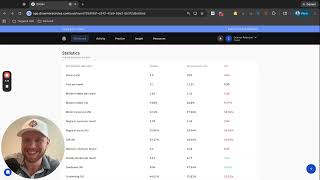
Connor Stirling Peterson shows how to track junior golfers' tournament stats without overreacting to single results. He uses seven core metrics—scoring average, strokes gained, birdie conversion, greens-in-regulation, scrambling, 3-putt rate, and penalty rate—to spot real improvements versus luck. A recent tournament case study shows how a two-stroke gain came from fewer 3-putts and better birdie conversion, not mindset.
Chapters
So in this video, I want to cover how I actually analyze statistics for junior golfers. This is one of the questions that came up in my coaching community. I did a coaching call on this recently, and so I wanted to share this with you guys as far as just helping you understand how I'm looking at data, because one of the more common problems that I see is that we get too zoned in on particular tournament outcomes, especially when I'm talking to parents. One of the things that I see very, very commonly that really shoots players in the foot, shoots parents in the foot, it leads us to making poor decisions, is hyper-analyzing a specific tournament outcome and using that to extrapolate information about our child. And it was just really, really, really harmful for, for a lot of reasons. Um, and so in this video, I want to kind of break down how you should be looking at, uh, your child's game, your child's statistics. Hopefully you're tracking that. If you're not, hopefully you're going to get some insights about where your child needs to be focused on this. And so starting off here, when I'm looking at any particular event, right, if I'm looking at this from the perspective of, hey, you know, we are going to, you know, play in a 2-day tournament, I'm, I I'm looking at through the context of what's probable to happen, right? I'm thinking in terms of probabilities. And I think this is one of the most important things that if you could wrap your head around one concept in golf, it's this, right? So if any of you have any background in something like poker, um, or any math-based probabilistic stuff, if you are an engineer, um, then you're more likely to probably grasp this stuff intuitively. But long story short, we want to be thinking in probabilistic terms, right? So what does that mean? If I have a coin and I flip it as heads or tails, right? And if I flip it, I have a 50/50 shot of it coming up heads or tails. But every one of us who has flipped the coin at some point in our lives knows that if you flip it more than once, you can get the same outcome 2 times in a row, right? Well, in theory, right, shouldn't it be 50/50? You know, 50% is like, well, if I flip it heads and it's going to come up tails the next time. No, like, that's not how it works. And so it's probabilistically true that it's a 50/50 chance. And you also have probabilities where if I continue to flip the coin, it's probable to reverse in the other direction, right? So if I have, you know, however many coin tosses where I get tails at a macro level, I know that at some point in the future I'm going to have a disproportionate number of heads come up. Just mathematically, that's going to happen. But at the same time, I know that that doesn't impact the next flip. And that's a hard concept to understand, especially when you get into something like golf where it is very nuanced. There's lots of things going on, but a lot of the time we get fixed onto a score or a set of scores or a particular problem, and we don't have enough context to understand what's actually going on here. All right, I digress. So let's go into how I actually establish this. So one of the things that I always do with a player is I want to have context on how do tournaments compare to practice. I know this is a problem that a lot of you guys struggle with. Where your child, you know, maybe they're a superstar in practice but they struggle in tournaments. And sometimes that's actually true, but a lot of times that's an illusion that's created by the way your child plays golf at home. At home or on the driving range, they hit a bad shot, reload, another shot, pure it. All right, cool. They get this false sense of confidence where it's like maybe they're better in practice, but in a lot of cases what I see is we actually just have an illusion about where we're at in practice because we're essentially allowed to cheat, for lack of a better term, right? So long story short, we want to be able to see from an objective perspective What are we comparing this against? So if we're looking at a tournament, we want to compare this to other tournaments. If we're looking at practice, we want to compare this to other practice. Pretty much nobody freaks out over a bad practice round. Sometimes it happens, but you know, same principles apply, just doesn't happen as often, right? So in this particular case, what I'm going to be analyzing is this recent tournament that, that this player had, right? And so the first thing I want to look at is how does that compare to the other tournaments that we've played, right? How much of an outlier is it? right? Now in this case, we've only logged 3 tournaments, and so right away I don't put a lot of weight in this tournament. Is it cool that he just started working with me and then all of a sudden we beat our scoring average by like 5 shots? Yeah, absolutely. Am I going to use that as a marketing headline? No, right? That's not the expectations that I would ever want to set for somebody, right? Because I know that this is randomness. I know it could have just as easily gone in the opposite direction, right? So I'm not concerned about that, and I don't want him to be too high or too low about the outcome of this tournament, even though he was happy about it. I wouldn't want his parents to be too high or too low about the outcome of this tournament, even though it was a good outcome, right? We want to have perspective of we're in data collection mode. We don't have a lot here. We've got 3 rounds of golf. So what we want to do is we want to go in and we want to say, okay, that's, that's good to see, right? It's nice to see like signs of life here. We don't want to overjudge that. We want to take away the lessons we can from it and continue to add data. We want to continue to add attempts and just see what happens. Because if we play enough, we are bound to have some good and some bad. We're going to have a distribution curve. So I say, those of you guys who do math and statistics, you're gonna be more comfortable with that idea, right? We have a distribution curve on whatever our average is. And the game is finding that bottom, you know, third standard deviation rounds, or maybe kind of like exterior second standard deviation rounds, chopping those out. That's really the game here, because if we do that, you guys know we're gonna shift our average up, right? Because if those bad rounds don't happen, and those bad rounds, you know, that were our second standard deviation are now in our third standard deviation on the bottom side, I'm just going to shift the overall trajectory of just like the total number of rounds. We're gonna have some more positive ones because those skills that we developed those mental things, right? That still carries over to our good rounds, right? And so everyone, when they play around golf, you can always look back on it and be like, hey, I should have shot better, right? And that's true for people who shoot 60. They're like, I could have shot 58, right? So that doesn't go away. Maybe you come back away from round and you're really sophisticated and you're just like, yeah, I couldn't have done any better, right? But that's usually understanding, hey, I had these things go for me well, and then I also had these other things, um, I just didn't have any bad luck. Right? I had a bunch of good luck, didn't have any bad luck, and so I pretty much did as well as I was possibly going to do, right? So in this case, I'm going to look at this player. We got -7.9, um, strokes gained. I'm going to compare that to how we're at practice because we've got more data in practice. So in this case, in practice, he's a little bit worse at the moment than he is in tournaments. So we got 1, 2, 3, 4 18-hole rounds. So we got 1, 2, 3, 4 5, 6, 9-hole rounds, so 3 in total. So we got 7 total rounds of practice golf. And to be fair, typically with better players, I see that we have a slightly worse average in practice comparatively to tournaments because we are more likely to take on chances in practice. For example, I want to hit, uh, I've got a par 5. I'm in Las Vegas, so I'll use Las Vegas analogy. I've got a par 5, I've got a canyon down the right-hand side, I hit a fade and I gotta hit 2-iron off a downhill slope here. Well, in theory, it might make sense to be able to push that up around the green. Even if I pull it there, you know, reasonably I could get that up and down. Obviously there's the possibility that I hit it on the green. There's also the possibility I hang the face open and leave it right into the canyon. There's also the possibility I snap hook this out of bounds, um, over to the left right now. In a tournament, I might look at that shot and be like, yeah dude, screw that, I'm just gonna— I'm gonna lay up. And I'm gonna have 100 yards in, I'm gonna hit that shot on the green, I'm gonna go to the next hole, right? I'm not gonna take on that chance of that negative outcome, right? And that's typically what I see better players do is when they get into a tournament, they're going to hit the shot they're more certain that they can pull off, right? We don't go into tournaments and take a bunch of chances trying to like, you know, rise to the occasion or something like that. Like, we go in there and we play our game to the best of our ability, right? And that we always see that, we admire that with, with players. We can see that the benefit of that when a player just ruthlessly sticks to their plan right? That's what we want to breed in ourselves, right? Anyway, players have more justification to do that in practice, right? Now, I still advocate for a player in that case to play out that ball, be like, hey, make double bogey, made double bogey, because you need to have the punishment for having that negative outcome happen, right? You have to have that psychologically so when you're in a tournament you can do that calculus and be like, well, you know, I made birdie this many times, vaguely understanding this in your head, but you know, I also have these bad scenarios happen a decent percentage of the time. Versus I know I can just lay up there and, you know, worst case scenario, I guess I can miss the green with wedge and make bogey, but maybe I still have a chance to get up and down. Like, I'm going to take that scenario better, right? Or you have a situation where they're just like, yeah, I see no trouble around the green whatsoever. Of course I'm going to send it, I've got 7 iron in. Anyway, I digress. I want to have this benchmark here. So in this case, practice about the same as tournaments. I'm just going to lump them all together, right? Let's go ahead and load that up. And so scoring average across the board here, got a scoring average of 4.5. Now we can start to ask, why do we have a scoring average of 4.5? This is fundamental when I'm doing any type of like statistical analysis, right? So you got a birdie conversion rate of 14%, greens regulation of 54%, we've got scrambling rate of 44%, 3-putt rate of 7%, and we've got a penalty rate of 0%. So the reason I like to look at those statistics— and I've got other spreadsheets and other videos where I go through that stuff in more, more detail— um, the reason I like to look at those particular statistics is because they allow me to project what the player should shoot on average, right? Again, if you guys want to sit down and do a little bit of math, you can understand why that would be the case. Um, but fundamentally, that's what I'm looking at. So that's kind of our baseline, right? That's over 1, 2, 3, 4, 5, 6, 7, 8, 9, 10. Um, obviously we got some 9 holes in there, so it's not a perfect, but it's pretty close. It's good enough. Again, if you guys are in probabilities, you understand good enough is all we can go for, right? We can't go for perfection. We can't go for exact precision. We're dealing with things that are a little bit fluid. Okay, so we're looking at this data set and say, okay, that's our standard. That's what we would expect. And so we go into a tournament, we play at that level, then what's the, what's the outcome? Or like, what's the takeaway? Well, if I wanted to get a better result in that tournament, it's not about, oh, my mindset needed to be better in that particular tournament. It's I need to get better at one of these skills. Right. And so when I'm working with students, what I'm telling them to do is I want you to get better at this specific skill to be able to improve as much as possible. Right. That's the way I look at it. Because if you run these numbers again, you can see that if you improve scrambling by 5%, it doesn't have the same impact. As if you improve greens regulation by 5%. Greens regulation is inherently a more valuable skill than scrambling, in part because scrambling becomes less valuable as greens regulation goes up. Scrambling is also impacted by greens regulation because greens regulation ends up being a measurement of how much control you have over your golf ball. And so if you're able to put yourself in better positions, typically it's going to lead to better scrambling. Now obviously we can go into the details here. If you have super high greens regulation, low scrambling, that means that you don't have much attention to where you're missing the the shots, and just a simple strategic adjustment could jump up scrambling pretty substantially and also maintain your greens regulation. But that's neither here nor there. Go— continuing on here, so I'm looking at that from that perspective, right? So if I look at this tournament, I'm going to look at this specific round here. Let's see what dates it was. So that was the 14th and 15th. Okay, 14th and 15th. So I'm going to go ahead here, custom, 14th, we got the 15th, and we got tournament. All right, cool. So we got this round. So right away, what do we see? Well, we're 2 shots better than our average, our benchmark. Is that crazy? Not at all, right? 2 shots better than our average. You know, as far as standard deviation goes, that's well inside 1 standard deviation. 1 positive standard deviation. It's good, right? Then we can start to do it, to go down the list and say, why were we 2 shots better than our average in this particular case? Well, birdie conversion rate doubled on us. That's obviously nice to see. It's amazing how many times I talk to junior golfers and they think they don't make enough birdies, and in reality they make plenty of birdies. It's just they 3-putt way too often, or they don't hit enough greens or stuff like that. So birdie conversion rate off the charts, really, really good. Can we anticipate that happening on a routine basis? No, we cannot. All right, greens regulation pretty much performed at the level we're used to. Good. Actually, it was a little bit better in this particular case. Scrambling, a little bit better, but just— well, those are just call it at benchmark, right? 3-putt rate, lower by about 5%. That's worth about a shot. So between these two, birdie conversion rate and 3-putt rate, that equaled our, our 2 shots of improvement that we had in this particular tournament. That we overperformed. We did about the same distance we normally do. And so when I look at this tournament, I say, what happened? I would say maybe, depending on where we look at this, 3-putting. 3-putting could be been a little bit of luck. That could be the case. Could be some of the strategic changes that we had made, uh, earlier over the, the couple weeks that we just started working together. It could have been, again, just like really great luck for him, right? Just had a good putting day, right? As evidenced by that 3% break in average, right? But point being, when I look at that, I say, okay, that's realistic. We can have a 2.78% 3-putt rate. Look at some of the guys on tour now, they're— some of them are like down to like 1%, 2%. I feel like the number used to be around 3%, but it's dropped off a little bit, um, just because people are obviously getting, you know, better and better about the math and strategy and all that stuff. But long story short, this is realistic. We can keep this down. I can say, hey, if we can just improve that 3-putting a little bit, clearly we're capable of it. Let's just be attentive to that. Birdie conversion rate. Let's not get caught up in this mirage. We outperformed our number, right? But it's unreasonable to be like, yes, 30% is the new norm. Why? Well, number one, our baseline isn't anywhere near 30%. So if we have more data, right, we're able to say, yeah, we're not quite there, right? We can temper this good tournament, right? So the key here is always being able to tell what happened, right? So in this case, good stuff. What can we take away? 3-putting was down, so that's 2 thumbs up, right? We can, we can consistently do that. That's reasonable. Birdie conversion rate was a less, less that we can do intentionally, right? So let's just like leave that as is. Everything else— greens regulation, scrambling, we hit those numbers, we're good. So we can have whatever narrative we want about whatever happened in this particular tournament— good, bad, indifferent— it doesn't really matter. What we want to be looking at is the statistics. We want to have a sober perspective so we can say 'Cause at the end of every event, you analyze the event. It's not about creating some justification or some random like reason your, your childhood didn't better or worse or whatever. You know, critiquing every little thing, right? You know this, you can critique everything to death, right? If you are in a position where, you know, you're running a business or an engineer or anything like that, anything in math, you understand there's always gonna be lots of stuff you could critique and it's not helpful and it's a waste of time. It's actually detrimental. To critique all those little things because it gives you the illusion you could do something about them, right? So when you take away, be like, hey, what was the big picture stuff? I hear people talk about this and golf swing stuff, and they're like, oh, you want your big muscles to swing the club, um, which I don't, I don't necessarily know if I agree or disagree with on that point. But point being here, we want to think in big picture, right? To the degree that we can. We're analyzing something super small. What are the big takeaways? So in this, what's his takeaway? What should we do Well, number one, we just want to continue to improve this game. We don't want to get too sold on the, the birdie conversion rate. If we have another tournament where it's like we don't make any birdies, we don't want to freak out about it, right? We know that our numbers are going to kind of revert, right? We just flipped heads 5 times in a row. We're going to flip— we're going to have a stretch of tails at some point in the future, so we don't want to get shocked by that, right? Now, can we shift that a little bit positive? Yeah, absolutely, because if our average is consistently improving because we're putting in new things into the system, right, we're developing our game, then it's reasonable over time it's going to trend in a good direction. But at a micro level, we don't want to be shocked. We don't want to be too upset, right? So we have a tournament that went well. What's our takeaway, right? What do we do with this information that we just accumulated from playing this tournament? Okay, I played good. I know that I, I did a pretty good job of avoiding 3-putts. I definitely overperformed my, my birdie conversion rate. I overperformed my average score. When I go into the next tournament, my goal is just play at my level, right? If I can cut down all those 3-putts, that's great. If the birdies go for me again, fantastic. But if they don't, I'm not going to get too upset about that because I knew that that was, you know, that was unlikely, right? That's really the way to look at these, these good tournaments, right? Because good tournaments, just cool, right? Like, just you play good, right? You go out there, shoot 65, awesome, good for you. But we want to make sure that we have the proper perspective on that. We're not going out in the next room and be like, oh yeah, I've got it figured out, I'm gonna shoot 65 all the time. It's like, no, that's not how this stuff works. We want to go out there and say, hey, All right, that last round is good. I know I'm probably gonna revert to my average. If you have another good luck day, fantastic, right? But you don't need to go into it being like, oh, I'm gonna shoot 58, right? I think I can't express how absurd I think that that is, right? On the flip side, your child has a bad tournament, which is a much more interesting conversation. You can look at this and you can say, why? What underperformed the normal statistics, right? It's not just, hey, our mindset, we just blame our mindset for everything. What underperformed the normal statistics, right? And if everything was the same statistically, then you know that there's some other stuff going on, right? When I'm working with students, I call it compound errors. It's something I calculate out. I'm not going to go into the weeds of that in this video. Obviously, if you want help, I've got links on my, you know, different profiles and stuff where you'll be able to find an application to work with me. Um, but when we go into a bad tournament, we want to say, it's like, well, what happened, right? Is this a trend, right? How does this compare to our existing data set? Is it a trend? Cause if you have a bad tournament, bad tournament, bad tournament, it's the same thing's coming out because I can't hit an approach shot cause I'm hitting poles. Okay. That tells us something. We don't have to wait until we have 10 rounds to figure out, hey, I'm hitting poles. Right. But we wanna have the context and be like, okay, cool. Greens regulation's down. Got a couple penalties because I've got this specific problem and this is what I'm gonna do to solve it. And then the next tournament you go into and be like, all right, cool. Like qualitatively, did it change? And then quantitatively, did it change? Right. And then we can continue to make those adjustments and refinements. Okay. So long story short, big picture here, we're looking at a larger dataset to make sense of a smaller dataset. And then saying with that smaller dataset, what do we do with this new information? It's fundamentally, that's the question. That's the prompt, if you will. We're all, all in on AI right now. That's the prompt that you ask yourself, right? Because you don't know the answers to these questions unless you ask them. And you don't, you don't get answers to these questions unless you actually have the data. So your child's not tracking data, this is your sign to go do that. But also make sure they're doing the right stuff with it. You can't just say, hey, go track the data, because they're not going to know how to read all this stuff. And maybe you would have the time, you could figure it out. You know, odds are you're working, you got other stuff going on, you got a family to provide for. That's obviously why I do what I do. And so, you know, if you want me to guide you through your child through this process, again, I've got links around here somewhere. Where you can apply to, um, talk to me, look at your child's situation, see if it's a good fit or not, um, and then go— then go from there. So hopefully all this makes sense. Hopefully this is helpful. Um, odds are there's other videos on the channel here, so go check out some of those. I'm gonna go into other subjects around, around this topic of data-driven coaching, um, usually with a tint of playing Division I golf or college golf. Uh, but long story short, hopefully this video was helpful, and I'll see you in the next one.










