How Jason Improved By 3.4 Shots In 4 Months
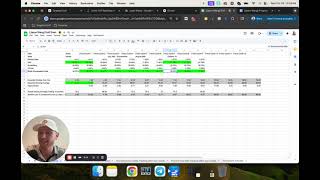
Connor Stirling Peterson shows how his junior student Jason dropped 3.4 strokes in four months using data-driven coaching. The focus was greens-in-regulation and birdie conversion, tracked through the Junior Golf Scoreboard. Jason hit 80% GIR at his peak, with Peterson updating the plan every ten rounds based on performance metrics.
Chapters
What's going on guys? In this video, I'm going to be doing a case study review of one of the students that I've worked with over the last few months. Um, I want to be doing more videos like this because I've obviously done a lot of videos. If you want to look at the other videos on my channel that are more on process and kind of my approach to things, um, I just haven't done a lot of videos outlining case studies outside of a few that I've done of players who have gone on to play Division I golf. Um, but the majority of the students that I'm working with are not in a position where they're going to play Division 1 golf, not because they're not good, um, or that they haven't seen improvement, but mostly because they're young. And that's a big part of my kind of philosophy here, is it's a lot easier to get into position to play Division 1 golf if you're younger, if you start off earlier, right? And so I've outlined that in plenty of other videos, but long story short, if you're new to these ideas Junior Golf Scoreboard is kind of my primary measurement tool because once we get to a particular range of scores, that's going to really dictate which programs are going to reach out and the amount of leverage that we're realistically going to have when talking to those programs. And so I just want to kind of show you guys a few examples. In this case, it's just going to be one example of one of the students that I've worked with, what we've worked on, what's, what, what's been good, what hasn't been as good, And, um, yeah, so you guys can kind of wrap your head around just a little bit more of my process, kind of see it in action. So anyway, let's go ahead and jump into it. Um, per usual, um, if you guys enjoy this video, go ahead and leave a like. If you're new here, go ahead and subscribe if you want to have help for your child to play Division 1 golf, um, and to learn more about it. So anyway, this is Jason. Um, Jason and I, we started working together back end of May, um, and kind of going into June. First time we did a practice plan together would have been June 27th, so he would have joined just a little bit earlier. I have the exact date in front of me, but Long story short, um, this is a junior golf scoreboard right now. He's got a scoring average of 73.03 and a scoring differential of 0.19. He's in 8th grade and he's ranked 22nd in his class, which is really good. Um, so like I said, we started working together right around end of June, you know, beginning in July. So scoring differential 3.59, we started working together, all the way down to 0.19 in the end of October. Um, so we can just do some quick math here. So we got July, August, September, October. That's 4 months. We've improved by about 3-ish shots, a little bit more than that. So pretty substantial amount of improvement. This is definitely an abnormal amount of improvement. Um, he's made a substantial amount of progress in a really short period of time. You can kind of compare that to, to the prior swath that we have here of, you know, a few months prior. Right? When I initially talked to, to Jason and his dad, I was like, hey, you know, he's in 8th grade. The average player I work with improves by about 4 shots per year. That said, if we run this math, um, that would put him at like a -8 or -10 or something like that, which, you know, might be a little bit unrealistic. Um, that would make us one of the best players in the country, but that's kind of going to be my target as far as like trying to help him accomplish that. And so he's made a substantial amount of progress. He's really overperformed. Performed what I expected. So I just want to be clear about that. So anyway, start working together here, and, um, obviously plays really, really good golf. A couple things that I want to highlight here is we were playing some shorter golf courses prior to working together. So we got 5,700 yards, 61, 63, 62, 61. And to be fair, in, in kind of Northern California, that's a little bit of a challenge. They don't have quite as long golf courses. But one of the kind of things you can kind of see that we be pushed here is playing slightly longer golf courses on average and playing harder golf courses, right? So we've got a few more AJGA events, we've got some Junior All-Stars, we've got an Invitational here. Um, just all in all trying to make the golf courses he's playing harder, in part because he hits the ball reasonably far. And so we want to take advantage of that. Now kind of the most obvious question is like, what happened here? What happened from— if I can get my mouse to click, doesn't want to click. All right, cool. Let me see if it'll click now. So what happened in this kind of range? I guess I can't select it, so that's weird. But what happened from, you know, July to, you know, maybe beginning of August here? Because I mean, it's just pretty substantial, like really, really good scores. Even this kind of, you know, right here is still playing really high level golf. But what happened here specifically compared to these prior scores? Because I mean, we got some 80s here, all of a sudden we're shooting in the mid-60s. Um, let me go ahead and walk you guys through it. So when we start working together, um, this is a spreadsheet that I use with any student that I'm working with. It's a part of how I identify, hey, here's what we need to work on specifically. And I prefer this methodology rather than just looking at something like strokes gained and saying, hey, we're losing shots off the tee with our driver because we don't hit it far enough. It's like, it's not very helpful for junior golf to do that. Um, I found it a lot more helpful to be very specific about, uh, which statistics, number one, are going to predict what we're going to shoot on average and then use those to kind of model out, hey, here's where you need to put our focus. Because the only other variable here that is going to get kind of taken into consideration is how long these golf courses are, which I'm doing separately, right? So I'm not just saying, hey, get the lowest scores possible. I'm saying get the lowest scores on the hardest golf courses. But it's just two different parts, right? If we hit the ball further over time, that's not going to come out any of these statistics. But technically you could say like, hey, if the golf course becomes longer, we see drop-off in greens regulation That would make sense. Or maybe we keep greens regulation the same but birdie conversion rate drops off because we're hitting longer approach shots in. Would also make sense, right? So there's, uh, we have to have multiple variables that we're looking at here, but this is just my personal preference of the way that I, I've found a lot of results helping students because it's a lot more clear about here's what we need to do. Um, to kind of wrap that up, you know, it's easier to say, hey, I want you to hit the green than it is to say, hey, I want you to hit 25 feet on average instead of 30 feet. Right? It's just then when the kid hits the 40 feet, they're kind of like annoyed about that and they think it's a bad shot, when in reality, you know, it's a perfectly reasonable shot, right? So just important to have perspective there. Anyway, um, main stats I'm looking at: penalty rate, greens regulation, scrambling, 3-putts, and birdie conversion rate, right? The reason I like those is we can multiply them out and get what the player should shoot on average, and then we can say out of all those variables, what's gonna have the biggest impact on our scores. For, for Jason, his case, the initial rounds that I looked at, he had a scoring average right around 74.4, or what he should have had, and he actually had a scoring average of 72. or 74.2. So pretty dang close, no real problems. He wasn't compounding any of his mistakes. Um, if you guys think here for a second, if you're chunking chip shots, these statistics would not account for that. And that's why I have to compare that to what the player actually does shoot so we can see if there's any kind of weird things you know, kind of popping out at us. Anyway, we were able to identify that if we could change one thing, the thing that would have the biggest impact is getting more— hitting more greens regulation. And once we could do that, it also made sense to say, hey, if we were going to do anything else, we would want to increase birdie conversion. Those are kind of like the two main things that we identified there. And so during this little stretch where he was on a heater, you can actually see he went to 80% greens regulation. Scrambling improved just a little bit. Three-putting kind of stayed in the same range. Birdie conversion rate jumped up pretty substantially. We did some stuff talking about par 5s, which I'll show you guys here in a second, and penalty rate dropped off a little bit. So as a result of that, he was averaging about 1.5 shots over under par. It was obviously really great stretch. Now once you get to this point, I pretty much told him, I was just like, hey, it's unrealistic that we continue to stay at 80%. It's just, it's really, really good, and it's not realistic that we're going to continue to stay there. As you can see, we kind of had a little bit of a reversion here. Which is kind of to be expected. The other thing to consider here is in this time period he started playing longer, like substantially longer golf courses, right? So if we go from some of the shorter golf courses, some longer golf courses, like I said initially, it makes sense that our greens regulation is going to drop off a little bit. Not because we're getting worse, but because we're just playing harder golf courses that are going to expose our game a little bit more. You could also be playing smaller greens and things of that future. Um, my golf mentor, a guy named Jeff Smith, Radar Golf Pro on Instagram, he works with about 6 guys on the PGA Tour. I was talking to him about one of his players who, you know, it's a really great ball striker. His greens regulation kind of dropped off, and I was talking about, like, you know, why is that? And he's like, well, you know, when you're playing in, you know, all the tournaments that you're kind of like beginner-level PGA Tour events, you know, like the Barracuda and stuff like that, you know, like golf courses are a little bit easier. You start playing Memorial where the golf court, you know, the greens are tiny and they're firm it's just much more difficult, right? So you can have a player who improves and, and doesn't actually see that in their statistics. And that's something that does happen in junior golf. It's one of the reasons why tracking these statistics are so important, even at the elite level. Like, you might say, hey, my kid's already really good, doesn't matter. And it's like, if anything, it matters even more so because you're going to have situations like this where you have to be able to justify and understand what's going on, right? It's like, am I actually getting better? And being able to have numbers prove you're getting better, you're not getting better, and then know where to focus as a result of that. Um, so anyway, long story short, that's kind of like the overall trajectory. Um, one of the things that's been really nice— 3-putt, 3-putting's improved a little bit, scrambling stayed pretty constant, off the tee stayed pretty constant. Um, birdie conversion rate has kicked up a little bit, so that's been really nice. So once again, if we can get greens regulation back up, which is what we talked about last time, you know, we talked about this, um, then we're obviously going to be in a good spot. And long story short, we've already made almost all the progress that I would expect on an annual basis. So to some degree, we're playing with house money here. If we can just maintain where we're at, which we'll do better than because you're just, you know, we've got a long swath of scores here that will fall off. As long as we can kind of maintain that level of play, we can expect this to go well into the negative numbers over the coming months. But anyway, let's go ahead and get into some of the weeds. So the first time I measured this, I always measure where the player is at on Junior College Scoreboard. We're at 75 point 1-2 as a scoring average, 66th in his class. Like I said, last time we did this, we're down to 21.0 or, um, 0.19. Anyway, his initial statistics here, so far he's been heavy on, on tournaments. One of the things I've noticed with better players, they tend to be a little bit more heavy on tournaments. That said, in my perfect world, I like to see practicing tournaments. Jason's just played a ton of tournaments, um, and so I identified, hey, you know, biggest opportunity here Second biggest opportunity. Here's what we want to do specifically. Let's see here. Um, yeah. And so when I'm making observations and adjustments here, I'm really just trying to identify like what's going on. Um, you're making sure that we're in a decent spot. I'm also outlining for the player, hey, I want you to do these specific drills. I want it to be this difficult. I want you to hit this many balls. Um, and then we're just updating that over time. So it's like the first time we did this, You know, we're at 3.59. I update this every 10 rounds of golf. So in Jason's case, he plays a lot of golf, so we updated more frequently. So 3.59, then he's at 2.7. Scoring average also bumped down. Birdie conversion rate became more of the priority, in part because his greens and regulation during that time period is so high, right? Um, and I just, you know, I said this, hey, expect some reversion. Uh, so you guys, I'm actually gonna see him This is a revisionist— I'm just, I'm just looking at what happened here. Um, and I said, you know, at this point a lot of this is maintenance here. I was like, you know, hey, we're playing at an extremely high level, let's maintain this to the, to the highest degree possible. Um, then continuing on here, we see continued improvement down to 0.94. Now we see a little bit of a regress with the greens and regulation, and we're talking a little bit about using Aimpoint, especially for kind of his middle distance putts, trying to get the birdie conversion rate up. So he was at 21%, um, we were trying to get it to 26%, right? And we had a couple other mistakes that like popped out in tournaments. Anyway, next time we update this, he's down to 0.19. Grease regulation, like I said, dropped off a little bit. So he dropped into a range where it was like, okay, cool, we have a little bit of room to improve. So you guys can kind of go back here as well. You know, when I was looking at this, I said, hey, we've got a little bit of reversion to 72%. That's still off the charts really, really good. So I wasn't concerned about it. But I wanted to get the birdie conversion rate up. Now you guys can see birdie conversion rates back up. We just need to bring up greens regulation. And to be fair, like, at an elite level, that's a lot of the problem that you're going to have is I want to hit as many greens as possible, and once I'm doing that, I want to hit as many birdies as possible. Scottie Scheffler is the ultimate example of that. It's in like 74% of his greens and makes birdie like 36-37% of the time. That's obviously the highest level you can do it. Not hitting any penalty balls, gets up and down a pretty good amount, does only 3-putt. That is elite level golf. That's what it looks like. Um, and so this, this case study is really just to give you guys, um, kind of understanding of the way that I like to approach things as a coach, really saying, hey, here's the lowest hanging fruit, here's what I want you to do specifically. All right, let's go and execute that, get the results, and then rinse and repeat that process. I'm not the type of coach to come in there and say, hey, you know, you're in front of me for a lesson, so I'm just going to go throw some stuff at you. I'm the first coach to be able to say, hey, you're in a great spot, let it ride. Like let it, let it do its thing, like run its course, then we'll make that next adjustment. And the other thing to be really clear about is just like, just because this specific set of things work for Jason does not mean that this specific set of things is going to work for your child. We need to be able to do this for your child by tracking their statistics and then analyzing their statistics and building out a custom practice plan, an order of events for them that's going to work the best. So that's really my process when I'm working with students. You know, I've got just under 50 students right now that I'm working with. This is going to get capped out at 100 just because I don't want to work with more students than that, at least, you know, as currently constituted. And so the benefit that you guys have when you're working with, with me in this kind of capacity is, you know, I have the data from literally all of these students, right? So it's like I've got all these players here and the players that I've worked with historically, and I can actually say, hey, here's what works the best based off of my, you know, what I've seen. And if you go back and watch like my old videos, the average player I work with improved by about 2.7 shots per year. At the point of recording this video, I don't like talking about it, to be honest, because I, I like— I don't want to commit over 4. 4 feels reasonable. But for the students that are playing at least 1 round of golf per week and logging it, So 13 rounds over the course of 3 months, the average player is improving by a little over 5 shots per year. And again, that's not because I'm some, you know, amazing, you know, golf coach and whatnot. Um, that's just because I'm able to say, you know, okay, here's what works, here's what doesn't. Do less of the stuff that doesn't work, do more of the stuff that does work, and just rinse and repeat that process. And all I can do as a coach is look at the data. I don't have any opportunity to do eye test or bring in my opinion or have some narrative that justifies whatever, you know, not great results that I'm getting. If I've got a student who's not improving, I— that's just smacking me in the face. Like, I have to fix it. And, you know, that's why I encourage families to judge me on when I'm working with them. So long story short, this sounds like something that you want your child to have help with. There's a link below to apply to work with me directly. Again, what I'm showing you guys with Jason is not normal. He's improved by an exceptional amount. He's done an exceptionally good job. Of following directions and doing what I ask them to do, very high communication. And so this is not normal. But that said, if you want that kind of help for your child and that kind of clarity on what to do specifically, where it's really based on results rather than just, I want to go out there and, you know, work hard and, you know, get a bunch of lessons and, you know, hope that pays off— that's something you're interested, go ahead, fill out the application below. Um, cool. Hopefully you guys enjoyed this video. Hopefully this gave you a little bit of insight. I'm gonna be doing more of these, so if you enjoyed it, go ahead, leave a like and subscribe to the channel if you're new here. Uh, once again, talk soon, guys.










