How To Adjust Your Swing Without Losing Your Feel
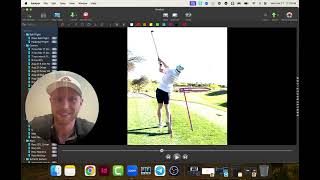
Connor Stirling Peterson breaks down swing adjustments using a swing filmed at TPC Las Vegas, walking through eight checkpoints from setup to downswing. He shows how to tweak mechanics for a reliable fade while preserving feel, then outlines a repeatable process: define your ball flight, practice with data like GIR percentages, and validate changes on the course.
Chapters
All right, what's going on guys? In this video, I'm going to be covering how to adjust your swing mechanics without completely blowing up your game, without taking, you know, a bunch of time off from actually playing golf, how to actually understand your swing overall, and how to go about making tweaks while you continue to play golf. If you're new to the channel, this is the type of stuff we talk about. We talk about elite-level information specifically for helping junior golfers develop to play Division 1 golf. And so in this particular video, I'm going to be covering the swing mechanics portion because it's something I haven't spent a lot of time talking about, to be frank. Um, it's something that I think is really, really important though. And a lot of players, especially the ones that I'm working with, um, you know, a lot of the time this kind of gets overlooked. And so I wanted to use this opportunity, actually just go ahead and walk you guys through, um, how to go about thinking about, you know, swing mechanics, because at the end of the day, there's so many things that go into playing Division I golf and shooting lower scores. And being able to play, you know, at different golf courses you've never played before and be able to score well than changing your swing or like tweaking things to your swing. And so I figured I would just use a recent swing of mine to kind of make these comments. You know, obviously I, like everyone else, you know, there's things that I want to change in my swing. There's things that I'm not happy with. There's things that I'm not, you know, super thrilled with how, you know, they're happening functionally. And so I just want to walk you guys through that. Kind of big picture-wise, and hopefully you guys learned something from this. If you're a returning subscriber, welcome back. It's gonna be a good one. So let's go ahead and jump right into it. So I've just got my swing pulled up here on Analyzer. Let's see if I can move my head there. Okay, cool. So this is out at TPC Las Vegas. That was my home, home course. Shout out to anyone in Vegas. And I thought this was a really good hole to kind of walk through this kind of logic here because Believe it or not, this actually starts with how we're setting up before we get into any of the mechanics. Because if my setup is screwed up, then everything else is gonna be, you know, not usable. And so there's a few big concepts we wanna understand here. So number 1, and you know, if these things seem like kind of simple to you, it's like relatively because they are, they're just harder to execute. The first thing we wanna see is we've got this green out in front of us. I want to use a different color because that's kind of hard to see for some reason. So use yellow. That's going to be better. I think there's just a weird tint. What about purple? Let's see if we can do purple. All right, cool. Purple works. Anyway, you guys can see this green here. This green is probably on the larger side of greens, but I'd say, you know, it might be 25 yards wide roughly, and that's going to be kind of your standard green width. Um, I think that's the first place we want to think about when we're thinking about, okay, how am I hitting my approach shots? I am a huge advocate for working the ball exclusively in one direction. I just think it's a lot easier to do. It adapts really well if you have a poor ball striking day. So for example, you know, if you try and hit every ball straight, like, that's cool. You know, you probably go out there and shoot 68 when you're playing good. What happens when you're playing bad? The ball's going both ways. You know, it's like you're hitting one left, hitting one right. That's a real problem. And it kind of puts you in this position where you might feel like, hey, I either play great or I play terrible. And especially if you're in a situation where you're saying, hey, I want to shoot more consistent scores in tournaments. Well, guess what? You're gonna have some good days and bad days and a whole lot of meh. Like you're gonna have a whole lot of days that really aren't that great. They're not really that terrible. But you need to be able to manage those as well as possible. It's just a lot easier to manage one ball flight, you know, explicitly because like, you know, when's the last time you've hit a 40-yard hook or a 40-yard slice with one of your irons? Just like rarely ever happens, right? Um, versus, you know, a 20-yard draw or fade, you know, trying to hit it straight, just like very possible, especially on a bad swing. It's very doable. And when you consider the average green's roughly 20 yards wide, let's say you say, all right, cool, I hit the ball straight, I'm gonna aim at the middle of the green, which you probably aren't doing anyway. But let's just say, you know, let's say you're being maximally conservative with— so with that strategy, you did the middle of the green. Well, if you have a ball that curves more than 10 yards, you're screwed. You missed the green, right? Versus if you hit one ball flight, guess what? Until that ball curves like 20, 25 yards, you know, in one direction, it's like you're still hitting the green, assuming you got your numbers right, which is a whole nother conversation. Um, but that's, that's why I'm such a big advocate. So let's go ahead and check my own alignment here. Let's see how this looks. So I got my feet lined there. I've got my clubface parallel left. So I'm pretty much aligning at the left side of this green. The reason for that is, you know, let's take a look at what's gonna happen. I wanna see a ball flight that looks something like that. It's starting somewhere in this left area, left of the green, so squarish with my stance, potentially a little bit far left, and I've got all this room to work with. So what that allows me to do is I can say, just like mentally, okay, if I hit this ball solid and I make a good committed swing, and this is the only ball flight I ever hit, I don't ever draw the ball, Well then I know, then it's like, I can hit a ball like that just in my sleep. You know, it's like that wouldn't even be a good shot. You know, technically the pin is right here. So it's like, again, but every one of those is completely fine. 'Cause it's like, okay, well I hit it over there, I hit it 35 feet. Like, who cares? You know, it's a 170-yard shot to a, you know, reasonably challenging green, to be fair. But it's like, who cares if I hit it 30 feet? So, you know, that is, just starting point. I'm stressing this at the beginning, you might be like, oh, this is kind of, you know, seems kind of rudimentary. It's like, yeah, that's the point. It's like we want to make things simple as possible. And to be clear, like when I'm coaching players, that's what we're doing is we're trying to make things as simple as possible for them. So we can actually focus on the real work, which is the execution of all this stuff. It's one thing to understand it or watch YouTube videos, another thing to actually be able to implement it, run into problems and consistently be reminded and directed in the right areas. 'Cause at the same time, a lot of times you might think one thing's an issue and it's actually something completely different. So obviously that's what I do with my coaching. I'm working with students and working with them one-on-one, building out their practice plan, telling them which tournaments to play in, and really helping with anything in their game that they need to play Division I golf. But typically it takes the form of specifically tracking their stats, playing in the right tournaments, and building out their practice plans. If that's something you're interested in, link below in the description for the application for that. Just make sure that you're a good fit. And that if we talk about it, I actually have a high degree of confidence I'm gonna be able to help your child play Division I golf. So that kind of screens that out. So anyway, if that's something you're interested in, you want help like that, um, just go again to the application here. But let's get back to this video. So within this move here, like I said, I'm trying to hit a fade. Now right out the gate, you can see just kind of some basic setup stuff. You want to see relatively neutral back. I don't really care too much about that right now. We don't want to see too much knee bend. I'd say this is all a pretty orthodox setup. I want to see the arms kind of hanging out of my arm sockets, if that's the right word, my shoulder sockets. I would say maybe I'm kind of a hair like, you know, pushed in. I could stand to be a little bit more out with that and potentially stand a little bit taller, but it's not really a big issue. And then we're going to kind of see how does, how do things work on my backswing. Now, one of the things that I want to see for, for all players, for the most part, obviously there's exceptions to all these things, but this is a rule. I want to see the club kind of coming through the middle of the hands. Um, if I was going to err on one side, I'd want to see a little bit more out. Typically we're not going to want to see it in. In creates a lot of problems. Um, we start getting this kind of, you know, you're going to react naturally and typically get it up and across the line. Um, you're also going to get some shanks from there. Like for me, anytime I've ever hit shanks, it's always because the club's kind of rolling in on the backswing. And a lot of players just struggle with that. So that's something to be mindful of. Um, anyway, continuing on the way back, I like to see some amount of verticality to the shaft on the way back. So, um, I like to see that somewhere between the ball and my stance line here, um, you know, which we've done that pretty well. So that's solid. I also like to see a little bit of depth here, so we're kind of like right armpit It's a good spot to be. Just, just so we're clear, you know, if my hands were like out in front of my sternum here, that'd be less depth. And if they're like back by my armpit, that would be more depth. There's a bunch of different ways to get into how you can create depth. That's not what this video is. That's obviously something I'm going to do for my students if they need help with that. But that's not something I might go through in a YouTube video. It's way too granular. Anyway, continuing back to the top. At the top here. Generally, you know, since I'm hitting a fade, this is about as much on plane as I want to be. So this would be one of the areas where I'd critique myself. Now, I'm not across the line really, um, but I'm on more on plane than I would like to be. Ideally, I'm okay with it being a little bit more laid off so long as the club is able to shallow in transition effectively. As far as kind of my hand positioning here, I'd say I've got a decent amount of depth. It could be a little bit deeper. I could be further back onto like, you know, my heel line. Um, but again, you know, it's kind of nitpicking there. But again, that's kind of like where we're at right now. So I'd say it's a little bit on top of the plane here. Let's see how I transition. Important kind of concept: my hands are going to track out toward the ball. That should be true in every golf swing. If your hands are like tracking down, typically what's going to happen is this club's going to steepen a little bit. Um, not a good place, not what you want to be doing no matter what you're hitting. Um, so you're going to see my hands— let me back this up for you guys. You're going to see my hands track out here and you're going to see this club shallow a little bit. Hopefully you guys can see that. All right, cool. So I'm going to continue to rotate. That's kind of a fundamental for me. I always want to be rotating, um, my golf swing. So kind of hand depth here on the way out, a little bit more than where I started on the way back. So a lot of times over the top kind of gets over, um, over-exaggerated, I guess, by people. It's like my hands are actually deeper on the way back than they are on the way out, but no one would ever call this golf swing, you know, over the top. So again, I'd say I'm still a little bit steeper than I'd like. But not too terrible. We're gonna shallow that out right at the end. Um, I'd say this is maximally like as inside as I would want to be trying to hit a fade, so I could stand for this club to be slightly more in line with my hands. But again, you know, I'm not doing too bad of a job there. Let's continue on through. Okay, impact. I know it looks like I hit a little bit fat. I actually flush this. All right, and then let's, let's track this ball. So this ball starts up on that line here. I can tell you guys, how's the ball flying? I guess it was a little bit higher than that, but long story short, I flushed this right at the pin. Now, funny thing enough, Funny thing here is, you know, this is about— I want to say it was probably a 175-yard shot. Um, this is into the wind, and I hit a 7-iron, which, you know, in retrospect, you know, maybe it's too much club. But the reality is, like, if I had 8-iron and the wind flared up, I could hit it in the canyon. So, you know, a big part of this video that I'm not even going to be able to get into is, like, the importance of managing your distance in those different scenarios. Stuff like, you know, the wind is in your face by 10 miles an hour versus 5 miles an hour— how much are you adjusting? And And also being able to play enough golf that you know exactly how far you carry your golf ball, or if you're in a simulator, you know, making sure that you're able to track like how far do I carry my golf ball on average. So you're able to be intelligent about these things because I'm going to talk about hitting greens regulation in other videos. And sure, you know, I've already talked a little bit about the shape stuff, but that just goes to account for— it's like, what about changing trajectory? What about hitting at the correct distance into the green? What about adjusting for front pin, middle pin, back pin? Those are all things that go into being able to hit more greens in regulation. And if you don't know exactly what your distance is, you're gonna have a hard time, you know, if you're not able to hit chip, you know, 7-iron, like I didn't do the best job here. But if you're not able to, to be able to hit that shot, well, you're gonna hit fewer greens, you know. So that's, again, obviously something that I help my students do. Again, if that's something that you want support with for your child, again, link is in the description. Anyway, back to the video here. So big picture here, I'm trying to hit a fade. I am viewing this swing through the lens of, okay, cool, my setup's about right, and now I want to set up the characteristics in my swing so that I will be able to hit a fade reasonably reliably. So checkpoint number 1, club's in a pretty good spot, I'm happy with this, um, so that's good there. Face could maybe be a touch softer, um just from the perspective of this would be like very strong. This is where it's at right now. This would be very weak. Anyway, I'm happy with this position here. Getting up to the top is where I find this kind of sketchy. One of the things that I really don't like is my hips kind of move away from this this little wall here. Alright, so if I redrew these lines at the top of the swing, my hips are going to pretty much stay in the same position. Maybe my head's gonna move a little bit back. So I don't want to see a ton of early extension. I don't want to like demonize early extension because I mean, at the end of the day, every player really extends to some degree unless, you know, Unless you're ridiculous, but for the most part, when I look at this, like, setup position, my head's pretty much where it started and my hips just kind of move in a little bit. But once I'm in kind of downswing mode, you know, my hips are not really moving off of that wall. So a lot of this problem here from the early extension perspective actually comes up in the backswing. And if you guys can kind of see here, you can almost see my heel looks like it's coming up here. You can see a lot of the pressure is kind of like in this, this ball, the toe area. And so for me, this one was a little while ago. One of the things that I'm focusing on here is really getting pressure back into my heel and getting this left hip or this right hip all the way kind of like back. And that's not going to be perfect, you know, realistically, like I'm not just going to expect it to go from here to here overnight. Like I don't, I don't expect that at all. But if this hip continues to stay back and I'm kind of pushing back up into that hip and I'm allowing my hands to feel like they go a little bit deeper, because that was one of the things I went back to, then what's that going to do for me? It's going to help me be in a position where I'm going to have a little bit more tilt. I don't have to have any difference feel. I'm not gonna have to feel differently at the top. Just by having that a little bit better tilt for me is gonna put this club in a better position at the top. Okay. Because it's in a better position at the top, when I rotate, the club is not gonna get so far under and it's gonna be easier for me to hit fades. Okay. So hopefully you guys are tracking with this. Um, I understand that this, you know, there's a lot of kind of cause and effect stuff going on here. Uh, I wish I could just say, hey, you know, I should be more laid off, but The reality is it's more complicated than that. You got to understand how your swing works and then you got to be able to figure out like, okay, what's the thing that I'm going to focus on and be able to order to hit that ball flight. Right. So when I'm working with a swing, I'm always going to be thinking throughout the backswing, how am I setting up? How am I setting things up? Because I should be able on the way down, just be like, hit the golf ball. Like I shouldn't have to have some, um, if you got all sorts of crazy feels on the way down, it's like, good luck. You know, you got a quarter of a second to be able to execute on that stuff. And, you know, in most cases, your brain can't even communicate to your limbs fast enough to be able to make any type of changes there. So a lot of this stuff is just automatic here. So I'm happy with this. For me, it's just here. I'm really trying to feel like I get my pressure back into this trail heel and my hands kind of move back and up. I want to make sure that I do not feel like my hips are moving. Toward the target there. Okay. And there's gonna be, there's gonna be varying degrees. Like, you know, this is obviously, you know, just on the golf course, right? Um, but that might feel a little bit differently on the driving range. It might feel a little bit differently on the golf course. It might feel differently in a tournament, right? So, but again, that's the feel for me. Now I'm going to want to film that feel to validate that that actually works. Cause I might have the idea of like, oh, you know, let me try and get in my heel and that's going to be better. But then I take it to the golf course and doesn't work. Like, it doesn't get me in the position that I thought it was gonna get me in, or it gets me way too laid off, right? Maybe put me over there or something like that. So I need to constantly validate this. I'm also going to get the feedback here. This club's probably gonna feel a little bit more over there at the top. I'm also going to get the feedback of it's easier for me to hit that ball flight. Because if it is, then what does that do for me? What allows me to open up, rotate freely, and pretty much know, like, I can kind of point the face anywhere? It's like, unless I start the ball like over here, which I'm not gonna do, you know, like, that's the only way I'm gonna hit a really terrible shot, you know, if I release the face a little bit too much, maybe I hit this one. But again, just keeps life really, really easy for me. So again, from the perspective of, okay, cool, I want to hit fades, what am I doing? Well, I've identified as kind of like a checkpoint here that I want to see this club in somewhat of a more laid-off or on-plane position than it is right now. I want it to be more here and less here. Still going to shallow from that position. My hands are going to track out, probably not going to track quite as down as they do here. Um, in part because my hands should be a little bit deeper. And in part because, um, I won't need to shallow it quite so much because it'll all be pretty shallow. So in this position, it'd probably be closer to there. Um, anyway, I've identified that, that's a little bit more on plane than I want it to be to fade, right? In general, I want to be more in there. And I've identified that a lot of that's happening because the way my hips are moving. Hips are kind of like moving back toward the golf ball. Um, and that creates a little bit of a problem. It creates a little bit of early extension as well. So again, I'm able to simplify this all the way back down from, I want that thing to happen and I want this particular ball flight, to, okay, well, I just need to feel a little bit more in my heel. And you know, that's going to get me in a little bit better spot. And I'm going to go ahead and validate that. And then I'm going to get the feedback from my ball flight here that is like, okay, cool, I'm hitting fades in kind of the window that I want to hit those fades. So practically, next time I go to the driving range, you know, with these, these thoughts, let's say I'm struggling from this particular yardage, I'm still working on this yardage, right? I'm just going to hit my whole bag with a bunch of random clubs. I'm going out there and deliberately hitting this shot and practicing getting reps in. Um, and I'm using that feel and I'm testing it based on, am I seeing the ball flight that I want? And I'm measuring it versus my statistical benchmarks, right? So if I'm hitting the green 50% of the time, I'm trying to do a little bit better than that. Um, that's going to give me feedback of whether or not it's working better, right? I'm just going to go out there and bang balls and be like, yo, I feel like I'm hitting it way better. It's like, no, like I want to be able to be backed by my actual data to see, okay, cool. This is working. And then a lot of people skip this one, then we go to the golf course. And so that's probably not going to be in that practice session realistically, just like based on time constraints for most of you guys. And also just in general, practice, rest, then go play most of the time the next day. So again, we go out there, we play the next day, we're going to first be validating and be like, alright, how's this feel? Like, is this feel even doable? Does this work? Like, does it feel like really weird? Because it feels really weird. It's like, alright, cool, that didn't work. You know, I was like, it's a real problem. I can't hit a good golf shot. It's like, all right, well, that feel didn't work. Like, let's figure this out. Let's figure out how we're gonna go play. Still finish the round. You don't get to bail out, but like, figure it out. Um, once you got that, okay, cool. Am I seeing the ball flight that I want still? Right? Because that's the real key here is it's like, if I'm seeing the ball flight that I want, it's like, all right, you know, we're in the clear, right? We're doing something good. The next place we're going to validate that though, is What does it look like? All right, cool. I'm seeing the ball flight that I want. Or if I'm not seeing the ball flight again, what does it look like? You know, am I still, you know, in that position? Or maybe it's gotten worse. Maybe I'm like over here or something like that. And I'm just like, geez, why am I hitting these bad balls? And be like, well, you know, look at your swing, right? You want to be able to have this kind of toolkit so you can say, okay, cool. Here's what's going on in my— here's what I'm trying to do first and foremost. And I'm like clear on theory, which is why I started this off with theory. Then it's, hey, what are the characteristics I want to see in my swing that are going to make that ball flight easy for me to hit? Then why do I have these characteristics in my swing? Like, why am I seeing this club being more on plane than I want it to be? And then what do I need to do differently? And then what does that feel like? And then actually apply that and validate it in your practice, validate it on the golf course, and and continue to refine. That's the process that you want to go through to be able to say, okay, I want to make this tweak, but I also want to continue to play golf. I want to still continue to play golf at a high level, because the odds are I'm probably not going to hit the ball materially different, especially on my good shots. This is just going to have a little bit more confidence, a little bit more crispness that I'm hitting the ball solid. And this stays the same regardless of the level that you're playing at. You know, for me, I'm essentially a scratch golfer, depending on how much time I'm putting in. But I can roll out of bed and hit a golf ball. And I'm gonna have different standards of what I expect, right? If you're shooting 90, or if you're shooting 80, like you're gonna have different standards of what you're going to expect, right? And so again, big process here. I just want to make sure you guys have clarity on, on, on the one hand, this is complicated, right? There's a lot of things that I went over. On the other hand, it's a fairly simple process. And if you understand, okay, cool, this is how my stuff works. Like you don't need to go to your coach every single time that you have like, you know, something that's not going right, you know, like if your coach hasn't helped you understand how your golf swing works to the point where you can do this for yourself, it could be a sign that you need to get a different coach, especially if you want to play golf at a high level, because you can't be out there in a tournament scenario and be like, oh, you know, I'm playing bad. I'm just— I just need to go see my coach. It's like, you got to go shoot a score. You can't just crap the bed. You know, like, you got to keep playing. Maybe you're in an AJGA event. First day was bad. Like, you got to recover for day 2. You got to recover for day 3. You got to have a process for doing this. And if you don't, you're screwed. And that's not like, that's not where you want to be in. So I hope this video is helpful, though, just kind of helping you guys understanding the building blocks here. I mean, just being able to say like, hey, we're hitting one ball flight, and this is our aiming strategy, it's going to have a massive impact on your game. If you're able to implement all this other stuff, it's going to help a ton. Obviously, this is something you want me to do for your child. In addition to telling them how to practice, how to track stats, which tournaments to play in, again, link in the description for the application. Or you can jump on the newsletter. If you're not ready to do that, or you're a little bit curious and you want to get videos like this every single week. So hopefully you guys enjoyed here. If you did and you want to see more videos, you don't even want to get on the newsletter, just go ahead and hit the subscribe button. Throw me a like if you enjoyed this, um, just push it out to more people in the algorithm. But anyway, hope you guys enjoyed. Talk soon.










