How To Avoid Burnout In Junior Golf
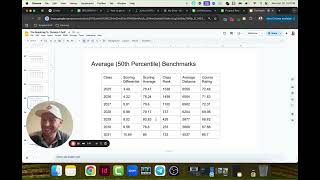
Connor Stirling Peterson shows junior golfers how to avoid burnout through a 12-month commitment, tracking stats like greens-in-regulation and 3-putting, then using that data to shape practice and tournaments. His students improve 3.6 shots per year on average, compared to 1.19 for those without a structured plan.
Chapters
All right, what's going on guys? So in today's video, we're going to be talking about how to avoid burnout in your junior golfer. So this is one of the things that, um, comes up all the time, and today I'm actually going to make a video covering it. If you're new to the channel, this is all we talk about is specifically helping junior golfers develop to play Division 1 golf. So if you guys are in that bucket or if you're considering becoming in that bucket, this channel and this video is going to be tremendously helpful for you. If you're a returning subscriber, welcome back, always good to have you. And we're gonna, we got a really good one for you guys today. So long story short, how do we avoid burnout in our junior golfers? So it's kind of interesting because there's a lot of talk about this, but it comes down to something that is fairly obvious. This isn't talked about a lot. If you want to avoid burnout in literally anything, you have to feel like there's a reasonable value exchange. Right? Like, why do people burn out and work? They burn out and work because they feel like they're putting a lot in and they're not getting a lot out, right? You know, that could be financial, that could be other things. But that's fundamentally why we burn out, is we just feel like we're putting in a lot and we're not getting a lot back. And our brains are very good at being like, hey, this is kind of an inefficient use of our, our effort here, let's stop doing it. And so I found this, uh, I decided to do this topic today because I was actually grinding through and I'm trying to compare the players in my program compared to the average player on Junior Golf Scoreboard. And one of the things that I say a lot is the average player improves by about 1.19 shots per year, and the average player in my program improves by about 3.6 shots per year, give or take, um, the particular data set that we're looking at in the time that I'm doing. It's a dynamic number, so it kind of moves all over the place, but within kind of a certain range. Anyway, I try to do a layer of sophistication, um, beyond that where I was like, okay, let me look at all the players who have at least 12 months of data, um, or 12 months of ranking and compare my players versus them. And the thing that I found was the numbers were very similar. And I was wondering, I was like, why is this the case? Like, is my coaching not as good as I've presented it? Um, you know, am I being like dishonest? Is there something about my program that could be better where we could get better results? Um, and then I was trying to square it with the other side of this where I was like, you know, the average, like the median player or the, the 50th percentile player year over year on Junior Golf Scoreboard really does only improve by somewhere around 1.19 shots per year, give or take. And so I was like, how do I make sense of this data? And it re— I realized that the thing that was different is when I work with players, I work with them for a minimum of 12 months, right? I want to have that 1-year commitment. And, you know, for, for me, you know, selfishly, there's a little bit of just continuity here. I don't want people bouncing in and out of my program. I want to make sure it's nice, solid, and consistent. But the other thing that hit me is the players in my program, because they make that 12-month commitment are more probable to get better results because they've committed for that time period. Now, that was like one, one angle that I thought. And I was like, okay, well, you know, if I just told players like, hey, you just need to get ranked, and if you're able to be ranked for 12 months, the probability that you improve is, is, you know, significant. I was like, no, that doesn't, that doesn't quite make sense. You know, if I just said, hey, um, you know, just be ranked for an extended period of time, like, that'll make you better, it's like Yeah, maybe you have more reps and you're, you're kind of in it, maybe you're more committed, and that will happen. But I still didn't quite feel right, because I know other players who put a lot of time in that, you know, that isn't actually the case for them. And I continued to think about it. And the real thing that came out was, players who are improving by a significant amount continue to play, and players who are not improving by a significant amount quit. And that makes a lot of sense, right? And so when I look at my program from, from that perspective, and just like junior golf in general, the trick here around burnout is they need to improve by enough year over year to feel like it's worth it. And so when I'm looking at the average player who's like got 12 months of data, I'll even show you guys the spreadsheets here. So this is one looking at very good players. These are all players who I would consider you know, in a position to play Division 1 golf, scoring differential of -2.5 roughly. And I'm looking at where they were at, at the beginning of their rankings, the amount of improvement that they've experienced, the amount of time— this is in years— and the amount of average improvement. So we've got 3.78 shots. Um, we've got here— I took different ranges of these players. So saying like, hey, what if we have a lower scoring differential? If you have a higher scoring differential, how much does this player group. So in these cases, you know, these players improved by 2.2, 4, 2.5— to be clear, these are medians— and 5. So the players who are worse, there's definitely a little bit of a bump, but once we kind of get into normal-ish scoring differential ranges, there actually isn't that much of a difference. I didn't grab as many of these for some reason, and I think that that skewed this number. But still, you know, you guys can kind of see it's a little bit higher than, you know, what we would ordinarily, um, you know, expect as far as that 1.19 shots. But it's still kind of in that range of, you know, we've got about 2 shots there. Now again, for these elite players, it's a little bit more. These players are going to go to play Division 1 golf, it's a little bit more. Now on the other side of this, let's see here. If we just took the median player from 2028, the class of 2028, median scoring differential, we got about 7 you know, 6.98 shots, right? Pull out our handy-dandy calculator and we say we're going to improve by an average of, let's call it, you know, that 3.78 shots that we saw those elite players improving by. And we do that for 3 years, we would get to a scoring differential of -4.36, which we know is not true. That's not what happens. Um, it's not every player who's ranked by 2028 ends up going on to play Division 1 golf. That's not how this works. So what really happens is, is year over year, we've got players falling out every single year, and the players who continue to stay ranked are the ones who are improving fast enough in order to justify that time and effort, right? So when I'm working with students, they're improving by on average about 3.6 shots per year, which is kind of similar to those elite level players, which makes sense why I have, you know, decent success rate with, you know, players getting recruited. And that is really by providing clarity for the players. So that, that's really like the biggest thing is to say like, what am I getting out of this? Has to be very clear to the player. Now obviously I do this in a tremendous amount of depth when I'm working with a student so that they can literally just go out there and implement. That's something you're interested in, you want that clarity for your child and also to help them not burn out. There's a link in the description where you can apply, and if you guys are in a position where I'm confident I can help you, be able to talk it over. So anyway, back into the video. So here, what we really need to understand here is the way that we avoid burnout is we need to make the player feel like I'm putting it, I'm getting out what I'm putting in, right? That's clarity. How do we get that clarity is kind of the next stage. Well, number one, they need to understand how the process works and understand what they're doing, because if they're just going out there and working hard and they don't really see anything happening and they're improving with like a shot, they're like, I don't, I don't, I don't know if I need to keep doing this or not. I don't know how good I am. Versus if we have a player who is ranked, all of a sudden, or at least we have clarity about like, hey, we need to get ranked. Like that's one of our projects for this year as we're playing in ranked events. Then that starts to move us forward. We sort of say, okay, cool, I'm getting something for this. Next thing I have all my students do, um, is track their statistics. Why would we do that? Well, if we just go play a round of golf and we play good, what do we think? Oh, I, I'm good at golf now. If I go out and play a round of golf that's bad, What do I think? I suck at golf. But the reality is one round of golf or even a tournament doesn't really tell us that much. We want to be able to look at long-term kind of variance for a player and see that the overall trend is in a positive direction. Um, I like the tool Draw More Circles personally for this. Um, you can look at 5 rounds, 10 rounds, um, tournaments or practice, so you can segregate those out. Um, because, you know, let's say you play a certain level in practice and you play differently in tournaments, we want to be able to know why that is. And where the disconnect comes from, comes from. That way we can attack that, whether it's mindset problem, strategy, whether it's a practice issue. Um, you know, those are all things that I obviously coach all my students on, but just like high level, you need to be able to see that information in order to make the appropriate adjustments. Versus if you have a player come to you and say, hey, um, or your child is, you know, struggling in tournaments but they're really good on the driving range, then it's like, it doesn't matter how good they're going to hit it on the driving range, they're still going to have that problem in tournaments. So it's a different problem to solve. but you need to have clarity on like, okay, here's what's going on. And then ideally, realistically, you need to have somebody who has clarity on how to use this stuff. Someone like myself, um, that can actually tell your child what they need to do. Um, and again, like that's, that's what my program's for is it's not just track the statistics. Lots of people track their statistics. You have to know what to do with it and you have to know, okay, cool, well, we have this particular strategic problem and then I need to pivot and use this particular, you know, set of like a playbook, if you will, to be able to solve that problem. It's not just like, hey, I've got the data. I know I'm bad off the tee. Now everything's solved. It's like, No, you got to know what to do with the information. But, you know, long story short, we need to be able to track this stuff and say, okay, cool, I'm getting better. And if we're not getting better at something, then it's kind of like a check engine light, you know, something that we need to, to pay attention to and get on top of. Um, that's why I created this spreadsheet for all my students that allows us to essentially track, um, in my opinion, what are the most important statistics, um, that are most correlated with a player, um, and what they're going to shoot. Now, these do not specifically tell us like, hey, we're going to go practice a particular skill just this on its own, but it gets us in the ballpark. Um, so this is something that's really, really crucial, um, to, to be able to understand and be like, okay, well, if I wanted to improve my scores as much as possible, what's going to have the biggest impact? Like, if I improve greens regulation, in this case you can see we would improve by 0.93 shots if I improved by 5% with this set of statistics. If I improve my scrambling, which everyone tells me about how I was so important, we're only going to improve by 0.35 shots. Now sure, you could say, oh, you should be able to get up and down 60% of the time and you're going to improve by 3 shots. But the realist— you know, the reality of that is, you know, unlikely. We're not going to go from 20% to 60% with a skill like scrambling, you know, in part because, you know, a lot of whether or not we get up and down has to do with where we left the ball on our approach shot. Not to get into the weeds here, but this is also one of those things where, you know, how many— how much of this stuff you've looked at and how much time you spent working with players is really going to dictate, like, whether you know what to do with the data. Because you could look at scrambling and say, oh well, you know, it should be easy to get from 20% to 60% on scrambling. But the reality is just like, that's just not going to happen. Um, and to be fair, like, you're not going to know that until you've done this enough, where it's like you've seen enough players come by and be like, yeah, that's not a statistic that can really be moved by that much. Um, but anyway, we got to have clarity on, you know, what we're doing here. We got to have clarity on the statistics so we can say for this player You know, if I just kind of like map all this out, odds are, you know, it's either going to be if we improve greens regulation or if we improved 3-putting. Is that the right number? That's not math. So we improved 3-putting, um, it wouldn't help quite as much as if we improve greens regulation. I'm always going to be the type of person that says usually it's going to be penalties and 3-putts first, but in this particular case, for this data set with this many birdies that we're making greens regulation is actually, you know, going to have the biggest impact. Now if this was a little bit higher, then— now let's just say for both these data sets this was a little bit higher— you can see how that statistic changes. Because what we're saying is like, hey, when we're missing the green, we're actually not getting punished quite as badly, right? So in that case, 3-putting would make more sense. But again, you guys can see here, you have to be dynamic about that. You have to have a framework that you can actually understand all these statistics. You can't just say, hey, I track my stats, therefore I know what's going on. And this That's one of the things that is so funny to me where I see parents, um, or even shockingly enough, some of the parents who jump into my program where the child will start tracking their statistics and they'll be like, oh, I don't like this. And I'm just like, we haven't even done our first like practice call. Like you guys need to get on my calendar so we can actually build this out. Cause it's like, well, you know, I know that I'm bad from this distance. You're like, yeah, that's, that's not that helpful. Like, I agree that that's not that helpful. Like you have to know what to do with that data. So again, here it's not just about tracking the statistics. If you just have a kid track their stats but they don't see how that's helping them, like, you're gonna burn them out. Like, absolutely. Like, they have to have clarity on, okay, I'm gonna track my statistics, then I'm gonna get practice based off those numbers, and I'm gonna see my game getting better, and then I'm gonna see my ranking improving, and then I'm in a position to actually get recruited and get the thing that I want, right? That's the path that they need to go through, but it all starts from that foundation. There's no one silver bullet. It's not just having the right drills. It's not just about tracking your statistics. It's not just playing about ranked tournaments. It's being able to put those things all together. See, here's that— here's how I'm actually moving toward my goal in an objective way. Not in like, hey, I feel good about it this particular week, but just like my numbers over time are trending in the direction that I want. That's really the key here. Um, so I think a good example of this is, um, this player that I'm looking at right here, Moses. We started working together back in— what was that, like June? So we started working together, he had scoring differential 8.18, and now he's got a scoring differential of 4.35. So he's on pace to improve by about 4 shots over this past year. And one of the things that we did was, you can see here right around, um, let's say July, August, really, we significantly increased the distance of the golf courses because just based on the data analysis, we'd say, okay, well, you can hit it further, you, you can play these longer golf courses, you're gonna hit it on the green about the same amount, and, you know, here's what we're going to need to do to mitigate that scoring a little bit. But, you know, as you guys can kind of see here, he's been able to continue to keep a similar level of scoring on substantially longer golf courses, and that's resulted in the significant drop in his scoring differential here. Um, so, so that's really kind of the impact of this stuff, is if you're able to track your stats, if you know what to do with those statistics, if you know how to build out the practice, if you know that you're playing in ranked events, your child's going to improve consistently, and they're going to be excited to actually get out there and continue to put in the work. Versus if they're not, if they're not seeing the results and they're just gonna quit. And, and, and I think it's also important to understand as a parent, it doesn't mean that your kid doesn't have the discipline to continue on. Their brain is actually kind of pulling the e-brake for them. It's just like, whatever you're doing isn't working here. And so yeah, maybe there are some people who can just like power through it, but to some degree that's not even necessarily the most efficient way to do that. So if you see your kid where they're in a position where they're, you're maybe on the verge of burnout, it might sound counterintuitive, but actually giving them the— giving them a significant investment into really getting clarity is actually the way to break them out of that. Because if you just continue doing the same stuff and you send them to the same lesson or, you know, a different coach or different coach, different coach, it's not actually going to solve the root problem. The root problem comes out of, I don't know what I need to do, and I don't know how that's going to translate to me getting to my long-term goals. That's the disconnect here. So That's really the biggest thing I want to make clear to you guys and just kind of show, like, you know, that, that really is going to be the difference between, you know, whether or not your child— you know, they could be like literally like a median player or slightly worse, um, even as a freshman in high school, but if they have the right plan, they have clarity, then they're going to improve fast enough and they're, they're going to be able to continue and stay disciplined and actually accomplish their goals versus if they're just kind of bouncing around. They're just going to drop out, they're going to quit. Um, so your goal is to have your child not quit and to actually be able to continue to go. Um, odds are they just need to have more clarity about what they need to do so that they can actually accomplish that goal. So with that, I'll leave you guys there. Again, if you guys want help with all this stuff, you want me to specifically coach your child, link is in the description. If you want to watch other videos regarding junior golf and developing to play Division 1 golf Got a ton of them on the channel. Go ahead and check those out. If you enjoyed this one, leave it a like. Um, if you're new here, subscribe, and I'll see you guys in the next one.










