How to Fix Weak Spots Holding Your Junior Golfer Back from D1
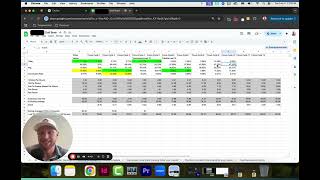
Connor Stirling Peterson shows junior golfers and parents how to use tournament data to find performance gaps holding them back from D1. Track at least ten tournament rounds and measure six metrics: penalty rate, GIR, scrambling, 3-putts, birdie conversion, and off-the-tee performance. Reducing penalties offers the biggest score improvement.
Chapters
All right, what's going on guys? So in this video, I'm going to be covering how to identify what's holding your junior golfer back from playing Division I golf and how to fix those issues. Uh, if you're new to the channel, uh, welcome in. This is all we talk about. We talk about how to help your child play Division I golf and all the nitty-gritty, all the steps that you're going to need to go through in order to make that happen. Meat and potatoes. This isn't going to be a bunch of fluff. There's going to be real stuff that you can implement. If you're coming back to the channel, welcome back. And without further ado, let's go ahead and just hop right into this. Um, and as always, if you guys enjoy the video, please, you know, leave a like. It helps push it out to more people. And once again, if you're new, um, go ahead and subscribe if this is the type of stuff that you've been looking for, um, to help you out. So let's go ahead and dive into this here. So first things first, you need to be able to have a way where you're tracking your child's stats. Either they need to be doing it, you need to be doing it, you both need to be doing it. If you don't have statistics on your junior golfer and the, like, the tournaments they're playing in, the practice that they have, like, you're just not really going to know what's going on. And you're just going to be going based off of your emotions, which isn't going to be a very effective tool to be able to see progress, right? Because if you go out there and you feel one type of way and you say, oh, I think this is going to happen, but you can't actually look at any objective data, what are you going to do? Like, it's just— you're really going to struggle to have long-term progress. So that's step number 1. Um, make sure you're tracking your stats. I use Draw More Circles. There's plenty of other stats apps out there. Um, I like this one the best, obviously. Um, but that's just like foundation number one. If you're not tracking your child's stats, they're not tracking their stats, and they want to play Division 1 golf, they need to start doing that. And if they're not willing to do that, they're not really that serious about accomplishing that goal. Um, so anyway, let's go ahead and dive into this. So in this case, I've got tournament rounds pulled up and I've got the last 10. The reason I approach it that way is we want to be able to see the separation between tournament performance and practice performance, right? Like, that, that's just— you know, we don't want to have those two things muddled together. And then we also want to see a reasonable amount of data. We don't want to just go based off of like, what do we do last round? It's like, it's kind of helpful as far as like, you know, if we say like, okay, what happened here? But it doesn't really make a lot of sense from a long-term planning perspective. So when you're trying to say, okay, what are the big trends that we want to pay attention to, you know, then you're going to want to look at at least, you know, 5, but ideally 10 rounds of data. So in this case, I'm looking at this player's statistics because we're going to be getting on a call pretty soon. And what I want to be able to do is just identify, like, why are we shooting the scores that we're shooting and how do we improve? So in his case, I'm going to pull up his statistics here. So he's at right now 47.22 greens in regulation. I've got scrambling 25.27. We've got 3 putts 11.3, birdie conversion rate 9.1, and then off the tee we're at 14.49. All right, cool. So these are the statistics that we're working with here. We should have a scoring average of about 10.9 over par. And if I look at our statistics here, we have a scoring average of 10. So again, I, you know, in this case, this player is actually outperforming kind of what he should be shooting. Um, but that, that's very helpful for me in kind of identifying, like, and also talking to the player. Like, all right, where do we need to focus here? Now what I'm able to do, this is just a spreadsheet that I built for all my students. Um, but what we can do here is we can say, okay, you know, here's where we're at right now. And this is going to show the amount of improvement that we're going to have. Um, if we make one of these changes. So for example, if I say, let's take our penalty shots down from 14% to 9%, we're going to improve by 0.9 shots. If I do the same thing for greens and regulation, we're going to see that we only improved by 0.76 shots, right? So this gives us an objective way to look at the player's data and say, okay, what's going to be the biggest bang for our buck? And then we can dig into these, uh, on an individual basis, right? Now I can already tell you guys from just experience that this is the biggest problem. I mean, it's not even close. Like, we've got— if we brought that down to zero, that's worth 2.6 shots. And, you know, typically when I'm working with students, the average player— that's not everyone— um, the average player improves by about 3.6 shots per year. That's 70% of the entire improvement just right there. And so this is really, really valuable because, you know, when I talk to this student, it's like Yeah, I'd like to see 3-putts, um, you know, come down as well. You know, like, that's a massive one here. Um, but this penalty rate is just unacceptable. I don't— I, you know, it's like, could his ball striking be better? Sure. Would I like to see him at 70% greens regulation? Absolutely I would. But this— I can't— we can't have that many shots off the tee just being lost because it compounds throughout the rest of his round, right? It's demoralizing. Uh, and not just that, like, he literally can't hit the green regulation 3 times out of, you know, those tee shots, right? So there's no chance— not he's in the rough, it's not, you know, any of those scenarios. It's a penalty. And sometimes it's going to be like off the tee. It's not even going to be like take a drop next to the, you know, pond and you still have a normal approach shot. You're just automatic double bogey. You're doing that 3 times per round. Like, you, you got to consider like that's really going to hurt your ability to score. It doesn't matter how good you hit your irons. And so for him, like, that's one of the things that I'm going to really stress here is saying, okay, let's look at this driver and let's try and map out this ball flight more effectively. Because it's one thing to understand the statistics here, it's another thing to actually be able to say like, what do we do with this? How should we be practicing? And then we need to be able to analyze how have we been practicing and, you know, what's off here, right? Because if I look at these statistics and say, hey, you need to get better off the tee, and then we just kind of like carry on life as normal, low probability that actually gets fixed, right? We need to get down to the root cause of like what's happening here. When we're, you know, struggling off the tee, do we overdraw it? Do we underdraw it? Are we picking too aggressive targets? Are we hitting driver when you shouldn't be hitting driver? Are we not actually practicing our driver? Maybe we're just ripping irons all day and, you know, we feel like driver doesn't really matter. Um, all those things could be factors here. Um, another factor could be, you know, are we not playing that much golf? Are we just hitting balls on the driving range and we're not actually making sure that, you know, this stuff translates? So if I were to go back here and look at this player's statistics in his practice, let's see how things change or if they're fairly similar. All right. So in this case, he's improved pretty significantly in his practice. Now let's also see, this is for outdoor practice. Okay. So he's improved significantly, which is good to see. And the ball striking has improved overall. Short game's improved a lot. Putting's improved pretty significantly. Higher greens in regulation, higher— slightly higher birdie conversion rate, not much. Scrambling is a good bit better. 3-putting is a little bit better. And then let's see where we're at off the tee. Off the tee is a little bit better. And so the other factor here that I would really look at for this particular player is what is the mindset that we're approaching these tournaments with? Because if we're going into these tournaments and saying, okay, well, I need to perform at this level, you know, for example, you know, it seems like this player, he's got a scoring average about 76, 77, you know, in his actual, um, practice rounds, but he's got a scoring average of, you know, roughly 82 in his tournament rounds. And so there could be a psychology element of You know, are we actually, you know, going to these tournaments saying, well, I should shoot 73 because I've shot 73, you know, a handful of times in my practice, and now that's my expectation? Or are we going to tournaments recognizing, okay, cool, like right now we shoot 82 in tournaments. How do we get to 80, 78, 76, and actually pat ourselves on the back when we shoot that 76? How do we pat ourselves on the back when we don't hit balls out of bounds? How do we pat ourselves on the back when we don't 3-putt? And not get carried away with kind of the minutia of, you know, any one of these variables. So anyway, this is a little bit shorter video today, but I really wanted to get you guys clear on how you should actually be going through this process. So again, it starts with a foundation of, of tracking the right tournaments— or I shouldn't track it— tracking the rounds at all, um, being able to segregate out between tournaments and practice, being able to look at a 10-round, 5-round, um, swath of data and then being able to say, okay, here are kind of like the core statistics that we want to be looking at. And you might want to look at different statistics, but these are the ones that I find to be the most effective and most important. So if you guys are new to this, I really encourage looking at each one of these kind of core statistics that I listed out: birdie conversion rate, greens regulation, scrambling, 3-putts penalty rate off the tee, because that tells you pretty much everything the player is going to do. And even you guys can see it allows you to calculate out what a player should shoot pretty accurately. And then we can just say, hey, you know, if we change one of those variables— like, for example, you know, right now we've got this, you know, 47% greens regulation. If we had 3 more attempts to be able to hit the ball on the green by not hitting the ball out of bounds, what would that do to greens regulation? It would have a substantial jump, not by becoming a better iron player, but simply by hitting more greens. And it's important we don't want to look at too small of a data sample. So if we just say, hey, this last tournament was really bad, it doesn't really tell us that much. You could have just had a couple of bad days, you could have gotten in your head a little bit, versus if we see kind of long-term trends, that's really where we want to keep our focus in. So hopefully this is helpful for you guys in kind of understanding, A, the value of actually tracking data, and B, you know, just how to approach these problems. You don't want to just go at it emotionally. You want to be able to say, okay, objectively, this is the area that's going to have the biggest bang for our buck, and then here's what we want to do specifically, and then here's how long we're going to measure that for, and then we're able to see, okay, did we make progress or did we not make progress? That's really what you guys want to approaching this. If you guys want coaching like this, if you want me to actually do this for your junior golfer, there will be a link below this video where you can apply for coaching. Uh, it's pretty straightforward. I'll do all this stuff for you. I'll tell your child exactly which tournaments to play in, what they need to be doing as far as their practice goes. I'll show them how to track their statistics and guide them every step of the way. Every week we'll get on coaching calls so they know exactly what they need to do. You know, you'll know exactly what you need to do as a parent. You'll be able to message me throughout the week if you have any questions or anything like that. So if that's something you guys are interested in, something you think would be helpful for you, just click the link below and you can apply for that. Uh, for everyone else, hopefully you enjoyed the video and I'll see you guys next week.










