How to Get Your Junior Golfer Ranked for Division I Golf in 2025
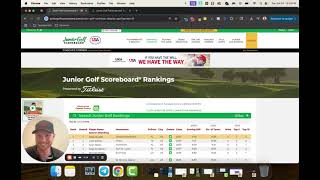
Connor Stirling Peterson breaks down how Division I golf rankings work: wins and top finishes count for 10%, tournament strength for 25%, but scoring differential makes up 65%. He shows parents how to reverse-engineer the scoring average needed for recruitment and explains that four ranked events are required to get ranked, with realistic improvement targets ranging from 1.2 to 4.5 shots per year depending on the player.
Chapters
What is going on, guys? In today's video, I'm going to be covering how to get your junior golfer ranked in 2025. So if you're new here, this is all we talk about, is helping your child get ranked, ultimately with the goal of playing Division 1 golf. And so this is an absolutely crucial piece of information that you need to have. I saw a video the other day of a parent from like a golf camp or something like that. They're talking about how recruiting is such a fog and no one explains what your child needs to do literally to, to get recruited. I'm just like Dude, you need to watch my videos. But hey, you know, it is what it is. So if you guys enjoy this one, go ahead, leave it a like, uh, help push it out to more people who are looking for this kind of help. If you're a returning subscriber, welcome back in. I want to do an update on this video just so you guys have the most up-to-date information, um, so you guys can actually see like how impactful this is. I'm going to go over all the reasons that you want to be ranked and how it benefits you, not just so that coaches can see you, but how you can pace yourself to actually get coaches reaching out to you once June 15th comes around. So if you're in the position right now, you just finished sophomore year, you're in the right spot. Coaches are reaching out to you. Like, that's, that's the reality of this stuff. And I'm not talking about just some, some random D3, you know, uh, program. No disrespect to the D3 programs, but if you guys are watching this, the goal is to play Division 1 golf, right? And we don't want to just play Division 1 golf at some random program no one's ever heard of before. We want to go to real programs. We want to have programs like Stanford or UCLA reaching out to us. Um, a real high-caliber programs. Your child might want to even play professional golf one day. And so that's really who this channel is, is really meant for, um, just because no one talks about that. D3, you can get placed out there, you know, it can, it can kind of work out for you. But Division 1, you need to have your ducks in a row. So that's really the point of this. And that's— if you follow this information, you can be in that position, um, or at least you know how to get into that position. So excited to dig into it with you guys. So I want to start off first by helping you guys just understand how rankings work, uh, and then I'll go into the specifics of why it's valuable, and then I'll talk about the literal, like, okay, how do we actually, like, get ranked? Like, what's the process look like? So first thing I want to draw your attention to here, as you can see over on this right-hand side, we've got 10%, you know, wins, top 5, top 10, strength of tournaments, scoring differential. So 10% is just how does your child finish in the tournament, right? So compared to like other ranked kids, 10% of the ranking is just attributed to where they finish the tournament. It's almost nothing. And so if you're looking at tournaments, you're like, oh well, my child finished here versus, you know, whatever other kids in this, um, in this field— doesn't matter. Like, it's not something I want you to concern yourself with whatsoever. I don't want you to look at other kids and say, oh well, you know, they're here, my kid should be able to do it. Don't do that. Um, it's kind of like when your child is 2 or 1 and a half or whatever you're looking at, I'm just like, oh, they can do this really well, and you know, maybe they're behind this. It's just like, don't compare them to other kids. Like, meet them where they're at and focus on what they need to get better, right? So that's thing number one. Next one you'll see here is strength of tournaments, 25%, right? This is how good the other players are in the tournament. It's not a variable you can control. You cannot control who comes and plays in the event, right? If you play in better tournaments over time, which you should be doing if you're following this process and you're playing the right events, this will take care of itself. But it's not something you can go out and intentionally change. Then we have scoring differential. This is the Mac Daddy. This is the one that actually does something. This is the relationship of the difficulty of the golf course to whatever your child is shooting, right? So just to be clear, this is not meaning that this player shoots 10-under on average. This is more of a representation of how they're playing very hard golf courses to, you know, the relation— the scores they're shooting on average, right? So in this case, let me just go ahead and pull it up. So he's got a scoring average of 69.5, which is insane, to be clear. And he's doing that on really long golf courses. So it's like, this is the best player in the world for a reason. Um, I mean, he's almost a shot better than number 3, which is insane. Um, but again, here what we don't see is a scoring average of like 62 or something like that. So it's like 69.5 or 69.6, whatever he's at, is absurd. It's really, really good. Um, and I think he's even made like the cut on the PGA Tour or something like that. So I mean, that tells you what you need to know. Um, but anyway, that's what that number is actually showing you. So in this case, player scoring differential of 9, you can see scoring average about 71.5. Um, and then they've got, you know, pretty long golf courses that they're playing as well, right? So that's, that's what that scoring differential is. Now, why is that valuable? Well, if we go over here to class of 2025, um, If we go to rankings and honors, college signings, you can see all the players who were recruited back to 2017. You can see this for boys and girls. You can sort by the class rank, or yeah, where they're ranked in their class, and you can see their scoring differential and what program recruited them. So by having this information, you can use this to reverse engineer where you would like to be, um, to be able to get recruited to the programs you want to go to, right? So it's not just like, oh hey, you know, I want to play Division 1 golf. It's like, all right, cool, you need to get to a scoring differential of, you know, realistically I'd like to see a player by this time their sophomore year at a scoring differential of like -1, they're getting recruited. Um, if they're at -2, they're gonna have some real programs reaching out to them. So I got a couple different players kind of in that range right now. And so, you know, no joke, I mean, they've got, you know, 5 and 13 programs reaching out to them respectively, um, just to my knowledge at this moment. And so it's tremendously valuable to be able to say like, okay, cool, where do we want to go? And then the other side of this coin is where are we at now? So like, odds are your child's not in this range, right? And so those are the two main variables. That's the first big reason why you want your child to be ranked, is this, so you can understand that, right? So like, people tell me like, oh well, Connor, I don't care about, you know, if my kid's the best. Usually it's not parents, usually it's golf coaches who do this. I don't care where your kid's at at 12. I just want them to be the best 17-year-old. It's like, you don't just roll out of bed and then all of a sudden the golf swing just clicks and everything works and you're the best player in the world. That's not how this stuff works. Like, that's not how literally anything works, you know? It's like, you don't go from being a D student that have really good study habits to being an A student and getting, you know, going to Harvard. Like, it's just not reality. Like, players who are good tend to be good relatively fast, um, and even if they pick up the game later, they improve quickly, right? So just a fundamental in this: players who are going to get recruited tend to improve faster than average. Like, that's just— it's usually not that you're all— you start off really good when you're 3 years old and you just maintain that level of, like, goodness, um, relative to everyone. Usually it's you might pick it up when you're 10, 11, 12, 13 years old And then you either have an absurd amount of talent for no reason, and then boom, you, you're there, or you're following a proven process. You're working with someone who has a proven track record to be able to make that, that improvement happen. Now I'm just, I can tell you straight up from, you know, junior golfers on Junior Golf Scoreboard, the average player improves by about 1.19 shots per year. And so if you figure out wherever your child's at, or maybe they're already ranked, you may be able to see— odds are they're probably not gonna be able to get recruited and get to the numbers that I'm talking about just improving that rate. Odds are that's not going to happen. So if they're doing the kind of like normal run-of-the-mill go get golf lessons and, you know, keep working on the golf swing until something clicks, that's not going to work for them. When I work with students, the average player applying my process— I have to kind of segregate that because I can tell a kid, hey, do this, and they don't do it. It's not really a reflection on my process. Sure, it's a reflection on, you know, maybe I need to get better at kicking those kids. Um, and that's why I'm even bringing it up in this video. Um, the players that work this process, improving about by about 4.5 shots per year, which is a little bit faster than Charlie Woods. So it's highly, highly, highly effective. Um, if that's something you're interested in, um, and you're like, hey, you know, this all makes sense, then I have a link below where you can fill out an application to work with me, um, and we can kind of talk about what that would look like for your child if you want kind of the accelerated path and you want to give them the best probability of being able to make this happen. Otherwise, odds are they probably got about 2% chance, being generous, of playing Division 1 golf. That's just kind of like the statistics, so I want to be clear with you on what that actually is. So anyway, back into the video here. The importance here, number one, is that gap, right? Understanding where your child needs to get to, where they're at right now, and understanding the amount of time that they have in order to accomplish that goal, right? So if they're 12 or if they're 13 and they start tracking toward that goal, they don't need to improve by as many shots per year as if they had less time. That's typically how that's going to go, right? If they're able to get in position earlier, makes life a lot easier, makes it lower stress, right? So typically that's where you want to start thinking about this stuff. Not saying it can't work for you if your kid is, you know, 16 or 17. I've had that with players where they come to me and they've got a scoring differential of 3, you know, when they're a junior, and it's like, hey, I need to get better really, really fast. And, you know, we've been able to do that and get them to a scoring differential of, you know, -1.5 and get them recruited to play Division 1 golf with multiple offers, right? But it's not my recommendation. It's not the first thing I want to do. It's more stressful for the kid, um, and it's not my preference as a coach. I'd rather, you know, get the kid, you know, younger so we have more time. But point being here, get your kid ranked. So how do we actually go ahead and do that? Well, you're going to go over here to search for tournaments, and you're going to look up your state. Um, so obviously some states are going to be a little bit more friendly than others. Um, you're definitely going to want to— let's see here. Is that halves? Yeah. So I would really recommend that we, you know, look at whatever your state is. And, you know, let's just go ahead and do year as well. Let's go ahead and search. And so this will show you all the tournaments that are ranked in your state that you can play in, that you're going to be ranked in. So let's go ahead and rather than doing the, the year thing here, let's see if it'll do anything smart. Okay, beautiful. So this is June 14th right now. It's showing us all the tournaments that are ranked at the current moment, and you can see, you know, if you're in California, like, you've got— you're spoiled for choice. Um, that said, the next layer of this is, okay, where are the right tournaments to play in, right, for your child's skill level? But anyway, just so you guys are all clear, the way to get ranked is you need to play in 4 of these. Right? So the reason I said look up, up your state is I don't want you guys traveling all over the country blowtorching money because you want to get attention when you're not even ranked. That's ridiculous. Um, your child needs to get ranked. You need to be able to see where they're at, and then you can make an intelligent conversation about like, okay, cool, we're at here today and we want to get here. What do we need to do to bridge that? How much do we need to improve? And then you can track it. You can literally go month over month, quarter over quarter. Are we improving at the rate that we need to improve by? And again, that's something that I do with my students. That's how we have a lot of clarity on where they're at. And you know, they know what they need to do specifically. And I need to know what I need to do as a coach, right? I need— I know what I need to do and whether or not I'm improving, right? And whether or not that child is improving, right? So anyway, you need to plan for these. Um, just go ahead and find them, you know, pause this video if you have to and just like sit down and do this. Um, like I can't stress this enough. I wish that everyone would just, you know, sit down and be ranked. Like that would just be so fantastic, right? Because then you have clarity, right? It's like, not everyone's gonna play Division 1 golf. Like, we can all accept that. There's like 600 spots in total, um, per year. And there's— I last I checked, it was like 3.5 million junior golfers. You know, granted that, you know, divide that out by class, but, you know, still, it's like, there's not that many spots, and there's a ton of junior golfers, and they're getting better every year. But if you just know, be like, hey, we've got— we're 12 years old and we have a scoring differential of 10. And we want to get to a negative 2, and we need to do that over the next, whatever that would be, 3, you know, 3 or 4 years, right? Okay, cool. So we need to improve by 12 shots over, let's say, 4 years. We need to improve by 3 shots per year. Okay, fantastic. Now we need to go ahead and get a plan. We need to figure out what are we going to do to improve by 3 shots per year on average, right? What are the specific actions that we're going to take? That's just like the beauty of being ranked. So when coaches tell me it's just like, oh, it doesn't matter, you don't have to care about being right, it doesn't make any sense to me because like at minimum it's just a measurement tool. And if you think that you can coach without any measurement, I think you're an idiot. Like, I'm just like, there's no way I can get around that. It's just like, if you're not measuring stuff as a coach, if your coach is not measuring how you're improving, they're just not that sophisticated as a coach. Um, and this is just becoming like, this is just a general trend. Like, you guys all know this, like data Big data, AI, like all those things are developing fields. Every sport is using analytics, you know, like it or not. Like that's just how this stuff works. It's not the eye test. It's not Ben Hogan hitting balls until his hands bleed anymore. You know, it's like, it's being able to use data to be able to model out the future and say, okay, we're going to take this specific action and then see that action play itself out. Right. So that's really how this works now. I'm going to get into the last half of this video here to really talk to you guys about how do you figure out which tournament to play in, right? Because this is one of the questions that comes to me all the time. If your child has a scoring average of 85, then yes, they should be ranked. They definitely want to get in that position. They might be in a situation though, and I've had this with students, where, you know, let's say we're in a place that just doesn't have a lot of, you know, tournament opportunities. Let's say they're in like an Iowa or, or Oklahoma or something like that. It's not all is lost. It's just a reality of, okay, what are the tournaments that are available? What are the tournaments that are closest to you guys? And let's figure out how to get ranked. And so, you know, that's happened for, you know, some of those students. But we want to make sure that we just have this in perspective, right? So it's like, hey, we need to shoot 78, let's say, to be able to become— you know, not even— I don't want you to worry about being competitive, to just be able to play in those terms. We need to both shoot 78. And we shoot 85. Well, then we know, okay, cool, we still want to play in tournaments. Maybe we're not playing in ranked tournaments, we still want to play in tournaments. So we get to the place where we can shoot that 78, right? Maybe we're starting off at 85. Maybe that means we've got a year or two before we're even going to compete in those tournaments. But we know, and we know whether we're moving toward it or if we're not. So that's super, super crucial, just, you know, for all you guys who are in that spot. So if your child's shooting like 85, if they could get ranked, fantastic. But if they don't have tournaments where they can get ranked, that's fine. But you know, hey, we need to get those scores down and we need to do that in this period of time, right? So that's one of the reasons I advocate for stat tracking. That's not really what this video is about, um, but if you're not already tracking your child's stats, start doing it. There's plenty of great stat tracking tools out there. So once you've got that, once your child is in that position, so you want to get ranked, and then it becomes a question of which tournaments should we play in. So not just like ranked tournaments, which tournament should we play in among the ranked tournaments? For that question, you want to look at how hard are the tournaments in general. You want to play the harder tournaments. So how do I define harder? Well, harder means longer typically, right? So if, if we're trying to make a golf course hard in general, we want longer So we have longer approach shots, deeper rough, more trees, hard greens, you know, fast greens. Like, that's how you make a golf course hard. For the most part, most of those things are not going to be able to be, you know, done. Like, they're not just going to get the rough super thick for literally any tournament. Um, but like, that's just not going to happen. So it's like, for the most part, they're just going to make the golf courses longer. And when you go on the PGA Tour, they're kind of already capped out at about 7,500 yards. So instead of making the golf course necessarily longer, although they do try to do that, they're just gonna make the green super fast and make the rough thick. That's how they're going to do it. So anyway, you want to play those longer golf courses. You can quickly look at this and say, okay, cool, I've got 2 tournaments as an option. Let's assume that you can comfortably play both of these tournament lengths. Um, you got a 6,400-yard and a 6,800-yard golf course, and so one's got a course rating of 73 and the other has a course rating 71.5. Play the 6,800-yard. Like, it's, it, it's that simple. Um, assuming that they're both, you know, within a reasonable distance and makes sense for where you guys are at, play the harder one. Like, that, that's how to approach this. Um, so that's within all the ranked tournaments. If you're in California, you might be able to get away with never playing AJGA. Like, a lot of times I talk about AJGA, and by all means, like, AJGA is great, but AJGA is honestly better for those kind of like, you know, places like Iowa where you just don't have as many opportunities to play, you know, ranked events. So, you know, if you're in a place like California, you might be able to get around with just like Toyota Cup, and that, that might be good enough, you know. But on the flip side, I just want to make sure you're playing in the best events possible. Now I will say just like one little caveat before you close up this video with AJGA. I do not recommend playing in AJGA until you have a scoring average around 77. If you do not have the scoring average around 77, better to get that scoring average there and then play in the AJGA events, because otherwise you won't be able to qualify through them. And the more times you try, the kind of like more they bias against giving you more opportunities. And so better to just be in that spot where you can reasonably qualify, um, than just try and like, you know, shoot your shot and you'll be shooting 82 and go out there and shoot 89 and feel all embarrassed. And it's just like, you want to make sure that the tournaments are lined up to where your child is at. So that's all I'll leave you guys. Once again, if you guys want help with this, you want me to build out your entire tournament schedule, if you want me to help you understand exactly where your child's at, how much they need to improve by, and specifically what they need to do to get there— not just kind of like vague stuff, like literally I will build their practice plan and tell them exactly what to do, exactly what drills to do exactly how many balls to hit, how hard it needs to be, everything, like micromanagement of them so that they can actually accomplish their goals regardless of where they're at, whether they're an elite player trying to get recruited to one of the best programs in the country, or they're just getting started. Let's be clear, they're still playing in tournaments. Um, if you're a complete beginner, this is not for you at all. Um, they're just getting started, they're serious, but maybe they're still stuck shooting in, you know, let's say the 90s, and they're trying to say, how do I accelerate this path? I really want to encourage you to click the link, uh, below, fill out the application, and we talk about what it would look like to work together. I hope you guys enjoyed this video, and if you did, go ahead and leave a like. That way more parents actually know what it takes to get recruited to play Division 1 golf. Or keep it to yourself, but no, seriously, like, push out to more people. Um, and go ahead and subscribe if you're new here. Um, welcome in. Um, once again, this is all we talk about, so happy to have you and look forward to seeing you next week.










