How To Tell If Your Child Is On Track For D1 Golf (By Grade Level)
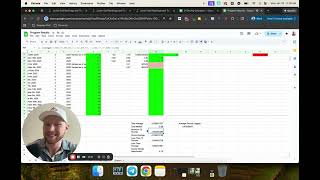
A coach shows parents how to calculate if their child can reach D1 golf by comparing their current scoring differential to program targets using Junior Golf Scoreboard data. He breaks down the math: elite programs need a differential around –5 to –6, and coached players improve roughly 4.5 shots per year with consistent play, while average improvement is 1.2 shots yearly.
Chapters
All right, what's going on guys? In today's video, I'm going to be covering how to tell if your child's on track for Division I golf. This is one of the most common questions that I get. Um, it is, to be quite honest, one of the most challenging things to answer, not because it's a difficult problem per se, but because there's no one-size-fits-all answer. There's a number of variables that go into this, and so I want to in this video walk you through what those variables are so that you can figure this out for yourself. So if you guys enjoyed this video, if you get— do leave it a like. Um, if you're new to the channel, go ahead and subscribe. Um, if you want to learn more about what it takes to help your child play Division 1 golf, that's all this channel is about. It's a very niche topic, and so my goal is to really give you guys very precise answers to what it actually takes and what you actually need to do. There's a lot of people out there teaching to do a bunch of random stuff Um, but I try to be very clear about, you know, the way I present this stuff. So without further ado, let's go ahead and jump right into it. So, um, first things first, we got to do math here. So if you're uncomfortable with math, that's okay. If you want direct help from me, there's actually a link below where you can apply to work with me. I do all the math for you. I'll show you what, you know, is required to actually make this stuff work. That said, hopefully you're comfortable doing a little bit of math because we're going to need to be able to if we want to play division 1 golf here. So first things first, this is a little calculator that I built for myself. Um, no, it's not available for download. Just watch, follow along. Hopefully you can do some math on your calculator or pull up a spreadsheet. And again, if you need help, go ahead and just fill out one of the applications below. All right, so we want to start with what is our target, where are we trying to get to here, right? So the way we determine that is not just some random number that we make up. We go over to Junior Golf Scoreboard, Rankings and Honors, College Signings. We filter so we can look at, you know, by year. I'm not using 2026 yet because we don't have all the recruits in. We're going to look at where these players are ranked in their class. Specifically want to look for the scoring differential. Now if you're looking at, hey, you know, what's it take to play Division 1 golf, there's different ways you could approach this, right? You could scroll all the way down and find the worst player who got recruited to play Division 1 golf, right? Um, yeah, not picking on this kid, but you you know, this kid in this particular case, 4.75, right? He was ranked almost 2,000th in his class. I would not recommend using that strategy. I would recommend going through and looking at and saying, well, you know, when is it— you know, pretty much everyone's getting recruited to play Division 1 golf. You know, how good do you have to be, right? Or when does it become most probable? I would say typically that tends to happen about rank 300 and better, where you kind of see pretty much all these players playing Division 1 golf. If they're playing D2 or D3, they're playing at a pretty good D2 or D3 program. So I like to say around like -2, -2.5 is a really good place to aim for if you're trying to play general Division 1 golf. Now if you're trying to play at UCLA, well then you might need to aim a little bit higher, right? We need— I need to aim closer to, you know, -5, -6. Now the way you can do this, if there's a particular program you want to look at, is look for the school and then try to average out where those players end up, you know, where that school ends up recruiting players. And this is true for both boys and girls, right? Now, if you have a particular program, you want to be super precise about it, you can actually go by year and say, okay, well, what they recruiting this year, the prior year, etc., etc. That'll help you understand what's going on there as well. So that's the first little variable we want to have. We want to have where we're trying to get to, right? Then the next variable that we want to have is where are we at right now. So you might be watching this video and your child might not be ranked at all, in which case that's step number one for you guys. Doesn't matter if they're a junior, doesn't matter if they're 10 years old. First thing you really want to have is, you know, where are they, they ranked. And if they're not able to get ranked— so you have a 10-year-old and they're just not comfortable playing longer, you know, or, or just, um, you know, tournaments with more holes in it. Maybe they just— they're 9 years old, they just got 10 years old, um, just had their birthday, and they're still used to playing 9 holes, right? So then you know, in order to play, to be ranked, you need to be playing 36-hole events. So the step for them might be, hey, let's get comfortable playing in 18-hole events, right? We're not so much worried about, hey, we need to be on this pacing because we have plenty of time. Realistically, we need to get comfortable playing more golf, right? Let's just say your child's in a spot where, you know, they're capable of playing 36-hole events and, you know, now they need to get ranked. Well, the next thing you want to do here is go over to Tournaments and Results, search for tournaments, and then just go ahead here and search, you know, your state. You know, I'll use California as an example, um, and just search for tournaments. Like, there's literally every tournament that's going to be ranked is just on Junior Golf Scoreboard. You can search it, you can look it up, and there you go, right? Now, once your child is ranked, they're gonna get a scoring differential. Boom. So we got the scoring differential here. So now we can say, hey, we want to get, you know, let's in this case say 4.27, right? And let's say our scoring, our target's still 5, right? And how many years do we have to improve? That's the next question here. So when we think about this, ideally we want to be doing this math based off of junior year. Now, if you wanted to push it up just a little bit for June or June 15th of sophomore year, so going into junior year, That's technically when coaches can reach out. Typically what I see is a -1.5 scoring differential is a great spot to be in. If you're anywhere better than that, you're gonna have a number of programs reaching out to your child, provided they've got good grades and all that stuff. Um, they're going to be in a position where they've got a lot of options there. So that's, that's really the sweet spot where we'd like to be. But again, when they actually get recruited, that's a little bit different. So you can again be the judge of this. That's why there's no one-size-fits-all, you know, perfect answer. And that's why I'm helping you guys go through the math, what's actually required to make this stuff work out. Okay, so let's take Jackson. Here's this example. Realistically, we've got another year until he's a sophomore, and then realistically, let's just call it 2 years, right? So we got 2 years ahead of us. If we wanted to get to a -5 scoring differential, we need to improve by about 4.6 shots per year. Now, we want to be a little bit more conservative, so we got to a -3 scoring differential. That's very— yeah, again, you can dynamically change this for whatever makes sense for Now once you've got that, if you want to do the math here, right, you take these two numbers, add them up, right, so that's 7.27, and divide it by 2. That gets you 3.6. This gets you the number of shots that your child needs to improve per year to reach their goals, right? So we've got a lot of clarity here. We know where we're at, you know, we're trying to get to, you know, how much time we have, you know, how fast we need to get there, right? It's like just the same way it's like you want to go, you know, get to a particular place on the road, right? You look at the GPS and it's like, how long is it going to take me to get there? Out there. It's like, or you might look at it and be like, hey, you know, I need to drive a little bit faster in order to get there on time. Now obviously not an endorsement of speeding, that's just we all understand this concept, right? Now once we got that, it's important that we look at, okay, well, what's realistic? Because if I told you, hey, in order to get to that spot at the other side of town in the amount of time you need to, and you need to drive 200 miles per hour in order to get there, you'd be like, Yeah, I'm not getting there. I'm not getting there on time. You know, I gotta, I gotta reassess when I expect to get there, right? Um, on the flip side, if I'm just like, yeah, you drive about 20 miles an hour, you'd be like, yeah, that's no problem. I don't, I don't even have to think about that. I know I'm gonna be able to drive at least 20 miles an hour right now. For the most part, most parents don't know this stuff, right? So I've got other videos where I link to this explicitly and I go through this in detail, but the average player on junior golf scoreboard improves by about 1.2 shots per year. And so that's really important to understand when you're trying to say, well, is my child on track? You need to be measuring this stuff. If you're not already measuring it, it's going to be challenging, right? Um, the other thing that can be really, really challenging is the improvement curve isn't always linear, right? Sometimes you have to jump. Um, and that's not like to say— I will, like, full disclosure, the best players that I work with honestly don't have a huge difference in how fast they improve compared to the players who aren't quite as good. So, but I think that that has a little bit more to do with the methodology of the way that I approach things and less, um, the absolute scores, right? So I would assume that if I was working with a student who has a scoring differential of -10, which I don't work with any student who's that good, um, then obviously it'd be very, very difficult to get to from -10 to a -11, right? Like we're really like shaving or splitting hairs there. But at the same time, if I work with a student who has a scoring differential of 2, it's not crazy for me to be like, oh, they could be at -2. Within a year. In the same way, if I have a student who has a scoring differential of 10, it's not crazy for them to have a scoring differential negative— or negative— not crazy for them to have a scoring differential of 6 within, you know, a year, right? Those are, those are still pretty similar when you kind of look at like the broad spectrum of things. Now, are there exceptions? Of course there are, but that's kind of what it looks like for me. But anyway, backing up here, average player on Junior Golf Scoreboard improves by about 1.2 shots per year. So that's an important kind of like think about it like a speed limit, right? It's like, you know, if you don't know what that is, just assume it's going to be about 1.2. Um, and also just this kind of like, well, a little point here. So when I talk about the average player I work with improves by about 4 shots per year, this is my data. You can see all the players that I'm tracking. You can see how I'm getting these numbers, or starting score differential, their current scoring differential, number of months they've worked with me, their grad year. Um, you know, sometimes there's cases for these where they don't get ranked until a particular date, so that's why I started doing that calculation. Also work with a number of students where they're not currently ranked It's something we need to do, um, just hasn't been a priority at the moment though, so I don't take those into consideration because I want to make sure this is as objective as possible right now. Once I have these, you know, it's not like every student I work with is just like instantly a superstar. You know, in some cases, a couple of players have actually gotten worse, and so, you know, that's, that's really important to, you know, disclose there. Um, we've also got some students who are improving by like 7, 8, you know, 10 shots, and in my book, that's, that's pretty absurd. I'm not ever going to tell you, hey, you know, this is something that's realistic that your child is going to do. Um, so I like to look at averages here. I tell my students I want a minimum of 1 round per week, and I've done a lot of things to try and get that number up over time. Right now, across all those players, about 4.55 as the average improvement for the player who can just track 1 round per week. Now, players who do more than that doesn't necessarily have a huge impact. Um, players who are just above average, which is about 9.5 rounds per week, they're improving by about 4 shots. Players who do less than that, or less than the average, less than those 9.4. That average is about 1.29, so pretty close to the average on Junior Golf Scoreboard here. So if you were looking at your child's game and you find them— either they don't track statistics, or they do track statistics but they don't really do it very often, or they spend the majority of their time on the driving ranges to do some variation drills— then I think it's very reasonable to anticipate that they're going to improve somewhere in the range of, you know, 1.2 shots per year. And so anyway, brings us back to our point. Now, if this was your child, right, you saw, hey, we've got a scoring differential of 4.27, we need to get to -3, we need to improve by 3.6 shots per year, and our average improvement should be about 1.2 shots per year, assuming we're just doing normal stuff, then you can just kind of know, hey, this probably isn't realistic to pull off, right? That, that's the important caveat here. Now, I've got noted here— this is an older statistic, but you know, it's still kind of within range— average player I work with as you guys saw, proven by roughly, you know, 4 shots give or take, depending on how much adherence you want to, you know, think that your child's going to have. Obviously, if they're not going to do the thing, right, they're not going to actually go out and play at least 1 round per week, then they're not going to achieve their goals. Um, but it obviously changes kind of the speed that we're actually able to move at, right? And so this is really why I say I can't give one, you know, exact solid answer. I have to look at it from the perspective of Where are we at right now? Where are we trying to get to? How much, you know, how much time do we have, um, in order to figure this out? Now let me show you guys why it makes sense. It's like, your child's younger, right? Like, the math all changes here. You know, let's say their scoring differential's, I don't know, like 7 or something like that, and they just want to play Division 1 golf, right? They only need to improve by 1.8 shots per year. You know, let's say, you know, they're 10 years old, right? So we got 6 years in front of us. You know, we got current scoring differential of 10. It's like, okay, we need to improve by 2 shots per year to get to a -2 scoring differential. High probability they're going to be able to play Division 1 golf, right? Is it still above average than you improve by? Yes, absolutely. When I say also the players who end up playing Division 1 golf tend to improve faster than average, I would absolutely say that. Typically what you'd actually find if you actually dig into the data is that players who improve by only about 1.2 shots per year usually quit. Um, they're usually not improving fast enough that they perceive that the effort that they're putting in is worth it. Um, and so yeah, that's how you really figure that thing out. Um, just to kind of like finish this thought process off, your child also might be in a spot where they've worked really hard at golf for a long period of time, and they might have improved pretty substantially. Maybe you're looking at this last year and they're like, oh dang, they improved by like 5 shots or 10 shots, something absurd, right? It's important to understand that that method doesn't necessarily, you know, pan out here. Right? So if, if that is continuous and you're continuously getting that progress where they're improving by like a shot per month, good for you. Honestly, you know, keep doing that as long as you can. Um, but it's not surprising if they run up and like hit into a little wall, right? So they got a lot of progress at the beginning and they kind of flatten out, right? If you see that, that's where you want to jump in here and change stuff. You do not want to take the perspective of, well, if we just work even harder, then we're going to get that back. That's usually not how that goes. So typically it's where players tend to stall out is around 76, 78 as a scoring average. That's where they tend to get stuck because you can pretty much get there pretty quickly just by working hard. Once you kind of get into that range, you start running into some problems. Now obviously you can be more deliberate earlier, but that's really where you're going to run into a hard brick wall as far as you can't just do random stuff anymore, right? That's, that's where the upper limit of their scores might be like 70 or 71 or 72 or something like that. Um, they're gonna have a very hard time— you're probably not seeing them shoot in the mid-60s. Essentially ever, right? And so that's where they need to be a little bit more deliberate. And that's how we're able to go back to more linear growth because we know exactly where specifically in their game they need to improve at, right? It's not just, hey, let me go work hard at everything. Whereas at the beginning they just have low-hanging fruit everywhere. They just roll out of bed and like work on anything and they'll literally get better versus as they get better and better and better, there's more things that are just like about as good as they're going to get, right? So we have to be a little bit more deliberate about where we're going to put that effort. So Hopefully this video makes sense. Hopefully this video gives you a little bit more clarity on whether your child's on track, and you know, if they're not, what you might need to do. So this is something that you want more help with, again, I've got links down in the description. You can apply to work with me directly, fill out an application, again, just to make sure that they're in a position where I feel like I can help them, and then we'll talk over their specific situation, look at, you know, what they're working with, and then tell them where to go from there. At the same time, maybe you're not quite there yet, maybe not ready to make that type of investment, but you're just like, hey, you know, how do we, how do we actually navigate this tournament stuff? Like, I get that there's, you know, ranked tournaments, but like, which ones should we play in and like what order? And you know, what if my kid's already pretty good? You know, what about AJGA? All that stuff. If that's something you're interested in, that's something you want help with, again, I've got a link, um, below for my whole tournament schedule methodology. So you can get that. If you want to add on a one-on-one call with me, um, that is an offer that's just with that particular thing. I don't sell one-on-one time as like a default. It's just benefit for you, um, or it's something you can add on if you just want to have that much more clarity and certainty that, hey, we're playing in the stuff that we need to be playing in. So, um, hopefully this video is helpful for you guys. I'll see you guys in the next one. Go check out some of the other videos on the channel about practice and tournament selection, all that kind of stuff, and I'm sure we'll have a link somewhere around here to those videos as well. All right, see you guys in the next one.










