How To Tell If Your Child Is On Track For D1 Golf
A golf coach who has placed seven athletes in D1 programs shows parents how to use scoring data and a custom spreadsheet to track whether their child is on pace for a Division I scholarship. Only 3% of junior golfers reach D1. The method benchmarks against target schools and projects when a player might hit the recruiting standard.
Chapters
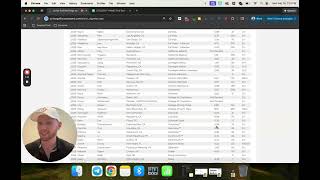
All right, in this video I'm going to be covering how to tell if your child is on track to play at their goal programs to play Division 1 golf. Um, so you guys are new to the channel, this is all we talk about is helping junior golfers develop to play Division 1 golf. Uh, if you're a returning subscriber, welcome back, always a pleasure to have you. Um, I want to be super clear in this video, in no way am I suggesting that by watching this video your child has a high probability of playing Division 1 golf. Almost certainly they have essentially no chance of playing Division 1 golf. The average, you know, I think the percentage of players who end up playing Division 1 golf is a little under 3% or right around 3%. It's technically harder than getting into Harvard. So, you know, by watching this video, is that going to make a major change for your child? Probably not. But this is just intended to help educate you based off of, you know, the other players that I work with, players who I have helped get recruited to play Division 1 golf. Helped 7 get recruited in the last 2 years to Division 1 programs. And so this is just passing down the lessons that I've learned working with those players. And, you know, at this point over 50 other ones. About 67% of the students that I work with are on track to play Division I golf. Average age is about 8th grade to freshman year. And again, no, no implication there that means anything for, for you, your child. Um, you guys are, you know, could be in all sorts of circumstances. So this is just, again, to help you guys understand how this process works and just, you know, for entertainment purposes. So anyway, With all that aside, let's talk about figuring out if they're on pace. So the first thing you need to do is go to Junior Golf Scoreboard, rankings and honors, college signings. Once you've got that, you're gonna be able to see for boys and girls all the players recruited back to 2018. What you then want to do is sort by school if there's a particular program your child wants to go to, and that's going to be the context of this video. So the reason I'm doing this is I just had a student, uh, reach out to me who they're trying to figure out essentially a variation of this, of a particular camp that they should go to or not go to. So essentially what you want to do is go down and find the program that you're interested in and then kind of note down like, hey, what range should they recruit in? So I built a spreadsheet for all my students here, and so we see a couple things. Number one, we're going to be able to see where that player is at, you know, as far as their scoring differential and how that's trending. If your child's not ranked, they don't have a scoring differential, Go back and do that. Do not pass go, go. Do not collect $200. Go get them ranked, then deal with the rest of the stuff. If your child is not ranked, you have no business asking these questions. Um, so go do that first. There's other videos on the channel that'll walk you through how to do that. Um, once you've got that, what I've essentially done here is just noted out, you know, 3 different examples here: Princeton, Yale, Dartmouth, Columbia. This is specifically for girls, and I just noted down the scoring differential that those programs recruited these players at. This is all from 2026. In theory, you could go back to 2025, '24, '23, etc. But just for the sake of this, you know, example here, this is how far back that I went. So obviously the programs change over time as well. And so then what I did is said, okay, well, what's the average of those numbers? And then what's the average of those numbers, right? So what's the average of those averages, right? So that gets me to -4.07. Now there's different ways we can interpret this. We could say, hey, we want to aim as high as possible, in which case we could go for the -4.92. We could say, hey, we want to get to -6.5 to be higher than the highest. Um, you know, we could aim really low and say, well, -2.5 did it for somebody, it might be able to do it for me. I'm not a big fan of any of those. I'm a big fan of looking at the averages and saying, let's just try and shoot for the average. Now, once we got that, the way this spreadsheet works for me is I've got a little goal reference here. So we can say like, hey, are we probable or on track? To reach this particular goal right now. This lights up bright green if it's improbable that the player is going to continue and accomplish this goal. So anything over -10 I rank as improbable just because nobody does it on junior golf scoreboard. Nobody has a -10 scoring differential. So I can just say, hey, we're in a really good spot, keep up the good work. We don't need to get too specific about whatever we're aiming for. We're in a good spot. Okay, and so what we want to see here is tracking the scoring differential progress year— or not even year over year, month over month— and say like, How fast are we improving month over month, but also how fast are we improving annually? We want to be able to quantify that. We don't want to just go out there and say, I'm working hard, I think I'm getting better, but I don't know. We want to be able to have numbers to show us how fast are we improving so we can make projections. Right now, in this case, taking the most recent number for this player, we got a short-term kind of projection here, right? So this is like long-term, like, are you on track to reach this particular goal? That you've mathematically quantified by doing your homework of actually going to this page and reading off these numbers and putting them into a spreadsheet. So this is something you guys want help with, or you just want me to give you this spreadsheet along with all the other things that I would help you do if you're working together. There's an application below, um, where you can apply to work with me based on your child's situation. I'll be able to kind of tell you whether or not I can help you, what that would look like. If it makes sense, we'll schedule a call, talk it over. So that's something you're interested in, link below in the description. Um, you can fill out that application. But anyway, I'm just doing the simple math here, just saying like, hey, here's all the times that, you know, these programs recruited players. Here's the average, setting that as our goal, comparing that to our average progress and where we're at right now today. We're able to say, hey, here's how fast we're improving on average, right? And then from there, we can look at that annual pace. We can say, well, where are we at today? And then we can say, well, how many months out into the future do we want to, to measure ourselves? Say like, hey, I want to be there by June 15th of sophomore year. Okay, cool. Yeah, I want to be there by September, you know, going into my junior year. All right, cool. So all we really need to do there is say like, okay, well, I've got this many months ahead of me, and then take our annual number and divide it by 12. And then in this case, we're just doing a little bit of quick math to say like, hey, you know, we're here and we're going to improve by, you know, this much per month over this many months gives us this particular target, right? So over the next 4 months, we would expect to be here, right? Or the next 7 months, we'd expect to be here based on our actual numbers. So when you're trying to figure out like, hey, is my child actually on track to play Division 1 golf or play at this particular program, it's just sitting down and doing the math and saying like, okay, cool, where are we at? You know, what, what's actually, you know, how fast are we actually improving? What's our actual target? And that way, if you're looking at these numbers, we're just like, oh, that's absurd. Like, if we keep improving at this pace, then you can be like, all right, cool, let it ride, you know, keep coasting, don't stress yourself out. On the flip side, if you're behind, then you know, hey, we need to get this thing sorted out. That's really the most important thing I want to kind of pass along to you guys in this video. And, you know, yeah, there is some math that needs to be done in order to, to really be able to understand what's going on. But, you know, that's how these things are, right? If we're trying to accomplish a specific goal We need to be specific about how fast we're going to get there and all that. So hopefully this makes sense. If you guys have other related questions to this topic, go ahead and comment below, let me know. I'd be happy to go into some of these deep dives. I always love when you guys come up with videos for me because I don't have to work— do the work of coming up with them. Um, obviously very niche subject, so if you know other people in this space who need help, need direction with college recruiting, please go ahead and share this video to them. Helps, you know, grow the channel, push out in the YouTube algorithm. Don't be one of those people who like finds something awesome like this and then keeps it to yourself. Those people are lame. Don't, don't be like that. We want to compete at the highest level possible. We want to set a high standard for, for all the kids. Um, we don't want to try and beat everybody else out by hoarding all the stuff. So yeah, in that, in the spirit of that, go ahead and leave this a like. Um, subscribe to the channel if you're new here, and I hope you guys enjoyed it. Go watch some of the other videos on the channel that break down other elements of helping your child play divisional golf. Hope you guys enjoyed it, and I'll see you in the next one.










