How To Track Your Child's Progress
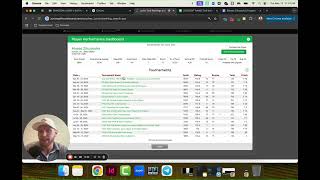
Connor Stirling Peterson breaks down a four-level system for tracking junior golfer progress toward Division I. Start with GHIN handicap logging, move to a stat app like Draw More Circles to measure strokes-gained and 3-putt rate, add official rankings, then build a spreadsheet that shows which metrics most impact your score.
Chapters
All right, what's going on guys? In today's video, I'm going to be covering how to track your child's progress. I think this is one of the most overlooked things in junior golf, and that's part of the reason why I talk about this all the time, especially when it comes to playing Division 1 golf. If you're new to the channel, this is all that we talk about is helping junior golfers develop to play Division 1 golf. And if you're a returning subscriber, welcome back. This is going to be a good one. So this is a very foundational concept, and there— it's important to understand that like there are different layers to this. This. You know, you don't have to be perfect, especially if you're just getting started off. So what I want to do in this video is there's going to be 4 main things that we can do to track your child's progress, and they kind of ascend in order of, number 1, like, to some degree difficulty, but it's also going to ascend in terms of impact, right? And so I'll talk through each one of these recommendations and why I recommend them and what times I'm going to recommend them so they're appropriate to where your child's at and their current kind of commitment level, if So anyway, let's go ahead and jump into the first one. If you guys haven't already guessed, the first one is going to be using the GIN app, um, specifically having your child, you know, have a handicap. And what that's going to require is they're going to need to be able to play a decent amount of golf. They're going to have 20 rounds logged, but they just have to put in their scores, right? And so what that's going to do is it's going to establish their handicap, which is going to be the top— the average of the top 20% of their rounds based off of the difficulty of the golf course or their scoring differential, which we'll talk a little bit more more about later. And it's also going to show them what their scoring average is. So this is going to be really, really helpful when you're trying to evaluate where is your child at, to look at their scoring average. And I think it's also one of the most misunderstood things as well. A lot of players have this illusion that in practice they tend to play better than in tournaments. And to some degree, you know, that can be true. But a lot of the time, part of the thing that exacerbates that is, is two big factors. Number one, only playing when they feel good about their game. Like, they go out to the driving range, and when they're hitting it good, they're like, oh, I'm gonna go play. But if they go out and they're hitting it like crap, they keep— they just keep practicing on the driving range. The reality is that's how tournaments go. Tournaments, you got to show up, shoot the scores, and if you don't, you know, like, you play bad and you log a bad score. And that's just how it goes. So one of the first things that's kind of foundational here that I would really recommend is getting your child in a place where they're tracking every single round and they're logging every single round that they, they have. And ideally establishing a day or multiple days within the week where they're going to play golf. They're actually going to play for a score. If they're remotely serious about improving, they need to have that in their, in their week. Because what that establishes is they are going to play golf every week at a particular time. And whether or not they're feel prepared or not, whether they feel good about their swing or not, they're gonna go play. And that's, that's how tournaments goes, right? So if your child is serious about this, that would be a highly impactful thing that you can do. And tracking their handicap is a great way to start with that. They're gonna have a very clear handicap. And also, if they're ever playing in any gambling games, um, depending on their age, that might be more or less realistic. Um, you want to have a legit handicap. You don't want to be that person going around, oh, I'm a +2, and then, you know, shoot 75 all the time. It's just like you want to be in a position where your handicap is legit and your scoring average is legit. And then you can look at that and say, it's like, how far off am I from my goals? And like, where's my game really at? And so when you're in a tournament, there's no kind of question mark of like, I think I'm better than I am. So you know exactly every single score that you shoot. And if you shoot worse scores in tournaments because you're nervous, okay, fine, like, that's a problem that can be solved. But at least you know, right? Versus if you're artificially inflating it, um, you know, that's obviously going to be a problem. So this first one I highly recommend, it's just starting to track your handicap. Um, so from there, I, I also kind of laid out some of the basics here as far as like what you should be doing on a weekly basis. Um, for your child, if they want to play golf at a high level, they need to play golf on a regular basis. They need to have a day or two that are prior to the week starting— these are the days that I'm going to play golf— and actually go out there and achieve those scores and track those numbers. So that's kind of foundation. Everything else is going to build on top of this. So once your child's doing that, you want to say, hey, I want to level this up. I want to have a clearer perspective on where my child is at with their game. The next thing I'm going to recommend is using a stat tracking tool. This is going to help you see your child's progress over time. Obviously, if you're tracking their handicap, their handicap should go down over time, right? Like, that's something that you could see. The caveat to that is their handicap could go down, but their scoring volatility could increase. And so that's typically what you see happen where you have a player who's like, oh, a plus handicap but then shoots 85 in tournaments. Is it's like either one of two things: either it's BS and they're not, you know, doing what I said of actually playing, logging all their rounds, or there's a situation where they're playing only when they're playing their best, and so they get this inflated statistic there and they kind of ignore the rounds where they play poorly. They just don't log those, and they get this kind of increased volatility. Another thing that I see happen a lot is players who are trying to hit every shot perfect or trying to hit the ball very, very straight, that can also happen to them where they have a day where it's like they've got the ball on a rope, they shoot 67. When they don't, they shoot 85. And so those are kind of like some of the most common things that I would see. But obviously you can apply your child's handicap over time, and I think it'll actually track it over time. But the next layer up from this is actually tracking their statistics. My recommendation is Draw More Circles. This is something that I give my students a $500 per year discount with. Um, obviously that's not something I'm gonna give out to the public, just, you know, obviously And that's my relationship with Circle. So I'm not going to just like throw that out there to everyone. That'd be ridiculous. Um, but this is the one that I recommend just because it's the easiest to put in your statistics. There's other stuff like that out there, like, you know, Decade or Clipt or stuff like that. Um, in my opinion, they're just kind of harder to use. Um, you got to do like the GPS thing and like move your thing around. I know Decade's come out with like the Tiger 5, and I think that there are some good things about that, you know, just tracking the Tiger 5. Um, one of the troubles that I have though with it is it's mainly predicated on avoidance, and it's sometimes predicated on avoidance of things that, you know, realistically aren't 100% avoidable. So I'd rather have the orientation be toward the skill that needs to be developed, the thing that they need to do positively, like hit more greens or have solid contact or whatever, rather than an avoidance-based statistic. So hopefully that makes sense. Yeah, if I'm talking to a player, one of the things that I found, even one of the players that I helped go on to play Division 1 golf you know, he said that it was easier for him to try to like hit his lag putt inside 10% of the total distance rather than to avoid 3-putting, right? He felt like if the mentality was, I don't want to 3-putt, I'm gonna 3-putt more, versus if I say, if I'm trying to do this specific thing, then it's easier to do that. So I would echo that as well. So anyway, you want to be able to use a tool like Circles where specifically you're going to be able to track tournaments versus practice. So I alluded to this earlier, right, where You know, if you're tracking everything within your Handicap, you're going to get practice and tournaments. That alone could inflate that, especially if you really only care about tournaments, which is really what you should care about if you want to play Division 1 golf. Um, but you also want to be able to see what's the difference, um, because sometimes players do certain things better in tournaments, which is awesome, and sometimes they do certain things worse. So it's not necessarily everything gets worse, it's usually a mixed bag. And so based off of that, you might change the way that you respond to things. But again, the other thing you want to be able to do is you want to have control over the date range you're looking at, right? Because stuff happens. Right? You know, like your child could break their leg, or, you know, they could be coming back from an injury, they could have a particular lesson where they change everything, and you want to be able to evaluate, you know, are those things working? You know, let's say you put new clubs in the bag, are we hitting more greens? You put a new putter in the bag, are we 3-putting less often? Those are all things that you want to be considering when, you know, you're actually using these statistics. So that's the other reason I really like Circles. You can do custom date ranges, you can do last 10, last 5, etc. So, um, really, really impactful as far as being able to see like, okay, how are things trending? And it's a lot more granular than just, you know, hey, um, you know, my handicap went down. It's like, okay, cool, but why, right? If you don't know that, you don't know what to do next, right? So I just wanted to kind of show an example of one of my students here. When we started working together, these are the first 10 rounds that he logged in tournaments. And then so you can see, you know, we've got a, um, whatever, strokes gained of about -10 versus a Division 1 athlete. Scoring average is about, you know, 5. or 4.9 there, so about 77. And so then I can look and say, okay, over the last 10 rounds, how's he doing compared to that? Well, let's find out. So now he's only losing 5 shots. So it's about a 5-shot improvement as far as strokes gained goes. He has only dropped his actual average by, you know, a couple, not even a shot, um, maybe like 0.4 shots. But the difference here is that he's playing a lot longer golf courses. And that was one of the adjustments that we made, but we're able to track this over time to see like, okay, cool. You know, here are the things that changed. And we can see, okay, 3-putt rate sharpened up, scrambling has sharpened up, greens regulation stayed about the same. So that'd be the main thing that would be impacted by those longer golf courses. Birdie conversion rate has improved. So we've got a lot of good things moving in a good direction. I should also note this kid broke his leg in the middle of the year. So, you know, long story short, um, you can make a tremendous amount of progress just by measuring things. You know, what gets measured gets done, right? So, you know, that, that's kind of like the high level there. Um, again, obviously I'm talking a little bit about my students. I'm talking about kind of the process and that. If that's something you're interested in, you want coaching for your child that's really based on data and math, got a link below as an application to join into that program. It's not something that I'm going to accept everyone into. It's only if your child actually has a high probability of playing Division 1 golf. That's really kind of the, the player that I'm going to excel with and the player that I want to work with. So if you're interested in that, you think your child might be a fit, just go ahead and apply. And then if you are a good fit, then we'll be able to book a call and talk it over. So anyway, continuing on here, This is kind of level number 2, right? Level number 3 is actually having a ranking. So I have other videos on this channel specifically about ranking and how to get ranked, all that stuff. So I'm not going to cover that in this video. Otherwise this video would be an hour long. Um, but long story short, this is the next level here, right? So handicap, personally, I take that with a grain of salt. Um, the next level is obviously tracking their statistics like I just showed you, right? But again, it's, it's, it's private. You know, it's not a public thing, nobody can see that, um, and it's not really validated by anyone else. Versus your ranking is a third-party validated, you know, measurement of where you're at. So it's going to be a little bit more accurate to show, you know, where are we actually at with our game here. So that's the next level. You're going to be able to see a scoring average, which you would be able to see at every prior level, but again, we can see that. We're also going to be able to see the scoring differential, and this is going to be limited to ranked events. So we're gonna have a little bit of that pressure, but at the end of the day, you know, if we're trying to play Division 1 golf, we're trying to play high-level golf, we want to see where do we play in tournaments. That's what we care about. We don't care if we can go shoot 67 at home, you know, in a practice round. You know, sure, there are plenty of people who care about that type of stuff, but if you're watching this video, that's not your concern, right? You can— your concern is, how do I help my child play well in tournaments, right? So this would be the next layer here. And so this is something we're going to be able to see. I'm not sure if every account can see this. I know coaches' accounts can, but this is the trend report here. So I can say, okay, I started working with this student here, and now we're here. right? So that's another layer of this. We can say, okay, cool, you know, for your child, if you just wanted to plot this on a chart and say, hey, we've got a ranking, we've got a scoring differential of this, right? And we are now scoring differential— this has been this much time. So we can say, hey, I've improved by this much. Also, if you're in a situation where you already have this information and you want to help your child play Division 1 golf, you're not really sure what that's going to take, I've also got a link below for my Division 1 pacing calculator. So you can go ahead and opt in for that, and we'll send it to you, and you'll be able to just plug in your child's numbers based on either the scoring differential, their current scores, the yardages that they're playing, and it'll spit out, you know, based on the level of golf that you want to play, how many shots per year your child needs to improve. So it just kind of puts this stuff on steroids. But anyway, back into the video here. This is the next level. You can also see the length of the tournaments that we're playing, etc., etc. Um, so you guys can see here, I talked about playing longer tournaments after we started working together, and boom, You can see right away we start playing in longer events, we see similar scores. If anything, the scores have gotten a little bit better on average. Um, but again, you see this incremental progress, and that's, that's really what we're looking for here is we want to see this incremental progress. So that's the third level. The fourth level is where you put this all together, right? This is what I do with my students when I'm working with them. This is the foundation of everything that we do, and it's part of why I'm able to get the results that I'm able to get. You know, the average student— one of the things that I talk about a lot— the average player on Junior Golf Scoreboard improves by about 1.19 shots per year. My average student improves by about 3.6 shots per year. That's not just like to flex, that's really to help you guys understand the impact of the things that I'm telling you. So anyway, the next level here is we track our scoring average. We want to— all right, we're getting our ranking in, right? We know what that is. And then we're also tracking it so we can say, okay, cool, not only is our scoring average 76.3, but we can also see, hey, our scoring average is 76.3 over here as well. And we can ask, why is it 76.3, right? So we got this birdie conversion rate, we've got this, you know, greens regulation, we got the scrambling, got this 3-putt rate, you know, we got, you know, this many penalty shots, right? Based on all that information, you know, what should we be shooting on average? And so this is a spreadsheet that I built for all my students. This is not something that's going to be available to the public. This, you know, I put a lot of work into this, there's a lot of math behind this, so it's not something I'm giving out for free. Um, But this is something that we can use here to say, okay, cool, based on this set of statistics, let's just map out his numbers here. So we've got, let's see here, 54.44, 54.44. We've got scrambling of 48.72. We've got 3-putts of 5.59. We've got birdie conversion rate of 22.45, and we had a penalty rate of 2.21, and we have a scoring average of 76.3, right? So in this case, I can actually see statistically, like, here's where we should be at. We should be shooting about 75.4. We are shooting 76.3. So I know we've got a little bit that's kind of like falling outside of the normal range. And so we can just ask ourselves, like, hey, what's gonna have the biggest impact. Like, if we got better off the tee, what does that do for us? Not a lot. You know, if we got better on approach, what does that do for us? Does something. Um, just so you guys can see here, the improvement metric, you know, how much we've improved is right there, so you can keep an eye on that box. Um, you know, everyone talks about scrambling and how important that is— doesn't have a big impact. 3-putts, we're probably not bringing it down to 0%. Just so you guys know, I'm moving these by about 5% on average. Um, that's kind of a middle ground here. So I can say objectively, the most impactful thing for this player right now is just needs to be a little bit more diligent about when he does miss the green, at least in these tournaments, that we're getting that third shot on the green. Or if we're getting out of position, we're just chipping back out into the fairway, trying to hit our next shot on the green. That's really the way that we should be approaching things. After he's done that, we can also say, all right, what's the next biggest impactful thing? So once again, with birdie conversion rate, if we got that up, we're going to improve by 0.49. I believe the next biggest impact for him is going to be getting greens mitigation. So for him, it's a combination of how do we get better on our approach shots, and then how do we also get better chipping around the greens and making sure we're not compounding any of our mistakes. So hopefully that makes sense to you guys. Hopefully you guys can also see how we're taking all these things together. We're saying, hey, we've got our ranking, but obviously we want this to improve. We've got insight into why do we shoot those scores. Then we're analyzing, okay, here's what's going to have the biggest impact on those scores. And then the last step, I think that puts it together, and it's something I do for all my students obviously, is building out the practice based off of those statistics right here. So you guys can see, this is where we started off, scoring average. You can talk about, you know, what we talked about for practice plan. We said, hey, we're going to work on these things. And then over time, what you're going to see is scoring average has gone down, scoring differential has improved. Even since the last time we talked about this, he's gone from 5.44 to, you know, 4.2, like you guys just saw. And it's by working on the right things. Um, and it's not just, you know, random stuff. So, you know, 3 putts, we were at 9 point or 8.94, now we're at about 5.59 or whatever it was. Greens regulation, again, we want to push those, those numbers up. So long story short, by focusing on the right things, it causes this long-term improvement. So anyway, long story short, to recap on this video here, if you're not tracking your child's progress, start with handicap. That's the easiest place to start. Then transition into some type of stat tracking app. Again, my recommendation is Draw More Circles. Then transition into actually being ranked. And then if you really want to put, you know, kind of everything together, it's do it, you know, be ranked and track the stats and then design practice, right? You don't even have to work with me in order to do this. You can say, hey, we think that this is going to work the best and then measure it over time. I like to do every 10 rounds because that gives us a reasonable amount of data to look at it. If we're practicing consistently, then we should be able to see what those results are going to be. And at the end of the day, if you want different outputs, we need to put in different inputs, right? If we want to see different scores, we need to practice differently, right? So that's kind of the foundation here. Again, that's something you guys want help with, link below in the description to apply for my coaching program. Again, not for everyone. It's only going to be available to you if your child actually has a high probability of playing Division 1 golf. Um, and again, if you're not sure and you want to just understand like if that's even possible for you, again, there will be a link below for my Division 1 pacing calculator. So you just have to plug in, you know, scores child's shooting, or whatever their current scoring differential is, the length of the golf courses, and the amount of time they have left until their junior year. And it'll spit out how many shots that they need to improve by and also give you guidance on, you know, how, um, probable it is for that to work out for them based on, you know, different options that they could take. So anyway, hopefully you guys enjoyed this video and look forward to talking to you guys in the next one.










