Is Homeschooling Or Online School Best For Junior Golf
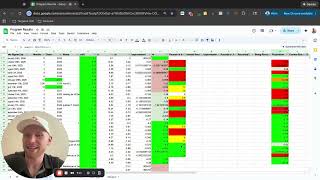
In this instructional video, golf coach Connor Stirling Peterson addresses parents’ questions about whether homeschooling, online school, or golf academies are necessary for junior golfers aiming for Division I. He begins with a strong disclaimer that high‑school golf and social media have limited impact on recruiting, though Instagram can aid visibility. Peterson then presents his own tracked data on students—rounds played, annual shot improvement, and tournament participation—to illustrate performance trends. He argues that a consistent schedule of roughly one round per week plus a practice session, rather than high volume or specialized schooling, yields an average improvement of about four shots per year, comparable to elite benchmarks. He discusses the concept of diminishing returns, emphasizing consistency over sheer volume, and outlines strategic tournament play (minimum four tournaments, 436 holes) versus quantity. Using probability models, he estimates each player’s likelihood of reaching Division I based on shot differentials. Concluding, he advises against homeschooling or intensive golf academies, recommending a precise, data‑backed plan and offers his coaching services for families seeking that level of precision.
Chapters
All right, what is going on guys? In today's video, I want to touch on a subject that for whatever reason I haven't touched on before, but it comes up all the time. I see parents asking me about this and so it needs to be addressed. Is homeschooling worth it? Should your child be doing homeschooling? Should they be doing online school? What is my opinion about that from the perspective of giving your child the highest probability of playing Division 1 golf? So I want to start off with a huge, huge, huge caveat disclaimer here. I am not a big fan of high school golf, period. I got a lot of hate for that. A lot of the time people think that that's offensive and I'm somehow talking down about all the intangible stuff that you get out of playing high school golf. I am not talking about any of that stuff. When we talk about playing high school golf, you want to play it because it's fun. Good for you. I'm just saying it doesn't have any impact on college recruiting. As soon as I hear a coach tell a player, hey, you're ranked 90th in your class on Junior Golf Scoreboard, you got a scoring differential of -5, you've got a 4.0 GPA, but I can't recruit you because you didn't play high school golf— as soon as I hear that, you better believe I'mma tell every one of you guys that you need to play high school golf. And I'll tell you guys one of the places that I recently changed my opinion on. I used to say that social media does not matter, and as a marketing— or marketing thing, I still generally believe that as far as like it's not going to overcome some terrible junior golf scoreboard ranking, um, because you got a cool swing video or you got a lot of followers on Instagram or you send out promotions. Like, don't— that's not That's not the thing at all. But Instagram is useful insofar as it makes it easy for a coach to say, hey, your name, let me look you up on Instagram, and voilà, you're right there, and they can message you directly. That's usually a fantastic situation to be in. And so just having that virtue makes it enough for me to say, hey, Instagram's probably worth doing. It's not the main thing, it's not It's not something to get distracted by, but it is worth doing rather than not doing. So all that being said, let's talk about homeschool golf or online golf academies, things of that nature. So do I have students that I work with who do homeschool golf? Absolutely. Do they do golf academies? Absolutely. Or at least, you know, sports-based online school? Yes. Do I notice that having a major impact in players' progress over time to reach their goals of playing Division 1 golf? So far I do not. And so what I have here, I have all the names cut off that way nobody's getting embarrassed or, you know, I'm not disclosing anybody's data. But this is how I track all my students. I know what they're doing because I measure it. And so technically I need to update a lot of these because I— this is the first, you know, second of the month here, first Monday of the month, so I'm supposed to update this stuff. But I wanted to make this video for you guys to kind of show you So I track every one of these students, and I track how much— I'll track where they started, where they start working together, where they're at currently, how much they're improving on an annual basis, how many rounds of golf they've logged. And the reason I do that is because that's how I quantify how fast they're improving and what's probable to play out for them in the future, right? So if I got a player who's improving substantially over the course of a year compared to players not improving at all. Well, those are kind of like different signals to me. This sends different, um, different pieces of information, right? So students that I work with who, you know, as you guys can see down here, improving by 4, 5, 6, 7+ shots per year— stuff that they're doing, I obviously know that's going to be more beneficial for, for just the general student, student body to do. These players, you can see, that are under you know, underperforming the average, I can also learn things about them as well. And so there's a couple outliers that you guys can see right here where these players, you get highlighted green. This is the number of rounds that they've logged in the last 3 months. And so if you guys following my stuff for very long, you know that I'm really big on tracking statistics. And so you can kind of see here, you know, these two players, they're in a good spot. I want to see a minimum of one round per week. Week. Now, anyone who's remotely serious about playing Division 1 golf can play 1 round per week. If you're not able to play 1 round per week, we have to really call into question how serious you are, right? If we've got reasons why we can't play 1 round of golf per week, that, that's an issue, right? That's going to keep us from being able to play Division 1 golf. Do we need to do homeschool golf to be able to accomplish that? No, we do not. Not at all. I don't care if it's daylight savings or what. It's like, we can do that. We can play golf on Saturday. I don't care if you got church, right? You can play golf on Saturday. Or maybe some— someone goes to church on Saturdays, stuff like that. Not trying to get into a religious thing, but point being, there's the time. We got the time available for remote. We serious about this, right? We can say, hey, we're gonna practice on Friday, we play golf on Saturday. Everyone should be able to do that. And I have the data to back up. If we're able to do that, the average player is doing that, that I work with is improving by 4.6 shots per year. As reference, Charlie Woods improved by about 4.75 shots. So you work with me, or you can work with me and play one round of golf per week and one practice session, or you can be the child of the greatest golfer ever. Similar results, right? So Something to take into consideration there. So when I look at these, I do not see— you guys are looking at the same data I am— I don't see any correlation with players going way over this number and better results. I got one player who's at 30.5, which is pretty incredible, honestly. Good for them. They only improved by 2 shots per year in this particular case. Okay, um, do I think that's going to improve? Yes. Does the student do an excellent job of like putting in the work? Yeah, absolutely. Um, do I think that they're going to catch up as far as their pacing goes? Over here we've got projections on whether or not we're probable to play Division 1 golf. About 67, as you guys— 67% are on pace to play Division 1 golf. But it's like, we got that one there, we got one here is at 19, a -4.5. We got us at 13 shots or 13 rounds, 6.8. Another 13, 6.89. You know, 7 is good. This one's at 24, right? We got a couple others sprinkled in here where some of these are kind of coasting off initial results. You know, sometimes students get results right away and then just kind of disengage for, for whatever reason, and that can happen. Sometimes we also have shorter bases of time that we're referencing here where there's some like legitimate reasons why they're not playing. Sometimes we got injuries, right? But as you guys can kind of see, I definitely see a correlation with, you know, if we play more, 13 or more rounds, we're gonna improve by a lot. Above average just got us a 4.28. But if we played less than that, we're at 1.57. So when you consider that, it's like there's a much bigger gap here. And you guys can also see the overall average is not quite as good as the more recent average, right? And so obviously the reason for that is I've gotten better over time as a coach. Um, but we can see here the average 9.4 rounds over a 13-week basis, right? If we're doing less than that, then we're only improving by about 1.5. We do less than that, we're about 1.14. Now most people think that it's like, hey, it's all about how much time do I put in, how many lessons do I get with my coach, how many hours am I working. And that's just not really the case. It's about— and it's not even about, oh, I need to play more golf, although that is true for most junior golfers. The real takeaway here is we need to put in time on the right stuff. That's the thing this data tells me, because again, when I look at these players, it's not about crazy volume, it's about consistent volume, it's about consistency over a long period of time. That's really the key. And so when I say the average student improves by about 4 shots per year, you know, that, that's— and I say that it takes one round of golf and one practice session, you might look at me and say, Connor, that's insane. There's no way you can get that kind of progress for so little work. That's just what my data shows me. If it was— I talk to kids where it's like, I have kids on a routine basis, they come to me, they're just like, I want to play golf every single day. And I'm like, that's cool, and I love it. I love that for you. Um, but there's a difference here, just in the same as tournaments. What's necessary and what you want to do can be different, right? It's not necessarily a linear relationship. There's a point of diminishing returns. And so once we get to that point of diminishing returns, you do whatever you want, right? You can go spend time with your friends, you can go play more golf, do whatever you want, right? If you want to travel all over the country to play tournaments, spend a bunch of money on that, by all means. Some families are good at vaporizing that kind of money just because they think it's fun. Good for them. But it's not what's required, right? So just switching gears a little bit, you need to play in 4 tournaments to be ranked on Junior Golf Score. You need to play 436 hole rounds. Do most players play more than that? Yeah. Should most players play more than that? Probably, yeah. So how many should they play in becomes a follow-up question. Typically, I would say as we get older, we play in fewer tournaments. But the tournaments are more valuable, right? They're more difficult tournaments. So if we look at the best players in the country, you know, for them, they might be playing in 7 tournaments, but it's the US Junior, the USPGA, the— or the Junior PGA. They're playing in Carlton Woods, they're playing in Sage Valley, they're playing in the Team TaylorMade, right? Like, they're playing in these bigger events, and so they don't need to play in as many events because the tournaments that they're playing in have— there's more relative weight, right? They're more serious tournaments compared to if your child is 12. They don't need to play in as many tournaments. Doesn't mean they don't need to be ranked. Still want to be ranked. So want to know where we're at relative to our goal so we can see if we're making progress. Do not do that thing where it's like, well, you know, I don't care who— how good you are when you're 12. I just care that you're the best player in the country when you're 17. There is nobody I've ever seen where they just come out of the blue and they're the best player in the country and they're 17 years old and they've never played any determinants. That's not a real thing. Um, maybe somebody can post in the comments if there's somebody that they can actually point to the data that if that was the case for them. But in almost all certainty, it's like, it's consistency over a long period of time. We all know that. But this is just a video to address, does your child need to spend an inordinate amount of time to play Division 1 golf? My answer to that is no, or at least that's not what my data shows me. And so If you're looking at that and you feel like that's a limitation, you feel like, man, my child only— they only put in like 10 hours a week. You're like, they need to put in 20 hours. I would push back on that. I'd say probably not. What they do need to do is they need to be focused on the right stuff. So that's the caveat here. If this is something you want me to help your child do to navigate this process so that they can be as efficient as possible without giving up their entire life to play Division I golf. You know, they want to be in a spot where they can play 1, 2, you know, maybe 3 times per week, right? Or maybe they're practicing once, playing a couple times, or some variation of that, and actually getting the most out of that. That way they can still have good academics and they can, you know, have a social life and other, you know, things. Because not everybody has to go play professional golf, and you want to be able to get the most out of this and still be able to play Division I golf. Fill out the application below. We can talk about where your child's at, what's probable for them. That's always the way I'm going to talk about this stuff, is in probabilities, right? If you come to me and your child's in a position where I'm just like, hey, they've improved a lot, um, but you know, we still have too big of a gap, right? It's just like, we need to improve by 6 shots per year. My average player only improves by 4 shots per year. I'm, I'm just going to tell you that straight up, and then you can make the assessment about whether or not that's a risk that you you want to take. And so I'm not here to say, oh, I've got a particular placement rate that I want to maintain. That's why I just look at the shots per year, right? Because if we accomplish that, we've got a -5 scoring differential, we're getting recruited. And so that's when I look at a lot of these, you know, is this player probable to get to a -18 scoring differential? Almost certainly not. But yeah, would that be nice? Yeah, it'd be great. Um, is it unlikely? Yeah, almost certainly, right? But it's just like, it's good enough. It's like, we fall short of that. What happens if we fall 10 shots short of this? We're at a -8. What if we fall, you know, 15 shots short of it? It's like, well, we're at a -3. So it's like, let's just run it out and see where we end up and we'll be good. You know, that's what I look at with some of these ridiculous ones. Some of these other ones are a little bit more reasonable, you know, a little bit more, um, on pace here. But anyway, I just wanted to make this quick video to address that issue. I see it come up so much. No, your child does not need to do homeschool golf. They don't need to do golf academies. They don't need to play golf 24/7. They need to have a precise plan about what they're going to do. If they're able to do that, they're going to be able to improve pretty dang fast. And so if that's something you want help with, go ahead and fill out the application below. Um, I say this, um, not from any type of, let's say, arrogance here. I have not met anyone else that approaches things like this that actually has the math to back it up. Um, I'm certain that there has to be coaches, um, that, you know, maybe there's someone out there who does this. Um, there are plenty of great coaches out there, but I just don't know many who, uh, use the numbers to get this precise about what needs to be done. And so if you want that type of precision for your child, um, again, fill out the application, at least have a conversation about it, and then you guys can make the judgment about whether you guys think that that'll be best and That's how you want to use your resources. So hopefully this video is helpful, and if you guys want to learn more about playing Division 1 golf, go check out some of the other videos on the channel, um, and they'll help you out as well. All right, talk soon.










