Is Your Child On Pace To Play Division 1 Golf
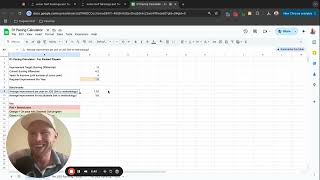
In this instructional video Connor Stirling Peterson walks parents of junior golfers through a systematic, data‑driven process for determining whether a child is on track to earn a Division I golf scholarship. He introduces a downloadable spreadsheet calculator that ingests a player’s current scoring differential (derived from Junior Golf Scoreboard rankings) and outputs the annual shot‑improvement needed to meet a target differential (e.g., –2 by junior‑year summer). Peterson explains the recruiting timeline (June 15 of sophomore year, with most offers occurring in junior‑year summer) and shows how to set program‑specific benchmarks using historical scoring differentials from recruited players. He then breaks down the player’s performance into five key statistics – scoring average, penalty rate, greens‑in‑regulation (GIR), scrambling, and 3‑putt rate – and quantifies the shot‑gain associated with incremental improvements in each metric. By applying an “opportunity‑cost” framework, he helps parents prioritize the highest‑impact levers (e.g., improving GIR or 3‑putting) and design practice plans that target those areas. The video also covers practical considerations such as course length adjustments, the importance of obtaining an official ranking, and how his coaching program selects students based on their projected improvement trajectory. Throughout, Peterson emphasizes clarity, measurable goals, and continuous monitoring to avoid late‑stage surprises for families.
Chapters
All right, what's going on everyone? So in today's video, we're going to be covering, is your child on pace to play Division I golf? Um, this is probably one of the most important questions that you can ask yourself because it requires you to have clarity on not just where they need to get to, where they're at right now, but also the amount of time that they have to accomplish that goal. And as a result of that, you're able to track that progress and say, hey, do we need to make adjustments? And if so, by how much? So if you're new to the channel, this is all we talk about is helping junior golfers play Division 1 golf. If you're a returning subscriber, welcome back. This is going to be a good one. So let's go ahead and jump right into it. Now, to be clear, I just created a tool to be able to quickly identify where your child's at, how much they need to improve by. I just recently did a webinar where we actually just like did this in like worksheet format. I was like, you know, What would be even easier than that is if I just created a spreadsheet to do all the math for you so you don't even have to think. So anyway, there's a link below this video, um, so you can get that calculator and actually, you know, do this process for yourself. But this video is just going to, um, go through that and also just show you how to be thinking through that, um, and go through some of the more nuanced points, uh, you know, within just, you know, this particular question. So anyway, let's go ahead and jump into it. So When I'm thinking about helping a player develop to play Division 1 golf, the first thing we need to understand is like, where are we trying to get to, right? We say, hey, I want to play Division 1 golf, but most parents don't know what that actually means. Um, you know, if you're anything like me, you might have thought that being a scratch golfer is really good, but in the universe of playing Division 1 golf, it really isn't, especially if you're just a scratch golfer just like at home. I mean, that's just not even in the same universe. As a Division I golfer. And so it's really important that we have a clear lens of like, what is that actually? And Junior Golf Scoreboard, in my opinion, is one of the best locations to really see this stuff. I've seen pitches for other, you know, ranking indexes. Um, you might be familiar with like the AJGA ranking index, um, the Rolex rankings. But, you know, for the most part, Junior Golf Scoreboard has the most robust, um, data as far as being able to compare players and also be able to show us which players are getting recruited, which players aren't. So anyway, if you go to college signings, ranking and honors, you're going to see this page, boys and girls, all the way back to 2017 of all the players who were recruited, where they're ranked in their class, which programs recruited them, and what their scoring differential was. Scoring differential is just a fancy way to say, you know, here's, you know, if you shoot 72 on a 7,000-yard golf course, that's better than if you shoot it on a 6,000-yard golf course, right? We have to have a way that we define that. So anyway, using this, what you're going to do is you're going to identify where does your child want to play. You can be very specific about this, you know. If they want to go to UCLA, then you can actually say, okay, cool, let's look at all the players who are recruited to UCLA here and make up a model of just kind of like where they need to be from a rankings and scoring differential perspective. They just want to play broad Division I golf, they're going to need a scoring differential somewhere around -2 by their the end of their junior year. So that kind of like that junior year summer is really where a lot of the recruiting is going to happen. Technically, it starts June 15th of sophomore year, and so there's going to be a range there of how quickly those programs are going to fill up their spots. So obviously you would prefer to be in position right at sophomore year, right at that recruiting, you know, is going to start. Um, but you know, not everybody's there. And so again, this is just one of those things where it pays to be aware of those kinds of things, because God forbid you're watching this video and your child is you know, let's say a sophomore right now, and they're a little bit off, you know, that could be really like a jarring thing, you know, if that was the goal and you've invested all this time and resources only to realize, hey, we weren't even close. Um, and that's the thing that keeps me up at night. That's the thing that keeps me, um, doing what I do is making sure that you guys don't end up in that spot. So if you're fortunate enough to be watching this where you've got a, you know, an 8th grader or 7th grader, 6th grader, um, freshman in high school, it's already shooting some really solid scores, then this is going to be profoundly valuable. So anyway, I've got this, we've got our target here. So what I've done here with this, this calculator— again, there's a link below here where you can download this— um, is I've got the target, right? So you could change this if you wanted to be like -5 or something for like a UCLA, you could do that. Then we've got your child's current scoring differential. That's the next piece of this. So I've got 3 tabs. If your child doesn't have a ranking, obviously they need to get one. I've got other videos covering how to do that, um, but also help you adapt it for, um, for where your child's at, just so you have a clear perspective on about how many shots they're going to need to improve by. So anyway, um, if you're fortunate enough to actually have a ranking, all you need to do is search them, get this number here, the scoring differential number, and then just go ahead and plug that into the calculator over here. Okay, so long story short here, once you've got that you've got years to improve until their junior summer. If you wanted to be a little bit more aggressive and say, hey, we want to hit that target by, you know, June 15th, sophomore year, that, you know, that might make a lot of sense. Um, that said, typically when these players are actually getting recruited, when we're seeing these numbers actually post, I'd say it's pretty close to junior summer. So, um, they might be a little bit worse than that, but let's just go down about like 150th. Yeah, so To some degree, I might actually be a little bit overly aggressive here, or overly conservative here, um, with a -2, uh, scoring differential. We probably want to be better than that now. And that just kind of reflects that, you know, as I've been doing this, junior golfers have actually gotten better, which it doesn't surprise me. I mean, there's videos like this out here actually telling you guys how to do it. You're not just fumbling through the dark. So let's just go ahead and move that to -3 just to be safe here. So anyway, you can see that this number changes dynamically. So if you guys actually download the spreadsheet Um, you make sure you don't touch this box. Uh, it's got math in here. But anyway, what you're going to see is like how many years until their junior summer. So this would be hypothetically if you had an 8th grader, right? So they're going to have 8th grade, 9th grade, 10th, 11th, right? So that's 4 years. They got 4 years to improve. They got a current scoring differential of 4.2, and they're going to need to improve by 1.8 shots per year in order to reach that target. So I've also got a couple of benchmarks here. So I've got the average improvement on Junior Golf Scoreboard by cohort, so like by 50th percentile essentially. Um, and then I have the average improvement for my students there, just as, you know, a shameless plug if you will. Um, so I— if you guys are interested in that, um, there'll also be a link below this video for, um, to apply for my coaching. But that's pretty limited. I only take on students if I'm confident that I can actually get them recruited. So when I'm doing this math like I'd want to see you somewhere between that. Um, I would want to see you at least better than, than 3.6, or like right around 3.6. If it gets over that, it— I don't want to necessarily take on a bunch of students to that position. I'm not saying I'll never do it, but I don't really like taking on students in that range just because it's kind of outside, you know, my wheelhouse. I want to be able to work with a bunch of players who get recruited because then everyone feels really good about that. So anyway, again, if you're interested in that, application is below. Anyway, continuing on here though, that is the way to be looking at this. Now let's say you have a boy here. Let's say that they're in 8th grade, and let me just adjust this for you guys so you can kind of see what would actually be, you know, a 4-ish scoring differential here. So if I said their scoring average is 75, what does that do here? Okay, cool. So we're probably looking at scoring average maybe 78, 79. All right, cool. So this is based on, um, how do we back out scoring differential without actually having that? You know, if your child is playing in, let's say, school golf— or, um, just for the record, school golf does not factor in whatsoever to recruiting. They need to get ranked. But this is just kind of intermediary step for you guys. So if you're just looking at this, trying to figure out like, hey, is this even realistic, this is going to be really, really helpful. Anyway, so let's say you got an 8th grader here, and once again you know, that they are— yeah, let's say scoring average 78. That fits pretty nicely. So they're playing at 6,300 yards. Let's just say that seems reasonable for an 8th grader who's hitting the ball reasonably far. Um, I got a scoring average of 78, and we need to adjust that yardage because for boys to have that 72 to 74 scoring average, we're also going to be playing at around 7,000 yards. And just so you guys are clear here, I'm not just making this number up. Let's just go ahead and move ourselves back here just a little bit so we can find that -3-ish number. These are -2s. All right, okay, cool, perfect. So let's just pull random. So yeah, 74.5. We're playing at, as you guys can see Pretty close to about 7,000 yards. We got some AJGA events here. Let's go ahead and pull another random one. 72.29. Again, we're playing about, you know, 60, 65, 6,800, 7,000 yards. Let's pull another one. This one's kind of more normal from what I'd see. We got a high end about 7,000 yards, scoring average 71.5. So this number is going to bump around just a little bit based on, again, how long the golf courses are and what the scoring average is, but it's gonna be somewhere in that range. So anyway, that's what we're trying to do. We're trying to guesstimate here. None of these things are going to be perfect, but we want to be in the ballpark, right? So if you're in a situation where, let's say you've got an 8th grader, they got a scoring average of 78, they're playing on golf courses that are 60 at 300 yards, and we want to adjust up 7,000 yards— just so you guys are clear, I've already done the math on all this stuff, um, but for every additional 200 yards it's going to take about one more shot, um, on average. So that's kind of what we're seeing there. That's what we're adjusting for. So yeah, scoring average 78 really is closer to about 81.5 if they're playing at that distance. And then we can make the adjustment of how many shots they need to improve, and then we can divide that by the number of years they have to improve. Same thing's gonna be true for girls. Um, so let's again just go ahead and make that adjustment. Let's see if it stays pretty similar. Yeah, so it's going to stay pretty similar here based on kind of these initial numbers. So, you know, if your daughter, again, 8th grade, let's say she's playing at 5,400 yards, she's got a scoring average of 79, she's got 4 years to improve, then she's going to need to improve by about 1.75 shots per year. And so, you know, again, we've got the benchmarks there. But I also want to talk to you guys about practically how you can use this information and a little bit of how I do this with my students. All right, cool. So I've opened up a tab that I use with all my students, a spreadsheet that I give all of them. Um, but it's, it's really how I break down the math behind what a player needs to do in order to accomplish their goals. You know, most of the time when kids say, hey, I need to improve by X number of shots, a lot of times, first of all, it's a ridiculous number. It's something like, I think I can improve by like 10 shots this year, which is not realistic. It's not gonna happen. Um, but beyond that, um, they don't really have a way that they know that they're going to do it specifically. It's going to be like, oh, my golf swing is going to be better, I'm going to hit it better, I'm going to putt better, my short game is going to be better. But it's like, it's not quantified. And they can't really go in and say, hey, I accomplished that. And what ends up happening is they go into some tournaments, maybe they do well, and they go to another tournament, maybe they do poorly. And this feels like this kind of like up and down roller coaster. Or maybe it feels like whack-a-mole, where it's just like, you know, they fix one part of their game, and another part of their game falls apart. And it's just, you can't quite get it under control. And so what I use this tool for specifically is to understand like, okay, you have these statistics in your game, these statistics are, you know, we have skills that are going to influence these statistics, right? So like greens regulation is going to be influenced by my ability to put the ball in play off the tee, and it's going to be influenced by my ability to hit my, my shots on the green, right? And so that actually gives me some clarity of a player's game, right? Because if they do that really, really well and they 3-putt all the time, that's a different problem to solve comparatively to, you know, let's say we don't hit a lot of greens and that's going to be the biggest bang for our buck, right? And at the same time, if I'm working with a swing coach or whatever on my swing, I want to know, hey, I only hit 50% of my greens, or 60%, or like, we need to know that. Because in your head, you'd be like, well, you know, I feel like I hit it pretty good. And be like, what does that even mean? You know, like, you don't have a clear definition of that. If we want to accomplish things like playing Division I golf, something that's literally harder than getting into Harvard, like, we need to be very precise about this, you know. Like, that's really the way to look at this. So let's just say hypothetically I'm going to go ahead and create a player profile here where we should have a scoring average of about, you know, what was this back here? Let's say 79, 78, 79. All right, cool. So here's what I'm going to do. We're going to go— we're going to bump this up a little bit. All right, cool. So in this case, we got a scoring average, a projected scoring average of 78.5. And let's just say for the sake of simplicity here, that's about what the player is actually shooting. I'm not going to talk about compound errors in this video. Um, so anyway, let's go ahead and look at this. So we got scoring average, and this becomes irrelevant. So anyway, let's say these are our statistics, right? So penalty rate, we hit a few balls out of bounds, but not a really big deal. Hitting about 50% of our greens, get up and down 28% of the time, 3-putt about 12% of the time, and we convert about 24% of our birdies. So I'd say this is a very high, you know, pretty conversion rate. But anyway, we need to be able to look at these statistics and say, hey, what do we need to do in order to improve? This is like the first step. Most of you guys do not have this level of clarity. Um, if you do, bravo, let me know in the comments if you've ever seen anything like this. Uh, but if you haven't and this is actually really helpful for you, um, go ahead and leave a like. Uh, if you're new here, go ahead and subscribe. Um, anyway, let's go ahead and kind of map this out. So at this point I can look at these statistics and I can say, well, what if I just cut out my penalty rate? Okay, cool. I'm going to improve by 0.13 shots. Okay. You know, like that might be good for some people. Um, but we want to be able to compare it against what are other things that we can do. Um, yeah. One of my big takeaways, one of the biggest takeaways I had from, from economics in college was this idea of opportunity cost. And all that essentially means is that if you do one thing, you can't do another thing, right? And so in theory, there's optimal choices that we can make in anything that we do. You know, that can be specifically within golf, that can be in life, etc., etc. Um, but we need to be able to compare our choices versus other choices. That's really the way to understand it. So if I said, hey, I want to improve off the tee, I'm going to improve by 0.3, 0.13 shots. What if I improve my greens regulation? Well, I'm going to improve by 0.87 shots. That's pretty substantial. That's it. And so if I were to look at that, I would be much more benefited by saying, how do I improve my greens regulation rather than how do I reduce my penalties? When I'm understanding this as a player, when I go into a round of golf, I'm not asking myself, hey, how do I not hit the ball out of bounds? Like, sure, that's a priority, you know, because that can have a major negative impact. But for the most part, I'm saying, how can I hit one more green per round? What's going to be the easiest way to do that? And there's a bunch of different ways we can do that. I'm not going to go into all of those. This is like just high level here, just like directional, you know, we're going to have a much bigger impact by, by decreasing or increasing our greens regulation. Now let's say if we improve scrambling, everyone always tells me how important short game is. Let's just look at this, improve it by 5%. Again, I'm doing this across the board except for ones that I can't do it by more than that. We're going to improve by 0.44 shots, right? So not nearly as good as if we just hit more greens, right? So that's not the best strategy. What if we improve 3-putting by 5%? We're going to improve by 0.9 shots. So in that case, if I were to compare greens regulation or 3-putting, I would actually get more from improving my 3-putting, right? So now we start to get into these layers where it's like greens regulation, as you guys saw, is pretty dang good, 3-putting in this case would actually be better. Now once again, let's look at the next layer here. Yeah, let's say that we can move, you know, this 29 up to 29.46. All right, cool. So this is for all of you guys who, uh, are out there, maybe you're looking at things and saying, hey, I need to make more birdies. It's probably not true, um, or at least if you can't map this math out, odds are it's not true. You know, for most players, that's not going to be the case unless your child is already in a position where they pretty much shoot in the mid to low 70s all the time, and they're just pissed off because they just ball strike their way to 70 every single day, but they can't shoot 65. That's typically what the difference is going to be. So anyway, when I look at a player like this, right, I have these statistics in front of me, run it through this calculator. I know biggest bang for our buck, let's get down to 3-putts. So when I'm looking at their statistics, we're going to be analyzing why are we 3-putting, right? Are we missing our short putts, or is our lag putting bad? Um, within that, it's going to be How's our speed looking? What is our strategy around our speed? What is our strategy around how I'm going to move this putter in order to create a predictable profile of how this ball is coming off, right? Are we accelerating to the ball? Are, you know, what are we doing as a method for that? What type of putter are we using? Those are all going to be things that I'm going to consider, and I'm just going to work through that in a hierarchy of saying, okay, strategically, here's the major low-hanging fruit. Because typically, if I just tell a player, hey, go out, and instead of aiming here, I want you to aim there, We get instant results. That's just super easy because I just tell them to do something and then they go and can go ahead and do it. Um, but on the flip side, you know, we're also going to talk about practice, right? Practicing in an effective way. And all of those things combined are going to create some amount of improvement, assuming we keep everything else essentially static, right? Which is another part of how I design my practice for my students. But anyway, what we're able to demonstrate here is if we just keep everything the same and only improve that one variable, we're going to improve by 0.9 shots. If we're able to do that 4 times throughout the year, then we're going to improve by about 3.6 shots per year, which is exactly how we get to this number, right? So my average student improves by roughly 3.6 shots per year. And it's because we do this systematically, because then I can say, all right, cool. What's the next step? Now, now, like, hey, what if I improve this by, you know, 5% again? Is that even possible? Can I get it down to this? Maybe, you know, we can still definitely improve it, you know, better than 7. Um, but what about this? This is probably going to be better. So again, we can kind of like start to map out here. If we only accomplished one thing after 3 months is we slightly decreased 3-putting rate, it's going to have a substantial impact on scores. Not even a shot, but it's a substantial impact over the course of an entire year applying this methodology. After that, we have less low-hanging fruit there. So we're going to go ahead and try and improve greens and regulation, right? Once again, you go run this again. Okay, cool. We improved that. It's still probably greens and regulation. We're going to improve by another 0.87 shots. And so again, this is the way that we want to do this. We want to approach this systematically. So we eventually get to a place where, you know, this is kind of like my prototypical, um, you know, Division I type player. Get out of here, Zoom. Stop. You know, we've got a scoring average of about 72.8. We're hitting 70% of our greens. We're getting up and down about 40% of the time. We 4-putt— or we 3-putt about 4% of the time, and we make about a 25% birdie conversion rate. I can drop this off a little bit, and I can drop this probably greens regulation off a little bit. You could even make this, uh, 3-putting a little bit worse. Let's say we bumped greens regulation down just a little bit. So we're thinking about how do we get to 74? We need to be able to quantify this just using basic math, and that's really the way that we're going to want to approach this. I know this is a little bit beyond kind of the initial scope here, but this is really the process that you need to go through, um, you know, if you want to help your child play Division 1 golf, is to be really clear. You got to know where you're trying to get to. You need to know, you know, specifically where they're at right now with scoring differential, or again, this calculator is going to help you identify where it is. If they don't have a scoring differential, again, link below, go ahead and download that. And then once they have those scores, you're trying to map out like, okay, cool, how do we actually accomplish improving by this many shots per year? This is the process you're going to at least want to start with. And then you're going to need to be able to drill down on specifically, hey, why are these things an issue? Then you're going to need to put a plan in place to say, okay, cool, here's what we're going to do to address this issue. And then you're going to need to measure it over time to make sure that it actually worked. And then you're going to need to update it with that next appropriate step in order to have that improvement continue. Um, and just










