The #1 Mistake Junior Golfers Make When Tracking Stats And How to Fix It
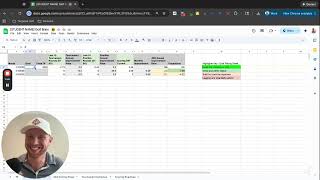
Connor Stirling Peterson shows junior golfers how to track stats that actually matter. Most miss the gap between range and tournament play. Set a Division-I target, track metrics like greens-in-regulation and 3-putt rates across rolling 10-round samples, then use a spreadsheet to flag what's broken: strategy, swing, or mindset. His students improve about four shots per year.
Chapters
All right, what is going on? In this video, I'm going to be covering the biggest mistake that I see parents and junior golfers making when it comes to tracking their statistics. So this video, like all of them, is going to be geared toward helping your child play Division 1 golf. That's all I talk about here. And if you want to see more videos like that, you know, go ahead and subscribe to the channel. This is all we talk about. I try and come out with 2 videos per week just to really make sure that you guys understand all the little nuances of this process, because it's pretty substantial. It's not as simple as just go get a weekly lesson. It was really that simple, and you know, there'd be all sorts of kids playing Division 1 golf. But you know, that's obviously not how this works. So when we're looking at playing— at tracking statistics, it's super important. Most people, they just think, oh, I'm just gonna go sign up for Decade, or like, I'm gonna go sign up for Clipt or some stat tracking tool. And that just couldn't be further from the truth, right? The whole reason that we track statistics is we're going to be able to do something with it, right? It gives us insight. And so it's kind of funny because I do all my coaching with students, I do it virtually, and some parents are like really taken aback by that. They're just like, what, you don't see my kid, you know, in person? You don't see them hit golf balls? Like, what's up with that? And, you know, they think that there's some kind of drawback there, and it couldn't really be farther from the truth. It's actually the coach as bad as it sounds. The coach that sees them on the driving range that doesn't have their statistics is actually flying blind because they're just looking at whatever's, you know, going on the driving range. And, you know, you tell me, does your child play the same way on the driving range as they do on the golf course? Almost certainly not, right? The rules of the driving range are entirely different, right? So let me give you a great example. If you hit 10 balls in the driving range and 9 of them are Perfect. One's terrible. What's your takeaway? Our takeaway is that we are hitting the ball really, really well. Well, if we do that on the golf course, let's say those are tee shots. 9 of them perfect, right down the middle. One out of bounds. That's a problem, right? We just made double bogey there. It would have been better for us to hit 10 mediocre shots rather than that one bad shot, 9 good ones. Because the difference between a good one and an okay one off the tee isn't really that big of a difference, to be honest. You're like, oh, I went 10 yards further. Dude, who cares? Oh, that one was, you know, right in the middle of fairway. This was kind of like, you know, the left fairway, or it was in the rough, right? It's like, okay, what's your point? You know, it's like, short of being in the trees, it's not really a problem. And so there is a much greater emphasis when you're actually going and playing golf that you understand your game a lot better, which is why players who play a lot of golf tend to play better. right? Because they understand their game better, right? And so if you go with the first one where you just hit those 9 perfect ones, 1 bad one, what's your excuse? You're like, oh, I gotta work on my consistency, you know, my golf swing's not, not consistent enough, I gotta, I gotta go figure that out. And that just couldn't be further from the truth. If you guys ever watch those every shot videos on the PGA Tour, or you watch tour players, you'll watch them— odds are they're gonna hit 3 to 4 bad tee shots. Tee shots are just not where they're aimed, not where they're trying to hit the ball. But in almost all cases, especially when they're actually, you know, had reasonably good rounds, they still find it and they still make the most out of it. Usually that's making bogey. Maybe they get lucky and they make par, right? That's typically what that looks like. And so, for lack of a better term, it's just whatever's happening on the driving range is just so universally different from what happens on the golf course, right? And so we need to have the statistics to see what's going on, right? And there's different levels of statistics, right? So there's the big picture statistics— are we on track to play Division 1 golf? Something I talk about a lot. But then there are more nuanced statistics. How are we doing our last 10 rounds? How, like, you know, how's our current, you know, uh, junior golf scoreboard scoring differential trending? How is our greens regulation trending? How's our penalty rate trending? Is it going in a good direction or a bad direction? How close is it to where it needs to be long term, right? Those are all things that we need to know. We need to see them together, right? They can't just be random stuff that is just like, oh, I need to get my scrambling to a particular number that's just arbitrary, just made up. So I recently started working with a student where he told me, hey, you know, my goal is to get to 60% up and down, you have 60% scrambling. And I was like, we're where'd you get that number? Like, how'd you come up with that? He's like, well, you know, that was just kind of like the number that we said. And it's like, okay, cool, yeah, I guess it's better than nothing. Um, and obviously we changed that, but it's like, that's how a lot of players think about statistics. Like, they just come up with like random stuff, or even the coaches come up with random stuff. It doesn't make any sense, right? It's not actually backed by math. So let me walk you guys through the math that I have my students do, that I'm doing with my students, right? So first things first, we like to set a goal. What are we trying to get to, right? If we're trying to go to Stanford, it's different than if we're trying to go to UConn, as an example, right? So we want to know where that's at. I've got other videos on the channel that walk through how to get that exact number of what scoring differential you should be aiming for. Also want to be super clear, there is no hard and fast rule of like, this is exactly it, right? But there's a range, right? We just want to be able to find that range and use our best judgment, right? If I tell you, hey, here's a program that's recruited players from -7 to -4, And, you know, over the last year, you know, they recruited some people at like -6. Like, what would your, your guess be? They're like, well, if I wanted to make this absolutely certain, I need to get to -7. It's like, if I wanted to be reasonably certain, you know, -6 is probably fine. -5 is probably fine. Um, if I'm at -3, even though they had recruited that in the past, it's probably not as good of a chance. And set your own goal, right? You know, like, that's— it's not that crazy. Okay, so we've got the class that we're in. right? That doesn't change. I like to look at last 10 tournament rounds, last 10 practice rounds. Where are we at? How are those things trending, right? How are— and how are they also just looking relative to each other? Then I like to look at scoring differential, right? Where's our scoring differential? That's kind of our North Star on Junior Golf Scoreboard. Where's that at? How is that trending over time? What does that have our current pace at? And then where does that leave our projections, right? Are we on track to to hit that target, yes or no? Now once we've got that, let me go ahead and move my head here. We can drill down, we can start saying, okay, let's look at this player's game and say, why do we shoot the scores we shoot, right? Why are we in the positions that we're in? And so there's a few stats that I like to track for that. First and foremost, you guys wouldn't believe how difficult it is to get junior golfers to track their rounds on a weekly basis and not like just play rounds of golf on a weekly basis. I can't— there are so many junior golfers that get weekly lessons or multiple lessons per week, but there are just so few that consistently play golf. It is absolutely mind-boggling to me. And, uh, yeah, it is absolutely mind-boggling. So that's the first thing we want to track. I want your child to play 1 round of golf per week. And I want them to have one practice session per week, and I want them to always have a ratio of practice to rounds of golf where we're playing more golf than we are practicing. Why is that? Well, when we look at this, if we practice something, what's the point of practice? The point of practice is to shoot lower scores, is to improve specific skills. If we wanted to get a little bit more detailed there. And so if that's the case, if we know that that's the case, then if we go and practice something, how do we know we got better? Well, we have to go and play golf, right? And we can't just judge ourselves based off the last round that we played because there's too much variance there. So we have to look at ourselves over a rolling 10, and we have to have a process for getting these results that we're going into practice, we're doing something in a particular way to be able to get a consistent outcome. Right? So people say, I want to be more consistent, but they don't actually do things consistently, rather just do random stuff. Um, so anyway, we're going to track the rounds we're playing. We want to track penalty rate, greens regulation, scrambling, 3-putts, birdie conversion rate, and the actual scoring average. Those are the ones that I like to look at because they allow me to project what the player should shoot on average, and I can see how many extracurriculars do we have in there, kind of narrow down what those are. And it just allows us to see like, you know, where's the player at, how are they trending month over month, right? Like, where are the statistics moving? Are they moving in a good direction or a bad direction, right? We want to see the same thing for practice. And each one of these statistics correlates down to specific skills, right? And we can actually— I've actually built logic into this spreadsheet here where we're going to be able to see, hey, well, You know, if these numbers are, you know, closer to where they need to be, right, it's going to dynamically change where the focus needs to go because I've actually built out the formulas on this, just like where the math ends up, you know, ending up. So it makes it easy for students to understand, hey, here's where I need to go next, here's where the focus needs to go, right? You know, if I move this to like 75%, then it becomes a birdie conversion rate becomes an issue, and then obviously this needs to change. So, you know, that's how it works, right? So it's dynamically changing based off of how the statistics are coming in. You know, in this case, you can see his 38% is, uh, highlighted bright green because if you guys actually look up the birdie conversion rates on tour, um, best players tend to be around 36%. That's where Scottie Scheffler is. So is it reasonable that a kid's gonna stay at 38%? Almost certainly not. All right, so we're able to see this stuff. We're also able to see things like how do we compare in tournaments comparatively to practice in this player's particular circumstances and their statistics, because this is kind of like dummy data. But in their case, they're 3-putting 300% more in tournaments, right? So when people look at me and they're just like, well, Connor, you don't see my kid play golf, like, how are you able to advise and tell us what to do as far as like strategy goes? I'm just like, well, I've got a red flag here to say like, hey, there we have the skill set in practice, we can actually do it on the golf course. But there's a disconnect in tournaments. And I can say why. I don't even have to look at anything else, right? I just know instantly, hey, this is a problem. Same thing with compound errors, which again begs the question, why are we making those kinds of mistakes? What are the mistakes exactly, and how do we go about fixing them? And that's going to tell us something that we need to do strategically, mentally, or mechanically. Those are essentially the three options, right? On the off chance that we're not practicing— obviously we need to practice, but I'm telling my kids what they need to do in their practice, so that's not really on the table, right? So we've got strategic, mental, or mechanics. More often than not, it's very rarely mindset, as often as you guys, you know, likely think that it's mindset. Um, mindset often gets used as kind of a catch-all, you know, kind of term where it's like, hey, I want to excuse my poor play, I'm going to call it mindset is, is the issue, right? Usually it's strategic or mechanical. Um, those tend to be the biggest issues that I end up seeing, um, once we're actually practicing effectively. Right? So the reason why practice is so effective is if I say, hey, let's say, you know, this player's statistics, right? Let's say they're just working on like 10-foot putts, just as a hypothetical example. Well, if I get them working on putts inside 5 feet and lag putting, well, obviously that's going to drop their, their lag putting, you know, or their, their 3-putt rate pretty substantially, just because they're not putting in any time into an area. If we work on it a little bit, probable to make progress. After that, it's like, okay, cool, what's— what are the strategic things we can do, right? If they're trying to get every putt past the hole, well, from 30 feet, that's going to start shooting them in the foot because they're gonna have some 6-footers coming back, right? So understanding the math with that, um, or, you know, it could be mechanical, right? I understand I'm trying to stop this ball dead on the hole, but I just can't do it, right? Like, I'm putting up and downhill, working on all that stuff, I just can't do it, really struggling. And then we might have to look at, you know, mechanics. We have to— might look— might have to look at acceleration profile, right? Those are all things. I had a student the other day where they had a putter that was just way, way, way too long. And so like, that was the issue, right? It was actually— it got into a little bit of equipment. Point being, you can see the stuff through the statistics really, really easily. And that's why I spend all my time coaching in this particular way, because it allows us to quickly see, here, here's what's going on, here's what we need to do. Highly, highly efficient. Most golf instruction, most people's approaches in your golf is just hit balls until your hands bleed, which doesn't make any sense to me. I don't think it works very, very well. I think some people get lucky, but, you know, coming from personal experience, doesn't work for everyone. And so it's really important that when you guys are tracking statistics— to kind of sum up this video— when you guys are tracking statistics, it's important to be using those stats to make a particular change, to understand how your game works, and to know what you're going to do with that information. Because you just have your child start tracking their statistics, it's not going to do anything for them, right? It's just some other random stuff they're going to go do, and it's completely unhelpful. We want to be able to track our statistics to know, hey, you know, my greens regulation isn't where it's supposed to be, you know, right? Like, I need to get my greens regulation up And so I'm going to do this, right? I'm going to hit balls in this particular way, or I'm going to make this adjustment to my swing to create a more predictable ball flight. And I'm going to go play golf. And then these numbers are going to change in a positive or a negative direction. And then we're going to rinse and repeat that process. If you're able to do that consistently and you have realistic benchmarks, not some made-up benchmark, like, you know, I need to get 60% up and down rate, then you're going to be able to make progress. And for the most part, that's why the students that I work with make the progress that they do. Um, average player I work with improves by about 4 shots per year. About 67% of the students that I'm working with who are ranked are on track to play Division 1 golf. And again, it's just following this process. So this is something you guys want help with in a more detailed approach. You're just kind of like overwhelmed by all the numbers and you want to make it really, really easy. Just go ahead, fill out the application below. Um, let's make sure your child's in a good spot where I can work with them. Um, fill out an application, book a call, we'll talk it over. That way you guys don't have to worry about all this stuff, um, and I'll guide you guys through it. So if that's something you're interested, go ahead and fill out the application below. Otherwise, hope you guys enjoyed the video. Go check out some of the other videos on the channel going through different elements of helping your child play Division 1 golf. All right, see you guys in the next one.










