The 3 Biggest Mistakes Parents Make That KILL Their Child's D1 Chances And How To Fix Them
A junior golf coach breaks down three mistakes that derail D1 recruitment: not understanding Junior Golf Scoreboard rankings, playing the wrong tournaments or too few of them (need at least four ranked events), and lacking a data-driven plan to track scoring differentials and fix weaknesses like three-putts.
Chapters
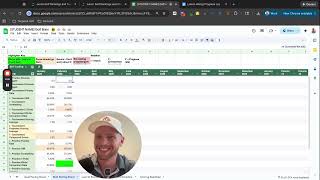
All right, what's going on? In this video, I'm going to be breaking down the 3 biggest mistakes that will kill your child's chances of playing Division 1 golf. If you're new here, this is all I talk about is helping junior golfers develop to play Division 1 golf. That is not to present this like it is easy. Technically, if you just Google this, playing Division 1 golf is literally harder than getting into Harvard. So I'm not by any means saying, hey, by watching some free YouTube video, you're going to be able to go and play Division golf. That's not what I'm saying at all. It's just me handing down the lessons that I've learned working with, at this point, over 50 junior golfers and helping them develop to play Division 1 golf. All the students that I'm working with right now, about 67% who are ranked or on pace to play Division 1 golf. And again, that doesn't mean that, you know, just by watching this video that that's going to work out for your child. That's just a little bit of context for, um, what's going on here. So let's go ahead and start breaking down these 3 main things that I see as absolutely kill families. Number one is you guys don't understand ranking, right? That's the first thing that kills families is they just don't even have a concept of rankings and how important rankings are. And so I talk about rankings all the time and I get pushback on rankings, right? People try and come up with all sorts of other reasons of other things that are supposed to matter or something like that. But here's the deal, we can actually go to Junior Golf Scoreboard and see all the players who recruited back to 2018 2018. We're able to see where each one of these players was when they got recruited. And as you guys can see, looking at their class rank, there aren't gaps, right? Like, this is consistent. And so if your child wants to play Division 1 golf, it's not a guessing game. It's not something you just go out and like work hard, or God forbid somebody tells you just be good, right? You just need to figure out what is the actual target, like where are they trying to get to How much time do they have to pull that off? Then what do they need to do in order to bridge that gap as quickly as possible? That's literally it. Okay, so how do we actually be in a position where we can even see this, right? Because you might look at this and say, hey, that makes sense. Can we get— need to get to a -7 scoring differential to get recruited to Georgia. Great. How, how do we even get ranked? It's really, really simple, which kind of leads me into my next thing here. You're not playing in the right tournaments. So, you know, you guys might be navigating different websites, um, and that, that's all just kind of like a more difficult way to do this. What you really want to do here is search your state. So let's just say it's California, and you just want to search for, you know, all the tournaments that are in your state. I'm just going to look at California in March here, and we just want to be able to go down this list and say Hey, you know, is this tournament near me? If your child isn't already ranked, just by going here, looking at rankings, honors, and then looking under boys and girls and just searching their name. So just literally going in here, searching their name, and looking them up. If you don't see them right away, then you know that you need to be ranked. You need to play in a minimum of 4 tournaments to be ranked. And so, you know, we just need to go out and find those for 36 whole events, right? And so if your child is not ranked, you know, they're at least short one of those tournaments. And so you just want to go down this list and pick out those tournaments that are appropriate for your child. Now, if they're already ranked, the tournament selection can be a little bit more nuanced, but it's important to kind of keep the right caveats here. If they've got a scoring average over 77 in tournaments, main concern needs to be just lower their scores. Tournament selection really starts to matter when they're in a position where, you know, hey, we're at a 74, 73, or 72 scoring average, but, you know, our scoring differential is still too high. That's a topic for another video. The main thing I want to address here is, you know, first of all, we don't know about rankings. Second of all, even if we did know about rankings, we're not playing in ranked events, right? So those are the first two crucial ones. So now, third one potentially most important, is you gotta actually have a plan to get there. You actually have to know what you're doing. So when I'm working with students, like we're setting a goal, we're seeing where we're at on our scoring differential, we're seeing how fast we're improving as we update this, and we're seeing where we're projected to be based off of what our current class is and how much time we have until recruiting is actually going to happen. So, so crucial to actually know, hey, here's where I need to get to, here's where I'm at today. Am I on pace? We need to be able to see that on a, you know, at least a monthly basis, right? And then we want to be able to see within our statistics, okay, cool, you know, what are my major statistics that are driving the scores that I'm shooting right now? Where are my major opportunities? And having an easy way to, to understand that. So if you guys are seeing this spreadsheet here, um, don't, don't try and build this out. This took me hours to build, and so it's something I give to all my students And this is just to make this process easier for them. It's a relatively new spreadsheet that I built for them. But again, just to make this process as easy as possible. So we can see based on the statistics, where does the focus need to go? Right? As you guys can kind of see at the top here, I've got a little key shows us, hey, you know, if our 3-part rate is 9.86%, all our other statistics are where they are, then that needs to be the focus along with these compound errors here. So I have thresholds that I've found. Are the most— the easiest to get to, right? And there's a certain threshold where we can't really get above that. Obviously you can't improve over zero, as an example. Um, long story short, last piece of this is tracking your statistics and actually knowing what to do with that, right? I can say, hey, we need to get 3 putts down, but we can't just wish 3 putts will go down. We have to say, okay, well, digging into our statistics, where specifically, you know, why are the 3 putts happening, right? Is it because we can't make short putts? Can we not lag putt effectively? What's going on? What are we doing to solve that, right? So when I'm working with a student I'm giving them the literal practice plan of, hey, here are the drills that I want you to do. Here's the short game, here's the approach play, here's the tee shots that I want you to do, here are the adjustments that I want you to make. I'm tracking where they're at on Junior Golf Scoreboard. I'm tracking how their stats are trending in tournaments and practice, and I'm tracking where those biggest opportunities are. And I'm just saying, hey, are we trending in a positive direction? You can see scoring differential here, 3.59. 2.7, you know, then 0.94, then 0.19. And so we can see for, for that player, hey, we're on track to reach these goals, right? And so it allows us to, at the same time as having this long-term vision here, we're also able to say, what do I need to do today and how well is that working? Like, is that working? Do I need to make an adjustment? So that we can always dynamically change that month over month. That's really how you're going to see progress, right? So if your child wants to play Division 1 golf, this is what they need to do. They to be ranked. They need to understand this whole process of really trying to get to where they're at right now. You need to be playing in ranked events, and they need to be actually using their statistics and using that to build a plan of what they're going to do, and then measuring and refining that, right? Now, if that sounds like a lot, you know, be honest, if you don't have the background in this, it is a lot. And that's why I do this. This is all I do. I work with junior golfers, help them play Division 1 golf. I don't have a lesson bay or anything like that. All the work is virtual, and so this is where I put all of my focus, and it, you know, allows me to have the time to build out spreadsheets like this and to continuously be improving my process. So if this is something you want help with for your child, there's a link below where you can fill out an application to work with me. It will walk you through, uh, make sure your child's in a position where this is realistic for them. You guys will be able to schedule a call with me, be able to talk through your situation and see what makes sense and whether it makes sense to work together. So hopefully you guys learned something in this video. If you guys enjoyed it, go ahead, leave it a like. And if you're new to the channel, go ahead and subscribe. Um, like I said, we cover a lot of topics like this, but it's all related to helping junior golfers play Division 1 golf. So hope to see you in one of those, and I'll talk soon.










