The Connor Peterson Show | Episode 1 | Navigating Junior Golf with Chris & Jaden Soong
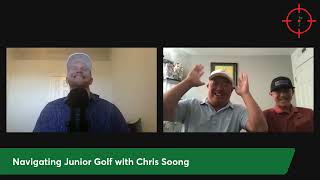
In this inaugural episode of The Connor Peterson Show, host Connor Stirling Peterson interviews Chris Soong, a former tennis player turned golf‑enthusiast parent, and his son Jaden Soong, a top‑ranked junior golfer from California. The conversation traces Jaden’s early exposure to golf at age three, the influence of Tiger Woods and the Netflix series The Short Game, and the family’s discovery of the US Kids local tour. They discuss the structure of junior golf pathways – US Kids, SCPGA Junior Tour, Toyota Tour Cup, AJGA, Underrated Tour, and USGA qualifiers – and how playing against stronger fields accelerates development. Chris shares the importance of community, camaraderie among families, and the balance between multi‑sport participation and focused golf training. The duo explains how they handle emotional setbacks, confidence swings, and mental preparation, including a TPI‑guided fitness program that boosted Jaden’s club‑head speed. They also cover practical logistics: school coordination, travel, financial considerations, and the need for flexible academic arrangements. The episode closes with parental advice about trusting the child’s decisions, stepping back as a coach, and fostering a supportive, growth‑mindset environment.
Chapters
I guess we'll figure out if we're gonna have the dog issues. Um, so what's going on, guys? Um, for, for everyone who doesn't know, uh, Chris and Jayden are, um, Chris is a parent of Jayden. Um, Jayden's an incredible, uh, junior golfer, one of the best probably in, uh, the country for his age. Um, And so I thought it would be really cool to kind of kick off this, this podcast by interviewing them and kind of digging through, uh, what's worked for them, kind of what their experience has been in junior golf. And for those of you who are also parents of junior golfers, uh, might be able to gain some, uh, insights from them. So thanks so much for hopping on with me today, guys.
Thanks for having us.
Yeah.
Yeah.
So I mean, when I look at you guys' story, like the first time we kind of talked together and I was kind of like looking at your numbers, I was Wow, these guys like really figured it out. Um, you guys are in California, which obviously incredibly competitive. I know we had the USGA, um, qualifier a little while back, so I definitely want to touch on that. But, um, just talk to me about like how you guys kind of like got into the golf, um, when we start, like how'd you guys get to where you're at?
Yeah, so, um, for me, I actually was a tennis player growing up and my grandparents introduced me to the game when I was 13. And it just really kind of stuck with me. I actually stopped playing tennis competitively after I graduated high school, and I started, you know, working in the executive world. And basically, you know, it's— they said, hey, if anyone plays golf, you know, you get an opportunity to play with like the president, vice president of the company. And I was like, sign me up, because no one played golf, because back then golf wasn't cool. And, uh, you know, lo and behold, you know, Tiger Woods comes along and the game just completely transcends and grows to levels that, you know, we could only begin to imagine. And so I said, if I ever have a kid, uh, I'm definitely going to introduce them to the game of golf. I think one of the biggest things is, you know, in anything we do, you know, again, we're Asian, we're not very big, we're not going to be very tall, so there aren't a lot of sports you can maybe you know, maybe become a professional athlete in. But I know that it definitely connected me, uh, in the corporate world to a lot of different— and opened a lot of doors for me. So, you know, I was half joking, I was half serious. So, you know, my wife and I, we, uh, she doesn't play any sports, she didn't play golf or anything. And, um, she ends up— we end up having our boy, our son. And, um, I said, okay, you know, it's, uh, he's 3 years old now, and let's see if he can hit a ball or whatnot. So I actually did a tee ball first, like just, you know, high-end coordination, and he was hitting a bat with a ball really quick. So I put a little golf club down on the ground and he smacked it pretty well, and I was like, all right, this is, this is pretty cool. And, uh, and then the drive, chip, and putt got announced by the Masters, and I'm like, oh, this is, this is great, this is awesome. You know what, he's gonna, he's gonna— we're gonna get to the Masters, we're gonna do the drive, chip, and putt. And, uh, and then as Jamie got a little bit older, you know, 4 or 5 years old, one of our friends actually, uh, goes, hey Chris, have you seen the Netflix series The Short Game? And I'm like, no, I, I don't, I don't know anything about it. And so we went, you know, I went and watched it, and it just takes you down this journey of junior golf tournaments by US Kids, right? And it was like the most amazing, coolest thing ever. And I immediately went on, you know, and looked up US Kids local in Los Angeles, and lo and behold, here's this, this local tour. And, um, so that, that is kind of what got us started down the, uh, the junior golf, uh, path.
Gotcha. Okay, that makes, that makes sense. Um, Jaden, what was kind of your experience with that? I mean, like, starting off at 3, I know— oh, when I, uh, when I talked to parents or somebody who's just like terrified of like introducing golf, they're like, golf's gonna be boring or something like that. Um, what would have been like for you?
I mean, for me, when I was that young, I didn't exactly know what was happening. All I knew is that I just really loved watching the game, playing the game. I just enjoyed it a lot. Um, I grew up watching Tiger, obviously, um, just watching the miraculous shots he could pull off, um, watching how he managed his game throughout the course. And I just wanted to kind of grow up and be like that, be like him. Like, and then as I got older, I realized, okay, I'm pretty good at this. Like, I could kind of do it. And then, you know, I had his support, my mother's support, all my family. So I just loved all the experience I was getting and was just trying to basically see if my game could compete against high, like, high-level players as well.
Gotcha.
Cool.
Yeah, no, I mean, that's, that's awesome. That's— it's funny to hear you bring up Tiger because every now and then when I talk to kids, I'm just like, oh, like Tiger did this. I'm just like, man, like, that— it's been so long since Tiger was like great, great. I'm just like, is this like even like a reference people get? Like, it might just be like, oh, Jack Nicklaus used to do this. But, um, so I guess like you must have gotten— because you're 13, right?
Yeah, 13.
Yeah, right. So you must have gotten like kind of like the back end of Tiger, like back in like 2012, 2013, kind of seeing like some of the comeback. Because like I remember when I got into golf, I was— I think I really started like following it like maybe in like 2008. So it was like right when he like won the US Open, I was like, this guy is crazy.
Yeah.
And then everything obviously went south for him after that. But then seeing him come back and then the Masters It's incredible, kind of like ripple effect that he had on golf. I mean, I don't know if anything's gonna come close to that, like even with all the talent that we have today. Like, it's, it's, uh, it's crazy. Um, so, okay, so you get into golf, um, you got your local tour. Uh, obviously not everybody who, um, you know, feels like they're good at golf and has a local tour, um, ends up being as successful as you guys have been. So like Walk me through, like, how did that happen? Was it just like you just like roll out of bed and you're like really good? Did you just like get a really good instructor? Um, like, talk, talk me through that.
Yeah, so, um, you know, we just, we just like— look, so I, I, I'll never forget his first time that he played in his first, you know, US Kids tournament. Um, it was at, um, Los Robles in, uh, in, uh More Park or out that way towards, um, and, uh, you know, I did a couple practice rounds and, you know, it's 9 holes, I don't know, 1,500 yards or whatever it was for 5, 6-year-olds. And, you know, he shoots a 45 and I'm like, like, that's really good. Like, you know what, I can, you know, that's, that's, uh, that's a, that's an acceptable number, you know, at that age, you know. And, uh, so he goes and plays his first tournament, right? I'm caddying, get to carry the little bag with I don't know, 5 or 6 golf clubs that were— I kid you not, I mean, they were so short. The guy at Roger Dunn had to cut it down, and, you know, the grip handle was almost to the, you know, to the, to the hosel because it was that— it's like, you know. And so, um, he goes out and he shoots a 52, and I'm like, my world's over. It's all— it's over before it even started. Oh my gosh, what's going on? How does he shoot a 52? And, um, I was like, all right, well, that was a good try. Maybe we'll find something else you can do now. So, uh, yeah, I mean, I'll never forget all that, right? It was just, um, it's, it's been such the journey in the process. And honestly, uh, a big portion of the whole journey is the parents, uh, and the kids, right? So meeting other parents and kids, uh, going through similar, uh, journeys and whatnot has been probably one of the biggest pieces that has really kind of kept us in the game. I can't tell you how many amazing families we have met over the course of the years. And I don't know if it's like that across the country. I know I have some other families that tell me it just seems like in California there's such a great connection with so many people and everyone's willing to help each other out, right, to make the kids better. And, you know, and I'll tell you that that's a, that's a big piece of it, too, right there, you know, is is just seeing the camaraderie of everyone coming together and trying to help each other's kids get better. Right. And there's no doubt. I mean, I think, you know, this and I'm sure you've talked about it and we hear it many, many times, but it's really true. If you want your kid to get better, they got to play with better kids. It's just, you know, it's not a comparison thing. It's not to say, hey, why can't my child be like that? It's to say, hey, you know, learn from what you're seeing from them, what they do. And do you have the ability to do it? And then obviously, you know, definitely coaching is a big thing. Um, I, I definitely support the idea of being multi-sport. Don't play just golf or, or any one sport. Try to really mix it up. Um, you know, he played baseball and he played golf. Um, the only thing I did differently with, uh, with that was I just didn't want him swinging a bat right-handed because it actually messed up the golf swing. Uh, or at least I— so I, uh, I actually I told him, hey, you're gonna swing a bat left-handed. Look, you're not hitting home runs. Who cares? You're 4 years old, you're 5 years old. So just go out and have some fun, you know, play baseball lefty, and, uh, and you'll play golf regular. And, and, and then, you know, as far as, um, being competitive, I, I will tell you from our experience that, you know, sending Jaden to the US Kids World Championship at Pinehurst starting at 6 years old, I felt helped develop him as a player, as a competitor. Um, you're, you're introduced to an international group. I think, you know, at 6 years old there was probably 120 kids, I think, you know. And then again, it's 9 holes, 3 days of golf, but you're in a completely different setting, right? And I, I just think it really helped to build and develop his character as a competitor. You know, he finished Top American as a 6- and 7-year-old, and then he tried to, you know, do it as a third time as an 8-year-old. But again, I think it really helped us with his development to, to have that experience.
Yeah, that's really cool. I mean, I think you touched on a lot of really interesting things there. The first one I kind of like want to touch on a little bit is like you said, play with better kids. And I think I completely agree with that. And one of the things that I find like really interesting, obviously like you guys have a little bit of an advantage there with like being in California. You guys won the lottery on that one for, for golf and for a lot of things. Um, but one of the things I get a lot of pushback on is I'll say like, hey, playing the best tournaments that, that you can play in, you know, playing these better events, push yourself trying to get into these qualifiers And all the parents tell me, it's like, yeah, but like my kid, you know, they're not going to be as competitive or like whatever. So like, like, how would you speak to that? I mean, when you're playing in maybe a tournament where the other kids like are a lot better than you, like how, how do you guys see like handling that emotionally? How do you guys see handling that from a development perspective?
Again, I think it really is all about perspective, right? And how What type of expectations are you drawing up, or are you trying to come up with, you know, when you talk to your junior player? Um, for me, you know, again, it was one of those things where I, I think I, I saw that Jaden, you know, mentally could handle, um, playing older kids, you know. Um, he actually grew up— I think he was probably at like 8 years old, um, playing with a couple of older kids, local kids here that were really good. And I think it just again helped develop his game and helped him mature in a way that allowed him to, to play up in tournaments. Right. But everybody is different, right? There is no roadmap. You as a parent have to really kind of look at and decide, you know, what you think is best for, you know, your junior player, you know, and again, right, talking to your coach, your local coach or whoever it is, you know, but US Kids, for instance, right, they don't let you play up. You have to play the age division you're in. right? Um, you know, but then there happened to be some other local tournaments where you could take, you know, I think at the time he was 10 and I put him in a, uh, 12 to 15 year old event or whatever. And, you know, I mean, it definitely got some looks, but the, the tournament director said, I know he can play, um, so that's fine, you know, I know he won't slow anybody up or anything like that, so, you know, we'll let him play in it. And, uh, but, but here's the thing, right? I mean, whether you're in, you know, whether you're playing tournaments, you know, starting at, you know, when you start getting into that 12-year-old age group, it's a 12 to 19 or 12 to 18, right? I mean, there are tournaments that may be smaller that you'll play at 12 to 13, 12 to 14, but eventually you're going to get to a point where you're going to play a large age range. And the sooner, um, your, your, you know, your junior can, can adapt to that um, the better, you know. And, and so here locally we have the SCPGA Junior Tour, um, which has a development part of it, right? Then they have a Players Tour, and then they have the Toyota Tour Cup. And so it's just a matter of, you know, you understanding, you know, where your kid is at. But the most important thing is, again, it's golf. There's only one winner in these, in these events, right? You have to be realistic to progressions, right? So I will tell you Again, I know it's a long-winded answer, sorry, but you know, Jaden started this year out, um, so he qualified for the Toyota Tour Cup in December of 2022 at 12 years old. Um, his first 4 tournaments or 5 tournaments on the Toyota Tour Cup tour were not his best. I mean, he was shooting in the 80s, he was finishing, you know, somewhere between 25 and you know, 50 out of, you know, 65 kids. And at one point, uh, I think his third tournament in or whatever, he finished 62nd out of 65. Okay. And he didn't cry or anything like that. I didn't, you know, I didn't get upset. I said, hey, that's got to be motivation for you to figure out what do you need to do, you know, to get better. How do you, um, you know, whether it's course management or whatnot, because You're out there watching these players and you see what they're doing. What are they doing differently, right? Um, so then we take a break from Toyota Tour Cup. We end up doing, you know, some other stuff— the US Open, blah, blah, blah— all that, all that stuff kind of happens. And then we get back to the Toyota Tour Cup in the fall, and he has about 3 or 4 events to play to hopefully get a top 10 finish so he can be exempt for next year. And just goes on a run. He, he gets second place he gets 4th place, and then he gets a top 10 or whatever. So that's all you can ask for, right? I mean, whether it's you as a parent or you as a, you know, when you go to work, you just want to see them growing, and you're hoping that, that they're, they're growing from that, they're learning from that. And if they are, great. If they're not, then you have to kind of reassess and kind of rethink things out.
Yeah, that makes a ton of sense. So like, I want to dig into that a little bit because, you know, one of the things I find kind of like when working with students and having played golf myself is one of the things that's the most difficult for kids to really handle is like, sometimes you're going to play like not good golf for like a stretch and not like you had a bad tournament or two tournaments, but like you're going to have like 1, 2, 3, 4, 5 tournaments and your headspace kind of needs to be like, okay, cool. Like we're getting reps. Like we're figuring out like, what are the things that break under pressure? Like, what do we need to learn from this rather than like, oh, I suck. Right. And so, um, like, talk me through, like, how— Jayden, like, where was your headspace at going through those? Um, we haven't talked about the USGA, so maybe this is a good time to talk about that. Is your headspace going into that? And then kind of like, what did that do for you, like, going forward? Like, what changed?
Yeah, um, I mean, those events that I played before shooting in the '80s was that just hurt a lot. Um, it got me to kind of just rethink, like, what can I do differently, um, in my next tournament to just keep improving and stuff. And I think at one point when I finished 62nd out of 65 kids, then I just started working really hard. Like, I started waking up probably at like 5 in the morning to go to the range at like 5:30 to figure out my swing. like before school, just so I could try and figure out my swing, figure out what, what am I doing wrong? Uh, is there something I need to fix? Talking to my coaches. Um, and then I had a better tournament after that because I was able to think things out. And then the USGA thing happened. So my dad just put me in that tournament to just see, well, is he like, what can he do against these guys? Right? Like they're professionals, high amateurs, just playing the game for a living. And when I got there, I was like, geez, these guys are big. They're like grown adults.
And I was like, okay.
So I was thinking, well, just try my best. You know, there's not a lot of expectations for me out there. I mean, I was mostly just trying to figure out my game, compare it to the guys I was playing with, like see what are they doing differently than me. Are they managing their game differently? Are they— is it just distance off the tee, or is it short game? Like, what are they doing, right? So I ended up doing like really good. Um, I— down the stretch it was not going very well, but I was able to kind of grind it out and just mentally get through it. And then I was able to qualify in after like getting through in a playoff. Um, so that there just boosted my confidence a lot, and I think confidence is a very big thing in when you're trying to compete at high levels, because if you're not confident in yourself, you're just putting doubt in your mind and you're not going to be able to compete at high stages against high, uh, players.
Yeah, for sure. Yeah, confidence is, is huge, and it's such a difficult thing to like kind you know, gather, you know, it's one thing to be— if you could just tell people like, hey, you just got to be confident, be like, all right, cool. It's a lot harder, harder to develop that. So like when you go to this event, like you're not necessarily playing amazing and you're kind of going in like, all right, part of me is like, these guys are huge. Like, this is interesting. What do they have in their game that, that I don't have or do have? What did you see? Like, what was the difference between their game and yours? Or was it a little bit closer than you might have expected?
I mean, some parts was definitely closer than I expected, but I definitely could tell that they understood what they were doing and they understood their game. So it was like sometimes maybe, um, playing against high-level people, you want to try and stay close with them. Like maybe you want to hit the ball as far as them, you want to try and outscore them. You're seeing what they're doing and you just want to beat it. But it's like what they do is they just focus on their game. They're not even worried about what the other guy is doing. They're just focused on what is the best shot for me and what can I do in this situation. So they were just really good at managing their game and mentally just staying in the moment and being really strong. So I think that was just a big thing for me to see because sometimes when I play, Like if I see a kid in the field back then that was really good, I was like, oh, I wanna see what he's doing. Like I'm checking what he's doing all the time. And it's like, you can't do that. You just need to focus on you. Like it's you and the course out there, not anybody else.
Yeah. And I'm glad, I'm glad you're saying that too. Cause that's one of the things that I can always tell someone's a little bit messed up and they're just like, oh, I finished like this versus all these other kids. And like, that's kind of bummer. I'm just like, that's not even like the thing you should be focused on. Like you Like, I was kind of like screaming about this, and I'm like, get your scoring average down playing good tournaments.
That's it.
That's all of like junior golf. Like, that— if you want to play college golf, you want to go Stanford, just like get your scoring average as low as humanly possible and playing the best tournaments you have access to. Like, that's it. Like, you do that, you're going to be as successful as you want.
I mean, the one nice thing is we were doing junior golf camps since he was like 9, 10, okay? Like, going to colleges right? And the one thing that rung home to me from every college coach was the results are the results, right? But they just want to see, you know, as early as you think it's reasonable to do, to put your kids up against the best and put them in these pressure situations to see whether or not they can handle it. Okay? Because that tells them a lot about their character, their development. So great. You know, one of the best things is, you know, they say is, look, in golf, everyone's great is great. It really is, right? I mean, like, you know, but it's when you're playing bad, how bad or how good is your bad? And that's really what separates the kids, right? Or anybody really. I mean, that's even the adults, right? It's, it's literally when you're playing bad, how are you right here, right? And what are you doing to understand, I don't have my best game today, but I'm gonna go out there and I'm gonna shoot a score anyway. right? Tiger Woods, front 9, uh, at, uh, what is it, the, um, the, the Tour Championship, whatever. He missed every fairway, still shot 300. Like, how do you do that, right? And that's really what I try to, to focus on with Jaden is, you know, again, everyone's gonna have good days, and everybody knows how to play on good days. It's how do you handle the bad days, or you know what, it just wasn't your weekend or your week or whatever. What do you get, you know, how do you handle that?
Yeah, for sure. Now, I, um, I remember, I think it was about a year ago, I was playing in the— I'm in Memphis now, I used to be in Las Vegas, and I was playing in the county AM with, uh, guys in Las Vegas or Nevada, like Golf Hall of Fame. And I was, I was pretty happy with myself because I was in the same group with him on the second day. So I was like, all right, cool, like we're doing pretty good. Yeah, I get to play golf about once a week, so I was like, this is awesome. And I was playing with them and I was I wasn't even sure how my game was. Like, I was just kind of approaching, I was just like, yeah, you know, like, we'll see how this goes. Like, I don't know if I'm any good, like, whatever. Ended up being better than I thought I was. I went out and played with them and I realized, I was like, oh, like, the thing that's separating us, or like what we're doing from anyone else in this, is just like, we're just not making any like dumb, dumb, dumb mistakes, you know? Like, we're gonna miss some greens, we're gonna make some bogeys, we're gonna 3-putt every now and then from, you know, decent distance. It's like we're gonna hit some bad shots, but it's like, do I find the golf ball? Did I like miss the green and it's like a place where I could hit it? You know, like those kind of like basic things is just like so much like what dictates good from, from bad. And you think about like on the one hand it's like, oh, 72 or 71 or 73 is like hard score to shoot, but you like break it down, what it actually takes is like it's mostly like hit the ball in play, like hit your wedges on the green. Like, try not to 3-putt that often. Like, don't make double when you miss the green. Like, it's, it's really basic stuff, but then it forces you to look back and around and be like, huh, well, how come I make doubles? How come I can't hit a lob wedge solid? Um, so no, it's just so funny to hear you guys say that as well. It's just like, it's, it's really about managing what happens when things go bad rather than like, oh, I've got my best game. Because everyone knows it's just like at the pin. You hit it there, you make birdies.
Um, it was funny, his coach assessed, you know, did like a mental assessment. You know, Rick Sessinghaus is— he's a, uh, you know, he does both mental and swing with Jayden. But from the mental side of it, you know, he assessed him as a golfer and his personality. And I think it was a D—
was it a D?
Like, I forgot what the D stood for, but I'm gonna say dynamic, right? So he goes, you're a player that's gonna make a lot of birdies. Like, it's just, you know, you're— but, but you're also gonna bring bogey and double bogeys into play, right? So he just goes, so that's just what your round's gonna look like, right? It's gonna be one of those rounds where you could have a lot of birdies and shoot a really good score, but there will be days where you will have those bogeys and doubles, and it's, it's how are you gonna, you know, manage through that because you're that type of player. That's just what you're, you know, and That kind of really opened our eyes up a little bit too, right? To go, okay, like, now we understand the type of player he is and what a scorecard could look like because of it.
Yeah, no, that, that's a good point. I think it's so interesting. It's like when you're looking at your scorecard, it's really easy to be like critical of it, but I think that it takes a lot of maturity to kind of look at and be like, okay, this is kind of like who I am, and like maybe I want to like clean some of this stuff up. But I don't need to go into every single tournament and like critique the crap out of myself, you know. It's just kind of like, like I kind of played to like who I am and it kind of like worked out for me this time. It didn't really work out, I got some bad breaks, like whatever. Like you're trying to get better at that one thing, like go play in this next tournament, let's see how it goes. Um, so it's, it's just interesting how it always comes back to some of these like really like simple basic things. And golf's such a complicated game, you know, there's all sorts of information out there about the golf swing or strategy and, and all this different stuff. And it, for some reason, it always comes back to kind of like very like simple ideas, which maybe is just because we're like, you know, at a high level, you know, those things, everything else is just kind of obvious. But it's again like funny to hear you guys say that. Um, so after that, obviously, um, the USGA stuff, we start playing better, a little bit more confidence. Um, what's your guys' plan to kind of like keep up that momentum? Is it just kind of like keep on keeping on, or Or is there something you guys have in the works? Or how's that?
Uh, that's, that's a great question. And, uh, you know, we, like I told you, um, earlier, so we just finished playing, uh, the season. You know, he had his last 2-day tournament this past weekend, then he had the USGA Four Ball, um, yesterday with his, one of his really good golf buddies. And, you know, they did phenomenal. So, um, it, you know, we're gonna take a look at the AJGA and Toyota Tour Cup schedule, um, You know, for the AJGA the past couple of years, we've only played one junior all-star each time because of the scheduling and the fact that he was so young, I didn't really know what he should or shouldn't do. But, you know, now that he has exemption next year for AJGA events, we're going to look at the Opens, obviously the larger ones, and just try to understand what is the best opportunity. But again, the biggest thing is access, having the ability to try to do these events when you have to travel. You know, it's a 3-day event plus the practice round, so, you know, typically it's a week of travel. Uh, that's not afford— I mean, that's not cheap, right? That's, that's an investment. And, um, you know, it's something we, we, you know, thankfully to this point we've been able to kind of do more locally. Um, it will be interesting to see, you know, how much we can do, um, you know, at that next level, you know. But The other things that we're obviously looking at, you know, are the USGA stuff. So he does have the US, uh, you know, Open Junior, Junior Am, US Am that we'll be trying to do qualifiers for. Um, because he won the SCGA Junior Amateur in October, he got exemption into the SCGA Amateur, which will be held at Saticoy in July, and then the the SCGA Cal Amateur, which will be at Sherwood Country Club, um, in June. So those are some really cool, uh, opportunities for him again to, to kind of test himself now that he'll be— he'll be 14 at the end of January, so next year— and kind of see, you know, where do we get started with the new year and then what that looks like mid-season.
Gotcha, gotcha. Okay, cool. So I want to touch on the traveling, but before I do that, because I think, I think that's really interesting and how that ties to school. But before I do that, I kind of touch on something you just said there, which is opportunities. Like, one of the things that I think is, is you guys clearly have figured out, but I think it's important for a lot of parents to understand is like, when we think about tournaments and trying to perform in tournaments, if you go into like one tournament, you're like, this is the one, like, this is how it's gonna go. I was, I was kind of describe it like, like a lottery mentality. Be like, this is the one that's going to set over. Like, same mindset goes for like your golf swing. One day my golf is going to be so good, it's going to go out there and shoot 65 all the time. It's like, that's like, um, so like you just lined up there, you like, you talked about the AJGA stuff, you talked about some of the higher-end California stuff, you talked about some USGA stuff. But the thing that stands out to me about that is like you've got a, a nice lineup of like some very high-level events where you don't have to do well in like every single one of those to be like wildly successful with that. And I think that's just kind of an important thing to like draw attention to is like, you have that many opportunities, you don't get to go into any one tournament like this is the one, you're just kind of like, all right, you know, I've got my schedule and I'm just gonna go out there and do my best, right? So I just kind of wanted to like draw attention to that for anyone watching. But to go back to kind of like the travel and like taking that week off for like an Open, I think that's I think a lot of people struggle with that. So like, how do you guys think about that when it comes to like school? Obviously there's the financial part of it. I would imagine, Jayden, that there's at least some degree of like, oh, like we're doing all this for this, like I want to play well. Like, how are you guys handling that?
Yeah, so right now being in 8th grade, it's a little more flexible, right? You know, but high school I'm sure can be quite a bit challenging and different. Um, again, you know, one of the things that the junior golf camps— you know, one of the coaches said, hey, look, um, if you know, for instance, you're interested in East Coast schools, then probably look at an AJD event on the East Coast, right? If you know you're looking at— so it also can kind of direct where you might want to play tournaments is based on where you think you, or, you know, where your junior player wants to go for college, right? Um, I know Jaden has, you know, expressed his, um, wants to probably stay on the West Coast. He likes that better. But, you know, um, I don't know. Again, like I said, it's— it'll be interesting to see. Um, we, we had the great fortunes of, uh, playing on the Underrated Tour this year. And, um, you know, having the access to, to play on that tour that Steph Curry has, you know, with his, uh, sponsors including like, you know, Under Armour and CDW, KPMG, Subway, right? It, it really provided some great insights to, uh, golf in other parts of the U.S. And that was stuff that we haven't— I mean, yes, we did go to North Carolina, but in between that, really, there wasn't a lot of golf that we, we have played. So we got to see, uh, different courses, um, different, uh, types of grasses, like all the different things that, you know, and So having that, that access was amazing. Um, it was something that I truly believe, um, helped his development this year as well, right? I mean, being able to go every 2 and a half weeks to a different stop was just— again, it's not something we could have afforded, but, you know, through the, through the, um, Underrated, uh, tour, it, it, it, it gave us that, uh, that, that chance to do that.
Yeah, no, that's really cool. So like with, with school, even in 8th grade, like how, um, how do you guys handle that? Like what's it like talking to like, I guess, teachers, like getting the homework set up? Like, I mean, that's even, even if you get that okay, like Jaden, like that's a commitment from you to like get the stuff done even with, you know, um, even without the teacher being like, hey, right here, like do it, you know?
Yeah. I mean, I just tell my teachers, like, you know, I'm going on a golf trip, I won't be here, is like, what would the work look like and stuff like that. Some teachers are nice, some teachers are not so nice. So some of them will be like, oh yeah, I'll make sure to post it online for you. And then when you're able to just check it out, if you're able to finish it, that would be great. If you're not, I'll give you an extension of time. To try and finish up your work. So that's very nice of them. Some teachers are just like, well, you know what, if you're missing, it's your responsibility to check online and if I, if I post it or not and just get it in on time or else I'll have to mark down points. And I'm like, okay, I will definitely go and check it. So I make sure to kind of just set like a little reminder, like 'Oh, this is the class I need to really focus on. This class is giving me an extension.' So just making sure I'm communicating with my teachers and seeing which ones will kind of give me some space and which ones are being a little harder. So I mainly just try and do that. And then so I could focus on my tournament.
Gotcha. Okay. Yeah, no, that makes sense. I remember being in school, so I remember the teachers are kind of like that. Um, Chris, like, how do you, um, how do you feel about, like, how do you take that as far as just— because I know some parents out there have, like, reservations about, like, taking time off school and that, like, they feel like that might impact, like, academics negatively. I'm assuming you guys still value academics pretty highly, so, like, talk me through that, um, as a parent.
Yeah, I just tell them, look, man, if you don't make it in golf, you gotta— you better have something to back yourself up with.
So just being honest.
Like, you know, look, what is it, 1% make it to the PGA Tour? Um, so that— there's a big percentage where, you know, you, you don't— you got to have something to fall back on. And, um, I'm not saying you got to be to the extreme, uh, well, if you really want to be a PGA golfer, you got to just go all in. But, you know, you, you have to have your studies and academics. But I mean, we're not the crazy parents that are like, you got to do everything great, right? Where it just stresses them out. I mean, you try to work with them and you try to support them as best you can. He's doing good in most classes. I still don't understand how he continues to get a B in PE.
I did that one too.
That's a head-scratcher. I was just like, you know, but, but, you know, yeah, communication, right? Communication is key with the school. You know, LAUSD has actually been very, very generous to us and helping us, you know, and I know it's a challenge. There's no doubt about it. And there's no right answer to it. Again, it's a balance. And, you know, we've looked at homeschooling. We've looked at a lot of different things, but we want him to try his best. And again, I don't think he isn't doing it right now anyway, but to just live kind of a normal life, right? To just enjoy being a kid when you're not on the golf course. I mean, the person you see on the golf course is definitely not the person you see at home. So it is a very— it's just completely two different kids. I have a lot of people that remind me because, you know, when I'm at home, I'm like, you know, you're so mature, you're so responsible, you know, when you're on, when you're on the golf course, right? But when you come home, lights are on, doors are open, clothes everywhere, and you're like— so, um, so that's why I said, like, you know, it's, it's just trying to find— and again, for everybody it's different, so just trying to find that balance.
Yeah, no, that makes a lot of sense. That's, um, that's actually interesting you bring that up. So, like, I think this is an interesting topic for, for a lot of people, um, especially for, for the kids out there. Jayden, how do you separate like your life from like your golf? Like, this is kind of like one of the things I kind of find that if sometimes when kids are just like, it's golf all the time, it's always like, there's just like all-consuming, it becomes like really difficult to perform. So I'm just curious, like, what is that like for you?
I mean, for me I obviously love golf a lot. I'm very passionate about it, but I can't do it every single day for like 8 hours or whatever some kids do because I feel like just over time you'll burn out and it's just too stressful for me. I mean, I try and practice as much as I can, but I'll maybe get on the course like 3 times a week if there's no tournament. And then the other times I'm just trying to finish up my homework to try and get ahead or something. I play video games with my friends that probably maybe live a little farther away from me. So I just try and keep it like kind of normal, like just almost like a normal kid's life outside of golf. And then when I step on the course, like that's like my business time. Like that's where I'm focused. I'm trying to just stay in my zone and then not allowing like anything else to distract me. Or something.
Okay, gotcha. So actually, um, that brings up something interesting because I, I completely agree with you. And it's like, in my experience, like when we look at, um, the kids who are the most successful, it's like you think it's like you got to go, you know, grind for all day every day. And, um, I mean, I was that kid. I was a junior golf pro. I was like, let me just grind all day. And that did not work out. And I was looking around, I was like, how come there are these kids that like don't even spend that much time out here and they're like way better. Like, it's just super frustrating. It sounds like you're one of them. So what is, um, what is like normal, like a normal week for you? I'm sure you're out there playing golf. I'm sure you've got stuff you're working on in your game. Um, but like, how do you divvy that time up? Are you playing more golf? Are you practicing more golf? Um, what's your practice look like? Talk through that.
So a non-tournament week would look like Monday is, you know, you go to school, I wake up at like 6:30 now, and then I head out maybe at like 7:30 to school, get there by like 8, and then spend like whatever time till 3:20. I get out, I'll probably come back home and finish up homework and stuff. So that'll be like a Monday. Tuesday is a short day for me in school. So I'll get out and then I'll go to my workouts on Tuesdays. Wednesdays, I would practice golf with one of my friends. We either practice at like Brookside or thankfully he has access to Oakmont Country Club. So we'll try and just figure out where we'll go. I'll practice Thursday also with him again. And then Friday we have this kind of tradition with 3 of my other buddies that I've grown up playing with as long as I can remember. So all 3 go out to Brookside and we'll all play every Friday if there's still sun. We'll go out and play and just enjoy ourselves. So that'll kind of be like a non-tournament week. A tournament week is definitely a lot more serious. Like, I kind of shut down like video games, um, and I kind of prep. Like, I go to sleep earlier and stuff like that. And then Monday I'll be practicing, Tuesday's workout, Wednesday's practice, Thursday's practice, Friday's practice. Like, just to make sure I'm— when I step on the tee or whatever, my hands don't feel like, oh, I don't know what I'm doing, like I haven't played.
So Sure.
Okay. So, and then what are your weekends look like?
Weekends? I go to bed probably really late. I go to bed at like 11:30 playing video games, and then I'll probably maybe be doing something around golf where it's just practice, maybe a practice round somewhere playing with a buddy. I like getting out on the weekends because, I mean, it's just a lot of time for me so I can try and enjoy myself, uh, with friends and stuff. So definitely I'm either with golf buddies practicing or, uh, I'm with my family and stuff.
So gotcha. Okay, so when you're— when you say like you're practicing, like, I guess how many, um, how many holes would you say you're playing like per week?
Like 18, 36, like Per week, I'd say I'm playing probably roughly around 36. I like practicing on course, like I don't really like ranges and stuff because for me, I feel like I don't have a target necessarily. I like trying to feel out courses where it's like I can manage my game around the course and stuff. So that's personally what I like. Um, other people may be range rats and like just staying on the range for like 4 hours, but I can't do that.
This is why I'm, uh, I'm digging into this with you, because I think it's— this is like things that people like really struggle to understand is just like how good players effectively, you know, practice, you know, because it's like I don't know if you guys have ever experienced this, but like you can go out there on the driving range and like grind for days on like a particular feel and like looks right. You go to the golf course, you're like, I can't do this. You're like, I just wasted all this time. Like, this, this sucks. Um, I mean, it happens.
Like, you know, he— like, there— it wasn't this, this tournament, it was the tournament before, right? He, he did everything like he normally would do, right? And then he literally goes, I can't rotate. I'm like, what do you mean you can't rotate? Like, you're in the tournament and you don't know how to rotate? He goes, I can't rotate. He's like, hit the balls like— and it was absolutely hilarious, right? Because he just— something happened, you know, you get those moments, right? And I'm like, all right, well, guess what? You got it. It's whatever you got left to play, so you got to figure it out. Then he calls up his coach, and his coach goes— he's like, well, were you wearing shorts or pants? He goes, I was wearing pants. He goes, Were they like too tight on you? He goes, I don't know. He goes, well, next time— he goes, tomorrow wear rotate pants, pants that you can rotate. So he's just having fun, right? Because he's just, you know, that's golfers. Sometimes my grip doesn't feel right, things just— you, like you said, it just gets that way. So you could do all the practice you want, you get into the tournament, something happens.
Yeah, no, that, that's great. And one of the things I always kind of talk to kids about is like what you have, like how you feel about your game that day, is like part of like what you have for that day. And like part managing it when it's bad is like, okay, I don't have it. Something feels really weird. It's like, can I just figure out how to make contact? Can I like have a prayer of like starting this ball like somewhere online? Do I have some concept of like which direction it's gonna curve? And then you can kind of start to piece together and it's like, then you get the intrusive thoughts to be like, oh, I've got water over there. It's like, okay, thoughts, like I'm just gonna hold you there over on the side. We're gonna figure out how to make contact with this, try and get through a round and It's just, um, yeah, I think it's interesting because like everyone has the same thoughts. It's how we like relate to those and how we kind of like work through it. I think that that separates the good golfers from maybe the not as good golfers. Um, but no, that's cool to kind of like go through and, and dig into. So we're playing a lot of— spend a lot of time on the golf course. Um, one of the things I wanted to touch on, this is kind of switching gears a little bit, but you, you mentioned this one of the first times we ever talked, uh, Chris about kind of like the stuff you guys did to gain some distance, um, over the last year or so. Um, I know a lot of parents kind of like throw with theirs like, oh, maybe my kid's like smaller than the other kids, maybe they don't hit it as far, so like I'm kind of like hesitant to put them in tournaments because of that. Um, and I feel like we've already kind of touched on that a little bit of just like you want to still get out there and, and give them the opportunity to try and figure it out in their own game. But like, talk to me about like the distance stuff because that was I was really fascinated by that.
Yeah, so a couple years ago, Jaden started complaining about his back, um, and so, you know, I took him to a spine doctor, actually the one that worked on my back, and he just said he's got like— he's having growth spurts. So there's just, you know, parts of the body that are kind of compensating right now for, for, you know, the golf swing, right? Um, and so we, we started doing like a program to, to help with the muscles. And we literally stopped golf for 3 months. And it was like right in the beginning of the season, it was like January, December, January timeframe. And it was crazy because, you know, it's like you kind of almost go, these things happen for a reason. And I was freaking out. I honestly thought, you know, he really hurt himself and this could be not good. And after coming out of the sessions, it was twice a week. Um, core resistance bands, no weights, own your own body weight, planks, stuff like that. He got stronger, and I was like, whoa. And it kind of like caught me off guard. I wasn't expecting that. I was just hoping his back would stop bothering him, and he got stronger, you know. And all of a sudden, there's a little more pop on the ball, and I said, oh. So, you know, so we kept, we kept doing the, the work And then eventually we met with Ken and he did a TPI assessment of Jayden and understood, you know, where he was really strong, where he had a good base, a good core, and then where the opportunities were. And so between him and his coach, so Coach Rick, they would talk, right? So, hey, you know, I'm noticing this when Jayden shifts laterally or this or that, and then, you know, can we work on building the structure around that? And then they build and design the, uh, the work on that. So when we started with Ken in December of 2022, Jaden was a 99 miles an hour swing speed. Um, I don't know what the ball speed was at the time, 146, 148. Uh, and we've done— we did 12 straight weeks of, uh, once or twice a week with him, uh, just one-on-one, and then we went broke off into group sessions Uh, and so we're finishing the year out at about 110, 111 miles an hour and 162, 163 ball speed. So, um, and it's just, it's just core training really. And then Jaden is disciplined enough himself. He has, um, like bands and stuff like that that the coach gives him to kind of do stuff with, and, and he'll just, uh, he'll gradually work on stuff. So I mean, he's 5 foot 2, 117 pounds. So that's, that's where it is. Yeah.
So yeah, no, that's, um, that's awesome. So like, what kind of like workouts were those? Like, was it like medicine ball stuff, or was it like standing on a ball? Like, what did those workouts look like?
Uh, in the beginning it was resistance band type stuff, um, right? Planks, you know, um, and then he had that ball that was like on a— he had to stand on it and kind of like keep his balance. And, um, and then just, just different things like that, um, to really build the coordination. He would take a medicine ball and kind of throw it into the wall or throw it into the ground, you know, different kind of motions like that type stuff. Um, and, and just kind of built it, you know, from there, right? So, but one of the biggest things he gave Jayden very early on, um, which I really appreciated were— so a lot of people, when they walk out to the range, they use that as their warm-up, right? So they'll go and hit shots and stuff like that. He actually gave him 6 different things that he needs to do before he ever hits a ball, right? So these are different exercises that activate the muscles before you ever go hit a ball. And that's been something that has been just a game changer in, uh, especially in cold weather when you're out there and it's cold. To, uh, to get the muscles at least a little stretch, a little warmed up before you go and hit a ball.
Gotcha.
Okay.
Yeah, no, that, that's interesting because that was really fascinating to me with like talking to you guys because I have a lot of experience with like developing clubhead speed at like kind of like post-puberty. For me, I didn't start playing golf until I was 16. My clubhead speed was around like 113. I'm 6'2", um, so I got that going for me. Um, but then I started, um, lifting for strength and it's like just focused on strength and got up to like 120 over the course of like 4 months. And so every time I talk to people, I'm just like, you know, we gotta, you know, eventually, like, if you're strong, you're gonna be, you know, fast at golf. Um, it's just been my personal experience. So I see all these people out there, I was just like, oh, you gotta like do all this like golf training. I'm just like, I don't know, like, you just get strong. Like, that works very well too. Um, but I wanted to kind of dig into that with you guys because like we're still on like the younger end as far as like Fitness. I'm not gonna go tell an 11-year-old and be like, let's get 300 pounds, you know? So it's like, man, like, um, no, but that's interesting. You've got, um, taking the added stability and the coordination, kind of like you said, I think is, um, makes a ton of sense.
It's—
we're, we're getting more effective at using what we have, kind of, and we're also kind of strengthening that. So that makes a ton of sense. Um, I know we're kind of like coming up on time here just a little bit, so there's just a couple things I wanted to, to get from you before we jump off here. Um, first, first thing, what is the best advice that you have gotten as a parent, um, kind of going through this, this process? Or for you guys as a team, um, what's been like the most impactful piece of information that you've ever gotten?
You know, um, it's gonna sound cliché because everybody says different things and whatnot, but, uh, I think, you know, the thing that— so, you know, when you're doing this at 6 and 7, right, and you're seeing some of the older kids, you know, you're like, Oh man, I wonder what it's gonna be like when I get there. And you're, you're, you're, you're so anxious to get there, right? And, um, and we as parents like just naturally want to kind of help, right? Or control certain things or whatnot. And I will tell you that, um, I forgot, I want to say Jordan Spieth's dad definitely said it, but it's kind of one of those things where you, you have to kind of take a step back and let the player, uh, control— take control of where they want this to go in their game. And I, and I can't, I can't stress this enough, right? So it's something I, I wanted to say before we got off, right? So Jaden actually— so I, so I don't remember when it happened, but there was a point where I stopped going to his practice. I stopped going to the range. Like, I sit in the car, he might come out, go, hey, can you, can you hold the camera, or can you look at something? But I, I stopped doing all of that and allowed him to kind of go, you know, figure it out for himself, right? And, um, one of the, the, the biggest things that, uh, happened this year actually was, again, completely unprompted. This was, this was his decision. He comes to me and says, Dad, I don't want to play baseball anymore. I just want to focus on golf. And it broke my heart. I love watching. I don't know anything about baseball. I mean, I do know baseball, but I don't know baseball in the sense of like I could coach him or anything. But I just loved watching him play. I mean, he's been doing it literally the same amount of time as he's been doing golf, and I thought maybe we could squeeze one more year. And he did something like in that January, February time frame, you know, whatnot. But when the spring— before the spring season started, he looked at me and goes, I just want to focus on golf. And that is something that, you know, we as parents have to not try to direct them on or whatever. It's like we have to allow them when they're ready to make the decision, make the decision, whether that's at 13 or 14, whatever it is. You know, again, everyone's different. He just came to me and said, this is, this is what I want to do. So I think it's really about enjoying the journey and the process. Being there to support them, but not like— just understand the hat you're wearing. Again, it took me a very long time to do this, you know. You know, when it's time to be a parent, be a parent. When it's time to be a coach, be a coach. And when it's time to be a supporter, be a supporter. But the ultimate thing is, you know, allow them to make mistakes and to grow, okay? Um, because if you say to them, hey, why did you do that? Or why did you do this? They're never going to learn, right? I give them a little bit of grief sometimes by going, hey, what's the definition of insanity? Doing the same thing over and over and expecting a different result, right? So how about we take a wedge out of a bunker instead of a 7-iron? Well, you know, just— you're fooling around, right?
You're messing around.
But, but you want them to learn and grow through mistakes because that's how we did, right? We, we got to make the mistake. And you'll be like, hey, kids touch a stove, it's hot, they burn themselves. You think they're going to do it again? Probably not. So it can, you know, it's— so it's just, um, enjoy the process, enjoy the journey. Um, definitely, um, don't try to compare your kid to other kids. Put them in a position to excel by playing with, with better kids. You know, that, that is one of the greatest things you could absolutely do. Put them in tournaments where it does push them, and who cares about the results? Just look at how did, you know, how did they handle themselves, how did they carry themselves, and don't focus so much on their results and see how they can grow, I guess, would be it. Jaden, what about for you?
For me, a really good piece of advice I've gotten is kind of trust and communication with people. Like, you know, sometimes when he tells me things, like if there's something wrong with my swing that he sees when I ask him to come video me or something, sometimes I don't trust him. I'm like, what are you talking about? There's no way that's true. Really? No.
Come on.
And it's like you always have to have other people's advice, right? You always kind of have to take it in and kind of trust what they're saying because obviously he's not here to hurt me. They're not here to hurt me. They're just trying to help me and to help better me, right? And it's just about talking with like your coaches and stuff and talking with him. Like, you know, my coaches aren't always going to be there and I always need to have kind of a second eye because I can't do everything on my own. I can do some things but not everything. And when, when things aren't going well, I need someone to kind of fall back to and just be like, can you help me with this? Can you help me with that? So just trusting, communicating with, um, my dad and my coaches just to help better me and stuff.
Gotcha, gotcha. Now that's awesome. And, uh, I think I want to dig in part of that, and I think we can call it, um, you kind of met— you guys both like went straight to like essentially like trust, like you need to be able to have that kind of like mutual trust there. Uh, Chris, I want to ask you this First, as a parent, you know, like, I think we're in kind of this space where it's, it's a little bit of like, which comes first, chicken or the egg, right? I think this is something a lot of parents like struggle with is like, well, you know, they say they want this, but I don't know, I'm not really sure. And like, for you, what's been your experience? Was it you trusted him and then like things kind of like worked out, or things worked out and then you started trusting him? How did that work for you?
No, again, I think it was just me personally saying, this is what I wanted to do. I've always wanted to do something like this. So it was more about just trusting the decision of, hey, we're going to go down this path, this journey together, and let's see where it takes us. And like I said, Connor, I can't stress this enough, but if you try to do it alone, I think it's just really hard to do. I think, again, when you have people that you can share ideas and frustrations with and just all that, it makes it so much more tolerable. And I'm not going to sit here and say it's been roses and rainbows the whole time. This has been a journey. It's been a grind. And I will say I probably, as the parent, made it harder for him than anything else. So, you know, having that support system, one, for him having friends that, you know, he can talk to, to complain about us, and then us having someone that we can talk to, really helped everything. So, and that's where it's gotten us to this point today, which I am so grateful for. Because I, I, I was really scared at one point where I might be pushing him away from not only the game but for me.
So yeah, that's, um, yeah, no, I think that's a good place to, to end things. I think that's, uh, that's a great like takeaway for everyone as well, is that the importance of that relationship in addition to just like golf and all the stuff, it's, you know, it's that growth, is being able to trust each other And to give that trust and be like, okay, cool, like things might not go perfectly, but that's not the important thing. The important thing is that I'm trusting you and I'm giving you the opportunity to succeed or fail. So this was a lot of fun. I feel like we could keep going, but I know you guys have a time stop here. So, you know, thanks so much for jumping on and kind of sharing you guys' perspective on everything. I really enjoyed it.
And thank you. Your insights and your information and knowledge of of the junior golf. I mean, there's some— I mean, there's just some amazing stuff that you put out there for just for free, or for it just— and I— it's just so, so nice of you. So, uh, thank you for inviting us, and I'm sure, you know, we'd be happy to jump back on again if, if this was a podcast that people enjoyed. But, um, uh, we really appreciate it, and we hope that, uh, you and your family and everyone have a great happy holiday.
Yeah, thanks for having us.
Yeah, thank you. Thank you, you guys as well. And, um, thanks so much. I do my best to help everybody, but, um, it's been awesome having you guys on.
Take care. Thanks, guys. Okay, bye.
Thank you.










