The Connor Peterson Show | Episode 2 | European Junior Golf with Jana & Stefan Spruza
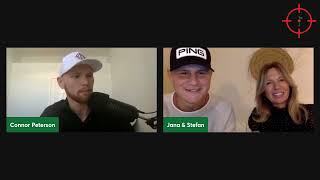
In this episode of The Connor Peterson Show, host Connor Stirling Peterson interviews Jana Spruza, founder of the largest European junior‑golf Facebook group (20,000+ members), and her son Stefan, a European junior golfer now pursuing U.S. college golf. Jana explains how the group was created seven years ago to answer the many questions she and other parents had about tournaments, equipment, and coaching in a country (Latvia) with almost no junior‑golf infrastructure. Stefan recounts his personal path: receiving a plastic set of clubs at age 7, training on a 9‑hole course, competing in early international events (US Kids European Championship in Scotland, US Kids World Championship at Pinehurst), and the mental challenges he faced. They discuss tournament selection, the importance of ranking points (US Kids Golf, World Amateur Golf Ranking), and how to evaluate which events are worth the travel expense. Mental performance coaching (David McKenzie) and a sports‑psychology specialist are highlighted as crucial for handling pressure. The conversation moves to the college‑golf pipeline: discovering the U.S. college system at age 10‑12, targeting a scoring average around 73, using agencies (PQSA Golf) to secure offers, and the flexibility of D1, D2, D3 pathways. Financial and logistical hurdles of European travel are examined, with advice to consider relocation to more golf‑rich environments (e.g., Spain, UK, USA). Finally, Jana shares a side project—creating a series of five golf‑themed children’s books (encyclopedia, fairy‑tale, bedtime story, coloring book, etiquette) born from a dream, now available for purchase. Throughout, the hosts emphasize perseverance, metric‑driven improvement, and the willingness to change coaches or move countries to maximize development.
Chapters
All right, we're live. What's going on, guys? Thanks so much for, uh, coming on and doing this with me.
Thank you for the invite. Well, uh, very—
yeah, absolutely, absolutely. Um, so just anyone who's watching this, um, real quick background on, uh, Jana and Stefan. Um, Jana created the largest, uh, junior golf group on, on Facebook. It's got over 20,000 people in it. I'm in it. If you're watching this, you're probably in it. Um, and so I knew that when I started this podcast, I really wanted to be able to get her perspective on just kind of how that came about, how she's been viewing junior golf. And, um, yeah, so I'm excited to actually get an opportunity to do that with you guys. Um, and Stefan is her, uh, son, so he'll be translating for us today. Um, but yeah, I can't, can't thank you guys enough. So Anyway, just kind of kick things off. I just want to, I don't want to bury the lead. Talk to me about like this group, like how to get started. I mean, obviously it like picked up, lots of people start Facebook groups, but like why'd you guys start it? Like what were the goals? Just kind of like fill me in on the background on that.
Okay, my name is Jana or Jana. Okay, but my English is not so good because we are living in Spain and I'm using Spanish more, much more than English. English. I forgot everything. Yeah, but it's very strange that I am founder and admin of this group because I am not advanced user of social media. I am not golfer. My English is not so good, and it's, it's why myself, my son Stefan, uh, will help me with translation.
Yeah.
And about this group. Yeah. Um, I founded 7 years ago. Yeah. And why?
Because my son 7 years ago, not 7, nearly 12 years ago now, 12 years ago.
Yeah. Uh, decided to play golf. It was, uh, his own, uh, decision, solution, decision. Yeah. And, uh, uh, for me it was, um, I was very surprised because we are not golfers. Our family never played golf. It's in our country, we had only one golf course with 18 holes. Now we have two. Yeah, we had no, uh, uh, junior tour, uh, good level, good level junior tour. We have no coach, uh, coaches for advanced juniors. And I can, I can say that we have no anything we have. No, yeah, we have anything for, uh, to develop junior, yeah, golfer, junior golfer. And, uh, that's why, uh, I decided to, uh, to create this group because, um, I had a lot of questions, a lot of.
So, wow, it's, um, in Spanish here, okay, demasiado, uh, Yeah, she had too many questions about junior golf, about pretty much everything, you know, what tournaments to play, what golf clubs to buy, you know, what kind of coaches we should look for. So I'll take this over for a second. So she decided to create this group, this community, or platform that would allow, you know, us and other parents to find answers to, you know, these questions. And, you know, we, or my mom, never thought the group will be so huge, that's for sure. So, challenge. Yeah, now here we are.
Yeah, it was very strange for me.
Yeah, uh, so because my, um, you know, as my mom said, um, none of our family members had played golf before. So, you know, we— when I started playing golf, we pretty much had no idea about anything. Yeah, uh, so that was, uh a big challenge, but then, um, you know, once coaches and tournament organizers and other parents started joining this group, uh, it definitely became easier, uh, for us and, you know, for other parents and people that join the group. So awesome.
Yeah, no, I mean, that's, that's a cool situation there. So I, I guess the thing that jumps out at me first is like So you started playing golf at 6. How did you start playing golf when you, like, it sounds like you guys don't really have golf courses, you don't have family background, and like, how'd that happen?
Yeah, so I started when I was 7. I'm 18 now, so it's almost been 12 years now. The coach that I had at the time, the coach that I started with, was actually based on a 9-hole course that was an hour away, but we had the only 18-hole course in the whole country that was 40 minutes away. So I picked up by a total coincidence when my parents presented me a plastic set of golf clubs as a present.
Just like a present.
Yeah.
For €1.
For €1, yeah, $1.
It's like a gift from, from a 1-hour trip. It's, uh, okay, it's just, just a car, just a, I don't know, any gift.
Yeah, so unfortunately for my parents, I liked it.
Uh, yeah, you could, you couldn't have picked like soccer or something a little bit more affordable, or ice hockey or any other sport that was more developed in our country, Latvia.
So, yeah, okay, it's very, very strange choice.
So yeah, no, I mean, but then you guys have like one of the most famous golfers in the world, or a couple of the most famous golfers ever to come out of Spain too, with like Seve and, uh, with Jon Rahm. So, okay, so we started golf at 7. We got the, the plastic clubs that How does that go from that and like playing the 9-hole course? I mean, like now you said you're going to be going on to play college golf, like what? And then you started this group to try and solve that. Like a lot of people have those problems and those goals but don't have the outcome that you're having. So like, how did the rest of this story go?
Yeah, so, uh, we haven't mentioned this originally. We're from Latvia, uh, so we're— but right now we're in Spain.
Okay, gotcha, gotcha. Then that makes more sense.
Yeah, I'll, uh, I'll get to this now. Uh, so as I said, uh, I— my coach was based on this night hall course that was in our way. Uh, there was some, some more kids that I started with, so we always had the competition. I think competition is extremely important for a kid, but we were also big friends, which is also important. So we had we were kind of frenemies, you know, we had fun but we wanted to beat each other, um, and we were pretty close, uh, with each other. So, um, you know, and then I was the first one, or my parents were the first that decided, you know, we should try and, uh, play some international events as well.
Yeah, high level.
So because of nothing, when did you guys decide to make that jump? Like, how old were you?
I was 9 years old, 8 years old, maybe 8, 8 years old.
So that's the thing that's like so crazy to me is like, like, um, you guys probably seen like a little bit of my posts and stuff. I work with, you know, some junior golfers, and in my mind I'm kind of like, okay, you know, like 11's definitely like you should be taking things seriously by 11 if you're serious about playing college. Because I see so many kids where they're just like, yeah, I mean, like maybe when they're like 16 we'll like think about college. And I'm like I'm like, bro, like, you're just— to people in your situation, or so many other great junior golfers in these communities, and it's like, yeah, I started like serious tournament golf at like 7. And like, I made posts about saying, I was just like, hey, you consider it like 11. They're just like, well, you know, you're ruining golf, you're not making it fun anymore. I'm just like, guys. But, um, okay, so we started at 9 for the travel events. That's interesting. How'd that go?
Uh, well, at the time it was mind-blowing because, you know, coming from, uh, this, uh, this country with basically no, um, no junior tournaments, uh, basically competing—
it was crazy, absolutely competing with—
competing against the same 5 guys all the time to So, you know, then, uh, I think it was— yeah, it was Scotland that we went to.
It was the US Kids European Championship in Scotland and World Championship too in the United States.
Yeah.
And then, uh, a few years later we also played in the— in the crazy— and the, uh, US Kids World Championship in Pinehurst. Uh, so yeah, when we got to Scotland and we got to see proper golf courses and proper competition. It was kind of like a culture shock, cultural shock in terms of golf. But it was, yeah, it was incredible. And that was the— it was eye-opening, you know, it was definitely eye-opening. But And then a few, a few more, uh, kids from the same academy started, um, going to these events as well. So, you know, we, um, it definitely was a motivation for us all to work harder.
And yeah, for sure, it was very, very difficult mentally. It was sure, like, for me, like, for Mom, it was I don't know, it was not like a challenge. No, it was like hell, because, because, you know, uh, it's true that golf world is absolutely men's world. I was a mom, I wasn't a golfer, I, I, I didn't know rules. But for me, all this was like, Madre Mía, it was like another planet, you know, and I saw a lot of parents, different parents, you know. Yeah. And situations when my son couldn't play because he's in this level because he didn't have this experience. Yeah. And, and mentally it was a help. Absolutely. For me, for my son, I don't know. He made all— he made on, um, uh, on, on play. Yeah, but for me, just to wait, just to wait, uh, every, every day, and every championship day, I just waited. Oh, what I, what I have to do, what I have, how I can to help. It's, it's, it's, it's crazy.
That was, yeah, the biggest challenge for my parents, uh, since, you know, they, uh, didn't know much about golf and development. So, uh, these, these other parents obviously, uh, knew how to help better. Um, so I would say the first two times were, uh, pretty hard mentally, but we learned a lot, and that's what we had to go through, and we wouldn't change, you know, the decision to start going to those events because that's where you really see what the competition is.
So yeah, no, that, that's, that's cool. And I think it's, I think it's actually good for people to kind of like hear that too. It's like, I don't think you guys are like that uncommon where it's like a lot of, you know, a lot of the times like we're not getting into golf because like, you know, your parents play golf or something like that. It's just something that happens, just like, okay, I gotta figure out this new thing. And then it's like, well, I want to be able to help, and golf's so much like a solo sport, but at the same time it's like you want to be able to help your kid through that. So, um, I'm actually kind of like curious, um, to, to get your perspective, Stefan, just like being the junior golfer in that case, like What was that like for you? Like, what did you want out of your parents? Like, were there any like kind of like roadblocks you guys ran into, like communication-wise? Because sometimes, obviously, I'm sure you guys have seen it where the parents that are like overbearing, then there are some parents that are like not engaged at all. They're kind of like, this is your thing and I'm gonna go get coffee over there. Like, pick you up at the end of your round. Like, um, what was that like for you? What did, what did you guys, um, do well? Like, what do you feel like was kind of like a challenges, or if there were any challenges?
Um, well, I, I always felt the support coming from my parents, and that's the only thing I wanted. I knew they couldn't really help with the game itself. I knew they just, uh, you know, if I had the background, I could just, um, you know, uh, see them, give them a hug, and and just, you know, learn, forget, move on, and play the next round. Um, so yeah, I didn't expect much from, from them. I tried to learn a lot myself. Um, they never, um, they were never hard on me, which I'm really grateful for because, you know, some parents unfortunately are So they— my parents never, you know, they would never tell me off for bad scores or anything, but rather just if my attitude was not there, then they would point that out. But apart from that, you know, they're amazing parents in that sense.
So, you know, I finished— finished? Yeah. Oh no. Good. Okay. 2 programs, uh, by, um, gold psychologists, like gold psychologists, just to help Stefan. But you know, I can't help him because he don't believe in me. And, uh, and, and that's why I found, um, a great specialist in this area, uh, from United States, and Stefan, um, good, good. Yeah.
Uh, well, that helped a lot.
Yeah. Okay.
Uh, so I, I, um, I started, started working with, uh, like a golf mental coach, um, which was a huge help.
Um, I got this information from, from our group because one, one parent in comments, uh, wrote this name and surname of this specialist, like a super, super specialist and super professional. And, um, and I decided to offer Stefan a little bit work with, with this, um, this man. And, uh, um, I think it's successful. Yeah, I hope it's—
yeah, no, that's definitely interesting. So I mean, I feel like when I've, I've talked to a lot of parents, like, I feel like that's one of the things that always comes up is like the mental side of the game. I know I work with kids, like mental side, like comes up so often because I think all of us, you know, have seen like, you know, everyone's got a swing coach, right? That they see like once a week or, or, you know, every other week or something like that. But it's like everyone has that and some kids, you know, do way better than other kids. So it's like, I'm always kind of skeptical when someone's like, well, you know, we're working on the golf swing. Like one day it's gonna click and then we're gonna go out there and shoot 65. And I'm like, that day doesn't come. You've always got issues with your golf swing. So, um, it sounds like you guys figured that out relatively early. So like talk me through like what were the things where they were like coming up where you're like, okay, cool, I need a mental coach. Um, and like how, like what was that experience like for you? Like what are the things that you guys worked on?
Uh, well, no, to be honest, I, I started working, uh, with David. His name is David McKenzie. Uh, like 3 years ago only.
It's not advertising, it's just, yeah, well, okay, experience here.
Uh, to be honest, I should have started much earlier, but obviously we had no idea. Uh, but It is the kind of help that a kid needs because, you know, the parents sometimes simply cannot help in a way that a mental coach will help. Yeah. So, you know, everybody has to deal with, you know, pressure, you know, pre-round, post-round, you know, if you didn't have a good round, how do you react to that? And that's where a mental coach, especially for, for a junior golfer who is, you know, not as mature as an adult golfer, um, so that's even more important for, um, for a, for a kid, for a junior golfer to, to help, to have that kind of help, that, um, you know, that support during the tournament and you know, just on regular days. Um, yeah, so yeah, because any—
it's in any sport, yeah, you, you need it to— you need to do it, yeah, to make lessons with the professional in this area because your child is, is man, is little man, and he has stress like us and It's very difficult, I think. Don't be afraid to use it. It's very soft. Yeah, it's very soft. And it's not like a pressure, you need to do it. No, it's a good, very good experience. Very good.
And yeah, it's better for everyone because I'm not really sure, but I think most kids don't really listen to their parents, but they will listen to a professional. And it's important for them to have a good relationship with that professional. So, and that can make a huge, huge difference, much bigger than changing something in your swing. Yeah, having the right mindset and the right tools.
Yeah, no, I mean, this is very, uh, important moment. Yeah, because this is good way to save your relationship— relationships. But because if professional helps to your child, you don't need to explain, uh, something, and the professional will do it. It's, it's very good way. Yeah, because, uh Some parents who made scandals, uh, I saw it. Yeah, so yeah, and, uh, with their child and, uh, kids here. And, uh, why? You have, you have a professional for this. You don't need to destroy your relationship with your, with your kid, please. Just go to— it's like your medicine. You don't need to make a treatment if you are not medical.
Medical, you're not a medic.
Yeah, yeah.
No, that, I mean, that, that's a great point to, to really bring up and emphasize too, because I— it's always interesting, like sometimes I'll talk to parents, they're just like, yeah, really struggling with this like Uh, that's not gonna— it's like, even if it's the right thing, it's just like, that's not gonna land. And then it's also like, you're not an expert. Your kid knows you're not an expert. They probably know more about golf than you do, and you're trying to like go in there. It's like, yeah, it's like, even if it helps, it's like, it makes the relationship at least weird, right? And so, um, it sounds like you guys were smart right out of the gate of just like, okay, cool, let's, let's trust the professionals on this one. Let's step out of it. And then, you know, even if something doesn't go well, it's like, okay, well, we can switch out professionals. We don't have to switch out parents.
Yeah, well, for sure, for sure.
But okay, so that's, that's really cool. I think that's definitely a good, good highlight for everyone that it's like the mental stuff matters a lot and, and learning how to manage that and saving the relationships, um, keeping those strong. So, um, okay, so we're traveling, um, we're playing in these, you know, bigger like international events. How does that go from that to, hey, I think I can play college golf? Like, how does that happen?
Well, I, I found out that there is such thing as college golf when I was about 11, 12, maybe even 10.
Okay.
And that's when I realized Yeah, that's, that's what I want. Uh, it's, uh, my kind of small dream to, uh, to go play, um, college golf. And that, uh, that takes a lot of effort, a lot of competitions, a lot of learning. Um, and, um, yeah, just playing the right, the right events as well, I think is important. So obviously playing like club events is fun for a junior golfer with, you know, lower pressure events. But obviously that's not where the coaches will notice you, is on those bigger regional state events if you're based in the United States, or, you know, if you're in Europe, then go and play those WAGGR World Amateur Golf Ranking events abroad or in your home country, depending where you come from. So, um, so I, I think, yeah, I've learned that playing the right events is crucial. So just put yourself out there on the scene. Yeah.
Yeah, no doubt.
Sorry, I never dreamed about United States college, never, because it's too far.
Yeah.
And for me now, it's also— it's not— for Stefan, it's very good solution. For me, no, it's because I'm mom, just mom. Yeah, I understood, understood that he has, he has, will have, will have good system, yeah, discipline. And, uh, and what, uh, we have, um, hasn't here in Spain. It's a little bit more for relaxed, yeah. And, uh, yeah, this is, uh, that's why, that's why, uh Yeah, I agree. Okay, that's good for him.
So it's definitely harder for, for Europeans because, you know, when you go too far away, um, but it's, it's the sacrifice that has to be made. As my mom said, um, the, the environment in college, you know, college golf is very competitive and You have a team of, you know, great guys and coach and a fitness coach, hopefully. So yeah, it's just a different world compared to, you know, if you choose to kind of do it on your own, if you then try to pursue pro golf. So it's definitely the right choice.
Yeah, okay, got it. So, um, interesting that— so you said, okay, we start thinking about this around like 10 or 12, um, which again, like, I've had conversations with parents who are just like, well, you know, my, my 10-year-old, 11-year-old said this, but it's like, I don't know, they might change their mind in 6 months or whatever. So, uh, like, what was that like for you guys? Like, did you have to like convince your parents at all? Were they kind of like, okay, cool, like, we're gonna support you? And like we just want you to have like big goals. Um, like, what was that like for you guys?
No, for sure, my parents just, they were ready to support, you know, whatever I decided to do. And, uh, yeah, especially my dad. I think, uh, once I said, uh, I want to play, uh, college golf, he's definitely the biggest fan. Yeah. Uh, he's, um, he never, he never lost the, the, the trust, and they never lost that idea that, and that college golf in the US is, is the right way to go after school. Um, so yeah, my parents always supported me in that. It was, as I said, it was, it was my decision. Uh, I found out that there is such thing And I, um, I decided quite early on that it's what I'm going to do.
From, from, uh, the age, uh, 14, Stefan is absolutely, uh, independent from us. It's not about money. Yeah, he contacted with coaches, with organizers of competition, and he, he made everything. We just We just paid for tickets and hotels and much more, but he absolutely is an independent person. He's responsible and he's, I think, has own discipline. But, but yeah.
All right. Cool.
Yeah. So that makes a lot of sense. Let's see here. So you guys talked a little bit about like traveling for these events. You talked about like Pinehurst and all that stuff. You mentioned kind of like the, you know, spending money on hotels and whatnot. And I feel like from, you know, being in Europe, you guys probably have to do a lot more travel than people even in the US do. And I feel like a lot of people in the US are like, oh my God, this is like so challenging with like the, you know, financial constraints of like traveling around and stuff like that. So, um, number one, like how did that go for you guys as far as like sorting through that? But also like how did you guys Did you have ever anyone guiding you as far as like what, what things to spend money on, as far as like which tournaments to actually like make the effort to get to? Because, um, there's so many events you can play in and like all of them end up being like quite expensive. So like, how did you guys navigate that? Like, what was that like?
Just, um, trial and error, you know. Uh, we just had to, um, how did you guys then look—
like, how did you guys look at that and say like, okay, this one was like worth it, this one wasn't? Because like a lot of the times like there's so much marketing that goes into these tournaments, like every tournament's like the biggest, you know, championships, national championships, whatever. And it's like, is this actually legit? Is this just like another tournament? Like, how'd you guys figure that out?
Yeah, some tournaments you could call clickbait. Yeah, but, uh You gotta look at, you know, is there, is there any ranking points that go towards some kind of important, uh, order of merit? Um, I mean, that's pretty much the biggest, the biggest thing. And then you look at the field, you know, is there actually good players coming to play there? Um, you know, is it maybe too far away, too expensive to go? Um, so all these things, but if the tournament is actually worth it, yeah, you have to look at the, uh, at the ranking points and the ranking that it goes towards. Um, so, um, okay, all right.
So for you guys with, with like navigating that, because I mean, I remember when I was a junior golfer, I didn't have any concept of like the, the ranking system and all that. I worked with a guy who's, you know, teaching on the PGA Tour. And he never told me, he's like, hey Connor, by the way, you have to get ranked. Um, I was just like going out there working on my swing. I was like, you know what, it's just one day it's gonna pop off, I'm gonna win some tournaments and it's gonna work out. Um, that didn't happen. Um, so, but like you guys have the international situation, so did you guys focus more on like, like WAGGR? Was that kind of like the, the path for you guys? Or did you guys look at like Junior Golf Scoreboard or something else in the US? Or, um, what was the ranking system you guys were even looking at?
Um, yeah, so I think we focused a lot on the US Kids Golf Tour, um, and then these bigger international events like English Boys, Scottish Boys under 14, 16, and so on.
It's also so hard, you know, it was very hard because, uh, all these kids are participating in, uh, uh competitions, uh, some competitions of one level, first level, second level, third level. But Stefan hadn't, uh, all these levels, and he participated in the highest. It was, it was, uh, it was too hard from, for his brains. And, uh, yeah, because, uh, you need to go, you need to go, uh, from From the, on the top, from, from the down, or—
Yes, uh, so that's a great point actually, is, uh, you know, trying to find a tour where you start at the bottom and make your way up. That is, um, that is probably the best way, um, for a junior golfer to, um, you know, to to play and, and learn, uh, so you don't want to— yeah, that was probably a mistake for, for us, is that I tried to— I, I played in these, um, big events with a great field of players, uh, but I just didn't have— I didn't have to, uh, kind of qualify there. I could just, just sign up and play, but, uh, without nearly as much experience as, uh, the guys had that I played against. So it was a mistake in itself, you know.
It wasn't mistake, you know. We had— we hadn't, uh, similar tour. Yeah, where, uh, our kids, uh, kids, uh, can, uh, participate, uh, step by step to, to go up and up and up. Uh, we had, uh, but very, very small, and it's Funny, it's for 20 children only. It's nothing. Yeah, but these kids can come, can be competitive with kids from United States, for example, because these kids are participating and are going, yeah, past all levels. Sorry.
Yeah, they were, um, yeah, they were kind of, you know, if you compare it to a professional tour, you know, they, they were going from, uh, if you look at Europe, from the Alps tour to the Challenge Tour.
Yeah, you need to, you need to develop your child on the, from the smallest level.
Yes, basically start at the bottom. Yeah, make your way up.
Yeah, to train brains. Yeah, this is very important.
Yeah, it's, um, it's interesting. You— I love that you guys bring that up because, I mean, you guys have seen my post. Like, I talk a lot about like tournaments and stuff like that and the tournament selection. You guys have brought that up, and I think a lot of people hear that and they're like, okay, cool, I need to get into all the big tournaments, and like, that's gonna be the hack. And I always kind of like, no, like, it doesn't matter what you play in. If you're gonna shoot 82, if that's your scoring average, don't do that. That's dumb. Like, you're gonna waste money. Like Go lower. That's— and like, a lot of people want to figure out like, well, what can I do other than shoot better scores? I'm like, no, like, shoot better scores. That's the meat and potatoes. Then once you're doing that, you'll be— it's like, oh, I can't get into AJGAs. And I'm just like, yeah, because you don't shoot good enough scores. So like, play in your local stuff, don't spend a ton of money, solve that problem, then go play in the AJGAs when you can qualify. Because I mean, like, most of the time it's like you got to shoot like 76 to qualify. Like, it's not even that good. And just like, okay, cool, now I'm in, I'm in the bigger event. And now you're in a whole new world because now you've got to like, you get exempt status. And then once you have exempt status, now there's like Rolex points and like getting to the bigger tournaments and all the invitation. It's like it keeps going and going, but it's like keep the main thing the main thing. It's like get better scores, move up the difficulty. It's like, I think it's easy to look at it and be like, oh, there's these points and this status and that status. And it's like, it's actually just get better at golf, playing better tournaments. That's it. Just like improve that over time. You know, it really is that simple. Um, but that's so cool you guys kind of like intuited that. Um, okay, so, you know, we're playing in, you know, some of the bigger European stuff, uh, we're playing some of the US kids. Um, okay, so now we're like in high school pretty much. Like, what was that? Just like put your head down and, and just like grind and play golf, or was there any kind of like big realizations at that point, or did you get offers early? Like, what was that experience for you like?
I, um, I actually— yeah, there was a moment in my career, uh, it was very strange, and, you know, when I was about 17 that I kind of lost that, uh, that desire to go and play college golf, uh, because my game, um, wasn't where I wanted it to be. I I struggled for—
he's perfectionist.
Yeah, you know, I'm not the perfectionist, but perfectionist. Yeah, but yeah, so, uh, from 16 to 17, I just, uh, wasn't playing well, uh, therefore I wasn't getting any offers, especially because I'm a European. Um, even so, uh, that, that makes it harder. So, um, I Just decided again, like 2 months ago. I woke up and I was like, one day I woke up and I was like, I'm gonna regret not following this dream. I just giving up on this dream. Sometime in the future, I'll give— I'll regret.
It was, it was a few days after this day of draft.
Yes, it was after— it was a few days after the national letter of intent.
He decided, I need to—
I need it, I have to do it. So it was very late, almost too late, and I— well, thanks to the agency that I started working with, PQSA Golf, I, I managed to you know, get it done, get a great deal, um, very quick. Yeah. And within one month, uh, I got some offers because I had a decent summer last year, some decent scores. Um, so I, I got a good offer. Okay. All right. It wasn't always a straight line, let me tell you that. It was quite—
it also was a big surprise for us. Yeah.
That's awesome. Um, so just like, so people have like context, you say like good summer, like what kind of scores were you shooting? Or like, do you have like a, like what's your scoring average right now in tournaments?
Um, it's around 74.9, I think. Uh, so, and during the summer, um, I, during the summer it must have been 73 point something because I basically played anywhere from 68 to 74 constantly, you know, from the tips from the YCs here in Europe.
So yeah, before the— oh no, after the COVID Stefan had, I think, a very bad period.
Yeah, COVID didn't do me good.
So yeah, no, that's, um, I mean, that, that makes sense. So you said to me like, hey, I've got scoring average of 73, I've got, you know, playing 6,800 to 7,400 yards. Like, that's, that's college golf right there. So, and obviously you got the hurdle from like the European side of things, but, um, that makes a lot of sense. It's, it's so funny, like, on, on that note, it's like you have, you know, like, I think in the States you probably would have had like an easier shake on that because I've worked with kids where they're kind of like struggling, like, maybe around like 75, like 76 is their scoring average. They're just like, well, I'm not getting offers programs. And it's like, yeah, because we need to get these scores down. And I was like, yeah, but what about the programs? And that's like, they get to this point kind of like where you're just like, like, I don't know if I'm gonna do this, whatever. They take a little bit of pressure off themselves, and then boom, scores come down, and then they start getting offers. And it's like, oh, that was weird.
Um, but yeah, I think the thing is, uh, that you just have to get there. Uh, you can always transfer That's the biggest thing is that you're not connected to this one university that you committed and signed with. So, and that was a big, big moment, big eye-opening moment for me is that that's true. I can, it doesn't have to be a number one D1 university program. It can be a D2 school as well, D3. I mean, it doesn't really matter. You just have to get there and make your way up. Just work hard, and there is always, you know, some kind of good offers that will come your way.
Yeah, stay in the game, you know. Like, it's— I think it's, uh, I think it's actually a good illustration too, cause I like talk to parents a lot about this. Cause I like, I talk a lot about Division I specifically in general. Like I talk about it cause it's the hardest to get into. It's got like the most hoops to go through. And if you say, hey, I'm 11 and I want to play Division I golf, it's like, that's very realistic. Like you can do that. You can take those steps. I also kind of emphasize it because it's like, if you're in a situation, you fall a little bit short from D1, D2 is right there. D3 is right there. But if you say, eh, college golf in general, like maybe D3 would be cool. Then when you wake up in the same situation that you guys are in, you don't have a scoring average of 73, you have like 79. And it's like, well, you know, why— how come I can't get any offers? And it's like, because you guys didn't set the right targets. So, um, I think that's like a good illustration of that too, that it's like, it's not necessarily like the soul-crushing thing. If you're like aiming for D1, you fall a little bit short, and then you have options. You can stay in the game, you know. Um, yeah, sometimes it's just starting big, putting one foot in front of the other, and then eventually you get to it and you kind of like work out stuff as it comes along.
Exactly.
So that's really cool to hear from your perspective. Switching gears a little bit here, what do you guys, like, if you were to go back in time, it's kind of like taking the seat of maybe, you know, that 10-year-old, 11-year-old, 12-year-old, like, what do you guys wish that you would have known then that you guys know now?
Yeah, well, I've been speaking about this with my mom actually, and Uh, we probably would have moved to England or the United States, uh, just because of the competition, the different, uh, opportunities that you have, uh, competition-wise and just development-wise. All the coaches you have, um, it's a little bit hard here in Europe. I mean, I'm— no, not even speaking about Latvia.
This is my advice for, uh, maybe European must more, more, uh, yeah. But, uh, if you see that your child is, uh, absolutely engulfed, yeah, you need to move. You need to move to, uh, more developed countries in this, in this area. Yeah. And, uh, you need to, I don't know, looking for any opportunity to move and to develop your child in these countries. No, no reason to sit in one country where there are no, there are no, uh, golf courses, normal level competitions, etc. But you need to look in for another way, another way.
Yeah, even, even if you're in the States, uh, I'm sure there are regions or states that are not as developed as other regions or states. So in that case, you know, you have to— you know, depends on what your dreams and goals are, uh, and what your opportunities are, uh, but you should always, you know, look, uh, to, to move. I mean, we, we moved basically to Spain, to the other end of Europe, just because there is much more opportunities here, much more tournaments. So that's—
but not, not like in the UK or— yeah, it's more, more for fun.
Yeah, there's, uh, yeah, there is, yeah, there is some. Yeah, well, definitely more than in Latvia. Uh, but yeah, that's one thing we would change is, um, because you grow naturally, you, you develop and you improve naturally so much faster when you're in this, um, this environment, this competitive environment. It's very important with many golf courses, coaches around you. Um, so, okay.
Yeah, no, that's, um, it's a very nice country for everything.
Yeah, no, that's, um, that's fascinating.
Thanks.
So I'll have to add that advice to, to what I talk to people about, because like a lot of the times, like, I kind of, you know, in my head I'm just like, yeah, I just need to, like, I need to understand like Waggle better or something like that. And it's like, to hear you guys just be like, nah, just move. Like, it's, you know, it's not necessarily something you want to be like, yeah, I mean, like, I mean, I just moved across the country and I mean, it's expensive to move, period, you know. Um, from one country to another based on what your 12-year-old's goals are. I mean, that's like a whole nother level of committed. But I also think there's something to be said for like, if you want it, you want it and you do it.
No, by money, I guess it's not so expensive to move and live in UK, for example, and to travel to make a trip to these competitions. It's more cheaper They go every time to France, United States, or a lot of countries. It's more expensive, yeah, than to live in one country and participate in local tour and step by step go up. Yeah, but it's, it's more clever. And now I think this is our— not mistake, but we haven't experienced here. But now I see this is very good way. And this is, uh, best way. This is best way to looking for a new—
yeah, that's fascinating. That makes my life easier. I don't have to go down that wagon rabbit hole. Just be like, anytime I talk to someone internationally, like, what should I do? Be like, move here, we'll solve it. What, um, what junior golf scoreboard stuff should I do? Just move here and we'll figure it out.
Um, it is a great point that Uh, in the end, uh, financially it will probably be the same. Um, you know, because if you're in a region in a town with not so many competitions around, and then you, you have to simply travel all the time to these events. As you start winning your local events all the time, you're like, well, okay, I'm ready to take the next step. And then it becomes more expensive. So, um, but as I said, if you have the opportunity, because, you know, most kids, uh, will simply not be ready to, uh, to leave their friends in their school and, yeah, you know, the place they come from. So, yeah, so it's important.
Okay, yeah, now that, that's genuinely, that, that's really fascinating. Um, so another question for you guys on that kind of like line of thought. What advice along kind of this journey has like helped you guys the most?
What advice?
Don't give up, it's clear. And advice to look for, to look for every time, to look for all response, uh, responded Response. Yeah, response to— if you don't know something, you need to look for, to look for, yeah, for a solution. Yeah, yeah. And so, um, you can't— it's my opinion only— you can't believe only in one coach. You need to, you need to try to get, uh, opinion, more opinions.
Yeah, try, try and find the right coach for you. Don't, don't be afraid to switch coaches.
Um, so to change coaches, it's, it's normal. It's not— it's, it's absolutely normal for big professionals. Yeah. And, uh, but you don't, um, you can be sure absolutely that this guy is fantastic and best and all this. No, uh, this only— this is person, yeah, and, uh, human. He can, he can be— he, he can make, make errors. This is, this is life, and you need to, you need to— because I, I made my growth, yeah, our growth. And thank you for your post, you know, your post.
I'm happy to be there.
Amazing, you know, it's very interesting. Every time.
Yeah.
And, uh, uh, and this group is, uh, I made it, made it, uh, because I want to get more information, not from only one man or, okay, coach or organizer of competition. No, I want to get more opinions, more recommendations. For example, what, um, what about waterproof clothing and shoes, for example? Yeah, but Um, yeah, it's very important, by the way.
Yeah, it's not an— it's not an advice that we got from someone. It's an advice that my mom and I would give to everybody, is to, uh, if you feel like you need a change with the coach, uh, to not, not be afraid, um, to, to try another one or try to find a new coach. Yeah. Um, Just always, yeah, look for a solution. Something's off, look for a person or, or anything that will, that will help with that.
Yeah, that's, that's an interesting one. Because I feel like there's like kind of touching on two things. Like number one, I think a lot of people want to stick their head in the sand, they want to look at their situation and be like, yeah, we're great. Like, my kid's great at golf, like, we're gonna be good. Like, you know, we'll just like, and then they get down the road. And then it's like, oh shoot, like, why didn't things work out? It's like, because you guys stuck your head in the sand. You weren't like always trying to learn. Or when people are like, oh, I already know all the things, I played golf 20 years ago. It's like, it's a little bit different today. Yeah, um, there's that. The other one that— and this is like something I'm like super, super passionate about, like, as a coach— is like, a lot of the times it's really hard to measure where you are. And a lot of coaches don't like doing that, where it's just kind of like, hey, like, we're making your golf swing better. Like, these positions are better, and you're like, all right, cool, like, I'm taking your word for it, dude. Like, I hope we shoot better scores. And I think it's so important to have something, whether it's like rankings or scoring average, or you guys see me talk about statistics, where it's like you need to have like metrics. You're like, these things need to move. Like, that's going to validate whatever I'm doing, that it actually works. You know, if I'm gonna work with a coach, I should see my scoring average go down. If that plateaus for like an extended period of time, we gotta have a conversation about that. You know, we gotta have a way that we're measuring what we're doing and not just being like, I think it's good, our positions are getting better in our golf swing. It's like, that's cool, but like, what did that help? Did that help your greens and regulation? Did that help you hit fewer balls out of bounds? Like, what are we doing here? So, um, having that clarity I think is absolutely massive, just kind of like piggyback on what you guys said there.
Yeah, metrics are super important.
Yeah, yeah, awesome. Um, okay, cool. So last question I gotta ask, just out of like pure curiosity here. Talk to me about the children's books. Like, I've got a 6-month-old, so like in the back of my head I need some better books. We haven't really stocked up on the Dr. Seuss stuff yet, but like fill me in on that.
It also was very, very strange. Check this over. Please tell me, tell about it more because, uh, okay. Um, so I was very deep in He's going very deep.
Yeah, so when I, uh, when I started competing more, obviously my parents got more and more involved in golf, um, you know, to a point where my mom started having dreams about golf. And one of those dreams happened to be a fairy tale that eventually became the first book with all these characters, you know, Birdie, Albatross.
Yeah, she just—
it's true.
I thought, oh my God, maybe I am crazy. Yeah, it was.
Yeah, that's amazing.
Not about new bag, you know, not about new clothes. It was about his cold. What is it?
So yeah, that's how it started. And my mom saw this dream, this tale so clearly that she was like, damn, I should put it into life. I should write a book about it. And, and yeah, I mean, here we are today. My mom now has so many books.
Oh no, yeah, and it's why, um, uh, I tried to find for Stefan some encyclopedia of golf.
Encyclopedia.
Encyclopedia. I wrote it.
Yeah, there was no encyclopedia.
I created it, you know. And so, uh, um Now I have 5 golf books. Yeah, it's an encyclopedia, fairy tale, bedtime story, coloring book, and etiquette. Golf is one book about etiquette. Yeah, but also I have tennis books.
I continued, you know, because Were these all inspired by dreams, or do you start like writing after you got the first one out?
Uh, no, it's just a continuation of—
yeah, okay.
I'm sure she gets one of those dreams once in a while still.
But all started from this very strange dream. Very, very strange dream.
That is a great origin story. Um, Where, where can I buy said books? Is there a link that I can go to? Or like I said, I've got some bedtime stories I need to read and I need to get some better books. Where can I buy them?
We got, we got one for you.
Yeah. Yeah.
All right, cool. Well, I think that's probably a good place to cut this off. It's been a lot of fun, guys. I really enjoyed it. Really cool getting to kind of like learn from you guys about the like European experience and trying to like navigate this to get to college golf successfully and kind of like where it started, some of the road bumps, um, and just having like— you guys are like— I, I know you guys, you're gonna do awesome in the States, Stefan, just because like you guys have like the, the, that attitude and the mindset of just like, if I don't— I can't find it, like I'm just gonna create. Like if I have a problem, I'm just gonna fix my own problem. And I think that's, that's so cool.
Um, I'm gonna move to another part of the world if I have to.
Yeah, no, I mean, that's, that's so cool. Just to like, you know, even down to the advice, just like, oh, like, what should you do? Just be like, just move, just send it. Um, I love that attitude. It makes sense why you guys are as successful as you are. So, uh, yeah, thanks so much for coming on and sharing all that. I'm sure it's going to help a lot of people. Um, I just really appreciate your time.
Thank you so much for the invite. It's been a pleasure.
Absolutely.
Thank you.
Thank you very










