The Data You Need To Track To Play Division 1 Golf
Connor Stirling Peterson shows junior golfers and coaches how to track metrics like scoring differential, greens-in-regulation, 3-putt rate, and birdie conversion to measure progress toward Division I play. He uses spreadsheets and dashboards to spot whether a player is improving or plateauing, then adjusts coaching decisions like drill focus and tournament selection based on the data.
Chapters
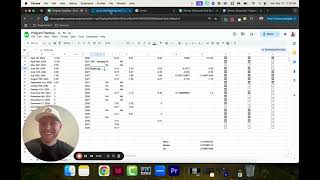
What's going on guys? In today's video, I'm going to be covering the importance of feedback in being able to play Division 1 golf. If you're new to the channel, this is all we talk about is how to play Division 1 golf. What are the actual steps required? Not a bunch of fluff, not a bunch of squishy stuff where it's kind of like, oh, you know, here's some mindset stuff, here's some emails. Oh, like actual hard math of doing this. Um, so if you're new, welcome in. Go ahead, hit the subscribe button if you want to see videos like this every single week. If you're a returning subscriber, welcome back, it's always great to have you. So let's go ahead and jump right into it. I'm going to be showing you guys the feedback that I look at as a coach to help my players, you know, be as successful as possible. So I've got this first sheet up here, I've got all the names, um, scooted off just for the sake of privacy. Some of my students, they don't want to have their name everywhere showing what they're working on. But I still want to be able to show you guys the data of just like, you know, what I look like, what I look at as a coach in order to make decisions and help myself understand, like, where are my players at, how am I doing as a coach, you know, and what does each player need to do specifically as far as accomplishing their goals? Because, you know, there's a lot of stuff that I can say, hey, you know, players should do this or that or the other thing, and, you know, that's all well and good, but if we don't have the high-level stuff of, you know, here's what we're trying to get to and here's where we're at right now, and like, you know, here's whether or not that that's probable based on our current pace, it doesn't matter what I tell you to do. If I tell you the perfect drill to do, but I know that it's going to take you 4 years to accomplish, you know, and reach your goal, and you only have 2 to accomplish that, it's like, that's the wrong target. You know, I, I need to have a different conversation with you. Either I need to give you a different drill, I need to give you different feedback, um, or I need to tell you, just be like, hey, you know, like, your goals are not realistic here, um, and so we need to recalibrate. And, you know, for me, helping players play Division 1 golf, like, that's what I'm talking to them about. And so if we're in a situation where I look at a player and say, hey, you know, this isn't going to happen, I'm not going to take them on as a player. I'm not going to take them on as a student because I'm looking at that and saying, well, all the things that I'm going to coach around are going to be optimized around that particular goal. And so there's a lot of coaches out there who can coach on all sorts of stuff. You know, they'll work with players at any skill level, whether they're just beginning golf and they're 6 years old, or, you know, they're, they're a senior and they're, you know, 70 or 80 years old trying to, you know, hit a golf ball and everything in between. That's not me. My thing is playing Division 1 golf, and so it's very important for me that I have feedback on every single player to see where they're at. So anyway, let's go ahead and get into this. So this first page that I've got pulled up here is how I really track my students. So on this little left-hand column here, um, you've got the starting scoring differential— so when I started working with the player, where they're at— the current scoring differential, the amount of improvement that that player has had, the monthly improvement, and the annual improvement. Improvement. That way I can just kind of have a perspective of like over year, over year, over year, where we get— we're going to end up getting to. And I also kind of have in here, you know, where the class is so that I kind of have a perspective of like, okay, cool, you know, how much time do we have for this player. And then my head's kind of hiding it, but we also have how many months ago they signed up for the program because that also is going to dictate, you know, what this number ends up doing over here. But anyway, I have all that and then it kind of becomes my mean and median averages so I can have a perspective when I'm working player to say like, okay, like, what's realistic? Like, we just kind of were average. A lot of times parents are concerned about like, oh well, you know, I don't know if my kid's going to do this thing perfectly. And it's just like, yeah, no one does this thing perfectly. But again, it's— if I can just say like, I present this information to players and I coach them this often and I do these things and they get these results on average, then I can say, all right, cool. You know, if I could up the compliance as a coach and maybe I can make it easier for them, then those numbers will rise. But I can just say it's like a blanket average and be like, this is kind of what I expect a player to end up accomplishing. One of the things you might be noticing is there's a lot of blank spots here. That's because we've had a lot of recent signups through the winter months, um, and we just haven't really had any tournament data coming in here to really be able to update this stuff. So I'm excited to see where that stuff goes. And kind of as a great segue into saying, like, you know, for me, this is my number one feedback, you know, loop here, because I can see for a player, okay, we started working here and now you're here, you know, if it's a big jump and it's a big improvement, I can say like, all right, cool, that stuff we were doing, it was working, you know, it's the right things to tell you. If I have some of these players where, let's say, you know, they either struggle or they get worse, you know, yeah, it kind of sucks, but it's also great feedback for me as a coach to say, all right, cool, I need to double down with these players specifically. These ones are fine, you know, these players over here, they're crushing it, they understand it, but these players here, they need a little bit more attention, and we need to potentially, you know, tweak their stuff. And this alone is not enough. So I want to show you guys all the dashboards that I'm really looking at as a coach to be able to help a player do this. So number 1, junior golf scoreboard. I've just got an example, Moses here, because he's been crushing it since, you know, since we started working together back in like July. Um, and I mean, he's been doing an awesome job. He's got some, some crazy stuff going on, but, um, just fantastic job. So anyway, let's, um, you know, let's kind of look at this and kind of consider things. So, you know, I want to see where his scoring average is at, right? So that's kind of trended down over time, which is definitely positive. I'm just going to jump over here. We started working together— yeah, it was back in July here. He's at 77.3, so now we're down to, you know, 76.5. So I guess, you know, that's about a shot. Um, his scoring differential has come down by almost, you know, 2.5 shots over a pretty short period of time. So that's great to see. Not sure why the 71 is not reporting yet, but I'm sure it will eventually. Um, but you know, that, that's kind of like where we're at here. So I have this as kind of a good measurement here. I can also see that the tracking here, I can see the overall progress. So, you know, back again, and what was it, July, 18.5. Now we're at 5.53. So big improvement. And I can also see the percentile. You went from 40th percentile to 29th percentile. That's fantastic. Um, but once again, I can, I can get the feedback on where he's at as a player. Because if you didn't have this, you might look at something like, oh, well, he was ranked 257 and now he's ranked 260. If you didn't have this, you wouldn't— you'd be like, oh my gosh, you know, we have to like win tournaments or we have to beat other kids. It's like, no, he's actually improving really, really fast. He's improving at a rate of like, um, let's see where, you know, his numbers are out here. Improved by like almost 4 shots a year. And, and that's with, um, you know, I guess you guys— he might not— broke his leg. Like, you know, that's, that's crazy. Um, but this is, this is one of the feedback tools that I like to use. You know, this is something any coach can do, uh, but most coaches don't. You know, to be fair, um, you know, most coaches do not go through this because it's, you know, it's kind of a pain if you— especially if you don't have things set up for it. So this is the number one thing. If you're a parent, definitely be looking at this. Next one I've got is, um, stats. You know, I want to be able to see, you know, player stats. I want to see every round that they play, you know. So in this case, I can see for him, you know, we had this 82, not the best. Another 82, again, not the best. To be fair, he's getting his legs back, um, pun not intended, um, but then we got a 71 here. So, you know, one of the things Moses has learned a lot of is being able to learn how to look at this data and look at some of the other statistics that I'm not gonna be able to go over in this video to understand what he needs to do in order to improve and play better. To make his game very, very simple so he understands, okay, I did that in this last round, I made those mistakes, I need to double down on that because I'm getting a little bit sloppy there. So that's huge. So if you guys aren't already tracking your stats, I really recommend it. Draw More Circles is my favorite. If you guys are looking for one, definitely try them out. I know they've got a free trial. I give my students a discount for it, but if you want to pay full price, then, you know, I highly recommend it. Decade's pretty good. I've got, uh, obviously I prefer Circles, but But Decades, another good one. Um, but continuing on here, another place that I like to, to go to, another dashboard that I like to reference is, um, this is something I created for all my students. Um, but you can pretty much do basic math, you know, if you've got the legwork to do this. Um, but I like to see penalty rate, greens regulation, scrambling, 3-buzz, and bird conversion rate because I can see your, you know, scoring average, your scoring differential. Um, but in order to really be able to bring scores, I can see what your scores are shooting, but if I want to really bring down scores, I need to figure out like, what are these averages here? And, you know, how are they moving, um, you know, how do they interact with each other? Um, because for example, you know, if we've got a lot of penalties off the tee, I don't need to say look at the scores and be like, hmm, why are the scores high? I can be like, hey dude, are we hitting balls out of bounds? And then not just that, we can start to dig into like, what's happening here? You know, with one student I'm working with, he had a situation where he was being very aggressive, and that wasn't punishing him in the past because he was going through a stretch where he was, you know, being able to drive the ball pretty straight, and he was playing golf courses that were fairly wide open. And so he could use his driver as a weapon. He was able to hit it very far. Um, and he was able to use that to, to, you know, to some degree artificially push his scores down. But if we didn't have the perspective for him and his game to say, hmm, this is a little bit of an issue, this is really causing us some problems, then we would just be, you know, running around being like, oh, we have to do this, we have to do this, let's look at the golf swing. When in reality it was as simple a situation as just like, hey, I need you to be a little bit more conservative off the tee and we need to do a little bit of legwork as far as mapping out a golf course ahead of time. To make sure that we're hitting driver into windows that make sense. So, you know, that's just a very high-level, you know, perspective. And again, you know, these things get more detailed for, you know, a student that I'm working with specifically. But, you know, the point of these videos is really help you guys understand the high-level stuff. You guys want direct feedback, you want me to just do all this stuff for your child and tell them exactly what they need to do, the drills, the, you know, strategy changes, all that stuff, there'll be a link below this video, um, where you can fill out an application to learn more about that. And there's also another video or a link below where I'll be doing— I do a monthly webinar. So if you're interested in learning more about this process in more detail, then you can go ahead and opt in for that as well. Um, continuing on though, you know, all these numbers go together to produce what a player should shoot. And when I say should shoot, it's not going to be 100% perfect, but it's going to get us pretty damn close if we understand how many shots we're losing off the tee, we understand how many greens we're hitting, if we understand how often do we make bogey or, or par when we miss the green, we understand how many times we, you know, make bogey on the green, you know, 3-putting, and we understand how many times we make birdie when we hit the green, then we can really manipulate these numbers and say like, you know, what if I got, you know, my greens regulation higher? What if I got my 3-putting down? What if I got my birdie conversion rate up? And what do I need to do ultimately to, to be in a position where my scores make sense? You know, for a Division 1 player I'm going to want to see scores between 72 and 74 on average. And so we can literally just say like, okay, cool, like, you know, what, what do we need to do? You know, in this case, just to kind of show you guys how dynamic this is, you know, these are kind of numbers that I'd say are kind of where I would typically see a Division 1 caliber player. Let's just, you know, that's, that's usually what I'm going to see. You know, we got close to 70% greens regulation. Maybe 40% scrambling, could be a little bit better, um, could be a little bit worse to be fair. Um, 3-putting, you know, maybe just under 5%, you know, once around. Um, you know, maybe it's a little bit worse, maybe it's a little bit better. Again, I said 72 to 74, you know, this is right smack dab in the middle of that, about a 20% birdie conversion rate. And all we want to be able to do is be able to say, okay, well, we're here today and what's gonna— what's gonna impact our scores the most? And then just systematically do that week over week month over month, year over year, until we've accomplished whatever our goal is, right, which is to shoot lower scores and be in a position where we can be successful. So that's the next big tracking and feedback perspective, is because we're not just going out there and playing rounds, we're not just looking at our scoring average or scoring differential, where we're ranked in our class. We're actually looking at, okay, what are the, the specific skills and how are they trending compared to, you know, what our scores are and where we need to focus as a result of that. And then we break it all the way down into practice. What are the things that we're going to need to do? Um, and so we want to be able to say, okay, you know, what's the biggest priority? In this case, you know, we were initially talking about this stuff. Your 3-putts was a huge one. I think it still is, to be fair. But par 5 was another big one, and there's not as much meat on that bone, but it was very easy to implement very, very quickly. And as a result of that, that was a big part of his initial scores dropping off. We're going to have feedback here. We can say, okay, cool, scores have come down, scoring differentials come down. 3 putts did come down a little bit. Greens regulation dropped off a little bit, but that was because he started playing longer golf courses, right? So it's not he's a worse golfer or he got worse, it was actually he just started, you know, um, challenging himself a little bit more, which is why scoring differential went down more than a scoring average did. But the fact that we were able to lengthen out the golf courses and have scoring average go down at the same time is massive as far as overall progress. And again, this gives us the perspective over here on, you know, what is our scoring average going to be. But then we also have the tournament selection, which I haven't even talked about in this video. There's plenty of other videos on, on YouTube from me on tournaments if you guys want to go watch those, that also just bring the scoring average down by making these courses harder. Again, you guys can see back here around this time last year we're playing easier golf courses. Around, you know, post-Working Together, now we start playing harder golf courses. You can see that in the course rate. But anyway, hopefully you guys can understand here how much easier it is to help a player accomplish their goals if you have all this data in front of you and you know how to, you know, parse it out. You can say, okay, cool, you know, we're class of whatever this is, um, class of 2029. So it's 2025 right now, we got 4 years roughly, probably 3. And we know that the average player, just looking at this data right here let's just be conservative and say it's, you know, 3.3. Well, if we improve by 9.9 shots, you know, over the next 3 years, you know, we're going to be a scoring differential like -4. That, that opens up a lot of options. And, you know, just to be super clear on this, you go to rankings and honors college signings and, you know, ranking, you know, what do we get at -4 scoring differential? We're one of the best players in the country, and we got programs like Arizona State recruiting, you know, at that, at that level. We got Princeton recruiting at that level. You got Indiana, Michigan, Florida State, UCLA. Like, these are very good programs. And, you know, it could even get better than that. You know, it's like, again, that's just saying if we performed at average. You know, if we performed a little bit below average, we're still playing Division I golf. Um, so, you know, Moses's case I can be very confident for him to say, okay, cool, based on all these metrics, not only are we moving in the right direction, but we're also going to know if we hit a plateau, if we get stuck, we're going to know exactly which skill is holding us back. We're going to know exactly where we need to focus in order to bring those, the, you know, that improvement. So hopefully this all makes sense to you guys. Hopefully this gives you a different perspective on the thinking of playing Division 1 golf. You know, don't get swayed by those people who are like, oh, you know, just, you know, social media, just work hard, just send out emails. Like No, like you should be able to mathematically quantify what you need to do, and then at least gets you over the targets. And then there's a certain level of expertise in knowing exactly what to do to bring each one of those numbers down. Um, and like I said, you know, that's, that's what I do with all my students. That's something you're interested in, either fill out the application or, uh, register for the webinar that I'll be doing. I do one of them. Um, we're planning on doing once a month. Um, it's just opportunity to learn this stuff in more detail. I also take questions on the webinar. So Limited spots for that because it is, you know, live interactive. Um, but if you're interested in either one of those, just go ahead and fill out those links below. And with that, hopefully you guys enjoyed the video. If you did, leave a like, helps push it out to more people in the algorithm, and I'll see you guys in the next one.










