The Division 1 Recruiting Timeline
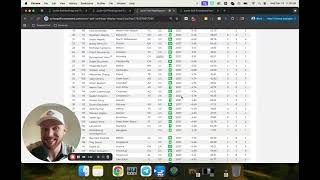
A guide to Division I golf recruiting from June 15 of sophomore year through signing day. Coaches contact players based on scoring differential around –1.5 to –3 and average scores of 72–74. Let your scores do the talking instead of mass emailing coaches.
Chapters
All right, what's going on guys? In today's video, I'm going to be covering the timeline for Division I recruiting. Um, we talked about when coaches can initially reach out, what that typically looks like, the kind of middle period in between that initial outreach and the player committing to a particular program. And then I'm also going to talk a little bit about when you actually see it being official, where they do signing day and stuff like that. So hopefully this video is going to give you a lot of clarity on what this process looks like, and hopefully you'll understand by the end of this video what your child needs to be focused on in order to, to make the most of this process. So, um, I want to start off with just kind of like high-level framework here before we go into kind of the weeds and kind of like proving out some of these points here. Um, the high level: a Division I coach cannot— or just like college coaches in general, as far as I understand it— are not able to reach out to a player until June 15th of their sophomore year. So at the end of their sophomore more year, they're not able to reach out at all, right? And so prior to that point, the main thing that we want to do is to be in a position, um, ideally within our rankings, that is going to cause those programs to reach out to us, right? We want to be in a position where, you know, when coaches are looking for, hey, who do I want to recruit, that you're one of the players, your child's one of the players that is actually going to be in that, that spot that they want to recruit. And so the easiest way to look at this is, you know, let's just say we take, you know, class of 2028 right now because that's a lot of you who are, you know, going into June 15th sophomore year. The way this is going to look is, hey, if I'm a college coach, I know something like Junior Golf Scoreboard exists, which, you know, to be clear, is the largest ranking index for junior golfers. Then what I'm going to do is just look at, okay, well, here are all the players in class of 2028. Um, yeah, let me go ahead and reach out to these players to the degree that I can reach out to them, right? You know, If I'm going down this list and I wanted to find players, you know, let's say your job was you're a Division I coach and you need to find, you know, players to recruit. It'd make a lot of sense to at least reach out to these players, wouldn't it? You know, it's like maybe there's some other diamond in the rough or something like that you're willing to entertain, but for the most part, it makes a lot of sense to just say, hey, let's look at page number 1, you know, page number 2, page number 3, etc., until you get to the point where you're just like, yeah, I'm not, I'm not interested in recruiting that type of of player. And so when we think about, hey, how do we get into position? How do we get coaches reaching out to us? A lot of people get caught up in this idea that it's about sending out emails, or you have a particular connection with the coach, or really sell your story, when in reality it's a lot simpler than, than any of that. It's being in one of these like positions here as a player where you can just let your scores speak for themselves, right? right? And then those programs are, are going to reach out organically. That's really the place that you want to be in. Um, and the reason for that is like, let's say, you know, what's the point of sending out an email or, you know, getting a connection or introduction or whatever? It's to get your foot in the door, right? It's to get an opportunity to be in front of that coach and for them to say, hey, you know, like, I like what's going on, or I don't. And, you know, just for the sake of that, you know, this example here, let's say if you wanted to go to Harvard, right? You want to go to Harvard, you want to get into, you know, the admissions. You get an introduction to, you know, whoever runs admissions, and you go in there and you're like, hey, you know, here's, you know, here's why I'm a great student, blah, blah, blah. And they're like, all right, cool, what's your GPA? And you're like, it's a 3.6. If you know anything about Harvard, you know, that's just like a non-starter, right? To be like, okay, cool, like they can be polite, but they're going to play— they tell you that this isn't a fit, right? It's like, you need to have a 4.0, that's it, that's the end the story unless you've like cured cancer or something like that. And so the same thing is true for junior golf. We just— long story short, we want to be in this position where coaches are going to kind of reach out. Now, in my experience, about a -1.5 scoring differential is when coaches start to reach out. Um, so if we just wanted to look at this really quickly, you know, say a player is somewhere in that range, we're going to see a scoring different— or a scoring average around 72-74. I don't work with this player, but just, you know, as an example, random example there, 72-74 is about standard. and we're gonna see tournaments that they're playing probably about 6,800 yards on average. This player is maybe a little bit on the shorter end of that. Um, they got a couple of AJGAs, or it looks like they've got 4 AJGAs. So they got some good events that they've absolutely played in, they've shot some good scores, and that's why their scoring differential is what it is. If we take another just like random player again, scoring average a little bit lower, golf courses are a little bit shorter, not quite as difficult. Let's just take one more here. Scoring average 72 to 74, again kind of medium-length golf courses, you know, 6,800 yards. And this is, you know, this is a really solid spot, you know, for most players. You know, this is going to end up resulting in being able to play Division I golf, and it's certainly going to result in Division I coaches reaching out June 15th, sophomore year. I can almost guarantee that this player, assuming they don't just like fall off a cliff is going to be in a position where coaches are going to be reaching out to them, right? And this is true for both boys and girls. So that's the first kind of opening question is how do we get there, right? How do we put ourselves in a position where, you know, coaches are reaching out to us? Let's just assume that you've gotten that. If you don't have that, that's all you need to worry about, right? Get the scoring average down, playing the right events, that's it, right? Um, now once you've gotten there, that initial outreach happens. What's next? So every one of these players in the class of 2027, especially these better players, I can guarantee you they have lots of offers from different Division I programs, or at least programs that are reaching out to them and communicating with them. Really important to understand that, right? So it's like that initial touchpoint has happened and they're kind of in a we're feeling it out type of phase. Easiest way to understand this, the way that I would kind of choose to describe this, is imagine the first outreach is kind of like your first date, right? For those of you who are married, it's your first date, right? It's an opportunity where they're saying, hey, you've got something about you that I like, right? Really what that is, is this course. And so I want to just kind of get to know you a little bit better and, you know, talk to you a little bit to see, you know, if we're compatible, right? Like, do you like my program? Um, you know, are your grades where they need to be? Uh, what do you want to study? Maybe we've got a non-starter right there. You know, let's say you want to study engineering and I, you know, program, like the engineering program, super hard, so you can't do that and play golf, right? Um, whatever the case is, that's that initial conversation. And so as a player, um, or for your child, it's like you want to be prepared for that conversation. Now, to be super clear, hopefully you guys are parents who are watching this, your child needs to be handling that communication. You do not want to be sticking your head in there. Um, that's not what we want to see. We want to make sure that your child is doing all of the communication. Um, and so that, that's just, you know, hopefully that makes sense, right? From a coach's perspective, they're trying to figure out like, hey, how is this kid? Like, you know, what's their communication like? Are they a weirdo? There's all sorts of little just like kind of like sniff test type stuff. And if the parent's in there navigating the conversation for the child, what's that communicate? What communicates that the kid's not capable of doing that themselves, right? Which is an automatic red flag for the parents or for the coach, or it's just like, maybe this isn't the kid that I want to go after. If I've got another kid who's almost identical, who, you know, maybe is a little bit better communication, right? I think a lot of the time people get this messed up where it's like they look at Division I coaches and they're like, well, you only care about all these other things. Like, yes, after this criteria is met. I do not really have any examples where we have a player who's got a -4 scoring differential being passed up for a kid who's got a 0 scoring differential. With the exception of potentially a substantial amount of money, which comes in the form of like donations, stuff like that. That's neither here nor there. That's a different topic entirely. 99.99% of you guys watching this video, probably not in that position. If you are, congratulations. You should still do the main stuff, but that's kind of the only exception that I ever see for that. And that's not something that I— it's not like a, here's this dollar amount. Anyway, you've got that initial touchpoint, right? If you handle that touchpoint correctly, you should leave with some information, right? You should know, hey, what's kind of the timeline here? Like, when are you trying to fill a spot by? What are you looking to see out of me? And how is this relationship going to go forward, right? It's like, imagine you go through your first date. If you end that date and there's no second date, there's no plan on what we're going to do, there's probably not going to be that follow-up there, right? It's like, we need to be able to say, it's like, okay, cool. Like, what are we doing now? Like, what's the point of this? In that first conversation is again, like, big picture logistical stuff, just, you know, immediate disqualifiers, things of that nature. After that, there's probably going to be some element of, let's just call it dating, right? If we're in a good spot, we're going to have some communication with that coach, right? That coach is going to be following up. Your child's going to be playing in tournaments, and, you know, they're going to want to kind of report back and be like, hey, here's what's going on, here's what I'm working on. The coach might ask, hey, you know, here's what's going on. And, you know, to some degree in that period, the coach is trying to figure out, you know, does this kid really like golf? Um, and they're also talking to other players, right? So, you know, this is kind of a two-way sales conversation. Realistically, ideally, your child has multiple programs reaching out to them, so there's multiple coaches that they're in communication with. And, you know, at the same time, that program obviously has a number of players that they're in communication with as well, right? So it's navigating that, really trying to figure out a way to stand out, which to some degree is going to be you know, shooting good enough scores and kind of checking some of these other boxes. But at the same time, it's going to be depending on, you know, what those other players do as well, right? And so that's that kind of first conversation and kind of, you know, going forward from there. Eventually you're going to get to the point where some of those programs are going to start to give you more serious offers, ideally, right? Um, so some program might be like, hey, you know, like, when are you planning to make a commitment, right? Um, the flip side of that question would be for a player to ask a program, hey, you I've got these other programs reaching out to me, but I'm curious when you guys are going to be filling these roster spots or how many spots you've got that you're planning to fill and when by, and what do I need to do in order to be one of those players? That's, that's kind of where the rubber starts to meet the road. Eventually, within that context of that conversation, you might talk about scholarships, you talk about financial considerations, more, more kind of detailed stuff. There was like, hey, I want you to come here. And I want to offer you this, in which case the player can say, yeah, cool, like, I'll take that. Or actually, I want to go talk to this other program first, which isn't how you would technically say that, but just big picture, it's like, I'm not going to talk to this other program because maybe this other program I'd prefer to go to. But, you know, that's a pretty good offer, right? And I'm sure you can imagine this, right? It's like your child might have a program reach out to them that they're like not super thrilled about, or there's like, there's other programs they'd rather go to. But eventually it might become, be like, hey, well, that was the best offer, and, you know, I can get over, you know, whatever reasons were Maybe I wasn't thrilled about that program initially, right? Or I might learn about a program, it's like, oh, that's actually kind of cool. Like, I do kind of like that. So there's a lot of feeling it out in this time period. And so it's very difficult to say, hey, here's the exact timeline, because it really depends on each individual program, how many spots they're trying to fill, when they're trying to fill them by, and the particular player as well, not just in their own kind of ability, but also in their own risk tolerance, right? You know, if they get a Division I program that they're really happy with, they might be like, yeah, I don't need to talk to anyone else. Like, I want the spot. Like, can I have it? And then that's where you're going to see some of those earlier commitments, right? So it's like, if you're a program, like, let's say a Stanford or UCLA, you know, in theory, it's like they can come in right out the gate, just be like, hey, we want to offer you this. And that's typically going to happen for the better players, you know, things like top, you know, 50, you know, top 25 in their class, that type of stuff. But they just come right out the gate and be like, hey, I want this. You know, like, are you willing to make that commitment early? And you see it sometimes. Or you have people who drag it out a little bit longer, right? Typically, if you're able to drag it out longer than the program still wants you, you can increase the amount of scholarship you're going to potentially get because they're kind of looking like, well, you know, I offered you 25%, you don't want to take that. Hey, I could offer you 40% or whatever. And eventually a player might be like, oh, okay, cool, if it's that, I'll take it. Like, let's do this. And so that's typically where you get the verbal commitment, right? So that when you see players say, hey, I'm committed to XYZ program, That's what we're referring to as a verbal commitment, right? We don't have it technically signed yet because we don't have signing day, but we have that verbal commitment right now. Throughout this whole process, things can change, right? It's like you can verbally commit one place and go somewhere else. It happens. You can also go to a particular program and then transfer, but that's not really the point of this video. The point of this video is to help you guys understand what's going on when you see these players signing or committing and stuff like that, right? So we look at all these Class of 2027s. Some of these players are, you know, potentially, you know, in a position where they've already, you know, verbally committed, right? I would have to go down through all these, but I mean, like, I'm fairly certain that Miles Russell has already committed to— I believe it's FSU. Um, don't quote me on that, but I'm fairly certain about that. Do we have any doubt that Miles is going to play Division I golf? No. Do we have a reasonable— you know, again, I think you could just look this up on Instagram. Is he almost certainly going there? Yes. Do we have that little label that says he's going there yet? No. Why is that? Because he doesn't have the official signing yet. And the data hasn't been pushed back. So I'll take another player that I have worked with in the past. Matt Hull here. He's committed to UCLA. You can go look at his profile on Instagram. He's committed to UCLA. Does he have the little name thing yet? No. Do some of these other players have names? Yes, they do. And so again, we're going to start to kind of see this filled out. And if you go over to the, um, Rankings and Honors College signings, you're going to start to see this filling out here. Now this is 2026, there's not as many signings quite yet because he's just so kind of like trickling in. And you'll notice we've got gaps here: 1, 5, 7, 10, 12, 15, 17, 26, 29. The further you go down you know, to some degree you're going to see bigger and bigger gaps, right? Not always necessarily the case, but it's like we go from 107 to 120. So you can kind of see the higher up you are in this, the more certainty we have that you're going to get recruited, number one, and potentially the earlier you're going to get recruited and actually have that like finalized here. Now it's like, you know, for Matt the kid I was just pointing out, you know, he's ranked 42nd in his class, which is really, really good. Um, but you know, it just hasn't had that like official signing happen yet. That's, you know, been pushed back here. Now if we look at the year prior, 2025, we can see 1, 2, 2, 3, 4, 4, 5, 6, 6, 7, 8, 8, 11, 12, 13, 13, 14. Like it's just a lot tighter, right? Because you can see all these players that, you know, eventually committed, right? And so that's really, um, It's kind of how this ends up looking, right? So that's typically going to happen going into senior year where you get those official commitments, sometimes a little bit earlier, just depends on when the player actually signs. So as far as what do you do with this information as a parent, because I think this is really important because a lot of parents get caught up in this like recruiting thing and they like turn it into a thing in their heads. What does your child actually need to do? They need to number one, be in a position where those programs are reaching them. That's first and foremost. If we're not there, they're June 15th sophomore year, nobody's reaching out, odds are, unless you have evidence otherwise, they're probably not ranked very well compared to what they would like to be ranked, right? So if we're at a -3 and nobody's reached out to us, then yeah, yeah, there could be some issues with just like how easily accessible your child is as well. But that's absolutely the case where you start reaching out to programs and being like, hey, here's what's up. It's also worth noting that, you know, it's important that they have good grades. Good SAT, good ACT, all that stuff. But that aside, yeah, if they've got a -3, nobody's reaching out to them, yeah, start sending out some emails, 100%. I almost never see that happen, right? Because Division I coaches have decent budgets and they're good at what they do, right? Um, as opposed to with, um, excuse me, as opposed to D2 and D3, typically they have smaller budgets, so we have to do a little bit more work on the outreach. That's not really my area of expertise as far as that communication. Do I know people who do that? Absolutely. Are they great at it? Yes. If that's the position that your child ends up being in, let me know and I'll connect you with them. But my main thing is I want to help your child get better, right? I want to make sure that they're in a position where those coaches reach out to them because that makes everybody's life really easy. You have a bunch of options. They reach out. I've got other videos on this channel of how players have gotten Division 1 offers, but it boils down to that, right? We've got a number of offers. We decide which one we want to pick and which one wants us, and then we go ahead and do it. It really is that simple. And so even once you start having those conversations with coaches, let's say your child's in that position where the program's reaching out and like, what do they need to do? It's like, well, they need to not be a weirdo and like communicate with the coach. Um, they need to ask the questions that I kind of talked about. And you know, when I'm working with a student, I'm guiding them through, you know, how to do that. Um, but you know, it's continue to do their— play their game. It's not to get in the spot of just like, oh, I need to get this exact program. It's like, yeah, obviously we have maybe preferences. Um, we just want to play the best game that we have and do our best to, um, you know, to present ourselves well. And then when that opportunity comes along, if you want to take it, go ahead and take it. I've worked with students where sometimes I wanted them to improve a little bit more, but they got an offer that they're super happy with and they're just like, yeah dude, like, I'm good with this, I'm happy with this, I don't like the stress of this, I'm just going to commit here and that's that. There's nothing wrong with that really. Like, at the end of the day, my goal is not to say, hey, your child needs to go to Stanford or UCLA or whatever. My goal is to help them improve as much as possible and ultimately help them achieve whatever their goals are that they've stated and we've agreed are reasonable, right? Um, so that's really my perspective on this entire process. So, you know, as a general summary, get in position by June 15th, sophomore year. That means it's like, odds are it's like your child probably needs to start like developing their game in an intentional way by like 7th, 8th, 9th, 10th grade so that they're in a position to do that. Because it's like, if they've never played ranked tournaments, stressful. They play in ranked tournaments, maybe they're not as good as they'd like to be. Maybe they're shooting in like the 80s on average, right? So they need to improve that, need to have opportunities to get reps and stuff like that. They don't just get 10 shots better overnight. It's kind of my main point here. So you want to know like where they're at, how much time they have, and the easiest way you can do that is just get ranked. You know, I've got resources below if you need help building out a tournament schedule to get ranked. Obviously I have an application below if you want to work with me directly and just have me do all this stuff for you guys. Um, once you got that, once you're in that position, programs reach out, you have that initial conversation, kind of set the stage for how that communication is going to go going forward. Once we get to more commitment time timeframe, we start really trying to hammer down, okay, cool, what are the offers, one of them being made, etc., etc. At that point, we get to a verbal commitment, ideally. And then you've also got that kind of period in between, hey, I made this commitment, it's probably gonna happen, getting to know the coach, blah, blah, blah. And then the actual, like, hey, we're signing it on, on signing day, right? So that's kind of what that looks like. Hopefully this clears up the process a little bit. And hopefully it just makes it clear to you just like how simple this is, just like help every child play their game, um, make sure they have good grades, good SAT scores, have those conversations with the coaches in an intentional way. But I mean, like, if you're doing some crazy, like, email outreach and social media and you're getting crickets for a response, odds are your child's just not good enough, and that's where the focus needs to go, is getting them better, getting them shooting better scores, rather than, you know, just doing more outreach and stuff of that nature. So hopefully this makes sense. Um, if you guys enjoy this video, go ahead and leave it a like. It does help push it out to more people on the YouTube algorithm. You're new here, um, go ahead and subscribe to the channel if you want to learn more about playing Division 1 golf. Got a bunch of other videos on the channel kind of going through every one of these subjects, um, you could possibly come up with. If you come up with something that you want me to cover that, you know, I haven't covered, just comment below, let me know. Um, the only reason I'm doing this one is because I actually had one of my students reach out and say, hey, can you do a video on this? So that's why I'm doing it. So anyway, once again, hope this helped for you guys, and I'll see you in the next one.










