The ONE Platform College Coaches Use to Recruit Every Player (And Most Parents Don't Know It Exists)
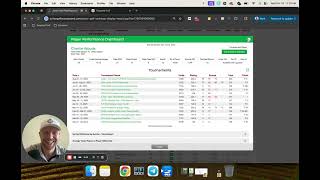
Connor Stirling Peterson explains how Division I golf coaches use the Junior Golf Scoreboard to evaluate recruits. Top programs like UCLA look for scoring differentials around -5, and focused coaching can improve a player by 4 shots per year versus the typical 1.2. Early planning with realistic targets and the right tournaments matters more than one exceptional score.
Chapters
All right, what's going on guys? In today's video, I'm going to be covering the platform that the majority of coaches, especially Division I programs, are using to recruit junior golfers. Now, I want to be very clear when I'm making this video, this is not the only thing that a coach is going to consider. Obviously, there's a lot that goes into it— grades, you know, attitude, you know, a lot of stuff goes into this, right? But the reason that I put such an emphasis on the reason I'm going to be talking about this tool is because this is kind of like that first check, right? Yeah, maybe you could fail this, and maybe if everything else is exceptional, you can get over that hump, but it's not a very good, you know, strategy, right? In the same way, if you're going to apply to Harvard, you want to know that you need a 4.0. It's just kind of like just a baseline there, right? If you don't have that, to some degree, you're going to come off as a little bit, you know, not serious. And it's just, there's there's not a high probability you're going to be able to even get your foot in the door, right? Um, so this is kind of like that first step. And, you know, again, could you get into Harvard with a 3.5? Yeah, I'm sure somebody's done it, but I'm guessing that in exceptional circumstances. And if you're trying to, you know, be successful in anything, it's usually not a great bet to plan to be the exception, right? Um, so even those who do end up being the exception, they weren't necessarily planning on that. And even if you can point to one person who's just like, oh yeah, here's— I'm going to be the exception, they pulled it off, you're talking about somebody who's like one in millions, right? So usually it's just not a great strategy to, to use there. So anyway, um, the site that I'm showing you right now is called Junior Golf Scoreboard. And the reason, um, there's, there's so many reasons why this, this site is, is very useful, obviously for college coaches. It's also very useful for a junior golfer, you know, hopefully your, your child's a junior golfer, um, and you're watching this video. Um, number one is the largest ranking index, right? So you might have heard of stuff like AJGA. AJGA is a lot more narrow, obviously. You probably know it's very difficult to get into AJGA events. And even the other non-AJGA events that do count for rankings points, um, those are all very, very high-level events. Not to say that they should be neglected, but this is just to say pretty much everything that's going to be ranked by AJGA will also be ranked by Junior Golf Scoreboard, but it's not necessarily true in the reverse. So this, this platform is great, especially if your kid's like 10 and up. Like, you're going to be able to get a lot of value out of them being ranked, aside from like obviously and we'll kind of go over this together. It's essentially a billboard for, you know, college coaches when they're trying to do their, their research. Um, but even beyond that, it helps your child do a lot of mapping, um, you know, as far as like where they're at right now and where they need to get to and how much time they realistically have, which does a lot in, in long term for setting expectations. Also helps a lot for mindset. Um, it's one of the most neglected things that I see for people who struggle with mindset is a lot of the time we have way too much emphasis on an individual tournament or an individual round of golf. And if you can help help a child who's, you know, 10, 11, 12, 13, 14 years old recognize that they've got years ahead of them and also help quantify that for them so they understand where they need to be year over year or quarter over quarter has a tremendously positive impact on just like their overall like mental well-being around golf. Anyway, let's go ahead and jump into the video. I will also say if you guys enjoy this video, go ahead and leave a like. It does help push it out to the algorithm, and if you enjoy this type of content of helping junior golfers play Division 1 golf, go ahead and subscribe to the channel because we come out with stuff like this every week. So anyway, that's the first page I want to draw your attention to. It's rankings and honors, college signings, and this shows for boys and girls every player is recruited back in 2017. It's pretty extensive. This is the most comprehensive, especially for Division 1 golf. It's a little bit less comprehensive for Division 2 and Division 3. Now for that one person who's going to say, oh well, you know, D2, D3 are just as, you know, good and sometimes better than Division 1, Sure, are there exceptional, you know, D2, D3 programs? Yes. Are there bad D1 programs? Absolutely. But, you know, for the most part, D1's the best. Hopefully that's kind of, kind of obvious already, but I just know somebody's going to say that. Anyway, this shows us where the player was ranked in their class, shows what their scoring differential was. Scoring differential is just kind of a way of saying that if you shoot 72 at 7,000 yards, it's better than if you did it at 6,000 yards. And then we also have the program that recruited them. So if you're like, hey, my child wants to go to UCLA, what does it take? Well, it's like, okay, we can sort by school and say, scroll all the way down to UCLA and say, okay, well, you recruited a kid who's -4.22 and -6.69. Okay, cool. So you want to go, go to UCLA, probably want to be -5 or better. right? Like, that's kind of a good range to kind of aim for. Also looks like in this case we got a Hawaii kid and a California kid, so maybe they're not quite as biased on location. Some coaches— just to disclose— some coaches will only recruit international kids. That just kind of is what it is, right? And long story short, we want to be able to— this data is all accessible to us, and we want to know that ahead of time. Um, and, you know, if we need to reach out to coaches, we say, hey, you know, I'm here, and, you know, typically I see you guys only recruit from, you know, international right? I just want to reach out and let you know that, number one, that I exist, and if there's anything that I can do to, you know, help move over that needle. Once you get to that point, which is like hopefully not when you guys are watching this— that's more so for like junior year and forward when you can communicate with coaches— but I digress. Anyway, tremendously valuable. Um, I'll go ahead and pull up girls for you guys as well. Um, pretty similar range. Um, so let's just look at top 100 for girls. Negative 2. 4.6. Let's look at top 100 for boys. Or a little bit better, yeah, 2.8 or, uh, 3.82. So boys are about a shot better on average comparatively to girls, um, you know, which should make sense because there's obviously more boys that are playing golf than girls, um, so the competition is a little bit steeper. Anyway, once we've got that, let's go ahead and jump on over here and let's just look at the class of 2027, which is all of our juniors right now. Um, so if you're a coach, kind of think about it like this. You know, this exists and you want to recruit kids, obviously, you know, in their junior year right now. A lot of these kids haven't technically committed. I will say a lot of them have, like Miles, I believe, is going to— I think he's going to Florida State. Um, anyway, they just don't have it like officially marked here, but there's a lot of verbal commitments. We got Charlie Woods here. Um, but you can see all these players who, you know, they've got their ranking, right? They've got their scoring differential, which is 65% of the overall ranking, right? And that's going to, you know, determine a lot of this. And so we can also look at, you know, what tournaments are these players playing in. See a lot of AJGA, um, we see some of the bigger, uh, or invitational events. Um, to be clear, not everything that's an invitational is technically a big event. Sometimes they just use that term to like, you know, make it sound cool. Um, we're typically going to see a scoring average somewhere between 72 and 74. Again, this player is a little bit under that, um, but they're also playing some shorter golf courses, and that's going to be the rationale for that. One of the things that's also really cool is we can see how fast this player is improving. Now, this isn't generally accessible, so like you probably won't be able to do this on your end, but it kind of helps us understand what's a reasonable pace of improvement. You know, this player improved a lot over this last year. They went from -1 to -5. Obviously, that's huge. That's 4 shots. Um, that's a ton. Right. Let's look at the year prior to that for them. They went from 2.3 to, you know, so they improved by about 3.3 shots the year prior to that. So obviously they hit something here. But anyway, as a coach, you can kind of see it's just like, hey, I've got a leaderboard here of all sorts of great players that, that I can recruit. Let's continue on here. Anyway, you can kind of see what we're looking at here. I'm just going to pick another one. Again, we kind of see players hovering around the 72 to 74 scoring average. It'll be 74 when the golf courses are longer on average. So, you know, it's like 6,600 yards— more of these are 7,000— then you might see the scoring average a little bit higher at the same scoring differential. You're also going to see a lot, once again, of AJGA. Got a smattering of other stuff in here as well. Um, and you know, again, that's typically what you're going to see. And hopefully this kind of makes sense of just like how easy this is for a coach to be like, okay, we've got some really high-level players, and you know, if your child's position where it's like, you know, let's say they're a scratch golfer, let's say they're shooting, you know, 75 or 76 in tournaments that are, you know, 6,500 yards, um, for the context of boys, and maybe 5,800 yards for the context of girls. You can kind of see here where it's like, it's just not that appealing for a coach, especially if you're not ranked. It's just like, I've got so many options, you know, like scoring average 73, a little bit, you know, longer golf courses on average. So we got some shorter ones, but you know, this is like the Junior PGA, um, you know, in their state. Got the Bubba Conway, which is a huge one. Bunch of AJGA. You guys kind of get the picture here. If you're a coach, you, you really, you know, are kind of spoiled for choice here. And so what you want to do with that, um, I'll pull up Charlie Woods again, just, you know, back on the topic of annual progression, because I, I always like to compare Charlie to what I do. Um, so Charlie's 5.49 Last October he was at 1.48, so he's improved by about 4 shots, um, as well. The year prior to that, uh, he's improved by— let's see here— he improved by about 3 shots the year prior to that. So anyway, long story short, um, that's kind of what you can expect for like— that's elite level. I mean, this is like, you know, kid's dad is the GOAT, right? So, you know, that's, uh, and again 73 scoring average, pretty difficult tournaments on average compared to like some of the other ones that we've seen. So even though he has a higher scoring average, because these golf courses are longer and harder on average, his ranking overall is a lot better, right? So anyway, um, the key here is to really to get your child into that position. And here's the cool part about this, you know, I just kind of outlined to you like, hey, you know, if you get into this range, you know, like coaches are going to reach out to you. And so let me just kind of pull up an example of one of the students that I, you know, worked with this past year who, you know, is in that exact spot. Now, so you can see right now he's got a scoring differential of -2 here, scoring average of 73. Again, bunch of AJGA, longer golf courses. And I'll just pull up the message he shot me, literally June 15th of his sophomore year, which is, you know, when you can technically reach out to kids. Let's go ahead here. All right, boom. So as you can see, it's got the Oregon State, you know, head coach reaching out to him. Literally like as soon as they can be reached out to. And, you know, just so you guys know, this isn't kind of like a one-off event. I'll just pull up another student that I work with as well and go to the exact same date range here. So I reached out to him, I was like, hey, you know, June 15th. He's like, yeah, I've got a number of programs, you know, Arizona was one of them. Um, we talked about this more, so he was ranked a little bit better. He was around like a -2.8, and I could show you guys that in a second here. Um, you know, he had Clemson, Stanford, Cal Poly, like a lot of really great, you know, programs there. Like I said, I'll just pull this up for you guys as well. So -2.87 for him. And so, you know, hopefully you guys can kind of see where it's just like, if you're able to get into that position, it's just a complete game changer. And this is also true for girls as well. Um, and so why is this so important? Just like to kind of zoom out, make sure you guys have something that's actionable here, is if you know that you need to get here right? And getting here has certain criteria, right? Scoring an average of 72-ish, playing longer golf courses, certain scoring differential. And let's say your child's at wherever they're at today. Let's say they're in 8th grade and they've got a scoring differential of, I don't know, 4. You want to be able to look at that and say, hey, what are, you know, what's the pace that we need to be on in order to get to this -4, -2, -6, whatever their goal is for, you know, whatever program that they want to go to? Which again, you can go back to the other page I showed you and determine that, right? But once we've got that information, say, okay, cool, I need to improve by, you know, 12 shots over the next 3 years, right? At least we have that clarity, right? Or, hey, we need to improve by 6 shots over the next, you know, 3 years, or whatever the case is. When I work with students, the average player improves by about 4 shots per year. Right now it's trending a little bit higher, um, but I also like to be very conservative in what I talk about as far as like average performance To be frank, I've got one student right now, he's improving by a shot per month. It's ridiculous. But I would never set that expectation as like, oh, that's what's gonna happen for your child if you decide to work with me. So it's just important to understand. It's like, hey, if you got, you know, an 8th grader and they've got a scoring differential, let's say 7, right? Like, we just do simple math. We got 8th grade, 9th grade, 10th grade. Ideally, we want to be in position by June 15th, sophomore year. So let's say 8th, 9th, 10th. Right? We've got 3 years ahead of us. Let's say they've got a scoring differential of 7, right? So we're going to go 7 minus 4 minus 4 minus 4. It's going to have us at a negative 5 scoring differential by their sophomore year. And that's just kind of like an on-average estimate, right? Could be better, it could be worse. Every player is different. But it allows you to at least have some clarity because let's say you go, you go from 7 to 1 in a year or something like that, which I have had students do. Then you can say, okay, cool, we're ahead, right? Everyone relaxes. You're gonna be like, all right, we're good. You know, we still need to know what to do next, right? Like tournaments are going to change, you know, things we're going to need to improve in the game are going to be a little bit different. Obviously, you know, let's say you're shooting 80, you go to shooting 73, the opportunities in your game are very different. You might have cut out some 3-putts, you might hit a few more greens, but you're gonna have different problems. You're trying to go from 73 to 72 or 72 to 71, or you're trying to substantially increase the distance so you can play the 7,200-yard golf courses, or for the girls, the 6,000-yard golf courses, right? So those are all things to consider, but you're able to see this clearly rather than just going out there taking lesson after lesson after lesson and just hoping it pays off the next tournament and then crossing your fingers and hoping that some coach sees this. So, you know, as far as, you know, I hope you guys are clear on this. Got two options for you if you want more help. Obviously you can just stick around, watch all the videos on the channel. I do my best to go through all this stuff, um, but nothing beats actually having somebody just tell you literally what to do. So I've got two options below here. Number one, if you're in a position where you're like, hey, this sounds great, but it also sounds like there's a lot of stuff going on— to some degree there is— and you want somebody to guide you through, you want me to guide you through, um, your child through on what they need to do as far as getting ranked, what they need to do as far as improving, what their practice needs to look like, how to track their statistics, all the stuff that they need to focus on and make sure that they have support, you know, literally 24/7. If that's something you're interested in, there's an application below. Um, fill it out, and then if your child's in a position where I can help them, then you'll be able to schedule a call on my calendar and we'll go over together, make sure it makes sense. If you're not quite there, right, because you're working with me, you know, that's, it's a little bit more intensive. You're just looking at this, you're just like, I don't even know how to get ranked, right? It's like, I don't know what to do. Then there's another link below as well, um, that will give you my tournament selection framework. So this is the exact training that I give. It's literally like this one right here, um, how to make your tournament schedule It's about an hour long. This is literally what I give all the students that work with me, you know, at the highest level. And so you guys are able to pick that up for $147. I want to be very clear, that's not me personally like picking out all the tournaments for you. There's no way that I can justify, you know, that time and like, you know, interchange and all that stuff. It's going to show you what to do, which is going to be more valuable anyway, because number one, you're not going to be dependent on me to do this for you forever, right? You're going to understand how to do it. You're going to be able to do it dynamically all the way into the future, right? So if you've got a 12-year-old or something like that, like, you're going to know how to do their tournament schedule. You're going to know how to make sure that they're playing in ranked events. You're gonna have clarity on like, hey, we've got a scoring differential of 11, and we've had that scoring differential of 11 for the last 6 months, and we're not improving. We need to do something to get this to move faster. For context, just so you guys have clear expectations, if you guys decide to kind of go this your own route, average player improves by about 1.2 shots per year. And so the way that I make that assertion here, I'll just show you guys in kind of one little iteration. So we can see that there's 60 pages here, right? And that's just like all the junior golfers that rank are ranked. So let's just go to the middle, right? So we're gonna have to go bump all the way over here to 30. All right, boom, we're at 30 here. So let's just say dead center, Got a scoring differential of 4.46. Also, if we click into this, what you're going to see here is the percentile. We're at 50%. We really want to know what that is. So you don't want to look at what rank in the class, because more kids— and so this is something you guys will see down here if I can get it to scroll— more kids are going to enter the class over time. So since February, they've had another 800 kids get into class. Now granted, he's improved quite a bit, right? He's improved by about 4 shots, you know, since February, which is awesome, right? Um, now is he still in a position to play Division 1 golf? Probably not. You know, he might be able to squeak in Division 3, but you know, being a junior, um, and being that spot, even with that type of trajectory, still going to be really, really tough. And that's why I say it's like, if you're watching this and you can get in early, if your kid's like 11 or 12 or even 10, obviously it's going to be a lot easier for you because this progress is you know, actually matters, right? And so anyway, let's go with your prior just so you guys can kind of see the way I'm doing this math. So look at 2028, because we can't just look at like, hey, here's an exceptional case, or here's a good case, or whatever. So now we got to go to 22, page 22, because there's 45 pages. 21 and 22. All right, cool. So we're just gonna call this roughly middle. As you guys can see, we're pretty close to the 50th percentile here. And so this player, it's a scoring differential of 5.64. You guys can go back, I believe it was about 4.4 was the next year. As you guys can see, it's about 1.2 shots. I didn't pick these out, these are just like randomly done. Um, this is about what I see consistently class over class, year over year. The average improvement is about 1.2 shots per year. And so when you guys are trying to model that out, that's just something to be aware of that. Once again, at the beginning of this video I said do not plan to be the exception. If you're looking at that and saying, hey, we're doing what everyone else is doing, you know, we're getting swing lessons every single week and, you know, we're just kind of like doing our thing, you know, maybe we're, you know, got a mindset coach or what have you, um, that's kind of what everybody else is doing, to be quite honest. And that's just something to be aware of, that don't plan to be the exception. Don't put yourself in that— your child in that position, um, so it's going to create a lot of stress for them. And above all, measure it. You know, if you're in a position where you're like the kid that we just looked at where, you know, you guys are improving by 4 shots per year and you're not seeing any slowdown, keep doing what you're doing, you know, like keep sending it, right? Um, but if you're not, if you're looking at it, you're like, hey, we're stalled out, do not, do not— I can't stress this enough— do not just sit on your hands and just think, oh, it's gonna work itself out. It does not. I can— I promise you that. I've seen so much data, I've seen so many kids. It's just like, as soon as we get like all locked up because it's just like, oh, we're not improving enough, therefore we're not gonna like make any investments That's when we lock up, right? So anyway, once again, if you enjoyed this video, go ahead and leave it a like, subscribe to the channel. If you want more help, again, application below. And I've got my whole tournament schedule framework. You guys can even get a one-on-one call with me if you guys want to add that on when you check out. So those are the two options for you guys. Hopefully you guys enjoyed this video. Hopefully this cleared some stuff up for you guys, and I'll see you guys in the next one.










