This Is Why Your Kid Gets Mad About Decent Shots (And How To Fix It)
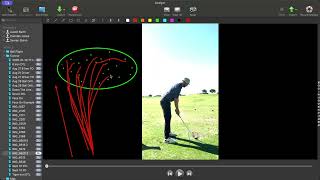
Junior golf coach Connor Stirling Peterson explains why kids get frustrated with decent shots: they're aiming at a single spot instead of understanding shot patterns. Your shots naturally scatter around a pattern rather than landing exactly where you aim. Learning to aim at the pattern itself, recognize your kid's natural ball flight, and align properly reduces frustration and improves results.
Chapters
All right, in this video I want to talk about shot patterns. This is one of the most important concepts for us to understand in junior golf. I see so many parents where they don't really understand this topic, and it can lead to some coaching where parents trying to help their child by saying things that are not really feasible, and they don't really have the language to explain to their child why an okay shot is okay, right? So if you're watching this and your child, you know, consistently hits shots that you feel like are okay, maybe they're hitting the ball in the green to 20 feet and they're pissed off about it, stuff like that, this video is going to be helpful for you in combating that, that topic and that narrative and helping them understand why that's the case. Okay, so the first thing I need to talk about here is shot patterns. And so shot patterns, I'm not the first person to come up with this. I learned this concept from Scott Fawcett. I'm sure he learned it from someone else, or maybe he was the first person to come up with it. I know Mark Brody's talked about this. Um, but long story short, a shot pattern— what that means is if I have your child hit 20 balls, they're not going to hit balls that look like this. You ever seen them hit balls in a simulator? We're coming out of the winter right now. That is not what their pattern looks like, right? Might be if they hit like 3 balls, and it's cute if their, their coach puts that on the, the sim and says, hey, look how good we are, right? But realistically, if you had them hit 20 balls at a target You know, it's gonna look something like this, right? It's gonna be all over the place, right? Now, if they're very skilled and they understand their game at a high level— odds are that's not the case— but then their target is in the middle of this pattern. Now, typically what we're going to find is something like this, where the target is off-center, right? And so that becomes a product of a player who does not know how to aim this pattern. And so you'll see me talk about probabilities in other videos, and this is obviously a difficult concept, concept to grasp if you're a junior golfer, to be able to think in probabilities, right? Even adults have a hard time thinking in probabilities. But when we're thinking about hitting an approach shot, we are not talking about aiming one of these little shots and trying to say, well, you know, the flag's right here and I want to put it right next to the flag. That's not possible, right? What we can do is we can say, I've got this pattern here and I'm going to aim that pattern. And so here's the thing, the average green is about the size of your child's shot pattern, if not slightly smaller, right? Now on tour, they might be a little bit more accurate, but a good rule of thumb is 10%. So a great shot pattern from 150 yards would be 10%. So that's 15 yards, which is 45 feet, which if you have your pattern perfectly over the target, you should have an average proximity of 22.5 feet, which if you wanted to go and look that up is exactly what the actual proximity is on the PGA Tour from the fairway from 150 yards. Okay, and so it's crucial to understand this pattern because if we don't get this pattern right, we're not going to hit very many greens. We're going to put ourselves in really stupid situations. We're going to get pissed off hitting bad shots that aren't really bad shots, they're just poorly aimed shots because we don't understand our actual shot pattern here. Okay, and so it's just absolutely crucial to understand this. Now, next piece of this that makes this more challenging is a lot of players are under the illusion that it's a good idea. Even coaches kind of advocate for this. And, you know, to be fair, like, I'm sure some coaches can argue with me here in the comments or something like that. Um, but a lot of, a lot of people prefer to see this kind of straighter ball flight. And so when I say straight, I mean, you know, people articulate, they're like, hey, I want to hit the ball straight. And in my opinion, I just don't think you can do that and have this pattern and have any degree of understanding where the ball is going to end up. I think that you have to understand which direction this ball is going to curve. And so that means that we are fundamentally starting this ball at the left side of the green or the right side of the green based off of our shot pattern and seeing it draw or fade some amount, and also allowing a little bit of tolerance for hitting a pull or a push. Okay, this is based on a general concept of saying, hey, pretty much every coach— got myself over here— is going to say, hey, I want 2 degrees left or 2 degrees right of path, somewhere in that ballpark. And then they're going to want the face somewhere between 2 degrees left and square, right? And so in theory, I'm good with that. You know, that makes plenty of sense. In practice, I think it's a little bit wider when we actually get our full shot pattern here. So if you're, um, you know, fading the golf ball, I would presume that if we hit 20 balls that our pattern, our shot pattern, or our— I'm sorry, our club path might be closer to -3 at some point, and then maybe it pulls a little bit further than that. But at this kind of general pattern here, that gets us about a 20-yard wide shot pattern, right? So there's a good chance your top is a bigger pattern than that. But that's— that it's one thing to say, hey, I can do that, but it's another thing if you don't understand this. There's no chance you're going to be able to just intuit this, or it's very low probability you're going be able to intuit this. Okay, so when your child's hitting their approach shots, they need to first of all understand what shot they're hitting, right? Do they fade the ball or do they draw the ball? No, they do not work the ball in both directions. Nobody does that at a high level. Um, and the easiest way to test that— if your child ever wanted to push back on you and say, no, I can do it— I would challenge them to hit 20 balls with one shot pattern, right? And they're gonna have a pattern that looks like this. And then I would challenge them to equal— have exactly the same size or better if they work the ball in both directions every other shot, right? So they go draw, fade, draw, fade, draw, fade. I bet you any amount of money that this pattern balloons. And it's like, okay, cool, then you didn't help yourself, right? You can't actually do it, right? And so just because you can get the ball curved in another direction, it's like, that's not it doesn't really matter that much. Um, that's another skill which is— it matters a lot more distance control, which I'll potentially get into a little bit later, right? But if we're hitting a fade, trying to start the ball left side of the green without allowing a little bit of tolerance here for if we hit a pull. So like, if you look at like alignment here, we should be kind of feet left side of the green, or maybe a little bit outside of the left side here. That way if we pull it, we're still hitting the green on the left, and you know, for the most part, we're going to have, you know, shots that look— it's hard to draw with a mouse— we're going to have shots that look something like that, right? Occasionally it's going to start, you know, square. Obviously it's not drawn to scale, so it's a little bit smoother at scale, but you guys can kind of see the pattern here, right? We don't need to think to ourselves, hey, I need to, you know, draw the ball into this back pin, unless you're trying to work it around like a spruce tree or something like that. In that case, you shift your pattern, right? You just don't really have that option here, um, because again, you can't just say, hey, I want to do it on this only this one hole, because then it throws off your entire pattern for every next shot they're gonna hit, or it throws off all your feels. So in this particular scenario, right, we understand that we can't say, hey, I want to hit this one specific spot. Now from there that influences how we think about alignment. So you guys can see here, I'm trying to hit it on this flag here. You can see I've aligned myself somewhat left of that target. And so you're going to see, that's how I'm going to try and start this golf ball. In this case, I started pretty much down that target line, maybe a little bit too far to the right. And you're going to see this ball fade some amount to the right. So that's my preferred ball flight here. And so the reason that I say that this is so crucial to understand the shot pattern is because if we don't understand the shot pattern, we can't understand how to aim, right? Because visually, just so you guys can see, see, this is like I'm looking at something like that. So if I don't have this, then I can't aim, right? I'm going to aim at the target, or God forbid, I'm going to be one of those people Maybe your child does this, right? Don't have an alignment rod on the ground to align myself on the driving range. And then you got on the golf course, your child was on the golf course, you wonder why they can't aim because they don't practice aiming on the driving range. Okay, um, so we want to have all those alignments there so I can say, okay, if everything, all the conditions are perfect, I can just train the skill of hitting this shot with the right pattern. I can train my eyes for what they want to see. I want to see the ball out in front of me, right? If I was trying to hit a draw, I'm looking over my shoulder. So those are visually different. This is, you know, going back and forth between these is one of the reasons I don't like hitting a draw or fade. I'm going back and forth between those because that's very visually different, right? So we want to have this foundation of understanding, okay, I'm going to hit a pattern that looks like this. And so we don't get irritated when you hit a little bit of a pull. You recognize, oh, I just hit a pull. right? Now if you just pull, pull, pull, pull, pull, pull. Okay, cool. Now we can say, you know, there's something going on here. That's not my pattern versus, hey, yeah, sometimes I hit a pull, sometimes I hit a push. And some players interpret this, you might even interpret this as a parent, as, oh, I'm inconsistent. And it's like, that's just not true. You're inconsistent because you're looking at too small of a data set. Right? You're hitting a couple balls right next to the pin and thinking it's because you're good, and then you're hitting a couple balls over here and then thinking it's because, because your mindset— and it's just like, no, it's just parts of this pattern here. Like, they're just going to come in randomly. You don't know when you're going to hit them. You just got to commit to that pattern. But if you don't understand that there's a pattern there and you don't understand how to aim for that pattern and you can't recognize, oh hey, I just hit a pull, like it's not a big deal, like it's just part of the game, or I just hit a push, you know, that's okay, it's just part of the game, then you're just going to drive yourself crazy, right? And so this is why your child gets out there, they're having a good round, they hit one bad shot and they just spiral because they're looking at it from the perspective of, oh well, if I was really that committed, I could hit it in the exact spot that I wanted to, rather than thinking in terms of patterns here and saying, let me just commit to that, and if I just hit this ball solid, I'm gonna get this something reasonably it's kind of in this pattern, right? That allows us to actually play golf, or it's very, very low stress because we're actually just operating within what's reasonable that we're going to hit as far as the shots we're going to hit, right? And so this also gives us a framework for understanding, hey, you know, if I'm looking at this, this trajectory here, right, I've got my setup here, right? I've got my alignment stick down on the ground. And I haven't even said this, I'm filming this swing, right? So this is not an endorsement to go film every single swing, but if you're not— if your child isn't filming their swing, especially when they're hitting the ball poorly or just like whacking balls, it's a little bit like saying, hey, I see here's something like dinging around in my car, but I'm not gonna have a mechanic go look at it, right? I'm not even gonna look at it. I'm just gonna let it, you know, ding around and like hopefully I drive around enough where it's just gonna figure itself out. Like, it's just, it's stupid. Um, and so we want to have all this basic stuff so then we can look at the swing again, assuming that we're sold, right? This makes sense. Be like, hey, we're trying to hit the shot pattern, we're mentally committed to doing that, we're going through our process, we're not getting lazy about it, like we're committed, we're doing that. Well, it's like either we, we essentially have two options beyond that, right? We have our strategy figured out, that's all correct. We have our mindset figured out. We're solid. We're going to do the thing. We have the full intent to do the thing. There's two other questions. Are we practicing it in a format that makes sense? Ollie, i.e., like this. Whoa. And what are our mechanics telling us, right? So if I'm hitting pulls, so I'm just, I'm trying to aim down this, I'm just consistently left. A lot of junior golfers do this thing where they like start adjusting their alignment. Which is wrong, right? We want to have the alignment needs to be a stock standard thing, right? Alignment doesn't change. I want to look at the swing and say, okay, cool. Is the face getting closed? You know, this gets into a little bit of understanding mechanics here, but it's like, is the face closed here? You know, is the face very, very close to the top, right? How close or open does your child like to see this? Right? When they're hitting the ball good, great time to take video to understand why what they're doing works. When you're hitting the ball poorly, you can compare that to when they were hitting it better and understand what changed, right? So we can look at clubface, because clubface is going to dictate a lot of this, right? That's not to say that, you know, it used to be believed that if you just have the clubface pointed at the target, then it's going to go to the target. That's not true. But what your child— your child's going to react to where the clubface is. So if you're watching people who are not very good at golf, they might have this golf club wide open at the top, or you can't even see the club face. Okay, well, what do they do? Well, they come out over the top and, you know, swing the hand path, you know, on the club left to try and square off this wide open face, and they hit crazy slices. Okay, you might see other players where they have a club face extremely shut, right, where it's like facing the sky, and then they're going to swing either way out to the right or they're going to hit crazy pulls. And then, you know, that's going to draw from there, right? They're going to have a lot of curve on their golf ball. Okay, so we want to just be looking at this and saying, you know, if we're having ball flight issues where we're hitting it left or hitting it right, you know, why is that the case? And one of the first places we can really check is just like, where's the clubface pointed, right? You know, is it, is it reasonably square? Are we kind of hitting our targets here? And then on the way down Is that impacting anything? Right. I'm going to primarily talk about stuff going on throughout the backswing because the club's moving fairly slowly there on the way down. It's much harder to coach that, right? We're more accommodating how our bodies want to move. And so if we crank open really, really fast, we might have an arm plane that's a little bit deeper and lower to accommodate that. If we don't open up very well, yeah, with a deeper hand path, then we might want to have our arms a little bit higher. Justin Thomas would be a good example of that, where, you know, he's tried to be deeper in the past, he starts hitting hooks. And so that's where, for him, he won't set a fade, he lifts his arms up, that allows it to work well for him. Okay, so we want to have the proper framework to understand all this stuff. It all starts with understanding shot pattern because that allows us to understand where we're trying to aim, what those starting parameters are. And as we move Further and further through this, you guys can see there's fewer and fewer things that could potentially be the problem, which allows us to have more certainty about what the problem actually is and we can solve it. That's why when I'm working with players, it's so easy for me to see, okay, this is a strategy problem, this is a practice problem, this is a mindset problem, this is a mechanics problem, because I'm able to narrow down all the variables, right? And so if that's something you want help with, I've got links all over social media where you can apply to work with me if that's something you're interested in. And we'll apply this process for your child, help them understand stuff like this. Because obviously this is just one small topic of shot patterns. There's all sorts of other things we can go into. And when I'm working with students, I go into all those things, and I'm coming up from a position of, you know, there's a lot of different things that we could pull. You know, there's a lot of different levers we can pull in golf. There's a lot of stuff that they can improve at. We want to know, hey, what are those sure things for your child so they can improve as quickly as possible? So if that's something you want help with, got links floating about to be able to apply for coaching. Hopefully you guys enjoyed video and learned something. Hopefully it gives you a perspective that you can bring your child if this is something that they're struggling with.










