What College Golf Coaches Look For That Most Parents Don't Know
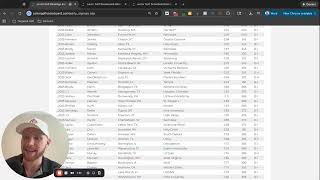
In this instructional video, junior golf coach Connor Stirling Peterson explains the key factors college golf coaches consider when recruiting players, aiming to demystify the process for parents. He walks through publicly available Junior Golf Scoreboard data to illustrate realistic recruiting thresholds, emphasizing that a player typically needs to rank around the top 300 in their class, maintain a scoring average of 72‑74 for boys (on ~7,000‑yard courses) or 73‑75 for girls (on ~6,000‑yard courses), and possess strong academic credentials (GPA 3.75‑4.0, solid SAT/ACT scores). Peterson highlights the importance of a player’s maturity and direct communication with coaches, as well as measurable attributes like driving distance. He discusses expected yearly improvement (about four strokes for most players) and the variability of outcomes based on engagement. The video also covers recruiting timelines, noting that players with strong stats can attract 5‑14 program offers by mid‑sophomore year, whereas lower‑ranked players face limited options. Finally, Peterson promotes his coaching services, offering a transparent application process for families seeking personalized guidance.
Chapters
All right, what's going on? In today's video, I'm going to be covering what college coaches look for that most parents just don't know. Um, so I'm going to be covering this because all the time I talk to parents, and most of the time they don't really understand what a college coach is actually looking for, and it leads them to have a lot of anxiety. It leads them to typically stress their child out, and it just doesn't actually help them end up you know, helping their child get recruited. So long story short, I want to walk you guys through what I actually see happen, um, what this process actually ends up looking like, because it's actually a lot simpler than you'd think. Um, doesn't make it easy by any means whatsoever. It's harder to play Division I golf than it actually is to get into Harvard. Um, but the benefit is it's fairly transparent, you know. And while, you know, it's like you go to Harvard, you know, you need to have a 4.0, um, and a bunch of other like random doodads that you don't even know about. They probably make up on the spot. Um, so, you know, aside from that, um, Division 1 golf is actually very clear. It's just, you know, it's quite difficult to be able to get to that level of golf. But I'm gonna go ahead and walk you guys through it. Hopefully you guys enjoy stuff like this. This is all I talk about on this channel. It's literally what I do is help junior golfers develop to play Division 1 golf. So if your child is in that position, welcome. Happy to— happy to have you here. And, um, Yeah, if you enjoy this, go ahead and leave a like, um, share with people that you know, um, share with people you find think might be, um, might be helped by this. So, um, anyway, let's go ahead and jump into it. So first page, Junior Golf Scoreboard rankings and honors, college signings. This page so shows us all the players recruited back to 2018, so we don't have to guess about what's actually required. We can actually just go out there and look. And so you can sort this by class ranking, which is my preferred way to do it because I think Makes things very, very clear. So we can see where the player was ranked, their scoring differential was, the program that recruited them. And so as we scroll down here, one of the things that I like to do is say, like, you know, in theory, you know, what's the worst you can be where you still have a high probability of getting recruited to play Division 1 golf? And in some way, there's two layers of this. Number one, I like to look at this— when do I start seeing gaps here? All right, if we look at the 75, 75, 77, 78, 79, 79, 80, 81— so you better believe if you're ranked 75, you're gonna get recruited. That said, caveat here, grades matter a lot. So if you're watching this, maybe you've got a child who needs a kick in the butt over their grades, or maybe you're just not really sure how much grades actually matter. Maybe you think, you know, golf's like football or something like that. Um, let me be the one to tell you, grades matter a lot. Your child needs to have really good, um, GPA, really good SAT, ACT scores. Take those seriously. Now when I say good, I mean you're shooting for a 4.0. There are a lot of players who have 4.0s, so that is the target, that is your goal. Now, if you fall a little bit short, how far short can you fall? This is not license to go and try to do this. This is just, you know, should you be concerned? 3.75 is about the worst that I would say you're still going to be okay. Lower than 3.75, we need to kick it into high gear and also know that that might kneecap us down the the road. So full disclosure there, that definitely matters. A couple other honorable mentions that I'll just throw out here because I try and give you guys the meat and potatoes of this stuff. I try not to, you know, talk about all the little random stuff that doesn't really matter that much. Um, good attitude, obviously. Don't be a weirdo, obviously. When you're doing interactions— when your child is doing interactions, I should say, because I'm presuming that I'm talking to you as a parent— make sure that your child is communicating with the coach, not you. So that's, that's an important detail because some parents try and butt their, their, stick their heads in there because obviously you're trying to help your child. It makes your child look like they can't actually speak for themselves. It makes them look like they're not very mature. And so when you consider that from the perspective of a coach, if I've got a lot of kids that I can choose from and one of them is very independent and mature and one of them, they have to have their parents speak for them, that I'm usually going to bias toward the kid who's a little bit more mature, even if they're not quite as good. Right now. This is all just in the universe where we're pretty close here. I'm not talking about, hey, one kid's amazing and one kid sucks. I'm saying that, you know, we're all players are ranked around like 80 or something like that, right? The coach is going to make the biased decision based off of some of these other little squishy variables here. Um, so aside from that, uh, obviously coaches like distance, right? If we can have more distance, that's usually gonna be a good thing. Usually that'll work itself out in the scores though as well. Um, you know, so we don't need to be superstar athletes or anything like that, but, you know, distance definitely does, does matter. Um, but anyway, we really want to be looking at where we ranked. So I would say the cutoff here is about 300th in her class. Now again, caveat, you guys know I'm going to tell you, tell you how it is. Is there a player who's ranked 1886— I apologize, whoever this is— um, 1886 got to play Division 1 golf? Yes. Is that something that you should aim for or plan for? No. Um, are there players who are, you know, even further down here in the 400s or the 500s? Yeah, absolutely. Like, they're absolutely there. Um, does that mean that that's something that your child should aim for? I would not recommend it. Okay, I would recommend to shoot for a number where they can be kind of give or take, and they have a high probability to play Division 1 golf. Benefit of that is when I work with a player, often I've had this happen numerous times at this point where I have a player where I feel like they're underachieving. I feel like they should have done better. I'm a little bit disappointed with the amount that they've improved. The average player I work with improves by about 4 shots per year, but not every player I work with improves by 4 shots per year. And certainly if they're not as engaged as, as I would like to see them be. And so I've had students on numerous occasions now where they were nowhere near as good as I thought that they could have been. But they still got recruited to play Division 1 golf. And that's just expectations there, because I, in my mind, you know, when I get a player who's ranked 20th in their class or 70th in their class, I'm like, let's be the best player in the country. That's my mindset. That's the kind of, um, approach that I'm going to take with any student that I work with. I want to help them be the absolute best they can be. Now, is that true on the flip side? Do I work sometimes with players who, you know, maybe we got a little bit more of a stretch, you know, maybe we got to improve by a lot, and we do improve by a lot, but we don't improve by enough? As long as we're all taking that calculated risk, I'm okay with it, right? I'm actually more happy in that case than I am with the player who doesn't improve as much, gets played visual and called, right? That's why I talk about myself as average improvement rather than I got this XYZ placement rate, because the meat and potatoes of what I do is actually helping the player develop. So anyway, as you can see, we've got all this data publicly. It's kind of— see, about 300-ish. What's actually required then? Let's go over here. So this player is ranked right around 300, and this is the scoring average and set of tournaments that I'm going to kind of talk to you about, talk about all the time. You've got a scoring average between 72 and 74, and we got golf courses at about 7,000 yards, a little bit shy of 7,000 yards, and that's probably why the scoring differential isn't quite as good. Um, but that's what this looks like. And this player's in Florida. Um, for any of you guys who think, oh well, Florida is like automatic you know, amazing status? No. Um, same thing for California, same thing for all these other places. Are they helpful? Of course they are, right? Is it better than being in Iowa? Of course. But it's not the end-all be-all, right? So we still have to consider, you know, the difficulty of the tournaments that we're playing in and the scoring average. But those are the two main variables— is playing in the longest, hardest tournaments we can possibly get into. Sometimes there's gonna be limits to that. And then getting the scoring average ideally to 72 to 74. Now, if you know you're just gonna absolutely get kneecapped on the distance of the tournaments, you're just playing these short Mickey Mouse golf courses all the time, there's nothing you can do about it, which is a real case, right? Like, let's see, you can't play in any AJGA, you can't play any travel stuff, you're just very limited to the local area, then guess what? Scoring average needs to be super low. You just need to plan accordingly. To have a scoring average that is under par on average, it's very difficult. It's one of the reasons why I don't typically coach players to do that as a first methodology. It is much easier to get them on longer golf courses and have them actually, you know, just develop their game, um, so they're able to play those golf courses about 72-74, which is around par. Otherwise, we have to learn how to make birdies, which is more challenging to do that intentionally at a high volume while also avoiding bogeys. That's just that. But this is typically what this looks like. So, you know, Division 1 golf is what it looks like. Now let's look at girls. Same thing, class of 2026. Go ahead and look over at, again, ranked around 300-ish. It's gonna be pretty similar. And if you guys go back over this page here, I want to be super clear, you can see this for boys and girls. Okay, let's look at it for girls. So girls, obviously this girl got recruited here, a little bit higher on the scoring average, right? So in her case, it's 77. Granted, she's playing some pretty long golf courses, she's playing about 6,000 yards. $58,000 to $6,000 yards is kind of, kind of what I expect to see for girls. Um, now that said, girls again aren't quite as good as boys, um, just on average. If we look at kind of, you know, 150 for Class of 2026, obviously you've got a few girls already getting recruited. 76.8, again, 6,000 yards-ish. Um, let's go one page up. Top 100 for girls. 72.6, a little bit shorter golf courses on average. Just picking random ones here. 74, more, you know, I'd say, you know, 58, 6,000 yards. Typically my recommendation for girls is 73 to 75 is really where I like to see. If we're in that spot, we're in an amazing spot. Um, you know, am I going to work with girls who probably end up getting recruited to Division 1 programs who got a scoring average like 77? Probably. I would anticipate that. Um, but I'm always going to bias toward let's try and get that number up. As you guys can see, I'm always trying to help my players just improve as much as they possibly can, be the best players that they can be so that they have the most options when it comes time to getting recruited. Because you don't want to be bottlenecked into a spot where you're just like, oh, I can play this program, but I don't really like the coach, or I can play at the spot, but I'm not going to play, right? We want to have an option where you— we got several different programs to choose from. You know, some of the students I've worked with where, you know, we've got a -1.5, -2, -2.5 scoring differential you know, June 15th of sophomore year, you know, we've got anywhere between 5 and, you know, maybe 13, 14 programs reaching out right at June 15th. How amazing of a position is that to be in comparatively to, you know, being at the mercy of, you know, sending out emails and hoping somebody responds to one of those just like random emails, or sending out videos, or like, hey, here's my swing videos, or here's my Instagram, or here's my video, or my college recruiting video montage thing. This is really where the meat and potatoes is. This is where you need to focus. This— if this is something that you want help for your child with, this is all I do. As you guys can tell, I've been doing this for over 2 years just on YouTube. I've been doing a little bit longer than that on my own. Before that, I was also working with a couple other guys. So I've been doing this, I mean, essentially since the start of the 2020s. Um, so something I know very, very well. If there's something you're interested in, there's a link below where you can apply to work with me. I'm very transparent about all stuff. I'll tell you exactly where your child's at, whether it's realistic, you know, what makes sense, how fast they should expect to improve, and you know, just what the lay of the land is. That way you can make an informed decision about, you know, what makes the most sense for you and your family. Um, so if you're interested in that, go ahead and fill out the application below, um, and we'll talk about it. Otherwise, hope you guys enjoyed this video and go watch some other videos on the YouTube channel. Um, I cover all these topics, so if there's a question that you've got, odds are I've probably got a video on it. You just search my name and about a particular subject. Odds are it's going to come up. If it doesn't come up for some reason, comment below, let me know if you want me to do a video. Happy to do it. So let me know. Hope you guys enjoyed this video, and leave a like if you enjoyed it. I'll see you guys in the next one.










