When Should Your Child Take D1 Golf Development Seriously
Connor Stirling Peterson says parents should stop asking when to start serious golf training and instead pick a target college program, then work backwards from its recruiting standards. He breaks down a framework using scoring differential data, noting that average junior golfers improve 1.2 shots per year while his students improve 4 shots per year, and identifies ages 12 to 14 as a critical window for separation.
Chapters
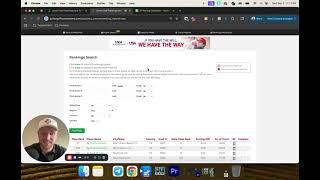
All right, what is going on, guys? In today's video, I'm going to be talking about when your junior golfer should start taking things seriously as far as trying to play Division 1 golf or even trying to play college golf more broadly. This is one of the most common questions that I see comes up from parents. I'm also in a group where I, you know, help coaches coach better, and it's one of the questions that came up in that group as well. And so I just figured it would be, you know, a good video to cover on YouTube because, you know, odds are you probably have this question. So let's go ahead and dive right into it. So when we think about, hey, you know, when, when's the right time to start? Um, that's the title of this video. It's kind of the wrong question. Uh, it's not really the way you want to be thinking about it. So I want to give you kind of a few steps to be able to ask the right questions so that you can come up with that answer for yourself. So number one, where are we trying to get to, right? Like if our goal is— I'm going to use, you know, kind of a different analogy. If like, if our goal is to go to Harvard and we know that we need to have a 4.0 GPA in order to have any shot going to Harvard, when do we need to start taking, you know, grades seriously? Well, we probably need to at least start by freshman year, right? Because we can't have anything worse than an A on our, on our GPA. But then it's like, is it reasonable that you might have a child who is a D student, that they're gonna go from middle school and then they're gonna go into high school and all of a sudden they're gonna get all A's? It's probably not reasonable, right? It's like they probably have to start preparing and having academic, good academic habits prior to that. So then it's like, you know, is it 8th grade? Is it 7th grade? Is it 6th grade? Is it 5th grade? When do they actually have to quote unquote take that seriously? And it's, it kind of belies the question. Now it's like, we want to have the skill set that we need to display, you know, that 4.0 or whatever at that time. So technically, just to kind of give you guys some extremes here, recruiting starts June 15th, sophomore year. So ideally, if you started quote unquote taking it seriously, um, one year prior to that, where you've got 12 months of tournament rounds, and in theory, you know, it's like you could just go out there and shoot, you know, 72 on average and play a bunch of like long golf courses and, you know, have that work out for you and you have a -2 scoring differential. Then obviously that would be fantastic. Um, the thing is that's just not reality. Like nobody actually does that. I don't care how many lessons you get with your swing coach. I don't care how good the golf swing looks. That's not how this works. And so it's not really, you know, the way you guys want to be thinking about it. What you want to think about is where are we trying to get to? Um, so there's this page on Junior Golf Scoreboard rankings, honors, college signings shows us all the players are recruited back into 2017 for boys and girls. Um, this is very comprehensive for Division I. It's a little bit less comprehensive for Division II and Division III, to be fair. So what we're able to see is say, okay, where are these players ranked in their class? What was their scoring differential, which is the major thing that really matters, and what program recruited them? So you can say, hey, I want to go to XYZ program, or I want to go to a range of programs. You can start to map out ahead of time, okay, where do I need to get to in order to get recruited by those programs? And you can just make that decision on your own. You could say, hey, I'm good with going to Villanova, which, you know, maybe is closer to a -1 as a scoring differential, or I want to go to UCLA, which may be closer to -5. It's a 4-shot gap. Um, and so say it's like, when should you get serious? It's like, it really depends on what the end goal is. Um, you know, just first and foremost. So once, once we've established whatever that end goal is, and again, like, this dynamic, you know, this can change, you know, if you're okay with Division II or Division III, then it's like, clearly you know, a scoring differential of 2 works, um, or some of these higher numbers as well. So it's like, depends on what that end goal is. Once you've got that end goal, you also need to know where you're at. So, you know, just pulling up a player that, that I work with, um, you want to have your child ranked on Junior Golf Scoreboard. There's a section of Junior Golf Scoreboard where you can just look at all the tournaments that they have and then just pick out the ones in your state that make sense. You need to play in 4 ranked tournaments in order to actually get ranked. These are 36-hole events, and I've got other videos on the channel going through like how to pick the right tournament, so you can go watch those videos if you're interested in that. Anyway, we want to be able to see like, okay, where are we at right now today objectively? And so, you know, this player is in his freshman year, but it's like your child could be in 5th grade, 7th grade, 9th grade, like all 11th grade, it doesn't really matter. It matters where are they at right now and what is the gap between where they're trying to get to and where they're at today. Like, we have to know that. So like, that's step 1, know where you're trying to get to. Step 2, where are we at today? Step 3 is how big is that gap and how many years do we have ahead of us, right? So it's like, if two players have a scoring differential of 2, um, that doesn't necessarily mean they're the same. Because it's like, you know, if a player has a scoring differential of 2 and they're in 8th grade, that's completely different than if they have a scoring differential of 2 and they're, you know, a, a junior, you know, or something like that, right? So it's important to understand that we need to consider all of those things together to be able to say like, okay, cool, how many shots per year does this player need to improve? Now I can tell you straight up, on Junior Golf Scoreboard, the average player improves by about a little bit over a shot per year. Most of that improvement comes from hitting the ball farther, not necessarily from shooting lower scores. Most players kind of get capped out on average somewhere between 80 and 78, and that's just, you know, essentially because you can kind of get to that scoring range by just working really hard. Eventually you get to this point though where it's like you have to be more intelligent about the way that you go and practice. You can't just go brute force it. You actually have to think through like, okay, I have a limited amount of time. I have a little limited amount of like mental bandwidth. Um, what shots do I really need to be able to develop in order to shoot lower scores? And we have to have clarity about that. So, you know, when I'm working with students, that's specifically what we're doing is having clarity on that whole picture and then knowing what to do specifically when they go out and practice based off of their actual data and whatever their goals are. So that's something you're interested in. Got an application below. You can fill that out. Uh, make sure your child's actually in a position where I can help them. If I can, then you'll be able to book a call and we'll, we'll talk it over, make sure it makes sense for you guys. So anyway, back into the video here. Once we have where we're trying to get to, where we're at now, we've got the distance between those two, we've got the number of years, we've got the shots per year that we need to improve by, then, you know, that's, that's really where we want to be thinking with. And so, like I said, average player improves by about 1.2 shots per year. So you can do the math right now to say like, hmm, I've got scoring differential of 4. I've got 2 years ahead of me, or my child, you know, got 2 years ahead of them. Um, you know, can we get there? It's like, not, not on that math. Now the question is, can you do something to improve faster than, you know, that 1.2? It's kind of like the next question. And so when you're evaluating any coaching, that's really the question you should be asking is, is this going to result in faster improvement? And if so, by how much? That's, that's the question you want to be asking because it's like, that's really how you would judge one coach is better than another. Right. I had a guy ask me the other day, he was like, you know, Connor, are you the best, uh, coach for my family to go with? I'm just like, dude, um, I help the average, the average student I work with improves by about 4 shots per year. And I'm like, if you are, you know, talking to someone who helps players improve by 5 on average, that's clearly better than I am. Right. You know, it's like, I don't know what the costs associated with that are. I can tell you guys that, you know, a kid like Charlie Woods, um, Tiger's son, last I checked, has improved by about 4 shots per year over the last 3 years. Let's go ahead and look at them now. So let's see here. So over the last year, he improved by, looks like 3.4 shots the year prior to that. He improved by 4 point, you know, 4.2 shots essentially. The year prior to that, he improved by 6, which is a pretty big jump. And then the year prior to that, he improved by— we don't have the exact number here. Looked like about 4. So anyway, um, all in all, on average, about 4 shots per year for Charlie. That's pretty incredible. Um, I I think it's pretty dang good. And yeah, so that, that's kind of my personal comp. So to say, okay, cool. Well, and what's Tiger doing with his kid? If I'm anywhere close to that, I'm pretty happy with, with where I'm at. But long story short, it's like whatever that number is, you know, number one, like I track my stuff. I'm, I'm really big on that. I would advocate that if you're going to go through this process and have your child, you know, get ranked on General Scoreboard, track where they're at, like track their scoring differential to show, hey, we're improving at the rate that we want to, cuz you can back this out. You know, it's like you don't have to wait a whole year to figure out how many shots are we improving by. You can be like, okay, well we've improved by, shot over the last month, then you guys can all be like, that's incredible. Like, that's really, really great. If it's half a shot, still really, really good because you can block that out and be like, that's a 6-shot-per-year pace. Like, that's fantastic. You know, if it's not at all, you know, it's only 1 month, so it's not something to get freaked out about. But if it's like 6 months and there's no improvement, then it's like, hey, you might want to do something different, or you at least want to look under the hood and say like, what's going on here? Like, why are we not seeing improvement there? Um, but anyway, depending on where your child's at, that, that's really what you want to be able to do is just say like, okay, if you're in a spot where it's like 2 shots per year, 3 shots per year, um, then you want to start looking at that seriously and say, okay, what are we going to do that's going to give us a substantial advantage over just, you know, what everyone else does? Like whatever the average is. Um, that's why I have a program like, like I have. You can apply down below. Um, it's limited to 100 kids. Um, that's not like a made-up like marketing thing. Like it's, it's literally just me. Like you guys would be working with literally me, so I can only really work with 100 kids and still like not hate my life. So, um, 100 kids is the number. And then got some other stuff in the works on, um, ways we'll be upgrading the program in the future. But that's something you're interested in, you want my direct support, that's what that looks like. But long story short, you just want to figure that out for your child and start to do the math. And, you know, parents ask me, they're just like, well, you know, what if we wait a year? And it's like, okay, well, how does that change your math? It's not about me saying, hey, you need to do it right now, or whatever. Um, It's about how does the math change for your child and what bets do you want to make, right? So it's like, let's say, cause I'm telling you, it's like my average student improves by 4. Some do better, some do worse, right? So if you were gambling, which just, you know, to some degree you are when you purchase any service, you're looking at that and saying, okay, well, what if, what happens if I fall a little bit behind? What if my kid only improves by 2 shots, 3 shots, right? It's like, that's still significantly better than average. But it's like, if you start earlier, you have more room for them to be able to fall a little bit short and still reach the goal. Right. So that's, that's really the way to be thinking about this. So hopefully that helps you guys kind of understand it. It's just like, when should you start? Um, now I want to give you guys kind of like one last kind of framework just to kind of, you know, help you guys put all these pieces together. Cause I know some of you guys are gonna be watching this and you're going to have a kid that's like 7. Um, so that's a little bit of a different bucket from The, the earliest players that I tend to see playing golf competitively in any capacity is about 5. I know there are kids who can hit a golf ball that are younger than 5, but 5 seems to be like where tournament golf actually kind of starts. You know, maybe they're playing like 9 holes, and like there are kids that I've like seen that shoot even par for 9 holes, and that freaks some families out. Honestly, it doesn't really matter, but it's like 5 is the beginning. 10— 5 to 10 is kind of like that range where we're just playing 9 holes. All the time. Tournaments don't really matter that much. It's mostly about making sure the kid loves the game. So it's like, um, there's also a lot of variance there, and like sometimes you have big kids, sometimes you have smaller kids. Like, again, those aren't really things to read into. It's just going out there, having your child play their game, doing their best, trying to improve, but also just trying to enjoy the game. Like, that's really where that focus should be. From 10 to 12, it's kind of an options time period, right? Because the biggest gap, the big jump that needs to happen is they're probably playing 9 holes in tournaments, and AJGA starts at 12 years old. And so if they want to be ready for AJGA, those Junior All-Star events, those are 54 holes plus a practice round, or plus a qualifier, or plus a practice round and a qualifier. So we're looking at 72 to, you know, 96. Is that right? Um, doing math off the top of my head. Um, and so we're looking at that and saying, okay, cool, like, we need to get our stamina up. That's kind of like the main problem there. So we want to get the scores down because if we want to be able to be competitive in like junior all-star stuff, you know, we want to have a scoring average of like 77, um, 77 or better at the yardages that they're going to play, which is about 6,300 to 6,800 yards. So it's like, odds are, you know, if your child's 12 and just starting off Those golf courses are going to feel very long for them, and that's okay. That's just something to accept. It's like there's going to be older kids who are going to hit it further. That's not something to worry about. You don't need to worry about what other kids are doing. You need to worry about where your child is at and how they're improving their game. So I just want to be really clear about that. But it's like, if you're starting off at 10, you're playing 9 holes, then the target, rather than worrying about like college golf and all that stuff, is how do we increase the stamina So that we can play 36, 54, 72 holes and, and not like run out of just mental stamina in the same way that's like, you're going to run a marathon. You know, you don't just run like a mile at a time and like, hope it works out. It's like you start incrementally lengthening out the amount of time that you're running. Right. So same thing's true for the golf course. So it's, it's really lengthening out that stamina and then still, you know, applying kind of the same principles that we would when they're older of just, you know, how are we going to shoot lower shots? Or lower scores. You're making sure that everything is really solid, especially around the greens. We're not chunking chip shots, we're not 3-putting, we're not hitting balls out of bounds— things that are under their control. And then we can just kind of anticipate the greens regulation is probably going to be a little bit low. Scrambling odds are is probably going to be a little bit low as well, just because we don't have a lot of control of our ball on our approach shots, because we're probably hitting like 3-wood into a lot of holes. Um, so that's kind of what that time period looks like. And again, you could be enormous— like, I was 6 foot tall at at 12 years old. So it's just like, of course I'm going to hit it far. But it's like, if your kid's, you know, 5 foot tall, it's like, it doesn't really matter that much. Like, don't, don't get caught up in that. So once we get to 12 to 14, we end up in kind of an opportunity zone, let's say, because it's like we're starting to get into puberty and we're also in a position where, you know, players start to separate themselves out. Right? So it's just like the player who really puts their head down from 12, 13, 14 can make a big jump, or they can fall behind everybody else. Um, just because it's like you're gonna have those kids who are already ahead, right? But you're gonna have some kids who are just like naturally talented, pick up the game at 12, 13. It's like they can still be in a really good spot if they're shooting like 90 or something like that at, you know, 7th grade. It's like you get them in, you know, some good coaching, um, and you're improving that, that 4 shots per year. Again, you can just do the math on this. Um, The other side of that coin is I'm working with players, I'm trying to get them to about 72, 74 on average to be able to play Division 1 golf. So you can just do the math on, you know, 90 minus 4 for, you know, whatever, 7th grade, 8th grade, 9th grade, 10th grade, 11th grade, 5 years, 20 shots, that's 70. So it's like you're gonna fall short of that a little bit, like you're still in a really great spot. So that's kind of where I look at like that range as being kind of like you can pick up golf, be able to shoot 90 like almost overnight if you have good athletic talent, and then, you know, get really dialed in and reach your goals. So 12 to 14. Really great place, um, to start digging in there. And then once we're 15, 16, obviously we already have to have some ability. Like, if we're starting freshman year, we're just picking up a golf club for the first time, you're gonna have a bad time. Like, we're probably not playing Division 1 golf even if we're at that, you know, scoring average of 90 or whatever. It's just like, it's tough. Now, if we're just naturally talented and we have scoring average like I don't know, 77 or something like that, then absolutely that's going to work out for us. Um, but 15, 16 is really like, we're— that's go time, you know. It very much is go time. Um, junior year, high pressure. Um, junior going into senior, high pressure. Senior is like essentially the cutoff. It's just like we're in full placement mode there. Um, because we just don't have a lot of time to be able to lower the scores, right? So it's just like, that's, that's really the way that this ends up looking like from a timeline perspective. And so the question that you're asking yourself, um, with your child. It's like, where are we at right now? Where are we trying to get to? And, you know, what are the challenges that we need to overcome? Like, do we need to improve by a substantial number of shots? And that's the main problem. Um, you could also be in a spot where it's like you've got a kid who's 10 years old, who shoots 69 every time they go out on the golf course, or they're, they're huge, that, you know, they have physical ability, in which case, like, your main goal is just make them continue to like golf. You know, it's just like, you know, don't ruin golf for them. Don't freak out over it. Just like let them do their thing. And It's like, odds are it's gonna work out for them. So it's, it's knowing the problem you're trying to solve based on where they're at and not, um, you know, trying to create problems for yourself. So hopefully this makes sense. Hopefully this gives you guys some framework on when to take things seriously. Um, how that's not exactly the right question to be asking and, and really just think like, where's my child trying to get to? Or where do they say they're trying to get to? Where are they at right now? How big is that gap? How much they need to improve and, and what makes the most sense to, to do at this moment? So hopefully this makes sense. Once again, if you guys need support, um, link below, you can apply for my coaching. Um, and again, that'll kind of take you through a process to make sure that you're actually a good fit, um, from like a scoring perspective. Because if your kid needs to get 10 shots better in a year, like, I can't help them. Like, I just want to be very clear about this, not a marketing thing. It's— I have literally like dozens of people every single month reach out where I'm not able to help them. So don't be afraid about that. Um, just fill it out and at least it'll give you some perspective as far as you know, what your child needs to do specifically in order to reach their goals. So hopefully, guys, this was helpful for you, and I'll talk to you in the next one.










