Why Range Rats Rarely Play D1 Golf
Only 1.6% of junior golfers reach D1, harder than getting into Harvard. Range rats fail because high-volume practice doesn't work. Instead, track stats like GIR and wedge accuracy, design drills targeting your weakest metrics, keep sessions to 90-120 minutes, and aim for one-shot improvement per quarter.
Chapters
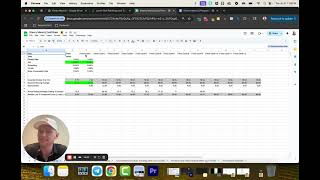
All right, what's going on guys? In today's video, I want to talk to you guys about why players who spend excessive amount of time on the driving range, or kind of like range rats, very rarely end up playing Division 1 golf. This is a topic that's near and dear to my heart because once upon a time I was that player. Um, I spent a tremendous amount of time on the driving range and really missed out on some of the key concepts that I'm going to talk to you guys about in today's video. Um, just so you guys know, if you're new to the channel, um, all we talk about on this channel is helping your junior golfer play Division I golf. And also, just to be clear, just by watching these videos doesn't by any means guarantee that your child is actually going to end up playing Division I golf. They've got about a 1.6% chance of actually being able to play Division I golf across all junior golfers, right? And so the probability you're gonna be able to watch a few free YouTube videos and be able to make that happen, relatively low. Um, but at the same time, I want to be able to share what has worked for players that I've worked with to have gone on to play Division 1 golf and share it with you guys so you guys can better understand the process, what you end up need to, need to be able to do. If you're a returning subscriber, welcome back, always great to have you. And this is going to be a really important topic for me to cover today. So one of the most common things that I see, because it makes a lot of sense, is that if you want to get better at golf, you need to practice more. I think it's one of the things that gets perpetuated by guys like Tiger talking about the amount of time and effort that he put in on the driving range. Um, you know, go even further back to a guy like Ben Hogan talking about hitting balls until his hands bled, you know, ridiculous stuff like that. And kind of gives us this idea or this impression that if we want to play Division 1 golf, we want to be successful at a high level, we need to put in an astronomical amount of practice. And that just really isn't, um, really isn't the case. What the thing that I've found consistently among better players is that the practice that they put in is very specific to whatever their goals are, and that allows them to get the best results. So it starts with a foundation here of doing something like tracking your statistics. I think this is becoming even more important. We all know the importance of just data collection and being able to use data to make intelligent decisions rather than emotional decisions. Um, and so it's very important that if your child's not already doing that, that they start doing that if they, if they have a serious, you know, goal of playing Division 1 golf. Also, just to be clear, you know, I said that only 1.6% of junior golfers will play Division 1 golf. It's literally twice as hard as getting into Harvard. So if you thought about this from that same perspective, if your child wasn't, you know, tracking their GPA and they wanted to get Harvard, you'd be like, well, that's not realistic, that doesn't make any sense. But so many junior golfers just go out there and like work hard and they think things are just gonna like work out for them. That's just not how this works at all. So it starts with the foundation, just understanding your, you know, tracking your statistics and knowing which statistics to look at, because that's really, you know, the foundation here. It's like, at the end of the day, like, if you want to be one of these players on this, you know, first list— I'm looking at sophomores right now— but if you look at these, you know, these are guys that got a scoring average of 72.5, um, you know, somewhere in that range, 72 to 74. So I talk about all the time, they're playing very difficult golf courses. And so in order to be in that, that range, you need to know, okay, well, I have a scoring average of 78 right now, or 79, or 77. You know, what does my child need to do in order to get to a scoring average of 72? And I can tell you right now, it's not just improve their ball striking. Like, they— it's not how this works. They have to be able to understand their entire game as a whole and understand where they need to put strategic effort. Sometimes it's going to be we need to hit the ball further. Sometimes it's gonna be, hey, we need to get more greens. Sometimes it's gonna be we need to be more strategic about when we do miss greens, leaving ourselves in the right spot. Sometimes it's gonna be, hey, I need to get better at making putts from 10 to 15 feet. Maybe it's gonna be I need to improve my lag putting, I need to improve my short putts. But if we don't have that information as a foundation, if we're just trying to get better at everything, then we're gonna get better at nothing, which is what most junior golfers experience. Most junior golfers don't improve year over year, um, or they don't improve by much. They end up just being like they quit, you know, essentially. And so you don't want to be in that position. You don't want your child to be in that position. So if you see that they're working very, very hard, it's important that you kind of meter it with things that I'm going to be talking about here. So as a foundation, once you have those statistics, you want to make sure that the practice is modeled around those statistics. What do I mean by that? If we know that we need to improve greens and regulation, then we want to look at where are the easiest places to improve greens regulation. A really obvious easy one is if our par-5 greens regulation isn't very high then we want to strategically say, okay, why? You know, is that a strategic position? Or maybe we're not very good from our— with our wedge play. That's an easy low-hanging fruit thing that it's very easy for your child to go out there and say, hey, you know, let's say they're not accurate enough from 75 to 100 yards, they can't hit a lob wedge on the green. Well, then it's very easy for them to just plop down a few balls, you know, let's say call it like 10, and say, hey, how can I hit 7 or 8 out of 10 balls onto an imaginary green? And and, you know, see what that feels like and see what I need to do in order to make that happen, and then go out on the golf course and execute that. Something as simple as that, as far as practice goes, can be highly impactful for their overall scores, because if they go from hitting 50% of their par 5 greens, or 75%, to 100%, or 75%, they've just hit one more green per round. And if that's the case, they're going to improve by about a shot— a little bit less than a shot, but close to a shot— of overall improvement just by hitting that one green. And how did they accomplish that? Well, they had a very simple practice. You'd hit 10 golf balls, takes about 5 minutes, right? So they could, in theory, have accomplished one shot of improvement just by a very small amount of effort put in. And so it's very important that you have that context through everything in your child's game, not just, you know, one part of their game, right? So this is something that when I'm working with students, this is exactly what I'm doing, is being able to say, okay, cool, here are your statistics, you know, here's, here's your big picture goal, more importantly, here are your statistics that feed into that goal. Here's the statistics that are going to have the biggest impact, and then here's what you need to do specifically in your practice in order to improve that statistic. And then we can reevaluate through time based on new data coming in, new rounds of golf, and saying, hey, what do we need to adjust? Are we moving in the correct direction or not? Is the practice that we're doing effective, right? That, that's a really important question. That's something that you're interested in, or if you want help with that, you want me to build out your child's practice plans and tell them exactly what they need to do to play Division 1 golf, there's a link below where you can apply for my coaching program. It's not for everyone. I will not take you on if you don't have a realistic shot of playing Division 1 golf. That's just kind of how that works. Um, but if you're interested, fill out the application. It'll let you know if you're qualified, and then if you are, you'll be able to book a call. We'll look at things together, make sure it's a good fit for your child, and then take the next steps from there. At the same time, if you want to learn a little bit more and go really into the details specifically of just how Division 1 golf works— this first video you're watching, or you just want to have a clear perspective from me on what your child needs to do specifically to play Division 1 golf. I've also got a link below, uh, going over how to guarantee that your child gets the attention of Division 1 coaches and the steps that go into that. So links below for both of those. Anyway, back into the video here. So when we're looking at how your child needs to practice, it's not about putting in more time, it's about putting in the right things. The other thing that is really important we talk about here is there's kind of a— there's like, imagine you have like a practice curve, right, where it's like you get there and you're kind of cold, you're not really mentally quite engaged yet, but you get a little bit further in and you start to become, you know, reasonably mentally engaged, right? You're, you know, let's say you're 15 minutes in, you're— we're kind of cruising there. Eventually we hit a peak where we kind of hit maximum focus, and then we're going to slowly taper off from there. And that, that's how anyone's practice is going to go. It doesn't matter how much time you put in, you're going to hit a point of diminishing returns where the reps start to decrease in quality. It's like if I went to the gym and, you know, you lifted all day compared to if you lifted for just 30 minutes, right? Those workouts are going to look entirely different. And if you approach that strategically, you know that that shorter workout, you're going to position all the really important stuff in that 30 minutes versus you have all day, you can just do all sorts of random stuff. And odds are, if you've ever done that in the gym, you know that you're not really going to get very good results if you're there all day. You're going to get a lot better results if you take a shorter window and you're more deliberate about each of the tasks that you do, because the reps are going to be higher quality, you're not going to be as tired, and you're going to be focusing on the stuff that actually like moves the needle. And you're going to be able to consistently see improvement if you do something like that. The same thing needs to be true for the way that your child is practicing. There's a limited amount of time they're going to be able to focus. Odds are it's about 1 to 2 hours, somewhere in that range where they're going to lose focus. If they're under 10, odds are we're probably looking at about an hour, maybe 30 minutes. But for the most part, the players that I work with 10 to 16 years old, realistically 2 hours is kind of the limit. So 90 minutes to 2 hours is kind of like where I, I like to see practice sessions because it allows the player to have about somewhere between 15 and 40 minutes at maximum to each part of their game. We can hit off the tee, we can hit approach shots, we can hit their short game, we can hit their putting, and we have a very limited amount of time that we're gonna be able to execute on each one of those. So if we're focusing on the right drill, you imagine this, you start working on your chipping and you've got about 15 minutes to make sure you've got, you know, several different shots, maybe you're carrying the ball specific distances. Well, if you have a limited amount of time there, you have to have a lot of focus to make sure you get a lot out of those reps, which is exactly what we want, right? We want to have the most, um, focus possible within our practice. Same thing's true for our approach shots. If I say, hey, you're only going to hit 10 balls, we think about each one of those balls a little bit more. If, if I say, hey, we're going to hit infinite balls then it's just like we don't think about it at all. So that's just a really critical concept, is if we constrain the time, we actually get better practice out. Next thing that's really, really important is that we have criteria that we're trying to perform to within practice that we can fail at. Um, a lot of the time there's kind of this common idea of, hey, you always want to end on a win. Um, and I think that there is some value to that, but I also think it creates a lot of mental problems. Namely, if you're always able to hit balls until you get, you know, whatever the end result is, you never really get a lot of experience with having to accept failure for an extended period of time. And when you go out there and you play golf, you are going to have to deal with that. You're going to have a scoring average of 78, you're going to go out there and shoot 88, and you're going to have to deal with that for the next day and be able to get up the next day and say, okay, cool, let's do it again, let's do better. And I think that there's a lot of value in allowing yourself to be able to fall short in your practice, same as on the golf course, because it gets you comfortable with seeing that you're going to fail sometimes, and it reduces a little bit of the anxiety that comes along with that failure, right? So, you know, if you go out there and you can actually fail in your practice, there's a lot more incentive to hit every single shot well, right? There's a lot more incentive to pay attention versus if you don't have any measurements that you're going after. Or you're able to just brute force your way to it. It's just like, well, let me just work so hard that I'm going to have it. And that's just not how golf works. You got to be able to do it the first time, and if you don't, you got to deal with the consequences of that, right? And so it's important that you have those measurements within your practice. Now, just be clear, this is exactly what it looks like when I'm working with a student, where we're going through the specific drills that I want them to do on the greens, we're going through the specific drills I want them to do on approach, the specific yardages, the specific standards. Same thing off the tee, we're going over their schedule of how often they should be playing versus practicing. We're going over the strategic adjustments, um, we're going over things that just look odd in their data, and we're tracking where they're at so we can see progress over time. That way I as a coach can see, okay, cool, the things that we're doing, the inputs are working, and we need to make adjustments accordingly. It's also really valuable for the player to see, okay, cool, you know, most of the time we're talking about incremental progress. You know, a goal of mine is for a player to improve by about 1 shot per quarter, and usually that's by adjusting 1 statistic per quarter by about 5%. And so that can be very slow, and, you know, to be quite honest, can be a little bit boring, right? Because we're not— we don't have the chaos of, you know, what everyone kind of experiences as golfers, like doing random things with their golf swing. Some days we play good, some days we play bad. One day we think we have it, when do we do it? It's like, that's not how any of this works. Like, we want to see consistent progress, low stress, so that we can accomplish our goals. You know, any of you watching this video who have had any level of success in your life, especially if you run a business, um, or, you know, just if you're in that position where you have to— you're responsible for results, you understand that you want to be able to sit back, look at the data, make very specific targeted adjustments to what you're doing, and then sit back again and watch the data come in and say, okay, did that work? And then improve that process over time, right? We want to do the exact same thing in golf, but for some reason, you know, because you don't have somebody like me yelling at you over this, you go out there and you just do some random stuff. You get lessons every week just, you know, screw around at the swing every week. And, you know, maybe the coach wants to see something slightly different, um, that's not attached to statistics at all. That's not being evaluated on, hey, did this work, does this not work? It's just kind of like, hey, I feel like we're doing better, or hey, we feel like we're doing worse. Like, you wouldn't tolerate that for yourself and your business or in whatever career you've chosen. You shouldn't be accepting it in your child's, you know, development, right? So, you know, again, if that's something you want help with, I've got links below. Where I can guide you guys through this process so you can understand, you know, hey, here's what we need to do to actually get to this level of scoring, to be able to get into the low 70s as an average. Not just, hey, I did it once, but as an average, to make sure that you're playing in the right tournaments, um, and that, you know, again, your practice is effective, that you're using the, the right statistics, you're measuring the right statistics to see, okay, cool, if I make this adjustment, how much is this going to improve? You know, this is a spreadsheet I give to all my students here where we can see, hey, if we improve and we hit this target where we improve by 5%, we're going to improve by 0.83 shots, right? If we're able to do that, you know, that's pretty substantial. If we can do that every single quarter, we're improving by almost 4 shots per year, which is pretty substantial. You guys, for context here, you know, let's go ahead and bring up, uh, Charlie Woods here, um, son of Tiger. Let's look at how much he's improved over the last year. So July to July, he's improved by about 2.5 shots, maybe a little bit more than 2.5 shots, right? Year prior to that, I think it was a little bit of a bigger jump for him. So July to prior July, you improved by about 4 shots, right? So that's about what Charlie's improved by on average, I'd say. It slowed down a little bit recently, but you can see the impact of that. If we're just focused on the right stuff, if you just focus on the right stuff in practice, you're pulling the right levers, then, you know, Option A, you can be— work— you can have your dad is like the GOAT and has infinite resources, and you can get to any golf course and have all the knowledge of, again, you know, Tiger Woods. Or you just work on the right stuff and look at the right data and, you know, make the right adjustments in your practice. And in my opinion, that's a lot simpler and a lot more cost-effective as well. Um, so it's just, you know, just kind of summarize this here. It's really important to understand that practicing more is not what's going to get your child results. It's practicing the right stuff. And there is a compounding effect of what it means to focus on the right stuff. It improves the quality of the reps. It improves— it ensures that we're actually focused on the thing that's going to move the needle. And if it doesn't move, that's cool. That means we can go back to the drawing board and say, what do we need to do to get this to change, right? If we say, hey, we're going to make this adjustment to make more putts from 3 to 5 feet, and then we don't make more putts from 3 to 5 feet, then we know that we're putting in the wrong inputs. We need to change the way that we're doing things. Maybe it's a mechanics thing, maybe it's a, a practice-related thing, but we know we need to make a change. And that's just so, so, so important that you understand if you want to help your child succeed at a high level. So I hope you guys enjoyed this video. Hopefully this made sense to you guys. Once again, links below if you want support, um, or if you want to learn more about this process. Paul's got— also got a link down there for my newsletter if you just want to get more videos like this every single week, and also get emails from me where I talk about these topics in more detail as well. So once again, hopefully you guys enjoyed the video. If you did, go ahead and leave it a like, helps push it out to more people, and go ahead and subscribe if you're new here. Um, appreciate you guys. I'll see you in the next one.










