Why Your Junior Golfer Is Stuck Shooting The Same Scores
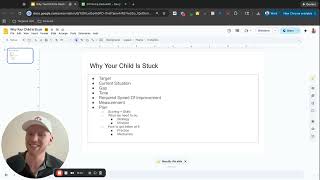
In this video, Connor Stirling Peterson explains why many junior golfers (ages 10‑16) plateau in the low 80s‑high 70s and offers a structured, data‑driven framework to break through the stagnation and reach Division I standards. He begins by emphasizing the need for a clear target—knowing the exact scoring and recruiting benchmarks for the desired college program. He then introduces his "pacing calculator" to assess a player’s current level, even without a ranking, and to compute the gap between current performance and the target, factoring in the time available before the senior‑year recruiting cutoff (typically August of the senior year). By dividing the required improvement by the years left, he derives an annual shot‑improvement goal. Peterson stresses the importance of tracking statistics (using tools like Draw More Circles) to measure progress, rather than relying on generic weekly swing lessons. He outlines a four‑layered improvement model: strategy (understanding shot‑by‑shot goals), mindset (commitment to each shot independent of prior outcomes), practice (targeted drills based on data‑identified weaknesses), and mechanics (refining swing fundamentals once the other layers are solid). He illustrates common pitfalls—unstructured practice, over‑focus on mechanics, lack of strategic planning, and mindset issues—showing how they keep players stuck. The video concludes with a call to action for parents to apply for personalized coaching to implement this framework.
Chapters
What is going on? In this video, I want to cover why your child is stuck. This is one of the most common things that I see when I'm talking to families, especially among junior golfers, where they're shooting in the low 80s to high 70s. A lot of the time, that's when junior golfers and parents of junior golfers are coming to me, usually around 8th grade, freshman, sometimes 7th grade. Obviously, I do work with players who are as young as 10 years old and as old as 16, but that's typically the average range that kids end up coming to me. And this is one of the most common things that, that I see that they're struggling with, so I wanted to make this video to walk you guys through it. If you enjoy stuff like this, and specifically helping junior golfers develop to play Division 1 golf, that's all we talk about here. So I hope If you enjoy this video, go ahead and leave it a like and subscribe to the channel if you want to see stuff like this. I'm doing videos twice a week now, so that's pretty cool. Um, but anyway, let's go ahead and hop right into this because if you understand this general framework, your child is going to improve so much faster because it's not just a, hey, what's one tip that I need to know? You're actually going to understand the framework of how to interpret things and you're going to understand the questions that you should be asking. So let me go ahead and start here. I'm a very direct and to-the-point person, so that's where you see everything is so simple and, uh, direct here. So the first thing here, our target. When I say our target, that means we need to know where are we trying to get to. So if you watch any of my other videos on junior golf scoreboard, That's the reason I love it so much, is we can actually look up what's required to play not only Division I golf, but we can actually say what's the difference between UCLA or William Mary, as an example, just to know what's going to be required of your child in order to accomplish that goal. I can't tell you how many people I see saying stupid things like, oh well, you know, you just need to be good, or, you know, talent just speaks for itself. It's just the dumbest thing you could possibly say. It's very akin to saying, hey, well, if you want to get into Harvard, you just need to be smart and they'll find you. It's like, that just couldn't be further from the truth. Like, that's just complete nonsense. So hopefully if you're watching videos, uh, or any of my videos, you're hopefully not thinking anything as ridiculous as that. Um, but anyway, hopefully we can appreciate having the target is just incredibly important. If you watch any of my videos, um, you know, that'll become clear to you of what's required. If you want more detail on that, you want me to just personally walk you through this process and show you exactly what to do, I've got a link below where you can apply to work with me directly. Um, but anyway, back into the video. Once we've got our target, we know where we're trying to get to, we need to establish where we're at today. What's our current situation? Now, one of the things I built a little while back is this pacing calculator. So based on whether your child is ranked or even if they're not ranked, I have a way that I built in the adjustment for this so that we can actually see where they need to improve at, whether they're, you know, ranked or not, just based on the length of golf courses they're playing and their average scores. Just again, obviously I would love for your child to be ranked, but if they're not, I still need to have a way of assessing where they're at. That way we don't look at this situation, say, hey, we're definitely going to play college golf, and then we actually get down to the meat and potatoes of it, and it's like, oh, we need to improve by 10 shots per year. I'm going to be the first one to tell you, yeah, that's not probable, right? Is it possible? Sure. Have I had students do it? Absolutely. Is it something that I'm going to tell you to ever expect? Absolutely not. Did those students expect it? Absolutely not. And so when we're looking at this, we just want to be able to see Where's your child at versus their goal, right? If continuing with the Harvard example, if they wanted to go to Harvard and they're a sophomore and they have a 3.4 GPA, well, guess what? Harvard's not in the cards anymore just because of where they're at. Now, golf isn't exactly that harsh, but we're also not going to improve by insane amounts year over year. Long story short, once we've got our target and our current situation, we've got a gap, we've got a distance between those two things. And we have an amount of time until we're going to get recruited. So a good cutoff, just in my experience, is August going into our senior year. That's the latest I've ever had a student get recruited. And essentially, based on that number, we can say wherever your child's at, how many years do they have to reach their goal? Usually we're looking at this where we've got 1, 2, 3, 4+ years, um, to go. So if I have an 8th grader come to me, right, so we've got 8th grade, 9th grade, 10th grade, and some change right now. So we got 3 years ahead of us, right? Um, and that's just for June 15th of sophomore year when coaches can technically reach out. So that's kind of when stuff starts. We're pretty much buttoned up and done by August going into senior year. So that's really your gap if you will, to really be able to make this happen. So if you've got an 8th grader, usually that's a really great spot to start taking this stuff seriously. So anyway, we've got our amount of time in front of us, then we can divide the amount of improvement that we need to see by the amount of time that we have left, right? So that's going to give us a number of annual improvement that we need to see. We need to be able to measure that. Now, one of the reasons I think most junior golfers barely improve at all If we look at Junior Golf Scoreboard, the average junior golfer only improves by about 1.2 shots per year. And if you actually drill down into the numbers a little bit more, about a shot of that is just because they hit the ball further off the tee. So it has nothing to do with literally anything else. So everyone is doing these weekly lessons. And in my experience, it's just, it doesn't move the needle at all. I don't think the data shows us that it really moves the needle. Are there exceptional cases? Yes. But as a rule of thumb, just looking at the average, it's not that great comparatively to when I work with students. Average player I work with improves by about 4 shots per year. And it's because we're applying the process that I'm gonna start kind of walking you guys through. Obviously we start with just the big picture stuff, but going into the details here, we need to have some way that we are measuring our progress. So I'm a big advocate of tracking statistics. And so we can go into a whole level of nuance at some point in the future on all the statistics that matter and also the statistics that don't matter. I've thought about doing a tier list video. If you want to see that, just go ahead and comment below. Let me know if that's something you'd be interested in. But we need to have a tool to measure. My preferred tool is called Draw More Circles. You guys can look them up. Um, I like that tool in part because I've been able to have input in some of the statistics that they track. And so that's why it's helpful for me. So once we've got that, we know that we need to improve by a certain amount, right? We've got all those things defined. Now we need to figure out what we're going to do in order to make that happen, right? So as simple as that sounds, most of the time most families are just sleepwalking through this process. It's just, let's throw some random tournaments on the board, let's go do weekly swing lessons, or let's do swing lessons when you know, we're not playing well, but there's no real calculated approach. Odds are, if you're watching this video, your child probably doesn't have much structure in their practice. They're just out there whacking balls. And, you know, maybe if they do have structure, usually it's going to be based off of their last round, something they didn't do well. They're going to go work on that, you know, maybe if they're a little bit more sophisticated. Um, but in almost any case, they're not going out there and using data to tell them exactly what they need to practice. That is extremely rare. I, I can't say that I've ever genuinely seen that. I've seen lots of cases where players think that they have structured practice because their coach gave them some random stuff to go do, but I just frankly don't know many swing coaches that even require their students to track their statistics. And so it always devolves down to let's get the golf swing looking right. Which is part of why you see junior golfers where sometimes they can work with a coach and they get really, really good, and that coach can work with another player who has a similar work ethic, similar golf swing, but won't get the same results. Oftentimes it's because they're missing some of these other intangibles that, that we need to be able to define here. So when we dig down in this plan, we We need to be able to fundamentally shoot lower scores, right? We need to improve our scores. We need to shoot better scores faster. That's fundamentally what we're trying to do. In order to do that, we need to understand how scoring actually works. Scoring— a lot of the times junior golfers are just focused on the end score that they shoot. What we need to do is focus on the underlying skills of why they shoot what they shoot. And so that's foundational here. Once, once we know those skills, then we can start to drill down and how do we improve those skills? How do we get better performance out of those skills? And there's two areas that we can go to. Each one of these builds on the prior. So the first one is what do we need to do? We need to understand that if we don't, if we have bad, a bad understanding of what we're trying to do, that everything else is just irrelevant, right? Can they help? Sure, but it's just you're really kneecapping it. And so the first thing we need to understand is just how do we score, right? Like, how does this process actually work? I'm going to lump that in as strategy, right? So strategy is not how good I am at a particular thing. It's like, do I just have a clear idea of what I'm trying to do? You know, on my approach shots, do I have a clear idea of what I'm trying to do, what my approach shot is, where I want the ball to be starting, how much I want the ball to curve on average, where the pin position is, how that dictates my distance, where my short-sided scenarios are. I need to know that fundamentally before I can do any of the other things here. And so you could be a very skilled player, but if you have bad strategy, you're just going to really struggle, right? If you're taking dead aim at every single pin, odds are you're gonna have a really hard time scoring. And some player who's much more mediocre than you at that particular skill set, or mediocre than your child at that particular skill set, is going to beat them just because their strategy is more effective, even though their skill itself isn't quite as effective. And I think we all fundamentally know this. You've seen players who don't hit the ball as well as your child just consistently outscore them, and that's fundamentally because they have a better understanding of strategy. Now we can know the right thing to do and not be committed to doing it, right? To not be fully sold on. And that's kind of the next layer, which I'm going to label as mindset. Um, just kind of broadly speaking, it's really the player's ability to commit to each individual shot independent of the prior shots. That's my current definition of when I'm evaluating a player's mindset. So somebody has a bad mindset, right? They miss a 3-foot putt, they go to the next tee shot, hit a bad tee shot because of that last putt, they're, they're failing in that. They're not able to execute on the shot in front of them independent of the prior shots that they've hit, right? So the player's better mindset, they miss that 3-foot putt, they go to hit the next tee shot, they don't care because they have a better mindset. Okay, so that's the second piece of that. We have to know, we have to be able to commit. Most of the time, junior golfers do not have a mindset problem, they have bad strategy, and that bleeds into having mindset issues, or they have bad other things and that bleeds into having mindset issues. They're not able to understand what's going on. And so it's a, it's a good catch-all. Parents in the same way, you guys might look at your child and say, hey, well, they have a tendency to spiral. And it's like they have a tendency to spiral because their mindset— it's not because of their mindset, it's because their strategy is bad. I know that's kind of difficult to, to think about here, but it's, it's kind of like thinking If you thought you were going to go out and shoot 65 and you shoot 85, that's traumatizing, right? Like, that freaks you out. If you thought you were going to shoot 90 and you shoot 85, it's like, you know, great day. You had the best day around your life. And parents, if you play golf, you might know that one where it's like, if you're, you know, a poor golfer than your child, then they might shoot a score that they hate, but you would love. That's a perspective that you have on whatever the outcome was. So in the same sense, junior golfers get mad that they missed 8-footers, and don't know that on the PGA Tour they're only making about 50% of those 8-footers, and they're probably not as good as a PGA Tour player at that particular skill set. So you interpret that as mindset, and in all cases, you know, very well could be, but it's not solved by some breathing technique or pre-shot routine. It's solved by understanding what you actually need to be doing from that shot, what's realistic. Now, once we have that sorted out— apologies for my 2-and-a-half-year-old in the background— Once we have that sorted out, we can ask the question of how do we get better at that, right? How do we actually improve that particular skill? We're looking at the same approach shot, we're trying to do the same thing, we're fully committed to it. We don't care whatever our tee shot was, we don't care that we just hit it uphill but we're still in play. We're just looking at that next shot independently. How do I get better at that? Well, that's what we need to practice, right? That's, that's what we need to practice fundamentally. And so we need to be able to practice that specific skill. So if we need the ball on the green more frequently with a pitching wedge, it doesn't make any sense to spend all of our time on the driving range hitting 7-irons. If we ever hypothetically hit a 4-iron and we never have to hit a 4-iron on the golf course, there's no reason to spend a bunch of time hitting 4-irons in our practice. It makes a lot more sense to practice the skills that are being exposed all the time, and you need data to be able to understand whatever those skills are. Now, once we're practicing the right things, because that often gets neglected, right? You know, we 3-putt a ton, that's costing us a ton of shots. Our lag putting is bad, and that's why we're 3-putting a ton, and we don't practice our lag putting. We're just working on our stroke mechanics. In theory, you're putting time in on your putting. You might even go to see a putting coach or get on Quintec or get on Sam Putt Lab. But fundamentally they're not putting the time in the area that's going to make a difference. And so they're going to struggle. It doesn't matter how much money you throw at that, they're over the wrong target. Now, last piece, super crucial: mechanics. This is where odds are 99% of you guys are at, where you're working with a swing coach on probably a weekly basis, maybe a little bit more or less frequently, but you're looking at everything through the lens of mechanics. And now hopefully you can see at this point why that could stall your child out, right? They could get more skillful, but if they don't have the strategy, they don't have the mindset, they don't have practice, they're going to struggle here. But here's the other side of this coin. Once we have that framework, we can use mechanics to actually ask the right questions. It's not just, hey, I want my golf swing to look better or more consistent, right? We already have a certain level of consistency even if we don't do it well, right? Our error on our approach shots might be bigger than we want. That doesn't make it inconsistent, right? That just means our error is very big. We need to be able to distinguish between those two things. And so once we've got that, then we can start to say, oh well, when I miss the green on my approach shots, why? Well, my contact was bad. Oh, I'm having trouble with starting the ball on the line that I want to. I'm having trouble curving the ball the direction that I want to. You know, I can't tell you how often I see junior golfers where they want feedback on their swing and they don't even have an alignment rod down on the ground out on the driving range. And it's like, how are we gonna— how are we gonna make sure our mechanics are solid if we can't even have the basics of aligning ourselves? And then the parent will often be like, well, you know, their alignment's bad on the golf course. And it's like, yeah, no kidding, we never practice it. And so that kind of teases a little bit into practice. But hopefully you kind of get my point here, where if we're able to have more clarity on why these things happen, then we're able to really make progress. Because we can identify at the high level, we're tracking the right stuff. Hey, we need to get greens regulation up. And the reason our greens regulation isn't higher is because for whatever reason, we can't hit a ball on the green from 75 to 100 yards more than 60% of the time. And we want to get that to 80% of the time. Let's just in the short term get it to 65% of the time. Let's just get it a little bit better, or 70% of the time. Well, why are we missing the green, right? Is it a strategy issue where we're trying to hit the ball super close and we're taking on shots we shouldn't take? Is it a mindset issue where maybe we're a little bit freaked out because we just hit a great tee shot and now we feel like we need to hit it close? Is that a practice issue where we just never hit wedge shots? Or is it a mechanics issue where there's some reason why Maybe we're hitting the ball fat. Maybe we're starting the ball way too far out to the right or to the left. That's how we want to be thinking through this stuff, because then we can say, okay, well, I'm going to make this specific adjustment. I'm going to do this thing differently, and I'm going to play enough golf, 10 rounds, and we're going to see, did that make a change? And if it did, then we can move on to the next thing. If it didn't, we can go a rung down and go deeper and say, okay, well, fundamentally we still have a simple thing we're trying to do. We're trying to hit a ball on the green from this particular distance, and we can still assess why is that not happening. And what can we do to be able to pull that off, right? So hopefully this video is helpful to help you understand the overall process, because fundamentally this is all improvement is. The reason your child's probably stuck is because they're almost certainly not doing this. And so if this is something you want help with, again, I've got a link below where you can fill out an application to work with me, and I'll walk you guys through, obviously, to see if Division 1 golf is realistic for them, but also walk you guys through any details that you want to see within this process as well, just so you understand it. And that way, if we're working together, you guys have a clear perspective on what everything looks like. So hopefully this video is helpful for you guys. If it was, go ahead, leave a like, and I'll see you guys in the next one.










