Episode 14 - Dr. Alec Couros: The EdTech Explorer – Rethinking Education with AI
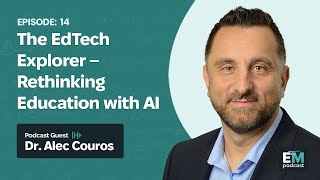
Dr. Alec Couros, a professor at University of Regina, discusses his decades of work in open education and how AI is reshaping learning. He sees promise in personalized AI tools but worries about who controls them, equity gaps, and whether schools can handle the shift without more teachers and mental-health support.
Questions this video answers
1971
Since 1999
Director of the Centre for Teaching and Learning (University of Regina)
Humboldt, Saskatchewan
2022 — the emergence of ChatGPT
Chapters
Teacher morale is incredibly low as it has been and it's not pay issues like classroom complexity is so incredibly difficult these days. The composition and complexity so too many students to really handle and no AI is going to fix that problem.
Welcome to the Education Matters podcast. I'm your host, Jason Buccary and today we're joined by Dr. Alec Kuros, an internationally recognized professor of education who works at the intersection of education and technology. Alec is a full professor in the Faculty of Education at the University of Regina and the director of the center of Teaching and Learning. Over his career, he has delivered hundreds of keynotes and workshops around the globe on topics ranging from open education and network learning to digital citizenship, critical media literacy and artificial intelligence. A passionate advocate for open access in education, Alec is committed to the use of open access publications, MOOCs and open boundary courses to reimagine how we share knowledge, collaborate and learn in a networked world. His contributions have earned him numerous awards for innovation in teaching and learning and solidifying his reputation as one of the most relevant voices in education today. So for those of you who've been tuning into multiple episodes, I thank you. I truly appreciate your support. I hope you've enjoyed the biographical beginnings to each conversation. Origin stories have always really fascinated me, and with someone like Alec who's done countless interviews and podcasts, I'm confident you'll discover something new about the person behind the ideas. And so it's fitting that Alec's story unfolds with a wonderfully humble Canadian Beginning growing up in Humboldt, Saskatchewan, Alec's early years were shaped by the values of his immigrant parents who fled post war Greece in search of a better life in Canada, instilled in their children a deep respect for education and hard work. Values Alec carried with him from his father's restaurant to to eventually the classroom. Whether peeling potatoes or wrestling with his brother George, another internationally recognized educator, by the way, Alec's upbringing was steeped in lessons about community resilience and creativity. In this episode, we dive into Alec's reflections on teaching and learning, as well as the complexities of integrating AI into education. Alec offers, as always, a nuanced perspective on how AI can enhance creativity, bridge equity gaps, and support personalized learning, while also raising critical questions about ethics, access and the unintended consequences of these technologies. Alec offers a perspective on how AI can enhance creativity, bridge equity gaps, and support personalized learning, while also raising questions about the ethics, access and unintended consequences of these technologies. Alec also shares an honest and raw take on the challenges educators face today. From addressing the needs of increasingly diverse classrooms to navigating teacher shortages in rural and northern communities. Alec's scholarship and critical engagement with the role of technology in shaping education and society is significant, not just for Canadians, but for the necessary task of connecting global educators and creating global citizens. I think he's one of the most necessary voices in education today. So I hope you enjoy my conversation with Dr. Alec Kuros. Alec, welcome to the podcast. Where does this podcast find you?
Yeah, it's finding me pretty well and in Regina, Saskatchewan, Canada, Treaty 4 territory. I'm in the former lands of the Anishinaabe Anahawak and the home of the Metellation as long as as well as the Nakota, Dakota and Lakota peoples. Very fortunate to live on these lands and to have been here most of my life and to have raised my children here. But now it's known as Regina, Saskatchewan. And happy to be here and to connect with you today.
Wonderful. Thank you. So I would have given you a proper introduction at this point, but maybe update us on what you've been up to lately.
Sure. I've been a professor at the Faculty of Education at the U of R since 99 in various roles. My status as full professor of education, my area is educational technology, media. I'm now currently the director of the center for Teaching and Learning at the university, which allows me to work with faculty across the institution and help them think about their practice and perhaps improve their practice. Being more thoughtful about it, thinking about the intersection of research and teaching, I think is really important. You know, researching our own practice and. And coming up with, you know, questions around our own practice, we often separate those things in the academy. And so that's one of the big things I do. And of course, introducing new technologies from my perspective, you know, AI has been a real big one, you know, since. Especially since 2022, I think 2022 and ChatGPT came out. That's where I'm spending a lot of my time with faculty, is helping them rethink what's happening in the classroom and, you know, especially around, you know, academic integrity. You know, it's become a crisis of academic integrity in many ways for, you know, the use of chat GPT and all that. I'm sure we'll get into that later on, but it's interesting because things haven't been so urgent as they have been lately. And that's when you get faculty more willing to learn when it's a crisis, which isn't always a great sign. But I'm Happy for anyone that walks through the door and who sends me an email and the hundreds of people that are showing up for workshops versus the dozens that came before. And so it really is a crisis across institutions all over the country and beyond.
Yeah, that's, that's certainly interesting and I do want to dive into all of that because I know for years and years and years you've been a leader in the education and technology space and you've always been a source for me of great insight and motivation, inspiration. So we're definitely going to dive into all of your work, especially the work around AI I'm particularly interested in. But I want to start with young Alec Kouros. Where did you and when did you grow up?
Wow. Well, I, I'm a Gen Xer. I grew up in the. Well, I was born 1971 and everyone knows my age. And also that's probably something you could have googled know born in that. In that time where, you know, I could walk around my small hometown and be out all day and kid and my parents didn't really care where I was. Well, they did care where I was. It just didn't seem as urgent as it was today. And you know, we had a key and a key at the front of our house where everyone in the community knew where the key was and they could get in if they needed to. You know, Humboldt, Saskatchewan, which became later in the news quite a bit with the, with the tragedy, the Humboldt Broncos tragedy, you know, a few years back, but you know, a town of 5,000 people, pretty small community, you know, four schools, three, three elementary, one, one high school. And that's where it was a good place to, to grow up. You know, I miss Humboldt and my old home there. And I go to see. To see dad's grave once in a while, but it was a good place to be. And then I moved to, from there to Saskatoon. Lived there for 10 years, did my undergraduate graduate work. Well, some of my graduate work, my masters, and then to Regina, Saskatchewan. So I've been born and raised in Saskatchewan. Good place to be. It's been. I've been to many other places, but still this is home and it always will be.
Growing up, how did you. Your friends, your siblings, how did you. How did you play?
How do we play? That's, that's an interesting. I don't know, you know, what do I remember of those times? You know, we were all four years apart, so we did. It was four or five years apart, so it was different. You know, I probably remember spending Most time with my younger brother George, who, you know, is, you know, an author and owns a printing company now and is known for his work on the Innovators Mindset. I remember wrestling with him. He was a big WWF wrestler fan and kind of fight. We played basketball once in a while I tease him, you know, it was kind of an interesting time because when I was in grade 12, he was in grade 8, I think we never were in high school together, so it was, you know. You know, and play was different. I mean. I mean, we just do things with our friends, typically, and we'd intersect sometimes and our friends would intersect, but at the same time, we own a restaurant. So I was at the restaurant a lot of the time. I was peeling potatoes from the age of, I don't know, feels like five, making pizzas, waiting tables a bit later. And I spent a lot of my time there. So, you know, it wasn't. We just didn't sit at the house and play. We were at school. We'd watch. We'd watch the Flintstones every noon hour. And, you know, later on we'd realize how horrifying some of. Some of the stereotypes and the racism in that show were. But every, every day I got home from school, I would go to the restaurant, eat there. The first five minutes were farm news. We watch, you know, look at the price of the crops and then watch the Flintstones, then go back to school. And that's where I'd see George. And then, you know, the rest of the time was intramural sports, you know, that. That sort of thing. But a lot of time spent at the restaurant. So it was our second home.
I don't know why I got the feeling that. That you did way more at the restaurant than George. I. I don't know George well at all, but I just. I just feel like being an older brother, that, that he got out of a lot of duties there.
Yeah, that's true for sure. I mean, he actually. He participated in more sports and that was his thing. And. And I spent more time at the restaurant, for sure. I think, I think about all four kids. I'm thinking I. I spent the most time. I could be wrong, but that's my perspective anyway. And you know, I was probably the one, if anyone who was going to take over the restaurant. Never did thought about it. Still think about it. It's a little bit late now, but. And my dad and I actually, after. After I left and went into my undergraduate, we started a restaurant in Saskatoon. So he actually closed the restaurant and moved and we tried that for a few years while I was doing my undergraduate and yeah, just never panned out the way that we thought it might be. But, yeah, I was probably the one who's going to do it. Never did have some regrets. But at the same time, it all works out.
But that's life, isn't it? I mean, I could kind of see it. The Greek Brothers restaurant. It almost sells itself.
There's still time. There's still time.
There's still time. Yeah. You never say never. Is there anything about your upbringing that you wish kids today could experience?
I think it was just that sense of independence. I think that's very different. When I was 16, I got my license and we. We drove around town all, you know, all day. We did something called the cruise where you just basically do this loop around town and you'd see all your friends. It was just kind of a waste of time, but it was something. And, you know, you didn't have. We didn't have cell phones to tell our parents exactly where we were. And I still remember, you know, if. If we just went to South Platoon, which was an hour away to the nearest big city now, to tell our parents where we were, we, you know, we wouldn't have access to a lot of funds. And, you know, we go to a pay phone and we do the old trick where you just, you know, it says, this is Sasktel, you have a collect call from. And instead of saying your name, we'd say, Alec or Mom and dad, it's me, we're fine. And we'd say that really quickly. And that was our. That was our pager, eventually. And they couldn't say anything, on the other hand, or we couldn't hear them, but they didn't have to accept the call. It was just our way of texting. I guess.
It was the genius move back in the day.
I remember it was the hack, right.
Dad, come pick me up. I'm at high school near Gym C. And you would hear him on the other end go, hello, who's this? It took him a while to get.
It, but eventually it worked. Yeah. So that was their way of texting. I'm not sure many would really understand that today, but I do think it was just that the ability to just go and do things and be safe. And I don't know, my kids are highly anxious and it's not. I don't think it's their fault. I mean, it's the culture that embraces them as well as the way that we parent is very Different, I think, in terms of, you know, every. I mean, and I'm not saying it was good. I didn't wear a seat belt. I didn't have a bike helmet. And, you know, we can get into that conversation. And obviously those weren't good things, and many kids got hurt and, you know, seriously injured because of those things. But, you know, it's the. That the medium is a message. You know, that's your first book and lesson. You know, you bring in those. You bring in particular technologies, you know, these technologies of safety into society. Everything changes. And, you know, and that was the. You know, it did really change everything. As we became more safety conscious in, you know, the, the tools that we brought in. We, you know, it echoed the parenting and influenced the parenting styles of a generation. And so everything became much more cautious.
Yeah. And I do personally find a lot of value in the work of hate and Lukianov, especially in the calling of the American mind, where, you know, the basic premise is we overprotect out in the real world and under protect online. And I think I've seen that in my community play out time and time again whether there's direct correlation to all the anxiety and all those things. Okay, fine. That might be an open question still, although I think enough evidence is out there to act and maybe we can come back into this. But before we do that, can you tell me a little bit more about your education? Were your parents educated before you? Kind of tell me what that was like.
No. My mom was quite proud to have a grade six status in Greece. My dad had a grade three. You know, my. You know, my dad, I have a photograph of him somewhere with. Standing on a. On a hill with a Tommy gun, you know, during the Greek Civil War, you know, and. And he's got this full beard and He's. He's like 17 years old or something. Yeah. And I'm thinking, like, none of his. I didn't look like that when I was a kid as sort of that manly military figure. Neither do my children. And it was just very different. So I don't know what it was, if the, you know, it was the goat's milk or, or who knows what it was, but it was. It was something very different back then. The olive oil. I don't know.
That's.
That's.
I do understand your AI Pictures now a little bit more of, I guess, Arnold.
Alec. Yeah. Yeah. No, I mean, he was just. He was a huge, huge figure to me. And. Yeah. In terms of, you know, and they didn't have the opportunity for school. So, you know, as. As you might find stereotypically, you know, they were very much like, it's very important that you have an education. We didn't have a chance for an education. So the incredible importance of us being educated and to gain an education and to find new opportunities in this land that, you know, they FL Greece. So that. That immigrant story that I think is common to many that, you know, came out of, well, at that time in the Mediterranean, but throughout Europe and so on, you know, those who came especially in that. That particular wave of immigration.
And so was it just essentially established that, like, they wanted you to go to school and you're going to go and go to high school and go to university? Like, how did they encourage you to. To be studious and to be a good student?
Well, I don't think there was ever another option. Like, I think it was just like, this is what you're gonna do. You're going, you know, and, you know, if, you know, the importance of educators and teachers was very different there. Like, I would never be believed if I did something wrong at school. You know, I could have the best alibi and story in the world, but if there was, my mom is never going to believe me over a teacher, you know, so. So the. The authority of. The authority of teachers in that sense were real, really paramount there. And so I still remember coming home and I'd be in trouble with, you know, I'd be in trouble with a teacher, and, you know, I make up something or whatever else or say, why, why this happened. And, you know, very quickly my. My mother would side with the teacher and say that I have to be better. And yeah, it was. It was really an interesting, interesting time. And I, you know, and I think from high school, we knew we were going to university. Like, we knew we had to continue. I don't think they ever mentioned, like, graduate work or PhD or anything like that. Not because that wasn't important. They just perhaps didn't understand the whole process. Like, they probably didn't understand terminal degrees and that sort of thing. They just knew that we had to get more and more educated. Right.
So they must have been very proud of you, though, when not only you were educated, but then ended up becoming a professor and doing a PhD in these kind of things.
Yeah, I think so. Like, I didn't go to my convocations because I found them. I didn't go to my undergraduate or graduate or master's convocation because I just found, like, the whole process boring and so on And I just didn't want to go. And so they made a big deal that they went to my PhD that I had to go, I had no choice because there wouldn't be another one. And that was probably one of the proudest moments I've ever had them feeling proud for me, you know, I, I, it, you know, that, that was, and I'm sure they felt that same way for, you know, my siblings as well. But, you know, over overall, you know, they feel that they've, they've accomplished what they weren't ever able to accomplish through their children. So that becomes, of course, you know, you know, something very satisfying and fulfilling for them. So yeah, yeah.
And my grandmother, I was lucky enough to have her into my late 20s, who also had a grade six education, loved school, but just couldn't afford to go to the high school, which was nowhere close to where she lived to in rural Sicily, told me many, many times that the proudest moment of her life was seeing my dad, you know, become, become a professor and graduate with a PhD. So I'm certain they were very proud of you. When it comes to your own learning, however, what were the things that you remember just loving to learn?
I mean, my love of learning started, I can tell you the moment I opened my Apple IIC on Christmas when I was in grade seven. And I still, I was probably affected in some way by the, the plastic or whatever it was, but I, I smell it, like I could still smell the packaging. And I opened it up and I felt the surface of this thing and put it together and you know, started to like, I didn't have a whole lot of software. I just, so, so I, you know, coded a rocket launching an Apple BASIC or something like that. And like that became the hobbyist. I became the hobbyist and I had that computer from grade seven all the way. It was interesting all through my high school. What else did you really need? I mean, I did word processing and an Image Pro 2 writer, like color printer at some point. And I remember, I remember even getting, I still remember open mapbox because it was shipped by bus from South Katrina Humboldt and it was in the winter and, and I remember, I remember pulling out of the box and it was like really, really cold and you know, putting that together and the, were of the dot matrix printer and all of that. Yeah, it was just, it was, it was interesting.
So when it comes to like what you eventually went on to study, what, what would you say impacted you the most? Obviously the love of, of technology from that Apple computer. But in Terms of what you studied maybe in undergrad or in high school, what impacted how you think now the most?
So, yeah, so the, the self discovery, as I mentioned on the, on the computer being able to think, you know, to you. I, you know, Papper later on said something like, you know, you can't think about thinking without thinking about something. Or how is it you can't think about thinking without thinking about thinking about something. There's this idea that you need something to think with. And the computer really helped me do that. How, you know, how it basically like it wasn't the problems that I was solving, but through, through thought and through problem solving. It helped me learn how to think. And I think sometimes, you know, you know, in school where you have worksheets or fill in the blanks, that sort of thing, you're not really thinking about problem solving in the same way. I mean, you know, obviously there's rope memory, tax tasks and so on. You know, later on I think I'm more, you know, recognizing. And now, you know, my favorite teachers were much more of the constructivist type where they didn't have really, you know, the more traditional practice that you saw through most of my elementary where we just explored and I remember my grade eight teacher in particular, you know, making learning more fun and non directed and very, very casual. And I, you didn't even know you were learning, but you learned a lot of really great things. Somehow it was like magic. And so I, I think through those constructivist experiences I really did feel connected to just learning independently and autonomously. And so that was always a big deal. You know, later on I was exposed to, you know, people in, you know, through my education, like look, you know, the schooling society, you know, the idea that, you know, that I think you once said, you know, that students are confused or they're schooled to confuse teaching with learning, great advancement with education, a diploma with competence, fluency, with the ability to say something new. Like it was that, that idea that we are schooled so much that we don't even understand what school is about anymore? Right. I think that similar to the, to his quote, that, that all of these things that we think are teaching and learn or learning in particular is just, you know, schooling and, you know, preparing students for, you know, some imaginary workforce or for, you know, for being regimented into sort of this new class. So, so that was, you know, that work, you know, if I go back, I think that's, I think it was also published in 1971 as well. So, you know, the year my De Schooling Society was published in 1971. So although I didn't come to it till much later, I was experiencing it, you know, throughout my entire life obviously, you know, and then later on, you know, and you know, I mentioned McLuhan before but you know, you know, Postman also talked about, well, you know, children enter school as question marks and leave as periods or something like that. Like the idea that often the inquisitiveness and the inquiry is just gutted out of us. And so a lot of that was really important to me later on, of course, Seymour Papert, where we talked about, you know, the role of the teachers to create conditions for invention rather than providing ready made knowledge, you know. And so again it was all these, the constructivist, inquiry oriented individuals, the deschooling types, the you know, Alfie cone and you know, the you know, the ungrading or anti grading variety that really helped me learn to, you know, focus on learning and really not abolish assessment. But you know, look at assessment very differently than ever before. So in terms of, I guess the way that I look at teaching and learning, I've always been a much more what feels like it's a radical, but it seems so to me it just seems so mainstream and so common sense. But when you're up against, you know, standardized testing regimes and so on, you know, you again stand feel like a radical that you can't possibly implement some types of, you know, these types of systems where learning is much more, you know, casual, unstructured. So I guess those are some of my influences. Right? Yeah, and yeah, the early ones anyway.
Well, okay, there's a lot to impact there, so maybe let's stay along that train. In terms of your work, you've, I think it's safe to say you've worked with thousands upon thousands of teachers and administrators and trustees in K12 and higher ed over the years. What would you say they're missing in their education? On education, like for example, you mentioned McLuhan and there's one example that I think a lot especially of Canadian teachers don't know and should know at least generally what his work involved and why it's important to teaching and learning. Are there any other areas that you would suggest for teachers to kind of learn about, be aware of any, any folks in particular that would be relevant?
Yeah, I mean I would still go Back to Papper, McLuhan, Postman, bell hooks. Those would be individuals that I think are really important and I think, you know, bell hooks I think is something that you're Seeing more in. In classrooms. Paper not as much. I mean, where I think Seymour Paper's work should be paramount. I mean, I. I still think kids should be playing with logo just for, you know, things to. To understand. Whether it's algorithmic thinking or just playing discovery, I think those are really important pieces. In some cases. I don't think it's so much who you're exposed to or I guess, who you're not exposed to, but what you're exposed to. And, and I think that's the learning environments themselves. And we become easily structured by the way curricula, you know, are crafted and, you know, inflexible in some particular cases. And so I think, you know, I think having not only access to individuals who speak about looking at learning radically different, radically different, but also having those experience yourself are really important and valuing those experiences, you know, we often, you know, even. Even the way that maker spaces and some of the more radical learning spaces in high schools are structured, it's like an aside, like a reward, or like it's not built into the essence of what it means to learn. It's sort of like recess. It's sort of, you know, let's. Let's take a break from thinking the way that we do in this very structured way, and let's go have some fun with our minds. But this is not really serious. We couldn't do things this way. You know, we have to go back to the other way. So rather than, you know, building it from a. From an unstructured process, we, we see this as well. We can also do this, but it's not really serious, you know, so it's, It's. That's. But that's been my biggest gripe against, you know, my makerspace is that they're not integrated into the fabric of teaching, learning and schooling, or as we. What we call schooling, I guess.
Yeah.
So you.
Sort of earlier pointed to the complexity of changing structures to allow for more of this type of learning to happen. Do you have any insight or even instincts into why it's so difficult? Like, I agree with you in that this vision of learning that you're painting is not radical. Not only is it not radical.
No.
I think everybody, let's take just K12 education, everybody from the superintendents on down want to do it differently. Why aren't we doing it differently en masse? It is happening in pockets. We know that. We've seen those schools. We've been part of that. We've seen some of these great classrooms. But what's the hold up to doing it much more, much more widely?
Well, it depends on, in Canada, depends on the province. Obviously. Standardized testing is one of these issues. Like teachers don't think they can get to what they're expected to get to. Unless of course, you know, unless of course they, they do it in a very straightforward manner. So they're not developing thinkers, they're developing individuals that know particular parcels that of knowledge that have been plagued as being important. And the thinking process itself is not as important as what the product is. And so that becomes an issue. So standardized testing and curricular regimes becomes an issue. And you know, there are certainly a lot of teachers that they're not trained, you know, through professional development opportunities or through teacher education programs to do things as radically as they can be. Or if they are, there's a separation from what you do in teacher ed versus, you know, school. And you know, I often see that, you know, even if you have a really strong program, say we have a four year undergraduate program in teacher education and maybe, you know, students that seventh of eight semesters goes out into the field and it feels like one semester can, can you can unlearn everything that you've done in seven semesters and that, and by the eighth semester you come back thinking that there's nothing else you can learn. Like there, there's a disconnect between the theoretical and the practical. And it's not that you can't do the theoretical, the, the more radical in, in schools, but there's just not, you know, it's much more difficult. Obviously, Obviously the theoretical is always more difficult to, to, to make possible. But there's just such, such disconnect in terms of theory and practice from a teacher education perspective to you know, what's happening in the field. And of course the closer alignment, even with closer alignment, it doesn't make the more radical possible. I guess it just, it just makes the more matter the more radical. You know, it's brought down a few levels so you still get to do some of that, but you're not necessarily doing it as the way it was intended. And, and again it becomes that aside thing that you can also do maker spaces and you know, and you can do critical thinking and some constructivist tasks, but for the most part we're going to do the real work of teaching and learning. Right. So it's. So there is a disconnect and you know, those, those entities, I mean not being essentially, you know, outside of practice, you know, outside of internships and you know, field experiences between teacher education and, you know, K to 12, there really isn't much alignment or association like those. Those. You would think that those two institutions would be much more, you know, there were. There would be much more porous together, that there would be many more ways of connecting in ways that would. Would benefit everybody. And I don't think that's happening. So, you know, it very, very quickly. You know, very quickly, the, the possibility of education becomes this institutionalized vision.
Yeah. And so is the case there you have one institution of the higher ed, which is cumbersome and slow to change, and then the other institution of K12, which is maybe even more cumbersome and slow to change, rubbing up against each other.
Yeah, yeah. You know, you hear the old joke, it's like, you know, how many professors does it take to change a light bulb? And people are like, change, right? Like change. What do you mean change? You know, and that. And I've heard that same Joe told by, you know, for teachers as well. And, you know, obviously, institutions are tough to change. And again, not to disparage anyone within either of these institutions, there's plenty of really great things coming on. But on the, on the whole, yeah, you know, we're not progressing as we should. You know, there's, you know, I don't think many honest people would admit within those institutions that there isn't a lot of more that we could do. Well.
Okay, so one of the themes of the podcast is, you know, let's look at education really honestly and bluntly and. And kind of look at what we can improve. But the other side is, of course, as you just mentioned, there is really great work going on in those scenarios. When you've been in a classroom and you've been like, wow, this is. This is it. This is the work that we need to happen. What would you suggest are the reasons that it was happening in that school? Is it, for example, the trustees are on board, the community gets on board. Is it the principal that leads at work, or is it a group of teachers? From your experience, what would you indicate is the specific areas or people that need to force that change?
I think you identified it. Yeah. Yes. It's all those things, right? Like having everyone around, they say, the shared vision for education. Like, I don't. It's hard to identify. Like, when I observe teachers who really get it, who really have created and transformed their classrooms, it's like, what you don't see. It's not what you see, it's what you don't see. Like, I feel like, you know, I Sit in, and there's not teaching going on. Like, in terms of classroom teaching, students are all at different levels, doing different things, working on projects. They. They will, you know, routinely come up to the teacher to ask questions, but they're working together for the most part. There's. There's a. There's a fair amount of noise happening in those classrooms, but there's also laughing and happiness and. And, you know, as, you know, Dean gets into, like, that joy in a classroom, but it's not super directed. It feels like it's, you know, like, I don't know what they're studying, but they're studying something, and they seem to be, you know, solving problems. And what class is this really? Like, those are the. Those are the classes that make you feel good when you walk out, that you don't. You had no idea what. What actually happened. But, you know, that learning, like, you could identify that school, you know, it was actually happening, whereas you can, you know, and I'm still blown away by a good lecture at times. Like, you know, when there's an engaging lecture or. Or a set of activities that a classroom teacher does, and then those are good, too. It's just. That doesn't impress me as much as something that is so incredibly chaotic, I guess, then. And I. I feel that there's more happening and the students have gone to a level where they can. They can work in that way. And it's not just a couple of students. It's like everyone's moving in a way that they're working. They're working collaboratively together, solving big ideas. And I see that once in a while, but I don't see it often enough. And maybe that's better for some classrooms and sub disciplines, you know, and. And it's hard to see that, to know for sure how that even happens. But, you know, behind it, I know there's, you know, the principal comes in, doesn't see this as. As unusual. Right? Like, I. I've seen the principals that have come in in the past, including my own classroom, like, if there's too much noise, it. You know, is there any learning going on? And, you know, if a trustee came into the classroom, you know, it would be the same answer. They'd be okay with that. You know, they know something's happening. They perhaps don't know what's happening, but they've at least been privy to the possibility that this is a. This is an unusual classroom, but a lot of really good things are happening. Their children are delirium that they enjoy this Class, you know, there are messages and communication from the community and at the same time, you know, it's one of those, like I've always disliked, I mean, and this is part of my foray into open education. Those students will create something amazing and then they put it on the bulletin board. And it's just, I always used to call it the sort of the oppression of the bulletin board. Like, you know, it's there for all the kids to see and for the parent and the tas and so on. But no one really gets to see these incredible work. And so what is the, what is the point of even doing it? Like, you know, you might have learned something. But why not? If it's that good, if you're that proud of it, if it, you know, if it's good work, why not make it available to others? And so I, you know, I'm a big fan of putting it out there. You know, if we're really, we really believe in our students work, we should be able to publish, make it proud, put it on newsletters, on the website, you know, showcase it in any way possible to make it available to others to see as, you know, at least a glimpse into what's happening. And not just the product, but also the process that got to that, to these really great artifacts of learning. But as a student, I was always disincentivized by, I don't get the registers of the class, simple things like that I want to read that poem that I wrote to the class and I want them to hear it. And then on this huge other digital scale, of course we didn't have the Internet. For me to publish it and for me to get praised by others outside of the classroom, that's going to make me do work differently. Now that's not going to work for every kid in the same way, but for me at least, and for some kids, having it to a larger audience makes sure there's more pressure. But at the same time, that pressure for some kids at least can, can shape a reality where you're actually much more motivated. Maybe you don't even like your teacher and you don't want to produce something for them, but you care about a wider audience. You know, that that's a different incentive to me and a different way of, you know, motivating students. I think at least some students, we always have to be careful not to, you know, push that particular, for a number of reasons, particular narrative on others. For some, they're, they're okay with it being just seen by themselves. And that's okay.
Excellent. So, Alec, you've always been like a strong advocate for open education network learning. Like when we're talking now about, you know, how education has changed and can change, can you kind of explain what those terms mean in, in practical terms and how you think they've shaped kind of the. Or will shape the modern learning environment?
Well, so on openness, I think about, we actually have John Wolitzke coming in. He's doing a presentation, I think next month that are. We have him as an invited guest. And we have, we just had David Wiley, who's who, who coined the term open content. He had a great presentation on the intersection of AI, artificial intelligence and open educational resources. And anyway, it was interesting, provocative. Lots of people came out. I think there was 800 people who came out because these are both interesting topics. But on open education, I think as a professor I found that like a real contradiction in what we were expected to do. We were supposed to publish papers, do research on the public dimensions because I work in a public institution, then give it away to a paper to a journal company, which are often, you know, companies of some sort who are making a lot of money on this, who then sell it back to your institutions through library fees or journal fees and so on. So like, who am I working for exactly? Why am I doing this? Free labor. And so the idea of open access really made a lot of sense to me. Like, why shouldn't I give. Be giving it back to the public? Like, if the public is paying for this research, why shouldn't it go back to the public? And then later on, you know, going back to Walensky, he wrote the access principle, I think back in 2006 or 2007. And that was a commitment to the value of. A commitment to the value and quality of research carries with it the responsibility to extend the circulation of such work as far as possible and ideally to all who are interested in it and who might profit from it. And so like when we are researchers, we are expected, especially public university researchers, we should be expected to put that back in, like that carry. We carry that responsibility to put it back out there. And so that was, you know, around, you know, open access journals, which are many other. And of course there's lots of FUD out there from, you know, fear, uncertainty and note put out there by the big publishers who want to continue this particular model of publication then to continue their billion dollar conglomerates. And so they say, you know, they tell you that open access journals are, they're not peer reviewed, which, you know, Many of them are, they're, they're, you know, they're not well cited, which of course many of them are. You know, they're not credible. Of course many of them are. There's, you know, there's, there's tons of really bad proprietary predatory journals out there as well. But anyway, there's, there's lots of FUD in the academy and of course, you know, people who just don't believe it or who are very protective of their IP and, and so on, but are willing to give it away to publishing companies. So anyway, from the publication aspect, I thought, well, doesn't that make a whole lot of sense in learning? Like, like why can't we open up our classrooms? And that's why, you know, 2007, the year before sort of MOOCs became coined by Dave Cormier, I put out a, an open web course. And you know, I think I wanted, I can't remember the numbers anymore. Like I wanted, I had to big for that one. Like there was 20 people in the class and then, you know, 200 people from the outside web showed up, which, and they were mentors. So I had 10 mentors to every one of my students, roughly, which was a really weird thing. And so lots of voices to look for each student's work. And then after that, I think I did Edmouc in 2013 and like 12,000 people showed up or something. And so it was really, for me, like those have been some of my greatest experiences is just this idea of finding people who want to learn and bringing them together and, you know, there's nothing stopping us from doing that anymore. And in a network world with all of the tools that we have now, and even back then we didn't have zoom and we didn't have all of these other tools. So I kind of put things together. There was something called Ustream and then I somehow made that to work with Skype and I put all these tools together to create sort of played some sort of ad hoc zoom and we were able to learn together. And yeah, it was neat. And so, you know, that's been a big part of how I see learning. I still think it's a valid idea. I think it's problematic in some ways with the rise of trolls and you know, you know, spam and all of the other things that are happening, we, we just have to have more education around sort of the pitfalls of it too. But you know, ideally, as a, as a way of learning, it's something I continue to believe in.
So when you now look forward to the impact of AI. And I know you've been doing a lot of work with districts and higher ed institutions around AI. How do you view that as different than past technological innovations that have inevitably impacted education? So feel free to take it in a couple different ways. Like if you want to look at, like, I can think of obviously the Internet as being the most, quote, unquote, disruptive to the previous educational model. And then maybe we look at AI and see how it's similar or different.
So I think, you know, the, so the open access movement was one thing where, where, you know, you could look to. I think it was around 90. Charles Vest, who is the, I think the president of MIT, decided to create something called OpenCourseWare. So he basically said, all MIT coursework is going to be on the web. It's going to be available to anyone. Of course, the courses themselves weren't there, so this wasn't quite the MOOC movement yet, but the materials are all going to be available. And he essentially said that, you know, content has become useless and that, you know, the real value of universities is the relationship with your instructor, the time that you have, you know, talking about these things. And he really touted the idea of the residential university at the time, but ultimately saying that, you know, Psych 100 or CS 100 is going to be the same or very similar at every university in the world. So content is just, it's out there, right? And so I think that was really an interesting time. And of course, you know, you, you fast forward ahead to say 2005 and you see YouTube and all of a sudden you had anyone could down, upload videos and soon you had TED talks and, you know, vloggers with some really interesting content and people could produce and publish content very, very quickly. And Michael, people like Michael Wesh, I love his work, talked a lot about that. He did the anthropological look at YouTube, you know, around that time, maybe 2008, 2009. He was one of the people that really influenced the way that I look at the web and the way that I present. I think he was probably one of my biggest influences. Dr. Michael Lesh, he's from Kansas State University. But really this idea that you work, you build together and collaboratively and you build these networks and you share your content and you can remix content. And so the idea of the remix was really big. The mashup was really big in my work and the way that I work with my students in particular. And then of course, getting into things like Larry Lessig Work and trying to figure out the copyright of all of this. The Creative Commons was really big because we learned that we had not only the right to give away our rights. So this all rights reserved world where, you know, everything was about mine, mine, mine. But you could actually say, I'm going to give you some of these rights. I'm going to relinquish the right to. No, all you have to do is give me attribution. But you can, you can share a, like, you can remix, you can, you know, you can do whatever you want with the content as long as you give it back to the community, for instance. So that was a really big thing for me now as all this content worked its way out to the web. You know, obviously as individuals were doing this and we were developing this shared expertise. You know, at the same time, you know, AI is, you know, peeking its head around a door and, you know, people started getting into, you know, machine and deep learning and there was all of this content that could learn from all of this in some other really interesting collective manner and his aggregate manner. And obviously all of the good and all of the bad was collective in this. And for us to see, you know, ChatGPT in 2022 emerge. And of course it was, you know, that was already by version three, so it had been around for a number of years. But that particular manifestation of this consumer ready generative AI tool really opened a lot of eyes at that time, because all of a sudden you can write a Hamlet essay with very little effort, and it wasn't exactly like the one, but very similar to everyone that you've ever seen. And the next time you did it, it would be very different again this time. And now, you know, to see the possibilities. Of course, in the last couple weeks, people have been playing with, you know, Google's Notebook LM tool where create podcasts in seconds from content. And it, you know, it's a really great tool for bringing in resources and asking questions of those resources. You could do that in the classroom. I've already seen professors already bring this into their students and say, this is how you can help, you know, study for my class. You know, put that into a notebook LM and ask it questions and, you know, you're connected directly to the knowledge. So, you know, how is this different? I mean, it's, it's, it's interesting because it built in all of the sort of the, the functionality, not necessarily the ethos, but the functionality of what we could do before in an instantaneous manner. I can remix and put things together. You know, of course it doesn't have any of the attribution. Well, not, you know, depending on how you, which tool you use. But, but, you know, it doesn't necessarily have all the attribution. It doesn't have necessarily all of the, the legalities. Quite correct, certainly. Yet I think there's a lot to be worked out in the courts in terms of intellectual property. But at the same time, I don't know if people were really doing it either when, when you developed a New York State Times style article, although you weren't doing it with machine learning before, you were doing it in a way that you've, you've read, you know, a thousand New York Times articles before and you knew what that looked like. And even if you didn't have it directly in front of you, when you're copying it, you are copying it. And so, you know, you know, AI is, machine learning is very similar, not equivalent, but similar to how our brains function, you know, in these black boxes and how we put things together. And people argue that AI can be, AI is, can never be creative. It's only going to be synthetically creative. And I, I argue against that. I think that it can be as creative as us, really, because it does the same processes, really. And how, you know, can it extend beyond our creativity? Well, I think in some cases it can. I truly think that. Or if it's not right now, it will be able to, you know, and of course a lot of this comes down to what we, how we classify terms like intelligence or creativity. But that's the only limitation here in terms of it doing what we did in the past with creating something new. And I think that's, people really hung up on this idea of the newness of what it creates. I don't think we've created anything new for a very long time. Humans in general have created something new. I don't know what novelty means in that creative sense, I guess.
Yeah, I think probably the operative essay there is T.S. eliot's tradition and the individual talent. And that might give some indication as to what humans are doing when it's actually new, but how much is actually built on tradition. And I mean, I think you can almost have a Turing test for creativity like an AI write a play, a poem, a movie script that makes a human cry. You know what I mean? If it does that and moves us like art is meant to move us or change our perspective on things, then yeah, you can say it. I think you can say it's creative. How do you think AI in particular, changes our views of public education.
Well, it depends, I guess. Like, I think, you know, there have been a number of big ideas that have not gone very far. Like the, the one laptop per child from. I think it was Nicholas Negroponte, who knows, said, if we just give a laptop to every kid out in the world, right, they're going to have much better access to, you know, to education. So we give, you know, every kid a laptop in Sub Saharan Africa. And we, and these are durable, they're, they're plastic, they have long battery time. You know, they're preloaded with some content. They can be networked in these mesh networks. And we're, we're just going to basically save these kids here. And so this really colonial mindset. And you can even see, I think if you go on the page today, the OLPC site, I'm going to go there now just to take a look at it there. There's for sure going to be, you know, photographs of, of, you know, kids in, in these particular environments with, you know, a couple of white saviors, you know, standing in the midst of these individuals. And that's sort of the model there. And I, and I get, I think it's a really cool idea, but did it have any benefit? I think on paper, a lot of these are really great ideas. And the same thing with AI I'm worried about, I guess I think there's already, people are talking about anyone can have access to a tutor with ultimate knowledge. You can ask it any question that you have, but which AI do you have access to? How, how many, you know, how intelligent is it? You know, is there like, what's the difference between a kid to get Access today to GPT? 3 vs 4 vs 5? And how does that change things, you know, in terms of what you have access to do and what are the restrictions on each of those, on each of these. What sort of software or hardware do you need to run this technology? What will it mean when some kids have access to these, you know, this super intelligence versus, you know, kids who do not have access or to AGI in the next coming few years that will be superior to your intelligence? Then, of course, what does it mean for job markets and all of that beyond education? You know, what jobs will be eradicated? What will be left, you know, who will be left to work? Will that be a good thing? Will we want to work or will we not want to work? What will be left of the jobs out there? You know, will I be better to be unemployed and to have Universal, you know, basic income or not. So, so I think there's, there's some really big ideas, but when you actually like in for AI and education as a democratizing force and something that would provide access, just like the onelapser per child project had and had some really good ideas. But when it actually comes out and it's implemented, is this actually going to be, is the playing field going to be less level than it was before? And I kind of worry about that at this point. The other thing too is, I mean, who's developing these models? We have the unfettered, the, you know, the ones that you have access to. There's a, there's a, there's a book by, I'm trying to remember now. It's on the Big Nine, how the Tech Titans Are and Their Think Machines Could Warp Humanity by Amy Webb. And she talks about the big nine. So it's the big nine are Amazon, Google, Facebook, Microsoft, IBM, Apple, and then there's three Chinese companies, Tencent, Baidu and Alibaba. So the nine, the nine big companies are, you know, obviously the big tech giants. Right. And the six, of course are doing their own thing. The American companies are doing their own thing. Government's not intervening because they just kind of let government do this thing. Of course, the three in China are, are heavily pushed by the government and regulated by the government. But ultimately, you know, the technology that you get is devoid of ethics. It is a, it is a reflection of the companies have made it. There's something called Conway's Law which says that the absence of stated rules and instructions, the choices that teams make tend to reflect the implicit values of their tribe. So the idea that in other words.
AIs that reflect tech bro thinking or.
Exactly, yeah.
Or, you know, governments that are pseudo fascist.
Absolutely. And that's a perfect way of putting it. Right. So you're going to get, you know, the tech bro ChatGPT type things or the meta glasses. Right. Like, like, you know, the other day I think Zuckerberg, you know, put out the, these VR glasses. Right. And then something I yesterday posted something around how these things can dox someone, essentially the AI. And these, these, these glasses can look at you. They can use some sort of lens to find out who you are, find out where you live and so on very quickly. Which is a very tech bro type of attitude when it comes to, you know, personal privacy and so on. Yeah. And so, you know, what version of AI are you getting ultimately in school or for students? And then what, how does it make A difference in terms of what that does to society. And even, you know, the bigger thing, for instance, is, you know, the restriction. I can go into Grok, I'm on an Elon Musk fan by any means, but I can go to Twitter's or X's Grok and if I want to create a, you know, an image of Trudeau or Pierre Poliev or Trump, you know, robbing a bank, I can do that. I don't think that's a good thing for me to do. But none of the other things do that either. Like, not like ChatGPT will not let you. So there's a dilemma. Is it okay that we restrict those things and what other things can we restrict or should we have this anything goes mentality? You know, I think those things should be blocked. But are they blocked for everyone? You know, obviously to be blocked, someone has access to these things somewhere. So if a certain group of people have access to that, and right now the people that have access to that are anyone who has access to an open source version of these tools has access to those unrestricted, unfettered versions of this. So in the future we might see control. Whereas the big six or the big nine say you don't get access to open access tools. We're going to kill these one way or the other and you will only have access to a corporatized version. But the people in the back rooms who need this, the journalists that are, you know, out of the state, for instance, if we think, you know, those who want to manipulate minds and manipulate minds and so on will have access to that, but the rest of you can have access to those tools. So you know, this, that, that type of thing worries me in terms of who has control to the keys of this AI coming out. Open source could be a really great thing that will give everyone ultimate access to all tools, but at the same time it can be a terrible thing. And I think the big six are going to make the case that we can't have these open source tools anymore because they, they are security risk. Therefore, you know, let's make sure that we make these other six players the dominant ones and make sure that you don't provide any regulation on us.
Yeah, and they don't even have to give justification. They're private companies, they can do whatever they want with their tools, however they want.
Right? What, what?
So in light of Sam Altman's what I find quite horrifying letter about super intelligence and the time frame there, what's your. Yeah, what do you say? 4,000 days or something like that or.
I think it was a few thousand days.
I believe it was a few thousand days.
Yeah.
What are your intuitions telling you about rushing towards super intelligence?
Well, this is where I would bring in the book to read. Here we go. Is Human Compatible by Stuart Russell?
I've got it somewhere here. I thought I had it right next to me.
I agree. Yeah, yeah, I agree. You know, this idea of the, this subtitle, the artificial intelligence and the problem of control. And I do think that's, that's the issue and there's been plenty of really great thinkers on this, on these ideas that, you know, if we do hit super intelligence, what does that mean for us? Especially if, you know, if it's not just super intelligence, but it's, it's the agent aspect of this. If this superintendent intelligence can be put into an autonomous agent, what does that mean to our power grids and to our financial systems and to everything else that's, you know, smarter than us, that can control our highly networked world of apparatus that keep us alive? And then, and the third, you know, the, you know, the, the various theories around, you know, the idea of AI at that point when it becomes super intelligent, we won't be seen as anything else but ants. Like we are sort of irrelevant to them. Or the other aspect could be like we actually have to keep these things, you know, alive because they need to be powered on these grids and they need power to function and, and so on. Just the, you know, the kind of sci fi, you know, at this point they seem very fictional possibilities or futures that we have with these, with these particular tools. I do think we're going to get to the point where, you know, AGI, at the very least, if not super intelligence will be, will be reached in a reasonable time and I think, you know, maybe a 10 year span of time is reasonable. From everything we know, we can't possibly know. We don't have what's the inside knowledge of these things. And, and of course you have to take Sam Altman's announcement as a grain of salt. He's, you know, he just got a bunch of new funding and so on and of course if, if the company doesn't look like it's progressing into this new territory and you know, Zuckerman's made, made similar announcements lately as well that they're, they're moving towards this, you know, image of VR and so on. So, so I think that, you know, that's part of that culture of, of finance that they have to continue to make sure that they're seeing new things. And I think one of the things actually made in the book that I mentioned before around, around the nine companies, the Amy Web book is you know, if you think about like Apple has to every single year on target, like all these companies have to make big tech announcements. Like they have to, they have to come up with something. If nothing is there to announce, then like they feel like a failing company. So if they don't continue to announce amazing new things on schedule every fall, then what's going on. But you know, innovation is necessarily like that. Like you may not hit something as significant to tell or to explain. So either you stifle or schedule your innovations or you just make up things. I don't know where I was going with that question. But you know, I do think that, you know, it is, it is. And there are amazing possibilities of what's possible out there in terms of, I think medicine in particular. I think there are amazing things that I look forward to seeing in terms of where this goes. But and I don't think super intelligence is the problem. I think the people behind superintelligence are the problem. Like the human actors behind all of this is the biggest threat to humanity, not super intelligence by itself.
Yeah, and I would agree. And I mean it's just kind of easy to see why. Because they're going around our institutions, right? The institutions, the one we've been spending the most of the conversation today talking about education. They've been trying to do an end around for years to find better programmers that they can get more effectively into their worker pipeline and things like that, let alone the institutions of government, of checks and balances. So I couldn't agree more there. But let's assume that we stave off the co opting of society by the tech bros and the super intelligence. You know, as someone who's seen like education technology in particular evolve firsthand and be right on that frontier, what do you see the next frontier of ed tech looking like in the years to come?
Not exactly how you know, people like Salman Khan look like where everyone has this intelligent tutor thing and there's been lots of discussion on that because you know, Dan Meyer is a mathematician, talks about this and he's one of the biggest critics of Salman Khan in that particular model that you know that's going to help a few kids in your class but for the most part they need motivations from somewhere else. Like if there's lots of great tools that have hit the classroom that you think are Cool as an educator and useful. But in terms of engaging students and prior assessments and, you know, really helping a student as to where they are and, you know, not just they're working on their. Developing their competencies in certain areas, whether it's numeracy or literacy, but also, you know, connecting with that kid in a social and emotional way, that's not going to happen. And so I think, you know, obviously that's. That's an issue. That's an issue. But I, But I do think, you know, I do think tools like Notebook LM where you can query articles, query podcasts, videos, and that sort of thing, like a collection of resources in a way. To work with it in an intelligent way, as an intelligent assistant is a way that we're probably moving. I think OpenAI even opened up some sort of canvas or notebook or whatever it was the other day. I know Claude's got something like that as well, where you can sort of see the results at the same time as your prompts. I do like that sort of working in unison where you can see your work and the results of your work at the same time. You know, uploading resources, having direct access to source files and pointing it to sources, versus just having, you know, intuition from the entire. All of the training data. I. I think that's going to certainly help. You know, every single time I jump in an Uber, we have a. We usually have the driver, and I myself have a conversation. Today it was, you know, I spoke to him via my phone. He was speaking Hindi, I speak English. And we went back and forth and we just had a conversation about that. I was very. It was a very human thing that, you know, we started talking about things I wouldn't normally talk to, about my. To my. To my Uber driver, because I don't just met the guy, you know, and you probably never meet him again, but we're talking through a phone. I just think there are some very rich possibilities for communication and bridging cultural divides and so on. At the same time, it horrifies me in terms of, say, indigenous languages and what that might actually do if it deincentivizes the need to speak Cree or Ojibwe or whatever else and. Or if it actually further endangers those languages from developing speakers, because there's no need to do it if you can connect in those particular ways. So I think for the endangered languages, they may become more endangered in some ways. And then there's a whole debates around, like, you know, what knowledge should be digitized anyway and how can you remove language from culture and all of. All of that as well. And so there's some deep, significant questions around all of that as well. But, yeah, I think, you know, I do think that personalized learning in some ways is going to happen, but perhaps not in the ways that are certainly expressed right now as these easy tutorial type things.
Yeah. And my instincts tell me that I think there's a frontier that'll open up for teacher support where I think everyone's looking and rushing to like this personal tutor. And I think you shared with me this really creepy, emotionally intelligent, quote, unquote robot that you can buy to raise your child like. And that just seems absolutely horrifying to me. But I do think there will be some really great supports built for teachers to be more effective. We talked about assessment and the kind of grip standardized tests have, but I think there's the opportunity for more innovative tests where, say, you and I can do a presentation to an AI that captures, helps a teacher understand and help school districts and universities, you know, assess these giant portfolios of really rich and meaningful student work. So that's where I kind of see the possibilities. But I also have realized here, Alec.
That.
I need to have you on for another podcast because I think you and I can go on for hours and hours and I feel like we've just started hitting some of the things that really interest me and I know are really part of your focus right now. But given the time where we are, I want to move on to always. My penultimate question, which is if you had a magic wand and you can do anything to the education system, and for your perspective, let's say From K to 20, what would you do?
Oh, man, did I miss that question in the prepping? I don't know. It's a tough question. Is this something that you just omit just to make you put someone on the spot?
But I buried it under 75 other questions.
Yeah, that's a tough question. I might even leave the answer for another response or I'll try my best respond. You know, you know, I would like to see, I mean, education in this country actually. And I'll talk about Canada in particular, or I'll talk about my province. I mean, the ratio of student to teacher ratio is really low. Teacher morale is incredibly low as it has been. And it's not pay issues like classroom complexity is so incredibly difficult these days, the composition and complexity. So too many students to really handle and no AI is going to fix that problem. We have all sorts of kids coming in from different backgrounds with. With. With, you know, with all sorts of different baggage issues with mental health, you know, kids that. Who are struggling in so many different ways, we don't have the supports for them. So, you know, bringing in more teachers, more trained adults in various areas, whether that's from mental health services, whether it's from, you know, childcare backgrounds, to make school a place that is not that you just, you know, you do your time. A place where everyone enjoys. Just like they want to go to, you know, the swimming pool or to a amusement park or something else where everyone feels cared for and supported. I mean, there's nothing about technology in there. And I think we do. I don't think enough people. I don't think enough people know how bad it is in some schools these days, and we can compare ourselves to, like, what we have. And I think many parents think it's kind of the same, but it's not anywhere near to what I had growing up in small, rural towns. Saskatchewan. But 20 years ago, even if this is a city, things were a lot better. And kids were like, it's not that teachers are not doing their job. They just can't do their job. They're just. It's too difficult. It's beyond their training, is beyond their, you know, their. Their limits in terms of their time. I always. I don't know if you've seen that YouTube channel, that YouTube clip. It's on. It's from the newsroom. First season with Jeff Daniels. And this freshman says, you know, can you see why America is the greatest country in the world? And the first person says, diversity and opportunity. The next someone says, freedom and freedom. And Jeff Daniels says, the New York Jets. And in a sort of flippant way. And the interviewer said, no, no, you tell us why the America is the best country in the world. And he said, no, that's my answer. And then he pushes them, and then he gets into this really incredible speech around how it's not the greatest country in the world and how he speaks about. He kind of speaks about how all these other countries are doing this. You know, Finland does this, and, you know, we're number one in number in males incarcerated per population and all of this other things. I want to do something like that for Canadian education, because we often think we're. We're in a better shape than we are. And so if someone asks me the same question, if you ever watch that, if we could come up with the same dialogue, I think that would be useful because I think I often hear that you do pretty well there. And we have some unique characteristics of our schools. But ultimately, and I don't think there's a province that doesn't suffer this in some way, we don't have enough teachers. We don't have enough teachers in areas that are less, you know, northern and rural and indigenous areas have. It's very tough to get teachers in many of these, in many of these places. We're not training teachers in those communities. And often that's what you have to do to have better retention. You know, we're not feeling, we're not creating places where kids feel cared for all the time. We're not creating kids places where, where it's conducive and, you know, it's. They're not conducive to learning. Kids don't necessarily feel safe in many spaces and you know, and although in some cases, yeah, there's plenty of classrooms and plenty of schools that are doing this well, as well as they can be. But I know we could all be doing better and I think there's a crisis happening and it's just getting worse. So that would be my answer, I guess, to a magic wand. I got more serious than perhaps you thought for the end. But I just think that we have lots to build that have nothing to do with technology or anything that we talked about today. It's just around capacity, training and making sure that schools are what they could be.
Yeah, no, and I appreciate that response and it might be a good place to start our next conversation next time. And I interpreted that as a kind of Roosevelt style New Deal for education. Is that a good way of understanding what's needed?
Something like that, yeah.
Yeah. Excellent. We can, we can think about that in the meantime. So always the last question. A book, podcast, movie album that you'd recommend to the listeners. I know you've already done one, one recommendation, but I know you're always into really good stuff.
Yeah. So Human Compatible was one. I. I would also mention that the book I mentioned earlier as well, that's the one that the Big nine How to Tech Titans and Their Thinking Machines Could Warp Humanity by Emmy Webb. The Human Compatible is Stuart Russell. Where are you coming from today?
Jason Kleinberg, Ontario, my friend. Just outside.
Of Toronto.
So Toronto straight north of Pearson Airport.
So one of my favorite artists from the Toronto area is actually Hayden His. I think his dad was a U of R Prof. But check him out. He. I don't know if he's done anything recently in lots of. Well, but he's one of my favorite musical artists and I have a number of his albums and I've listened to him since my. Since my undergrad. Well, I don't know, my undergraduate days. Has a bit of a sort of a Neil Young thing to him a little bit. But one of my favorite artists. If you ever get a chance to see him. Yeah, but if you ever get a chance to see him, it's great. Check him out.
I love that. And not enough people give me a musical recommendation. So with that, Alec, thank you very much. Until next time. This podcast is recorded on the territory and Treaty 13 lands of the Mississaugas of the Credit First Nation, and on the traditional territory of the Huron, Wendat and the Holdenishoni. The show is edited and produced by the marvelous and talented Andrew Mastroiani. If you like what you're hearing, make sure you subscribe to us on Spotify or wherever you listen to your podcast. Until next time, Remember, there's absolutely no inevitability as long as there's a willingness to contemplate what's happened. I'm your host, Jason Buccary. Until next time.
More from Alec


Online Learning in a Hurry Guest episode 6 - Alec Couros - Student's in spaces