Google+ Impersonation Reporting Is Broken - Fix This!
Alec Couros shows how scammers use his photos in fake profiles and why Google and Facebook's reporting systems fail to stop them. The platforms make it too hard to report impersonation, leaving victims stuck while fraudsters keep operating.
Chapters
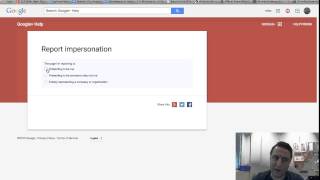
Hey, everybody. I just wanted to give you a bit of an update on my ongoing catfishing. My photos are being used by scammers issue. This has been an ongoing thing for about eight years or so. You can see the CBC covered this particular issue some time ago. Regina's man identity used in online romance scamming. It's been quite frustrating, I would say, at the very, very least, it's something that continues to go on. And one of the things I've noticed, and, you know, I've actually written about this a few times, for instance, that, you know, social networking sites really don't have in place some sort of capacity or mechanism that actually really deals with this. So I spoke or I wrote some time ago around Facebook's identity authentication being broken. It's still broken. Um, it, you know, whenever I report a Facebook page that's using my photos such as this. So for instance, I have. This is one that was reported to me recently by someone being scammed. This one will probably take, you know, on average up to a week, maybe a little bit less to be taken down. But sometimes, like in the past, what will happen is that Facebook will actually take down. They'll suspect your account as you being the inauthentic you. And, you know, for instance, Dean Chereski, a colleague of mine, right now, I believe he has his Facebook page being it was taken down by Facebook as they suspect that he's not the real Dean Cheresky, while a number of other scammer sites are out there with, you know, using his photographs and identity. So there's some real issues with it. But in particular, the reporting issue is a real problem with sites like Google and Facebook. And that's, that's really. I mean, as this becomes more and more prevalent, this becomes much more concerning for anyone, not just people who, you know, have a lot of photographs online. But even for those who have a few photographs online, it becomes a real issue and the reporting system is absolutely broken. And so I'll make sure that I post these in my blog post about this topic so that you can actually read these in more depth. But I want to bring you attention in particular to what I've noticed recently with Google and the reporting there. So, for instance, in. In Google, what you can see is when I go here, and I've done a Google search of myself here, when I look at any particular photograph I'm actually using, I have a little, you'll notice a little camera show up. I have a little search by Image Chrome extension that allows me to go Right. Directly and search by the image. So if I click on that, what I'll find here is you'll see a number of people that. Or a number of profiles that look like me. And this is a profile I use in my faculty page. So anyone with a faculty page, this could easily happen to you. So, for instance, if I look at here, Derek Crawford, that seems odd. Google my face. So I'm going to click on this profile and then I go here, and there's actually a Google page that actually has my image and got a number of views. I'm not sure how much he's using. What's interesting about this is a lot of the people that are. I'm not sure if it's the type of vocation or whatever, but a lot of the scammers typically use, like I'm in the field of oil, maybe that's quite lucrative. Maybe I happen to be gone for a long time. I don't have regular hours, but they really tend to, you know, oil engineers, that sort of thing is really kind of the thing that a lot of them use. Or, of course, people in the army, people with irregular schedules. Seems a bit easier to more palatable, I guess, for the person being scammed. Anyway. So what I did in this particular case, and I've already done this, but I'm going to show you the process. If I try to report this, I go to report, and then I go, this profile is impersonating someone, this person is impersonating me. I'll go to. Done. And this page is reporting to be me, which I think is a fair statement. You know, I think they are pretending to be me. Then there's provide your email address, your legal name, and ask you for the URL that you're trying to report, which I think is a bit odd, which it should just be in this. But that's a really small technical thing. Additional information, to be specific, which I've added. I added a lot of information about this particular instance that I recall. I mean, I've done this so many times that you forget what you've actually added. But I have a little text bit that I usually send forward. But at this point, I'm not sure if what happened is I actually submitted and I actually even put up my passport, which is. I think I'm giving more information than I would want to even give away to a company online, which is really, you know, something that you have to extend. I'm gonna have to pause this for a second. All right, I'm back. And this is the reason I wanted to pause it because I needed to dig around on my email and this is what I got back from Google about this. It says, we have received your impersonation claim and have determined that we cannot take action on the profile or page that you reported because the profile or page does not qualify for impersonation. So I have a sense that Google's reporting system doesn't look at, like, if they're using the same name, maybe that would be an impersonation. You're actually impersonating Alec Koros. But because they're just using my photographs and a different name, maybe that doesn't qualify for impersonal impersonation. But I don't see anything in that list that allows me to properly report for a catfishing scam like this. So how do we do that? How do we fix this? How do I work with you, Google, to get this better? How do we actually make it easier for someone? And, and this is more and more people all the time. How do we report this so that if our photos are being used, how do we prove that we are in fact who we say we are? And how do we report those who are using our photos in, you know, in. In the pursuit of some sort of scam or catfishing scheme to actually, you know, to actually deal with this in some fair way in a quick and easy way? Because every second, every. Every moment that these profiles are up, that increases the likelihood that they are actually going to scam people out of money. And of course, there's the emotional response that I've seen with so many people who come and feel that they've been totally tricked and deceived and so on. So we need to fix this, and we need to fix it well. And if we really want to think about digital citizenship and all the things those are important if you want us to continue to use these particular services. This is a really a big concern for so many of us who take on services like that. So let's fix this. Let's figure out how we can do this. And I think it starts, at the very least in fixing the reporting system that we have here to really call it what it is and to allow you to report specifically for these types of scams.
More from Alec

Episode 14 - Dr. Alec Couros: The EdTech Explorer – Rethinking Education with AI







Online Learning in a Hurry Guest episode 6 - Alec Couros - Student's in spaces