Alec Couros handed teachers USB sticks of portable Firefox to bypass school filters blocking blogs and video. He argues restrictive policies kill motivation when students are already creating constantly: 24 hours of video uploads to YouTube every minute, average contributor age under 27. Schools should study what kids do outside class, not block it.
Questions this video answers
About a dozen USB sticks.
24 hours of video uploaded to YouTube every single minute.
Less than 27 years of age.
185 voices representing 12 countries.
About 16 years old.
Chapters
So I want to start with a personal story. A few years ago, I was asked to lead a professional development initiative in a small school district, basically to introduce a group of teachers to the power of social media and to help these teachers become network learners. At our first session, I gave an overview of the possibilities and discussed what it means to teach in the digital age. These teachers were inspired and motivated to try new things. We were ready to dive right into the tools. And then it happened. Every single tool we wanted to use was blocked. Educational blogs, wikis, video services, microblogging, everything blocked. You could really feel a sense of deflation in the room. We went from visions of infinite possibility to a silver reassessment of the current reality. Kevin I've met someone so frustrated with the experience. I did what any kid would do. I checked to see if I could get a wrong filter. It didn't take me long to realize the proxy could be defeated if we could just access the web via Firefox. The teachers weren't technically able to install new programs, but they could access them with USB sticks. So I went to the electronics store, bought about a dozen USB sticks, loaded each with a set of portable apps, including Firefox, and handed these freedom sticks to the teachers. The next day, it worked. The filter was no longer an issue. And this new freedom really marked the beginning of a transformation amongst the teachers.
I don't mind, I don't care, as long as you're here.
Better access to social tools and free resources. And from that point on, the teachers were able to make their decisions around the content, tools, and resources that they could use in the classroom and for their own learning. When I share this story, I realized that there are ethical issues here. Some believe that if we condone these types of subversive activities, the same activities that are quite common amongst our students, that we undermine the authority of schools. But I think that there's an important counterargument and perhaps a greater ethical dilemma. I believe that our schools are responsible for developing active and responsible digital citizens. And I think that many of you listening would agree with that statement. But with this. I also believe that this task becomes very difficult in school environments where technical blocks and overbearing policies create an atmosphere of mistrust. But this presentation was supposed to be about learner motivation. So I'll try to get to that by posing one simple assumption. The assumption is simply we know that students are already motivated. We know that student motivation is very often not specifically about what is happening at school. But it does not mean that this type of motivation is at odds with learning, or at least learning as we have known it through our institutions of education. Take YouTube, what I consider to be a relevant example, a video site that I see is a massive set of artifacts built upon learner motivation to think that 24 hours of video is uploaded to YouTube every single minute and that the average age of the contributor is less than 27 years of age. This is a statistic. This is a culture that should not be ignored. In Lawrence Lessig's TED Talk, he speaks about the remixes and mashups found on YouTube as a new language, a new literacy of our kids, one that we must pay attention to. And while Lessig speaks of this mostly from a legal standpoint, as an educator, I see this as an important call to understanding, a signal that we must begin to understand these new ways in which our children learn. If we ignore this, I believe a tremendous opportunity to reform our educational systems will be forever lost. For me personally, this call has prompted me to jump into the world of remix, into the world of our kids, to learn firsthand what motivates them as both consumers and creators of media.
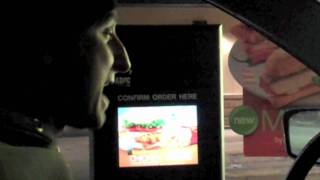
I want a double cheeseburger and hold the lettuce don't be frontin son no seeds in the bunnaby up in this drive thru order for two I got a craving for a number nine like my shoe I got a chicken over here and in this fizzle or is my fizzle got the salt on the fizzle? Dr. Pepper my brother and don't forget your mother Double double super thighs and don't forget the fries.
My apologies, there's actually more to that clip and it gets much, much worse. Okay, not everyone needs to be a YouTuber or a viral video aficionado. You don't need to go that far, although I'd highly recommend it. But I do believe that if we as educators begin to immerse ourselves in various forms of emerging media, we will discover amazing possibilities for teaching and learning. We can find hints of what motivates learners scattered all over the Internet. For instance, if you've never followed the work of comedian Ze Frank, you really should. His web projects are incredibly interesting, and for years he's been able to engage thousands of individuals in distributed creativity. His assignments can be engaging. This is the most recent one, where the task is simply to recreate a photograph from the past with your older selves, simple and engaging and ripe with creativity. Some of his projects can probably seem nonsensical or a waste of time, but look closer, see how it is possible for one person to mobilize the distributed actions of many. The lure and the technique are the important things. Here you will find examples of entirely new possibilities, things that just could not be accomplished five years ago Here are screenshots of this recent virtual choir orchestrated by Eric Whitaker. He planned and created a virtual conductor track, released it on YouTube and on his blog, had people sing along to it and record their singing from home with their webcams and and then These tracks from 185 voices representing 12 countries were combined in the spectacular virtual choir. Or take the example of then 16 year old Bassman Sean from Scotland. He participated in the Open Grad course I taught a couple years ago. I made the course available to anyone in the world to take and here is this young man participating at about 3am Scotland time almost every week of the course. Our class, made up of mostly teachers learned as much from this teen as he did from us, and his participation made many of us in the course Rethink Factors for Student Motivation Once we begin to analyze some of these phenomena, we will see that there are a set of common sense assumptions we can make around student motivation and engagement. Many of these haven't changed for decades, but very simply, we now have the ability to amplify these characteristics in new and powerful ways. In every classroom, every teacher and every learner can participate in these new forms of learning. And finally, here is a photo of my 5 year old taken last month. Here she is teaching herself imovie. She learned this simply through watching me. I never taught her a thing. And coincidentally, these are the same set of skills I just explicitly taught my undergraduate students this past semester. At five years old, my girl is full of motivation and I believe it is my role as teacher educator to do my part to ensure that her teachers will at the very least sustain this level of natural inquiry and curiosity. Moreover, it is my goal to ensure that schools never get in the way of her learning. Thank you for this opportunity.