The RISKY Pitch Method That Lands Dream Clients
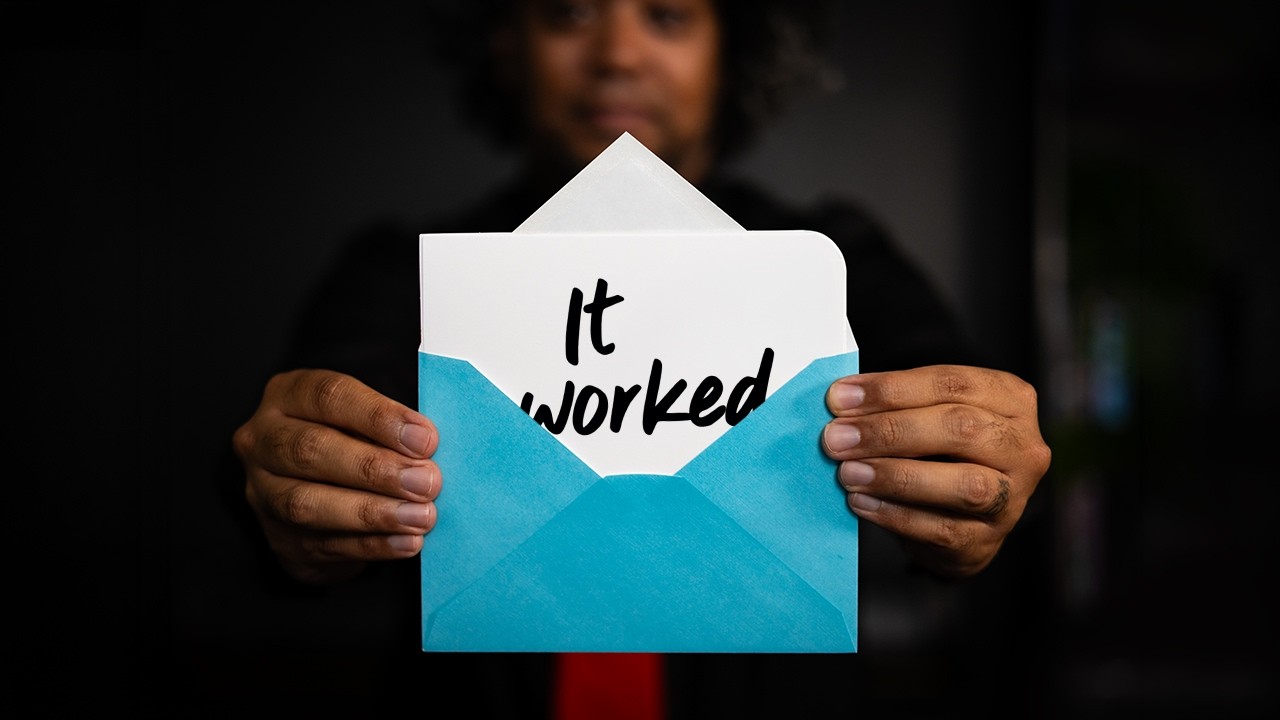
Dan Mall teaches how to land dream clients with personalized "love letter" pitches. The method requires five signals: deep homework on the prospect, a partial demo of your work, relevant case stories, clear next steps, and their own branding woven in. Brad Hussey and Francine Tamakloe share examples of pitches that actually worked.
Chapters
It took me 23 years to land my dream client. It should have taken one pitch. In this video, I'm going to show you exactly what that pitch looks like. By the way, if you're new here, I'm Dan Mall. I spent over 2 decades in the design agency world working with clients like Apple, Google, ESPN, The New York Times, and eventually my top dream client, which this video is about. I sold my agency, and these days I coach agency owners on how to make more money without burning out. Which means I've now watched hundreds of talented people chase their dream clients, and almost all of them chase the same wrong way that I did. I know exactly what it costs because it cost me 23 years. I built my first website in 1998, already dreaming about one client: Nike. I studied every commercial, website, and ad that they released. I worked my butt off to be good enough for them. I did every project as if it were for them. And I waited to be noticed. Here's what finally worked. None of that stuff. In 2019, I was on the jury of a design awards show and I made friends with the other jurors. 2 years later, one of those jurors landed a job at Nike. So I sent her a note. I said, congratulations, and honestly, I'm jealous. You have my dream job. She thanked me and I thought that was that. 3 months later, she messaged me. So it turns out we've got an upcoming project at Nike that I'm hoping might be a good fit for you and your agency. A few more messages, some phone calls, and 90 days later, I started a project with my dream client. 23 years of watching and hoping, and then just 90 days after asking. That note was 2 sentences, and it outperformed 2 decades of working hard on the wrong thing. 2 sentences. Imagine what a whole letter could do. By the end of this video, you will know exactly what I should have done 2 decades earlier and more importantly, how to make one yourself. Now, there are 5 pieces to this technique, plus a secret 6th one, and then we will build one together. Please learn from my mistake. Don't spend 23 years blindly hoping that your dream client will just happen to walk in the door. What I should have done is I should have sent a love letter. So what's a love letter? A love letter is a pitch made for one specific person at one specific company. So specific that it could not possibly be sent to anyone else. Now, if you're not paying close enough attention, it looks and feels a little bit like cold outreach, but the big difference is that no one who receives a love letter experiences it as cold. It's one of the warmest messages you can send to someone. You're not spending thousands of dollars on ads and you don't need a massive audience or social media following. This is a one-to-one strategy and that makes all the difference. If you run a web design agency, this is how you get web design clients, but you could swap in any creative business and nothing changes except except who you address it to. Love letters are about intimacy. Think about how you profess your love to a romantic interest. You would dote on them, you'd be lavish, you'd spend an unreasonable amount of time and money and effort to make them feel special, like they're the only one in the world for you. Okay, here's the plan. First, I'll show you the pieces, the 5 signals that every love letter must send. And remember, there's also that bonus 6th technique, the one that almost nobody includes but makes a major difference. Then we'll look at a couple of real love letters in the wild so that you can see the approach working for yourself. And then you and I will build one together from scratch so that you can see it come together step by step. Signal 1 is called Just Like You, and the job is to get one person's attention. Researchers call it the cocktail party effect. It's your ability to focus on one conversation even in a noisy environment. Imagine you're at a cocktail party. What's the best way to get the attention of one specific person? You call their name. Their ears perk up and now they're paying attention to you because you sent a message directly for them. The second signal to send is called "We did our homework." Shared interests get attention, sure, but solving expensive problems for people really wins work. The job here is to prove that you understand their business, a problem that they own, a stat that they recognize, a market opportunity that's being overlooked, other companies doing what their company is not. You're surfacing FOMO for them. And the sharpest homework has some numbers in it, in their units, because a business opportunity with a dollar sign attached is very, very hard to ignore. You'll see what I mean when we get to building that section. Now, signal number 3 is called Bring 10% to Life. The job here is to make the opportunity visible, not just something they understand with their brain, but something they can see with their eyes. You show them what the world looks like if they did this thing and you position your agency as the way that it gets done. But you only build the first 10%, not to be withholding or manipulative or anything like that. But this work should be something that they can't do without you and your team. And also something that you couldn't finish without their team. So what you do is you show just enough of the what and the why so that they have to ask how. Now, Signal 4 is: Don't worry, we've been here before. They might have some doubts at this point, so the next signal addresses those doubts. You include 2 or 3 hand-picked work stories, not a generic portfolio, that prove your agency has done this kind of thing for companies just like theirs before. After this, only one question should be left in their head: How do we get started? Which is the job of signal number 5. Let's do this. You end with 2 questions, a closed-ended request, and 1 crystal clear next step. I'll give you a script for this in just a few minutes. So those are the 5 signals clearly sent. And the 6th one? Hold that thought. First, let's see some real love letters. In 2017, Francine Tamakloe was working as an events and marketing coordinator, but her dream job was to work at Spotify. So she put up a love letter at FrancineForSpotify.com. The intro of her love letter is doing a few things at the same time. It's showing how aligned she is with the Spotify brand and also letting her personality shine through with a little bit of humor. She says things like, "When I was 12, I wanted to be the Alicia Keys of rap music, and I realized that being a trap pianist was not my calling." A little further down, here's a small touch that goes a long way. Francine includes quotes from artists that describe her style, and then she uses embedded Spotify songs from the artists that she quotes. Genius. This is exactly what I mean when I say this should feel not like a template, but like something that was custom made for them. If she was applying to a massive number of companies, this tactic would not land. But because this is just for Spotify, heck, the URL is called FrancineForSpotify.com. It is an extra level of detail that makes it feel like it was just for them because it was. Next up is her work. This is not a resume or portfolio. It shows 4 facets of her current job that transfer directly to the open role and why she would be a perfect fit for it. Lastly, at the bottom of the page, a very clear statement of intent: "I want to join the band." There's even an awesome line in here that says, "With my attention to detail and your solid bass line, we can make beautiful music and outstanding business results together." Brilliant! Sure, some might consider it a little bit cornball, but especially if this is how she is in real life, I think the conceptually relevant metaphors and the copywriting do a great job to make her stand out. If you were the hiring manager, how much more would you want to hire her as opposed to any of the other people who just applied by sending in a resume and a portfolio link? Apparently it worked. I don't know Francine or the hiring managers for this position, but Francine's LinkedIn shows that she worked at Spotify for 5.5 years over 2 different stints, starting as an associate and eventually becoming the senior marketing manager for North America. Now, just in case you think this is some manipulative technique that works against people who aren't wise to it, I am here to tell you that that could not be farther from the truth. It works, but not because it's disingenuous, but because it's genuine. It works with people who don't know what you're doing, and it really works on people who know exactly what you're doing when you send a love letter. I say that very, very confidently because it worked on me as recently as a few months ago. Brad Hussey makes his living building email systems for creators. He noticed I use the same email platform he specializes in, and instead of cold emailing me, he made a YouTube video. That was called "I funnel hacked Dan Mall and how I had 40% his revenue." It was 23 minutes of reverse engineering my setup from the outside, subscribing to my newsletter, cataloging every offer I sell, mapping my audience segments, and rebuilding the whole system the way he would if I'd hired him. Then he tweeted, "I rebuilt Dan Mall's funnel. He doesn't know it yet, but the internet will soon." Some people would call a lawyer. I tried to figure out how to hire him. Here's what it did to me, and I'm saying this as someone who teaches sales for a living. I knew every technique that he was using, and I still wasn't immune. I wasn't in the market for what Brad does. I was already working with someone who was doing similar work for me. But watching his video, the feeling that kept surfacing was, "I want that." He shot to the top of a list in my head that I didn't even know I was keeping. Now, he brought this idea about 10% to life. He built the map and the demo, but he couldn't finish any of it without me. That signal number 3 run perfectly. Brad wasn't right about everything he guessed at in his video, but I didn't hold any of it against him. Nobody docks you points for not knowing what you couldn't know. They credit you for the thinking. I actually interviewed Brad later, and I found out that he was genuinely scared about posting this. He almost didn't post it.
There's a risk there. And I did publish the video, and I was nervous about it. Video goes out, you know, a few days go by that you didn't respond. And even my wife was like, so did, you know, did Dan see the video? Did he say anything? I was like, nothing yet. And she's like, are you worried you maybe upset him? And I was like, yes, absolutely. I feel like he's like processing this and going to be like, I didn't like it. You need to take that down. So there was a nervousness there.
Now, that fear is the tax on this method, but it's also the reason that your competitors won't do it. And it ended the way these things end more often than you'd believe. I am currently one of Brad's clients, and we just finished up our first exciting project together. Now, Brad's love letter was public. It was a video that the entire internet could watch, but this works just as well in private too. One agency owner I coach sent a love letter to his dream client, a design leader at one of the biggest brands in the world. It named a conference talk that that leader had recently given, and it quoted the exact line that stuck with my student. That's the homework signal. It told a true story about a vivid memory with that brand's products, and that experience led to a campaign idea that he pitched. Unfortunately, he got no reply. So 3 days later, he followed up. Crickets. Until 5 days later, that design leader at the company wrote back with his own childhood memory. He asked for a few weeks of patience while he shared the campaign concept with his entire creative team. Let me say that again. A stranger's email about a memorable moment connected with a design leader's childhood memory and then conjured a project from scratch that neither of them were thinking about just weeks earlier. That is the true power of a love letter. Now, one more thing before we build. You might be thinking, this seems really slow, and that's true. If you need cash this month, a love letter probably is not the right strategy. But if you can afford to swing big and win big, Love letters are the highest yield technique that I know of because the depth of the effort is precisely what the recipient is responding to. And that's actually a bigger point than it sounds like. No strategy is good or bad on its own. Different strategies work when you run them in the right phase of your business that it's aligned to. Love letters are a big swing, long game play. They shine when your bills are covered and when you can afford to court a dream client for weeks or maybe even months. Now, if you run the same play while you're scrambling for next month's revenue, it's just going to feel slow and demoralizing, not because the strategy is wrong, but because the phase is. If you're not sure which phase of business you're in or what you should be doing right now instead, I made something exactly for that. It's called the Moneymaker Map. It's the 33 steps to grow your agency toward $1 million. It's organized into 7 different phases so you can find where you are and what to work on next. It's completely free and the link is in the description. Download it, find your phase, and if you're in one where big swings make makes sense, let's build our first love letter together right now. I don't run my agency SuperFriendly anymore because I sold it a few years ago, but I still have dream clients that I would love to work with if I did have an agency. At the top of my list is the NBA. So for the next few minutes, you and I are going to build the love letter that I would have made for the NBA for real from scratch. Let's roll up our sleeves and let's get to work. Now, the first decision is what do we build it as? I suggest a landing page. Why a landing page? Because a web page still feels like the effort to the person receiving it is a lot. Think about it at a visceral level. Wouldn't you be impressed if somebody said to you, I made a whole website just for you? Now contrast that with I wrote a whole email just for you, or I wrote a whole text message just for you. They just don't hit the same way because everyone can write an email or send a text. Not everyone can make a website. If you run a web design agency, you have an unfair advantage. You and your team can easily make a thing that's hard for most people to do. But even if you don't build websites professionally, there are so many great templates that you can customize over a few days that show that you spent real time on this. So if we lay out the signals on the landing page in a bird's eye view, you might be tempted to start from the top. But I recommend you start with the most important part of this message, which is why it's the biggest and chunkiest section of this page. And that section is we did our homework. I think you should devote at least half of your love letter to making sure that the business case is solid not just to make sure it makes sense, but to really communicate that I understand your situation. This is what is most likely to make it feel like a good potential partnership. The first question to ask is, what would the NBA need help with that my agency can deliver for them? Now, the NBA has a lot of different digital properties in their portfolio, and it's very clear to me that the NBA could use some help with something that I have a lot of experience in: enterprise-level design systems. My agency did this for so many clients with the same stakes as the NBA, which will come in handy when we signal that we've been here before. So let's start filling in this page. What I'll do is I'll lay in the opportunity. We'll add some statistics that make the case more compelling and then summarize my point as clearly as I can. Fix the foundation once and every product built on top gets faster, cheaper, and more consistent forever. Part of my agency's custom approach to design systems was not building the design system itself, but shipping products as examples of the power of the design system as part of the same effort. So we have to pick a product area that's part of the opportunity. After doing some research, I learned there's a massive potential in one specific area: sports betting. Basketball is one of the categories that's gaining the most ground, but the NBA doesn't really seem to invest many resources here other than partnerships. So I can show them that I understand the current situation, which further exposes the opportunity. This naturally moves us into the next signal to send. If we know the problem, what's the solution? Well, let me show you. We'll bring 10% of it to life. Maybe we'll create a 30-second sizzle reel that lays out our vision for how they can create a new NBA Pick'Em app that's developed in-house and powered by their new design system. Hopefully this is something that excites them, but maybe they're thinking at this point, uh, this is cool, but is this some amateur with a flash-in-the-pan idea? Which then brings us to our next signal: Don't worry, we've been here before. You show real projects that your agency has done for real clients that are similar in scale and stakes to what you're proposing here. I recommend showing 2 to 3, but I couldn't help using the headline Starting Five for the NBA-themed love letter, so I put 5 of my best examples here. We've done similar work for Nike, The New York Times, Peloton, United Airlines, and Marriott. I'm betting that including examples for these kinds of clients gives us credibility to be taken seriously. Now that we have the structure down of what we're proposing, it's time to figure out exactly who we're talking to. It might be tempting to start out with "Dear NBA," but the NBA can't reply to us. Cocktail party effect, remember? I did some digging— not creepy digging, public digging— and the person most likely to hire a team like mine are people like Jay, who's an SVP, Head of Consumer Product Experience, Julie, who's a VP Design Lead, or Abir, who's a Director of Product Design. From a little more digging, I learned from Abir's website that his parents immigrated from Bangladesh and he grew up in Queens. My parents immigrated from Pakistan and the Philippines, and I spent the first few years of my life in the Bronx. So maybe I can connect with him on these levels since we have something in common here. Now remember, the signal is, I'm just like you and you're just like me. We don't want to write a whole biography here. One strategic sentence is perfect. Then we summarize the opportunity we found while doing our homework. Can we build a next-gen design system for the NBA and go in the fastest growing market in sports? We add a bridge sentence here that we've been here before. I run SuperFriendly, a design collaborative that helps enterprises stand up design system practices. Finally, a little extra sauce that shows how excited we are to do this together. Almost like we were born to do this. For the finishing touch, way at the bottom of the page, we signal let's do this. Two questions, a closed-ended request, and a next step. Wanna build this together? I don't want to assume that Abir wants to do it yet. I want to give him the ability to say no, thank you, even though I'm hoping he says yes, please. And then how's Friday, August 7th for a chat? I might even add a little bit of dynamic smarts here to make the date always about a week away from today's date to make it feel like there's a not too soon but a not too far window available. And then some ways to get in touch. My email address or a social media channel to DM me. And there you have it. In just a few short minutes, a beautiful, compelling love letter to one person where you can really shoot your shot by sending 5 specific signals. Ah, yes. Good memory. There is one last thing I promised you, which is that magical 6th signal to send. Even though I think this page looks awesome, I used my branding and visual identity. Instead, if I'm sending this to the NBA, why not use the NBA's branding and visual identity? Go use their color palette and typefaces and art direction and tone of voice. It might take you a minute to research the right elements and find the right assets. And yeah, you might have to pay for some fonts or even hire a photographer or a copywriter to nail the style. That's a feature, not a bug. Remember, what makes the love letter work is that it feels like an unreasonable amount of effort to spend on just one person. You saw it in Francine's love letter to Spotify. She used their gradients, embedded music players, and their typography. I can't imagine that that didn't help play a part in getting her hired. And what's the point of this level of detail? Well, perhaps it sends the most powerful signal of all. It's like we're already working together. Our brains treat continuing as far easier than starting. If you make it feel like the work is already underway, the actual decision to begin feels like it's already been made. Okay, so what's the takeaway here? Let's do a recap. People ignore messages sent to everyone. They're much more likely to answer messages made for only them. And you don't have to be the best in the world at what you do, you just have to be the best in the world to them. And a love letter is the fastest way I've ever seen to become that. I never sent Nike a love letter. In hindsight, I wish I had because I think I could have gotten something that I got, but just decades sooner. I don't teach love letters because I did it right. I teach it because I didn't do it at all and I felt what it cost. As for my NBA love letter, I don't do client services anymore, but I might make an exception for this one. So, Abir or anyone at The League, if you're watching, you know where to find me. And to you, dear watcher, you probably already know who your Nike or NBA is. You've probably known for years. Maybe they're a Fortune 500 company, or maybe it's the business that your best friend runs. And you've been probably doing what I did. You're honing your craft, you're posting content on social media to no one in particular, just waiting to be noticed by them. And here's the truth about that phrase that we've all been taught: great work doesn't always make clients hire you. Yes, great work is definitely the price of admission, but it can only get you into the room. If you want something, most times you have to ask for it. I made this channel to help designers get their flowers. The thing I've learned after being a designer for 28 years is that the fastest way to get your flowers is to send somebody theirs. So stop plucking petals and send the letter.