Body Alignment Mel Larkins
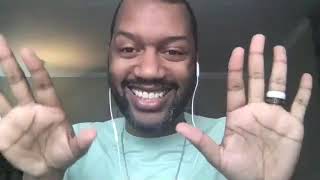
This is a transcript of a YouTube podcast interview where host Anwar White speaks with Mel Larkins, a high-performance wellness coach. They discuss the difference between mind and brain, the importance of facing physical and emotional pain rather than avoiding it, and practical calming techniques (notably a three-breath method) used to improve performance, recovery, and decision-making.
Chapters
Picture kind of straight.
Okay.
Hello, my loves. And thank you so much for joining me today on the get yout Guy coaching podcast. I have a special friend and amazing coach with me today. Her name is Melanie Larkins and she is a high school, high performance wellness coach. She's going to tell you what that means, but she is, from what I know, a master when it comes to all things body and mind alignment. And that is something that is so important in dating and relationships. And so first and foremost, Mel, thank you so much for being here on this podcast today.
Thanks for having me, Anwar. This is great. I'm glad to be here.
I'm so glad that you're here, girl. So why don't you tell everybody kind of, you know, what your business is all about and who you serve?
Yes. Thank you. So I am a high performance wellness coach for athletes, especially Pro athletes and CEOs, executive level business people. And what I do is help people to connect and strengthen the connection between their mind, their brain and their body. So this is helping people to just release stress, release tension, get more clarity and focus in the mind. And it also helps to improve sleep. For my athletes, it's really important that it's helpful in reducing injury or even recovering from injury for really anyone helps reduce pain and all of these things. So for everyone, it's really helpful to have this calm and focus in the mind and then you can start tapping into the body, reconnecting and grounding in the body and so that you can really understand the signals that are being sent to the brain, to the mind and start to then optimize performance. So for athletes, this is hugely important on the field or the court or wherever they might be playing. Helps them to, like I said, be injured less. It helps them to make more smart and clear decisions. It helps them to not be so distracted, which would also lead to more injury, distraction, anxiety, worry and. And for business people, these are very similar issues. So helps to remove some distraction as you're able to focus in the body. It's improving your sleep because you can relax and calm yourself. It helps you to make better decisions because you have more clarity, more focus, your intuition becomes stronger because you're really able to tap into the connection with your body, your body, your gut. You know, you say I have that gut feeling. That's your body trying to tell you things. And the more that we understand that connection, the more that we tap into that, the more it can guide us down our path a little bit more easily.
I love that. So girl, you talked about Mind and brain, are they different things?
Yeah, they're different.
I'm like, girl, I kind of thought that was the same thing, but I guess not. Okay, tell us, girl.
So if you think about the brain, the brain is your organ, right? Like, it's the thing that if your heart is beating, if you're breathing there, you don't have to think about that. It's like, it's like your involuntary actions, right? It's the blood moving through the body. It's your cells regenerating, it's your hair growing. Like those are things that are signaled by the brain. The brain controls all in the body, however, you also have the mind.
Excuse me? You have the mind.
Just get some tea, girl. We'll keep on going. Yeah, this is why we were. This is why we edit.
Yes.
So the mind, instead of like the brain, is that sort of functional organ. It does the structural functional things. But then the mind is more about your thought, it's more about your emotions, it's more about the subconscious. And the conscious mind are those kind of intangible functions like thought. So, like, emotions are happening in the mind. You know, I can think of something that makes me happy or sad, but then that's also a physiological response that's happening in the body because of the brain. So when you say, like, I feel scared, you know, that's a. That's happening in the mind, that fear, that emotion. And there's also the brain triggering a response in the body to have that fear. So that's getting tense, protecting yourself. Shoulders start coming up, you're like clenching. Your jaw might clench, your hands might clench. And so that's the physiological response is being sparked by the brain because of what's going on in the mind.
Yeah, I love that. So, girl, how did you get into this? Like, what's your story behind doing this work? Because it seems like, again, super special specialized, but also like super interesting.
Yeah, it's, you know, it's kind of been a lifelong thing. So I first got into yoga and meditation when I was 13 in high school because my dance teacher decided to start integrating it into our practice. And I grew up like fundamental Christian household. My parents told me that yoga was of the devil. If I did, I was going to go to hell.
Yoga and everything else, girl.
Yeah. And so we started doing yoga. I didn't realize that's what we were doing at the time. And then I found I was like, this is yoga. Oh, no. Am I going to hell? Yeah. Yeah. But then I was like, this sure doesn't feel like I'm going to hell by, like, stretching my body or breathing deeply. That seems odd.
So that just kind of, like, started me on this lifelong path of this practice of integrating yoga and meditation into everything I do. But I got into a car accident when I was 20. I totaled my car going three miles an hour in a parking lot by myself.
It was, like, horrible. It was really sad.
I don't know how we do that, but.
I was, like, distracted. I was trying to get a pen from the floor. Looked up, there was this pillar. I was like, oh, no. Freaked out. Hit the gas instead of the brake because of how my pedals were. So I lurched into this pole. Needless to say, I was very embarrassed. I didn't want to. I didn't want to, really. I didn't want to go to the doctor. I didn't want to go to the chiropractor. I do not recommend that, first of all, like, please go get yourself checked out. But I was stubborn also, and I was like, I think I got this. I think I'm fine. Because I was an athlete. I was playing Division 1 lacrosse for UC Berkeley at the time. I was like, I'm fine. And so I decided that my sternum was really pretty. Pretty sore and pretty injured. And so I started doing this deep meditation work to try to connect with the parts of my body where the pain was coming from. And as I did that work, I started really having a different understanding of pain and of my body. So I started realizing that I could control these very small pieces of my body, these very tiny, isolated muscle groups in a very different way that I had never learned as a gymnast or in dance or in any sport. And it was really just getting my mind to retrain my brain to understand that it controls all of the body. And then by controlling my mind, like, I then have that control. So I was able to, like, work with my muscles, work with my body. I started being able to really reduce my pain that way because I was. I was, like, facing pain. I wasn't running from it. I wasn't trying to ignore it. I was feeling the pain, feeling into it, understanding what my body needed, and then being able to address it. And so, yeah, that's kind of how that process went. And I just kept doing that over the years and started teaching yoga, integrating more of that into my yoga teaching. And.
Can you talk a little bit more about this notion of facing your pain? Because I think that our natural reactions as human beings is to avoid it and to run away from it and I know from the women that I work with that like anything painful that has to do with love and relationships, we're going to get numb to it, we're going to avoid it, we're going to ignore it. We're going to either try to be over it. And you're saying to face it and talk to me about that decision to face it and what that means in terms of finding a different result afterward.
Yeah. So if you think about really any. Any emotion or anything that happens in your life, the more you try to ignore it, it seems to just keep coming back over and over again. So let's say in dating relationships, you break up with someone, you've had a horrible relationship, toxic, maybe abuse was involved, something like that. If you just end that relationship and then never deal with those issues, you're likely to keep repeating that same cycle over and over and over again. And because you haven't gotten to the root cause of what got you there in the first place. And it's the same with the body. So if you have pain in the body, oftentimes, let's say that you, I don't know, that you trip and fall or something like that, you hurt your knee because you fell on it. If you try to just ignore that pain or mask it with like a painkiller or something like that, you're not getting to the root of what is causing you that pain. At the same time, oftentimes the pain is then.
It's then multiplying or amplifying throughout more of the body than just that part of the knee. So the more that you can focus on what is actually causing you the pain, the more you can actually deal with the root of the problem. If you're ignoring it, then the body will send you more and more and more signals until you pay attention to it. And so that might.
Yeah, no, I was just going to say, I think some people think that if I focus on it, then it's going to get bigger. Right. And has that been your experience or the experience you know, that your clients may have when they're working with you?
I think that's the fear. I think that's exactly why people don't want to do it, because it seems so overwhelming. But if you can do that in a way that a. Having someone help you through that process is very helpful because it's someone that can help guide you through. I have clients that are facing, like, trauma or tough situations or injury, and sometimes when you think about those things happening, it's the emotion that starts to make it overwhelming. It's the fear that you associate with that time, or the disappointment, the anger, the hurt, the sadness, the loss, and that's what's making it bigger. So if you can start to get your body to calm down, breathe, calm the nervous system down, then that gets you out of fight or flight mode, which is something that helps to amplify pain. Because it's cortisol running through your body. It's more tension in the body. And so you're not able to really allow the body to release enough so that you know you're safe and then you can understand really what's going on. So it's the fear. Yes. That it would make it overwhelming or amplify it, but if done in the right way, it actually does the opposite.
Now, you were talking about calming your body. Do you have. What are your best kind of tips to do that? Because I know, like, when I'm talking to some of my clients, they might be spiraling, they might be out of control, and their body is telling them. Their body and their brain. Right. You've given me the distinction. Thank you so much. Are doing, I guess also their mind is doing everything right. So how can we kind of calm the body and get to a state where we can start thinking more critically?
This is a great question. I love it. I recommend my, like, number one technique for people is three breaths. So this is meditation. People don't think of that as meditation, but it absolutely is. If you can just slow down enough to take three intentional breaths, like, it will shift your mind and your body to a whole different state. You can't feel two emotions at the same time. You can't be angry and joyful at the same time. You can go between those, but you can't stay in one state like two emotions at the same time. The brain can't do that. So. And so to help you move out of those states of maybe overwhelm, sadness, grief, anger, if you can just even close your eyes, or you don't have to close your eyes, but if you can stop and take three breaths, it helps to calm the nervous system down. It helps to slow your breathing down, it helps to slow the mind down from that kind of rapid momentum that starts to build, especially when you're talking about maybe past relationships where it's high emotion involved, because it's relationships. Right. That's our heart, that's our fully emotional interactions a lot of the time. And so of course it's going to work you up in some way. And so just taking Those three breaths can help so much.
I love it. This is what I'm going to start doing, too, but I'm going to call it my Destiny's Child breath. I'm going to go, Michelle Kelly, Beyonce, and everything is going to change for me. No, I love it. This is great. Great. Thank you so much for sharing that. Now, what I know about you is that you were, as you were saying before, competitive and lacrosse, but you had spent so much of your childhood being a gymnast and a dancer. And talk to me about. I'm asking about this time in your life, because I think a lot of us either were in sports physically or in sports mentally in school. Right. And so what I know about that work is that generally the work is to push you to your limits or even beyond them. Right. So can you talk to me a little bit about your experience kind of doing that and what you learned about your body and your limits or not?
Who. Gymnastics did not teach me about recognizing my limits very well. I was taught to ignore them for the most part. And I think that's true for a lot of people that are in sports or even in business. You know, we're kind of taught to just. There's the grind culture. Keep pushing, keep going, don't stop. And as a gymnast, I was essentially trained to be a robot or a machine and to not acknowledge emotion, to not acknowledge pain, to not acknowledge injury until it was absolutely impossible to ignore. So that's how I was trained, and that's how I lived for most of my childhood. The result of that is that I was a champion gymnast. I was at the top of my level for the state of California. I was really good. The other consequence to that is that I was not in a great emotional or mental space because I didn't know how to process emotions in a healthy way. I didn't know how to acknowledge my body. Trying to tell me, hey, I need to stop. Hey, I need to rest. Hey, I need to do something different. Because I just. I had. I had been trained to not recognize them for so long that I stopped understanding what those signals even were.
Yeah. So I didn't really learn that much in. As a gymnast or in high school, really. You know, it's being in a highly competitive academic environment combined with sports, dance, all of that. And I didn't really learn it until I got to college playing lacrosse for UC Berkeley. I got recruited to play, and I had to get cleared by the doctor, the team doctor, to be able to play. And I thought, no problem. Of course, I'm fine.
I'm 17.
No problem, right? And so he. He asked me if there are any. Any issues that I have in my body. And I start to talk about a few things and, you know, not thinking it's a big deal. And he said, you know, you've got potential telotendinitis in both knees. You've got Achilles tendonitis in both Achilles. You've got this other condition in your knees. And I said, whoa, wait a minute. What? Like there's a name for that that's real. Oh, that pain. I should have maybe thought that was the big deal. And he asked me if there was anything else that I should be. He should be concerned about. I said, well, you know, sometimes when I'm running, my legs start to go numb. And I could see his eyes got real big. And I was like, no, no, no, no, no, it's fine. It's fine. I just stop. I stretch it out. I'm good to go. My coach, my lacrosse coach told me, it's not a big deal. So I thought, it's not a big deal. He was like, no, Melanie, we have to go deeper, look at what's going on. And that was the first time I really understood that those signals are important. You have to look at what your body is trying to tell you. Otherwise, it will start to get louder and louder and louder until you not ignore it. This is like people who are grinding themselves into the ground start getting sick, start getting injured, start not being able to sleep, which leads to more injury, more sickness, all of that. Mental breakdowns. You have to rest, you know, you have to have limits on your body and your mind. Yeah.
I feel like I hear a lot with these competitive gymnasts that they lose their period because their body is just, like, going so hard and so extreme. And I think it's so, so ironic, right, that, like, especially for women, right, that you are pushing your body so much and ignoring that pain.
More from Anwar

#datingtips #datingadvice #datingadviceforwomen #singleblackfemale #singleblackfemale #blackfeminini








Dating Pitfalls of the Smart and Successful Woman - Get Your Guy Podcast S1 E2

